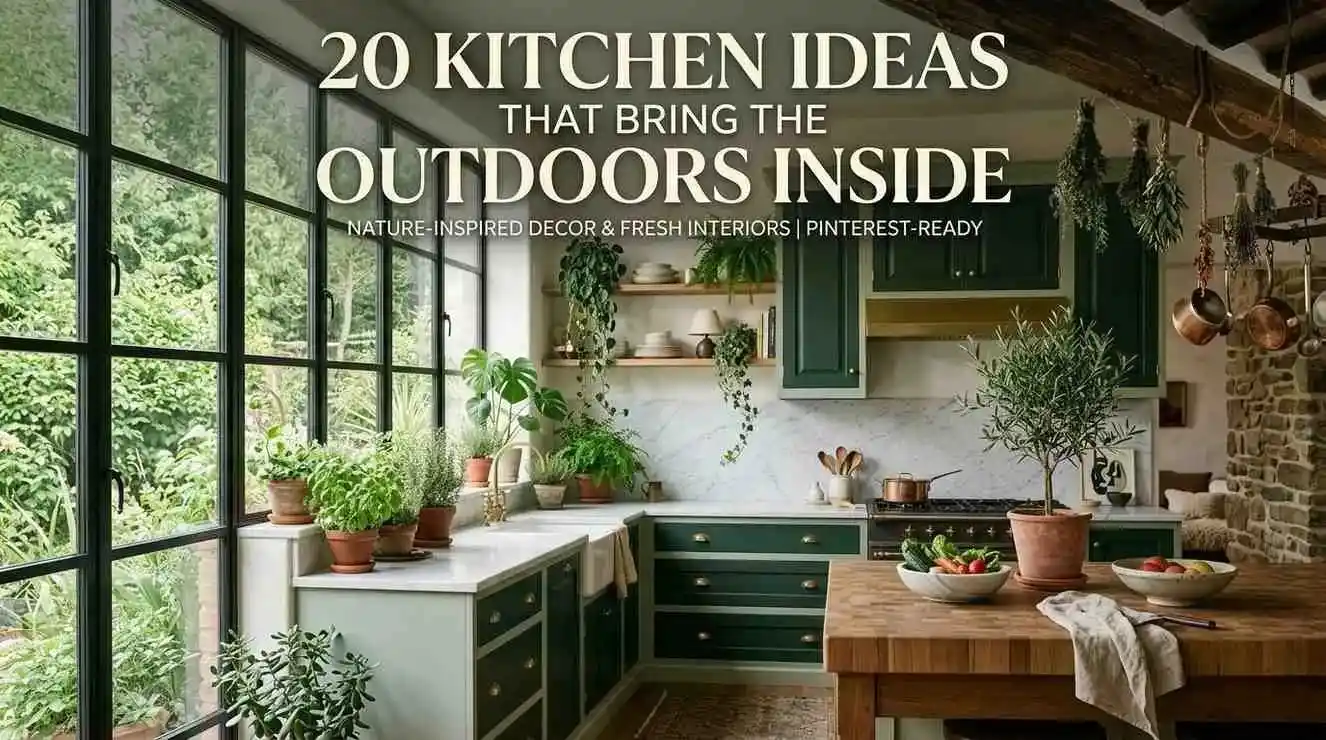
20 Kitchen Ideas That Bring the Outdoors Inside
Transform your kitchen into a serene nature inspired sanctuary with these stunning biophilic design ideas.
The kitchen is the heart of the home and when you weave the beauty of the natural world into its design it becomes a space that nourishes not just the body but the soul.
01)Live-Edge Wood Countertops
Live-edge wood countertops are the ultimate statement piece for a kitchen that feels organically connected to nature.Each slab is one of a kind carrying the raw silhouette of the tree from which it came knots grain patterns and natural curves included.Whether you opt for walnut maple or cherry these countertops bring warmth and character that no manufactured surface can replicate instantly grounding the kitchen in an earthy timeless aesthetic.Beyond beauty live-edge wood is surprisingly practical when properly sealed.It pairs beautifully with matte black or aged brass fixtures creating a rich visual contrast that feels both rustic and refined.For a cohesive look complement your countertop with open wooden shelving or a matching butcher block island. Caring for it with food safe mineral oil keeps the wood nourished and the natural luster alive for years making it a long term investment in your kitchen’s character.
02)Hanging Plant Ceilings
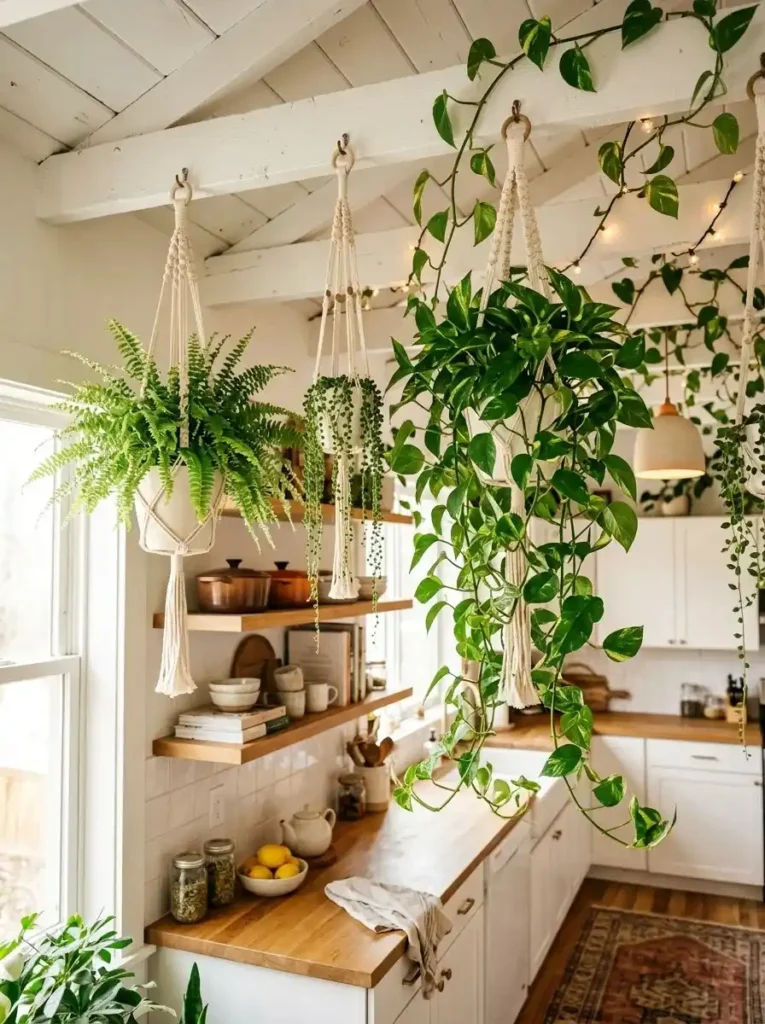
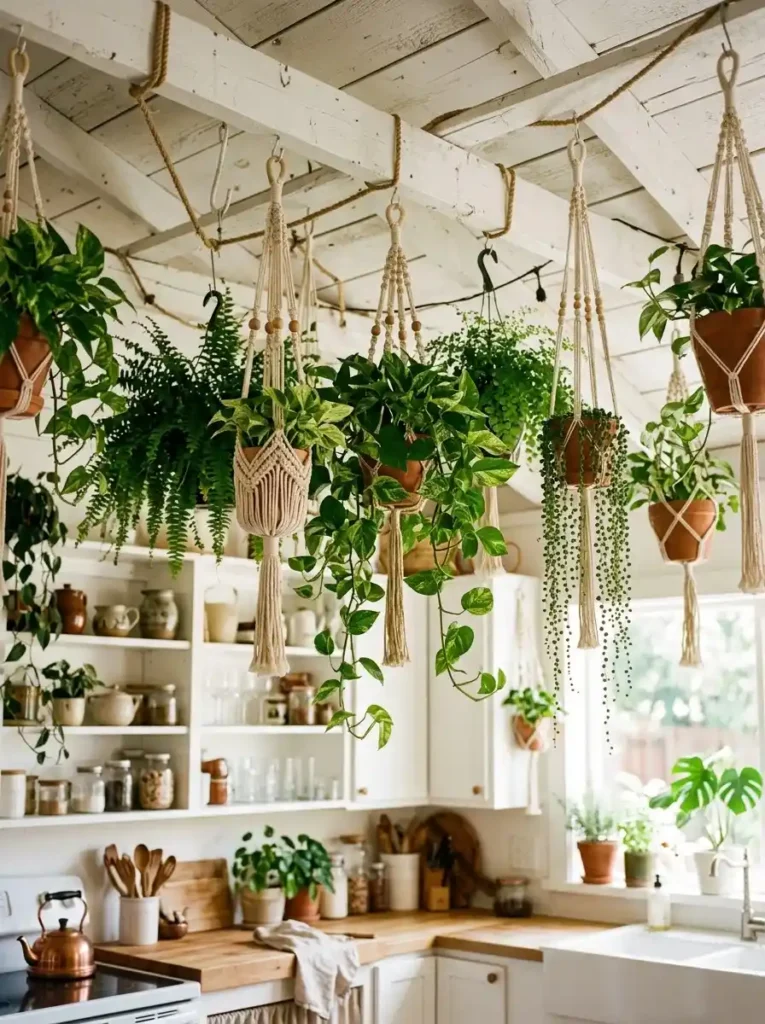
A ceiling adorned with trailing plants is one of the most dramatic and instantly Pinterest-worthy ways to bring the outdoors into your kitchen.Plants like pothos, string of pearls and trailing ferns cascade beautifully from macrame hangers or minimalist copper hooks creating a living canopy above your cooking space.This overhead greenery softens the hard lines of cabinetry and appliances filling the room with organic life and a sense of lush abundance.Hanging plants also improve indoor air quality which makes them as functional as they are beautiful.Position them near windows where they can catch indirect sunlight or supplement with grow lights disguised as pendant fixtures for kitchens with limited natural light.Rotate the plants monthly for even growth and choose low-maintenance varieties if you’re new to indoor gardening.The effect is part secret garden part chef’s paradise effortlessly serene and deeply inviting.
03)Natural Stone Backsplash Feature Wall
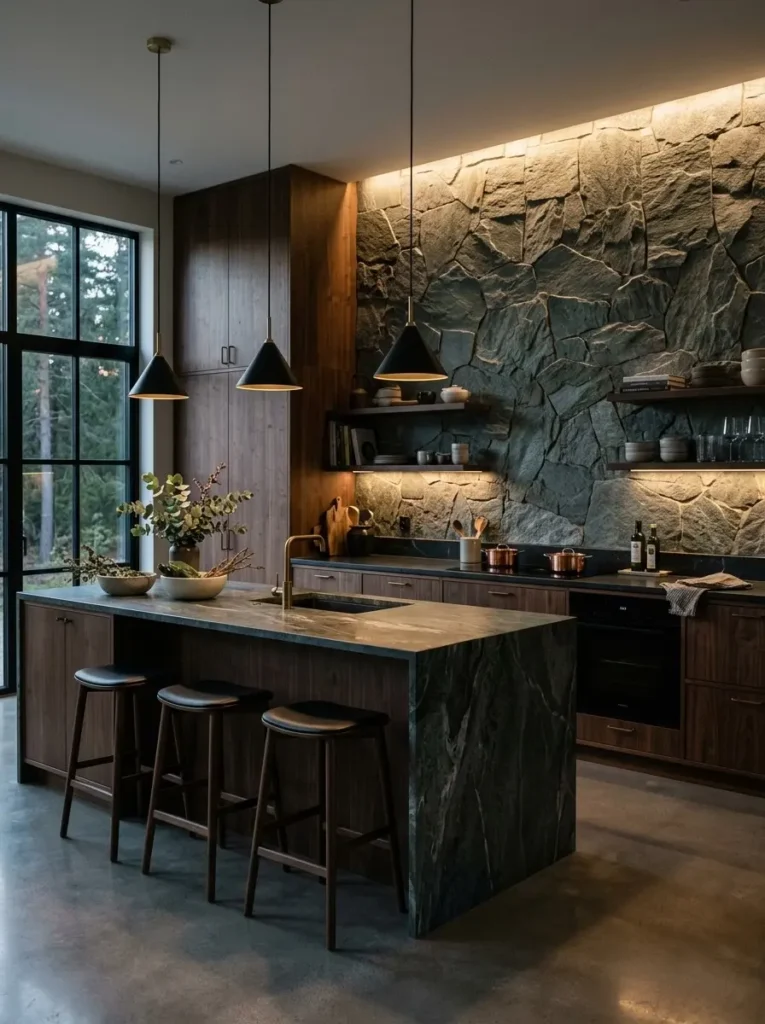
A natural stone backsplash transforms an ordinary kitchen wall into a geological work of art. Whether you choose stacked slate, travertine, or quartzite, each stone carries millions of years of natural history in its layers and veining. Running the stone from countertop to ceiling creates an immersive feature wall that anchors the entire kitchen, evoking the feeling of cooking beside a mountainside or a naturally carved rock face. The textural depth draws the eye immediately.Natural stone pairs exceptionally well with minimalist cabinetry in white, cream, or muted sage green, allowing the wall itself to be the star. Seal the stone properly to protect against moisture and cooking splatter, and use warm, directional lighting to accentuate the surface texture after dark. For a softer look, irregular flagstone creates a more artisan feel, while large-format marble or quartzite slabs lean into a sophisticated, gallery-like atmosphere. Either way, the result is deeply timeless.
04)Built-In Windowsill Herb Garden
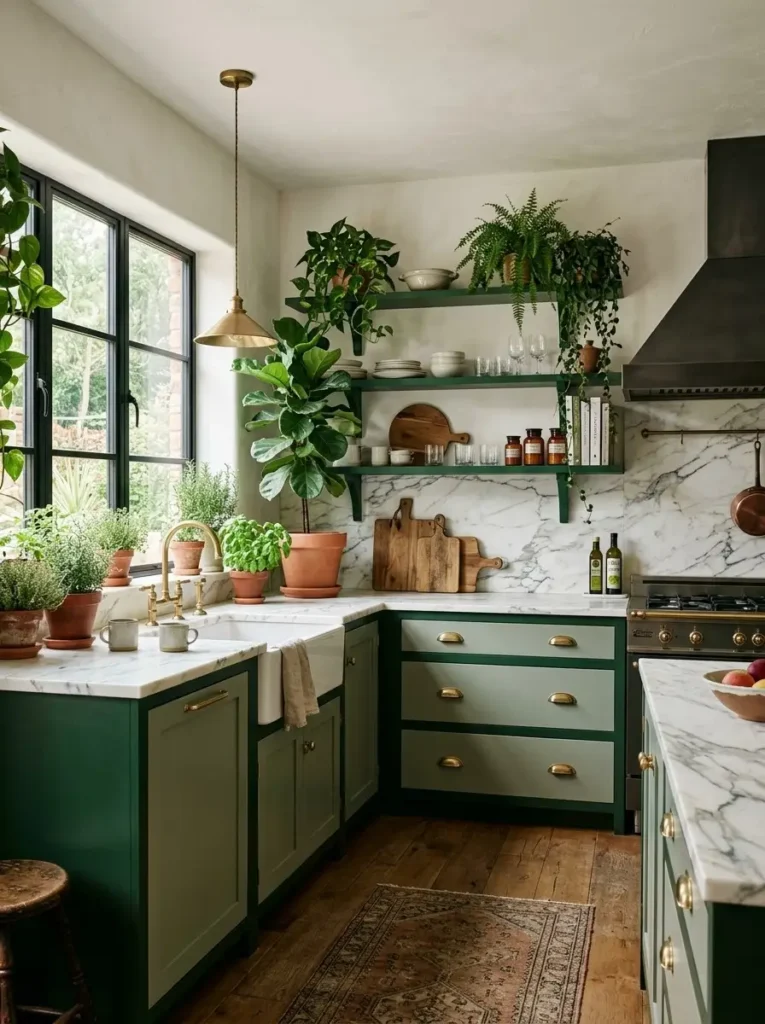
A built-in herb garden along your kitchen windowsill is the most deliciously practical way to merge nature with cooking. Imagine snipping fresh basil directly into a pasta sauce or tearing mint leaves into morning water all while infusing your kitchen with living greenery and intoxicating fragrance. Terracotta pots lined along a deep window ledge create an effortlessly charming display, connecting the indoors to whatever view lies beyond the glass, whether garden, yard, or simply open sky.Custom built-in herb niches can be designed with drainage channels and waterproof liners to make daily watering mess-free. Group herbs by their sunlight needs — rosemary, thyme, and basil thrive in direct sun, while parsley and cilantro prefer partial shade. Label each pot with hand-painted terracotta markers for an artisanal touch. Not only does this idea add fresh flavor to every meal, it also serves as a living, ever-changing piece of kitchen decor that evolves beautifully through the seasons.
05)Floor-to-Ceiling Garden View Windows
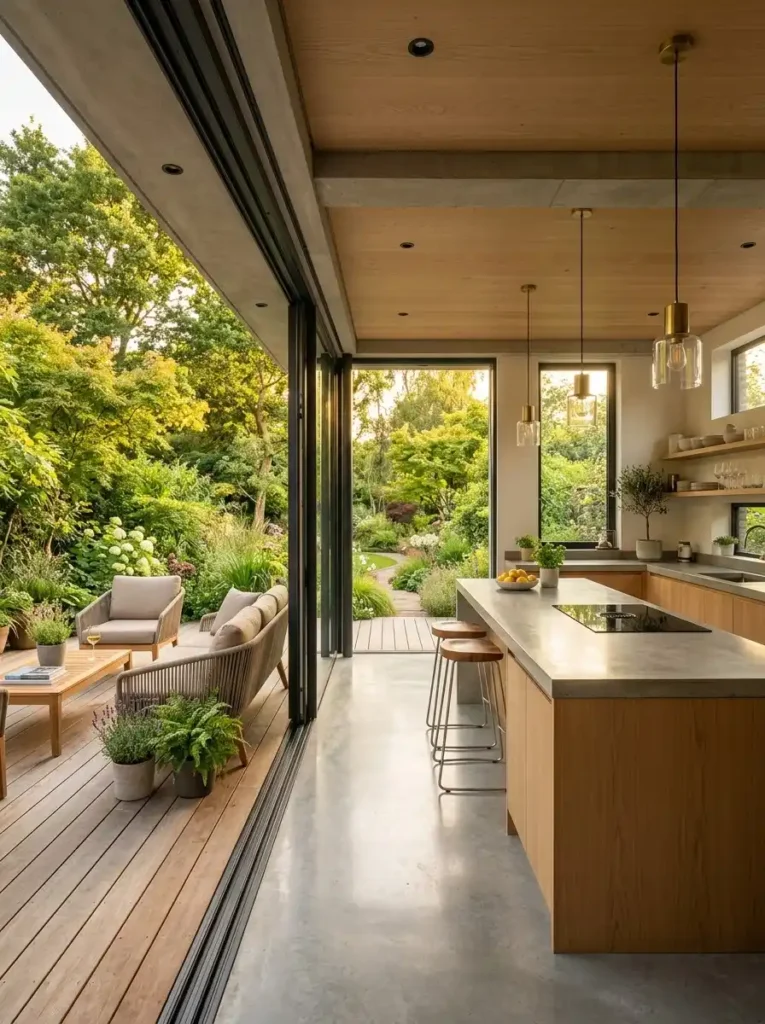
Nothing brings the outdoors inside quite as powerfully as an entire wall of glass overlooking a garden. Floor-to-ceiling windows or glass sliding doors dissolve the boundary between kitchen and nature, flooding the space with natural light and offering a living landscape as your constant backdrop while cooking. Whether your view is a manicured garden, a wildflower meadow, or a wooded backyard, the effect is transformative — every meal preparation becomes a meditative, scenic experience.When designing this feature, position your kitchen island or prep area to face the glass directly for maximum visual connection. Use frameless or slim-profile window systems to minimize visual interruption. On the practical side, consider exterior overhangs or UV-filtering glass to prevent overheating in summer without blocking the view. Interior window sills wide enough to hold trailing plants create a layered effect — the indoor greenery blending gently into the outdoor landscape beyond, creating a seamless, immersive garden tableau.
06)Handmade Ceramic & Earthenware Display
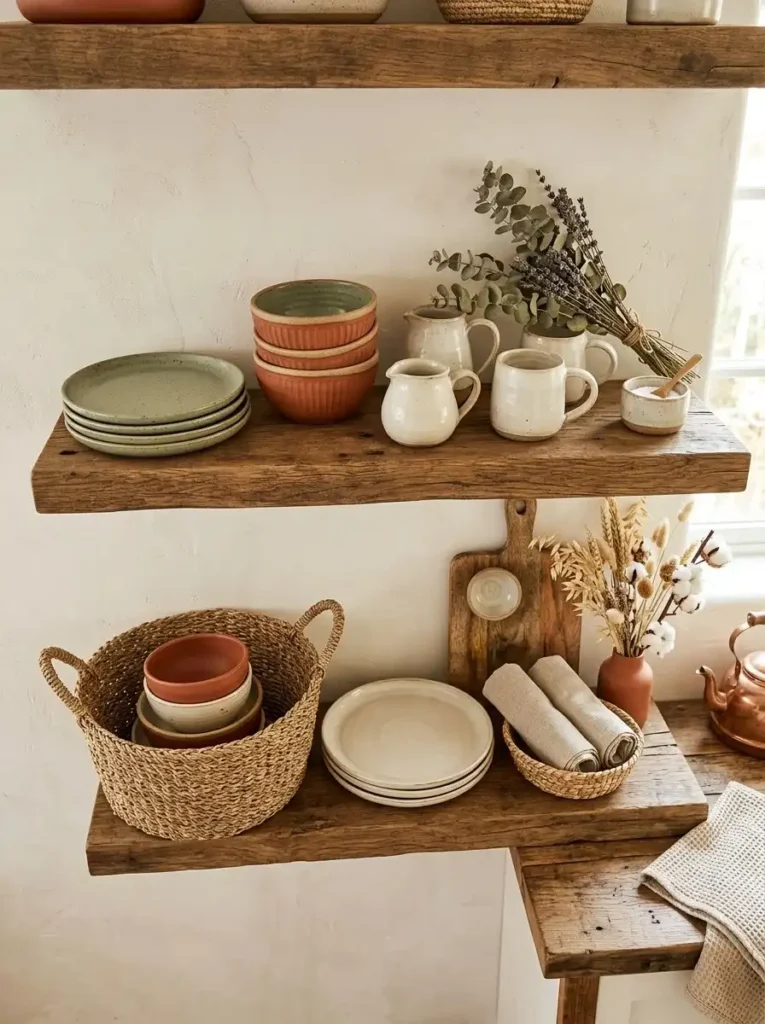
Swapping mass-produced kitchenware for handmade ceramics and earthenware is one of the simplest and most beautiful ways to introduce natural, tactile energy into your kitchen. Artisan pieces in terracotta, sage green, warm cream, or speckled earth tones echo the colors and textures of the natural world. Displayed on open shelving, they create a living gallery of organic form — each bowl, jug, or plate carrying the subtle irregularities that make handmade objects feel genuinely human and deeply personal.Seek out ceramics from local potters or small-batch makers, whose work often draws directly from natural forms and traditional earth-firing techniques. Group pieces by color family rather than matching sets for a collected, curated aesthetic. Intersperse the ceramics with small potted succulents, dried seed heads, or sprigs of preserved eucalyptus for a display that blurs the line between kitchen storage and nature-inspired still life
07)Sage & Forest Green Cabinetry
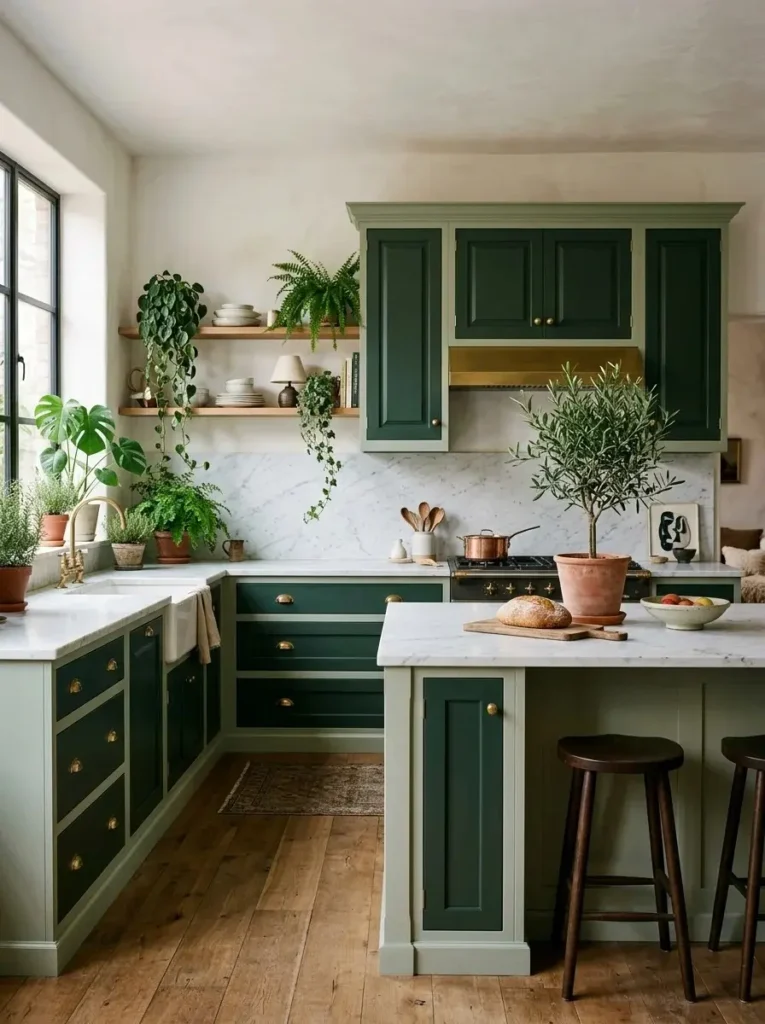
Green cabinetry is hands-down the most trending nature-inspired kitchen choice on Pinterest right now and for excellent reason. Shades ranging from muted sage to deep forest green immediately evoke the calming, grounding energy of the natural world. Unlike trendy colors that quickly feel dated, green cabinetry occupies a timeless intersection of sophistication and organic warmth. Paired with aged brass or matte gold hardware, it delivers a kitchen that feels like it belongs in a countryside manor or a Scandinavian farmstead.The spectrum of green allows for considerable personalization. Soft sage feels airy and Zen, ideal for smaller kitchens needing brightness. Deep bottle green or hunter creates drama and intimacy, perfect for larger spaces. Mix tones by using a lighter green on upper cabinets and a deeper shade below for visual depth. Complement the palette with natural stone countertops, warm wood open shelving, and abundant plants — the green cabinetry essentially becomes a backdrop that makes every botanical element look intentional and lush.
08)Rattan & Woven Pendant Lights
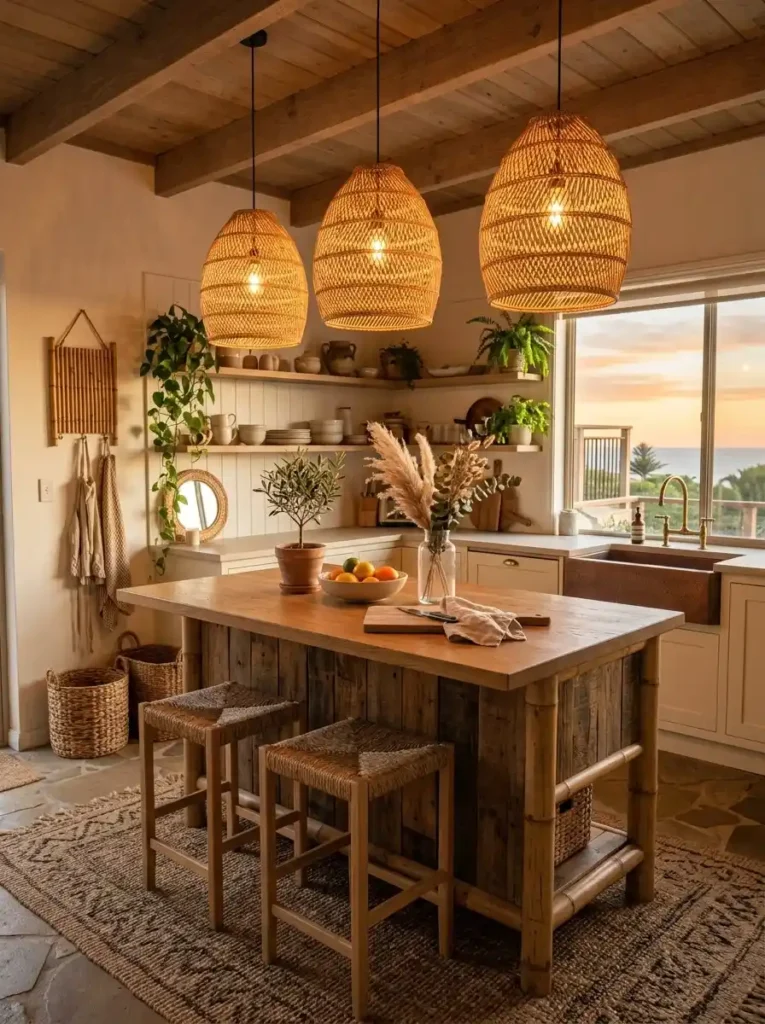
Lighting is often overlooked as a vehicle for natural texture, but rattan, bamboo, and woven pendant lights are transformative additions to any kitchen. When illuminated from within, these fixtures cast gorgeous dappled light patterns across the room — mimicking the effect of sunlight filtering through tree canopy or beach grass. Over a kitchen island or dining nook, a cluster of three woven pendants creates an immediate focal point that channels an effortless coastal or tropical warmth without any renovation required.Rattan pendants pair beautifully with almost every kitchen aesthetic, from bohemian to Japandi to coastal farmhouse. Their neutral, honey toned hues complement wood, stone, linen, and ceramic equally well. For maximum impact, choose pendants with open weave patterns that allow light to escape freely, creating a star-map effect on surrounding surfaces after dark. Layer with dimmer switches so you can shift the ambiance from bright and functional during meal prep to warm and atmospheric for evening entertaining versatile, beautiful, and unmistakably natural.
09)Quartzite Waterfall Island
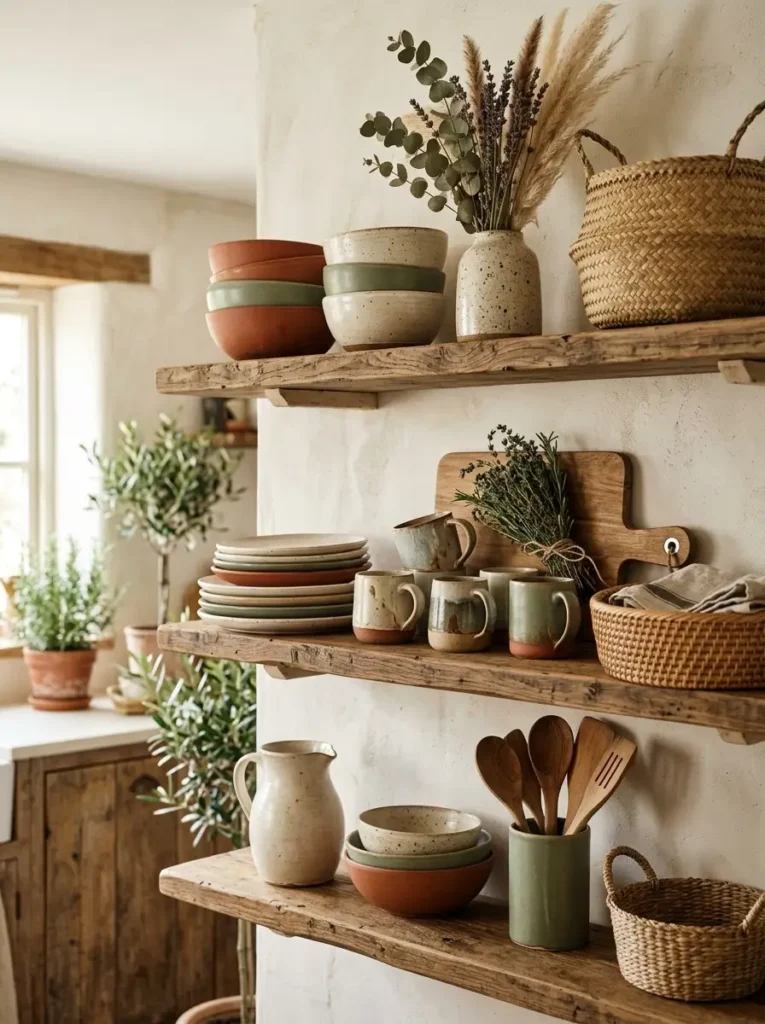
A quartzite waterfall island is one of the most breathtaking ways to introduce the beauty of geological nature into a kitchen.Unlike manufactured quartz, natural quartzite is formed under immense heat and pressure deep within the earth — and its dramatic veining, swirling minerals, and subtle translucency tell that story visually. A waterfall edge, where the stone continues seamlessly down the sides of the island to the floor, transforms the countertop into a sculptural installation that anchors the entire kitchen with majestic presence.Quartzite comes in a remarkable range of nature-inspired tones cloud white with silver veins, sea-foam green threaded with gold, or smoky grey reminiscent of stormy skies. Each slab is completely unique, meaning your kitchen island becomes a one-of-a-kind natural artifact.Pair the island with warm wood or matte black cabinetry to let the stone be the hero. Add bar stools in leather or woven natural fibers to complete the look with complementary organic textures that echo the island’s geological origins.
10)Botanical Print Wallpaper Nook
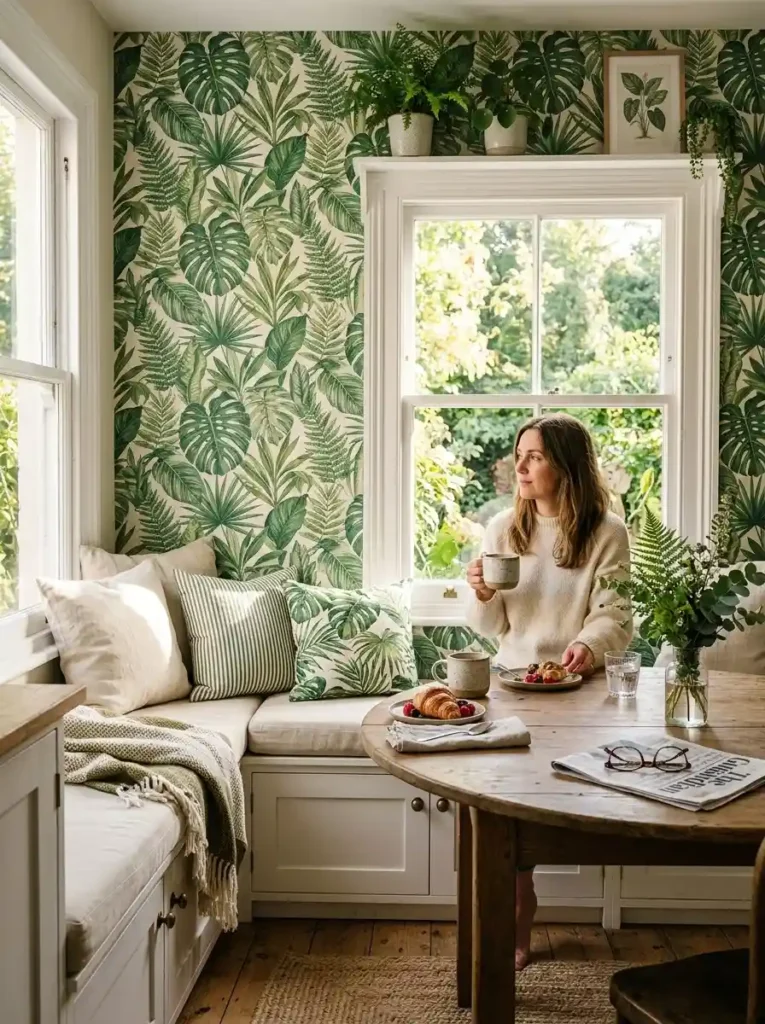
A botanical print wallpaper in a kitchen nook or breakfast corner instantly creates a lush, garden within the home atmosphere.Oversized tropical leaves, hand-illustrated wildflowers, or delicate fern fronds in watercolor or block print style bring the feeling of being surrounded by nature without a single actual plant required. The nook becomes a destination a cozy pocket of the kitchen that feels categorically different from the functional prep zones, inviting you to slow down, linger over coffee, and breathe in the visual richness.Choose wallpaper with a matte or linen texture finish for a more organic, artisanal feel over glossy alternatives.Cream, ochre, or sage backgrounds with botanical motifs in deep greens, rust, and charcoal create the warmest, most inviting color stories.Complement the wallpaper with a built-in window bench in natural linen or boucle fabric, adding a woven rattan tray table and a small terracotta pot with a trailing plant. The combination of printed and living botanicals creates a depth that is genuinely stunning in its layered naturalness.
11)Bamboo Cabinet Fronts
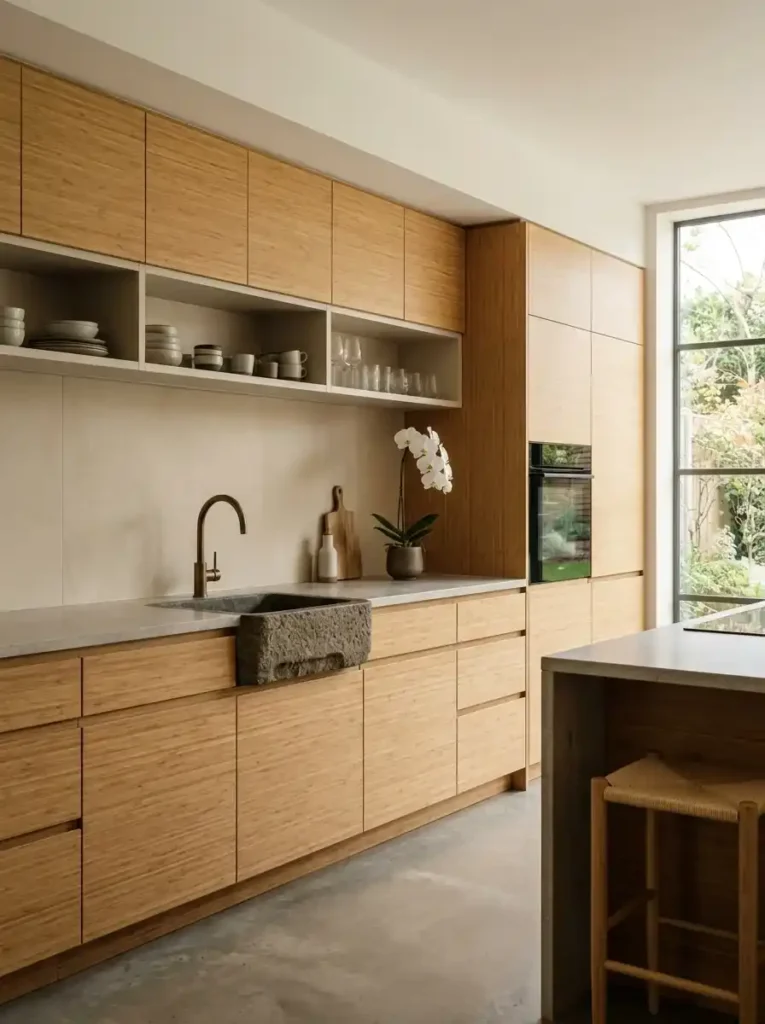
Bamboo is the superstar of sustainable natural materials it grows incredibly fast, sequesters carbon efficiently, and produces a surface of remarkable strength and beauty. Bamboo cabinet fronts bring a warm, linear grain texture to the kitchen that is distinctly different from traditional wood, carrying a lighter, almost luminous quality that feels fresh and contemporary.The material sits perfectly within Japandi, minimalist, or coastal aesthetic frameworks, where its clean lines and organic warmth feel entirely at home.Modern bamboo cabinetry is available in strand-woven forms that are harder than most hardwoods and highly moisture-resistant important in kitchen environments.Natural, caramelized, and charcoal-toasted bamboo finishes offer a range from pale honey to rich espresso tones, giving considerable design flexibility. Pair bamboo fronts with a stone or concrete countertop and simple matte hardware for a refined Japandi look. Alternatively, combine with rattan accents and warm terracotta accessories for a more relaxed coastal or boho-natural vibe. Either way, the material tells a sustainable, nature-connected story.
12)Dried Flower & Pampas Grass Arrangements
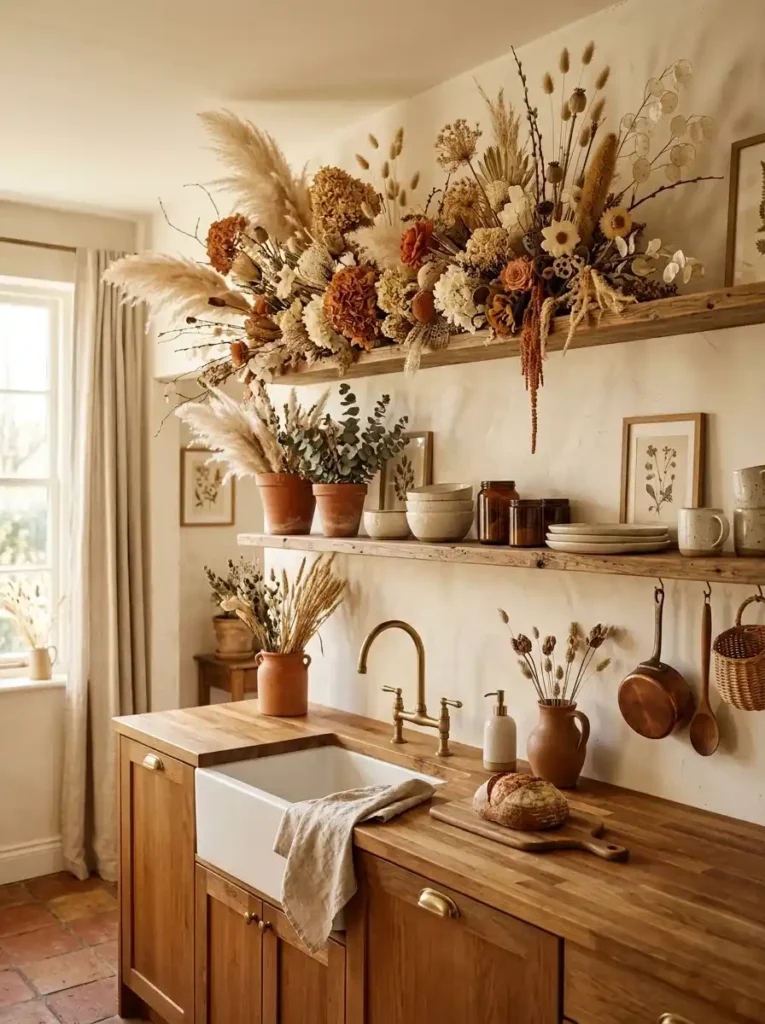
Dried botanicals have become a beloved fixture of the nature-inspired kitchen aesthetic, offering the beauty of the outdoor world in a low-maintenance, enduringly elegant form. Pampas grass plumes in their creamy white or blush tones, dried cotton stems, preserved eucalyptus, and bundles of lavender bring soft, organic volume to shelves, countertops, and window corners without any watering or wilting. Their muted, earthy palette straw golds, faded roses, pale greens feels utterly harmonious in kitchens with natural material finishes.Large arrangements of pampas grass in oversized ceramic or stoneware vases make striking floor-level statements in kitchen corners, while smaller bundles tied with linen twine can hang from ceiling beams or kitchen hooks in artful clusters. Mix varieties for textural interest — feathery grasses contrasted with stiff wheat stems and soft dried blooms create visual complexity that’s richly layered. The beauty of dried botanicals is their longevity: properly arranged, they hold their beauty for months or even years, transforming gradually with the seasons in the most poetic of ways.
13)Hammered Copper Farmhouse Sink
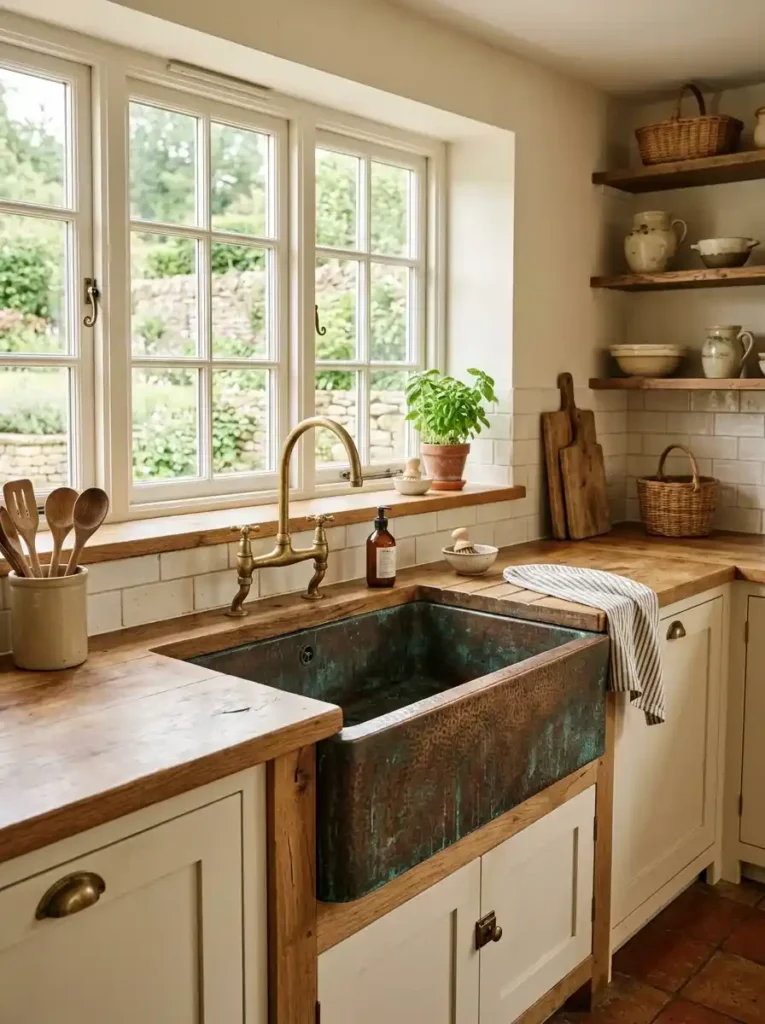
A hammered copper farmhouse sink is a statement fixture that brings the warmth and richness of the natural world directly into your kitchen’s most used element. The characteristic hand-hammered texture mimics naturally formed surfaces beaten metal, river smoothed stone, the patterned bark of ancient trees. Over time, copper develops a living patina that deepens and shifts with use, making the sink an ever-evolving natural artifact that actually becomes more beautiful as years pass. No two sinks age in exactly the same way.The warm amber tones of copper pair magnificently with dark walnut cabinetry, sage green paint, or rustic stone countertops, anchoring the kitchen in an artisanal, nature-connected aesthetic. Copper is also naturally antimicrobial, offering a functional benefit that aligns beautifully with its organic origins.Pair the sink with an unlacquered brass faucet to allow both metals to develop their patinas harmoniously. The resulting combination looks like something discovered in a centuries old countryside kitchen timeless, individual, and saturated with natural character.
14)Reclaimed Wood Ceiling Beams
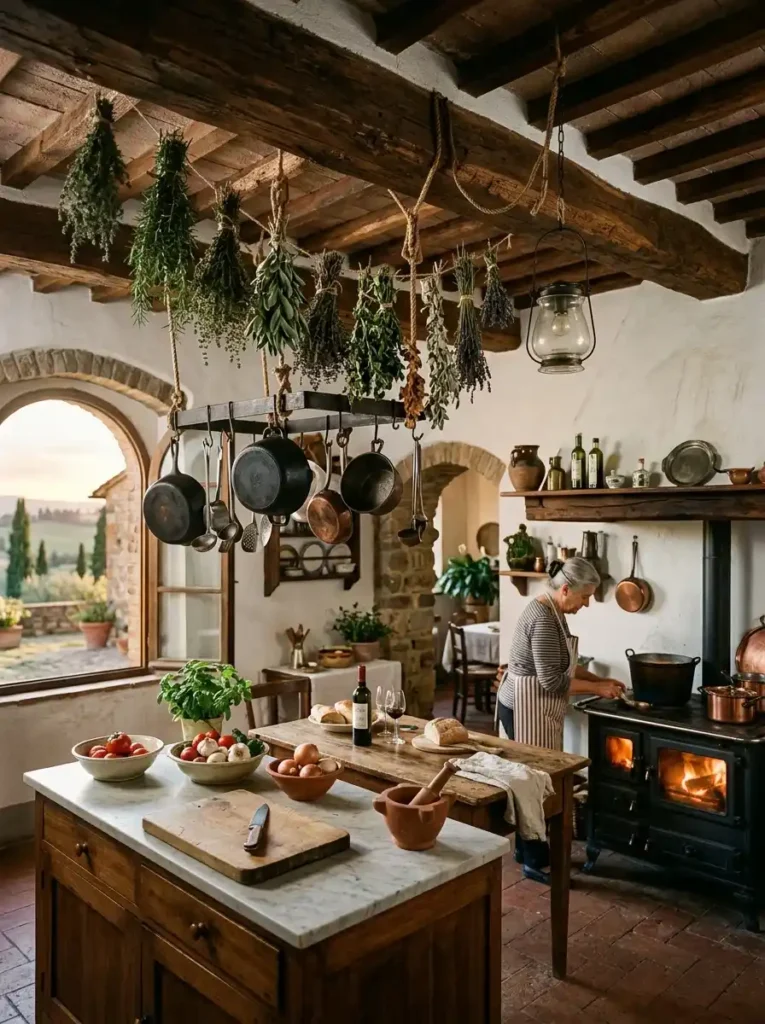
Exposed reclaimed wood ceiling beams are one of the most architecturally powerful ways to introduce raw, outdoor character into a kitchen. Sourced from old barns, factories, and demolished structures, reclaimed beams carry centuries of weathering split grain, nail holes, saw marks, and silver-grey oxidation that tell a story no new timber can imitate. Installed overhead, they bring the visual weight and warmth of a forest into the room, creating a sense of sheltered, organic grandeur that transforms an ordinary kitchen into something truly memorable.Reclaimed beams work beautifully in both rustic and contemporary kitchen settings. In a modern white kitchen, dark weathered beams provide grounding contrast and visual drama. In a more traditional space, they reinforce an heirloom character that feels deeply authentic. Use the beams functionally by hanging a wrought iron pot rack or suspending fresh cut herbs to dry in bundles a practice that is as visually beautiful as it is culinarily useful.Every glance upward becomes a connection to the wild, aged, and wonderfully imperfect world of nature.
15)Terracotta Tile Flooring
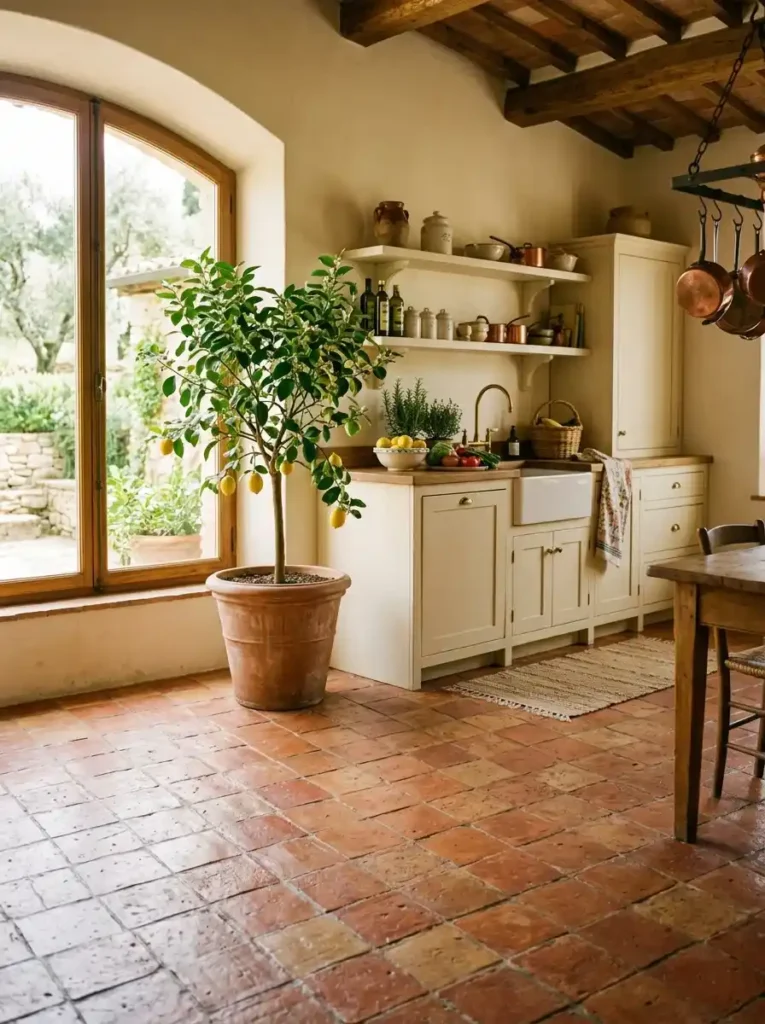
Terracotta tile flooring is the embodiment of earth underfoot literally, since these tiles are formed from raw clay and fired at high temperatures, producing the warm red-orange tones of the earth’s soil. Installing terracotta tiles in the kitchen creates an immediate sense of Mediterranean, Provençal, or Mexican warmth that invites bare feet and slow mornings. Their natural variation in color and slight surface irregularity makes each tile unique, and their ability to absorb and radiate warmth makes them physically as well as visually grounding.Modern terracotta is available sealed and unsealed, with sealed versions being easier to maintain in a kitchen environment. Pair terracotta floors with whitewashed plaster walls, hand painted Talavera tile accents, and woven jute rugs for a full Mediterranean kitchen experience. Alternatively, let the flooring sing against more contemporary minimalist white cabinetry for a fresh, fashion-forward contrast.An indoor lemon or olive tree in a large terracotta pot placed beside the kitchen island completes the picture a sunlit scene that feels plucked from the Italian or Spanish countryside.
16)Statement Indoor Trees in the Kitchen
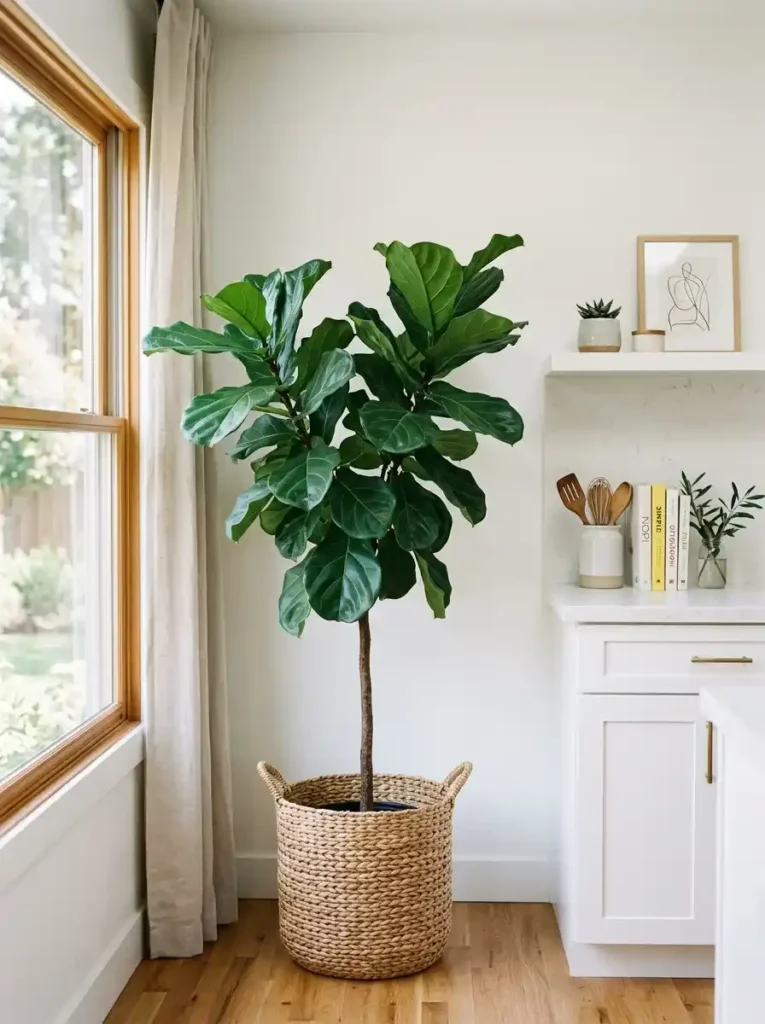
A large indoor tree placed in the kitchen is one of the boldest and most rewarding design decisions you can make.A fiddle leaf fig with its large, sculptural leaves, an olive tree with its silvery foliage, or a lush monstera with its dramatic fenestrated leaves each brings the vertical scale and visual majesty of the outdoor world inside. Positioned beside a window or in a bright kitchen corner,these trees function as living sculptures shifting subtly with each new leaf unfurling, growing visibly over months and years.Choose a planter that complements your kitchen’s materials woven seagrass baskets for a bohemian feel, concrete or stone for minimalist kitchens, or glazed terracotta for Mediterranean warmth.Water and light requirements vary by species, so research before purchasing to ensure a good match for your kitchen’s conditions.A well chosen indoor tree has the remarkable ability to make even the most modern, angular kitchen feel softened, alive, and genuinely connected to the natural world outside not as decoration, but as a thriving, breathing presence.
17Botanical Apothecary Pantry Shelving
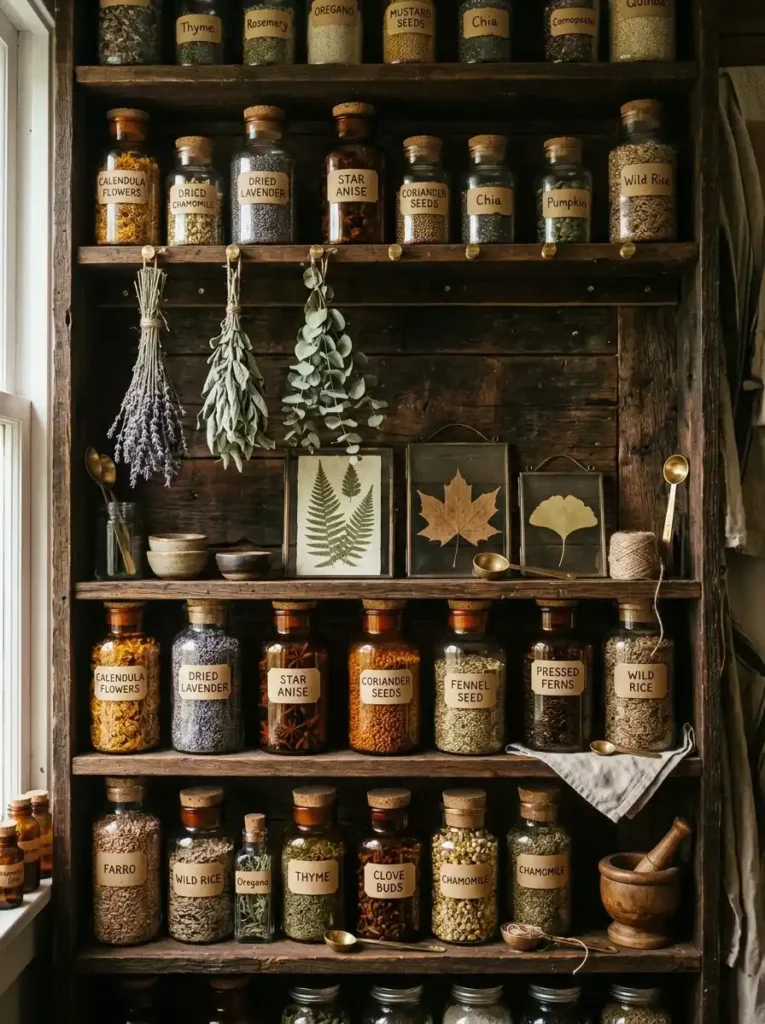
Transform your pantry shelves into a botanical apothecary display by storing dried herbs, grains, seeds, and loose teas in beautiful glass jars alongside small bundles of dried flowers, pressed botanical specimens, and natural curiosities.This approach merges the functional with the deeply aesthetic your storage becomes a curated display that tells a story of connection to the earth, to traditional food preservation, and to the cyclical abundance of nature.Amber glass jars, in particular, cast a warm, honey-toned light that is deeply atmospheric.Label jars with hand-lettered kraft paper tags tied with linen twine, or use elegant ceramic disc labels for a more permanent solution.Intersperse the jars with small fossils, seed pods, acorns, or pinecones gathered from walks and travels objects that carry nature’s most exquisite design work into your everyday kitchen environment. Vary jar heights and cluster by category to create visual rhythm along the shelves.The resulting pantry wall feels simultaneously like an old-world herbalist’s shop and a deeply personal, nature-connected kitchen shrine.
18)Raw Concrete Countertops with Wood Pairings
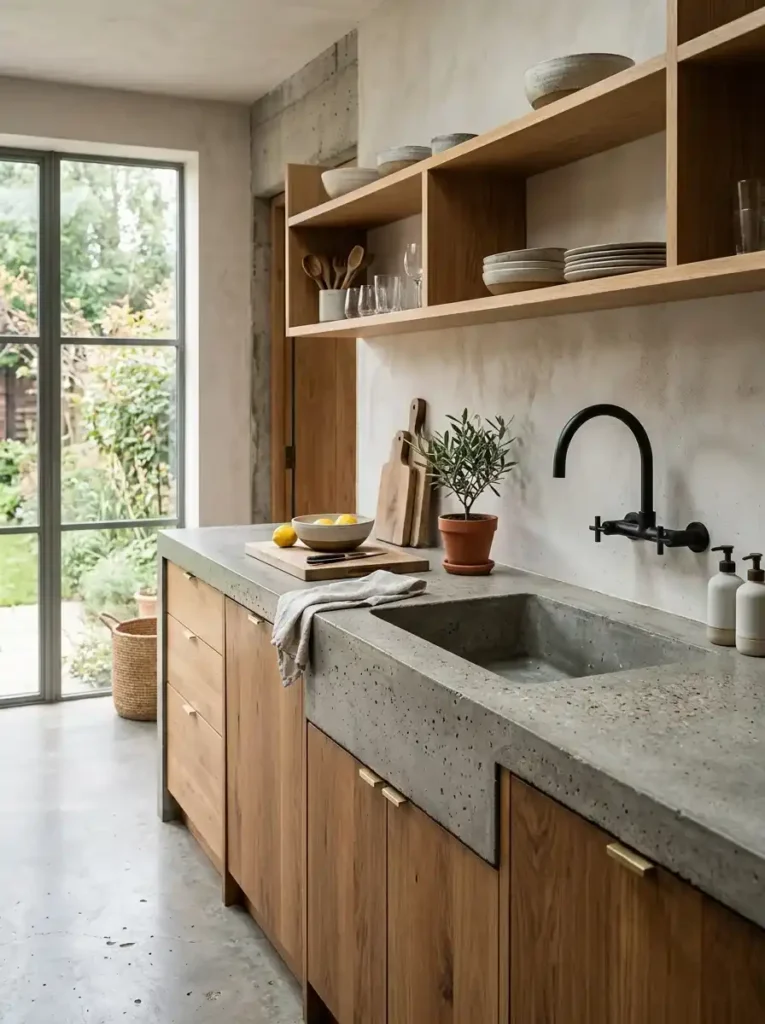
Raw concrete countertops bring the elemental,mineral quality of the earth directly into the kitchen workspace.Unlike polished or heavily treated concrete, a matte finish with visible aggregate small stones,sand granules,even embedded shells or pebbles makes the material’s natural composition visibly apparent and tactilely interesting. This approach echoes the feeling of working on a slab of natural rock, grounding the kitchen in a primal, geological energy that is simultaneously sophisticated and wildly organic.The cool neutrality of concrete creates a perfect canvas for warm wood cabinetry which introduces the necessary organic warmth to prevent the space from feeling cold.A concrete island paired with lower cabinets in warm oak or blackened pine, topped with hanging copper pots and a trailing plant cascade, strikes a deeply compelling balance between raw industrial and lush natural. Concrete is also highly customizable embed river pebbles, add pigment for earthy tones, or create a live edge concrete pour that mimics the organic silhouettes of natural stone formations.
19Hand-Painted Botanical Tile Backsplash
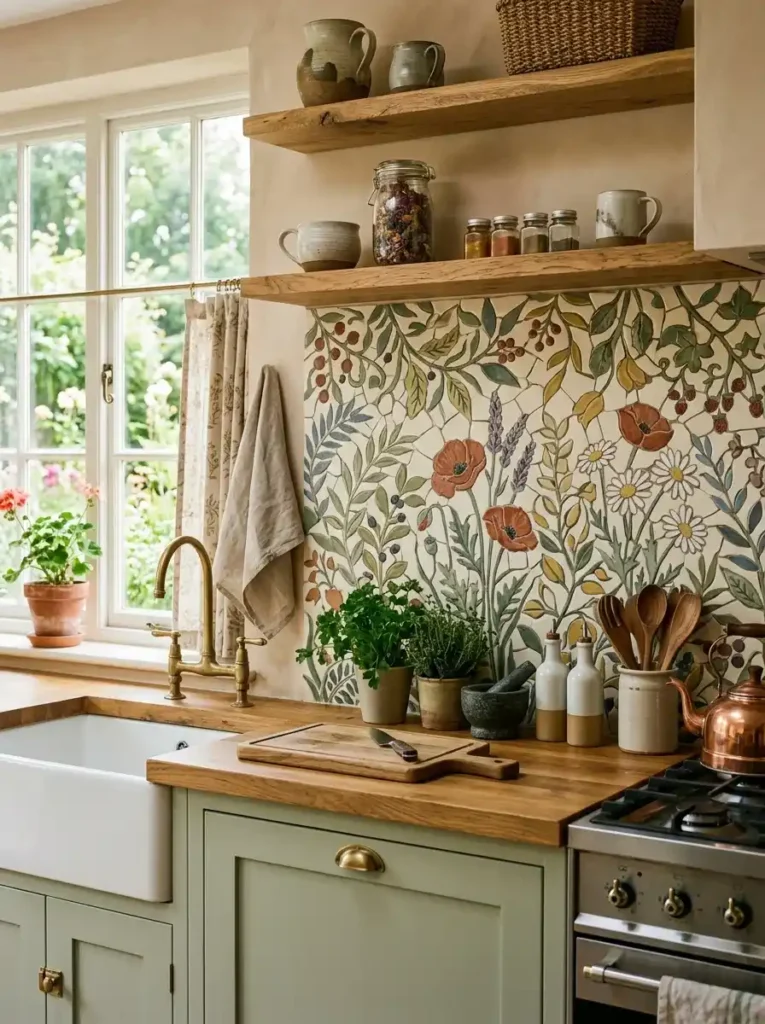
A hand-painted botanical tile backsplash is a kitchen feature that doubles as fine art. Whether you choose Talavera-style tiles painted with individual wildflowers, Moroccan zellige with leaf patterns, or bespoke handmade ceramics featuring
20)Living Moss & Plant Wall Panel
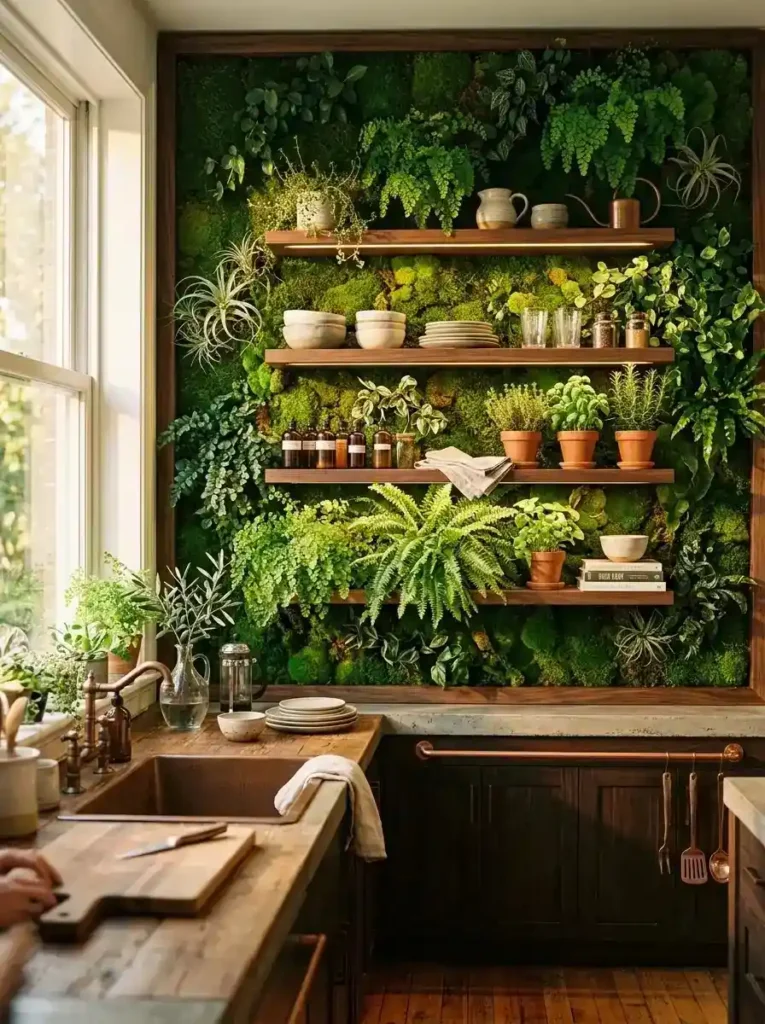
The ultimate nature-inside statement, a living moss and plant wall panel transforms an entire kitchen wall into a breathing, living artwork. Preserved moss panels require zero watering and maintenance while providing a perpetually lush, velvety green surface that is visually stunning in any kitchen setting. For the full living version, hydroponic vertical garden systems allow ferns, trailing plants, and even small herbs to thrive in modular panels creating a wall that genuinely grows and evolves, filling the kitchen with the quiet energy of a living forest.Install a living wall behind open shelving to create a layered composition where ceramics and objects float against a backdrop of living green it is, without question, the most photographed kitchen feature of the biophilic design movement. Preserved moss panels in a variety of green tones can be custom-cut to fit any wall configuration and require only occasional misting in dry climates. For either version, warm integrated lighting brings out the depth and richness of the greens after dark, turning your kitchen into a glowing, garden-within-the-home that is nothing short of extraordinary
.20 Kitchen Ideas That Bring the Outdoors Inside A Pinterest inspired guide to biophilic kitchen design.Save your favorites and start pinning .