11 Moody Neutral Living Room Ideas to Try
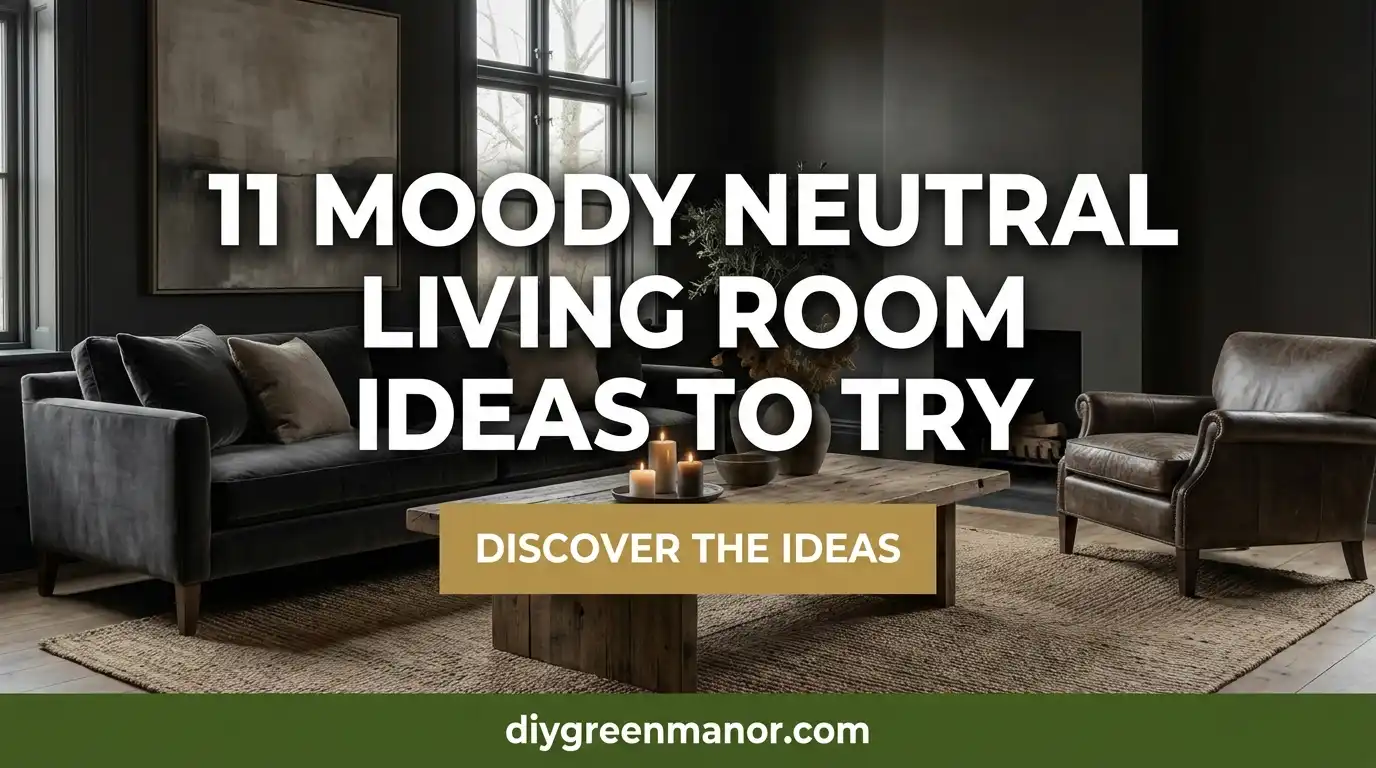
Designing a moody neutral living room is about mastering the art of balance, depth, and rich textural contrast. Moving away from stark, sterile whites and overly dark, cave-like spaces, the moody neutral aesthetic relies on saturated, earthy undertones—such as deep charcoal, warm espresso, muddy olive, soft greige, and rich taupe—to create an inviting, cinematic atmosphere. Rather than relying on bright pop colors to generate visual interest, this design philosophy relies heavily on subtle shifts in finish, dramatic shadow play, tactile fabrics, and architectural lighting.
A well-executed moody neutral space feels cozy, sophisticated, and deeply grounding. By layering natural elements like patinated leather, matte stone, washed linen, and warm vintage woods against a dark, enveloping backdrop, you can build a home environment that feels both high-end and deeply relaxing. Here are 11 moody neutral living room ideas to inspire your next home transformation on diygreenmanor.com.
1. Color-Drenched Charcoal & Greige Walls
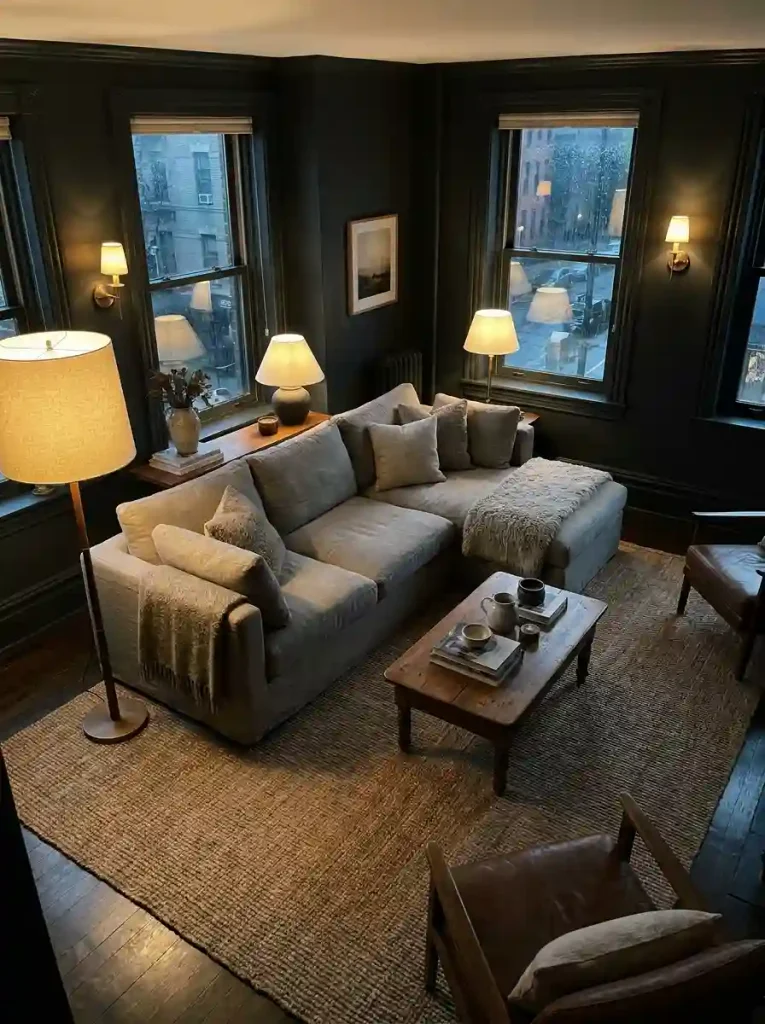
Color drenching is the ultimate technique for creating an enveloping, sophisticated atmosphere in a moody living room. Instead of painting only an accent wall or leaving baseboards bright white, apply a rich charcoal, deep taupe, or soft black paint across the walls, trim, doors, and ceiling in a matte or eggshell finish. Erasing high-contrast boundaries between architectural features softens the corners of the room, making dark walls feel expansive rather than claustrophobic, while providing a dramatic backdrop for light-colored furniture.
2. Rich Espresso & Cognac Leather Anchor Pieces
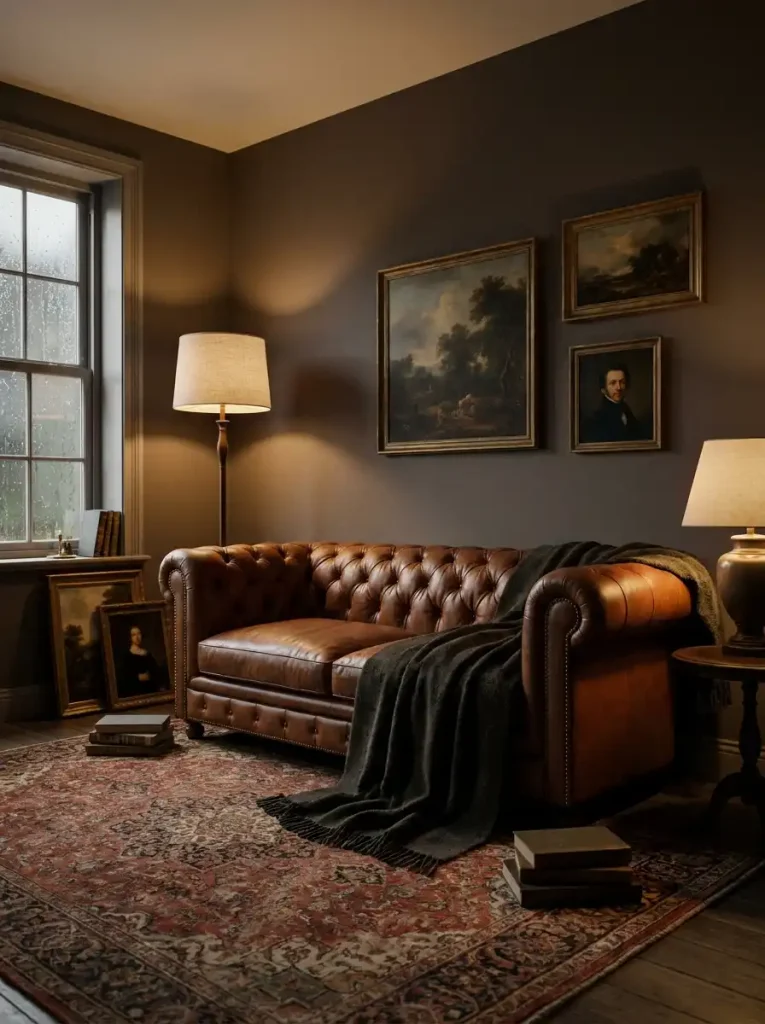
Warm, patinated leather introduces instant organic warmth and vintage character into a cool-toned, dark neutral room. Incorporating a Cognac leather sofa, an aged espresso leather armchair, or distressed leather poufs breaks up dark wall surfaces with rich amber tones. As natural light hits the worn surface of genuine leather, it reflects a soft, low-sheen glow that prevents a dark living room layout from feeling flat, cold, or overly monochromatic.
3. Tactile Bouclé, Velvet & Chunky Knit Layering
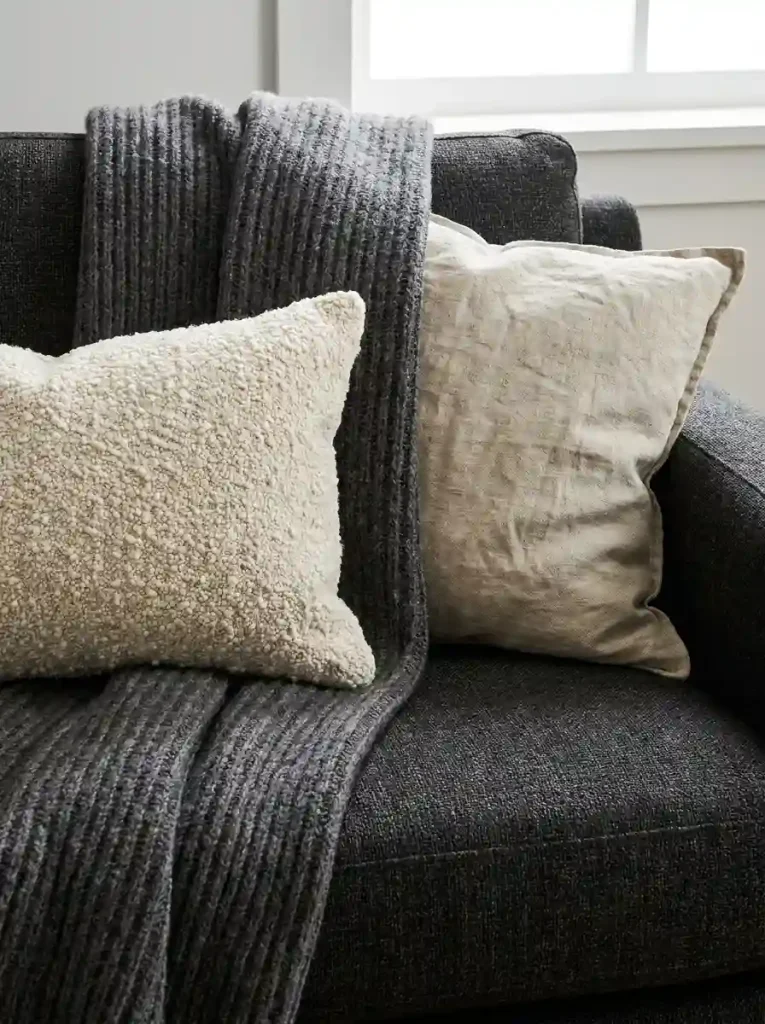
When working within a restrained color palette, texture becomes your primary design tool for creating visual warmth and depth. Layering contrasting materials—such as a plush velvet sofa, heavy bouclé accent pillows, washed linen drapes, and a chunky knit wool throw—creates a rich, tactile experience. These varied fabric surfaces catch light and absorb shadows differently throughout the day, ensuring your neutral living space remains visually dynamic, cozy, and multidimensional.
4. Low-Profile Dark Wood & Fluted Panel Accents
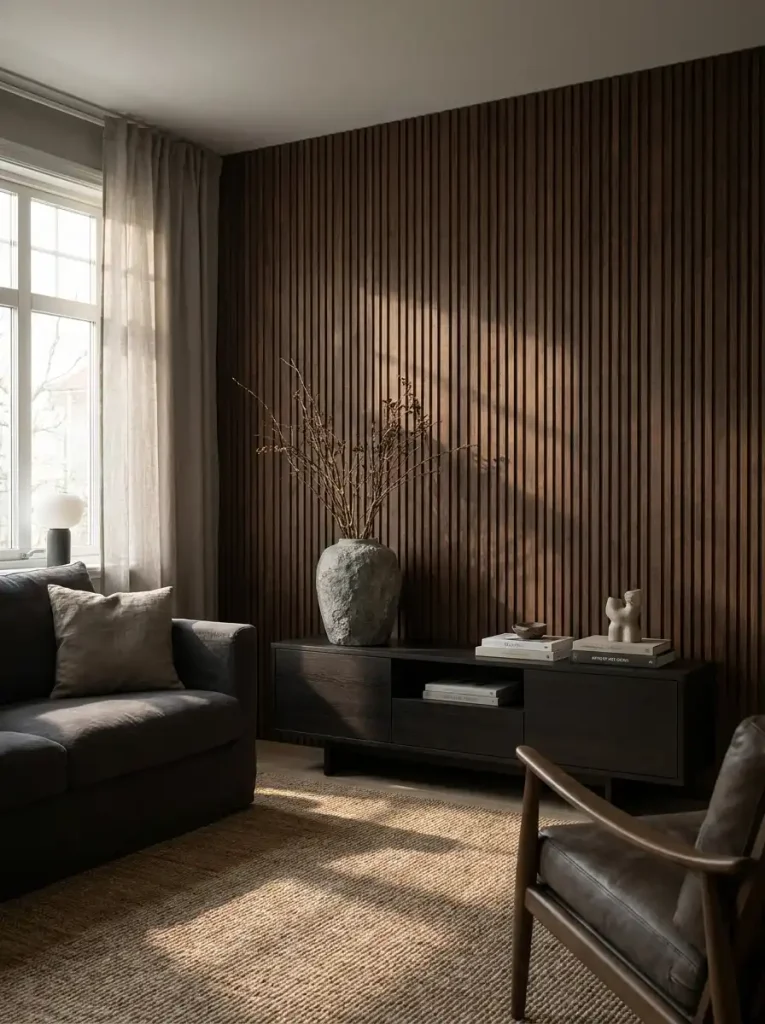
Dark wood tones like smoked oak, deep walnut, and charred ash bring structural grounding and natural elegance to moody interior spaces. Incorporating a fluted walnut feature wall, a low-profile dark wood credenza, or a heavy timber coffee table adds rich architectural detail without introducing jarring accent colors. The vertical lines of fluted panelling create subtle shadow grooves across the wall, enhancing the room’s atmospheric, custom-designed aesthetic.
5. Matte Honed Stone & Raw Travertine Coffee Tables
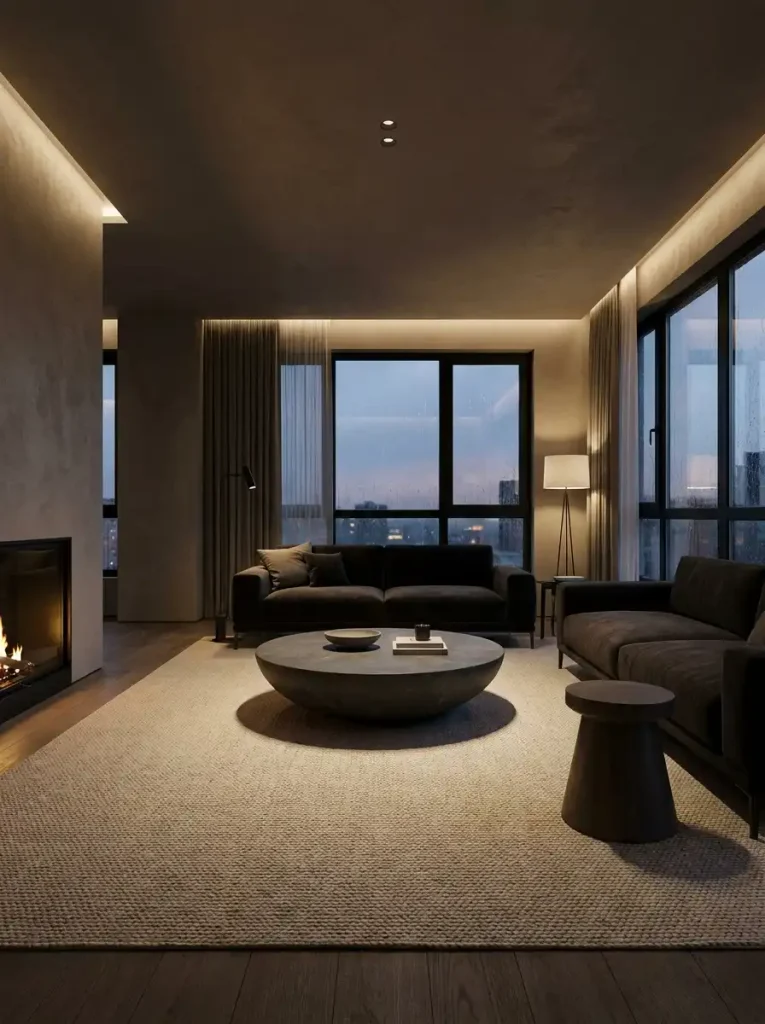
Swapping glossy glass or polished marble surfaces for raw, matte-finished stone introduces an earthy, grounded element into a dark neutral setting. A low-profile coffee table crafted from honed gray limestone, beige travertine, or dark slate offers a subtle, sculptural focal point in the center of your conversation area. The chalky, unpolished surface absorbs harsh overhead reflections, maintaining a muted, organic ambiance that aligns perfectly with a moody interior palette.
6. Architectural Ambient & Indirect Layered Lighting
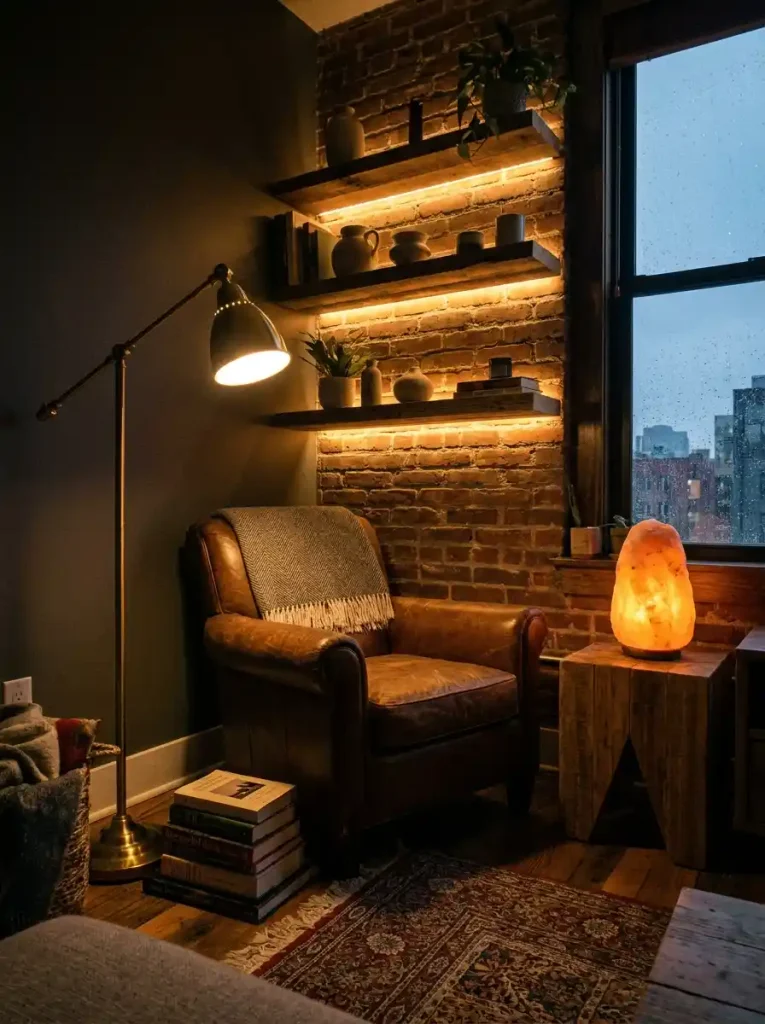
Proper lighting design is critical when executing a dark neutral color scheme; relying on a single bright overhead light fixture can wash out rich paint undertones and create harsh glares. Instead, build a layered lighting plan using warm-toned LED bulbs (2700K or lower). Combine slim floor lamps, directional brass wall sconces, indirect LED cove lighting hidden along shelving, and table lamps to cast soft pools of light and dramatic shadows that accentuate room corners and textured surfaces after dark.
7. Oversized Moody Landscape Art in Dark Wood Frames
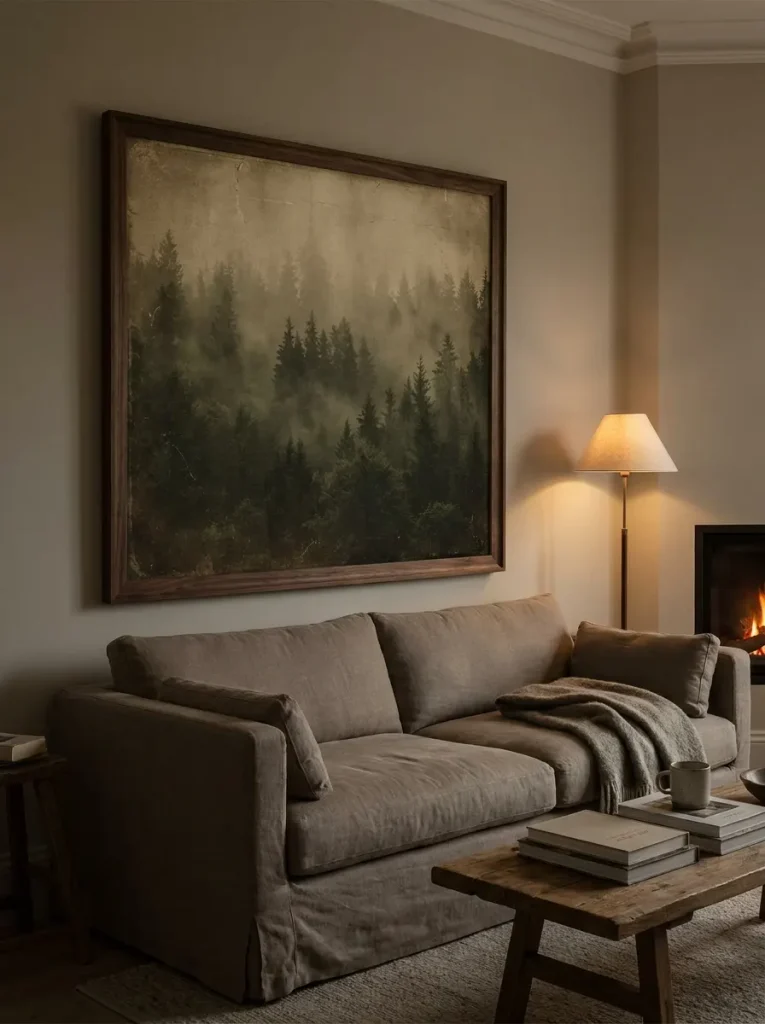
Art selection plays a major role in setting the tone of a moody neutral space. Replace bright, energetic prints with large-scale, atmospheric art—such as vintage oil landscape reproductions, foggy forest photography, or abstract sepia-toned brushwork. Framing large art prints in thick, dark walnut or antique gold frames creates an understated, museum-like focal point that grounds the main seating area without disrupting the room’s calm, contemplative energy.
8. Heavy Floor-to-Ceiling Velvet or Linen Drapery
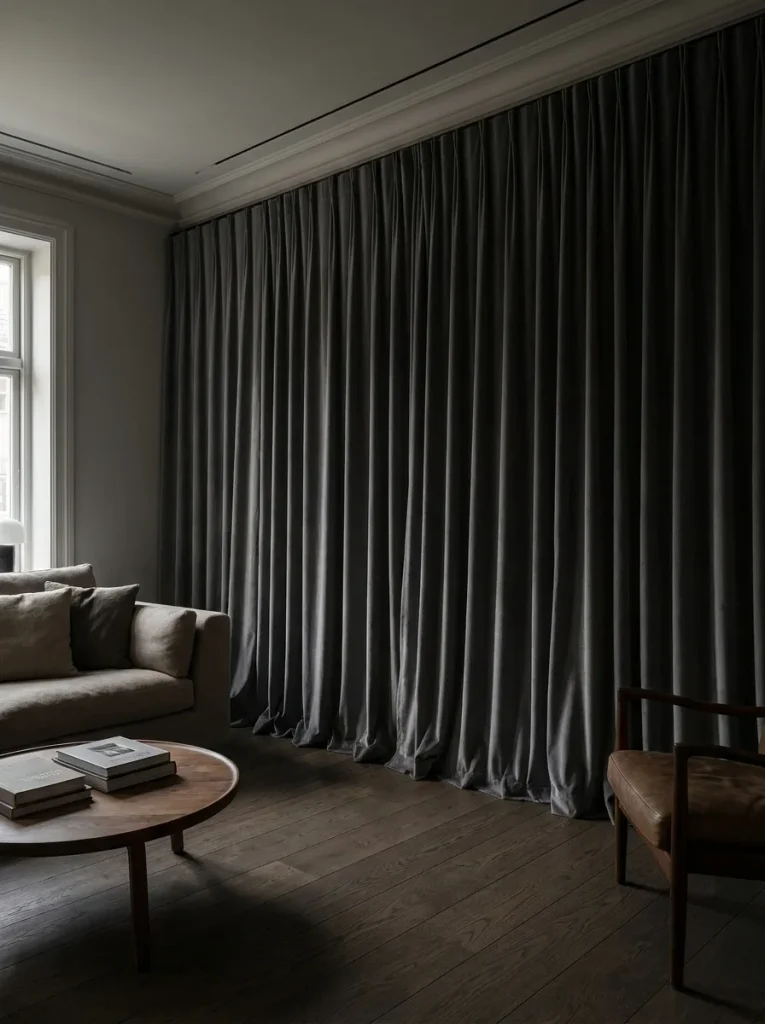
Window treatments in a moody neutral room should feel substantial, elegant, and intentional. Hanging heavy floor-to-ceiling drapery—made from dense velvet, thick slub linen, or wool blend fabrics in shades of charcoal, deep olive, or warm taupe—adds vertical height and soft architectural framing to your windows. Allowing the fabric to pool slightly on the floor adds luxurious weight while helping to absorb sound, making the space feel quiet, acoustic, and retreat-like.
9. Vintage Brass & Antique Bronze Metallic Touches
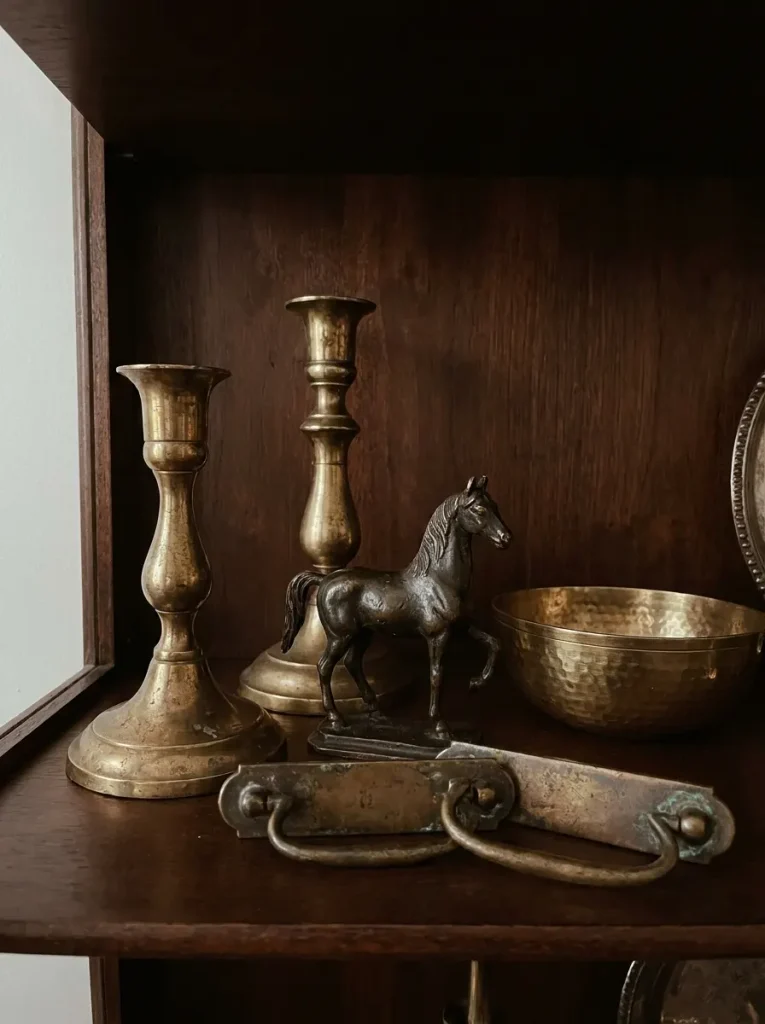
While shiny chrome and bright silver can feel overly cold against dark neutral backgrounds, warm metallic accents like aged brass, unlacquered bronze, and antique gold bring quiet luxury and warmth. Incorporating metallic elements through cabinet hardware, floor lamp bases, picture frames, and decorative bowls offers soft focal points that catch ambient light. Over time, unlacquered brass develops a natural patina that enhances the room’s timeworn, curated character.
10. Large-Scale Neutral Area Rugs with Subtle Motifs
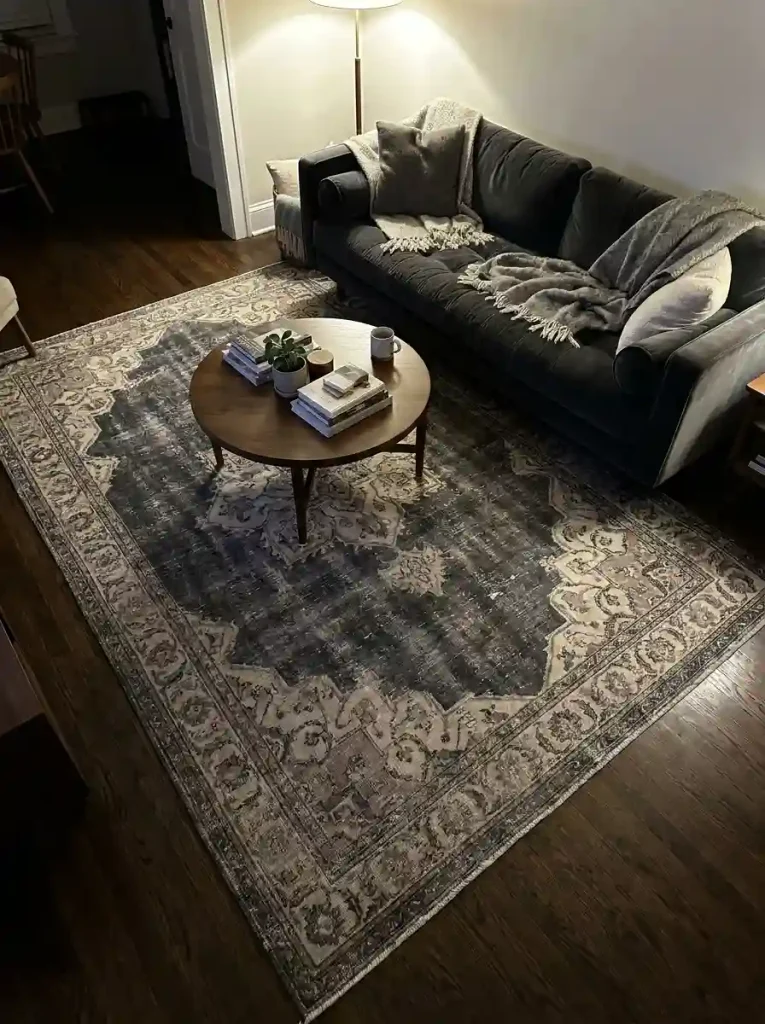
A tiny accent rug can cut up a dark floor plan, whereas a single, generously sized area rug unifies furniture arrangements and adds essential underfoot warmth. Opt for a large wool or flat-weave rug featuring subtle tone-on-tone patterns, faded vintage oriental motifs, or soft heathered neutral gradients. Selecting a rug that incorporates both light cream and dark charcoal threads bridges the contrast gap between dark walls and lighter upholstered furniture.
11. Sculptural Dried Botanicals & Deep Green Foliage
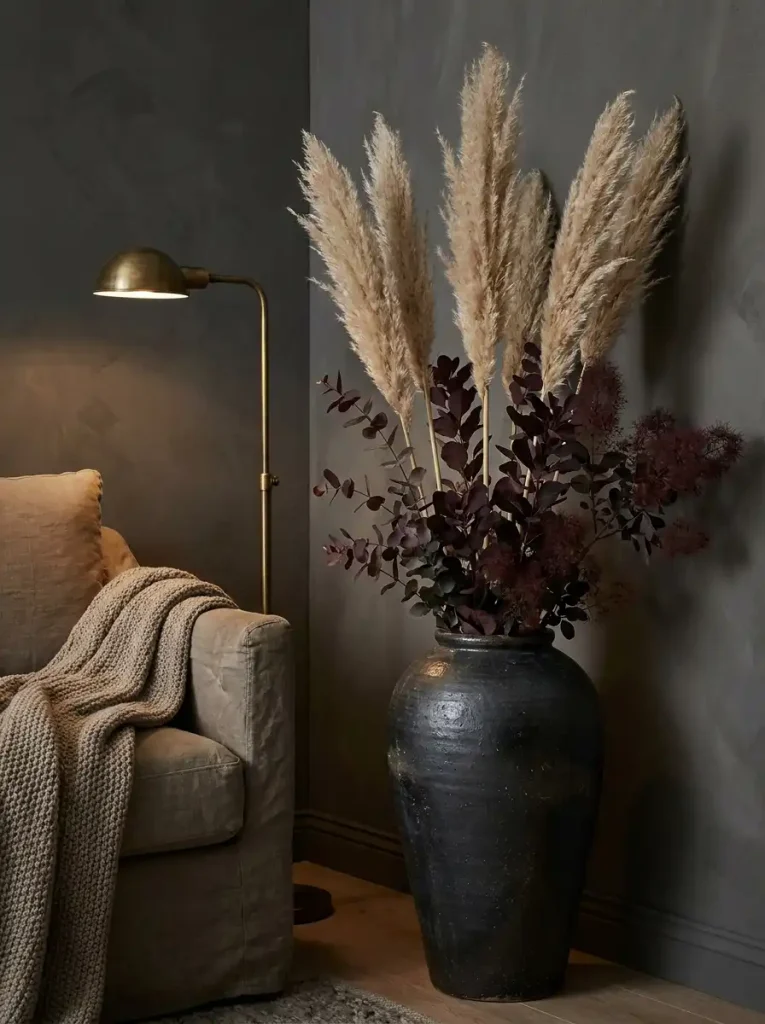
Bringing natural organic elements into a moody room prevents dark neutral color schemes from feeling static or lifeless. Instead of bright, fresh flowers, choose dramatic dried botanicals, such as dark preserved eucalyptus, dried lotus pods, tall pampas stalks, or deep burgundy olive branches placed in a rustic ceramic vase. The wild, sculptural branches introduce organic shapes, subtle height, and natural texture that soften sharp architectural lines.
Frequently Asked Questions (FAQ)
Will moody neutral paint colors make my small living room look smaller?
Not necessarily. While light colors reflect light, dark neutral colors (especially when applied using the color-drenching method across walls, trim, and ceilings) blur the boundaries of a room. Because the eye cannot easily identify where the walls end and the ceiling begins, dark moody colors can actually create an illusion of infinite depth, making a compact space feel expansive, cozy, and intentionally styled.
How do I keep a moody neutral living room from feeling too dark or depressing?
The secret to avoiding a gloomy space lies in textural variance and proper lighting design. Incorporate plenty of light-reflecting natural textures—such as warm Cognac leather, cream wool rugs, brass accents, and raw stone. Additionally, avoid using cold overhead fluorescent lights; instead, layer warm ambient lamp lighting (2700K color temperature) at varying heights throughout the space to create soft, inviting shadows.
What are the best paint undertones for a cozy, moody neutral living room?
Avoid cold, blue-based grays, which can make a dark room look icy and sterile. Instead, opt for dark neutrals with warm, earthy undertones—such as charcoal grays with brown/taupe undertones, muddy olive greens, deep espresso browns, or rich, muted dark teals. Popular choices include warm charcoal shades that look soft and inviting under both natural daylight and warm evening lamp light.