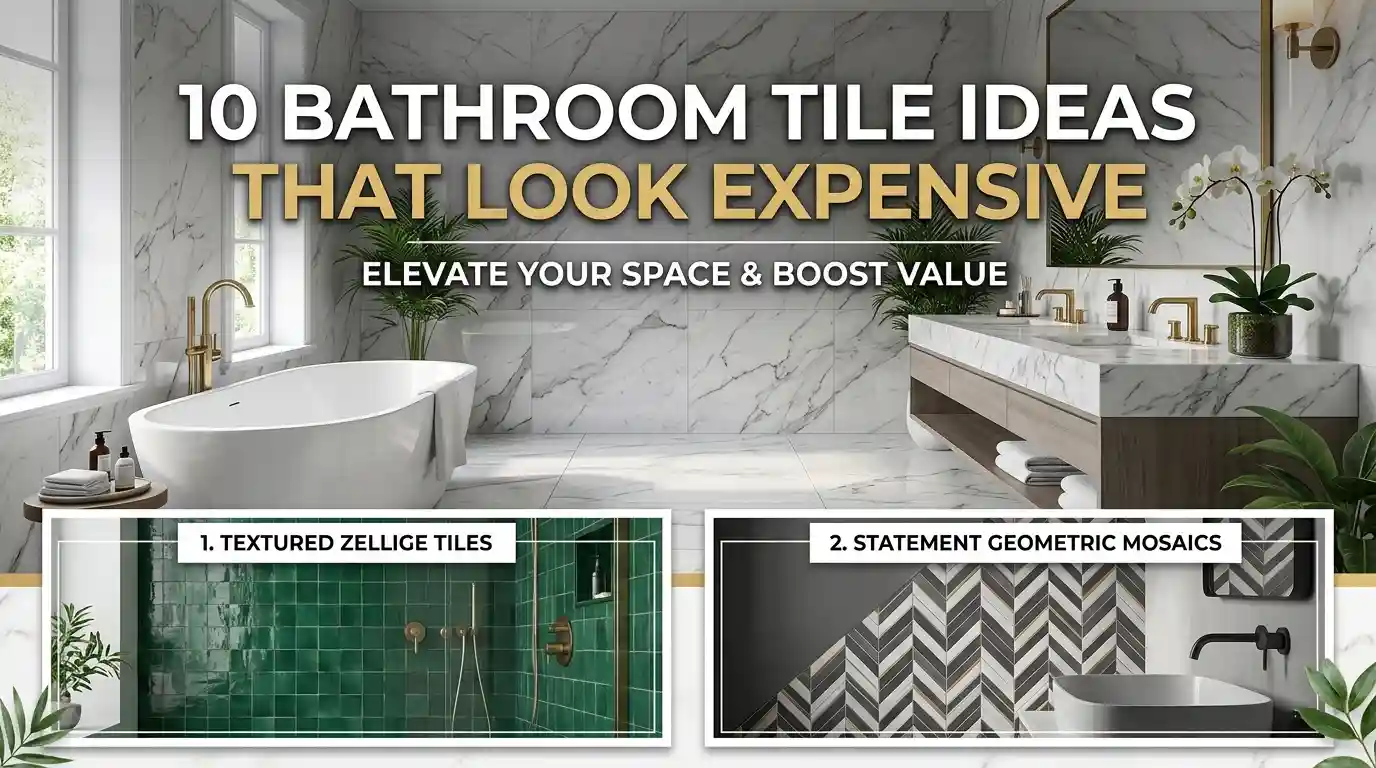
10 Bathroom Tile Ideas That Look Expensive
You don’t need an enormous renovation budget to make your bathroom look luxurious. The right tile can instantly elevate an ordinary space by adding texture, pattern, contrast, and architectural interest. From timeless marble-look porcelain to dramatic floor-to-ceiling tile, today’s designs offer plenty of ways to create a high-end appearance without relying on expensive materials. These 10 bathroom tile ideas that look expensive combine elegant finishes with practical styling ideas for bathrooms of different sizes and decorating styles.
1. Large-Format Marble-Look Tile
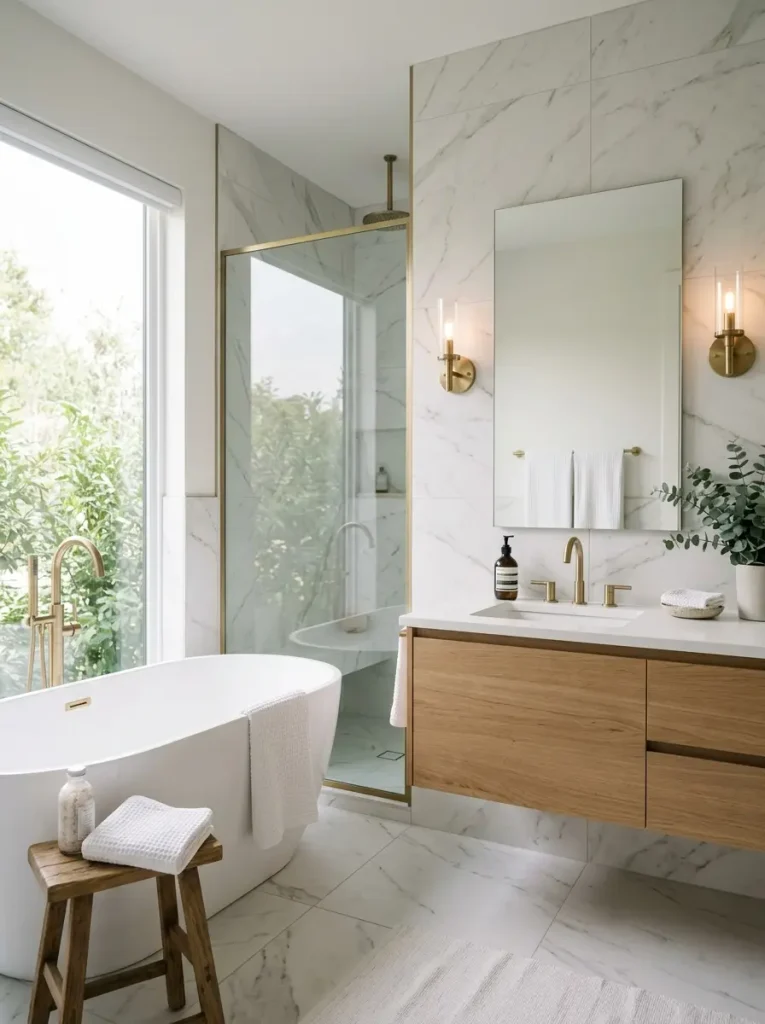
Large-format marble-look tiles are one of the easiest ways to create a luxurious bathroom appearance. Oversized tiles with subtle gray or beige veining minimize grout lines, giving walls and floors a more seamless and expensive-looking finish. Porcelain options can provide the appearance of natural marble while offering practical durability.
Use the same tile across the floor and shower walls for a cohesive, architectural look. Keep the rest of the finishes simple with warm wood, brushed brass, or matte black fixtures. The fewer competing materials you introduce, the more sophisticated the marble effect will appear.
2. Classic White Subway Tile with Dark Grout
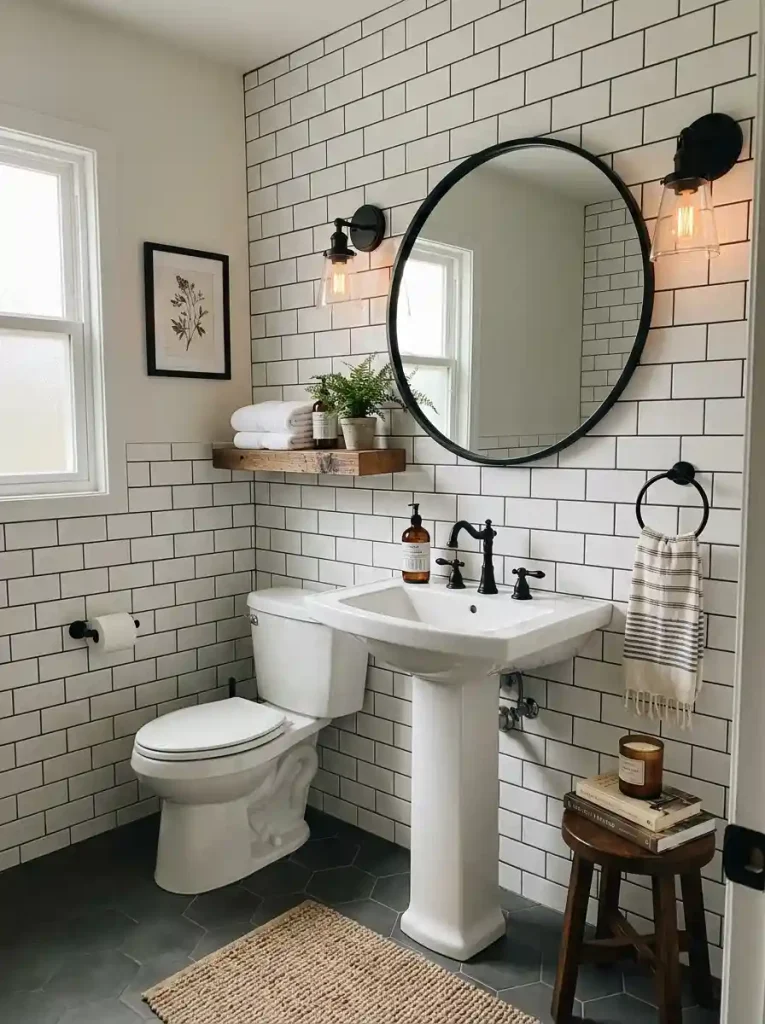
White subway tile becomes much more sophisticated when installed thoughtfully. Instead of using standard white grout, choose a contrasting charcoal or medium-gray grout to emphasize the tile pattern and create crisp architectural lines. This simple combination can give a bathroom a custom-designed appearance.
Use the tile throughout the shower or across an entire feature wall, then balance it with warm wood, black fixtures, and simple lighting. A round mirror or vintage-inspired accessories can add character without making the room feel dated. The result is timeless, affordable, and surprisingly luxurious.
3. Floor-to-Ceiling Stone-Look Tile
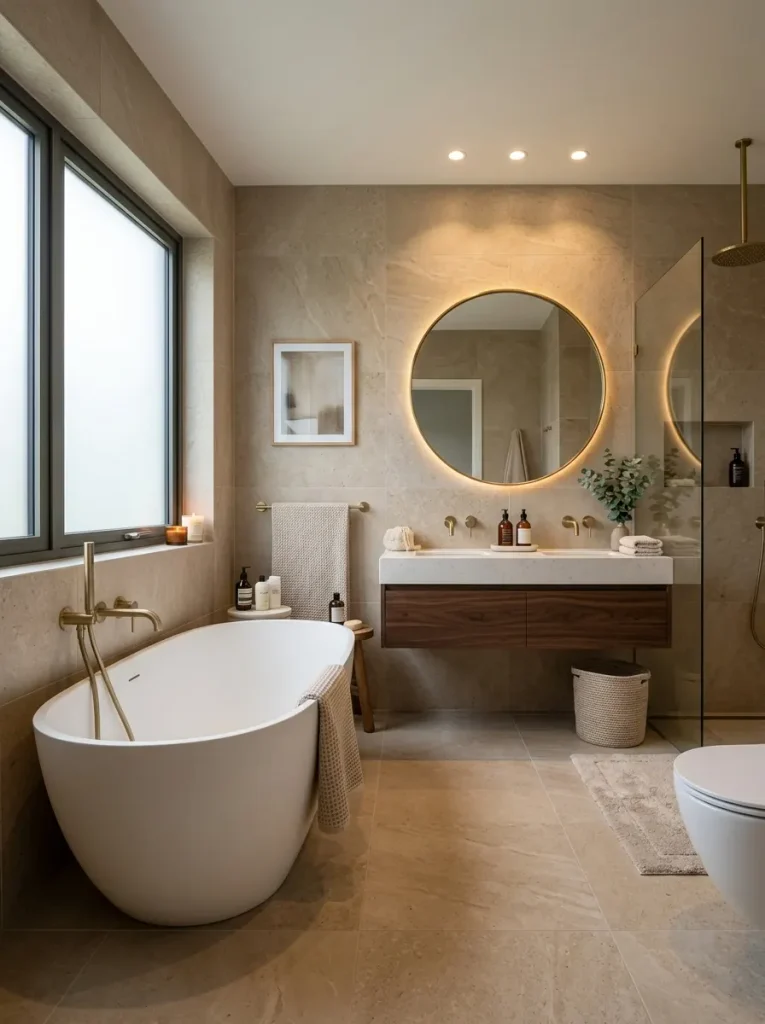
Taking tile all the way from the floor to the ceiling can make a bathroom feel significantly more luxurious. Stone-look porcelain in warm beige, taupe, or soft gray creates a continuous surface that visually expands the room while adding architectural depth.
Use minimal grout lines and consistent tile placement to emphasize the seamless effect. Pair the stone-look backdrop with a floating vanity, sculptural bathtub, and elegant lighting. Keeping the palette restrained allows the tile to become the primary luxury feature without making the room feel overly decorated.
4. Zellige-Style Handmade Tile
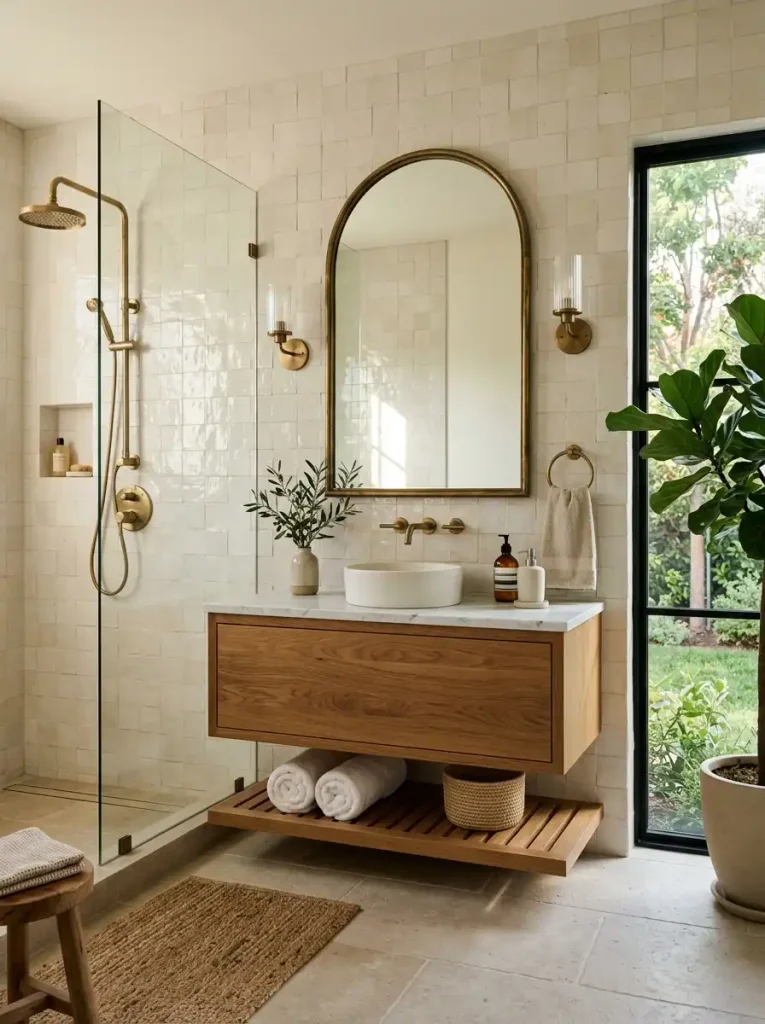
Zellige-style tile adds handcrafted character through its slightly irregular edges and variations in color and texture. Even when using modern versions inspired by traditional Moroccan tiles, the subtle imperfections can make a bathroom feel custom and thoughtfully designed.
Choose soft ivory, cream, pale sage, dusty blue, or warm beige for a sophisticated appearance. Use the tile behind the vanity or throughout the shower area and pair it with natural wood and aged brass. Simple imperfections become part of the beauty, creating an elevated organic aesthetic.
5. Statement Checkerboard Floor
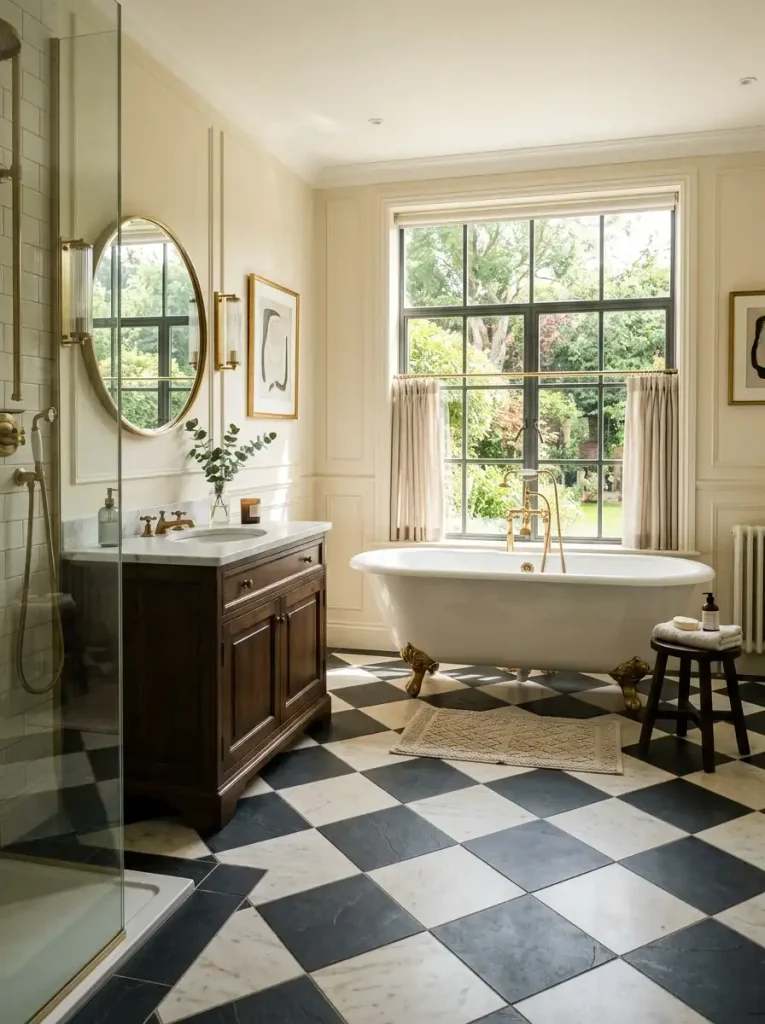
A checkerboard floor can instantly give a bathroom a designer appearance. Instead of choosing extremely high-contrast black and white, consider softer combinations such as cream and charcoal, ivory and taupe, or beige and brown for a more sophisticated effect.
Keep the walls relatively simple so the flooring becomes the statement feature. Pair the pattern with classic fixtures, warm metals, and streamlined cabinetry. A carefully scaled checkerboard pattern can add personality without making the room feel overly busy.
6. Vertical Stacked Tile
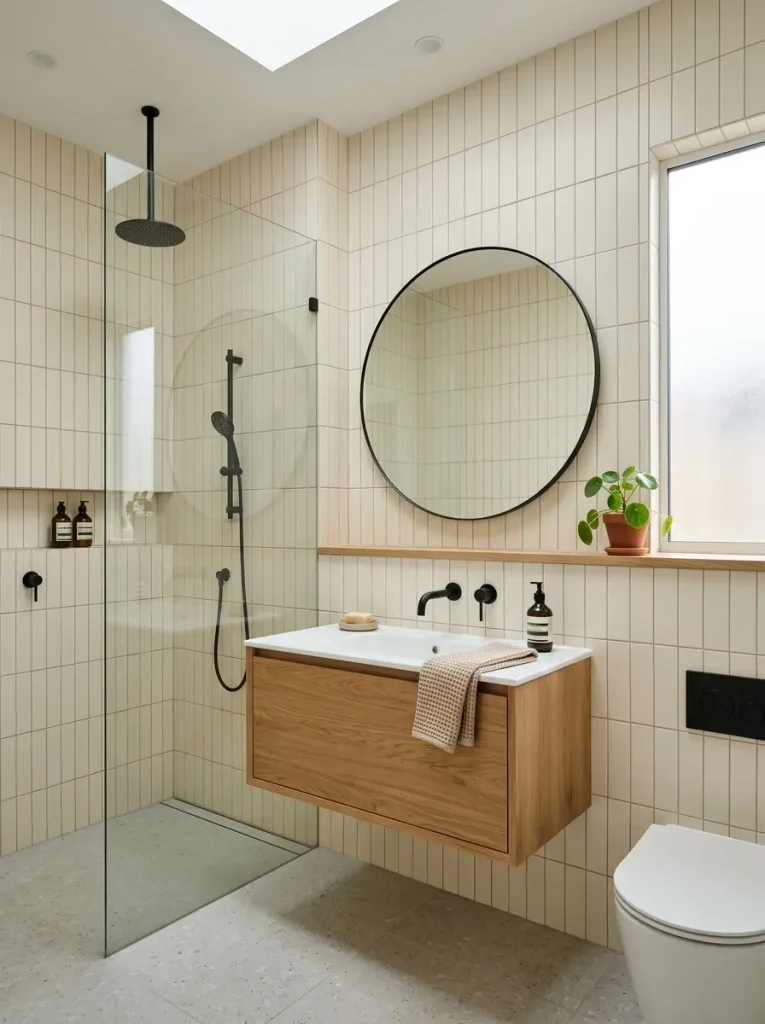
Installing rectangular tiles vertically instead of horizontally can create a subtle but powerful visual effect. The vertical lines draw the eye upward, making the ceiling appear taller and giving a compact bathroom a more spacious feeling.
Choose a soft neutral tile with a clean finish for a sophisticated appearance. A vertical stacked arrangement works beautifully in showers, behind vanities, or across full walls. Pair it with minimal grout lines and simple fixtures so the geometric layout remains the main design feature.
7. Dramatic Green Marble-Look Tile
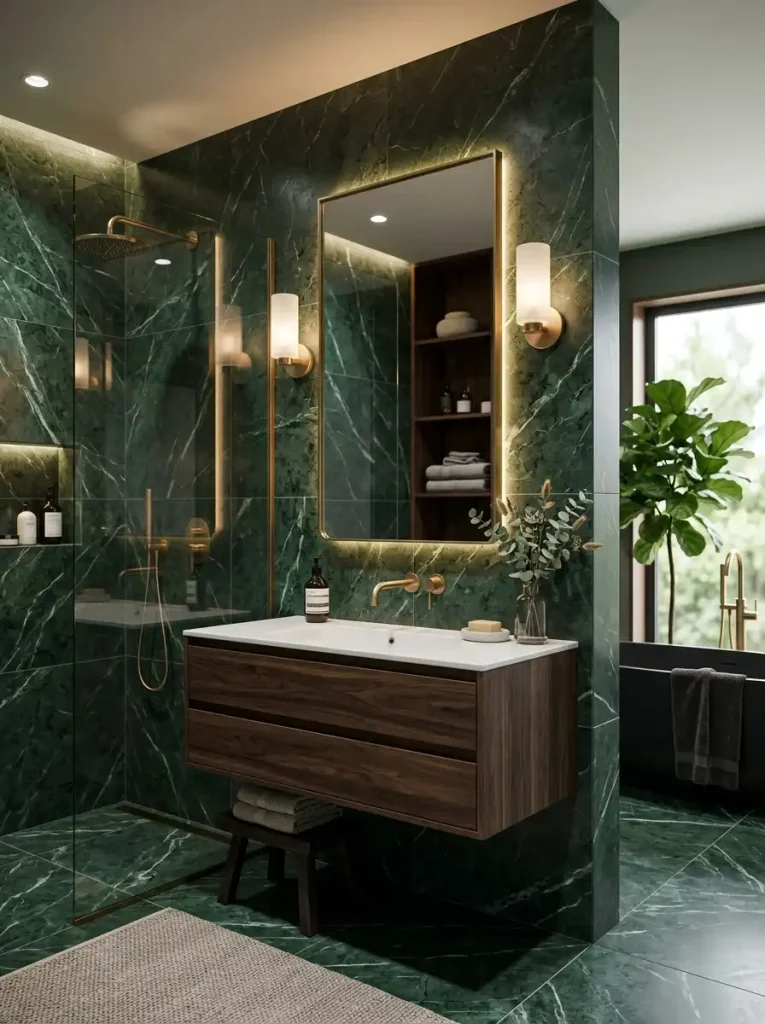
Deep green marble-look tile can create a dramatic, boutique-hotel atmosphere. Rich emerald or forest green combined with delicate white veining gives the bathroom an immediate sense of depth and luxury without requiring natural stone.
Use it as a feature wall behind the vanity or throughout a shower enclosure. Balance the dramatic tile with warm brass, dark wood, or creamy stone. Keep decorative accessories minimal so the beautiful veining remains the focal point of the room.
8. Herringbone Shower Tile
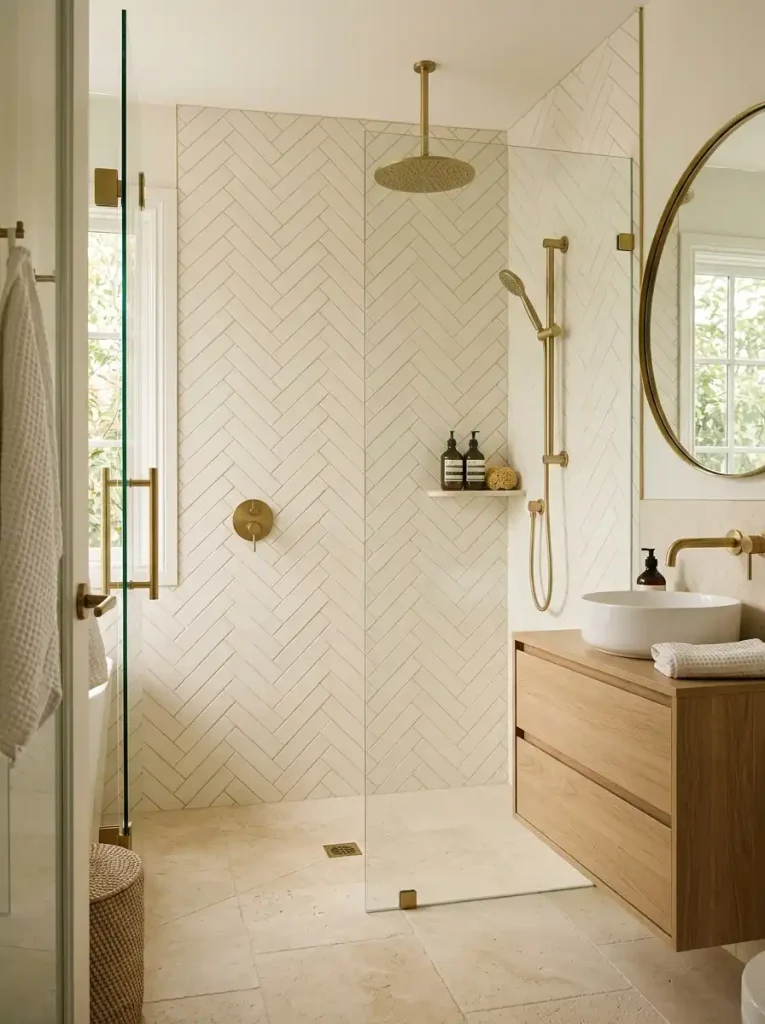
Herringbone tile creates visual movement while remaining classic enough to withstand changing design trends. The angled arrangement adds texture and craftsmanship to shower walls, backsplashes, and feature areas without requiring a complicated color palette.
For an expensive-looking result, choose a single sophisticated shade such as ivory, warm white, taupe, or soft gray. Keep the grout subtle and pair the pattern with elegant fixtures. Limiting herringbone to one feature area can make it feel more intentional and visually refined.
9. Large Terrazzo Tile
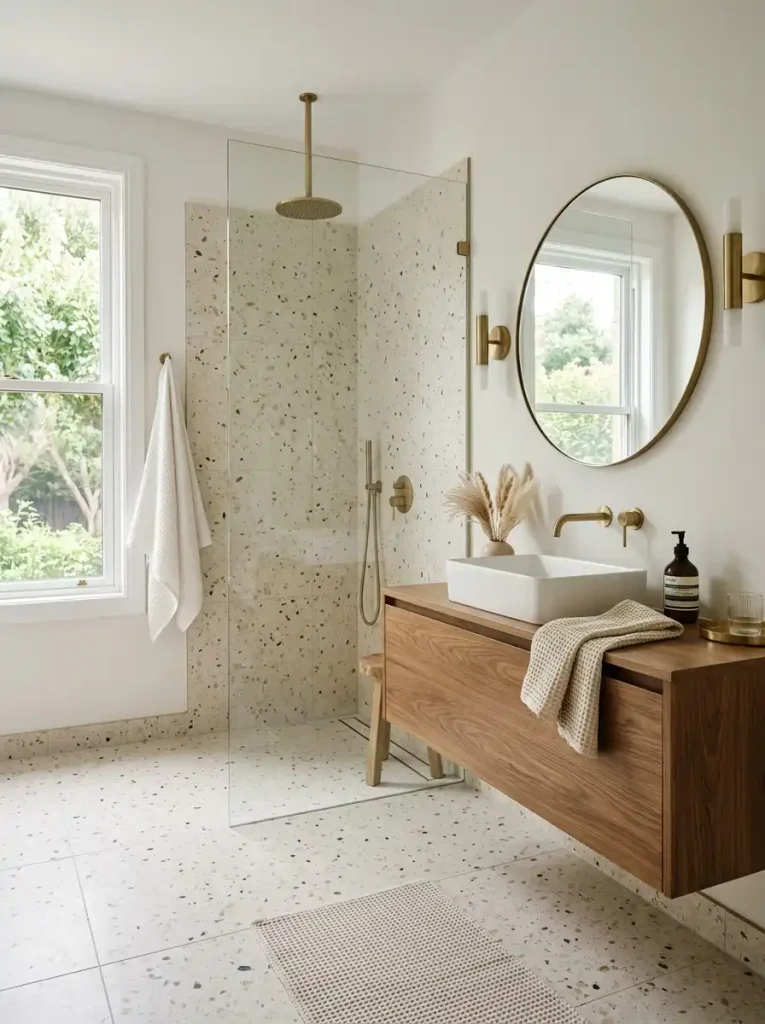
Terrazzo adds personality through its distinctive combination of stone chips and smooth surfaces. Large-format terrazzo tiles create a modern appearance while providing enough visual interest to become a major feature in the bathroom.
Choose a restrained terrazzo pattern with neutral chips if you’re aiming for an expensive, timeless look. Pair it with simple cream walls, natural oak, and elegant metal fixtures. Using the same terrazzo across the floor and selected wall areas can create continuity while keeping the overall design sophisticated.
10. Fluted Tile Feature Wall
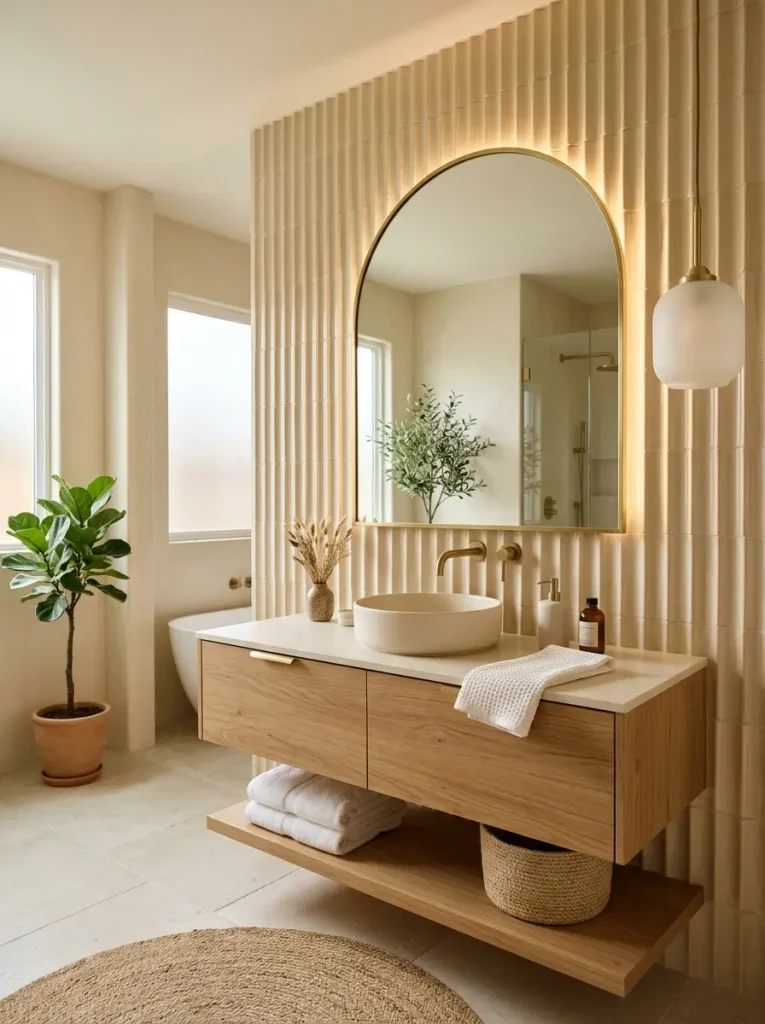
Fluted and three-dimensional tiles add architectural texture that immediately makes a bathroom feel more custom. Vertical ridges catch light and create subtle shadows, giving a simple neutral wall much more depth and visual interest.
Use fluted tile behind the vanity or as a shower feature rather than covering every surface. Cream, ivory, beige, or soft gray keeps the texture sophisticated and versatile. Pair it with warm wood and soft lighting so the shadows emphasize the sculptural quality of the tile.
Conclusion
Luxury bathroom design is often less about choosing the most expensive materials and more about scale, pattern, consistency, and thoughtful combinations. Large-format marble-look tiles, handmade-style finishes, herringbone patterns, stone-inspired surfaces, and textured feature walls can all create an upscale appearance when installed carefully. Keep your palette cohesive, minimize unnecessary visual clutter, and choose fixtures that complement the tile rather than compete with it. With the right combination, even a modest bathroom can achieve a polished, designer-inspired look without feeling excessively expensive.