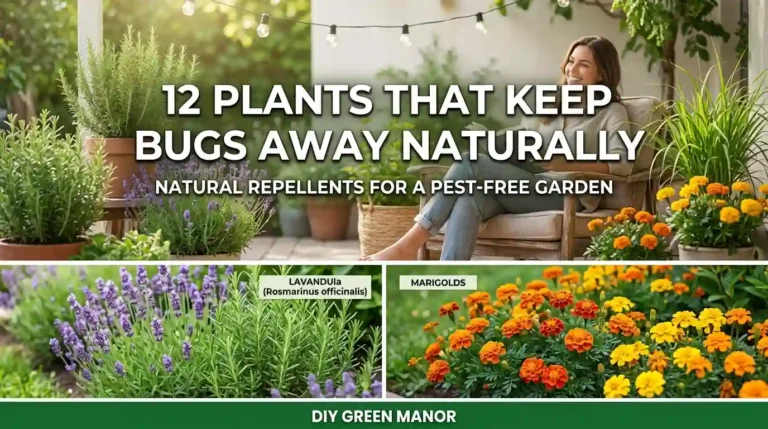
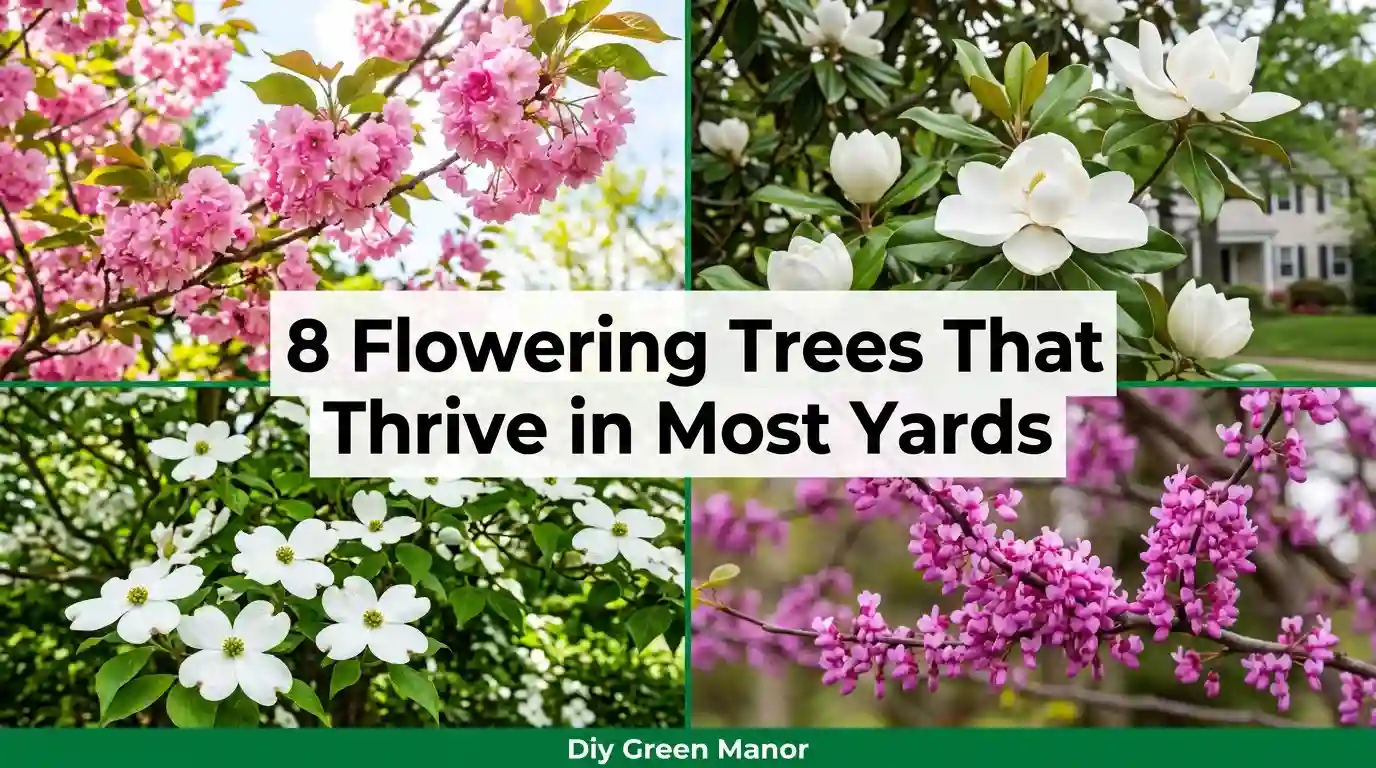
8 Flowering Trees That Thrive in Most Yards
Flowering trees can transform an ordinary yard into a colorful garden retreat while adding shade, seasonal interest, and natural beauty. The best choices depend on your climate, soil, available space, and sunlight, but several flowering trees are adaptable enough to work in a wide range of landscapes. From spring-blooming magnolias to colorful crepe myrtles, these 8 flowering trees can bring gorgeous flowers and year-round structure to your backyard. Always check local hardiness and invasive-species guidance before planting.
1. Crape Myrtle
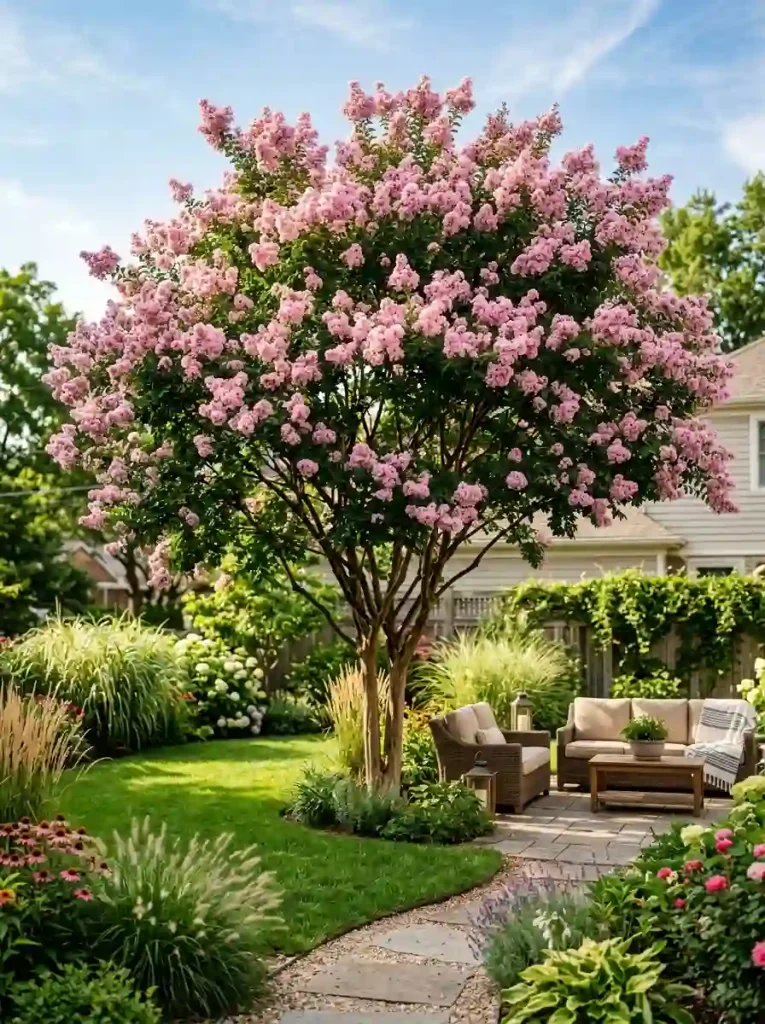
Crape myrtle is a favorite for adding long-lasting summer color to the landscape. Depending on the cultivar, flowers can appear in shades of pink, red, purple, lavender, or white, while the attractive branching structure provides interest beyond the flowering season.
Plant it in a sunny location with enough room for the mature size of your chosen cultivar. Use it as a focal point in a lawn, near a patio, or along a garden border. Its combination of flowers and architectural form makes it especially attractive in warm-climate landscapes.
2. Saucer Magnolia
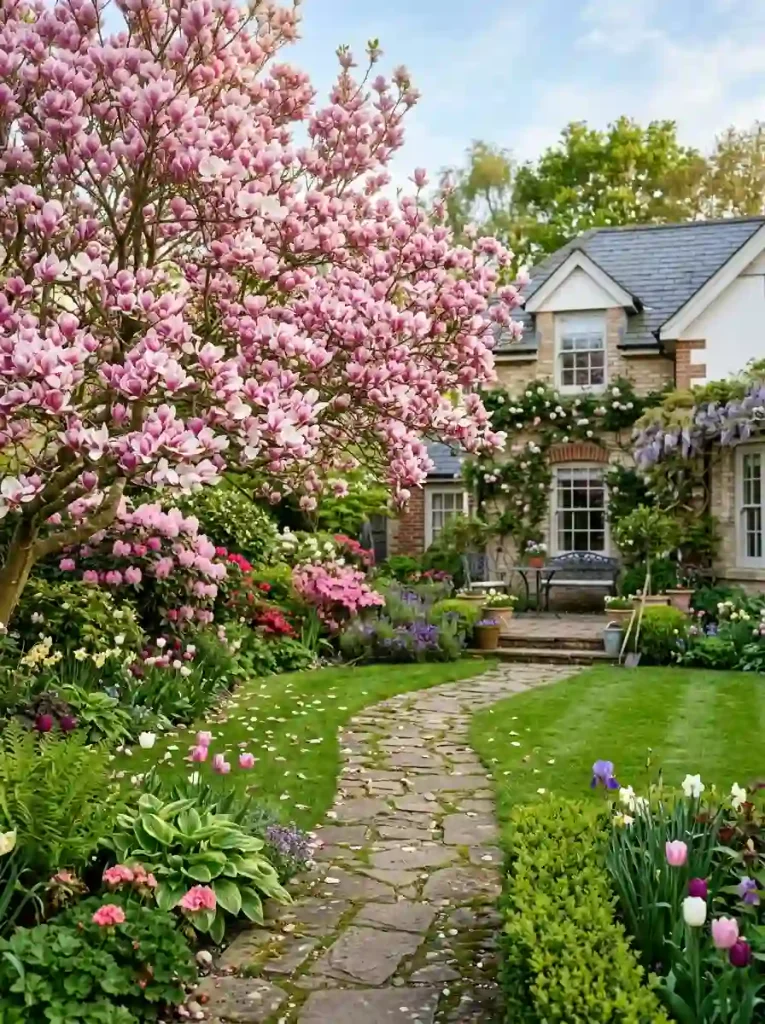
Saucer magnolia creates an unforgettable spring display with large, cup-shaped flowers appearing on mostly bare branches. The pink, white, or purple blooms can make the entire tree look like a living floral sculpture.
Give it enough space to develop its broad shape and choose a location with suitable sunlight and well-drained soil. A lawn or open garden area can showcase the branching structure beautifully. Because cultivars vary considerably in mature size, select one that fits your available space.
3. Eastern Redbud
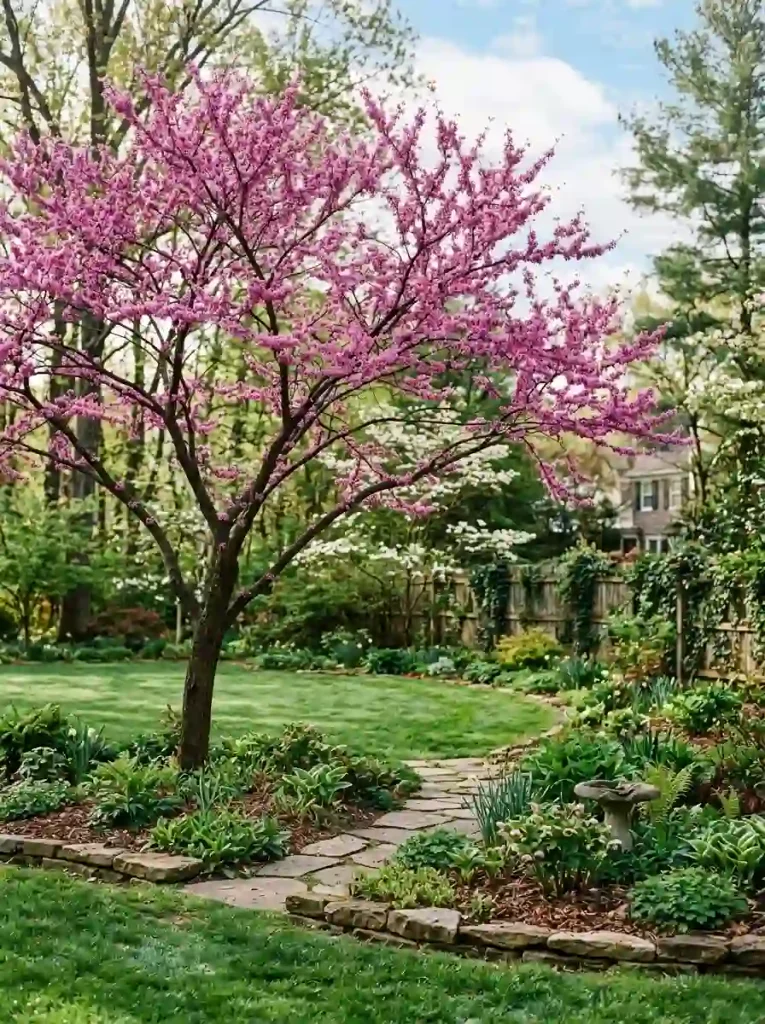
Eastern redbud is particularly charming because its small pink or rosy flowers appear directly along branches before or as the leaves emerge. This creates a delicate, almost magical spring display that works beautifully in naturalistic gardens.
Its heart-shaped leaves provide attractive greenery after flowering, giving the tree continued seasonal interest. Use it as a small shade tree, near a patio, or as part of a woodland-inspired planting scheme. Choose a suitable location with appropriate drainage and enough space for the mature tree.
4. Flowering Dogwood
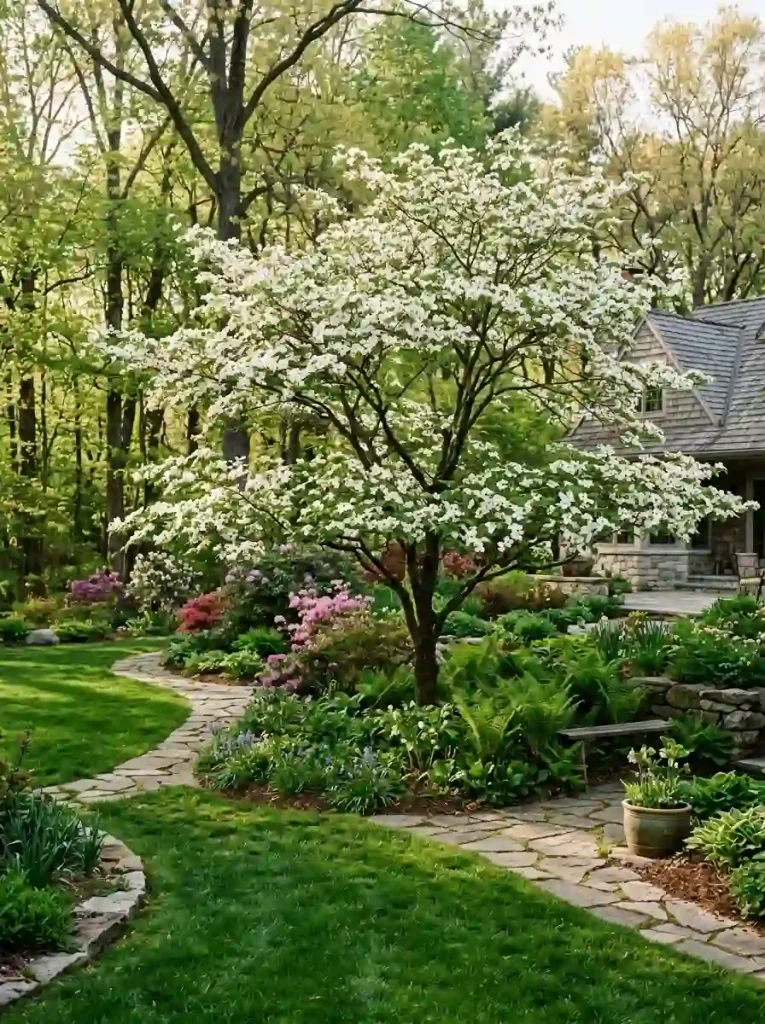
Flowering dogwood is known for its elegant spring display and graceful branching form. Its showy bracts surround small central flowers, creating the appearance of large blooms across the canopy. White and pink-flowering cultivars offer different options for garden color.
After flowering, the tree continues to provide interest through attractive foliage and seasonal changes. It works particularly well in woodland-style landscapes and gardens with filtered light. Select a cultivar suited to your region and provide the soil, moisture, and exposure conditions it needs to establish successfully.
5. Japanese Flowering Cherry
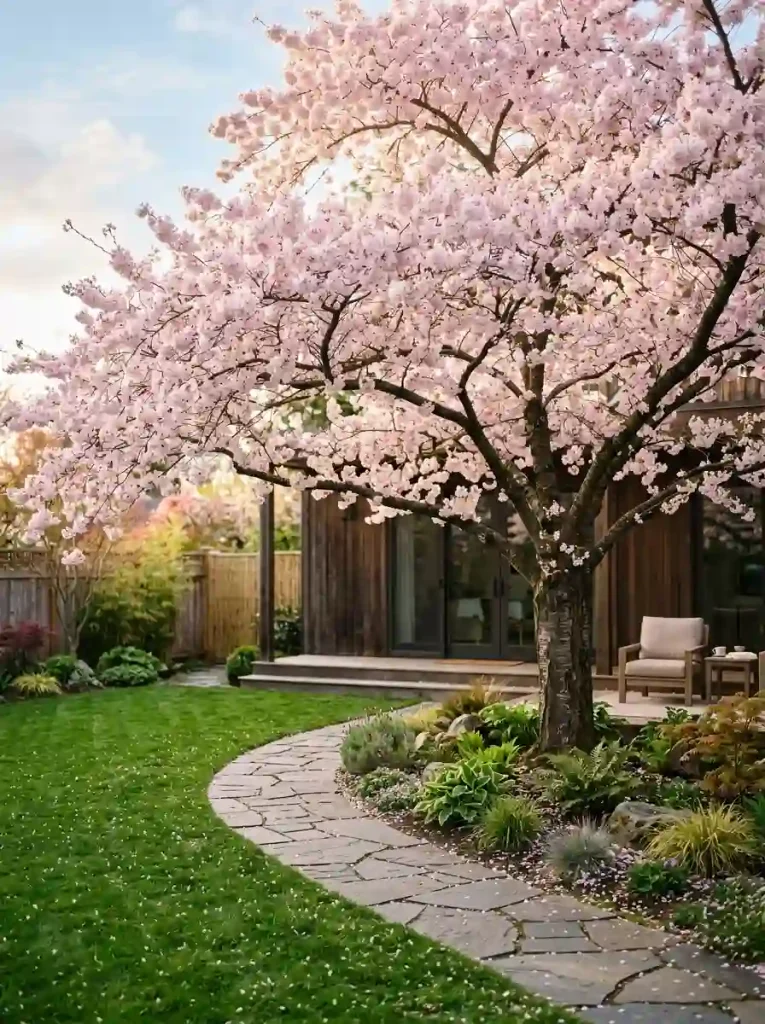
Japanese flowering cherries can turn spring into a spectacular garden event. Their branches become covered with delicate pink or white blossoms, creating a romantic canopy that looks especially beautiful against a simple lawn or garden backdrop.
Use a flowering cherry as a focal tree where its seasonal display can be appreciated from patios, windows, or garden paths. Avoid overcrowding it with too many competing plants. Choose a cultivar appropriate for your climate and available space, as mature size and growth habit vary.
6. Crabapple
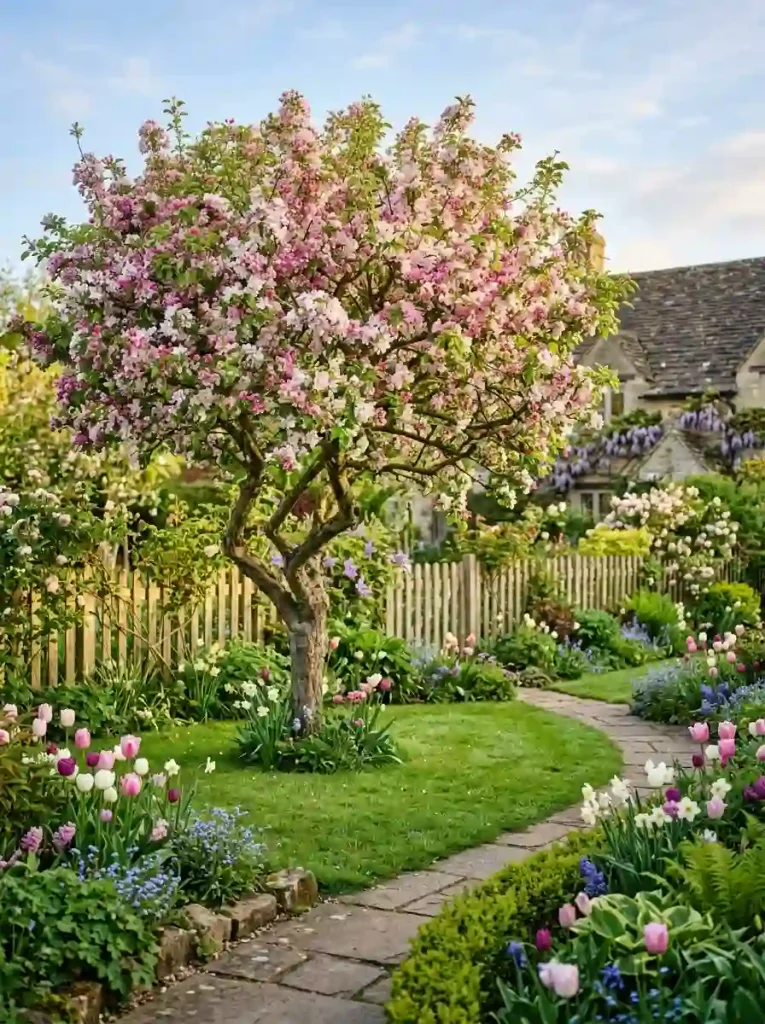
Flowering crabapples offer more than beautiful spring blossoms. Their compact forms can work well in many residential gardens, while some cultivars produce colorful fruits that extend seasonal interest into later months.
Plant crabapple in a sunny location with good air circulation and adequate space for its mature canopy. It can become a beautiful focal point surrounded by perennials, spring bulbs, or low shrubs. When choosing a cultivar, consider disease resistance and mature size to find a variety that fits your landscape.
7. Fringe Tree
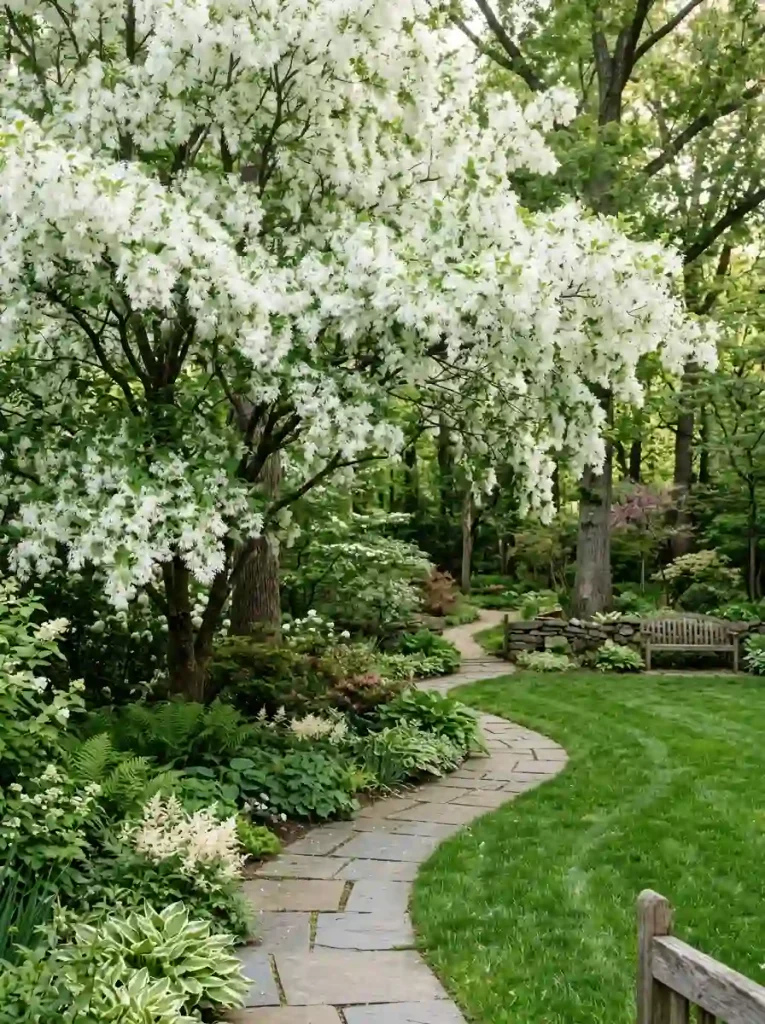
Fringe tree offers a more unusual flowering display than many traditional ornamental trees. Its clusters of narrow white flowers hang from branches like delicate ribbons, creating a graceful effect in spring.
The tree can work beautifully as a specimen plant in a lawn or within a naturalistic garden. Its relatively understated appearance makes it ideal if you prefer sophisticated landscaping rather than an intensely colorful floral display. Provide conditions appropriate to the species and choose a location where its mature size has room to develop.
8. Golden Chain Tree
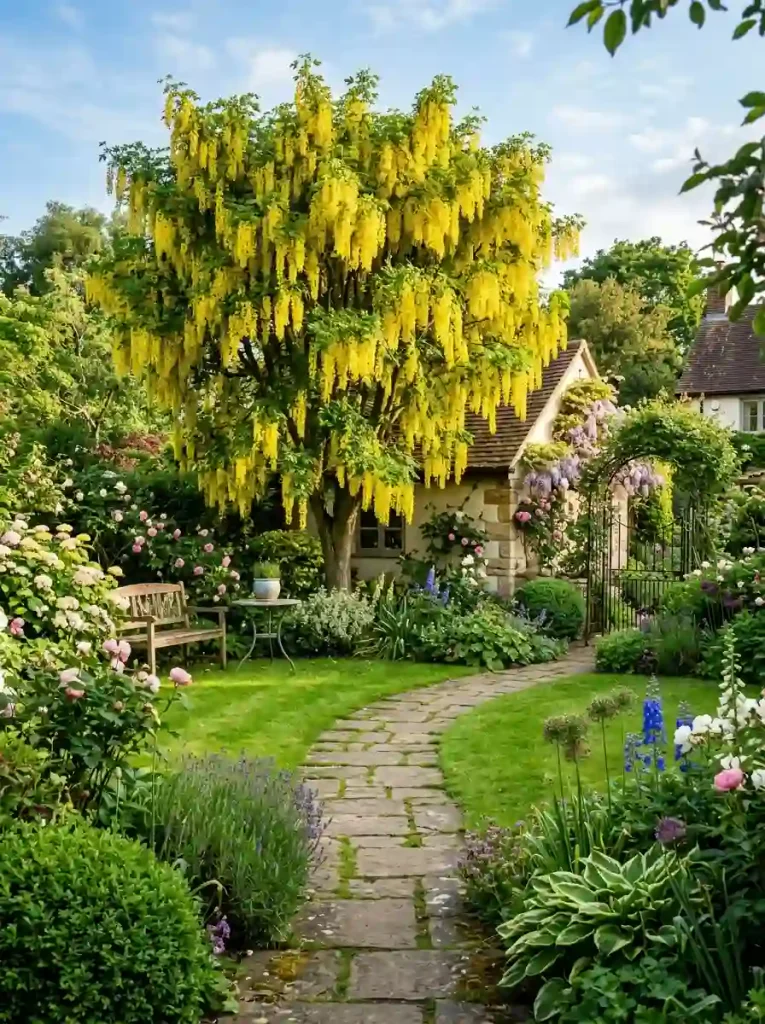
Golden chain tree can create an incredible focal point with its long, hanging clusters of bright yellow flowers. The blooms create a dramatic cascading effect that works particularly well when the tree is positioned where its flowering canopy can be viewed from a patio or pathway.
Use this tree only where it is appropriate and permitted in your region, as some Laburnum species can be toxic and may not be suitable for every household or climate. Choose a well-drained location and provide enough space for the mature plant to develop naturally.
Conclusion
Flowering trees can give your yard a dramatic seasonal transformation while providing structure and beauty for years to come. Crape myrtle, magnolia, redbud, dogwood, flowering cherry, crabapple, fringe tree, and golden chain tree each offer something different, from spectacular spring blossoms to colorful summer displays. Before choosing one, consider your local climate, mature tree size, sunlight, soil, drainage, and proximity to buildings or utility lines. With the right tree in the right location, your backyard can become a beautiful garden centerpiece every flowering season.