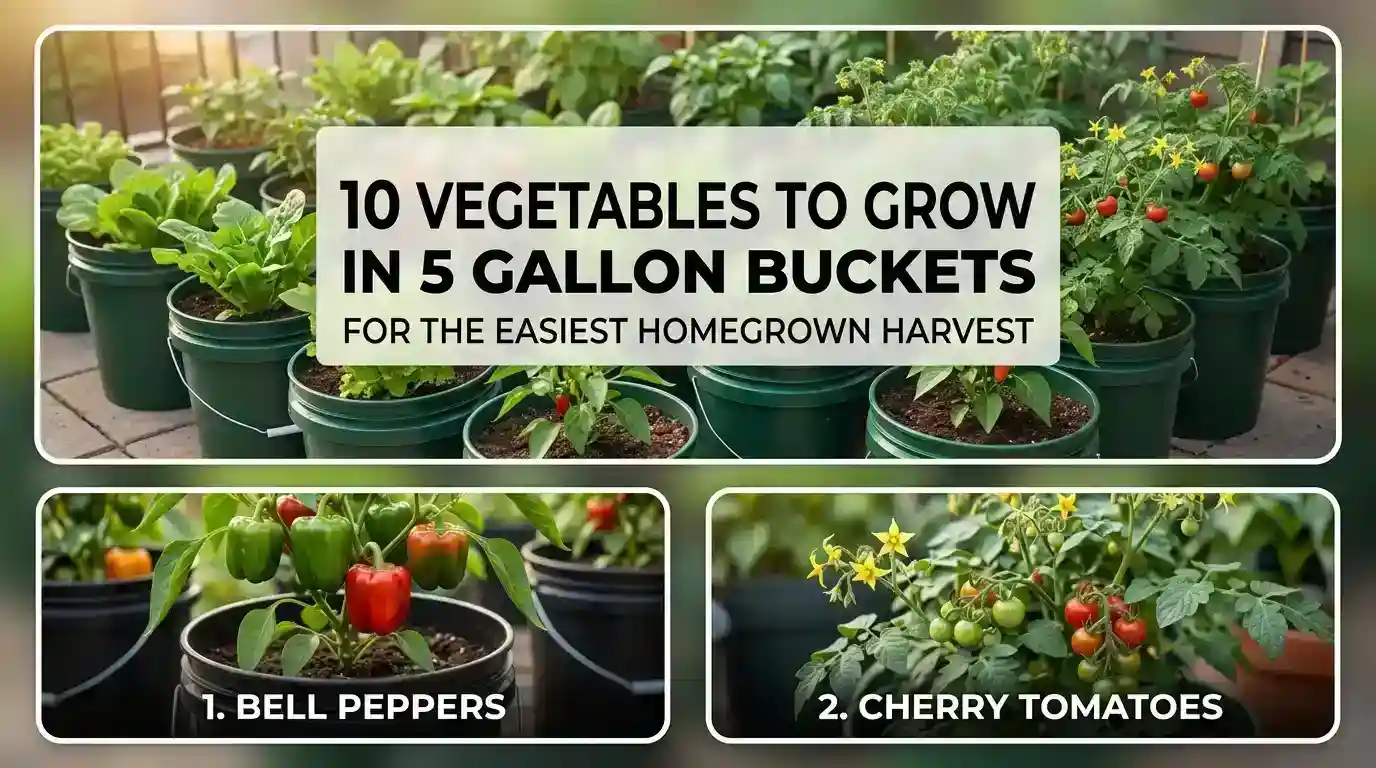
10 vegetables to grow in 5 gallon buckets for the easiest homegrown harvest
The small-space kitchen garden trend has taken container gardening by storm, and for good reason: growing vegetables in 5-gallon buckets is low-cost, space-efficient, and remarkably simple.
A standard 5-gallon food-grade bucket provides roughly 14 inches of depth and a 12-inch diameter—the sweet spot for root expansion, soil volume, and moisture retention.
1. Bush Tomatoes (Determinate Varieties)
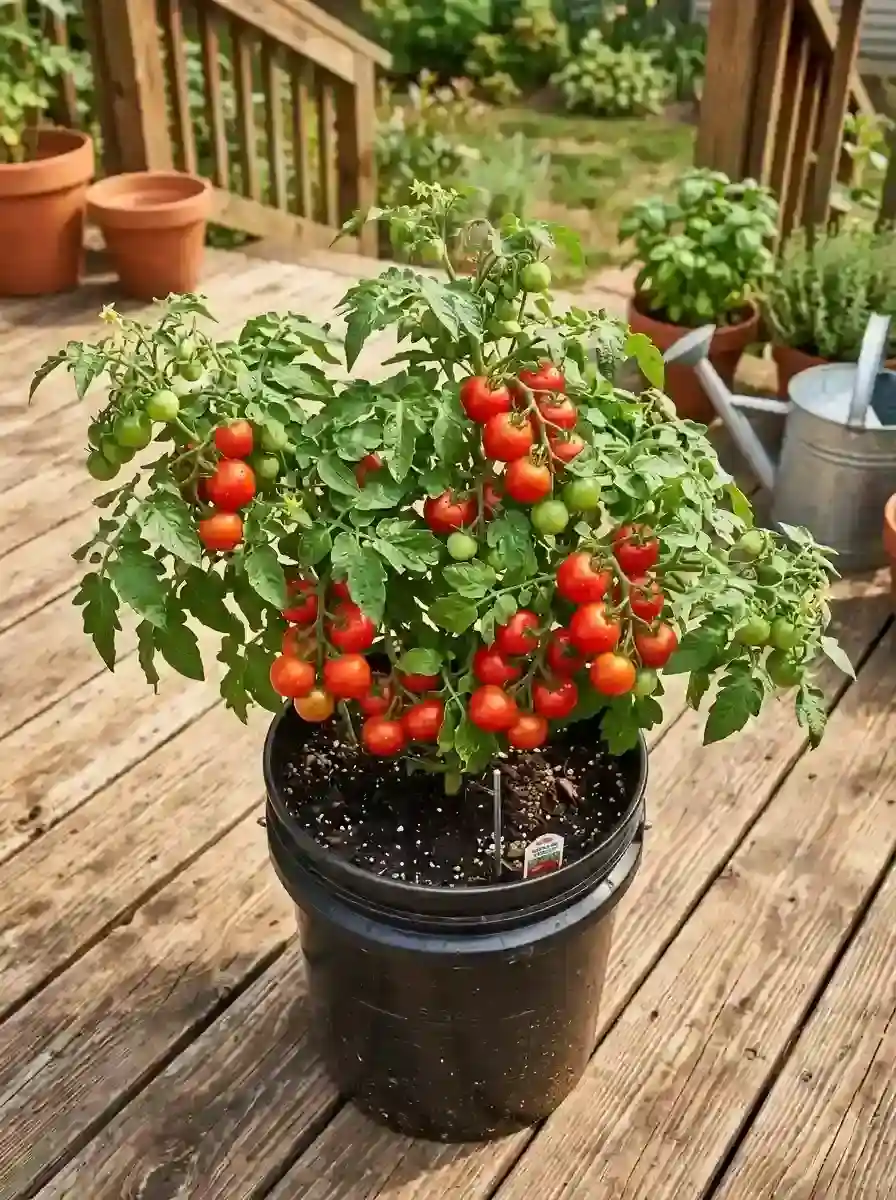
While vining heirloom tomatoes can quickly overpower small containers, determinate (bush) tomato varieties—such as ‘Patio Choice’, ‘Celebrity’, or ‘Roma’—are tailored for 5-gallon bucket cultivation. Bush tomatoes reach a fixed height of 2 to 3 feet, setting their fruit over a concentrated window. Ensure you drill 4 to 6 drainage holes in the bottom of your bucket, fill with a premium potting mix (never dense garden soil), and insert a lightweight tomato cage early to support heavy, ripening fruit clusters.
2. Sweet & Hot Peppers
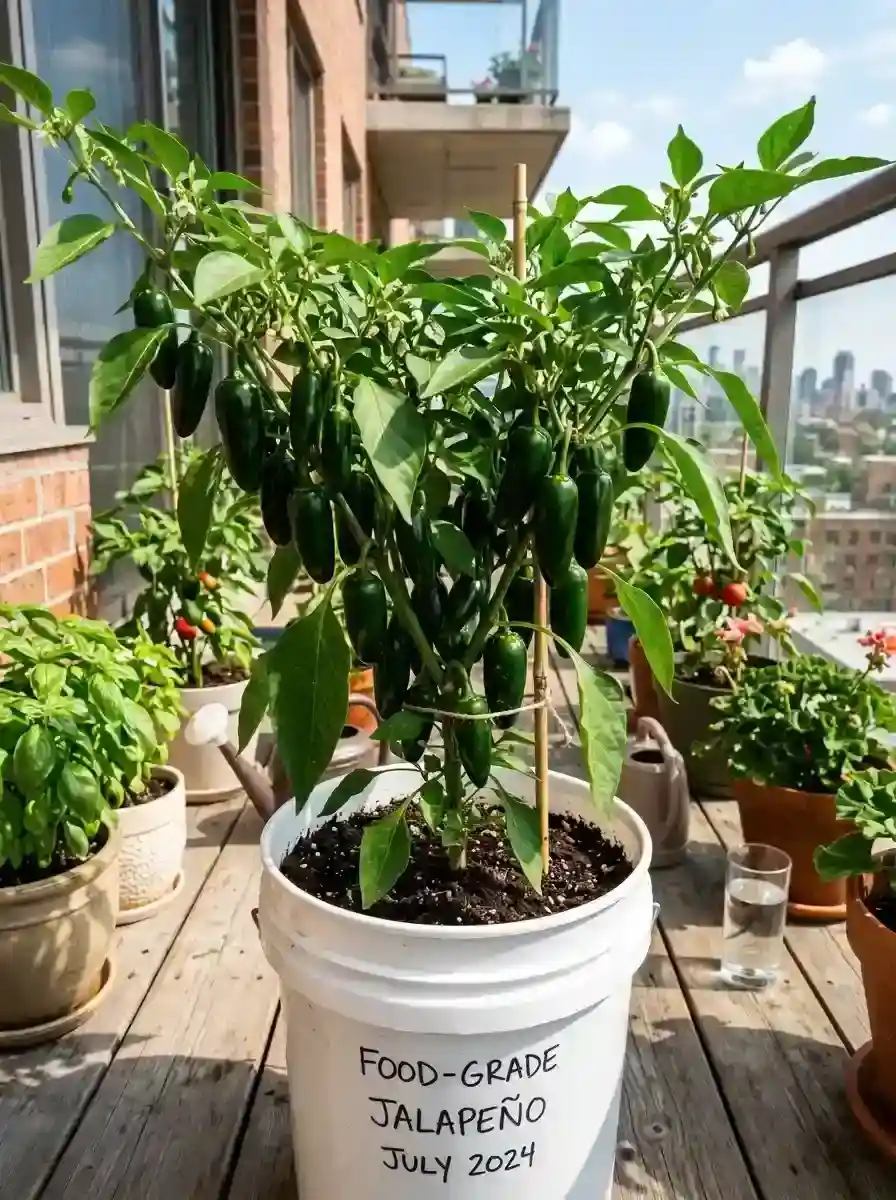
Bell peppers, jalapeños, serranos, and habaneros thrive in container setups because their root systems fit comfortably within a 12-inch footprint. Peppers love warm soil, and the dark walls of a 5-gallon bucket absorb ambient solar heat, boosting root performance and speeding up ripening times. Place your pepper bucket where it receives at least 6 to 8 hours of direct sunlight, and feed bi-weekly with a balanced organic liquid fertilizer once blossoms appear.
3. Bush Zucchini & Summer Squash
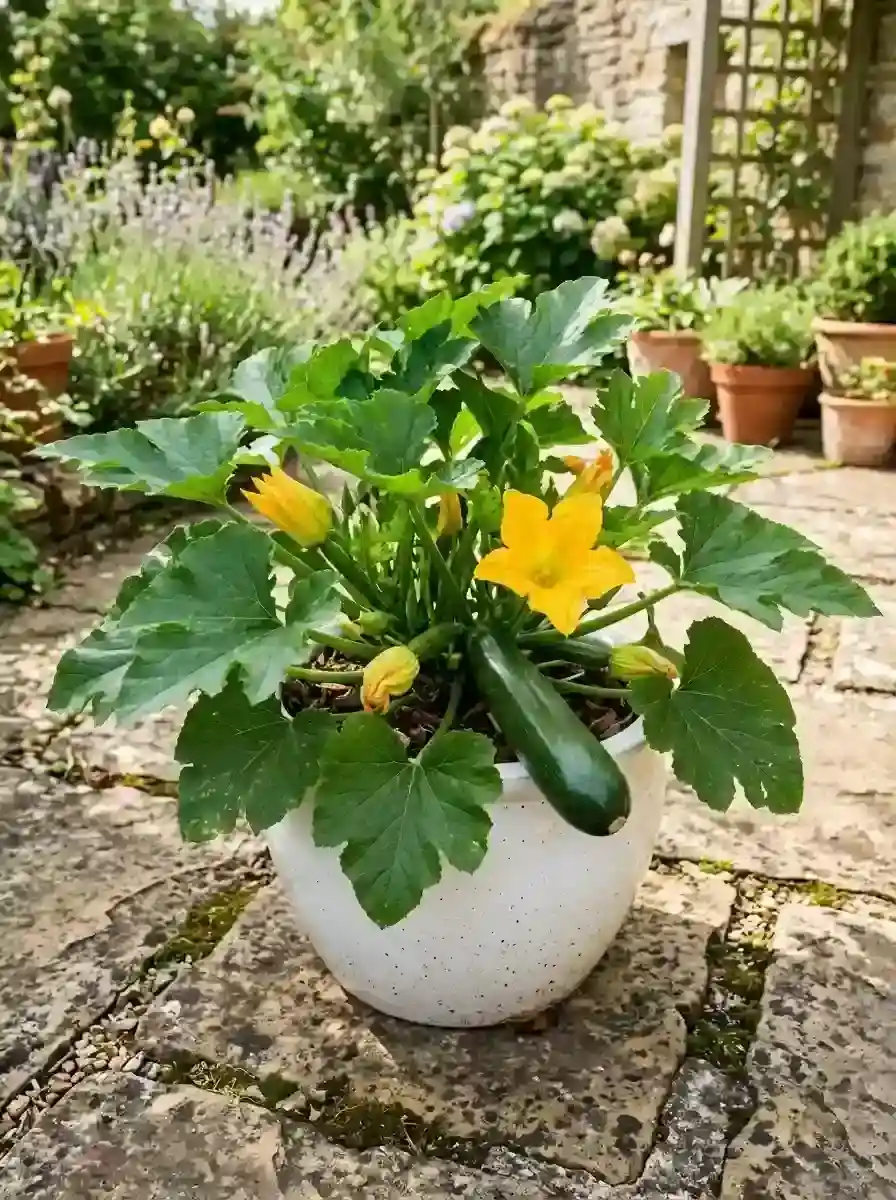
Traditional vining summer squash can easily invade an entire garden bed, but compact bush cultivars like ‘Astia’ or ‘Cube of Butter’ produce heavy harvests within a single 5-gallon container. A single bush zucchini plant per bucket fills the space without overcrowding. Because squash are heavy drinkers, water thoroughly every morning during hot summer spells to keep the large foliage from wilting.
4. Compact Bush Beans
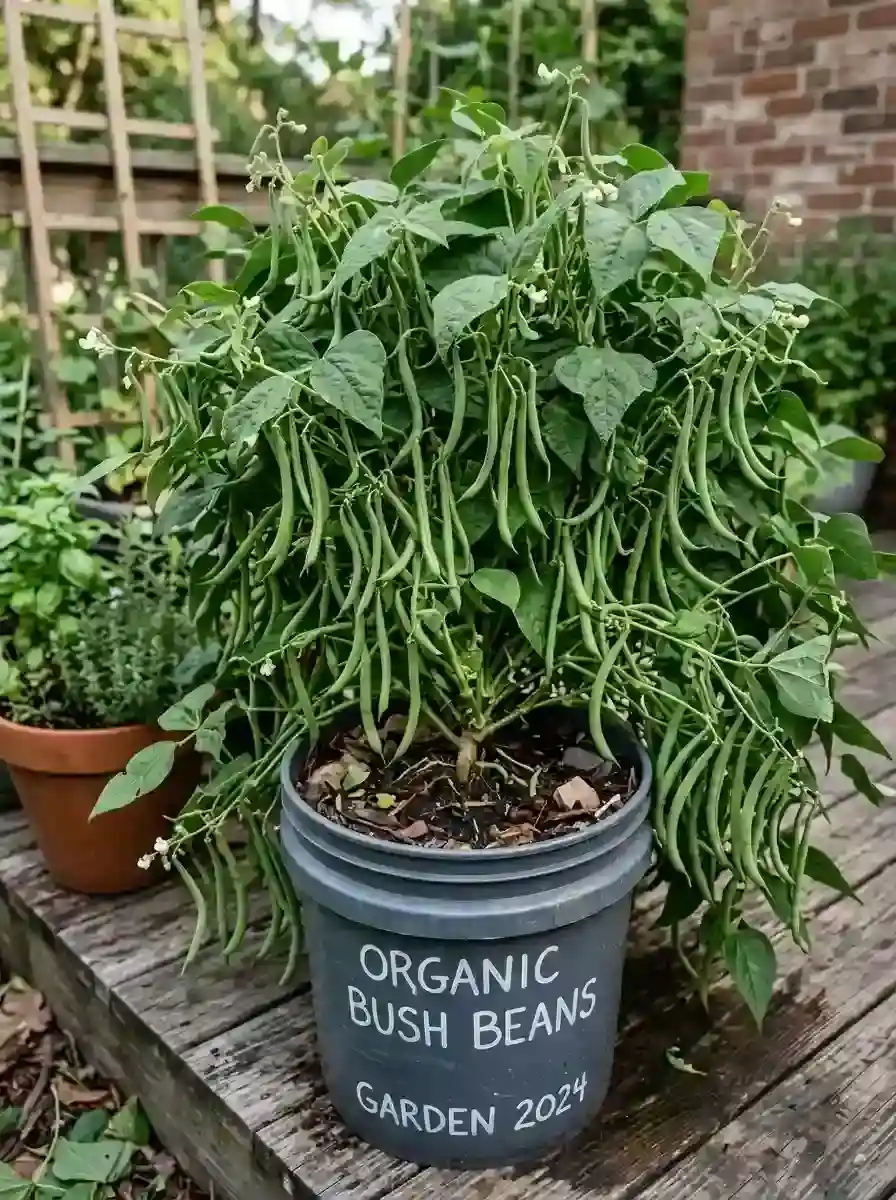
Bush beans are nitrogen-fixing powerhouses that yield an abundance of crisp pods over several weeks. Unlike pole beans that require tall trellises, varieties such as ‘Blue Lake Bush’ or ‘Provider’ grow into compact, upright clumps about 12 to 18 inches tall. You can comfortably plant 3 to 4 bush bean seeds per 5-gallon bucket, giving you a dense, productive container micro-crop that takes up virtually no balcony footprint.
5. Crisp Patio Cucumbers
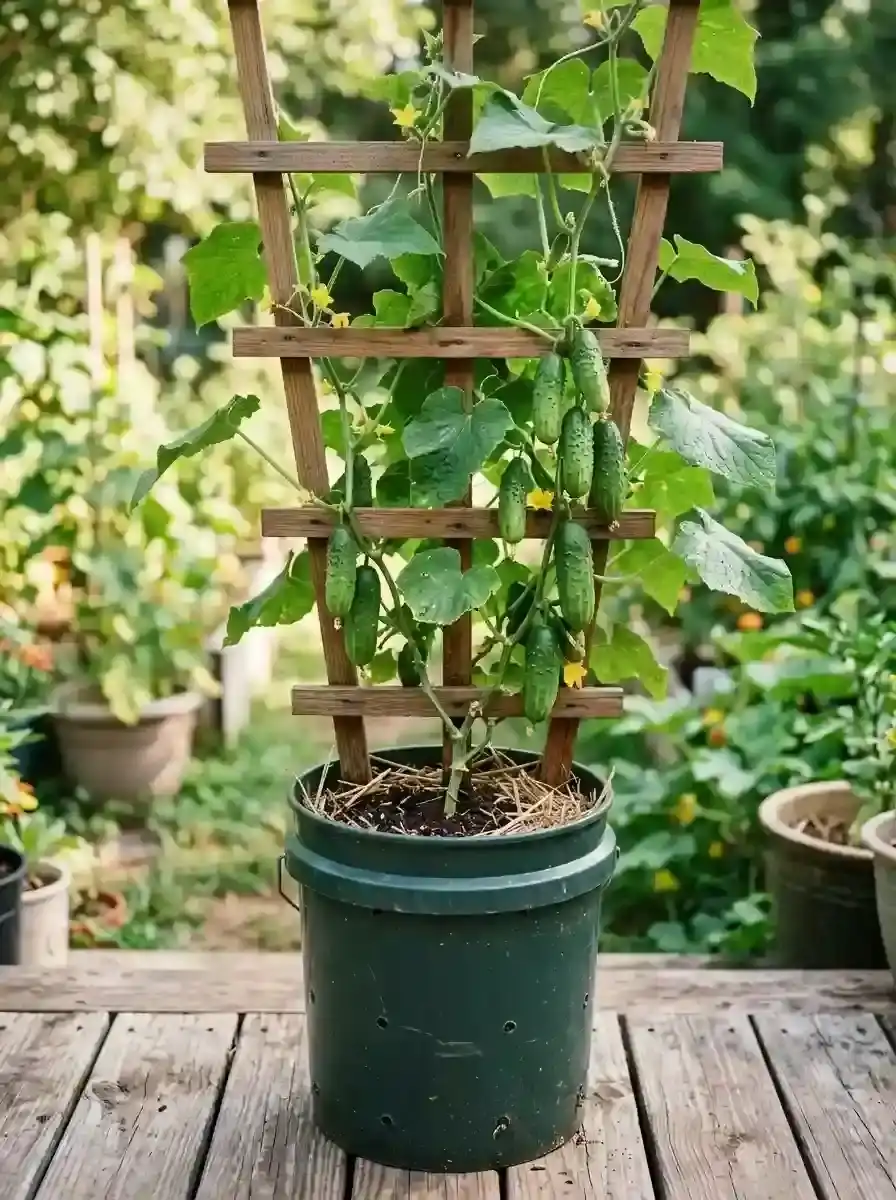
Fresh, crunchy cucumbers are a staple for small-space gardeners. Look for compact bush or patio varieties like ‘Bush Champion’, ‘Spacemaster’, or ‘Picolino’. Pairing a bush cucumber in a 5-gallon bucket with a small conical cage or wall-mounted trellis encourages vertical growth, keeping the leaves clean, improving airflow to prevent powdery mildew, and making harvesting incredibly easy.
6. Japanese Eggplants
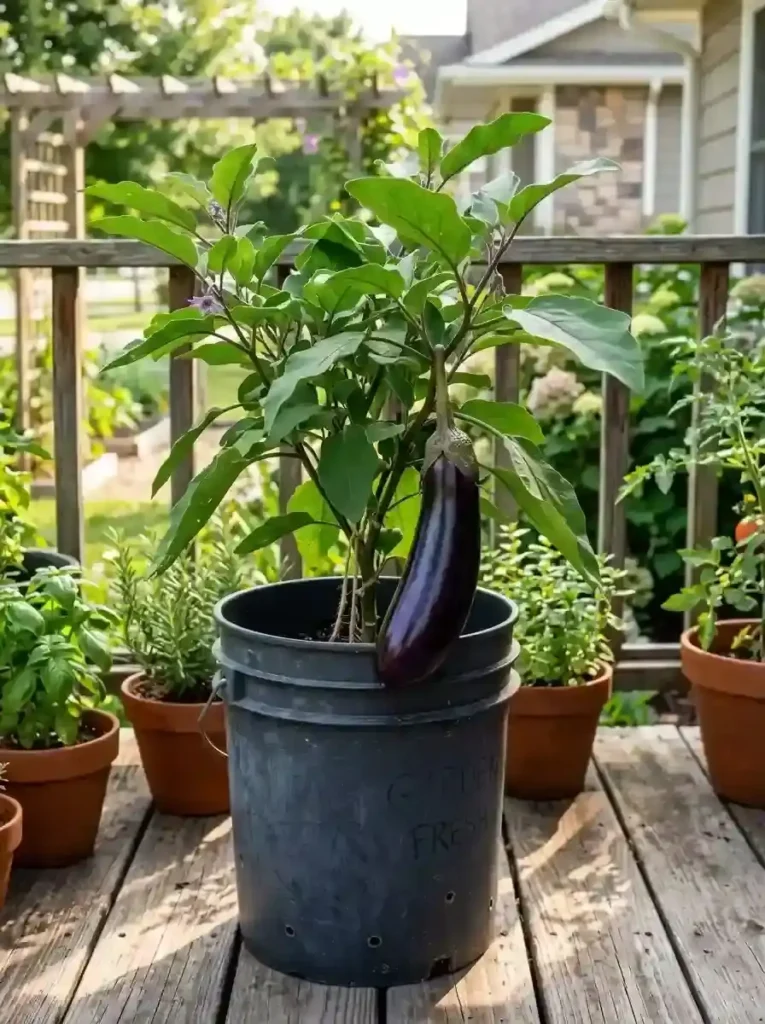
Eggplants are heat-loving crops that perform exceptionally well in warmer container soils. Slender, early-maturing Japanese varieties like ‘Ichiban’ or ‘Little Sailor’ yield dozens of tender fruits throughout the summer from a single bucket setup. Because mature eggplants can become top-heavy when loaded with fruit, stake the central stem securely to prevent the main branch from snapping in high winds.
7. Leaf Lettuce & Salad Greens
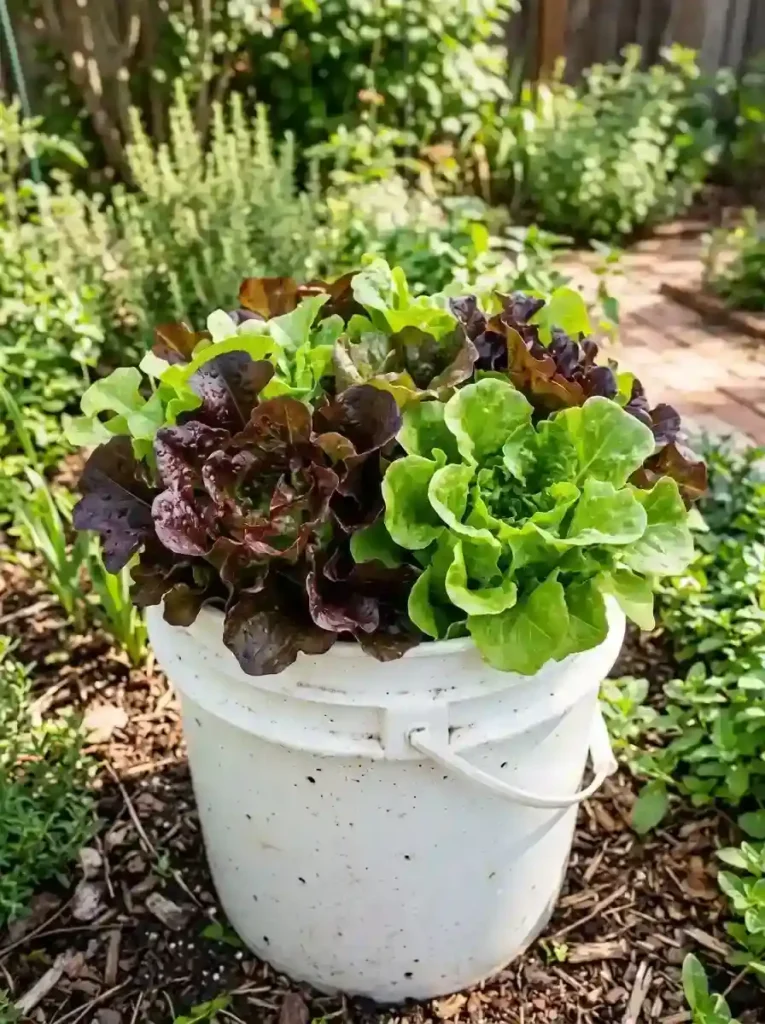
For continuous, cut-and-come-again harvests right outside your kitchen door, leaf lettuce mixes, butterhead, spinach, and arugula are unbeatable. Because greens have shallow root systems, a 5-gallon bucket provides more than enough soil volume to support a dense multi-plant layout. Sow seeds thickly across the top soil layer and snip outer leaves as needed for daily fresh salads; the deep soil reservoir keeps the roots cool, preventing premature bolting in early summer heat.
8. Crunchy Carrots
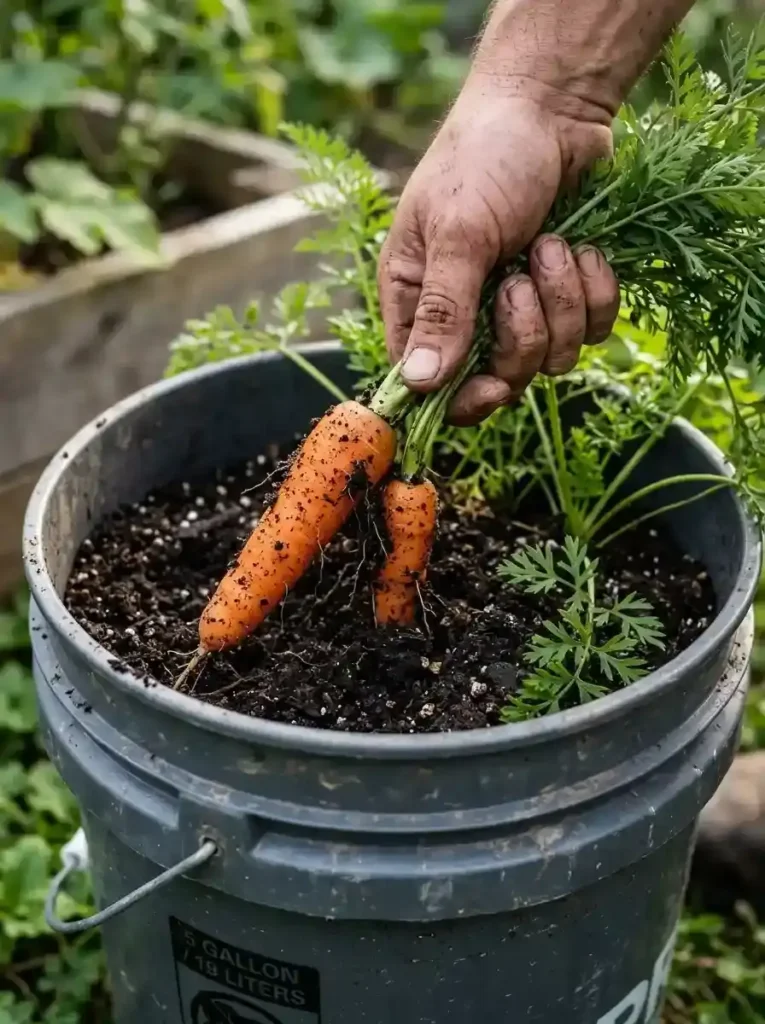
Heavy clay or rocky ground soil often results in stunted, twisted root vegetables. Growing carrots in a 5-gallon bucket filled with loose, stone-free potting soil combined with perlite guarantees straight, sweet, perfect roots every time. Choose short-to-medium varieties such as ‘Danvers Half Long’, ‘Nantes’, or round ‘Chantenay’ types. Thin seedlings to roughly 1.5 to 2 inches apart to give each carrot room to expand.
9. Swiss Chard & Kale
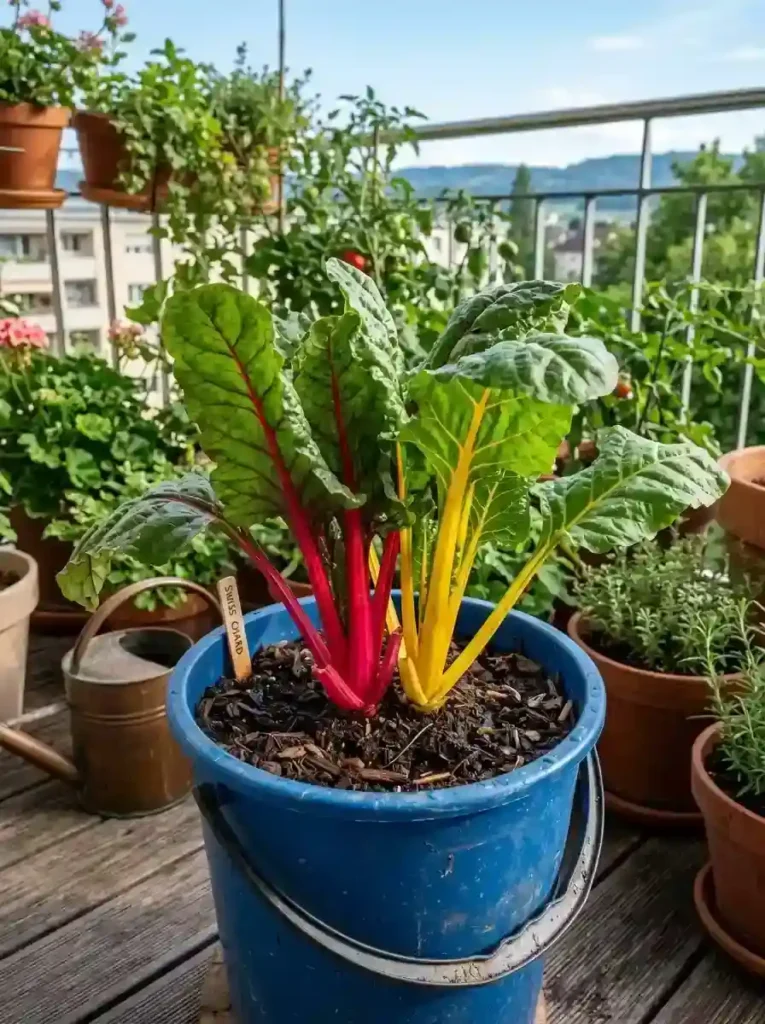
Hardy greens like ‘Bright Lights’ Swiss chard and ‘Toscano’ (Lacinato) kale are as ornamental as they are nutritious. A single 5-gallon bucket can house 2 to 3 kale or chard plants, providing nutrient-dense greens from late spring through late autumn. Harvesting only the lower outer leaves allows the central crown to continuously produce fresh new foliage, yielding continuous kitchen harvests for months on end.
10. Spring Onions & Radishes (Companion Combo)
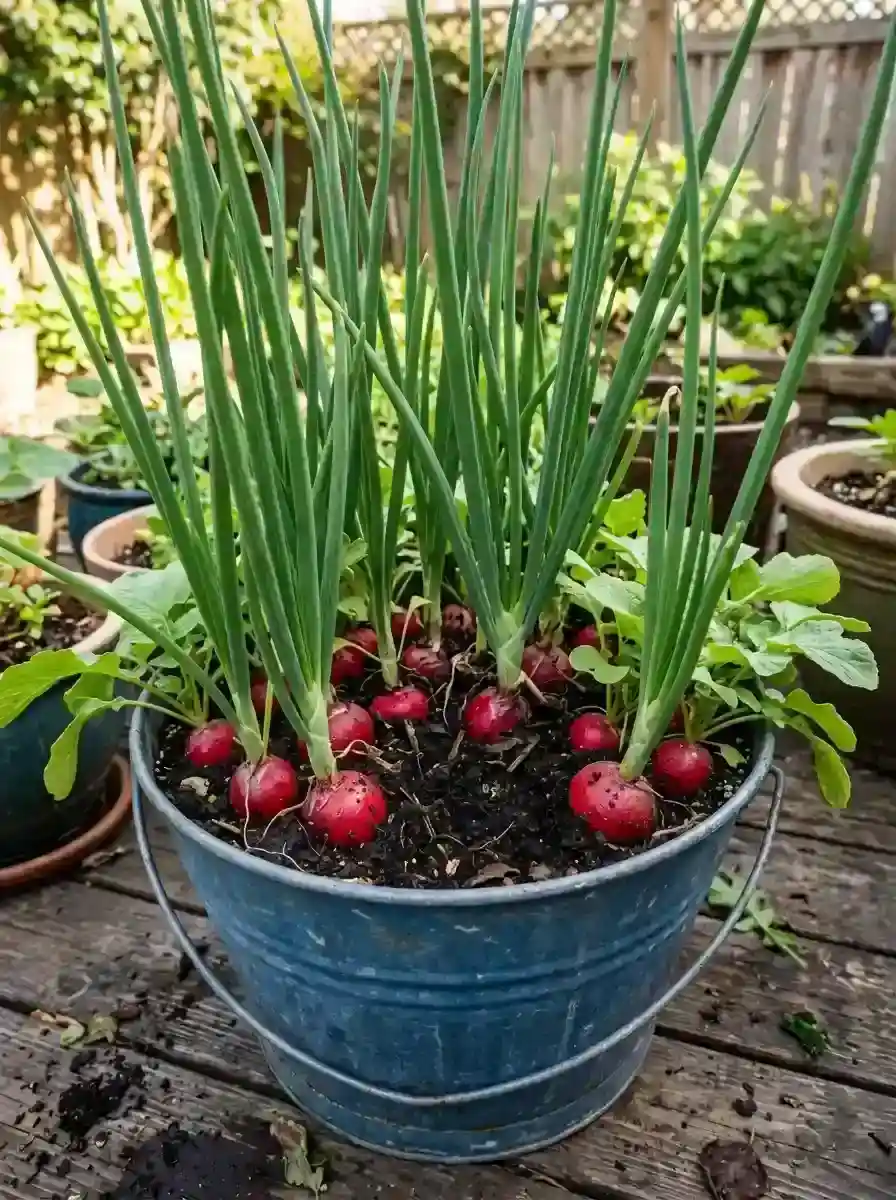
Maximize your 5-gallon container footprint by interplanting fast-growing spring onions (scallions) alongside crisp globe radishes. Because both crops have compact, non-invasive root profiles, you can plant a dense ring of scallions around the bucket perimeter while sowing quick-harvesting radishes in the center. Radishes mature in as little as 25 to 30 days, freeing up space while your spring onions continue to mature.
Essential Bucket Gardening Tips for Success
- Drill Drainage Holes: Always drill 4 to 6 half-inch drainage holes in the bottom rim of your bucket. Standing water rots vegetable roots quickly.
- Use Food-Grade Buckets: Look for “BPA-Free” or Grade #2 / Grade #5 recycling symbols on the bottom of plastic buckets to ensure no chemicals leach into your edible crops.
- Never Use Heavy Topsoil: Fill your buckets with lightweight, high-quality container potting mix amended with compost and perlite. Native garden soil compacts tightly inside containers, suffocating plant roots.
- Water Frequently: Containers dry out significantly faster than raised garden beds. Check moisture levels daily during peak summer heat, watering until excess drains out the bottom holes.
Frequently Asked Questions (FAQ)
Can I reuse 5-gallon buckets for multiple growing seasons?
Yes. Heavy-duty plastic 5-gallon buckets can easily last 3 to 5 seasons. At the end of autumn, empty the spent plant roots, scrub the bucket interior with mild soap and water, and store it out of direct freezing winter elements to prevent plastic brittleness.
How many vegetables can I plant in one 5-gallon bucket?
It depends on the vegetable’s mature size. Larger heavy feeders (like tomatoes, eggplants, or zucchini) require 1 plant per bucket. Medium crops (like peppers, cucumbers, or kale) thrive at 1 to 2 plants per bucket, while shallow or compact crops (like lettuce, bush beans, carrots, or radishes) can accommodate 3 to 10+ plants per bucket.
How often should I fertilize vegetables growing in 5-gallon containers?
Because frequent watering leaches soil nutrients out through drainage holes, container vegetables require consistent feeding. Mix a slow-release organic granular fertilizer into your potting soil at planting time, and supplement with a balanced liquid kelp or fish emulsion fertilizer every 10 to 14 days during peak growth.