21 Gorgeous Evergreen Landscape Ideas for Year-Round Curb Appeal
21 Gorgeous Evergreen Landscape Ideas for Year-Round Curb Appeal
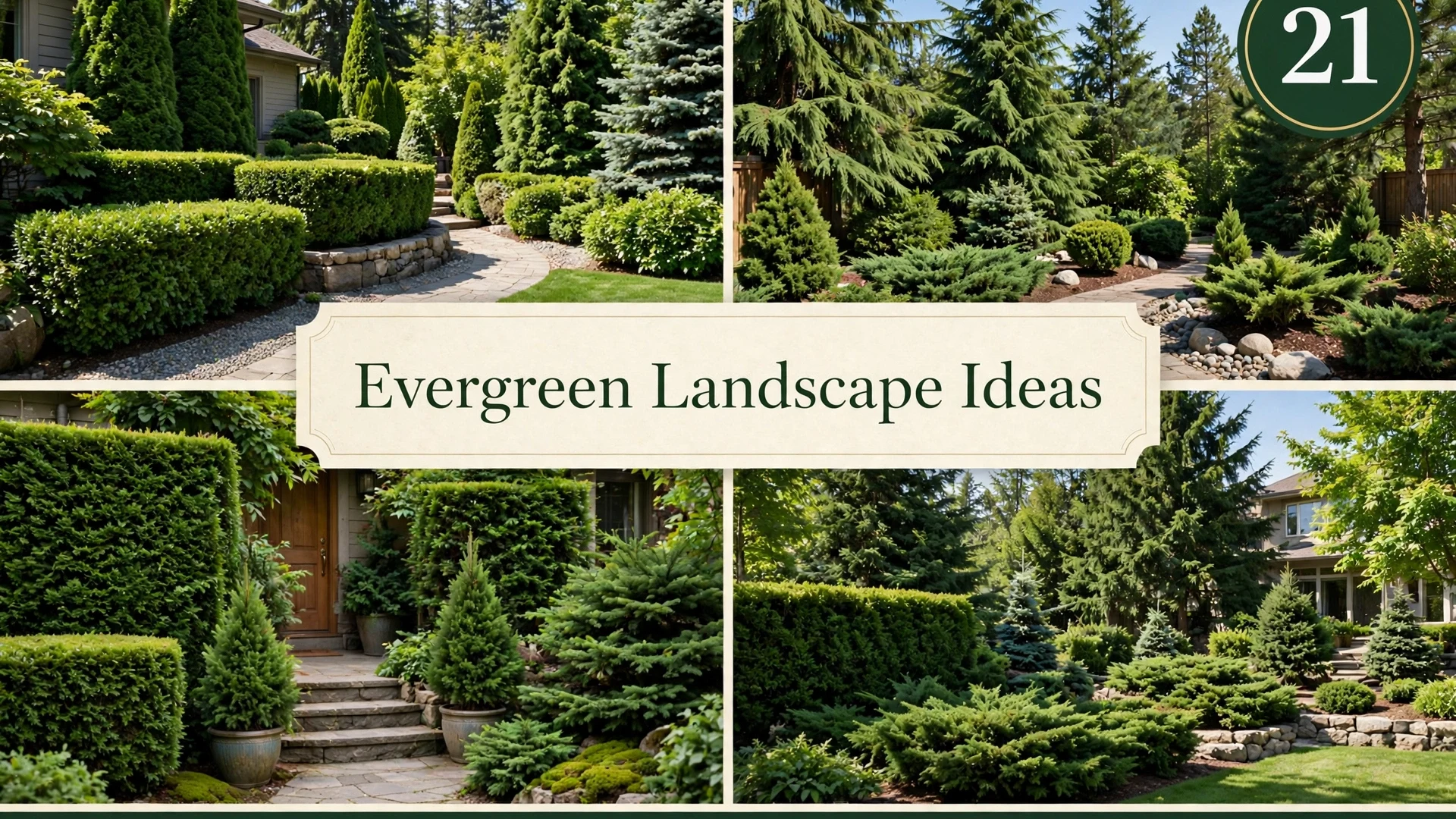
A front yard that looks good in July but bare in January is not really finished. Evergreens solve that problem beautifully, because they hold their color, shape, and structure through every season. These evergreen landscape ideas will help you build a front yard with year-round curb appeal, from low juniper banks and tidy boxwood borders to tall spruce pairs, cedar hedges, and sculpted yews that anchor the whole house.
In this guide, you will find 21 evergreen landscape ideas for front yards of every size and budget. Each one focuses on structure and curb appeal rather than general seasonal chores, so you can mix and match the looks that suit your home, climate, and style. If you also want cold-season color and texture beyond evergreens, see these winter garden ideas for extra inspiration.
1. Blanket a Slope With Juniper Groundcover
A bare front slope is hard to mow and quick to erode, but low spreading juniper turns it into a living carpet. Blue-green juniper varieties hug the ground, knit together over time, and keep their color through winter, so a steep bank looks intentional instead of neglected. Their fine, soft-textured foliage also contrasts nicely with lawn, stone edging, and taller shrubs planted above or below the slope. This living cover also cuts weeding and keeps the slope looking cared for.
Plant junipers in well-drained soil and full sun, spacing them so their mature spread just overlaps. Add a thick layer of mulch while they fill in, and edge the bed with stone or steel to keep mulch and soil in place. Water deeply during the first growing season, then enjoy a slope that needs little mowing, stays green all year, and frames the rest of the front yard. Once established, junipers tolerate drought and poor soil better than lawn grass.
- Choose low, spreading juniper varieties rated for your hardiness zone.
- Mulch heavily at first to suppress weeds while plants fill in.
- Use stone edging to hold soil and mulch on steep slopes.

2. Frame the Front Door With a Spruce Pair
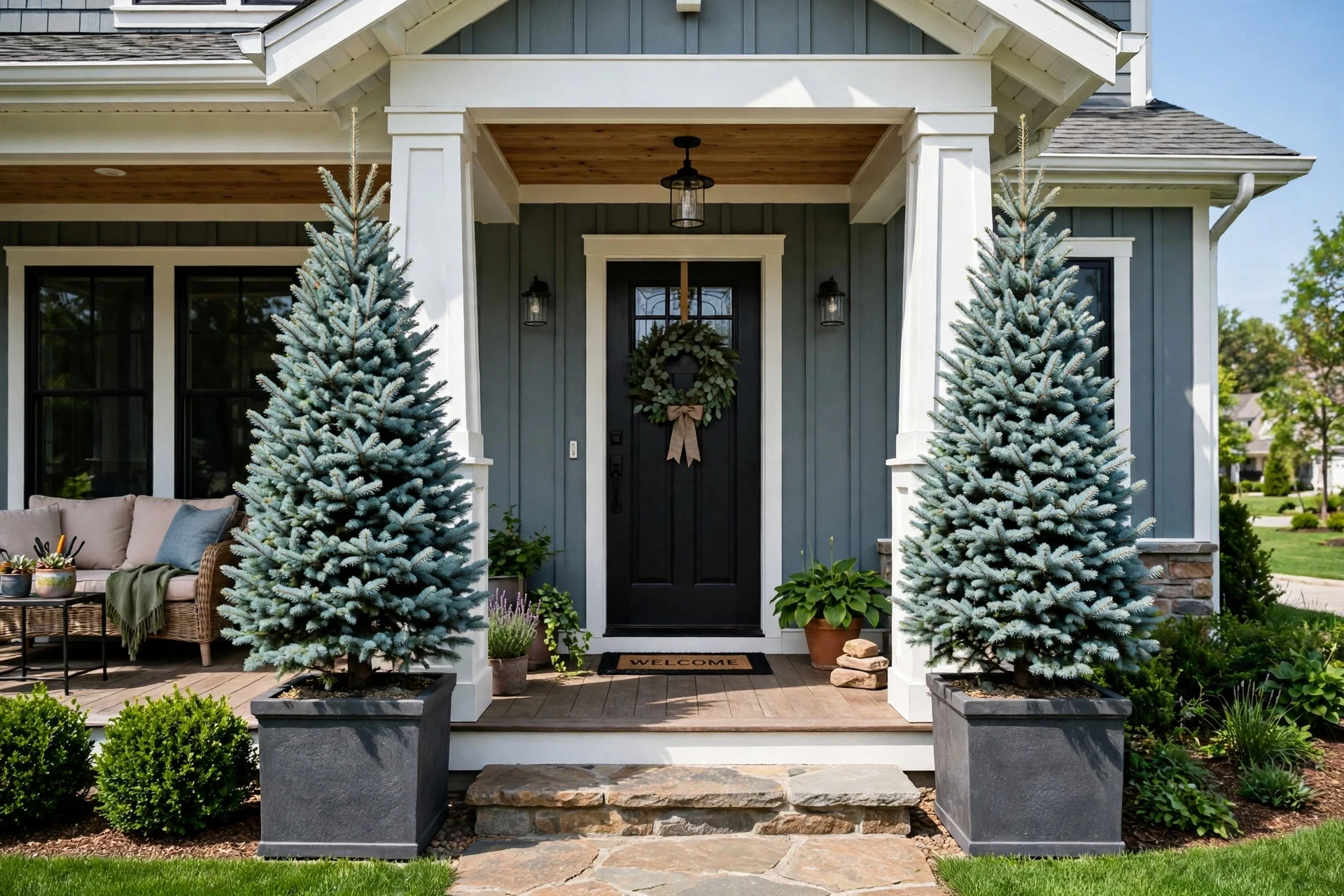
Nothing says welcome like a matching pair of spruce trees flanking the front door. Their neat pyramidal shape draws the eye straight to the entry, adds height to a flat facade, and looks just as good dusted with snow as it does in summer. Blue spruce brings a cool silvery tone, while Norway spruce offers a classic deep green that suits almost any house style. From the street, the pair creates a focal point that makes the facade feel welcoming.
Give each tree room to grow by planting it at least several feet from the house and walkway, and match pot or bed sizes so the pair reads as one deliberate design. Underplant with low evergreen groundcover or seasonal flowers for softness at the base. Prune only lightly to keep the natural pyramid shape, and water well until the roots are established. A light annual feed in spring keeps the foliage dense, richly colored, and healthy through winter.
- Match the height and shape of both trees for a balanced entry.
- Leave room for mature spread so branches never crowd the door.
- Underplant with low groundcover to soften the base.
3. Plant a Tall Cedar Hedge for Privacy
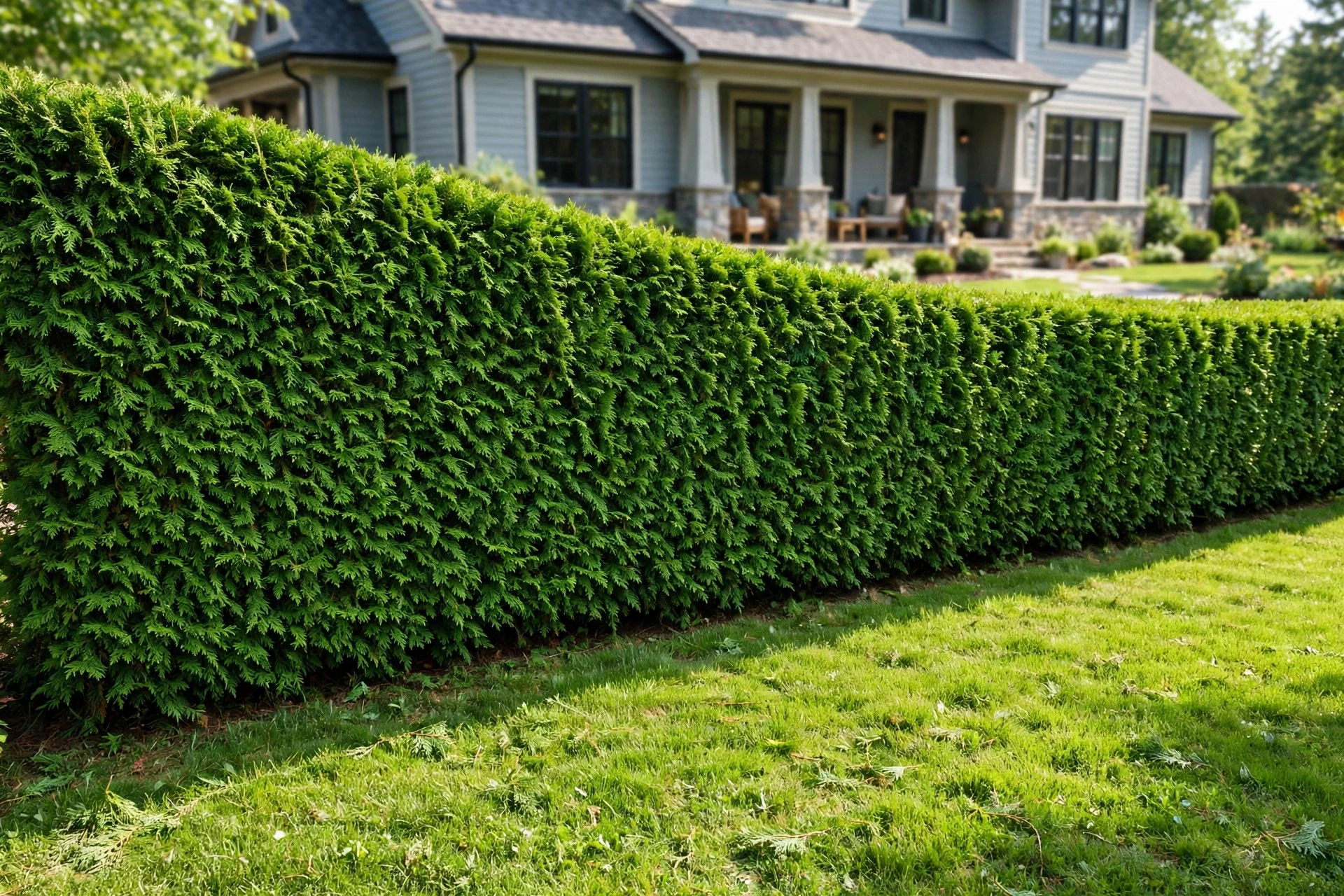
A tall cedar hedge gives a front yard privacy without a fence, and it does the job in every season. Western red cedar and arborvitae-type cedars grow into a dense green wall that blocks street views, softens traffic noise, and makes a small yard feel like a private garden room. Their rich green foliage also makes a beautiful backdrop for flowers, lawn, and the house itself. The hedge also shelters birds and gives the yard a calm, enclosed feeling.
Space plants according to their mature width, usually a few feet apart, and plant in a straight or gently curved line along the property edge. Water regularly for the first two years, mulch the root zone, and shear lightly once a year to keep the hedge full from top to bottom. Avoid cutting into old bare wood, since cedars regrow slowly from it. A soaker hose along the base delivers water efficiently during hot, dry spells in summer.
- Space cedars for mature width so the hedge fills in without crowding.
- Shear lightly each year to keep the hedge dense and even.
- Never cut deep into bare old wood, which regrows slowly.
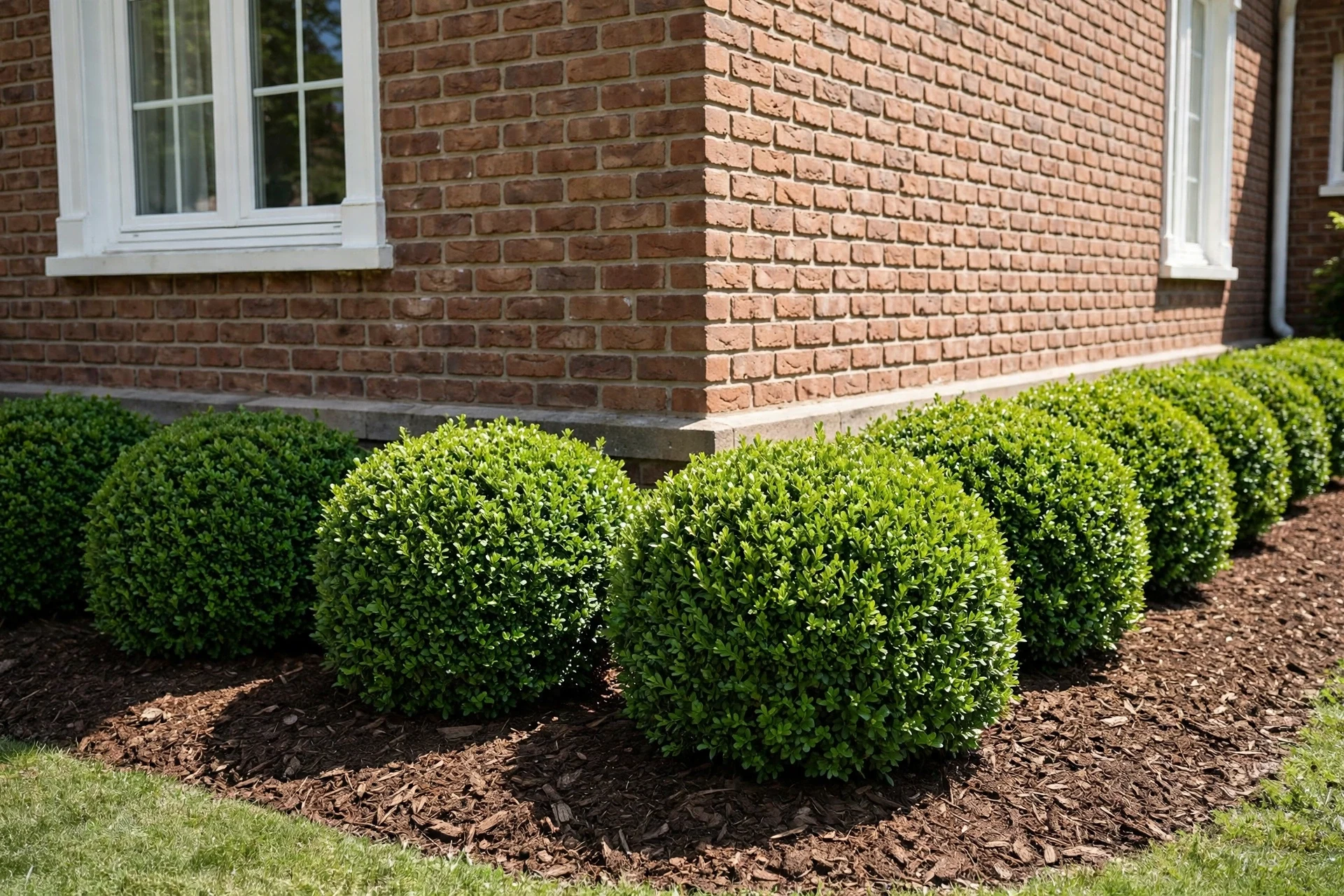
4. Edge the Foundation With Boxwood
Boxwood is the classic foundation shrub for a reason: it is dense, tidy, and easy to shape into the low border that ties a house to its yard. A row of rounded boxwoods softens a stark foundation line, hides vents and pipes, and gives the front of the house a finished look in January as well as June. Their small leaves read as neat and formal from the street. Boxwood also keeps the facade looking finished in every season.
Plant boxwoods a little away from the wall so air circulates and roots stay out of the dry drip zone. Keep them slightly below window-sill height for a balanced look, and shear once or twice a year after new growth hardens. In colder regions, choose hardy varieties, mulch the roots, and protect plants from harsh winter wind and salt spray. Feed lightly in spring and avoid shearing in extreme heat to prevent stress and browning.
- Keep boxwood below window sills so the house never looks hidden.
- Shear after new growth hardens for a crisp, even shape.
- In cold climates, pick hardy varieties and mulch the roots well.
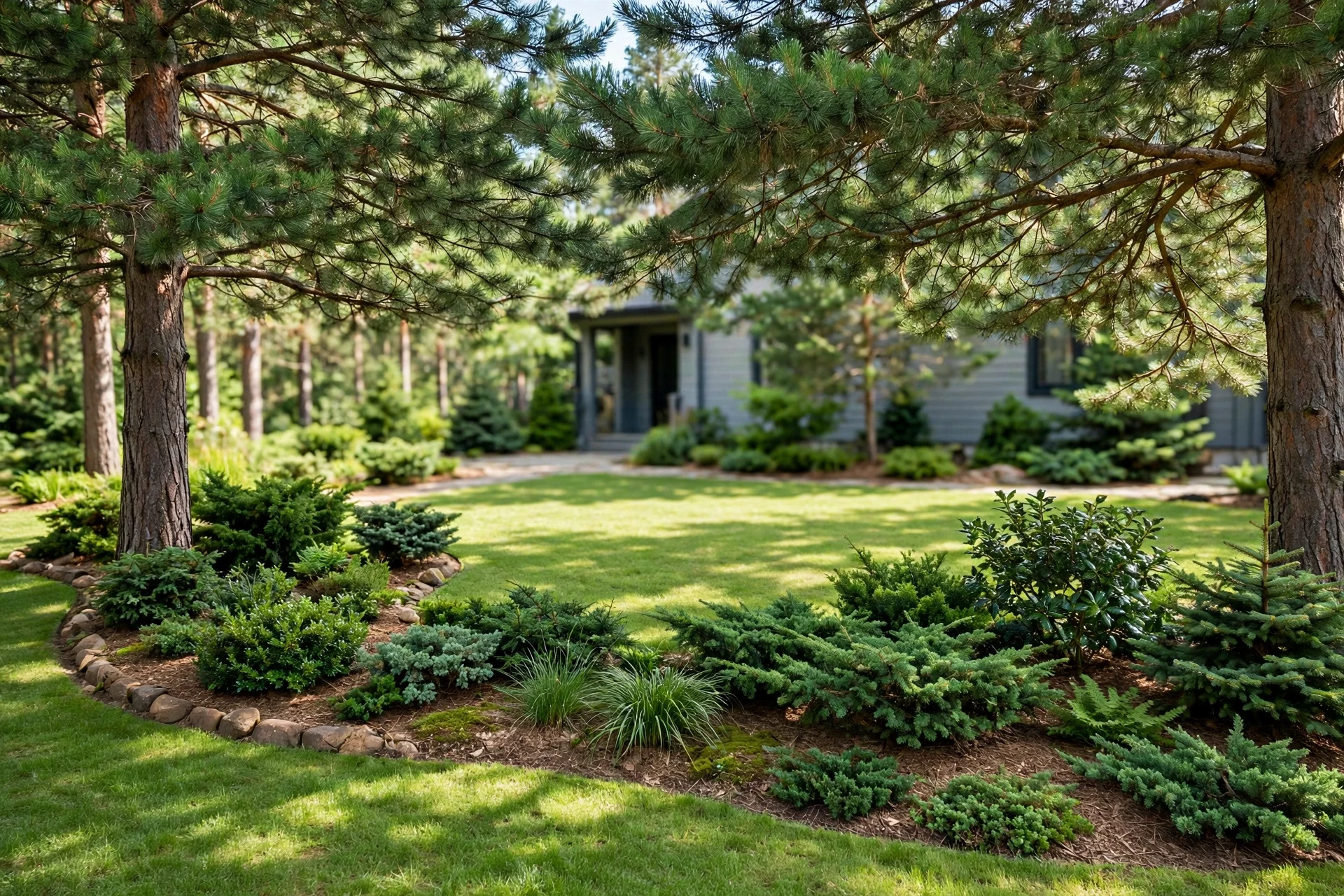
5. Let Pine Trees Frame the Whole Yard
Mature pine trees give a front yard instant presence, framing the house with height, shade, and a soft green canopy. Their long needles filter sunlight into dappled shade, which makes lawns and beds below feel cooler and more inviting. Pines also add a wonderful scent after rain and a gentle rustling sound that makes the whole yard feel alive. Their canopy also creates a natural ceiling that makes outdoor seating beneath feel sheltered.
Use pines as the tall layer of the landscape, placing them where their shade falls on the lawn or patio rather than over the roof. Clean up fallen needles for mulch in acid-loving beds, and underplant with shade-tolerant evergreen shrubs. Choose a species suited to your soil and space, and leave plenty of room for its mature canopy. Rake needles regularly from paths and gutters so they enrich beds instead of causing blockages.
- Place pines where shade benefits the lawn, not the roof.
- Use fallen pine needles as mulch for acid-loving plants.
- Underplant with shade-tolerant evergreen shrubs for layered depth.
6. Line the Walkway With Topiary Spheres
Topiary spheres turn an ordinary walkway into a garden feature. A row of perfectly round evergreen balls, whether boxwood, yew, or privet, adds rhythm, polish, and a touch of formality that guides visitors toward the door. The repeated round shapes also look striking against straight paths, square pavers, and the strong lines of a house. At night, low path lights make the spheres glow softly and guide guests safely to the door.
Space spheres evenly on both sides of the path, and keep them at a consistent height so the line feels deliberate. Shear a few times during the growing season to hold the round shape, and feed plants lightly in spring. For a lower-maintenance version, use naturally rounded dwarf evergreens that need only a light annual trim. Replace any struggling plant right away so the row keeps its crisp, uniform rhythm all year.
- Keep every sphere the same size for a clean, rhythmic line.
- Shear during the growing season to hold the round shape.
- Try dwarf rounded varieties for a lower-maintenance version.

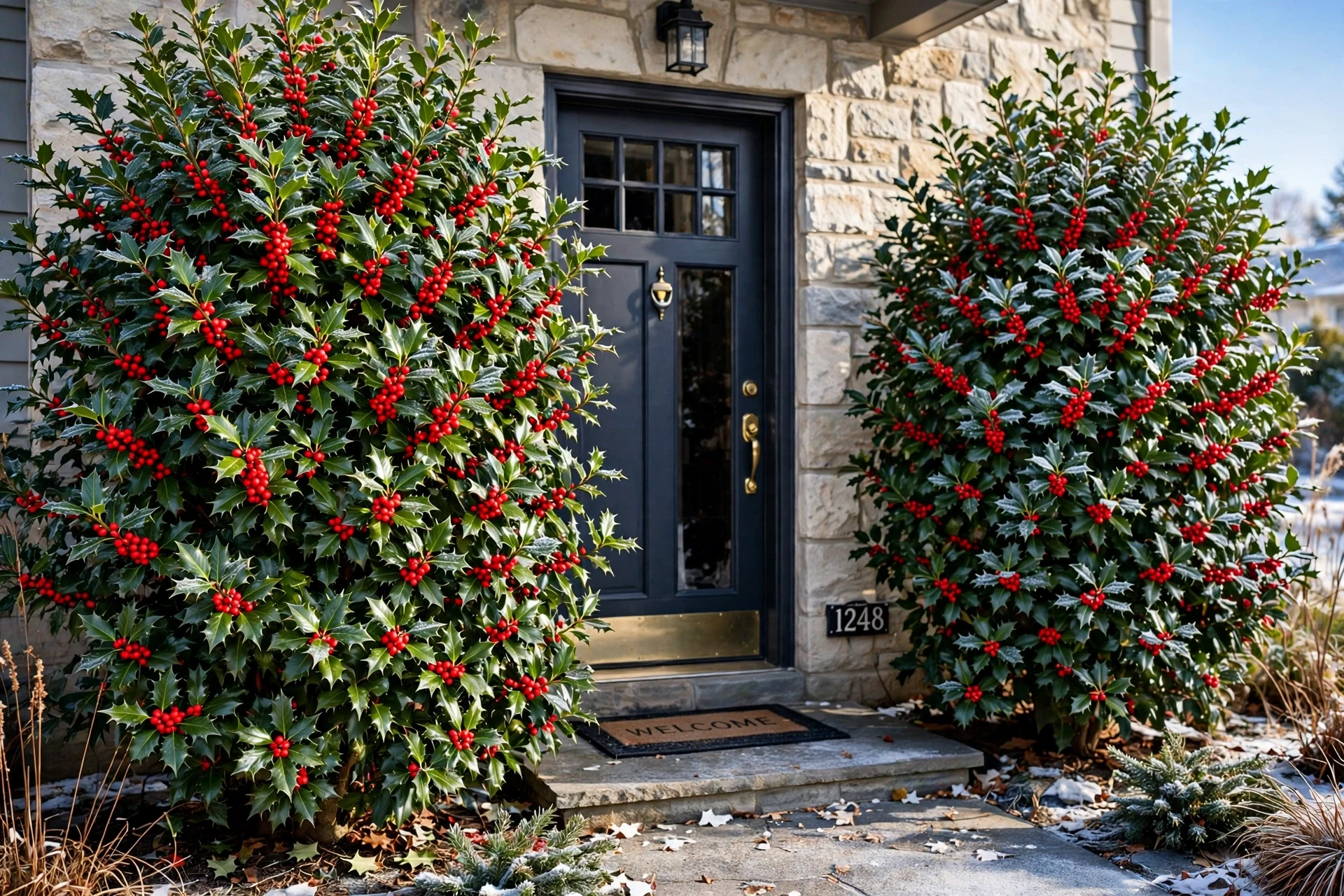
7. Add Holly Berries Beside the Entry
Holly is the evergreen that truly earns its place in winter, with glossy dark leaves and clusters of bright red berries that glow against a front door. A pair of hollies beside the entry adds festive color from late fall through winter, when most other plants have gone quiet. The spiny leaves also give the planting a crisp, architectural texture. In snowy regions, the berries stand out beautifully and feed birds through the coldest months.
Remember that most hollies need a male pollinator nearby to set berries, so plant a compatible pair or choose a self-fertile variety. Give hollies sun and well-drained soil, mulch the roots, and prune lightly after berry season. Keep them clear of walkways, since the spiny leaves can scratch, and enjoy the free winter color. A layer of mulch also protects shallow roots and keeps soil moisture steady through summer heat and winter cold.
- Plant a male pollinator nearby, or choose a self-fertile variety.
- Prune after berry season so you never cut off next winter’s color.
- Keep spiny branches clear of narrow walkways.
8. Anchor House Corners With Arborvitae
House corners often look harsh and unfinished, and tall arborvitae softens them perfectly. Planted at each front corner, these narrow evergreens draw the eye upward, blend the house into the landscape, and hide the sharp meeting of two walls. Their soft, flat sprays of foliage stay green all year and give even a simple home a more finished silhouette. Paired with low shrubs, they also hide downspouts and soften the transition from wall to lawn.
Choose a variety that matches your space: narrow columnar types for tight corners, wider pyramids for larger lots. Plant far enough from the foundation for mature width, and stagger a lower shrub in front so the base never looks bare. Water deeply in the first year, mulch well, and shear lightly only if the shape needs tidying. Check for winter burn after harsh winds and trim damaged tips in spring for fresh growth.
- Pick narrow varieties for tight corners and wider ones for big lots.
- Stagger a lower shrub in front so the base never looks bare.
- Water deeply in year one to build a strong root system.

9. Sculpt Yews Along the Foundation
Yews are among the most forgiving evergreens for foundation planting, because they tolerate shade, pruning, and shaping better than almost any other conifer. Their soft dark-green needles form dense hedges, rounded mounds, or crisp geometric shapes that hold their form through winter. That flexibility makes yews ideal for the shaded north side of a house. Their tolerance for shade also makes them useful under overhangs where sun rarely reaches the soil.
Plant yews in well-drained soil and give them room to reach their mature size, since constant heavy shearing stresses the plant. Shape them once or twice a year, stepping back often to check the overall line. Note that yew foliage and seeds are toxic if eaten, so keep plants away from areas where small children or pets graze on garden plants. A fresh mulch layer each spring also conserves moisture and gives beds a tidy finish.
- Use yews on shaded foundations where many evergreens struggle.
- Shape once or twice a year, checking the line from the street.
- Remember yew foliage and seeds are toxic if eaten.

10. Build a Mixed Evergreen Island Bed
An island bed in the middle of a front lawn breaks up a flat expanse of grass and creates a focal point you can enjoy from the street and the porch. Mixing a small spruce, rounded shrubs, spreading junipers, and a few boulders gives the bed height, texture, and color in every season. The layered look feels like a miniature landscape rather than a random collection of plants. A bench nearby turns the bed into a destination, not just decoration.
Start with one taller evergreen as the anchor, then add medium shrubs around it and low spreaders at the edges. Keep the bed large enough to look generous, with a clean curved edge and mulch that ties it together. Leave lawn access around all sides for mowing, and repeat one or two plants from the foundation beds for cohesion. Solar path lights around the edge also make the island bed glow after dark.
- Anchor the bed with one taller evergreen, then layer down in height.
- Make the bed generous so it reads as a real garden feature.
- Repeat plants from foundation beds to tie the yard together.

11. Tuck Dwarf Conifers Into a Rock Edge
Dwarf conifers are made for rock gardens and tight front-yard edges, where full-size evergreens would overwhelm the space. Miniature pines, spruces, and junipers grow slowly into dense cushions, cones, and mounds that nestle beautifully among boulders and gravel. Their small scale adds detail and charm close to paths, steps, and seating areas. Small alpine plants tucked between stones also add seasonal flowers without hiding the conifers or competing for root space.
Plant dwarf conifers in sharply drained soil, amending heavy clay with gravel or grit so roots never sit wet. Tuck them between rocks at varied heights, leaving gaps of gravel or low groundcover so each plant shows its shape. Check mature sizes carefully, since even dwarf varieties keep growing slowly, and prune only to remove dead wood. A gravel mulch also suppresses weeds, improves drainage, and highlights each plant’s sculptural form.
- Use gravel-amended soil so dwarf conifer roots never sit wet.
- Space plants so each shape shows against rock and gravel.
- Check mature size before planting, even for dwarf varieties.

12. Soften a Stone Retaining Wall With Evergreens
A stone retaining wall gives a front yard structure, but bare stone can look cold. Trailing junipers, creeping evergreens, and low shrubs planted along the top and base soften the hard edges, spill gently over the stone, and connect the wall to the rest of the garden. The green-on-stone contrast looks natural and expensive at the same time. Climbing roses or clematis nearby can also add summer flowers without hiding the evergreen structure.
Plant cascading evergreens near the top edge so they drape over time, and anchor the base with rounded shrubs that hide the footing. Choose plants that tolerate the dry, reflected heat near stone, and water well until established. Keep the wall itself visible in places, since the stone is part of the beauty, not something to hide completely. Check drainage behind the wall regularly so water never builds up and pushes stones outward.
- Let trailing evergreens drape from the top edge over time.
- Anchor the base with rounded shrubs that hide the footing.
- Leave some stone visible so the wall stays a feature.

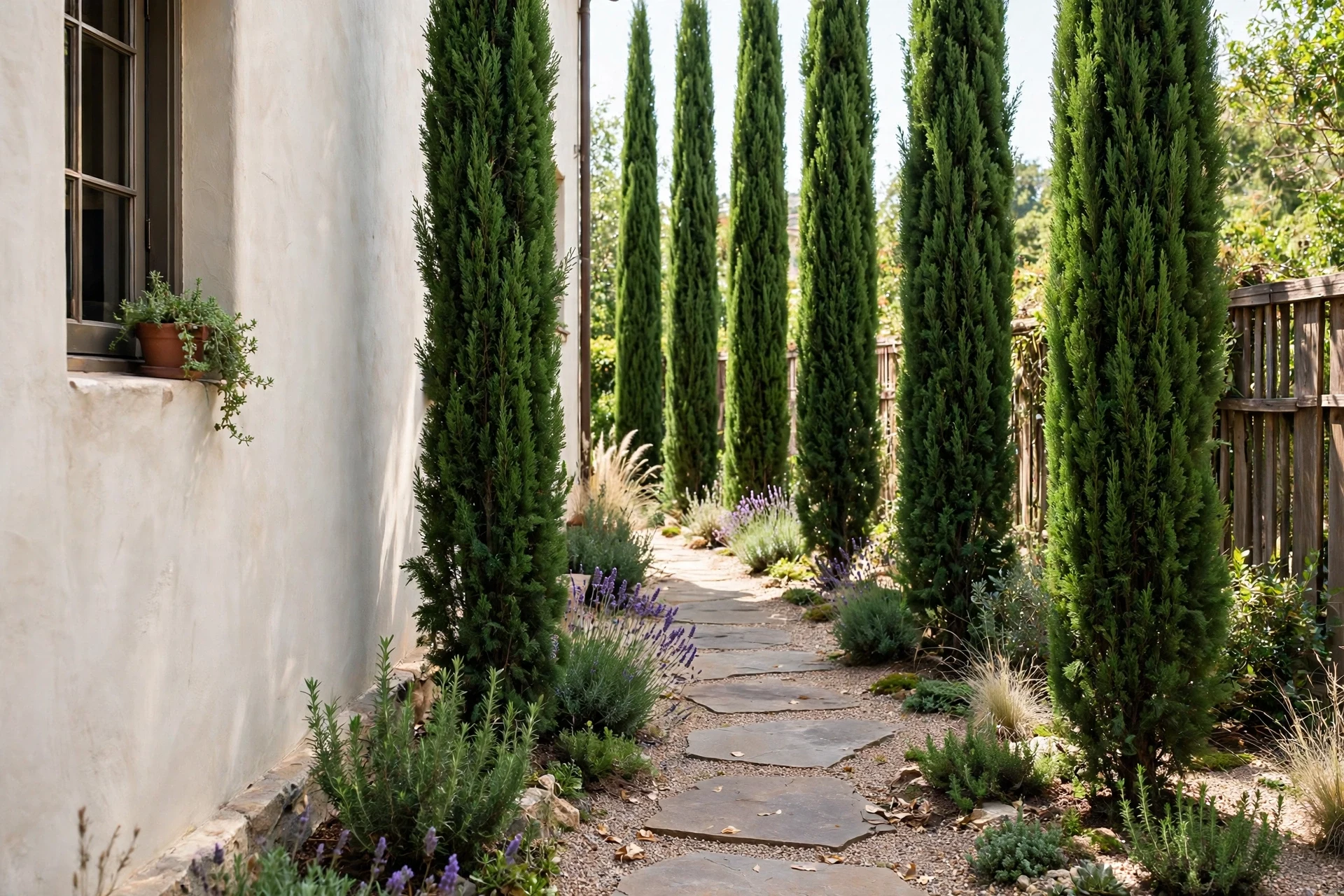
13. Go Vertical With Slender Cypress
When front-yard space is tight, slender cypress trees add drama without taking over. Italian cypress and similar columnar evergreens rise like green exclamation points, framing gates, flanking narrow beds, and drawing the eye upward in small yards. Their dark green columns contrast beautifully with low spreading plants and pale house walls. Repeated along a fence, they create a rhythmic colonnade that feels formal, Mediterranean, and calming from the street even in a small yard.
Plant cypress in full sun and well-drained soil, spacing them for their narrow mature width rather than their height. In cold climates, choose hardy columnar juniper or arborvitae instead, which give the same vertical line with better winter survival. Stake young trees only until roots anchor, and avoid shearing the natural column shape. Mulch and occasional deep watering also help young cypress establish strong, wind-resistant roots that anchor the tall, narrow canopy.
- Use columnar evergreens where width is limited but height is welcome.
- In cold zones, swap Italian cypress for hardy columnar juniper.
- Do not shear the natural column shape out of the tree.
14. Back Flower Beds With Tall Firs
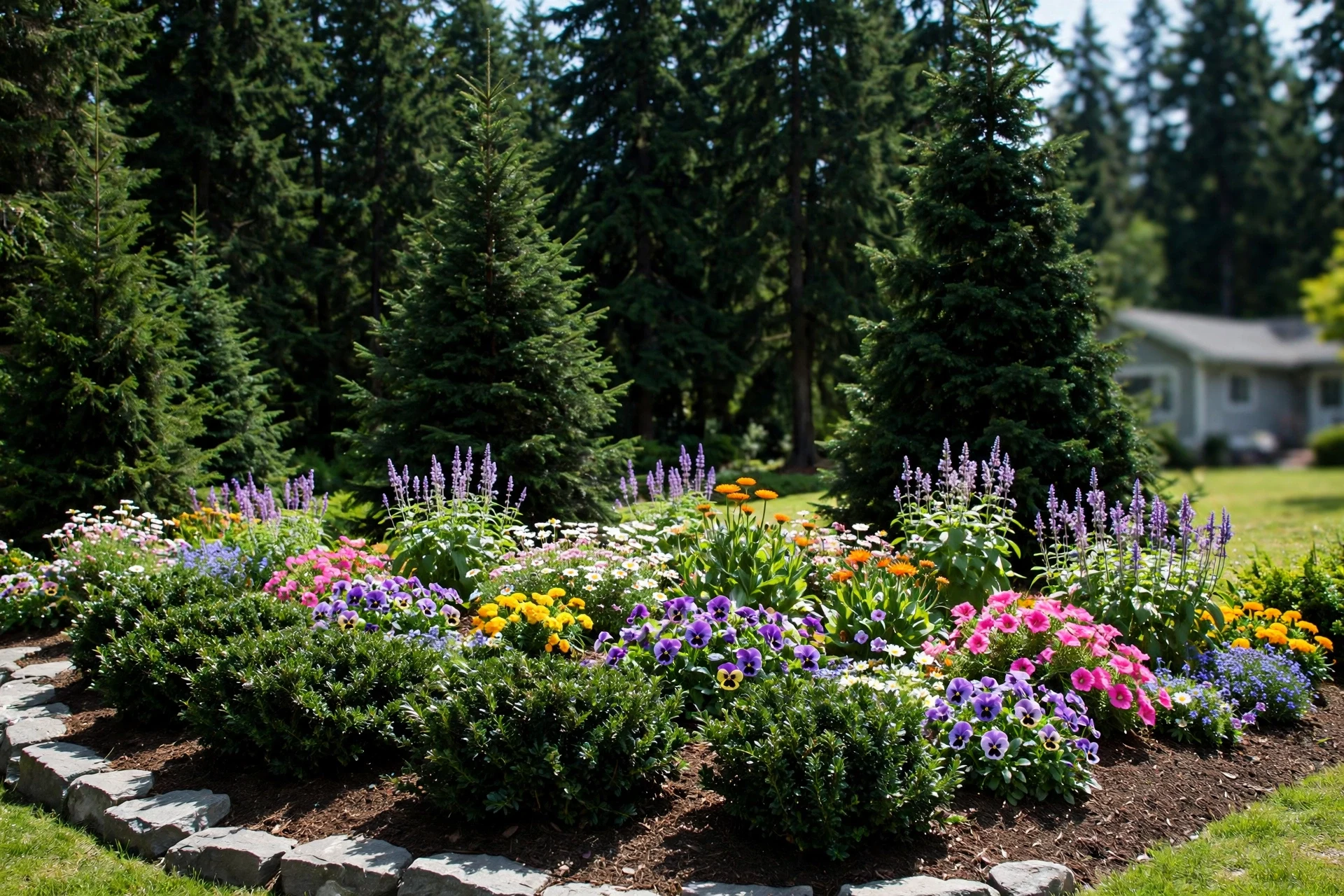
Flower beds look their best with a dark green backdrop, and tall firs provide exactly that. Planted behind a front flower border, firs make blooms pop, give the bed depth, and keep the garden looking structured long after the flowers fade. Their layered branches and deep color also screen neighboring houses and soften the skyline. In autumn, the dark firs also make fall foliage and late flowers appear even more vivid.
Place firs far enough behind the bed that flowers still get sun, and leave a maintenance path between trees and plantings. Underplant the firs with shade-tolerant evergreen shrubs so the base stays green rather than bare. Choose a fir suited to your climate and soil, and water deeply during dry spells in the first few years. A thick mulch layer under the firs also keeps soil cool, moist, and free of weeds.
- Keep flowers in sun by placing firs well behind the border.
- Leave a maintenance path between trees and flower beds.
- Underplant fir bases with shade-tolerant evergreen shrubs.
15. Fill Porch Planters With Evergreens
Porch planters are the fastest way to add evergreen structure, especially for renters or anyone not ready to dig new beds. A pair of large pots filled with dwarf spruce, boxwood, or trailing ivy frames the door, adds height at eye level, and stays green through winter. Planters also let you test a look before committing to plants in the ground. Swapping a few seasonal accents each season also keeps planters fresh without replanting the evergreens.
Use large, frost-proof pots with drainage holes, and fill them with quality potting mix rather than garden soil. Combine a taller evergreen thriller, rounded fillers, and a trailing spiller for a finished arrangement. Water when the top inch of soil dries, feed lightly in spring, and refresh tired plants each year without redoing the whole display. In freezing weather, move small pots near a sheltered wall to protect roots from hard frost.
- Use large frost-proof pots so roots survive winter cold.
- Combine a thriller, fillers, and a spiller for a full look.
- Water when the top inch of mix dries out.

16. Plant a Southern Magnolia as a Statement Tree
In warmer regions, a southern magnolia is a show-stopping evergreen statement tree for the front yard. Its large glossy leaves stay green all year, its creamy white summer flowers smell wonderful, and its bold scale gives a house real presence from the street. A single magnolia can anchor an entire front landscape on its own. Its broad canopy also shades the lawn below, creating a cool retreat on hot summer afternoons.
Give a magnolia plenty of room, since it grows wide as well as tall, and plant it away from driveways where falling leaves and seed pods need clearing. Mulch the root zone generously and avoid piling soil against the trunk. Underplant with shade-tolerant shrubs once the canopy develops, and enjoy a tree that looks grand in every season. Avoid planting near septic lines or shallow pipes, since magnolia roots spread widely over time.
- Allow room for both height and width at maturity.
- Mulch generously and keep soil off the trunk.
- Underplant with shade-tolerant shrubs as the canopy fills in.

17. Fill Shady Foundations With Rhododendron
Shady front foundations are a challenge for many evergreens, but rhododendrons thrive there. These broadleaf evergreens bring large glossy leaves all year and spectacular spring flowers in pink, purple, white, or red. A row of rhododendrons softens a shaded wall, fills a difficult corner, and gives the front of the house color when little else blooms. Their spring blooms also attract pollinators and give shaded yards a welcome burst of color.
Plant rhododendrons in acidic, well-drained soil enriched with organic matter, and mulch to keep roots cool and moist. Give them morning sun and afternoon shade where possible, and water during dry spells, since their shallow roots dry out quickly. Prune lightly after flowering to shape plants without removing next year’s buds. Avoid planting in waterlogged soil, since wet roots quickly lead to root rot and decline, especially in heavy clay that never drains properly.
- Use acidic, organic-rich soil and mulch to keep roots cool.
- Give morning sun and afternoon shade for best flowering.
- Prune after flowering so next year’s buds stay intact.

18. Screen the Boundary With a Laurel Hedge
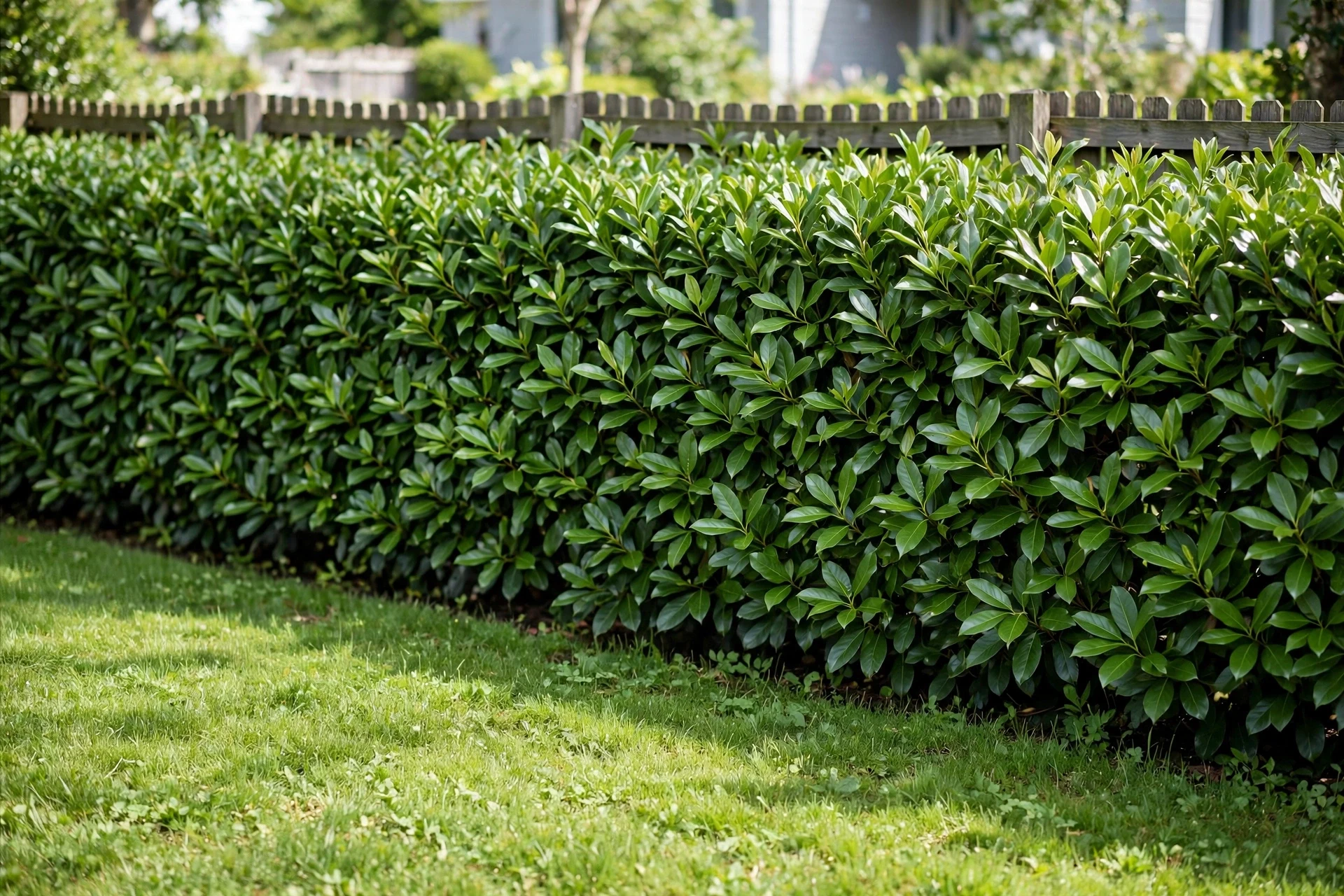
For a fast, lush boundary screen, few evergreens beat laurel. Cherry laurel and English laurel grow quickly into a dense wall of large glossy leaves that blocks views, muffles sound, and gives a front yard a sense of enclosure. Unlike needle evergreens, laurel has a soft broadleaf look that suits cottage, traditional, and modern homes alike. A laurel hedge also muffles street noise noticeably, making front patios feel quieter and more private.
Space laurels for their mature width, usually several feet apart, and prune with hand shears rather than hedge trimmers to avoid shredding the large leaves. Water well in the first two years and mulch the roots. Keep the hedge to a height you can maintain safely, and check local rules, since laurel grows vigorously in mild climates. Feed in spring with a balanced fertilizer to encourage dense, glossy growth through the season.
- Prune with hand shears to avoid shredding large laurel leaves.
- Keep the hedge at a height you can safely maintain.
- Water well for two years until the screen is established.
19. Dress Up the Mailbox With Dwarf Evergreens
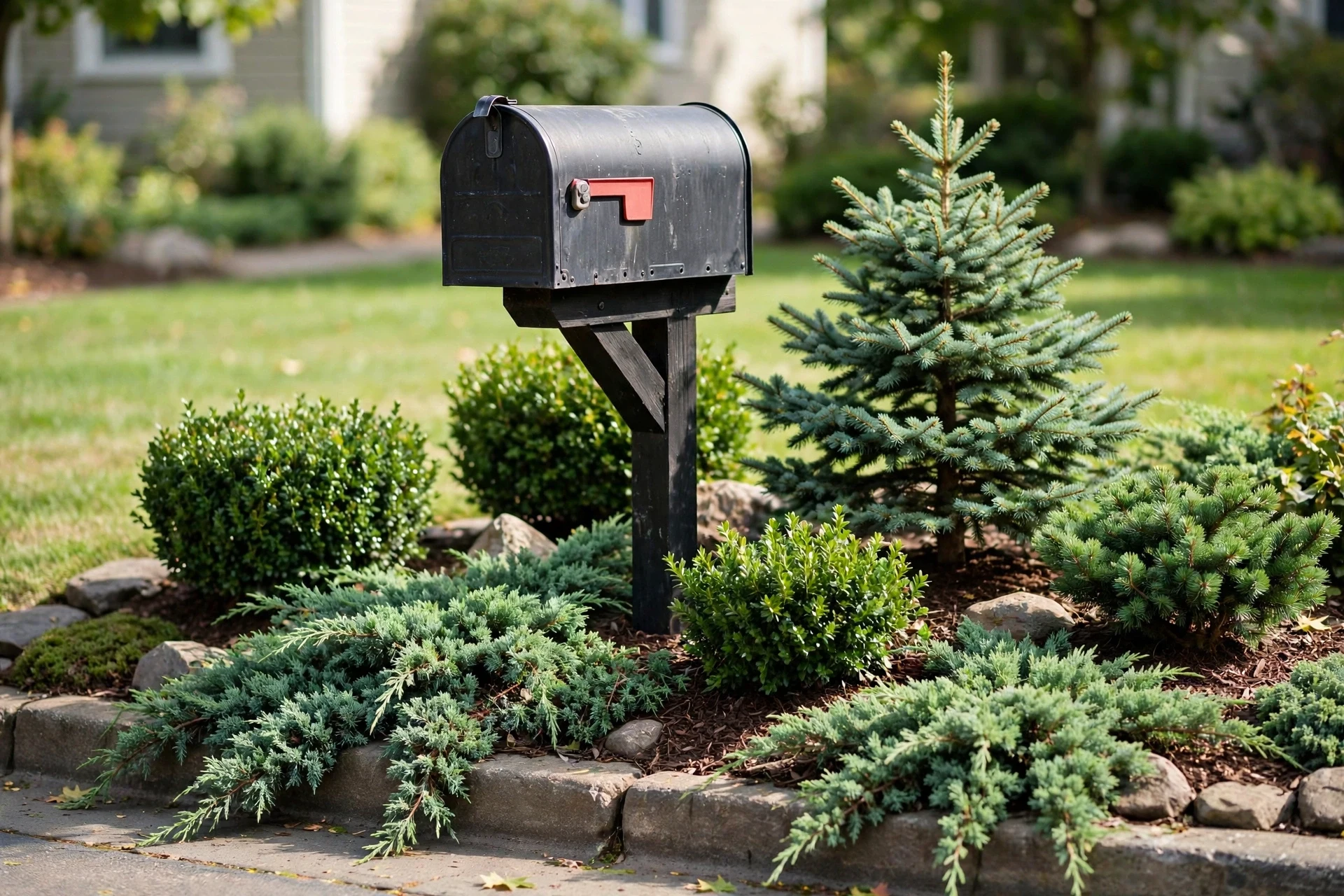
The mailbox is often the first thing visitors see, yet it is usually surrounded by bare grass. A small bed of dwarf evergreens around the mailbox post turns that overlooked spot into a miniature garden, with year-round green that looks neat from the street. It is a small project with an outsized effect on curb appeal. A few spring bulbs at the base also add color without competing with the evergreen structure.
Keep plants low and clear of the mailbox door and the road, following any local rules about mailbox clearance. Choose dwarf junipers, boxwood, or mounding spruce that stay compact, and edge the bed neatly with stone or brick. Mulch well, water until established, and trim lightly once a year to keep the planting tidy. Check the bed each spring and replace mulch so the mailbox garden always looks crisp and welcoming for visitors and delivery drivers alike.
- Keep plants clear of the mailbox door and road clearance rules.
- Choose compact dwarfs that will not outgrow the small bed.
- Edge neatly with stone or brick for a finished look.
20. Curve a Boulder Bed Around the Front Yard
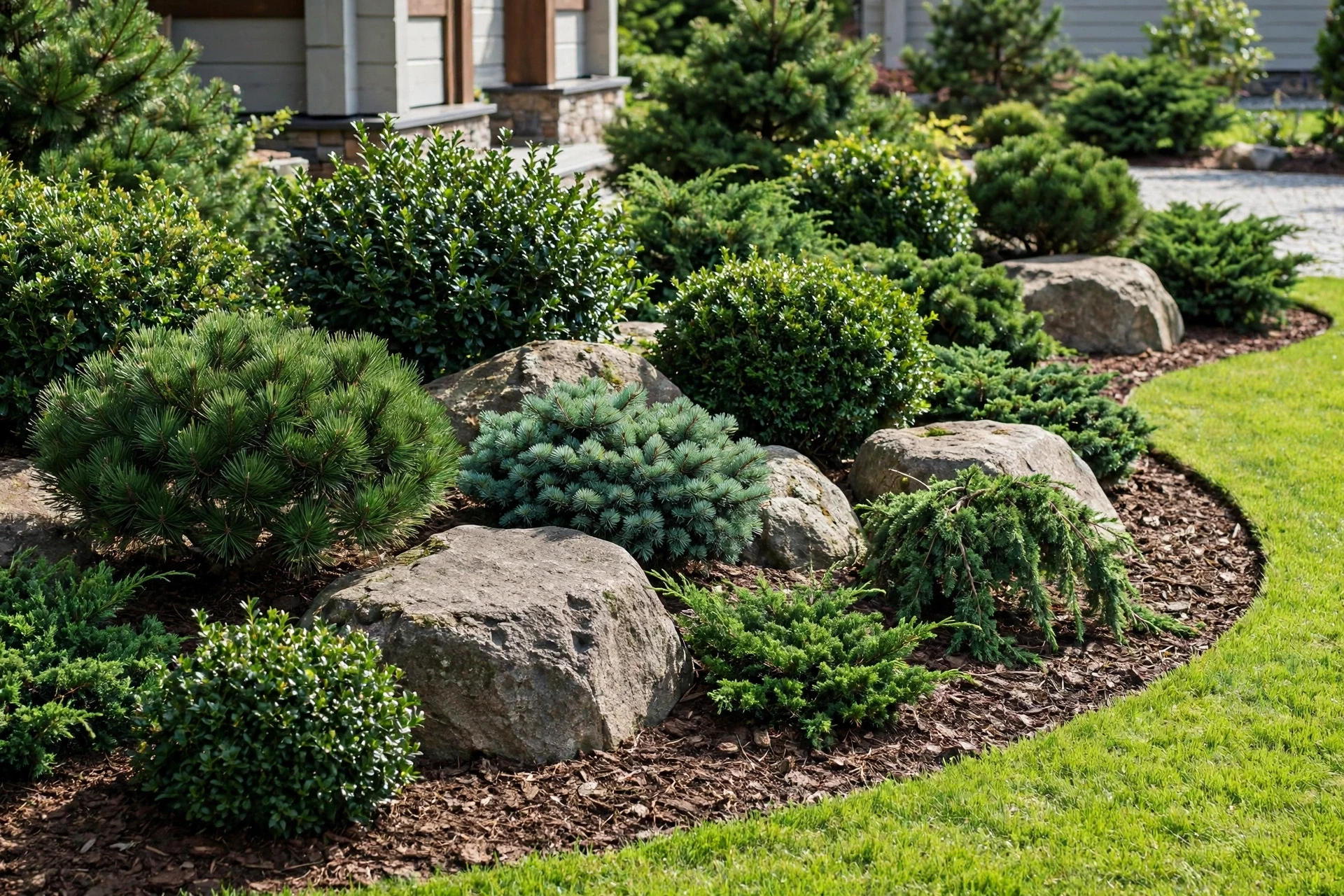
A curved bed of evergreens and boulders softens a rectangular front yard and creates a natural, landscape-designed feel. The sweeping curve leads the eye toward the door, while large stones add permanence and texture that plants alone cannot provide. Evergreens keep the bed looking full in winter, when a perennial bed would disappear. Groundcover between stones also ties the bed together and prevents bare soil from showing through the planting in winter.
Set the largest boulders first, burying a third of each stone so it looks naturally placed rather than perched on the surface. Plant evergreens of varied heights between the stones, and finish with mulch or gravel. If the bed sits near a seating area, keep sight lines open toward a cozy backyard fire pit so the front and back gardens feel connected. Choose stones in a consistent color family so the bed feels designed rather than randomly assembled.
- Bury a third of each boulder so stones look naturally placed.
- Vary evergreen heights between stones for a natural rhythm.
- Finish with mulch or gravel to unify the bed.
21. Line the Driveway With an Evergreen Allée
An allée of evergreen trees along the driveway is one of the grandest curb-appeal moves a homeowner can make. Evenly spaced trees on both sides create a green corridor that frames the approach, makes the drive feel like an entrance, and looks magnificent in every season. The effect works for long country drives and shorter suburban driveways alike. Overhead, the canopies eventually meet to form a green tunnel that feels magical in summer.
Choose one species and one size for a formal allée, spacing trees evenly and far enough from the drive for mature canopies and roots. Columnar evergreens suit narrow drives, while broader spruces or pines suit wider ones. Water and mulch young trees well, protect trunks from mowers and cars, and be patient while the corridor fills in. Underplant the trees with low evergreen groundcover to keep the drive edges neat and weed-free.
- Use one species and size for a formal, unified allée.
- Space trees for mature canopy and root spread, not just day one.
- Protect young trunks from mowers and car doors.

Conclusion
The best evergreen landscape ideas are the ones that fit your house, your climate, and the way you actually use your front yard. Start with one anchor, whether that is a spruce pair by the door, a cedar hedge for privacy, or a boxwood border along the foundation, and build outward from there. Layer heights, mix textures, and leave room for plants to grow into their mature shapes.
With a little planning, your front yard can look intentional and inviting in every season, not just in spring. Pick the evergreen landscape ideas that excite you most, plant them well, and enjoy a front yard with year-round curb appeal that welcomes you home every single day.
Frequently Asked Questions
What are the best evergreen plants for front-yard curb appeal?
Boxwood, juniper, yew, arborvitae, spruce, cedar, and holly are reliable choices for most front yards, because they stay green, hold their shape, and suit a range of styles. The best pick depends on your sunlight, soil, hardiness zone, and available space, so check mature size and cold tolerance before planting.
Do evergreen landscapes need a lot of maintenance?
Most evergreen landscapes need less maintenance than flower-heavy beds, but they still need watering while establishing, mulching, and occasional pruning to hold their shape. Slow-growing varieties and naturally tidy forms, like dwarf conifers and rounded boxwood, keep yearly upkeep especially low.
How do I keep evergreens green through winter?
Water evergreens deeply in late fall before the ground freezes, mulch the root zone, and protect plants from drying winter wind and road salt where possible. Most winter browning comes from dehydration rather than cold alone, so fall watering and wind protection make the biggest difference.
Can I mix evergreens with flowers and ornamental grasses?
Yes, and the combination usually looks better than evergreens alone. Use evergreens as the year-round structure, then add seasonal flowers, grasses, and bulbs in front of them for color and movement. The evergreen backdrop makes flowers stand out and keeps the bed attractive after blooms fade.
What evergreen works best for a small front yard?
For small front yards, choose compact or columnar evergreens such as dwarf juniper, dwarf spruce, narrow arborvitae, or columnar juniper. These give height and structure without overwhelming the house, and they fit narrow beds, planters, and tight corners where larger trees would crowd the space.
How far from the house should I plant evergreen trees?
Plant trees at least half their mature canopy width away from the house, and shrubs a little away from the wall for air circulation. This spacing prevents branches from rubbing the siding, keeps roots away from foundations, and gives each plant room to reach its natural shape without constant heavy pruning.