
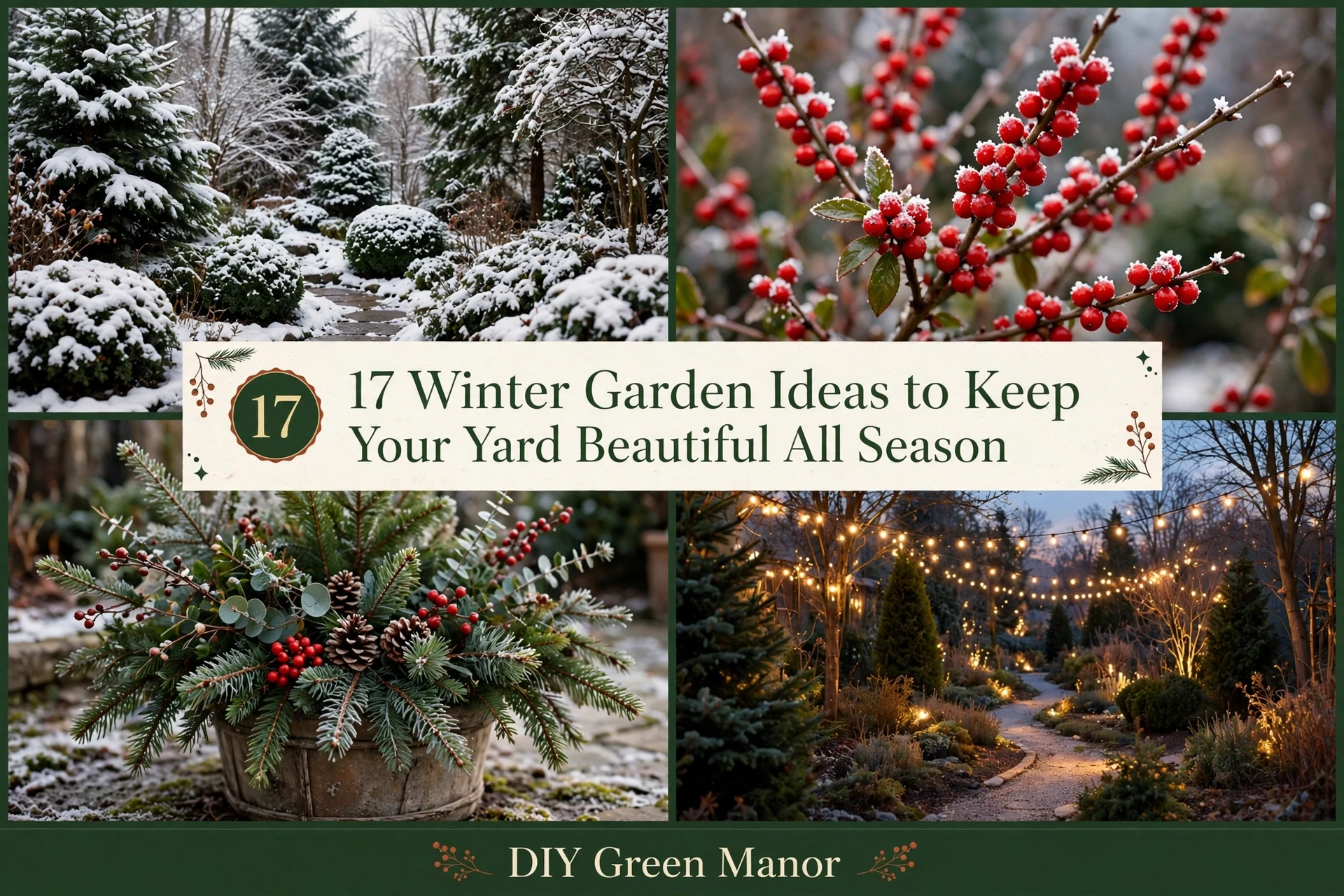
17 Winter Garden Ideas to Keep Your Yard Beautiful All Season
When the last leaves fall and frost settles in, it is easy to assume the garden season is over. But some of the most beautiful yards are the ones planned for winter, with structure, color, and texture that shine even on the coldest days. These winter garden ideas will help you turn a bare, gray yard into a space you actually enjoy looking at from the window — and walking through on a crisp afternoon.
In this guide, you will find 17 practical winter garden ideas for every yard size and budget, from evergreen structure and winter-blooming plants to frost protection, lighting, wildlife-friendly touches, and small-space solutions. Whether you have a large backyard or a single balcony, there is something here to keep your outdoor space beautiful all season long.
1. Build Your Winter Garden Around Evergreen Structure
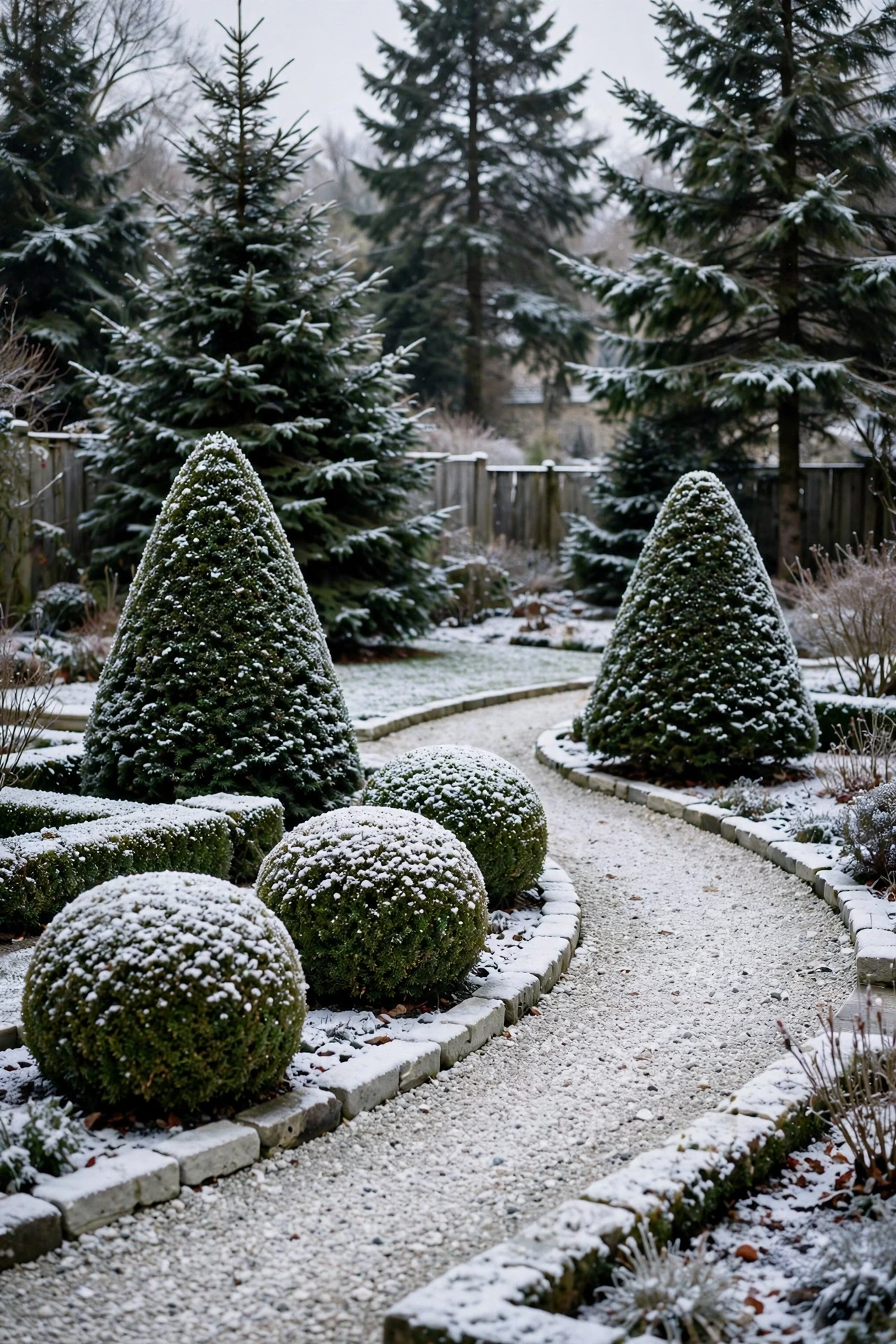
Evergreens are the backbone of any good winter garden, because they hold their shape and color long after everything else has gone dormant. Boxwood, yew, spruce, and juniper give your yard a sense of order in January, framing paths, anchoring beds, and screening views that look bare without them. Even a few well-placed evergreens can make the whole garden feel intentional rather than abandoned.
Start by placing one larger evergreen at each corner of a bed or flanking an entry, then fill in with smaller rounded shrubs for rhythm. Mix shapes — cones, balls, and low spreaders — so the planting does not look flat. In colder zones, choose varieties rated for your area, water them well before the ground freezes, and mulch the roots to protect against freeze-thaw cycles.
- Mix cone, ball, and spreading evergreen shapes for visual depth.
- Water evergreens deeply in late fall before the ground freezes.
- Mulch roots with 2–3 inches of bark to insulate against freeze-thaw.
2. Plant Shrubs With Striking Winter Bark and Stems
Once leaves drop, bark and stems take center stage, and a few smart choices can light up a winter garden. Red twig dogwood glows crimson against snow, yellow twig dogwood adds a warm glow, and paperbark maple or river birch offers peeling, textured bark that looks beautiful up close. These plants earn their place twice: pretty foliage in summer, and drama all winter.
Plant bark-interest shrubs where you will see them daily — beside a path, outside a kitchen window, or near the front door. Group three to five of the same variety together for a stronger color block, and prune out a third of the oldest stems each spring to encourage bright new growth. Pair them with evergreens so the color pops against a dark green backdrop.
- Group red twig dogwood in threes or fives for a bold color block.
- Place bark-interest shrubs near windows and paths you use daily.
- Prune oldest stems each spring to keep stem color vivid.

3. Fill Winter Containers With Evergreen Arrangements
Empty pots are one of the saddest winter sights, but a winter container arrangement fixes that in an afternoon. Fresh-cut evergreen branches, pinecones, red berries, and a few birch twigs create a lush, festive planter that lasts for months in cold weather. Unlike summer flowers, these arrangements need no watering once frozen and actually look better with a dusting of snow.
Start with a sturdy, frost-proof pot and fill it with soil or sand to anchor your stems. Place tall branches in the center, shorter boughs around the edges, and tuck in berries and pinecones for color. Add a strand of outdoor fairy lights if the pot sits near an entry. Refresh the arrangement in January by swapping faded branches for fresh cuttings.
- Use frost-proof pots — terracotta can crack in freezing weather.
- Anchor stems in damp soil or sand so wind cannot topple them.
- Add red berries and pinecones for color against the green.

4. Dress Window Boxes With Evergreens and Berries
Window boxes do not have to go bare in winter. Filled with spruce tips, cedar boughs, and holly, they frame your home with color you can enjoy from inside as well as out. A dressed window box softens a facade, makes a house look cared for through the darkest months, and costs far less than a full garden redesign.
Line the box with a plastic insert to protect the wood, then arrange spruce tips along the back, trailing cedar at the front, and clusters of faux or real berries for pops of red. Keep the arrangement slightly asymmetrical so it looks natural, not stiff. If your boxes face a street, choose hardy greens that hold up to wind and road salt spray.
- Use a liner to protect wooden boxes from moisture and rot.
- Let cedar trail over the front edge for a soft, natural look.
- Choose wind-hardy greens for street-facing boxes.

5. Grow Winter-Blooming Flowers for Cold-Season Color
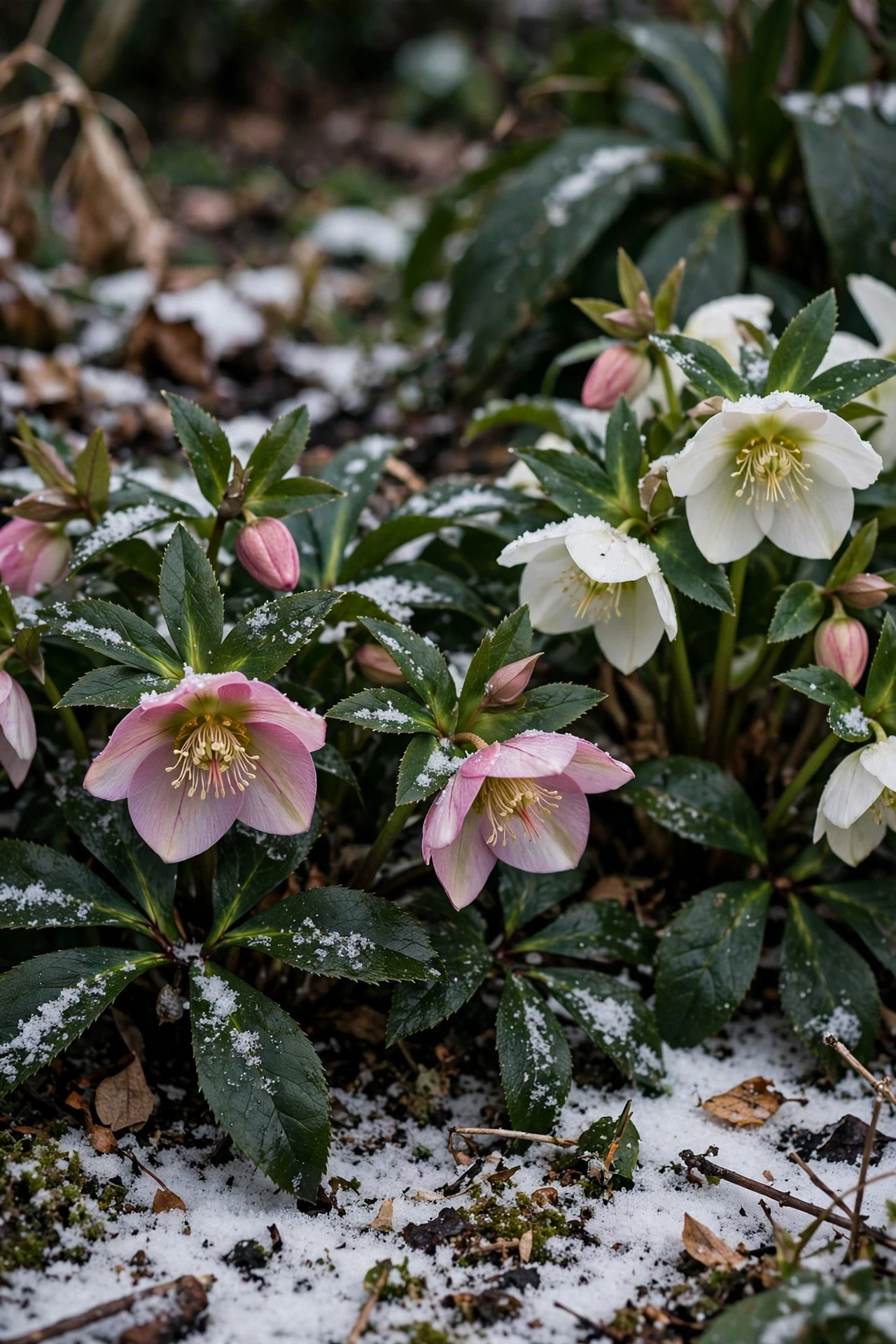
Yes, flowers really do bloom in winter. Hellebores open in late winter with dusky pink, white, and plum blooms; witch hazel unfurls spidery yellow flowers on bare branches; and snowdrops push through cold soil as early as February. These brave bloomers bring a sense of hope to the garden just when you need it most.
Plant hellebores in sheltered, partly shaded spots with rich, well-drained soil, and let their leaves shelter the flowers from harsh wind. Give witch hazel room to spread near a path where its scent can be enjoyed. Plant snowdrop bulbs in drifts under deciduous trees in fall, and leave the foliage to die back naturally so bulbs recharge for next year.
- Plant hellebores in sheltered partial shade with rich soil.
- Site witch hazel near a path to enjoy its winter fragrance.
- Leave snowdrop foliage intact after flowering to feed the bulbs.
6. Let Ornamental Grasses Stand Tall Through Winter
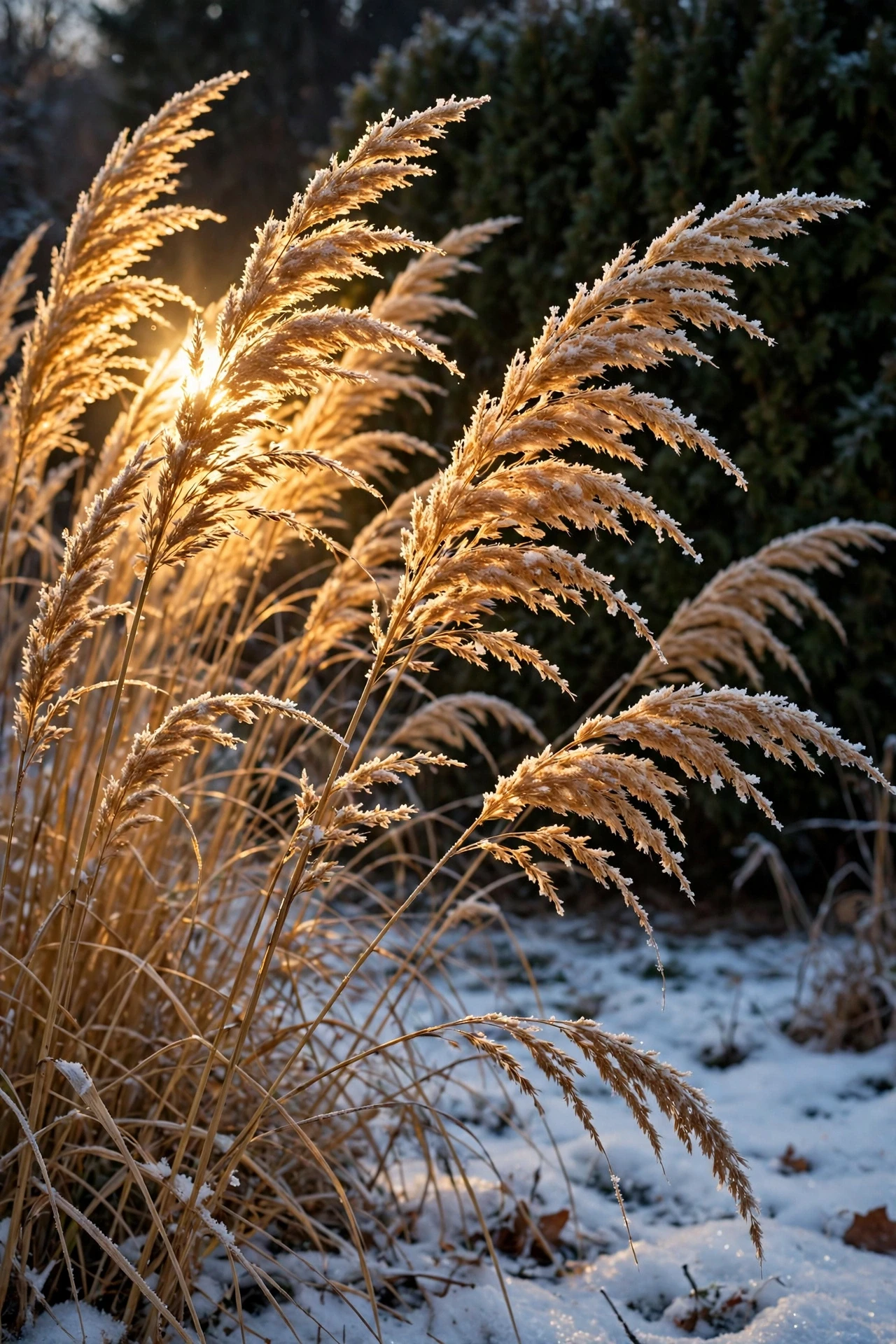
Resist the urge to cut ornamental grasses down in fall. Left standing, miscanthus, switchgrass, and feather reed grass catch frost, sway in winter wind, and glow golden in low sunlight. Their seed heads feed birds, their dried foliage shelters insects, and their upright shapes give a winter garden movement that shrubs alone cannot provide.
Plant grasses in groups of three or more where they catch morning or late-afternoon light, and avoid cutting them back until early spring, just before new growth appears. Choose clump-forming varieties rather than runners so they stay where you planted them. Pair tall grasses with evergreens and berry shrubs for a layered winter scene.
- Delay cutting grasses back until early spring, before new growth.
- Plant in groups of three or more for a natural, flowing effect.
- Choose clump-forming varieties to avoid unwanted spreading.
7. Add Berry Branches for Bold Winter Color
Nothing says winter garden like berries. Winterberry holly drops its leaves to reveal clusters of brilliant red fruit, while classic evergreen holly pairs glossy leaves with red berries that last for months. Birds love them too, so a berry shrub gives you color and wildlife in a single planting.
Remember that winterberry needs both a male and a female plant to fruit, so check the tag and plant a compatible pollinator nearby. Site berry shrubs against a dark evergreen hedge or a light-colored wall so the fruit stands out. Avoid heavy pruning in fall, which removes the very berries you are planting for, and enjoy the display until birds finish it in late winter.
- Plant a male pollinator near female winterberry for fruit set.
- Site berries against dark evergreens so the red pops.
- Skip fall pruning — it removes the winter berry display.

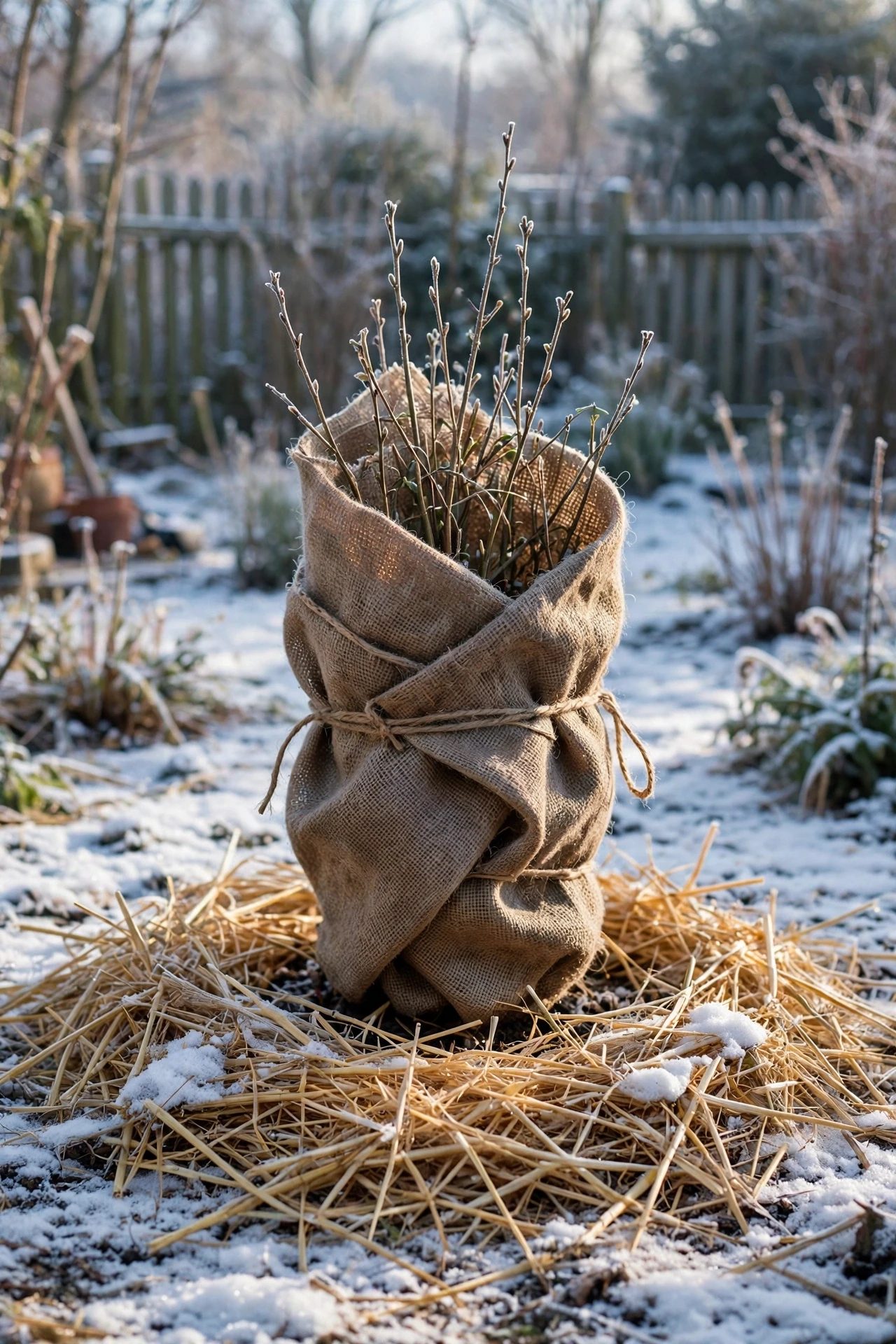
8. Protect Tender Plants From Frost the Right Way
A single hard frost can undo a season of growth, but a little protection goes a long way. Tender shrubs, newly planted perennials, and container plants are the most vulnerable, especially when cold wind and freeze-thaw cycles combine. Protecting them now means less replacing — and less expense — come spring.
Wrap vulnerable shrubs loosely in burlap, leaving the top open for air circulation, and never use plastic directly against foliage, which traps moisture and worsens frost damage. Mulch perennial crowns with straw or shredded leaves, move tender pots against a sheltered wall or into an unheated garage, and water plants before a freeze, since moist soil holds heat better than dry soil.
- Use breathable burlap, not plastic, directly against foliage.
- Mulch crowns with straw or shredded leaves after the ground cools.
- Water before a freeze — moist soil retains heat better.
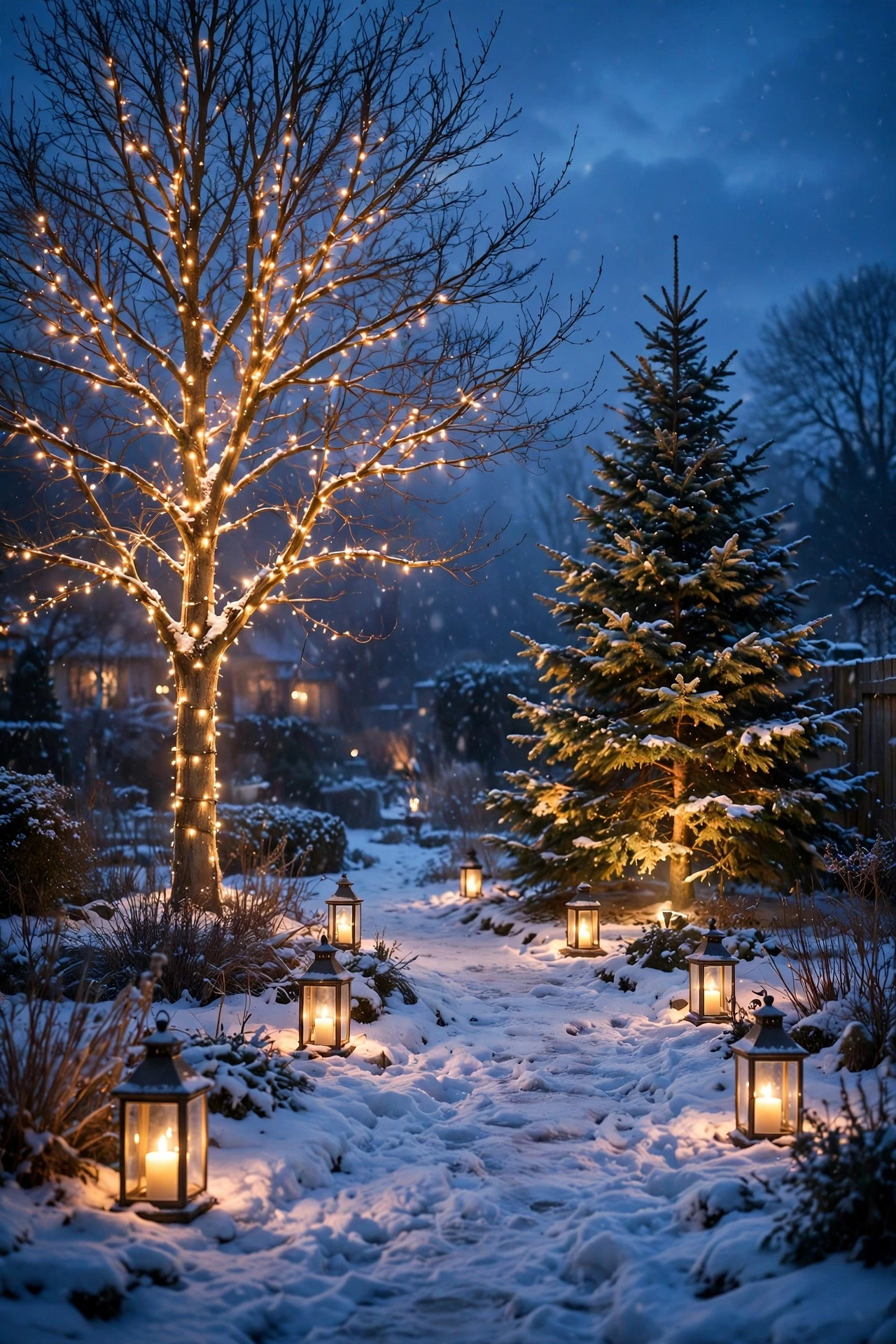
9. Light Up the Winter Garden After Dark
Winter days are short, so garden lighting matters more than ever. A few well-placed lights turn a dark yard into a glowing scene you can enjoy from indoors all evening. Warm-white string lights in a bare tree, lanterns along a path, and uplights on an evergreen create depth and a cozy feeling that no summer garden can match.
Start with one focal point — a tree, a statue, or a specimen evergreen — and light it from below with a warm-white spotlight. Add solar path lights or lanterns along walkways for safety and atmosphere, and keep the color temperature warm (around 2700K) for a welcoming glow. Use a timer so lights come on at dusk and switch off late at night.
- Light one focal point first, then add path lights around it.
- Choose warm-white bulbs (around 2700K) for a cozy glow.
- Put lights on a timer to save energy and effort.
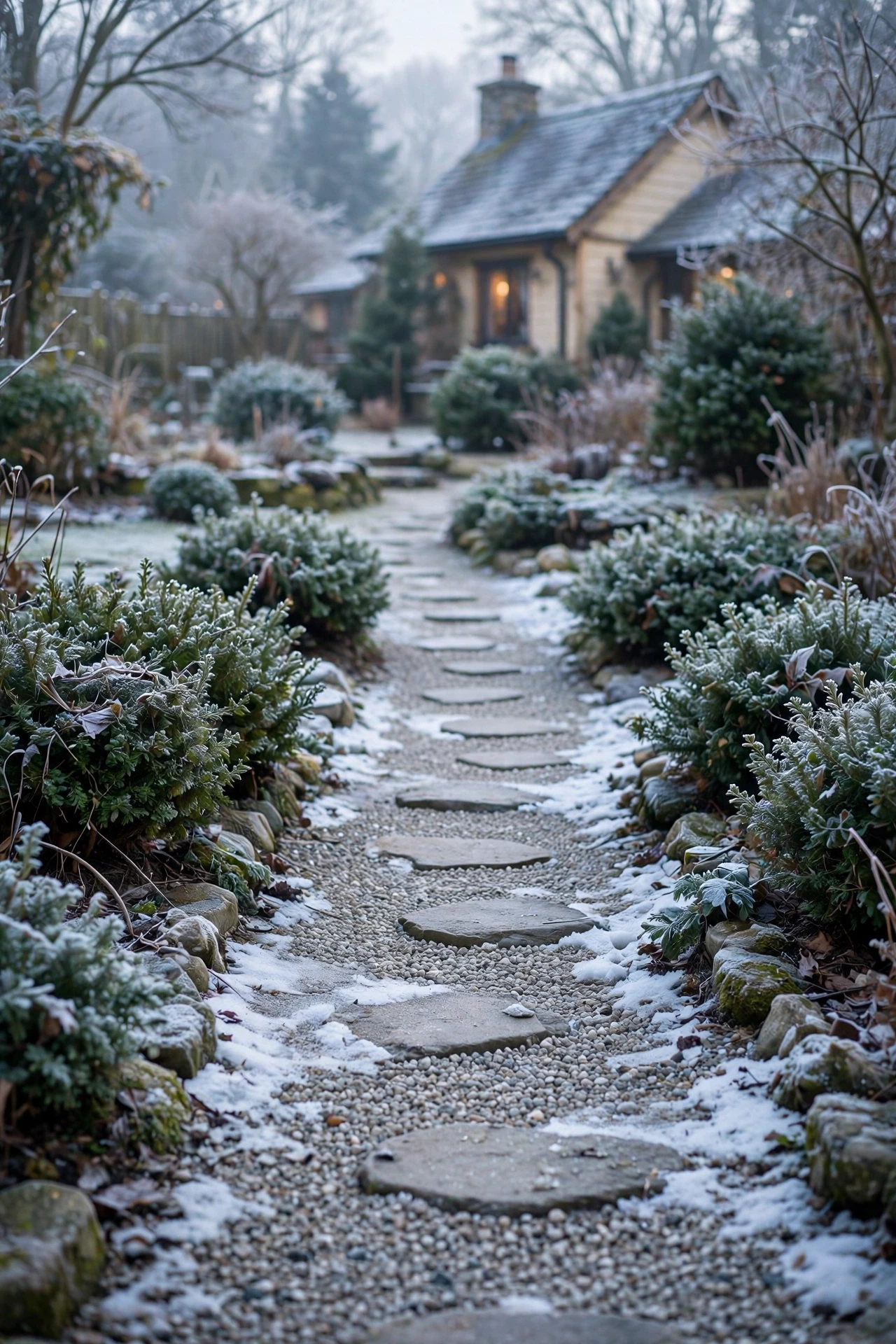
10. Keep Winter Paths Clear, Safe, and Beautiful
A winter garden is only enjoyable if you can walk through it safely. Icy, muddy paths keep everyone indoors, while a clear, well-defined walk invites you out even on cold days. Good winter paths also protect your lawn and beds from the trampled shortcuts that appear when the main route is unusable.
Choose a stable surface such as gravel, stepping stones, or brick, and keep it slightly crowned so water drains off rather than pooling and freezing. Edge paths with low evergreens or stones so the route stays visible under light snow. Keep a pet-safe de-icer and a sturdy broom by the door, and clear snow early before it compacts into ice. For larger sloped yards, the same grading and drainage thinking behind sloped backyard landscaping helps keep winter paths safe too.
- Crown paths slightly so water drains instead of freezing in puddles.
- Edge paths with stones or low evergreens for visibility in snow.
- Use pet-safe de-icer and clear snow before it compacts to ice.
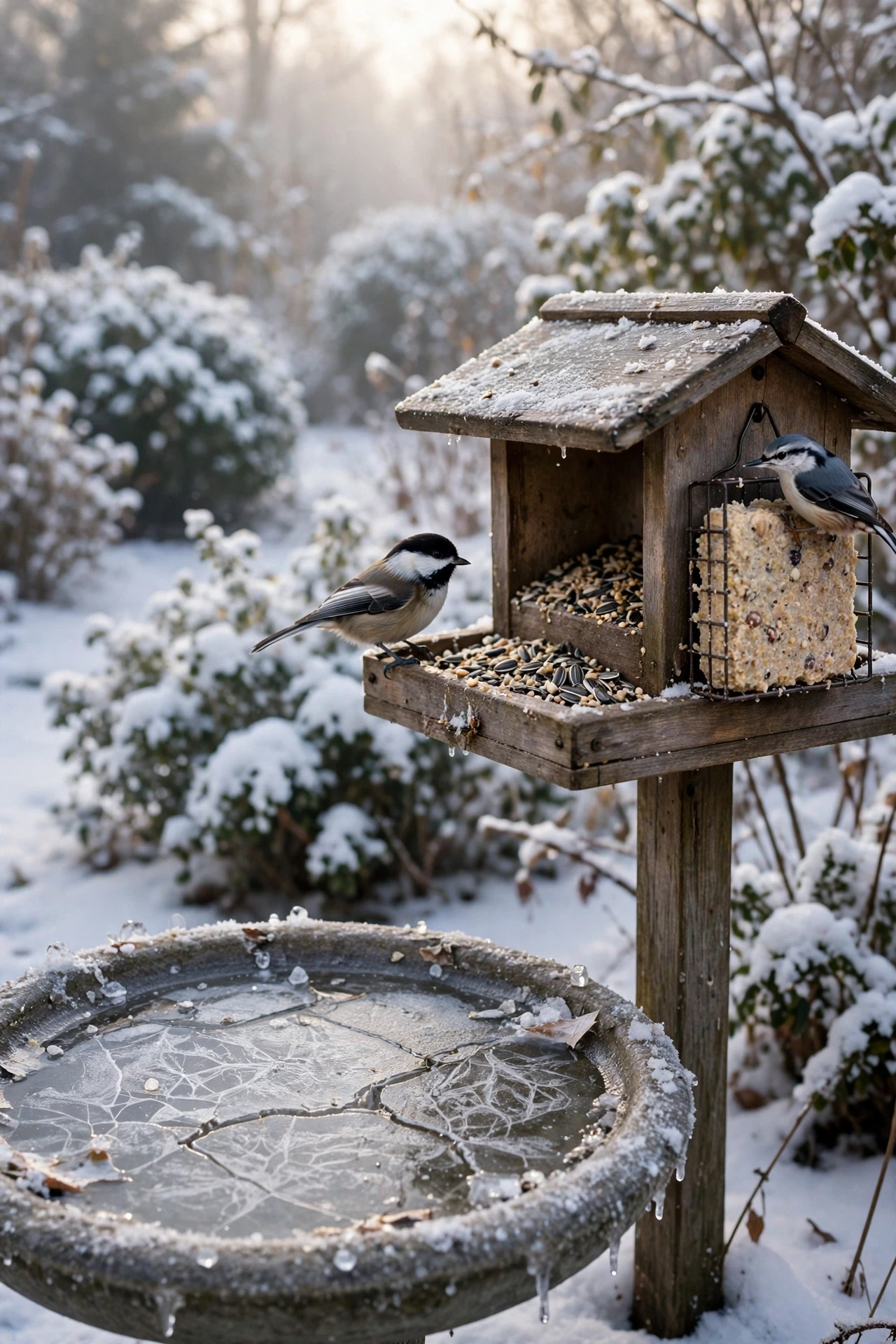
11. Make Your Winter Garden Wildlife-Friendly
Winter is the hardest season for garden wildlife, and a few small gestures make a real difference. Birds need high-energy food and unfrozen water, while insects and small mammals need undisturbed shelter. A wildlife-friendly winter garden is also livelier to watch — birds at a feeder can be the best winter show your yard puts on.
Hang feeders with sunflower seeds and suet near shrubs where birds can dart for cover, and keep a shallow dish of water topped up, breaking the ice on freezing mornings. Leave a corner of leaves and hollow stems undisturbed as insect shelter, and avoid tidying every bed — that “mess” is habitat. Clean feeders regularly to prevent disease spreading among visiting birds.
- Offer sunflower seeds and suet near sheltering shrubs.
- Break ice on bird baths each freezing morning.
- Leave one undisturbed leaf corner as insect shelter.
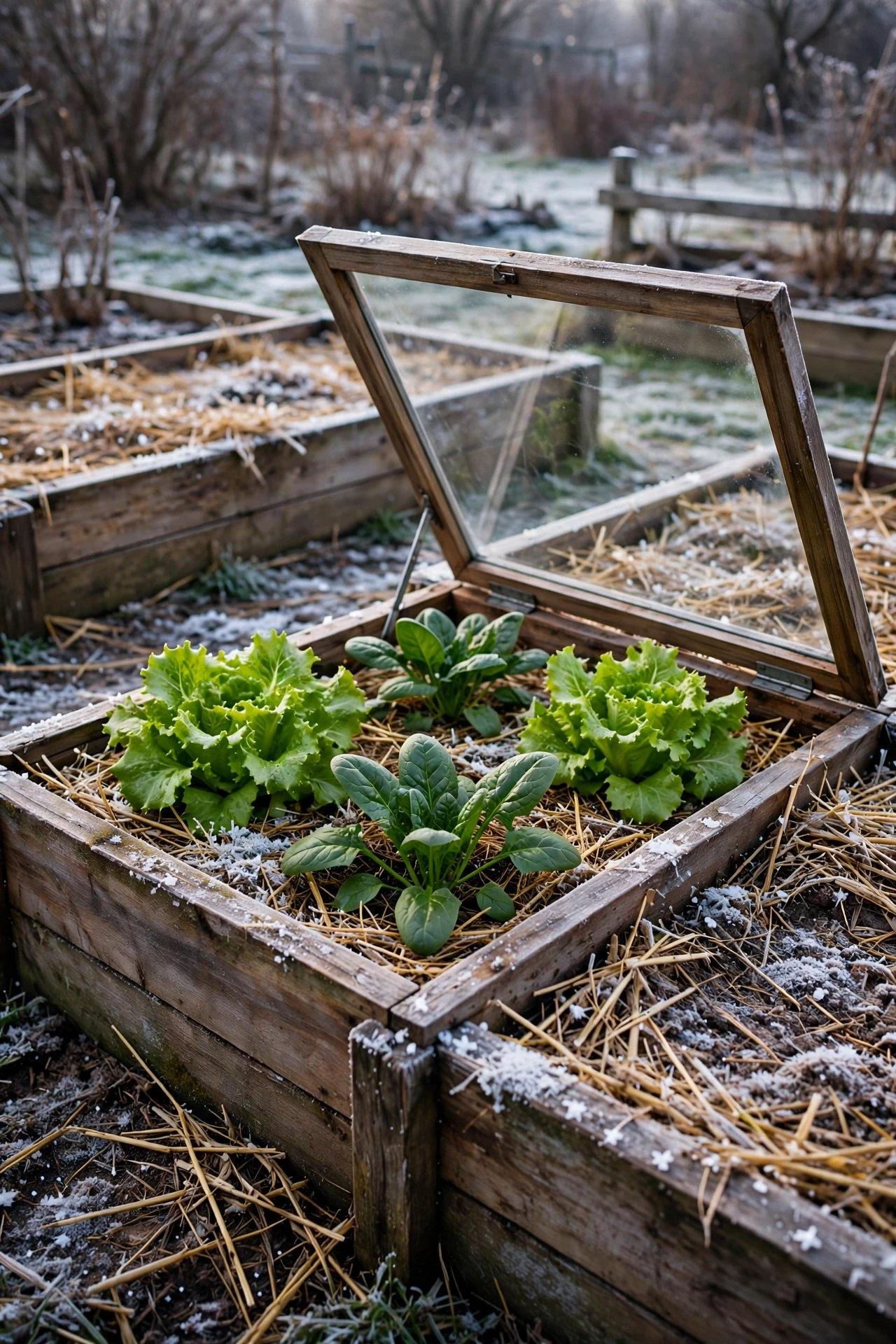
12. Rest Raised Beds With Cover Crops and Cold Frames
Winter is not downtime for raised beds — it is recovery time. Bare soil loses nutrients and structure over winter, while a bed planted with a cover crop or protected by a cold frame stays alive and ready for spring. Treating beds well in winter is one of the easiest ways to get a head start on next year’s growing season.
Sow a winter cover crop such as crimson clover or winter rye in early fall, then dig it in a few weeks before spring planting to feed the soil. For year-round growing, add a simple cold frame — an old window over a wooden box works — and use it for lettuce, spinach, and other hardy greens. Top beds with compost in fall so worms and microbes can work through winter.
- Sow cover crops in early fall, before the first hard frost.
- Use a cold frame for hardy greens like spinach and lettuce.
- Top beds with compost in fall to feed soil life over winter.
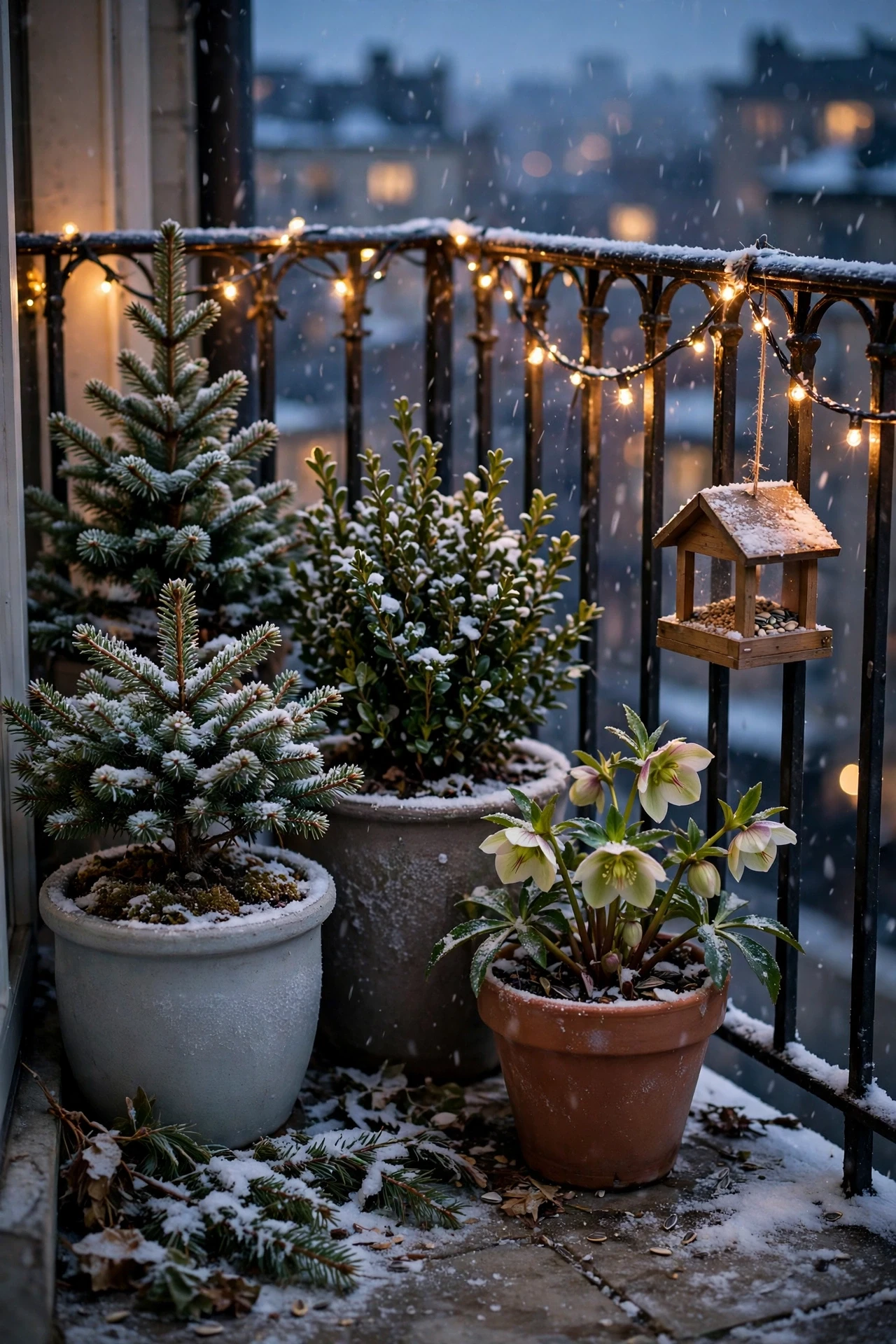
13. Create a Small-Space Winter Garden on a Balcony or Patio
You do not need a big yard for a beautiful winter garden. A balcony or patio can hold evergreen pots, a window box, a small bird feeder, and a string of lights — enough to make an outdoor space feel alive all winter. Small spaces are actually easier to keep looking good, because every plant is close at hand and easy to protect.
Choose compact evergreens such as dwarf spruce or boxwood in frost-proof pots, and group pots together against a wall so they shelter each other from wind. Add one winter-blooming plant, such as a hellebore or winter jasmine, for seasonal interest. If you are working out how to fit it all in, these small garden layout ideas show how to plan a tight space without it feeling crowded.
- Group pots against a wall so plants shelter each other from wind.
- Pick dwarf evergreens that will not outgrow their containers.
- Add one winter bloomer so the display changes with the season.
14. Refresh the Winter Garden on a Budget With Cut Greens
A winter garden refresh does not need a big budget. Cut evergreen branches, pinecones, and dried seed heads are often free — from your own yard, a neighbor’s pruning pile, or a local tree lot’s trimmings — and they make beautiful porch pots, wreaths, and table arrangements. A little foraging and creativity goes further than a shopping trip.
Ask a local tree lot for leftover trimmings, or prune a few branches from your own evergreens, taking no more than a third from any one plant. Combine greens of different textures — soft cedar, stiff spruce, glossy holly — in a single container for a professional look. Add pinecones gathered from the yard and a simple ribbon, and skip expensive faux decorations entirely.
- Ask tree lots for free trimmings after the holiday rush.
- Mix cedar, spruce, and holly textures in one arrangement.
- Take no more than a third of any one plant when pruning.

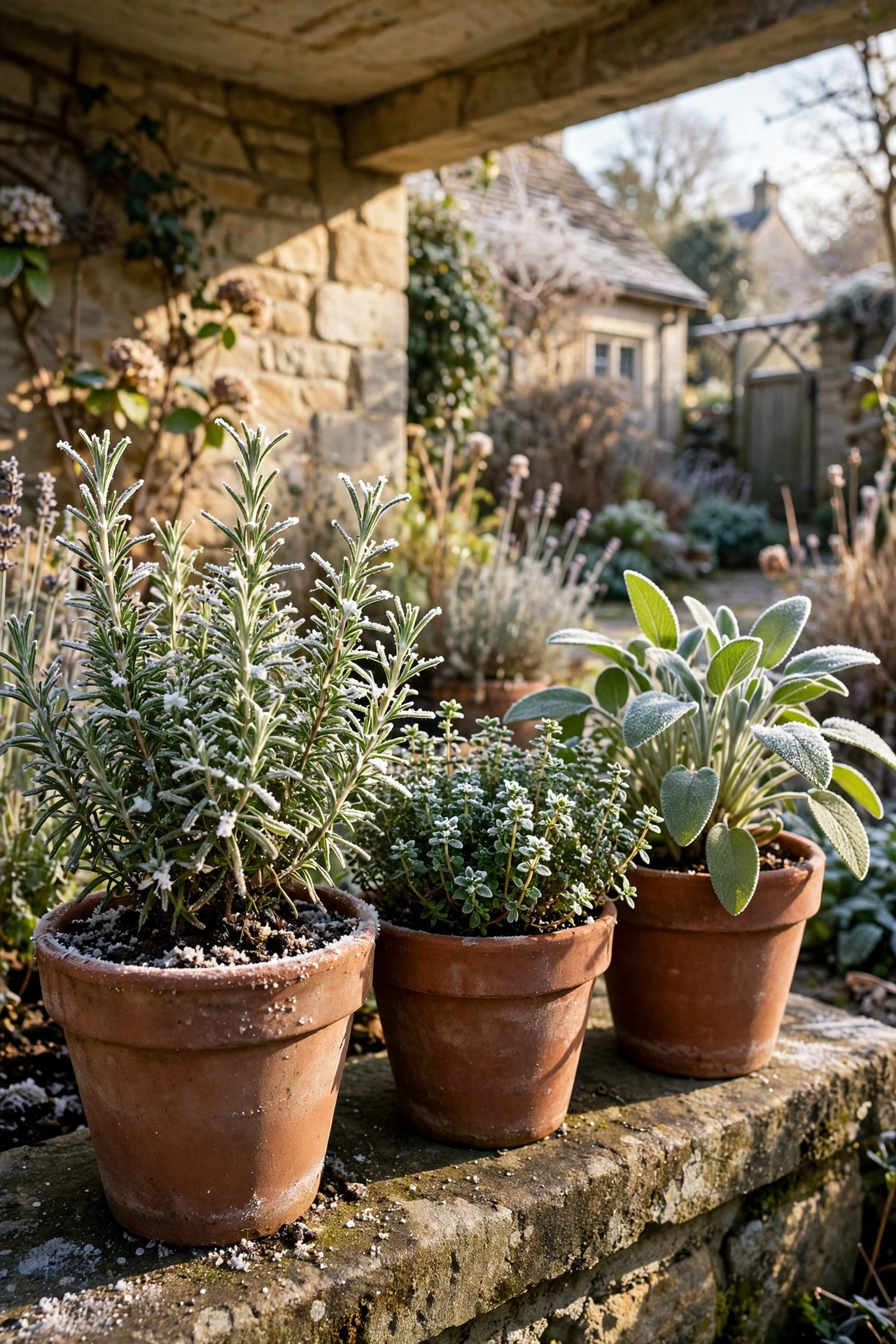
15. Grow Cold-Hardy Herbs for Winter Cooking
Fresh herbs in winter feel like a small luxury, and several hardy varieties keep going long after summer herbs have died back. Rosemary survives mild winters outdoors, thyme and sage tolerate frost, and parsley often pushes through light snow. Snipping fresh herbs on a cold day is one of the most satisfying winter garden habits.
Plant rosemary in a sheltered, sunny spot with sharp drainage, or keep it in a pot you can move to a protected wall in hard freezes. Grow thyme and sage in gritty, well-drained soil — wet winter soil kills more herbs than cold does. In colder zones, grow herbs in pots near the kitchen door or on a sunny windowsill, and harvest lightly so plants keep enough foliage to recover.
- Give herbs sharp drainage — wet winter soil is the real killer.
- Shelter rosemary against a sunny wall or move pots under cover.
- Harvest lightly in winter so plants keep foliage to recover.
16. Use Topiary and Garden Art as Winter Focal Points
When flowers fade and beds go quiet, a strong focal point keeps the garden interesting. A clipped topiary cone, a stone statue, a rusted metal sculpture, or a simple wooden obelisk gives the eye somewhere to land and makes a snowy garden look designed rather than empty. These elements work hardest in winter, when nothing competes with them.
Place one focal piece where it can be seen from indoors — at the end of a path, in the center of a bed, or beside a seating area. Choose weatherproof materials such as stone, metal, or treated wood, and set pieces on a firm base so they do not sink into soft winter soil. A single bold piece beats several small ornaments scattered around the yard.
- Place focal points where they are visible from indoors.
- Choose stone, metal, or treated wood that survives winter weather.
- Use one bold piece rather than many small ornaments.

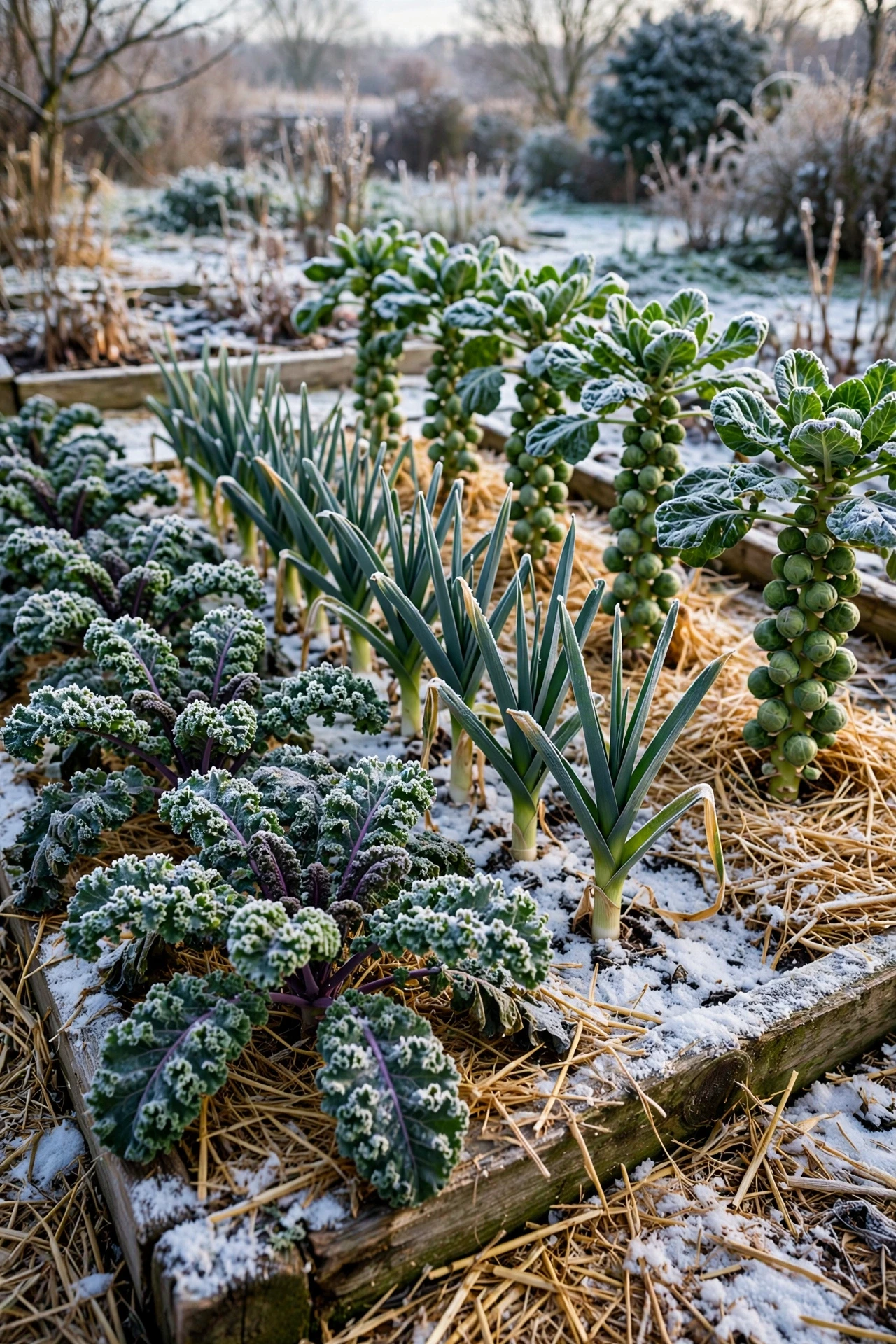
17. Grow a Winter Vegetable Patch With Hardy Crops
A winter garden can still feed you. Kale, leeks, Brussels sprouts, and winter lettuce actually taste sweeter after a frost, and they keep producing when the rest of the vegetable patch is done. A small winter vegetable patch turns an empty bed into something productive and gives you a reason to step outside on cold days.
Start hardy crops in late summer or early fall so they are established before cold weather arrives, and protect them with a cold frame or a layer of straw mulch in hard freezes. Harvest outer leaves of kale and sprouts from the bottom of the stalk upward, leaving the plant to keep growing. In mild climates, many of these crops will produce right through winter with almost no attention.
- Start winter crops in late summer so they establish before frost.
- Protect with straw mulch or a cold frame in hard freezes.
- Harvest kale leaves from the outside in to keep plants producing.
Conclusion
A beautiful winter garden is not about fighting the season — it is about designing for it. Evergreen structure, bark and berries, winter containers, lighting, and a few wildlife-friendly touches can keep your yard interesting from the first frost to the first spring bulb. Pick two or three ideas from this list to start with, and add more each year as your winter garden grows. Your future self, looking out at a snowy garden in January, will be glad you did.
FAQ:
What are the easiest winter garden ideas for beginners?
Start with evergreen container arrangements, winter lighting, and leaving ornamental grasses standing. All three are quick, affordable, and make an immediate difference without any new planting or specialist knowledge.
Which plants look best in a winter garden?
Evergreens such as boxwood, yew, and spruce provide structure, while red twig dogwood, winterberry, hellebores, and witch hazel add color and flowers. Combine at least one evergreen with one color plant for a balanced display.
How do I protect plants from frost damage?
Mulch roots, wrap tender shrubs in breathable burlap, water before a freeze, and move tender pots to a sheltered spot. Avoid plastic directly against foliage, and check guidance from a reputable gardening authority such as the Royal Horticultural Society for your plant types.
Can I have a winter garden in a small space?
Yes. Dwarf evergreens in frost-proof pots, a window box of spruce tips and berries, and a small bird feeder can transform a balcony or patio. Group pots against a wall for wind shelter and choose compact varieties.
When should I start planning a winter garden?
Plant evergreens, shrubs, and bulbs in fall, before the ground freezes, and build container arrangements in late fall. Lighting, paths, and focal points can be added any time, even mid-winter.
Do winter gardens need much maintenance?
Very little. Most winter garden plants need only occasional watering during dry spells, snow clearing from paths, and a spring tidy-up. Cut grasses back in early spring and refresh containers as needed.







4 Comments