
19 Fall Bulb Planting Ideas for a Beautiful Spring Garden
Fall bulb planting ideas are the quiet secret behind the brightest spring gardens. While the leaves turn and the air grows crisp, gardeners across the United States are tucking tulips, daffodils, crocus, and hyacinths into cool soil, trusting them to rest through winter and return with color. It feels like a small act of hope, and it is one of the easiest ways to plan ahead for a garden that greets you with color the moment winter loosens its grip.
In this guide, you will find 19 fall bulb planting ideas for beds, borders, lawns, containers, and even sunny windowsills. You will learn when to plant, how deep to set each bulb, which varieties come back year after year, and how to protect your planting from deer, squirrels, and soggy soil. Whether you have a large yard or a single porch pot, there is an idea here for you.
November is the last comfortable window in many regions, so timing matters. Most spring bulbs need several weeks of cool soil before the ground freezes, and planting by Thanksgiving gives them time to grow roots. Work through these ideas now, choose the ones that fit your space, and your spring garden will do the rest.
Before you start, check your hardiness zone and soil type, because both shape which bulbs will thrive for you. Tulips and daffodils love zones 3 through 8, while crocus and snowdrops handle cold even better. All spring bulbs need soil that drains freely, since wet feet in winter cause rot. A handful of compost and a little grit in each planting hole goes a long way, and a layer of mulch after planting keeps soil temperatures steady through the coldest weeks.
1. Classic Tulip Beds for Spring Color

Tulips are the classic choice for fall bulb planting ideas, and a dedicated bed gives them the spotlight they deserve. Choose a sunny spot with well-drained soil, then plant groups of ten or more bulbs in sweeping drifts rather than single straight rows. Mixed colors look joyful, while a single color in a large block looks bold and modern. Either way, the effect in spring is hard to beat, especially when the bed sits where you see it from a window or a favorite seat in the garden.
Plant tulip bulbs about six to eight inches deep, pointed end up, and space them four to six inches apart. Add a handful of compost to each planting hole, water well, and cover the bed with two inches of mulch. In colder zones, plant a little deeper and add extra mulch after the ground cools. Mark the bed so you do not dig into it later.
- Plant in groups of 10 or more for a full, natural look.
- Mix early, midseason, and late tulips to stretch the bloom season.
- Choose Darwin hybrid tulips if you want the strongest return each year.
- Avoid low spots where water collects after rain.
2. Daffodils That Return Every Year

Daffodils are among the most reliable spring bulbs you can plant in fall, and they truly do return year after year with very little care. Unlike tulips, which often fade after a season or two, daffodils naturalize and multiply, forming larger clumps each spring. Their cheerful yellow, white, and orange blooms are also deer resistant and rarely bothered by rabbits or squirrels.
Plant daffodil bulbs in fall, about six inches deep and six inches apart, in sun or light shade. They tolerate a wide range of soils as long as water drains freely, and they are happy in beds, borders, and even rough grassy areas. Leave the foliage in place for six weeks after flowering so the bulbs can store energy for next year.
- Choose large-cupped, trumpet, and miniature varieties for variety.
- Plant in drifts under deciduous trees before the leaves return.
- Never braid or tie daffodil leaves after blooming.
- Divide crowded clumps every four to five years in early summer.
3. Crocus Lawns for Early Spring

Crocus are the first brave flowers of spring, often opening while patches of snow still linger in shady corners. Planted in a lawn, they create a soft carpet of purple, white, yellow, and striped blooms that appears weeks before the grass needs its first mowing. It is a simple way to make an ordinary yard feel magical in early March.
Scatter crocus bulbs across the lawn in fall, then plant them where they land for a natural look. Set each bulb three to four inches deep, using a small bulb planter or a hand trowel. Delay the first spring mowing until the crocus foliage has yellowed, usually about six weeks after flowering, so the bulbs can recharge for next year.
- Use species crocus for the earliest blooms and best naturalizing.
- Plant at least 50 bulbs for a visible carpet effect.
- Choose a lawn area that gets winter sun and spring light.
- Skip fertilizer on the lawn until the crocus leaves fade.
4. Fragrant Hyacinths by the Door
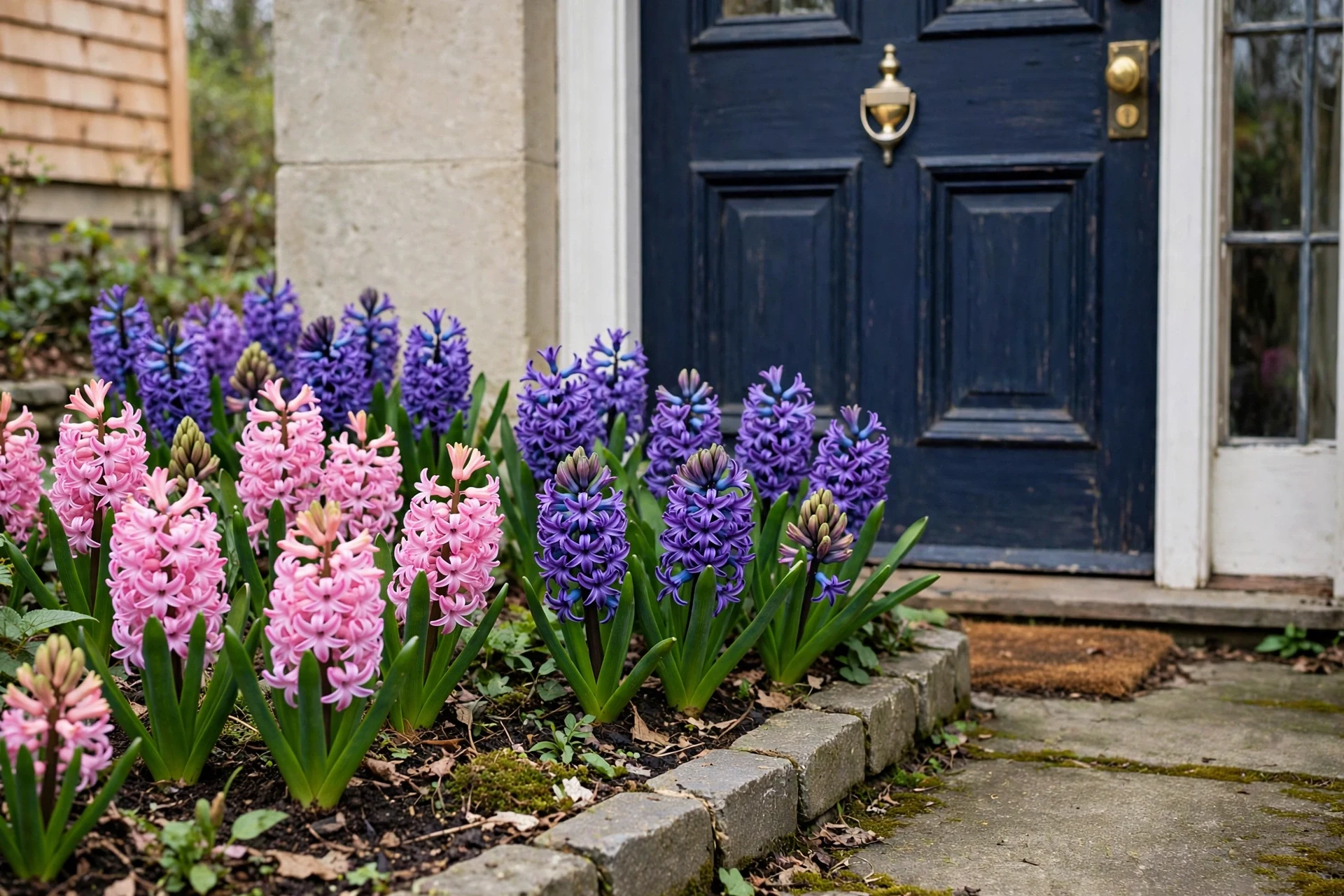
Hyacinths bring something tulips and daffodils cannot: a rich, sweet fragrance that drifts through the air on warm spring days. Planted by a front door, along a path, or beneath a bedroom window, they greet you every time you step outside. Their dense spikes of pink, purple, blue, and white also add strong color to small beds.
Plant hyacinth bulbs in fall, about six inches deep and six inches apart, in rich, well-drained soil. They prefer full sun and a sheltered spot where wind will not snap their heavy flower spikes. Wear gloves when handling the bulbs, since they can irritate sensitive skin. After flowering, leave the leaves to feed the bulb for next spring.
- Plant near doors, paths, and seating areas to enjoy the scent.
- Mix hyacinths with tulips for a longer bloom sequence.
- Stake tall spikes in windy spots with small twiggy supports.
- Choose a sheltered, sunny bed for the strongest fragrance.
5. Allium Globes for Late Spring Drama

Alliums are the drama queens of the spring bulb garden, sending up tall, straight stems topped with perfect purple globes. They bloom after most tulips have finished, filling the gap before summer perennials take over. Their architectural shape looks striking against fences, walls, and the soft green of emerging hostas and daylilies, and they need almost no care once they are in the ground.
Plant allium bulbs in fall, six to eight inches deep depending on size, in full sun and very well-drained soil. Large varieties like Purple Sensation need about eight inches of depth and a foot of spacing, while smaller types can sit closer together. Alliums are deer and rodent resistant, and their dried seed heads look lovely left standing into summer.
- Plant large alliums at the back of borders for height.
- Use smaller alliums in groups at the front edge.
- Leave seed heads standing for summer interest.
- Pair with ornamental grasses for a modern look.
6. Grape Hyacinths as Edging

Grape hyacinths, also called muscari, are small bulbs with an outsized effect. Their tiny blue, bell-shaped flowers cluster like miniature grapes along short stems, forming a neat ribbon of color when planted as edging. They are inexpensive, multiply quickly, and return faithfully, making them perfect for lining paths, beds, and walkways where you want reliable color without a big budget.
Plant muscari bulbs in fall, three to four inches deep and three inches apart, in a single or double row along the edge of a bed. They prefer sun or part shade and tolerate most soils. Because they are so small, plant at least 25 bulbs per yard of edging for a full line. Their grassy foliage appears in fall and stays green through winter in mild climates.
- Plant in a double row for a thicker, more visible edge.
- Combine blue muscari with white tulips for a classic contrast.
- Let them spread under shrubs where grass struggles.
- Divide crowded patches in late summer if they get too dense.
7. Snowdrops for the First Blooms

Snowdrops are often the very first flowers to bloom, pushing their delicate white bells through cold soil in late winter. They thrive in cool, moist spots under trees and shrubs, where many other bulbs struggle. A drift of snowdrops along a path or beneath a bare hedge is a hopeful sign that spring is finally on its way.
Plant snowdrop bulbs in fall, about three inches deep and three inches apart, in humus-rich soil that stays lightly moist. They prefer part shade and do best where the soil does not dry out in summer. For faster results, buy bulbs in the green, which are freshly dug plants sold just after flowering in spring, and plant them immediately.
- Plant in large drifts of 50 or more for the best effect.
- Choose a spot under deciduous trees or shrubs.
- Keep the soil moist through the first summer.
- Do not cut back the leaves until they turn yellow.
8. Lasagna Layering in Pots: Fall Bulb Planting Ideas for Containers

Lasagna layering is a clever way to pack three seasons of color into one pot. Bulbs are planted in layers, like a lasagna, with the latest bloomers at the bottom and the earliest at the top. In spring, the pot erupts in waves: crocus first, then tulips and hyacinths, then alliums, all from the same container.
Start with a large pot with drainage holes, fill the bottom with potting mix, and set the largest bulbs, like tulips or daffodils, about eight inches deep. Cover them with soil, add a middle layer of hyacinths, cover again, and finish with crocus near the top. Water well and leave the pot outside in a sheltered spot. For more container inspiration, see these Christmas outdoor planter ideas that show how layered pots can anchor a porch all season.
- Use a pot at least 14 inches wide and deep.
- Plant the latest bloomers deepest and the earliest shallowest.
- Keep the pot watered through fall until the soil freezes.
- Move pots to a sheltered spot in very cold zones.
9. Bulb Lawn Naturalized in Turf

A naturalized bulb lawn turns an ordinary stretch of grass into a spring meadow. Daffodils, crocus, and small species tulips are planted in scattered drifts through the turf, where they bloom, fade, and return each year with almost no extra work. It is one of the lowest-maintenance fall bulb planting ideas, and it suits larger yards beautifully, where a formal bed would feel too fussy and a meadow look feels just right.
In fall, cut small flaps in the turf with a spade, tuck three to five bulbs underneath, and press the grass back into place. Plant daffodils six inches deep and crocus three to four inches deep, spacing groups a foot or more apart. Mow the lawn short before planting, then wait until the bulb foliage yellows in late spring before mowing again.
- Choose daffodils and species tulips that naturalize well.
- Plant in irregular drifts, not neat rows, for a meadow look.
- Mark bulb areas so no one mows them too early.
- Skip weed killer on the bulb lawn in spring.
10. Forcing Bulbs Indoors for Winter Blooms

Forcing bulbs indoors lets you enjoy spring flowers in the middle of winter. Paperwhites, hyacinths, and prepared tulips are chilled, potted, and brought into warmth, where they bloom weeks ahead of the outdoor garden. A pot of fragrant hyacinths on a windowsill can brighten the darkest January week, and forced bulbs make lovely gifts too.
Pot bulbs in fall in a shallow container with drainage, using a light potting mix, and keep them in a cool, dark place for 10 to 12 weeks. Water lightly, then move the pot into bright, indirect light when shoots appear. Paperwhites need no chilling and bloom in just four to six weeks. These indoor blooms also pair beautifully with a seasonal table, much like the ideas in these Thanksgiving centerpiece ideas for a warm holiday home, and they brighten a room styled with these cozy winter living room ideas.
- Use paperwhites for the easiest forcing with no chilling.
- Keep forced bulbs cool after blooming to extend the flowers.
- Provide bright light so stems stay short and sturdy.
- Start a new pot every two weeks for a steady supply.
11. Deer-Resistant Bulb Picks

If deer visit your yard, bulb choice matters more than fencing. Daffodils, alliums, hyacinths, snowdrops, and fritillaria are all unappealing to deer, thanks to their taste and scent. Planting these varieties means you can enjoy spring color without waking up to nibbled stems and missing buds, which is a common frustration with tulips and crocus.
Build your spring garden around deer-resistant bulbs in the areas deer visit most, especially front beds and unfenced borders. Save tulips and crocus for fenced gardens, containers near the house, or spots protected by thorny shrubs. A light sprinkle of dried blood meal or a commercial deer repellent after planting can also discourage digging by squirrels.
- Lead with daffodils, alliums, and hyacinths in open beds.
- Plant tulips inside fenced areas or close to the house.
- Cover fresh plantings with wire mesh until the ground freezes.
- Reapply repellent after heavy rain in spring.
12. Fall Bulb Planting Ideas for Porch Containers

Containers are the easiest way to enjoy spring bulbs if you have no garden beds at all. A few large pots on a porch, patio, or balcony can hold dozens of tulips, daffodils, and hyacinths, and you can move them into prime position just as they bloom. They are also easy to protect from deer and squirrels by moving them closer to the door.
Choose pots at least 12 inches deep with drainage holes, fill them with quality potting mix, and plant bulbs closer together than you would in the ground, about two inches apart. Water well in fall and keep the soil lightly moist until it freezes. In very cold zones, group pots together against a wall and wrap them in burlap. For seasonal porch styling, pair your bulb pots with these fall porch decor ideas for a welcoming entry.
- Use large, frost-proof pots with good drainage.
- Plant bulbs closer in pots than in garden beds.
- Group pots together for winter insulation.
- Move pots into view as soon as buds show color.
13. Shade-Tolerant Bulbs Under Trees

Shady spots under trees are often written off as difficult, but several spring bulbs love them. Snowdrops, bluebells, winter aconite, and early daffodils bloom before the tree canopy leafs out, catching the spring sun while it lasts. They turn bare ground under maples and oaks into a soft carpet of color.
Plant shade-tolerant bulbs in fall, in soil enriched with leaf mold or compost, about three to six inches deep depending on the variety. Avoid digging too close to large tree roots, and plant in the pockets of soil between them instead. Water well after planting, and add a light mulch of shredded leaves to hold moisture through winter.
- Choose snowdrops, bluebells, and early daffodils for shade.
- Plant before the tree canopy fills in spring.
- Enrich the soil with compost or leaf mold.
- Avoid damaging large roots when digging planting holes.
14. Tulip and Daffodil Combos

Tulips and daffodils are natural partners, and planting them together solves two problems at once. Daffodils bloom first and their scent deters rodents from digging up the tulips planted nearby. Their tall, sturdy leaves also hide the fading tulip foliage later in spring, keeping the bed looking tidy for longer.
Plant daffodils six inches deep and tulips at the same depth in the same bed, spacing the groups so the colors mix rather than clash. Yellow daffodils pair well with red, pink, or white tulips, while white daffodils look elegant beside purple or deep pink tulips. Plant in clusters of five to seven bulbs of each type for a balanced display.
- Plant daffodils around tulips to deter squirrels and voles.
- Pair yellow daffodils with red or pink tulips.
- Use white daffodils beside purple tulips for contrast.
- Stagger early and late varieties for a longer show.
15. Planting in Raised Beds

Raised beds are ideal for spring bulbs because they drain so well. Bulbs rot quickly in wet, heavy soil, but a raised bed filled with loose, compost-rich mix keeps them dry through winter rain and snowmelt. Raised beds also warm up faster in spring, so your bulbs may bloom a few days earlier than those in the ground, giving you color while the rest of the garden is still waking up.
Fill the raised bed with a mix of topsoil, compost, and coarse sand or grit, then plant bulbs at their usual depth, measuring from the soil surface inside the bed. Space them a little closer than in open ground, since you can reach every plant easily for care. Mulch the bed after planting, and avoid walking on the soil, which compacts it and harms drainage.
- Mix compost and grit into raised bed soil for drainage.
- Plant bulbs at the usual depth from the bed surface.
- Mulch after planting to hold moisture and suppress weeds.
- Keep the bed edges clear so water drains away freely.
16. Bulbs Along Walkways and Borders
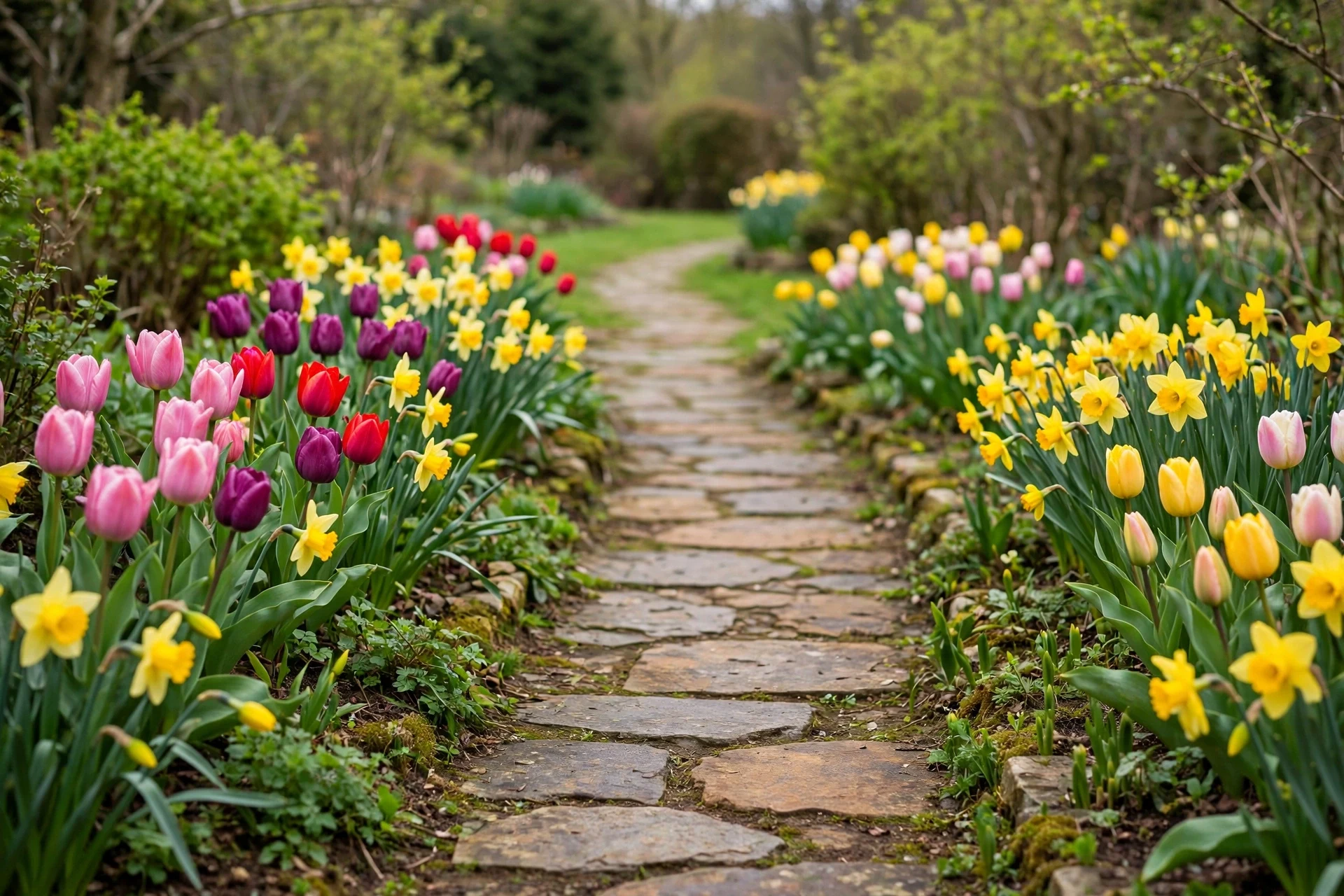
Bulbs along walkways and borders put spring color exactly where you see it every day. A narrow strip of crocus, muscari, and small tulips along a front path creates a welcoming line of color, while taller daffodils and alliums behind them add height. The effect is cheerful without taking over the whole yard.
Plant a low front row of muscari or crocus three to four inches deep, then a middle row of tulips six inches deep, and a back row of daffodils or alliums for height. Keep the planting at least six inches from the path edge so foot traffic and edging tools do not damage the bulbs. For broader curb appeal ideas, see these front yard landscaping ideas that pair well with spring bulb borders.
- Layer low bulbs in front and tall bulbs behind.
- Keep bulbs six inches from path edges.
- Repeat the same varieties along the whole walk for unity.
- Add evergreen edging plants to mark the bed in winter.
17. Digging and Dividing Overcrowded Bulbs

Over time, daffodils and other naturalizing bulbs multiply into crowded clumps that bloom less and less. Digging and dividing them restores their vigor and gives you free bulbs to plant elsewhere. It is a satisfying fall or early summer job, and it keeps your favorite varieties going for years without buying new stock.
Wait until the foliage has yellowed in early summer, then lift the clump gently with a garden fork, keeping the bulbs intact. Shake off loose soil, separate the bulbs by hand, and replant the largest ones immediately at the correct depth, six inches for daffodils. Discard any soft or damaged bulbs, and water the replanted clumps well.
- Divide daffodils every four to five years.
- Lift clumps only after the foliage has yellowed.
- Replant the largest, firmest bulbs right away.
- Share extra bulbs with friends or plant them in new spots.
18. Soil Prep and Drainage for Bulbs

Good soil preparation is the single most important step in fall bulb planting. Bulbs need loose, well-drained soil to grow roots in fall and survive winter without rotting. Heavy clay holds too much water, while pure sand dries out too fast, so the goal is a rich, crumbly mix that holds moisture but lets excess water drain away.
Before planting, dig the bed eight to ten inches deep and mix in compost and coarse grit or perlite, especially in clay soil. Avoid fresh manure, which can burn bulbs and encourage rot. If your soil stays wet, plant bulbs on a slight mound or in a raised bed. A simple drainage test is to fill a hole with water and check that it drains within an hour.
- Dig beds eight to ten inches deep before planting.
- Mix compost and grit into heavy clay soil.
- Never plant bulbs in standing water or soggy ground.
- Test drainage with a water-filled hole before planting.
19. Marking and Mapping Your Bulb Beds

Marking and mapping your bulb beds saves you from two common spring mistakes: digging into bulbs by accident and forgetting what you planted where. A simple sketch, a few plant labels, and a photo of each bed in fall will help you plan next year, fill gaps, and avoid planting over bulbs that are still resting underground and easy to damage with a spade.
After planting, place a small label at the corner of each bed, noting the variety, color, and planting date. Take a photo of the label and the bed, then draw a quick map in a garden notebook or phone app. In spring, add notes about which varieties bloomed best, so you can order more of the winners and skip the ones that disappointed you.
- Label each bed with variety, color, and date.
- Photograph every bed right after planting.
- Keep a simple map in a notebook or garden app.
- Note spring results to plan next fall orders.
Frequently Asked Questions
When is the best time to plant fall bulbs?
The best time to plant spring-flowering bulbs is in fall, once soil temperatures drop below 60 degrees Fahrenheit but before the ground freezes. In most of the United States, that means September through November, with November as the last window in warmer zones. Planting by Thanksgiving gives bulbs time to grow roots before winter. In warm zones 8 and 9, you can plant into December, while in cold zones 3 and 4, aim for September or early October.
How deep should I plant tulip and daffodil bulbs?
Plant bulbs at a depth about three times their height. Tulips and daffodils usually go six to eight inches deep, hyacinths about six inches, and small bulbs like crocus and muscari three to four inches deep. Always plant with the pointed end facing up and the flat basal plate facing down. If you are unsure which end is up, plant the bulb on its side and it will usually right itself as it grows.
Can I plant bulbs in November?
Yes, in many regions November is still a good time to plant bulbs, as long as the ground is not frozen and you can still dig. Bulbs planted in November often bloom just as well as those planted in October, provided the soil is workable and drains well. In very cold zones, plant earlier and mulch heavily after planting. A two to three inch layer of shredded leaves or straw helps insulate late-planted bulbs through their first winter.
Do I need to water bulbs after planting in fall?
Yes, water bulbs well right after planting to settle the soil and encourage root growth. After that, fall rain is usually enough in most regions. Water again only if the fall is very dry, and stop watering once the ground freezes. Avoid overwatering, which can cause bulbs to rot. Well-drained soil matters more than frequent watering, especially in heavy clay gardens where water can sit around the bulbs for days.
Which spring bulbs are deer resistant?
Daffodils, alliums, hyacinths, snowdrops, grape hyacinths, and fritillaria are all good deer-resistant choices. Deer usually avoid them because of their taste and scent. Tulips and crocus are favorites of deer and rabbits, so plant those in fenced areas, containers near the house, or spots protected by other plantings. Squirrels may still dig up freshly planted bulbs, so cover new beds with wire mesh until the ground freezes.
Can I plant bulbs in containers?
Yes, bulbs grow very well in containers as long as the pot is deep enough and has drainage holes. Use a quality potting mix, plant bulbs closer together than in the ground, and water well in fall. In cold climates, group pots together against a wall or move them to an unheated garage for the coldest weeks. Pots freeze faster than garden soil, so insulation and shelter make a real difference for container bulbs.
Conclusion
Fall bulb planting ideas are really about planting a little hope in the garden. A few hours of work in the cool autumn air, a bag or two of bulbs, and some well-drained soil are all it takes to fill your spring with tulips, daffodils, crocus, and hyacinths. Start with the ideas that fit your space, whether that is a sunny bed, a shady corner under a tree, or a single pot on the porch, and trust that the quiet winter months are doing the work for you.
Choose your favorites from these 19 fall bulb planting ideas, plant them before the ground freezes, and mark your beds so you remember what is waiting below. When the first snowdrops appear in late winter, you will be glad you planned ahead. Happy planting, and enjoy the beautiful spring garden you have created.
If you are short on time, start with just one bed of daffodils and one pot of tulips this fall. Even that small planting will give you weeks of color next spring, and you can add more varieties each year as you learn what grows best in your soil and light. Keep notes, save your bulb labels, and let each spring teach you something new. Your garden will only get better with every fall planting season.