

19 Cozy Winter Mudroom Decor Ideas for a Warm, Organised Entry
19 Cozy Winter Mudroom Decor Ideas for a Warm, Organised Entry
Winter puts your entryway to the test. Wet boots, heavy coats, school bags, scarves, and gloves all pile up by the door, and on a cold evening the last thing you want is a cluttered, chilly space greeting you. These cozy winter mudroom decor ideas turn that hardworking corner into a warm, welcoming entry that actually makes winter mornings easier.
In this guide, you will find 19 practical ideas for mudrooms of every size, from a full built-in wall to a single hallway nook. Expect warm wood, soft textiles, smart storage, and seasonal touches that look beautiful without getting in the way. Pick one idea for a quick weekend refresh, or combine several for a complete winter transformation. If you are refreshing the whole house this winter, our cozy winter laundry room ideas, cozy winter bathroom decor ideas, and cozy winter kitchen decor ideas use the same warm, practical approach room by room.
1. Warm Wood Bench and Hooks
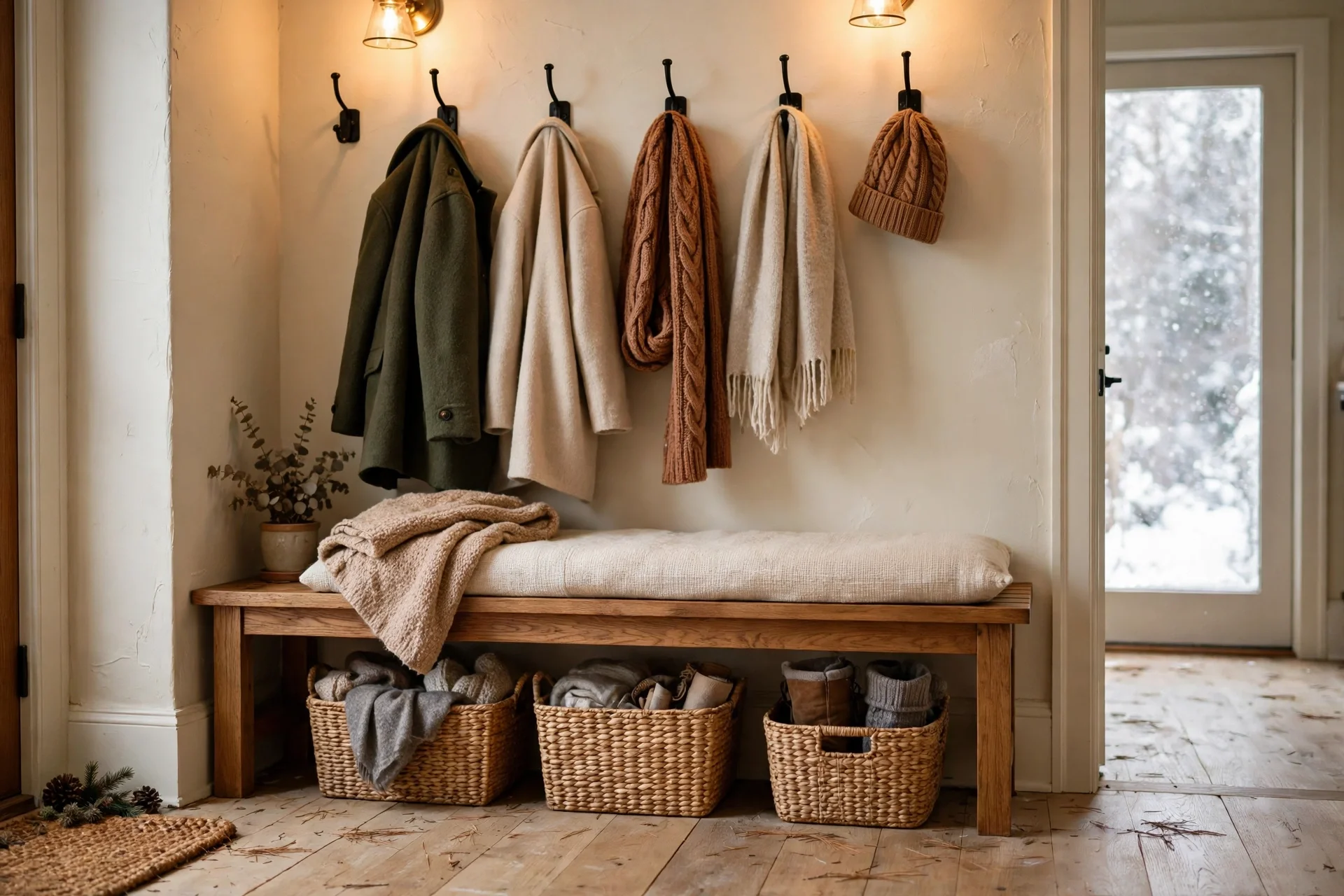
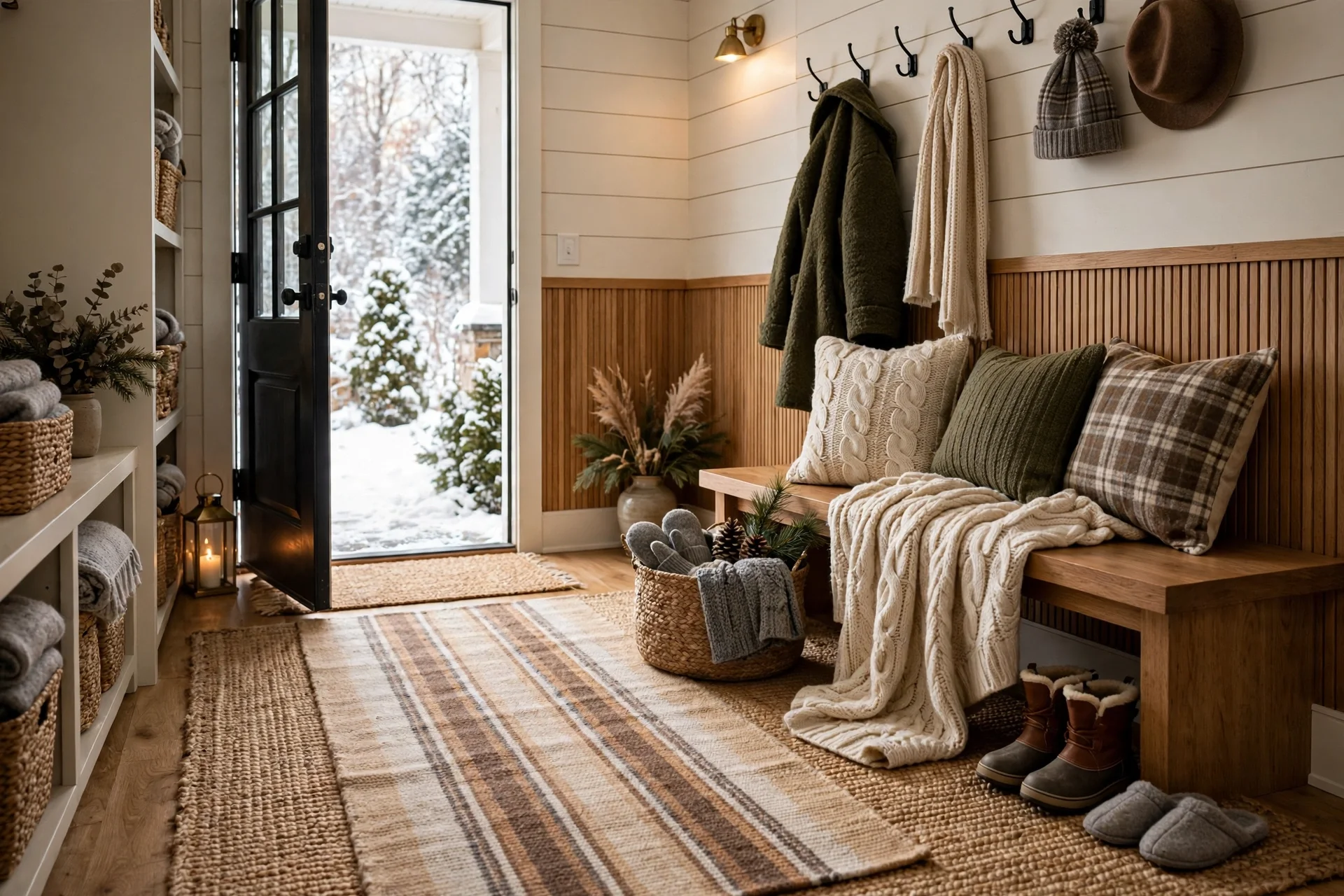
A warm wood bench with sturdy wall hooks is the heart of a cozy winter mudroom. The bench gives everyone a place to sit while pulling on boots, and the hooks above keep coats, scarves, and bags off the floor. Natural wood instantly softens a cold entry, adds texture against painted walls, and makes the space feel like a real room rather than a passageway. A thick cushion and a folded throw make the bench inviting on the coldest morning.
Choose a bench in oak, pine, or reclaimed wood, and mount hooks at two heights so children and adults can both reach them easily. Add a cushion in a washable fabric, and leave one hook free near the door for the coat you grab most often. Keep the bench top mostly clear, with baskets underneath for shoes, so sitting down stays comfortable every single day. In winter, this simple setup turns rushed departures into a calmer, more comfortable daily routine.
- Mount hooks into wall studs so heavy winter coats never pull them loose.
- Use a washable cushion cover, since mudroom seating takes a lot of wear.
- Leave one hook free by the door for guests and daily coats.
2. Cream and Oatmeal Colour Palette
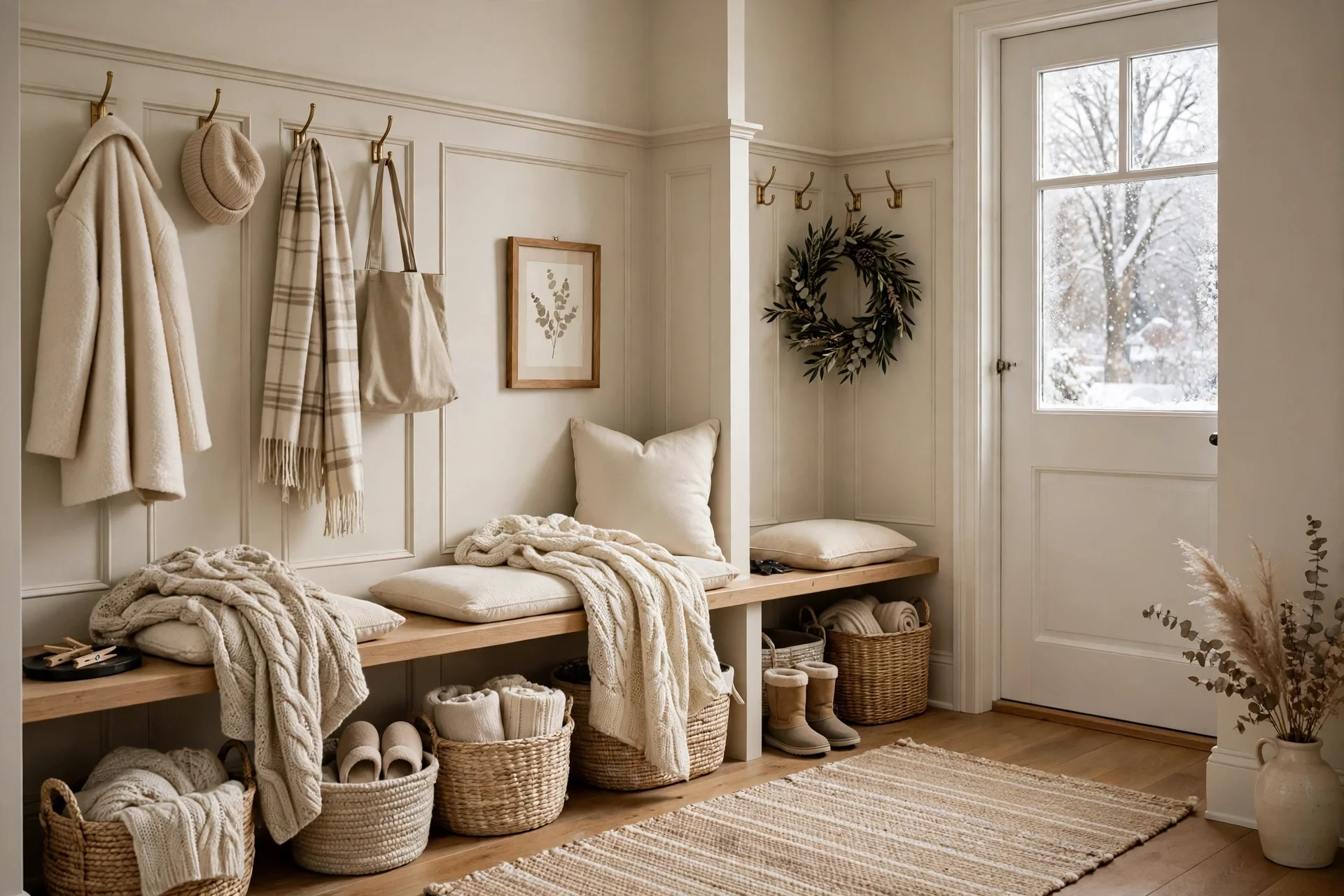
A cream and oatmeal colour palette is the fastest way to make a mudroom feel warm in winter. Soft cream walls, oatmeal cushions, and natural wood tones reflect what little daylight winter offers, while hiding dust and lint far better than stark white. The calm scheme also lets one seasonal accent, like plaid or pine, stand out without making the entry look busy. This soft, layered palette also photographs beautifully, which suits a home you love to share.
Paint or refresh the walls in a warm cream, then layer oatmeal through textiles, baskets, and a rug. Keep large pieces neutral and add colour through cushions and one basket, so seasonal swaps cost very little. If your existing cabinets are dark, lighten the room with cream baskets and a pale runner instead of repainting the whole space. A cream door mat and an oatmeal throw complete the scheme without adding visual clutter.
- Test paint swatches in evening light, when the mudroom is used most.
- Keep large surfaces neutral and add colour through textiles only.
- Repeat the oatmeal tone twice, in a cushion and a basket, for a pulled-together look.
3. Plaid Cushions and a Warm Runner
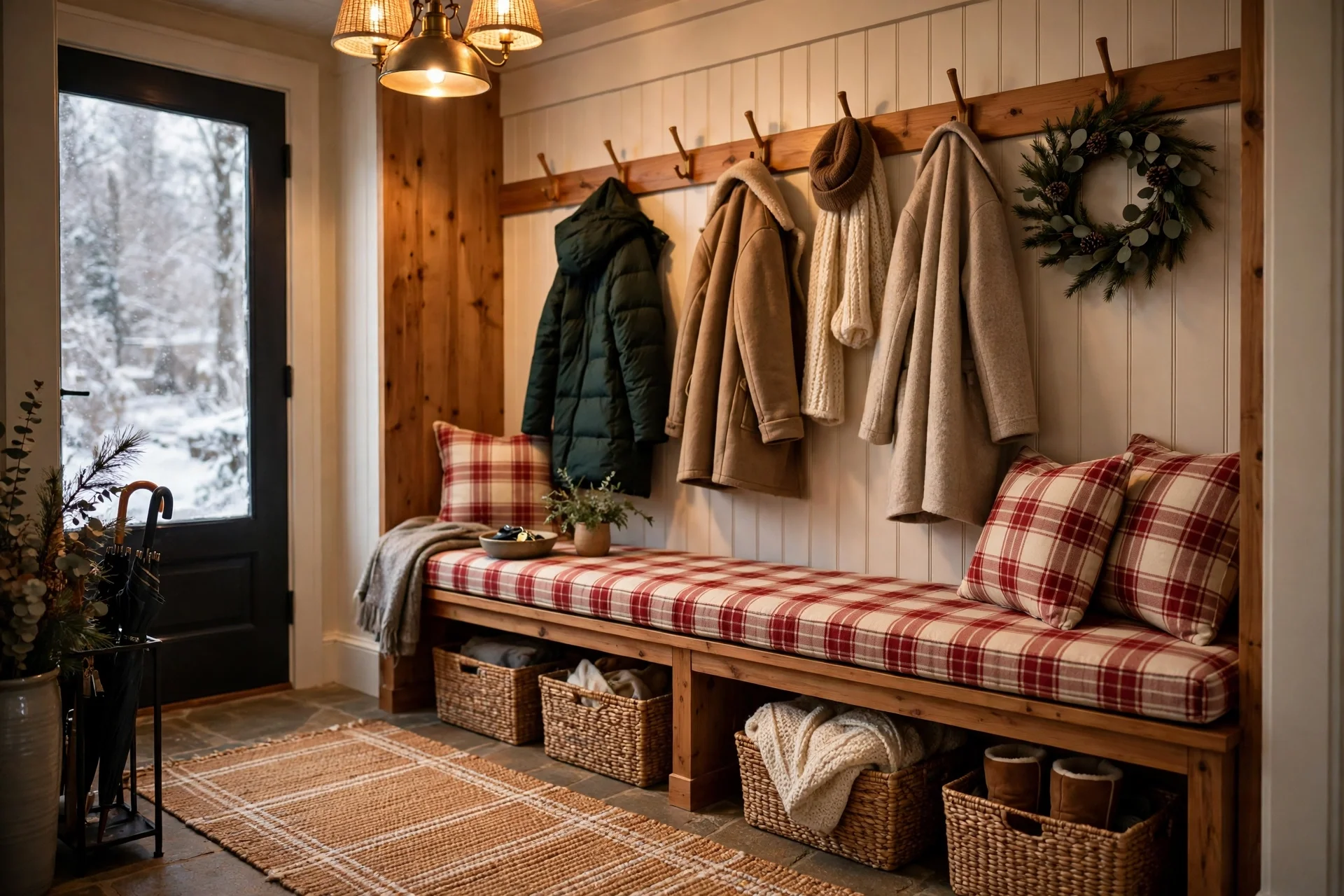
Plaid cushions and a warm runner instantly signal winter in a mudroom. A classic red, green, or navy check on the bench cushion adds colour and pattern, while a thick woven runner warms cold floors and catches drips from snowy boots. Because both pieces swap in minutes, the look can soften after the holidays into a quieter check that works right through February. The pattern also hides small marks far better than plain fabric, which matters in a busy entry.
Pick one plaid pattern as the lead and keep the rest of the room calm, so the pattern reads charming rather than busy. Choose a low-pile, washable runner that lies flat under the door swing, and a cushion in a sturdy cotton or wool blend. Shake the runner outside weekly, and wash cushion covers before they start to look tired. Choose colours that echo the rest of your home, so the mudroom feels connected rather than separate.
- Let one plaid pattern lead and keep the rest of the mudroom calm.
- Choose a washable runner that lies flat and will not catch on the door.
- Swap the plaid for a plain knit after the holidays to extend the look.
4. Open Cubbies for the Whole Family
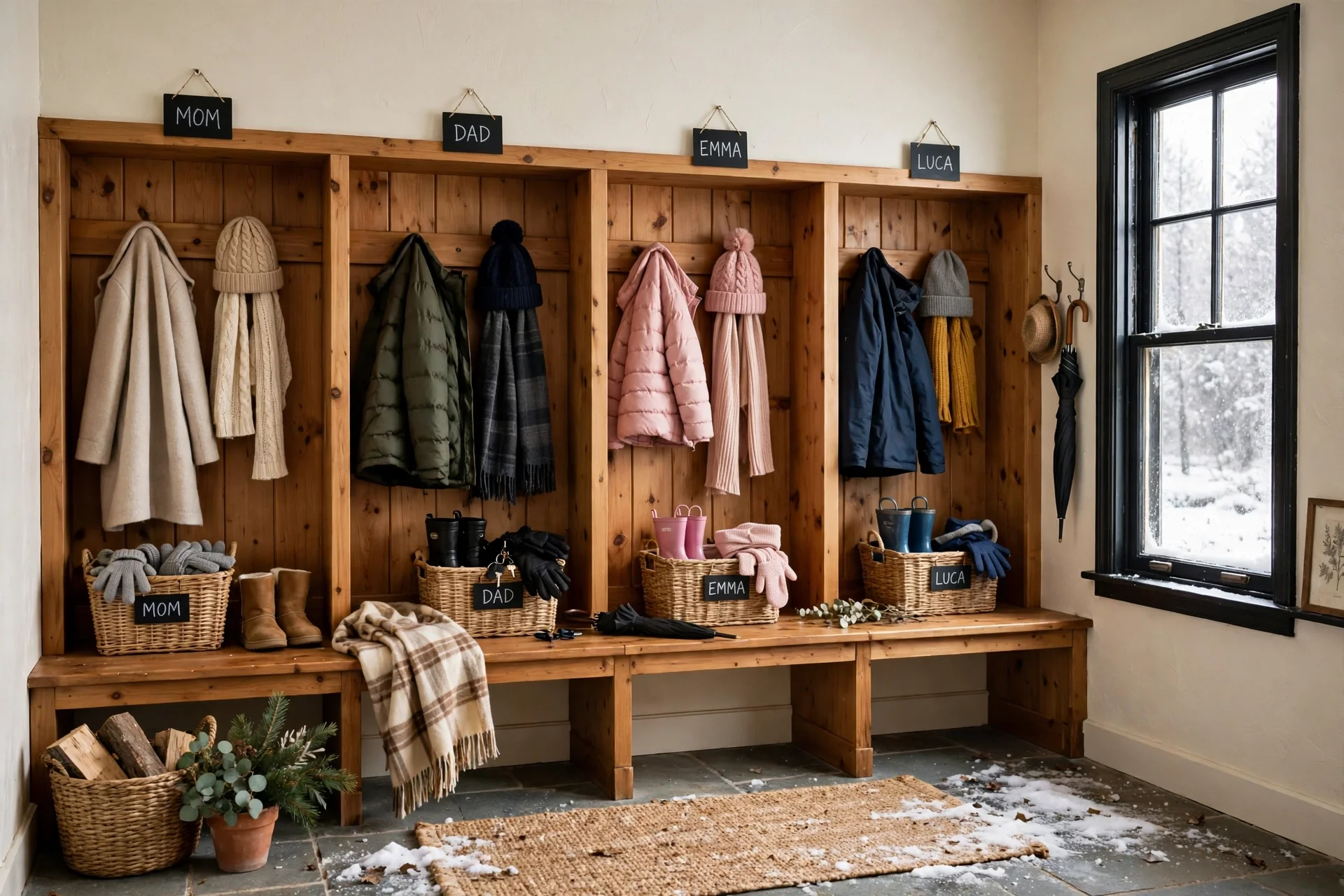
Open cubbies give every family member a dedicated spot, which is the simplest cure for a mudroom pile-up. Each cubby holds one person’s coat, bag, and boots, so mornings run faster and nobody hunts for a missing glove. The open design also makes it obvious when a cubby is overflowing, which keeps clutter from building up unnoticed. In a busy household, that visible structure also helps guests know exactly where to put things.
Size cubbies to your household, with a hook, a shelf, and a basket or boot space in each one. Label them with names or small wooden tags, and keep everyday items at arm height with out-of-season gear stored higher up. Do a quick weekly reset, returning stray items to their own cubby, so the system keeps working all winter long. A small stool beside the cubbies gives younger children a safe step up to their own hook.
- Give each person one cubby, one hook, and one basket to keep ownership clear.
- Label cubbies so guests and children know exactly where things belong.
- Reset cubbies weekly to stop one person’s overflow spreading to the rest.
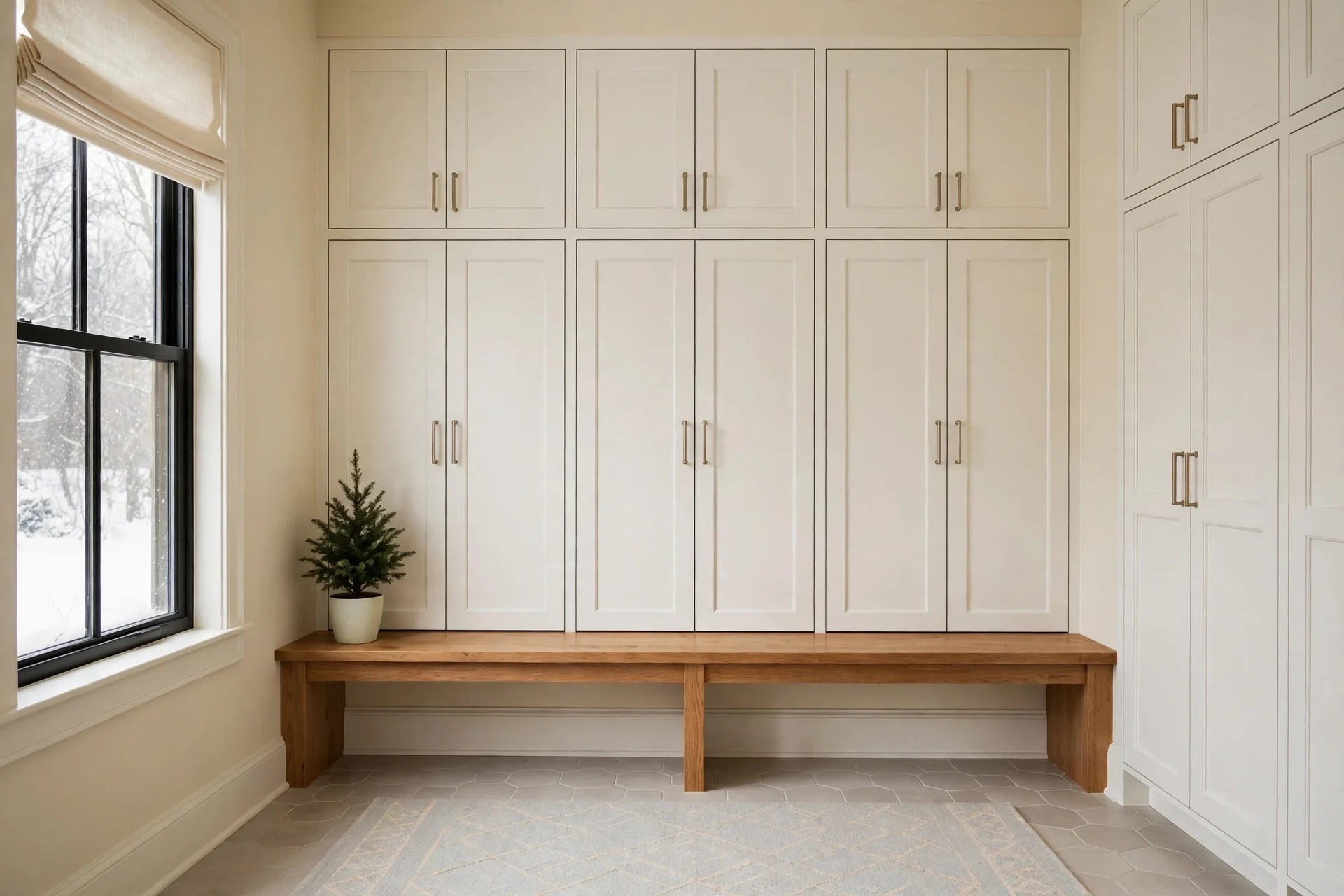
5. Closed Cabinets for a Clutter-Free Entry
Closed cabinets are the answer if open storage always looks messy in your home. Behind solid doors, coats, bags, and sports gear disappear completely, leaving a calm, tidy entry that feels larger and more polished. This approach suits formal front entries especially well, where a wall of cubbies might look too casual or busy. The result is an entry that stays photo-ready even on the busiest winter mornings with guests arriving.
Choose cabinets deep enough for hanging coats, with a bench section for sitting and a boot drawer or open base below. Add soft-close hinges so doors never slam, and keep one small open shelf or hook near the door for the coat in daily use. Inside, use bins to separate each person’s gear, so closed doors do not simply hide a mess. Ventilation matters too, so air damp coats out before closing the doors for the night.
- Make cabinets deep enough for coats on hangers, not just folded items.
- Keep one open hook for the daily coat so doors are not opened constantly.
- Use bins inside cabinets so each person’s gear stays separated.
6. Boot Tray and Drying Station
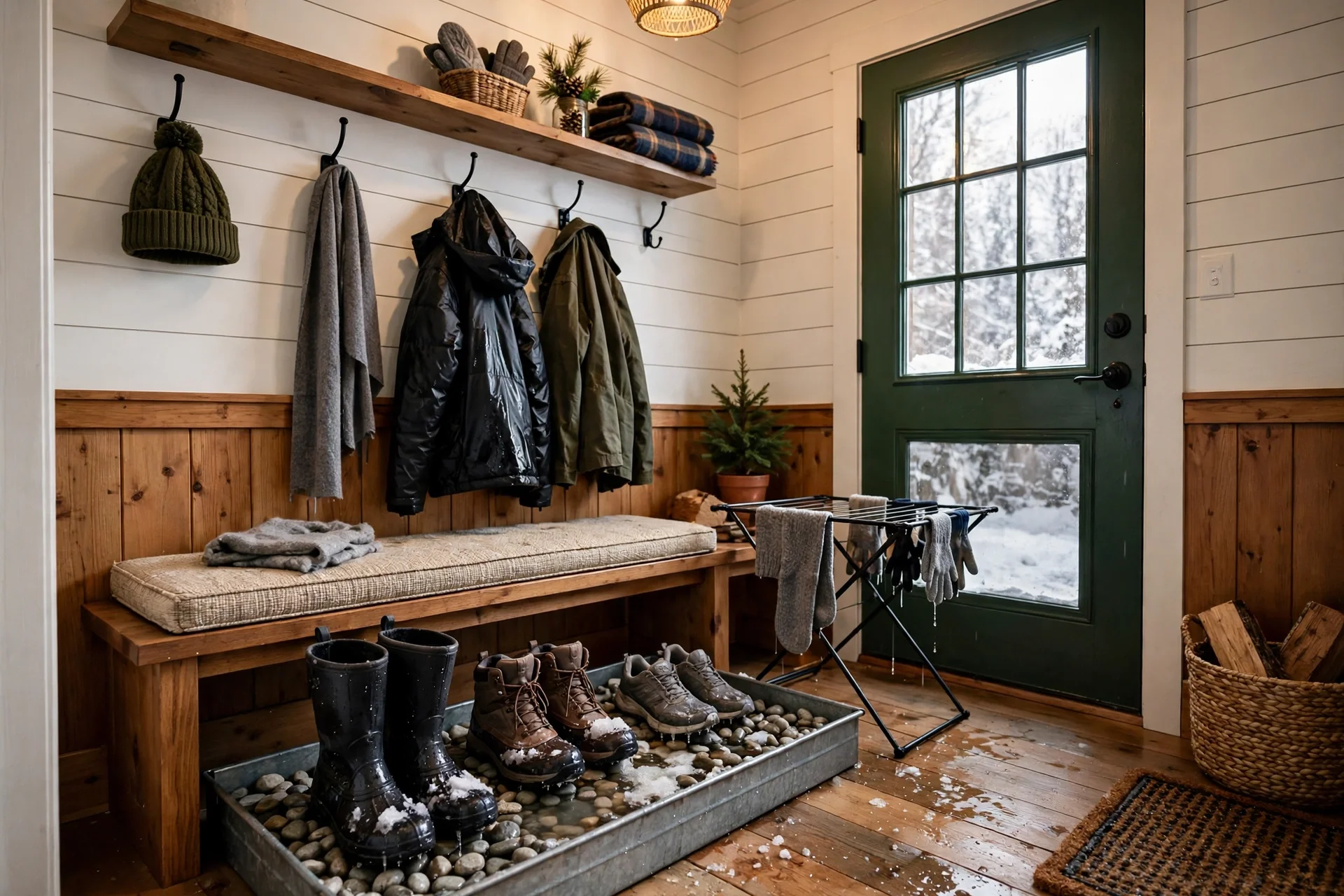
A boot tray and drying station protects your floors from the worst of winter. Snowy, salty boots drip as they thaw, and a tray catches that water before it spreads across wood or carpet. With a dedicated drying spot, boots also dry faster and smell fresher, instead of sitting in a damp pile by the door. This small habit also extends the life of leather boots, which suffer most from repeated salt exposure.
Place a sturdy tray with a raised edge right inside the door, lined with pebbles or an absorbent mat for airflow. Add a small boot rack or a fan nearby for faster drying, and keep a brush and an old towel close for wiping off salt. Empty and rinse the tray weekly, since road salt builds up quickly in midwinter. In homes with children, a second small tray by the back door handles school shoes just as well.
- Choose a tray with a raised edge so meltwater cannot run onto the floor.
- Keep a towel and brush beside the tray for quick salt clean-ups.
- Rinse the tray weekly to stop salt and grit from damaging boots.
7. Basket Storage for Hats and Gloves
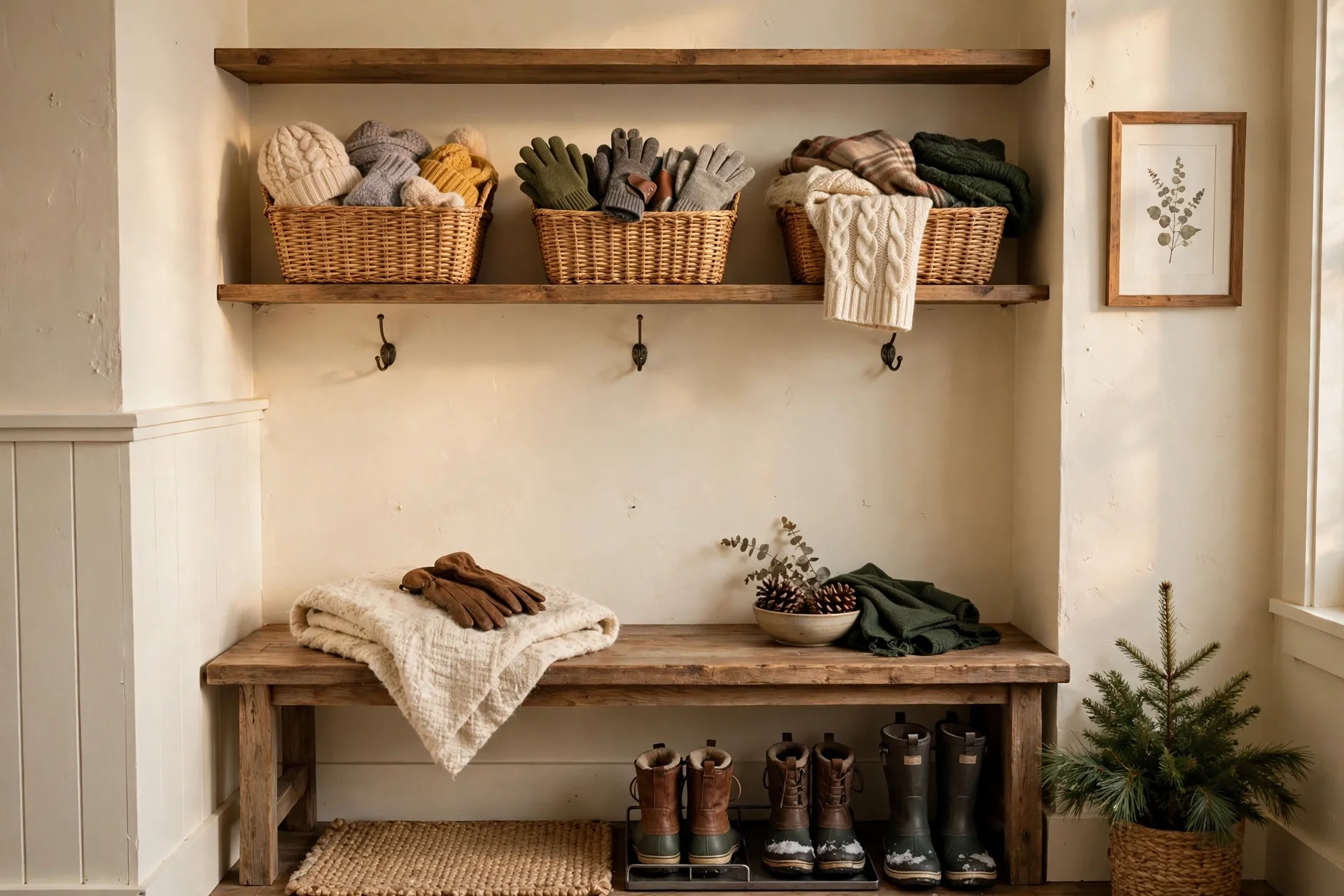
Basket storage is the kindest way to organise hats and gloves, because small winter accessories vanish so easily. A basket per person, or one per category, keeps beanies, gloves, and scarves together and visible, so nobody digs through a single overflowing bin on a freezing morning. Woven baskets also add natural warmth and texture to the entry. The natural texture also softens painted walls and hard floors, making the whole entry feel warmer.
Place baskets on a shelf above the bench or inside cubbies, and label them clearly with tags or small chalk labels. Keep one small basket by the door for single gloves waiting for their partner, and wash or air out knit items before storing them away. Rotate baskets seasonally, moving thin autumn gloves out when heavy winter pairs arrive. Store spare pairs in a higher basket, so the everyday basket never overflows before wash day.
- Give each person a basket so small items never mix into one pile.
- Label baskets clearly, especially in a shared family mudroom.
- Keep a small lost-and-found basket for single gloves and stray items.
8. Wall Peg Rail for Coats and Bags
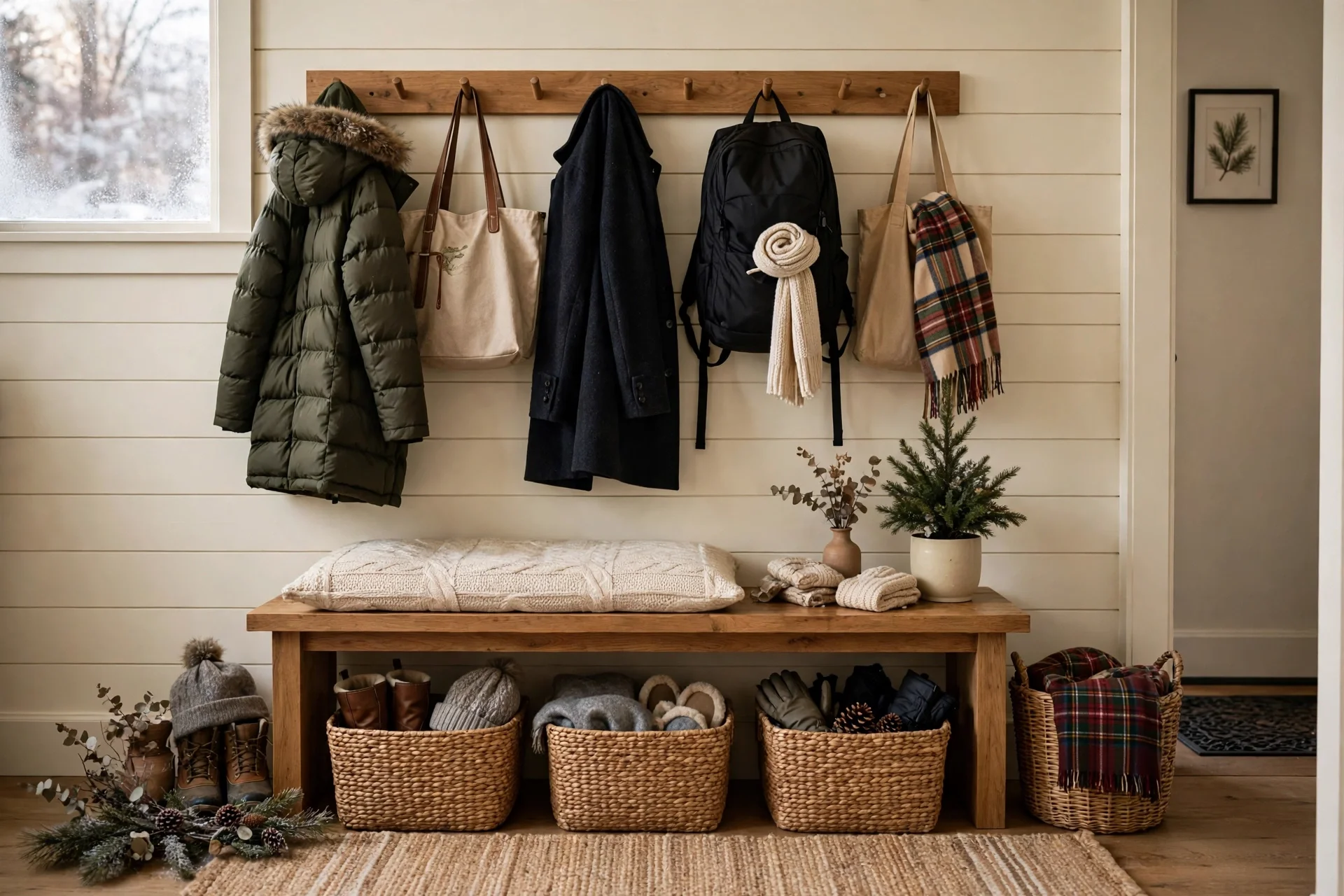
A wall peg rail is a simple, flexible solution for coats and bags, especially in a mudroom without built-ins. A row of sturdy wooden pegs holds coats, tote bags, backpacks, and dog leads at exactly the height you need, and the rail itself becomes a charming feature. It costs little, installs in an afternoon, and suits rentals well. The rail also works beautifully in a rental, since it leaves only small holes to fill later.
Mount the rail into studs at adult shoulder height, with a second lower rail for children if you have room. Space pegs generously, since bulky winter coats need more room than summer jackets, and leave the end peg free for guests. Pair the rail with a bench and a basket below, and the whole entry works as one tidy station. A small shelf above the rail holds sunglasses, keys, and other items you grab on the way out.
- Mount the rail into studs, since winter coats and bags are heavy.
- Space pegs widely so bulky coats do not crowd each other.
- Add a lower rail for children so they can hang their own coats.
9. Farmhouse Shiplap Mudroom
A farmhouse shiplap mudroom brings instant character to a plain entry. White or cream shiplap boards add texture and a relaxed, country feel, while wood benches and black hooks keep the look grounded and practical. The style works beautifully in winter, when layered textiles and greenery soften the clean lines. In winter, a simple pine sprig or a plaid cushion softens the clean lines and adds seasonal warmth throughout the colder months.
Install shiplap on one feature wall, usually behind the bench and hooks, rather than every wall, to keep the room feeling open. Paint it in a warm white, add a wood bench and simple black hardware, and finish with a wreath or a woven basket. Keep the palette calm, and let wood and texture do the decorating work. Choose boards with a smooth finish, since rough shiplap collects dust in a high-traffic entry.
- Shiplap one feature wall only, so a small entry still feels open.
- Use warm white paint, not bright white, for a cozier farmhouse feel.
- Pair shiplap with black hooks for a classic farmhouse contrast.

10. Small Hallway Mudroom Nook
A small hallway mudroom nook proves you do not need a dedicated room to gain a proper entry. A narrow bench, a few hooks, and a basket can turn an unused stretch of hallway into a hardworking landing spot for coats and shoes. Done well, the nook looks intentional, not squeezed in, and it stops clutter from spreading into living spaces. Even a single well-chosen basket and a warm runner can make the nook feel finished and welcoming.
Measure carefully, keeping the walkway clear, and choose a slim bench with shoe storage underneath. Hang hooks above, add a mirror to make the hallway feel wider, and use one basket for small items. Keep the nook to the essentials only, since every extra object in a narrow space quickly feels crowded. Wall-mounted storage keeps the floor clear, which matters most in a narrow, high-traffic hallway used by the whole family daily.
- Keep the walkway clear by choosing a slim bench that fits the hallway.
- Use a mirror to make a narrow hallway feel wider and brighter.
- Limit the nook to essentials, so it never feels crowded.

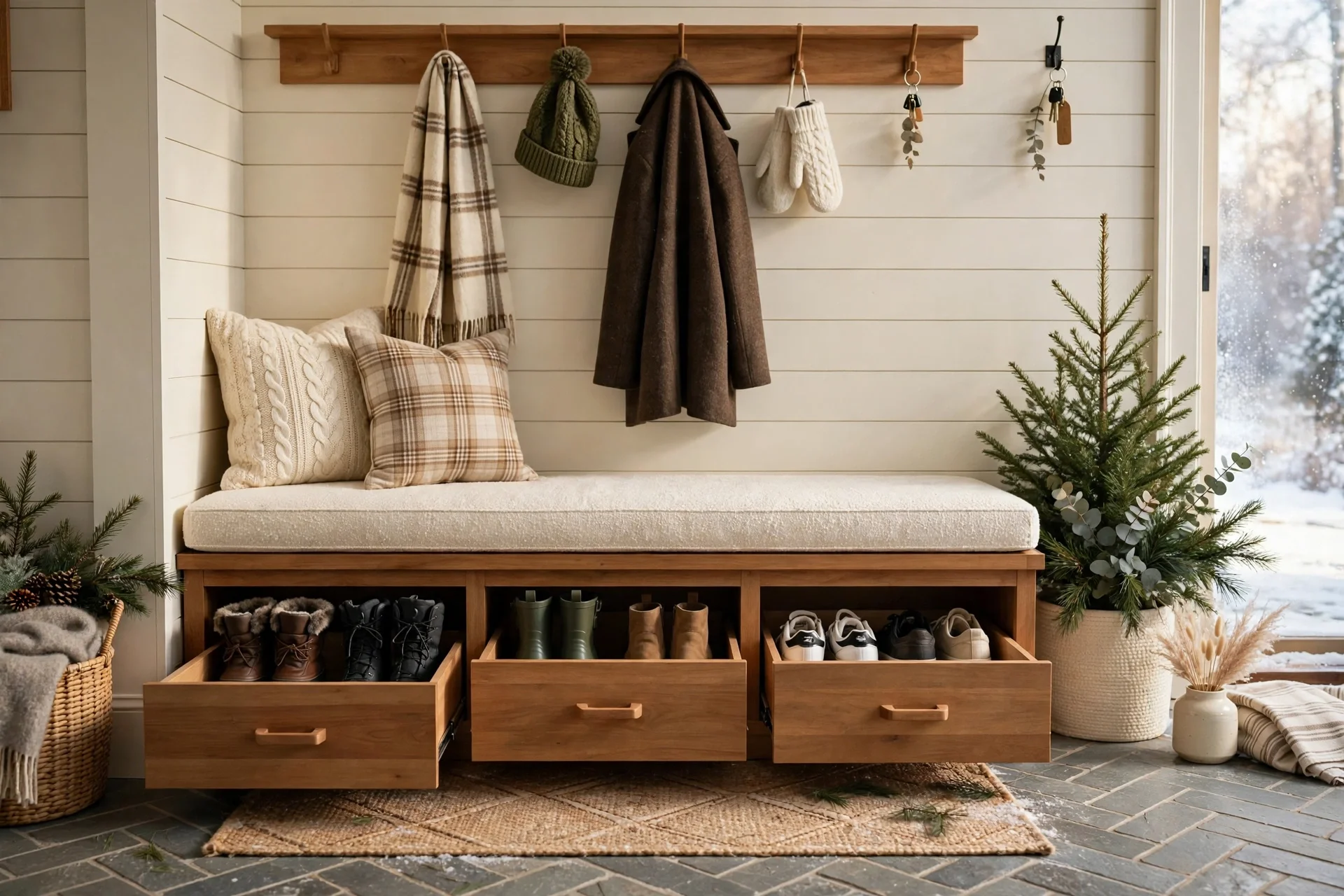
11. Bench with Shoe Drawers
A bench with shoe drawers hides footwear completely while keeping it easy to reach. Deep drawers under the seat hold boots, sneakers, and school shoes out of sight, so the entry always looks tidy even when the whole family is home. Unlike open shelves, drawers also protect shoes from dust and from pets. This hidden storage also keeps muddy shoes away from pets and small children wandering through the entry.
Choose drawers deep enough for adult boots, with a ventilated or slatted base if possible, and label the inside of each drawer by person or shoe type. Keep one pair of daily shoes by the door, and store the rest in the drawers. Wipe drawers out monthly, since winter grit collects quickly inside closed storage. A cedar block inside each drawer helps absorb moisture and keeps stored shoes smelling fresh.
- Check drawer depth against your tallest boots before buying or building.
- Ventilate drawers or air shoes out first, so damp shoes do not smell.
- Wipe drawers monthly to remove winter grit and salt.
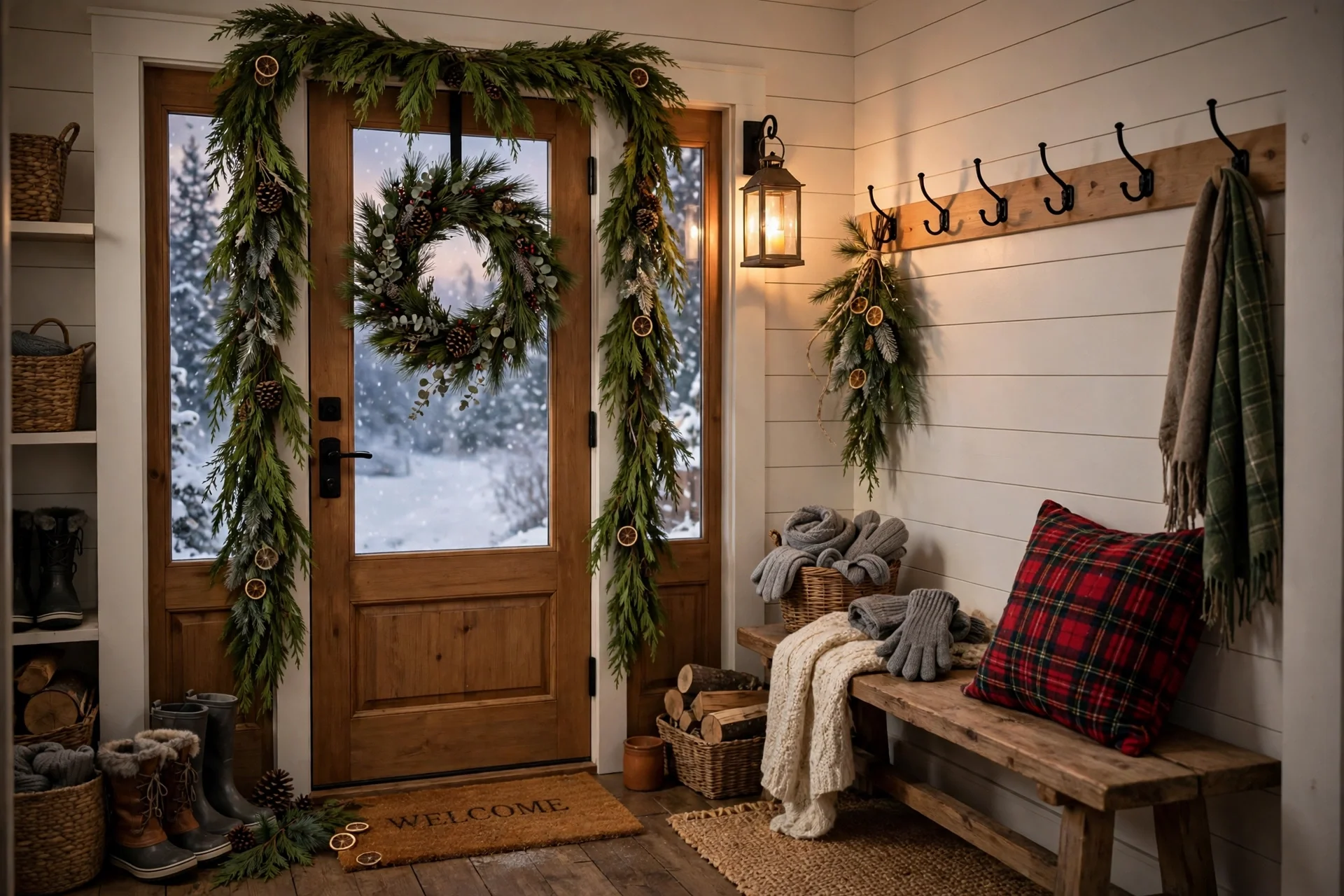
12. Wreath and Garland Entry Styling
A wreath and garland turn a plain mudroom into a festive winter entry with very little effort. A pine wreath on the door or wall, plus a cedar garland along a shelf or doorway, adds scent, colour, and seasonal charm. The greenery also softens hard lines and makes the entry feel cared for, even when the rest of the house is still undecorated. The scent of fresh pine also greets guests immediately, setting a warm tone for the whole house.
Hang the wreath with a removable hook so doors and paint stay undamaged, and keep greenery clear of heaters and open flames. Mist fresh cuttings lightly every few days, and replace them when needles drop. If anyone in the household has allergies, good-quality faux greenery gives the same look all season and stores flat for next year. Swap the wreath for a simple winter arrangement in January, so the entry stays seasonal without feeling festive.
- Hang wreaths with removable hooks to protect doors and paint.
- Keep greenery clear of heaters, radiators, and open flames.
- Choose faux greenery if allergies make fresh pine a problem.
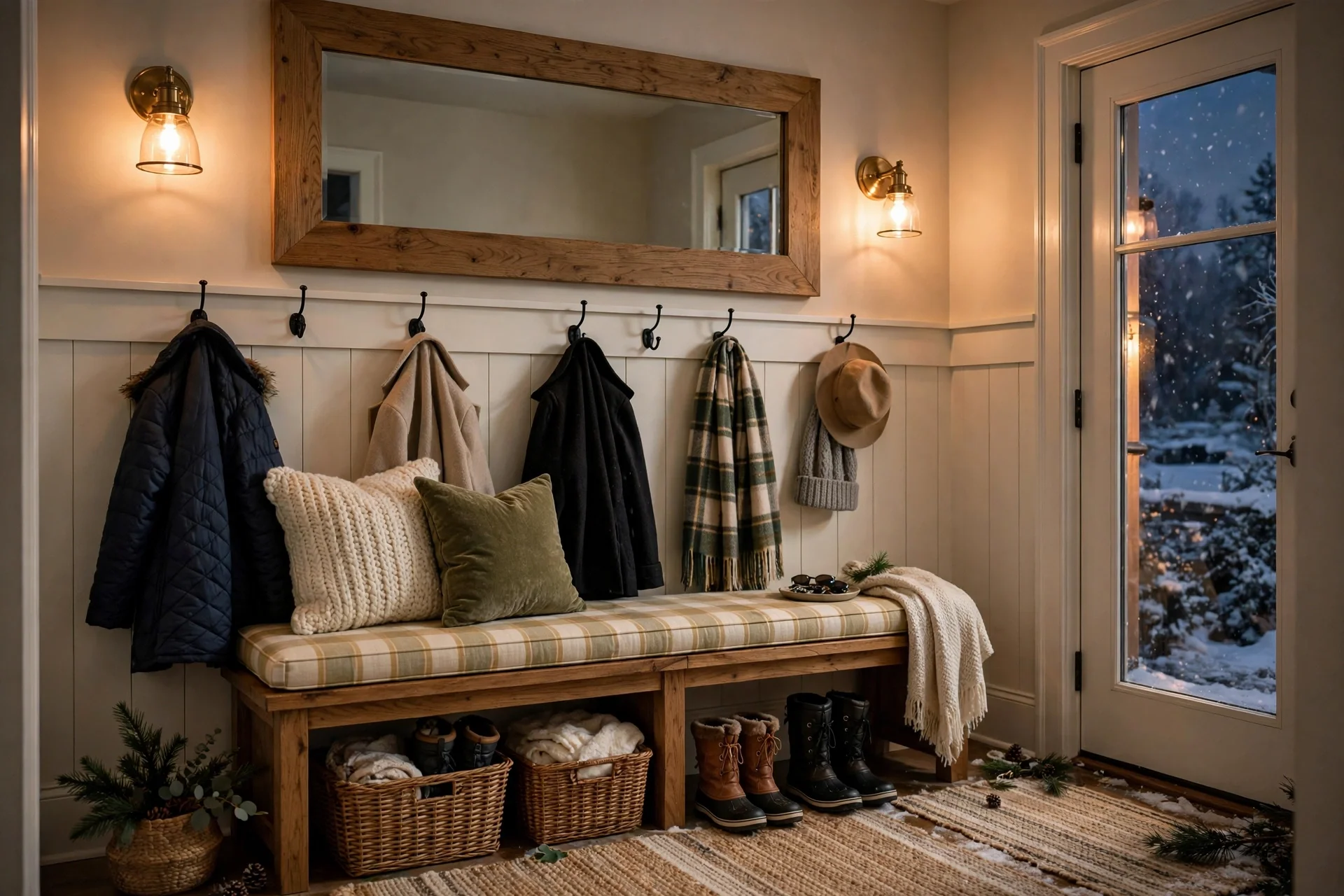
13. Warm Lighting and a Statement Mirror
Warm lighting and a statement mirror transform a mudroom from a dark passage into a welcoming room. A wall sconce or small pendant in a warm-white tone softens the space on dark winter mornings, while a large mirror reflects light and makes a small entry feel wider. Together, they make the last check before leaving home feel pleasant. A dimmer switch lets you brighten the mirror for a final check, then soften the light for the evening.
Choose warm-white bulbs around 2700K, and place a sconce beside the mirror rather than directly above it, to avoid harsh shadows. Hang the mirror at eye level above the bench, and keep the frame in wood or warm metal to match the room. Add a battery puck light inside a dark cabinet if the entry has no wiring. A small tray beneath the mirror corrals keys, sunglasses, and other daily essentials in one tidy spot.
- Use warm-white bulbs around 2700K for a cozy winter glow.
- Place sconces beside the mirror, not above it, to avoid shadows.
- Hang the mirror at eye level above the bench for a final check.
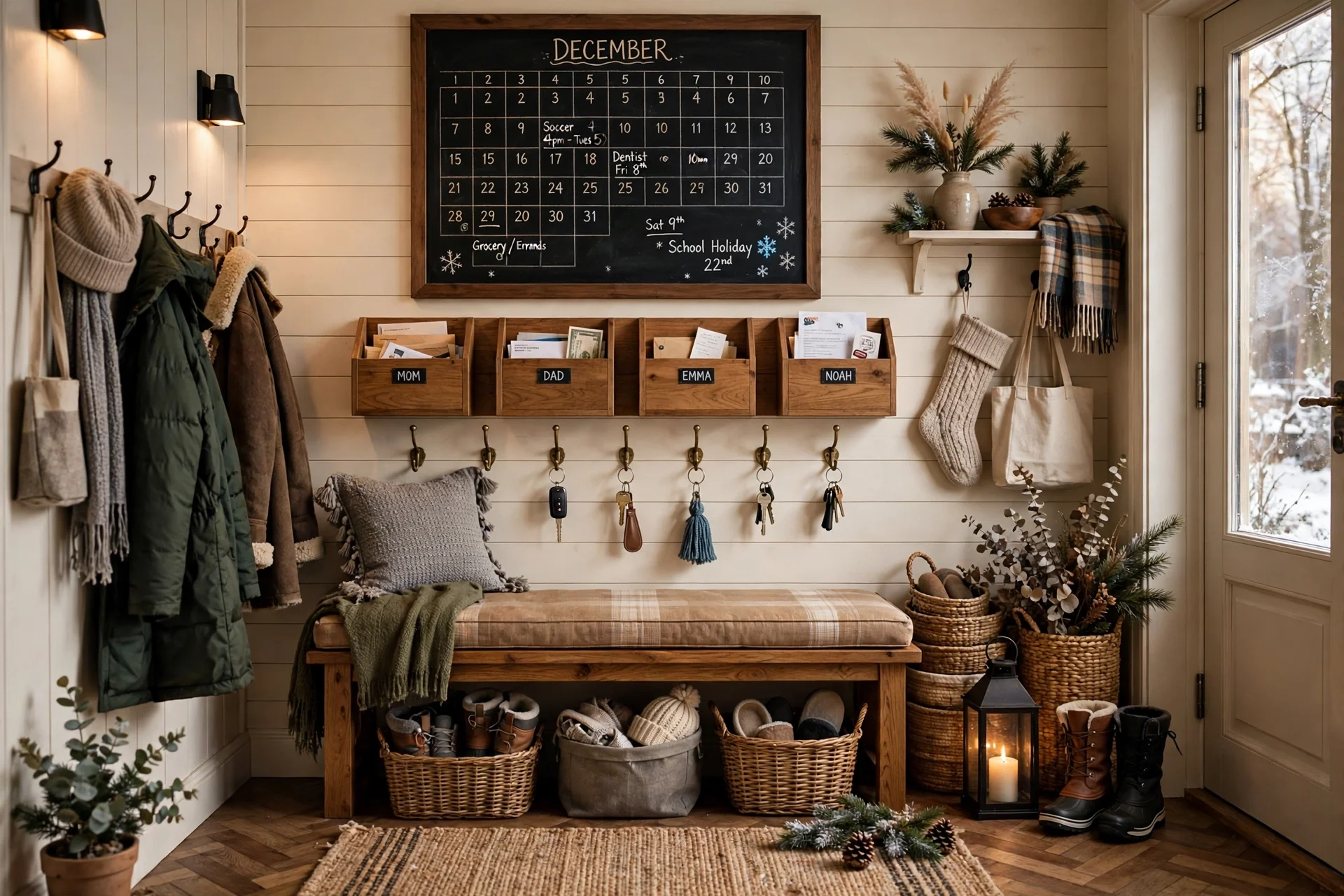
14. Chalkboard Family Command Center
A chalkboard family command center turns the mudroom into the household hub. A chalkboard or whiteboard for schedules, a row of key hooks, and a mail slot keep school dates, appointments, and reminders visible exactly where everyone passes each morning. It reduces forgotten items and last-minute scrambles, which winter mornings have enough of already. The board also gives children a sense of ownership, since they can see their own activities listed clearly.
Mount the board at adult eye level above the bench, with a small shelf for chalk, pens, and mail. Add a calendar section, a notes section, and one hook per person for keys. Update the board every Sunday evening, wipe it clean monthly, and keep the layout simple so children can read it too. A small basket beneath the board catches permission slips, letters, and other papers before they scatter.
- Update the board weekly, on Sunday evening, so Monday mornings run smoothly.
- Give each person a key hook beside the board to stop lost keys.
- Keep the layout simple, with one calendar and one notes section.
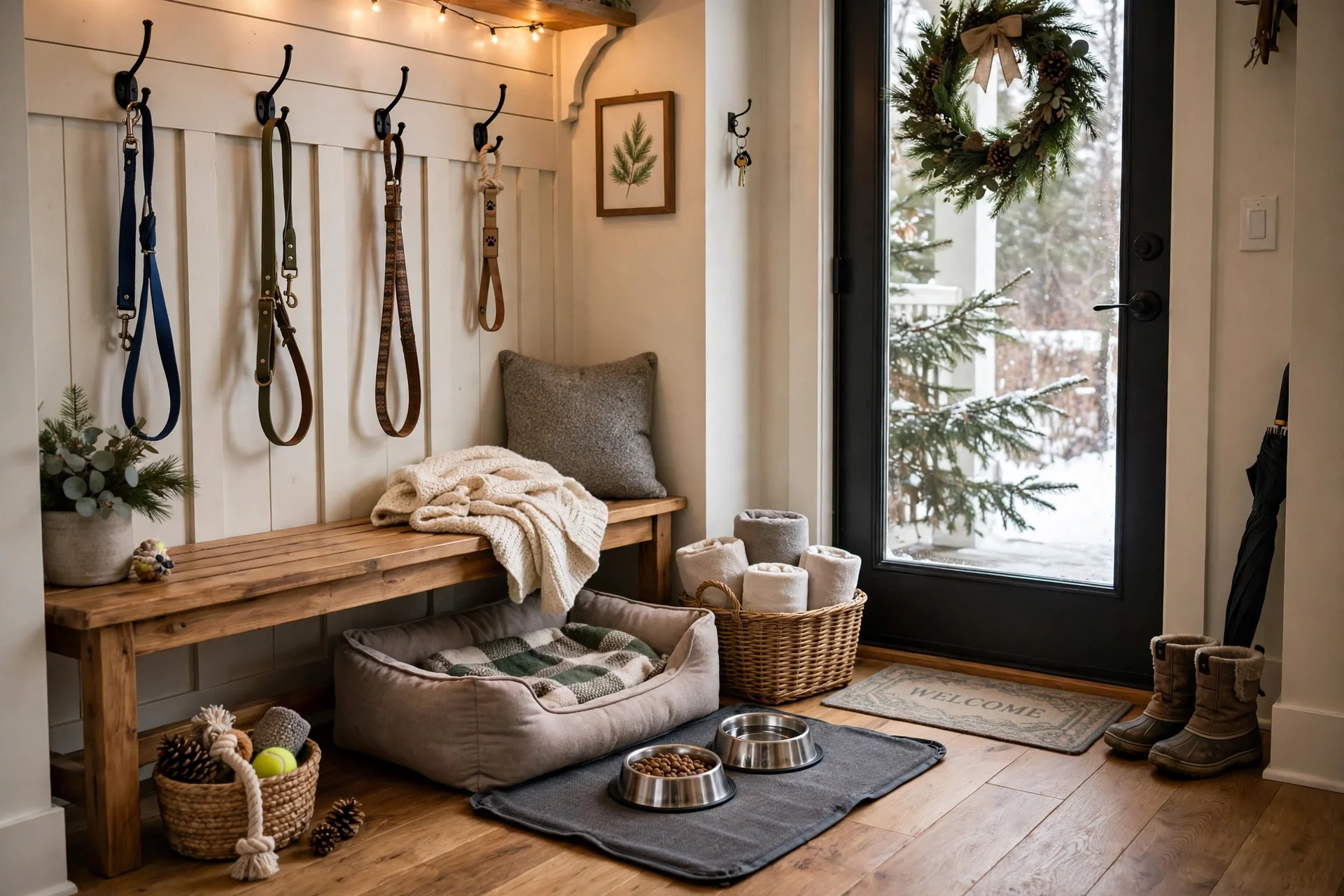
15. Pet-Friendly Mudroom Corner
A pet-friendly mudroom corner makes winter walks far less messy. Dogs come home with muddy paws and wet coats, and a dedicated corner with a towel basket, leash hooks, and a washable mat keeps that mess contained by the door. Pets also learn the routine quickly, which saves your floors and your patience. A washable cover on the bed also makes winter mud far easier to manage after every single walk.
Set up a low hook for the leash, a basket of old towels, and a small paw-washing station with a jug and a mat. Add a bed or a blanket in a draft-free spot, and keep treats in a sealed jar nearby for post-walk rewards. Wash towels and mats weekly, since wet pet gear smells fast in a warm house. Keep a spare leash and a roll of waste bags in the same corner, so walks never require a hunt.
- Keep a basket of old towels by the door for muddy paws.
- Use a washable mat under the pet corner to protect floors.
- Wash pet towels and mats weekly to stop damp smells.
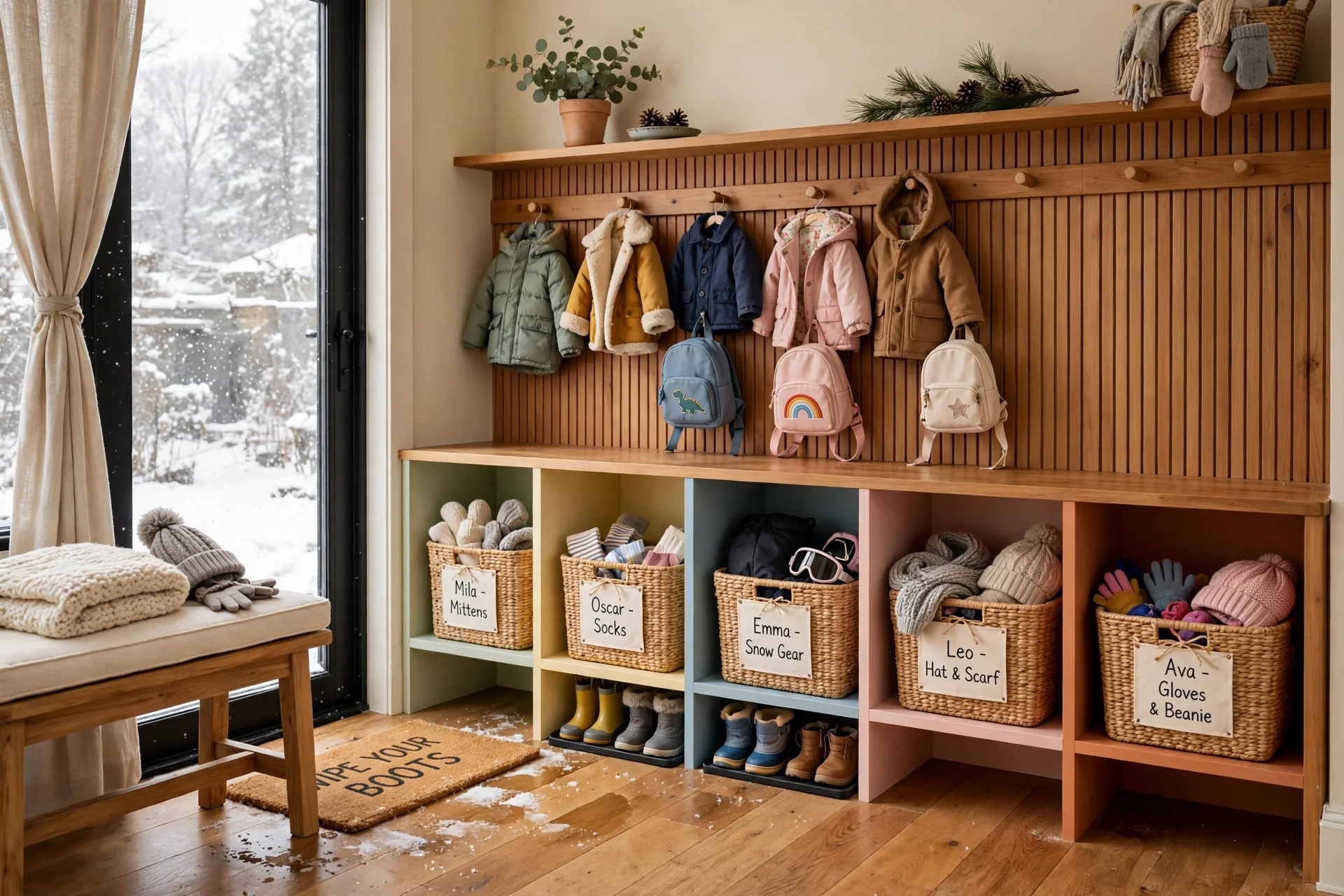
16. Kids’ Cubby System
A kids’ cubby system teaches independence while keeping winter gear under control. Low cubbies at child height let children hang their own coats, stash backpacks, and line up boots without help. When everything has a small, reachable home, mornings get faster and parents stop hunting for a missing mitten. The routine also builds confidence, since children learn to manage their own belongings before school each day, even on busy winter mornings, without extra help.
Build or buy cubbies with the hook at your child’s shoulder height, a basket for hats and gloves, and a boot space below. Label each cubby with a name, a photo, or a favourite colour, and keep the system to one cubby per child. Praise the habit, not perfection, and do a quick Friday reset together so the system survives the school week. A small step stool helps younger children reach their hook safely until they grow a little taller.
- Set hooks at child shoulder height so kids can hang coats themselves.
- Label cubbies with names or photos for younger children.
- Do a quick Friday reset together to keep the system working.
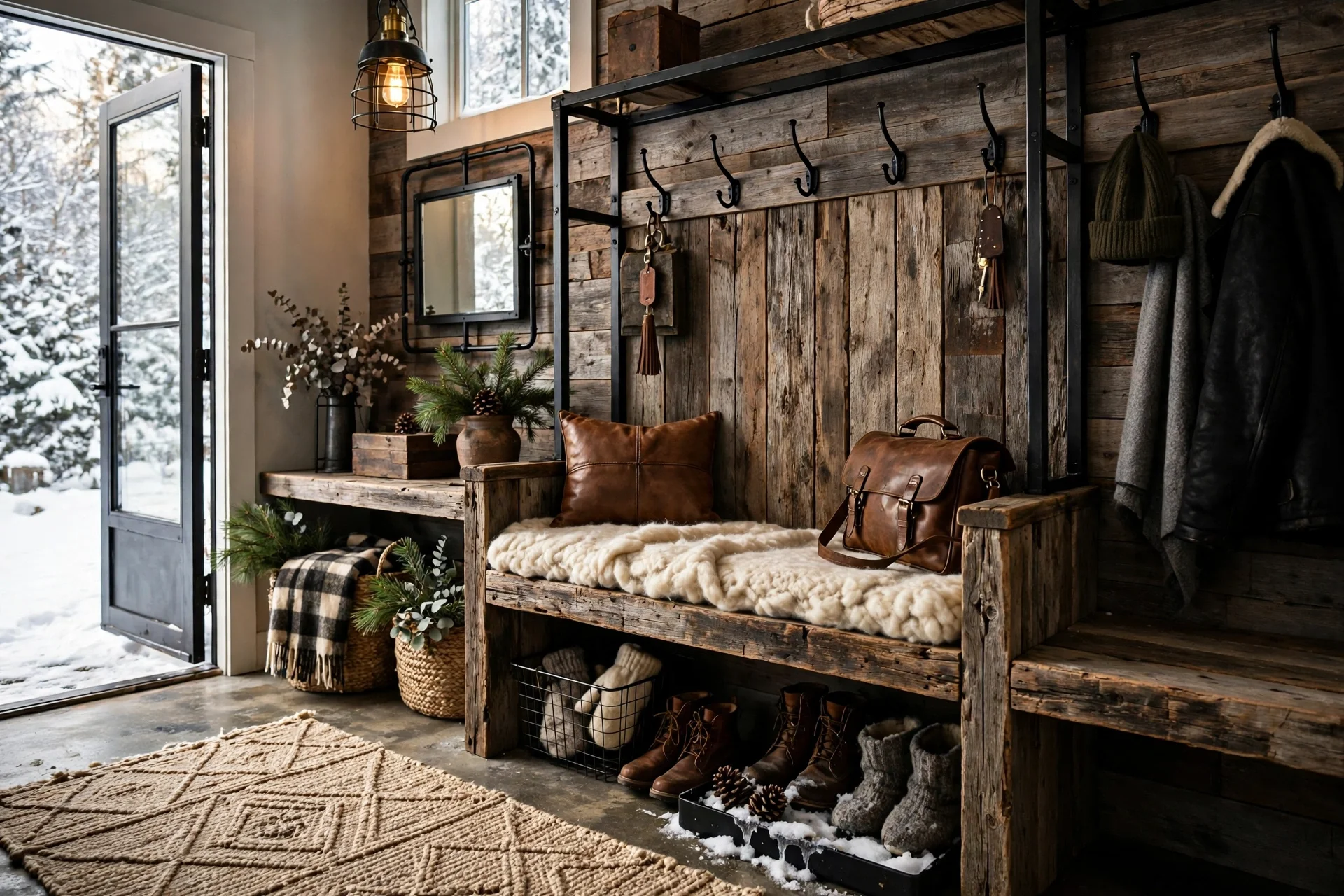
17. Rustic Wood and Black Metal
Rustic wood and black metal give a mudroom a warm, cabin-like edge. Reclaimed or rough-sawn wood brings grain and character, while black metal hooks, brackets, and frames add contrast and durability. The combination feels sturdy enough for muddy boots and heavy coats, yet warm enough to welcome you home on a cold night. The sturdy materials also stand up to daily use, from muddy boots to heavy bags and wet umbrellas.
Use rustic wood for the bench and shelves, and black metal for hooks, brackets, and a mirror frame. Keep walls in a warm cream or soft grey, so the dark metal reads as an accent rather than a theme. Seal the wood against moisture, since mudroom timber faces wet coats and boots all winter, and oil it once a season. A woven basket in the corner softens the industrial edge and adds a touch of natural texture.
- Seal rustic wood well, since mudroom timber faces constant moisture.
- Keep walls light so black metal reads as an accent, not a theme.
- Match all visible metal in one black finish for a cohesive look.
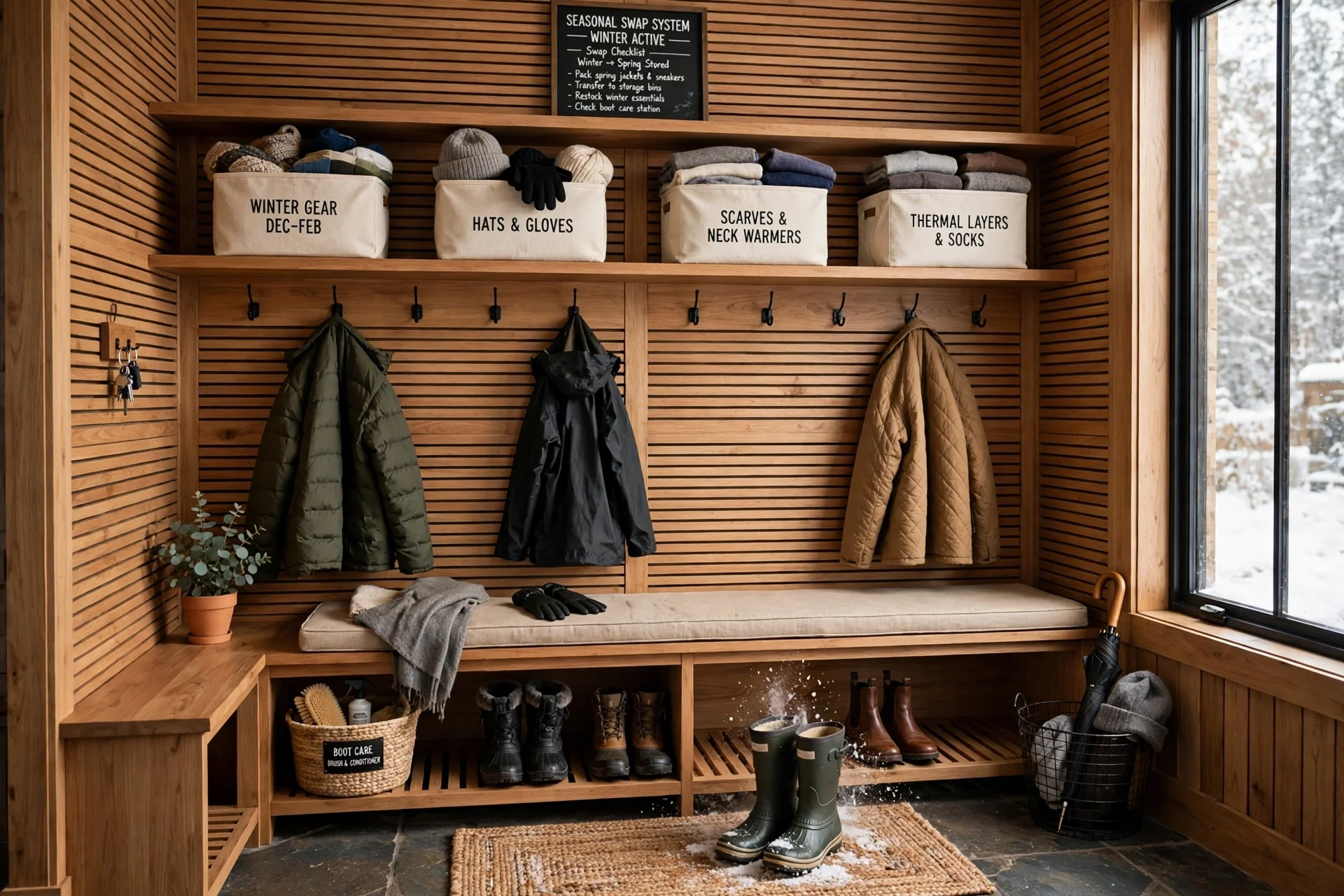
18. Seasonal Swap System
A seasonal swap system keeps the mudroom useful all year without growing cluttered. Instead of storing every season’s gear by the door, you rotate: heavy winter coats, boots, and accessories move in for winter, while lighter items move to a labelled bin elsewhere. The entry stays spacious, and nothing competes for hooks. The swap also reveals what you no longer need, making it easier to donate items before they pile up.
Keep one labelled bin per person for out-of-season gear, stored in a closet, garage, or attic. Swap the bins twice a year, in late autumn and early spring, and use the swap as a chance to donate outgrown coats and worn gloves. Wash items before storing them, so they come back fresh next season. Label bins by person and season, so the right box is easy to find when the weather changes again.
- Store out-of-season gear in one labelled bin per person.
- Swap bins in late autumn and early spring, not mid-season.
- Donate outgrown coats during each swap to stop storage growing.
19. Cozy Rug and Textile Layering
Cozy rug and textile layering is the finishing touch that makes a mudroom feel like a living space. A thick wool runner over a larger flat-weave rug warms cold floors, while knit throws and cushions on the bench add softness and colour. Layers also protect floors, muffle footsteps, and make the entry feel inviting the moment you step inside. The layers also add sound-softening warmth, which makes a hard-floored entry feel quieter and calmer.
Start with a large, washable base rug, then layer a smaller wool or cotton runner on top, keeping both flat and secure with rug tape. Add a knit throw folded on the bench and one or two cushions in coordinating tones. Shake rugs outside weekly, and wash the top layer regularly, since mudroom textiles collect winter dirt fastest. Keep colours coordinated with the bench cushion, so the layered textiles look intentional rather than random.
- Secure layered rugs with rug tape so they never slip or bunch.
- Choose a washable base rug, since mudroom floors take heavy wear.
- Shake rugs outside weekly and wash the top layer regularly.
Frequently Asked Questions
How do I keep a winter mudroom from getting cluttered?
Give every person one hook, one basket, and one boot spot, and do a quick weekly reset. When each item has a home, clutter has nowhere to build up, and a five-minute weekly tidy is enough to keep the system working all winter.
What is the best flooring protection for a mudroom in winter?
A boot tray with a raised edge, plus a washable runner, covers most winter damage. The tray catches meltwater and salt, while the runner protects the floor underneath and can be shaken out or washed regularly.
How can I make a small mudroom cozy without adding clutter?
Warm the space with light and textiles rather than objects. A warm-white sconce, a plaid cushion, and a thick runner add coziness with almost no footprint, and a mirror makes the space feel larger.
What colours work best for a cozy winter mudroom?
Warm neutrals are the safest base: cream, oatmeal, and natural wood, with plaid, deep green, or rust as accents. This palette feels warm under winter lighting and carries easily from December through February.
How do I organise hats and gloves so they do not get lost?
Use one labelled basket per person, kept on a shelf or inside a cubby at arm height. Add a small lost-and-found basket for single gloves, and check baskets during your weekly reset.
Conclusion
A cozy winter mudroom is not about a remodel or a big budget. It is about warmth you can feel and storage that actually works: a bench to sit on, hooks that hold, baskets that keep small things found, and textiles that soften cold floors. Start with the idea that solves your biggest winter frustration, whether that is wet boots, lost gloves, or a hallway pile-up, and add the rest over time.
Done that way, these cozy winter mudroom decor ideas will carry your entry comfortably from the first frost right through to spring, and they are easy to refresh next year with a new runner, a fresh wreath, and a different cushion. Pick your favourite idea today, and make coming home on a cold evening feel a little warmer.







One Comment