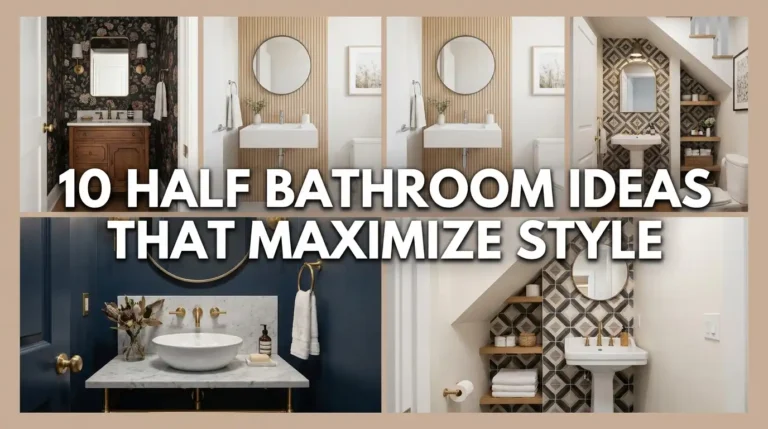
16 Modern Bathroom Designs That Feel Fresh
Modern bathroom design has evolved far beyond stark, cold white tiles and rigid chrome fixtures. Today’s modern bathrooms prioritize warm minimalism, seamless organic textures, integrated ambient lighting, and high-performance spa elements.
By blending natural wood finishes, tactile plastered walls, continuous large-format surfaces, and clean geometric lines, you can create a daily sanctuary that feels calm, luxurious, and effortlessly fresh.
1. Seamless Microcement & Limewash Plaster Walls
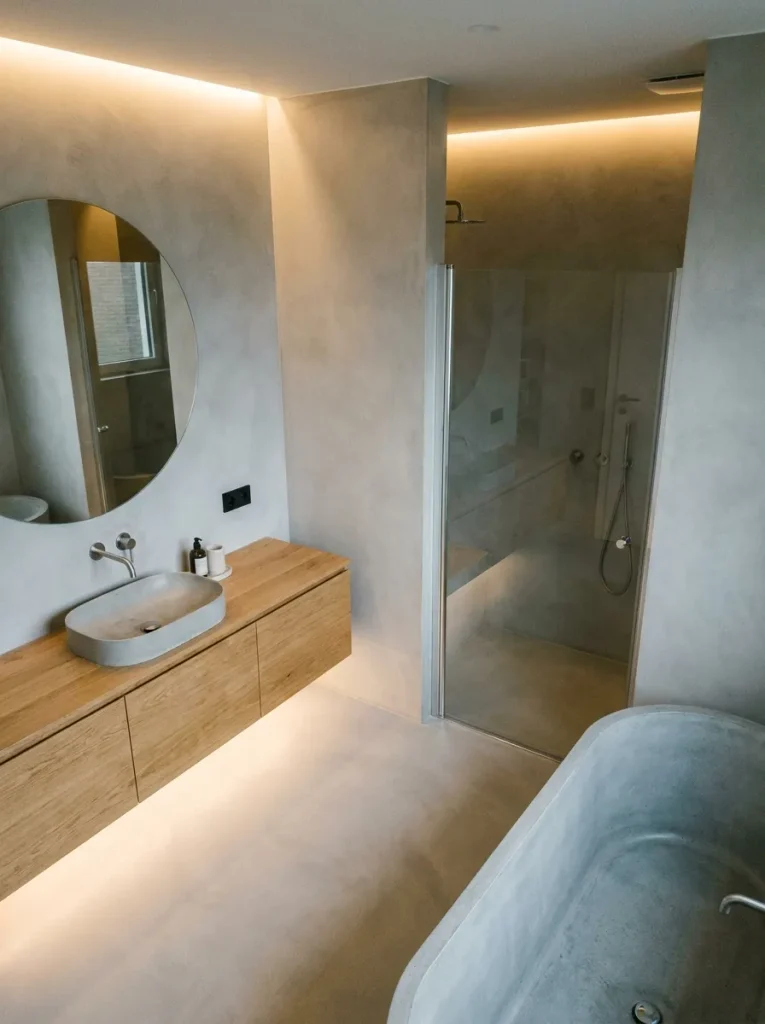
Replacing traditional wall tiles with smooth microcement or limewash plaster creates a continuous visual field that completely eliminates distracting grout lines.
The subtle, hand-troweled tactile texture adds organic depth while maintaining an uncluttered, minimalist aesthetic.
Plaster finishes reflect natural daylight softly, giving compact and spacious bathrooms alike a soothing, spa-like atmosphere.
2. Floating Natural Wood Vanities & Fluted Accents
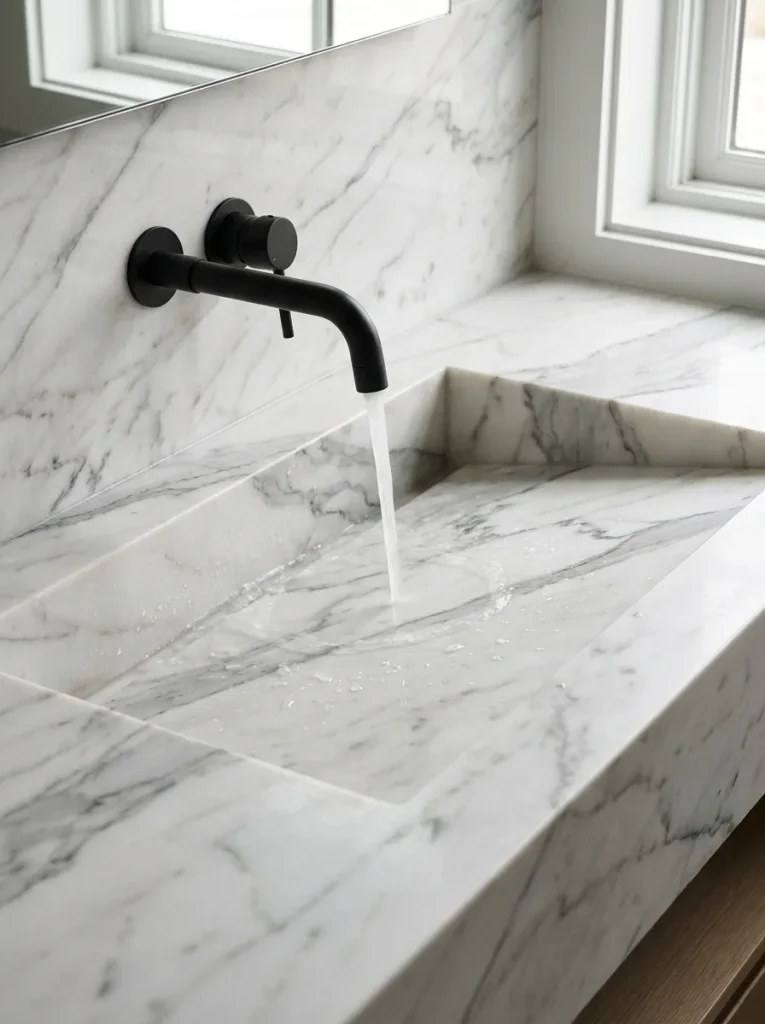
Wall-mounted floating vanities keep the base floor area completely clear, immediately expanding perceived square footage and sightlines.
Crafting the vanity from warm white oak, deep walnut, or fluted timber paneling introduces natural grain patterns that soften crisp architectural lines.
The contrast between warm organic wood and sleek stone countertops delivers a perfectly balanced modern look.
3. Integrated Custom Stone Slab Sinks
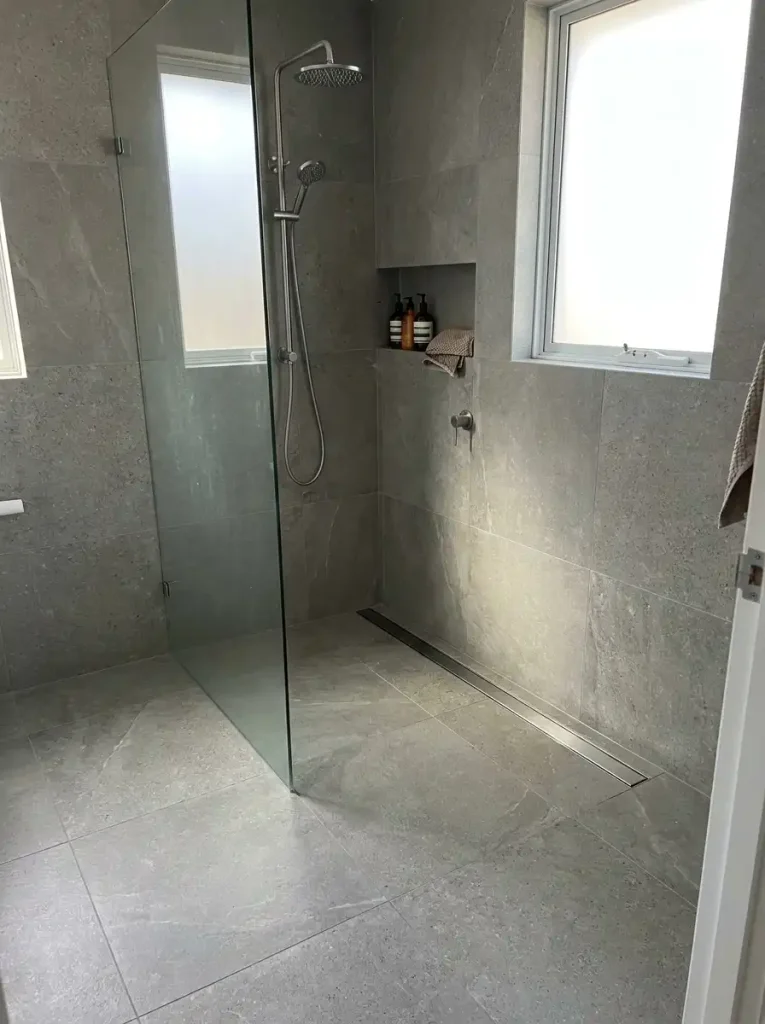
Custom integrated slab sinks represent the pinnacle of streamlined modern design. Crafted continuously from marble, quartz, or terrazzo, these sinks flow seamlessly directly out of the countertop surface without visible seams or raised edges.
A sloping ramp drain design enhances the clean aesthetic while making daily cleaning virtually effortless.
4. Zero-Threshold Curbless Walk-In Showers
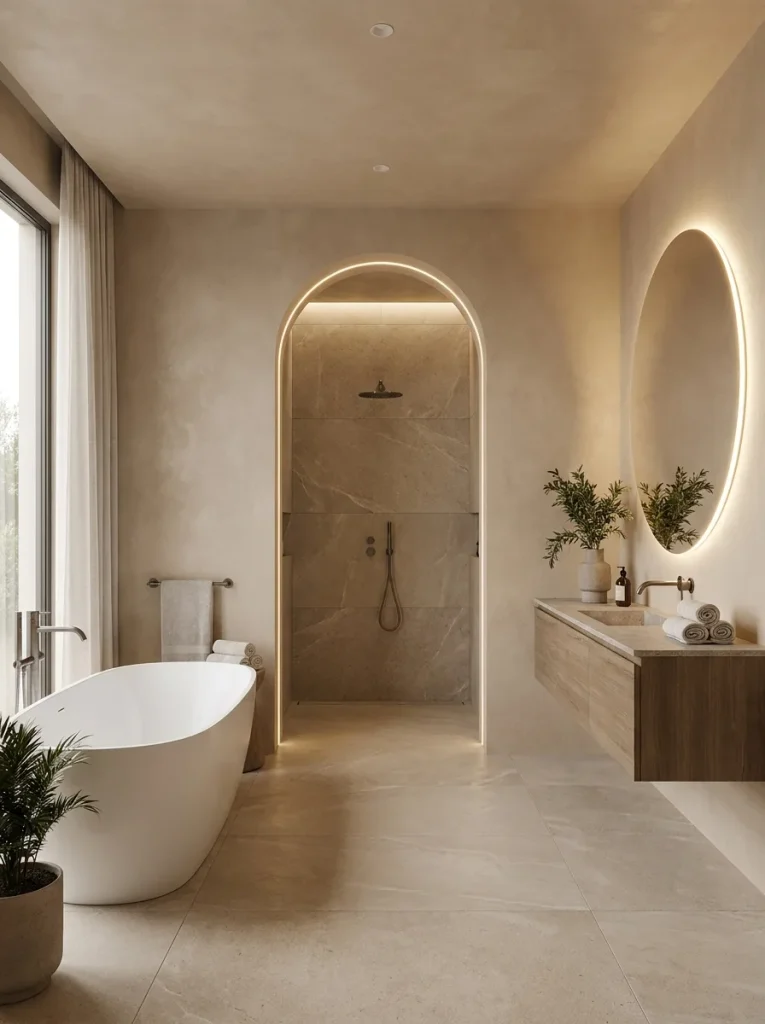
Eliminating traditional shower curbs creates a smooth, barrier-free transition across the entire bathroom floor. By running your floor tiles continuously straight into the shower stall using a concealed stainless steel linear drain, you create a spacious wet-room feel.
A single fixed sheet of frameless glass keeps water contained while preserving light flow.
5. Curved Architectural Archways & Soft Geometry
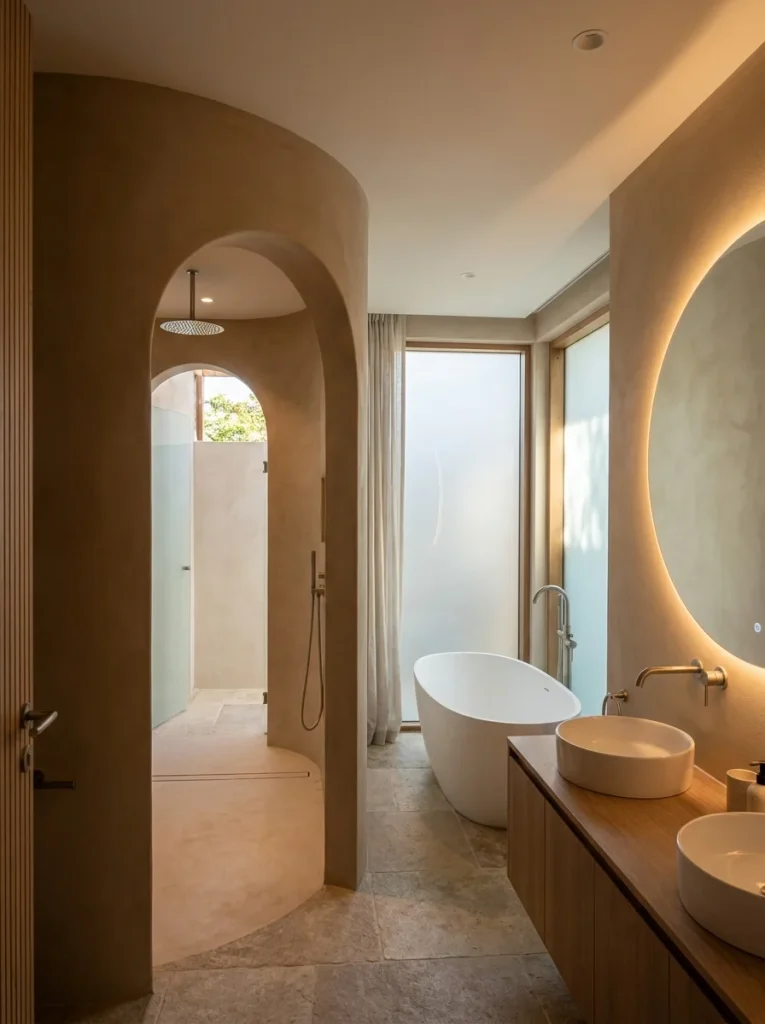
Modern interiors are leaning away from strict sharp angles in favor of gentle curves and rounded geometry. Incorporating arched shower entrances, soft oval mirrors, rounded vanity corners,
and curved freestanding tubs breaks up rigid boxy layouts. These flowing architectural shapes relax the eye, making the entire space feel more open and welcoming.
6. Perimeter Halo-Lit & Backlit LED Mirrors
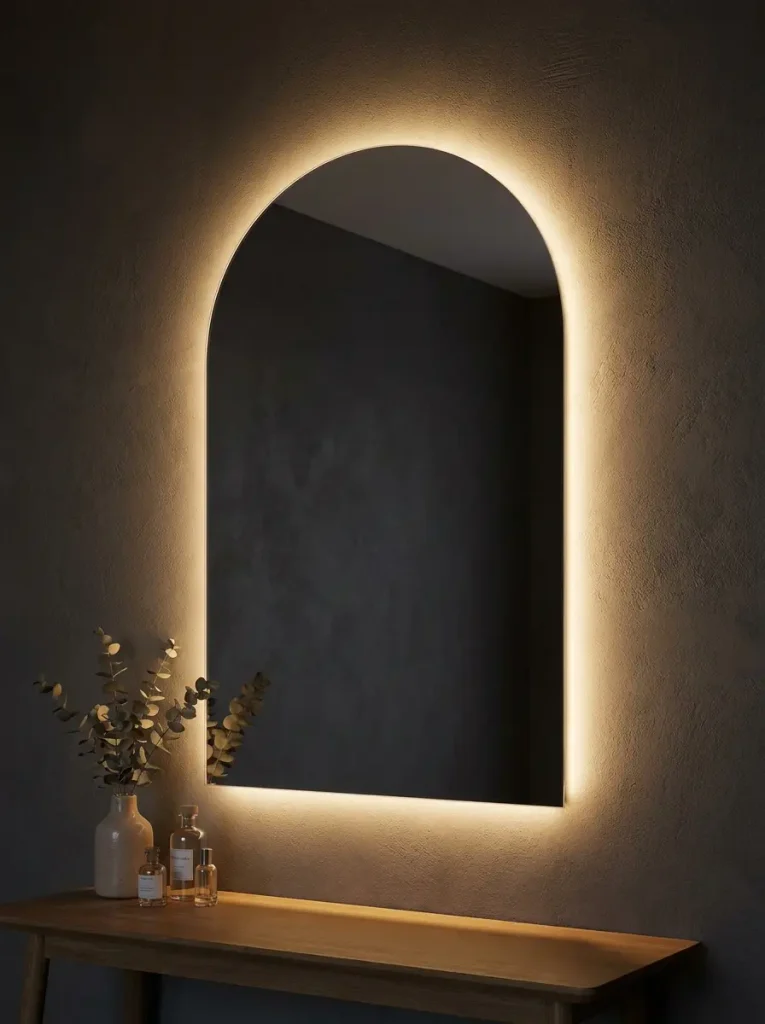
Layered lighting design is essential for creating a modern, spa-like bathroom environment. Installing hidden LED lighting strips behind vanity mirrors or beneath floating cabinets provides soft, indirect ambient illumination.
Backlit mirrors cast a warm, shadow-free glow across your face for morning routines while doubling as low-glare night lighting.
7. Textured Fluted & Reeded Glass Enclosures
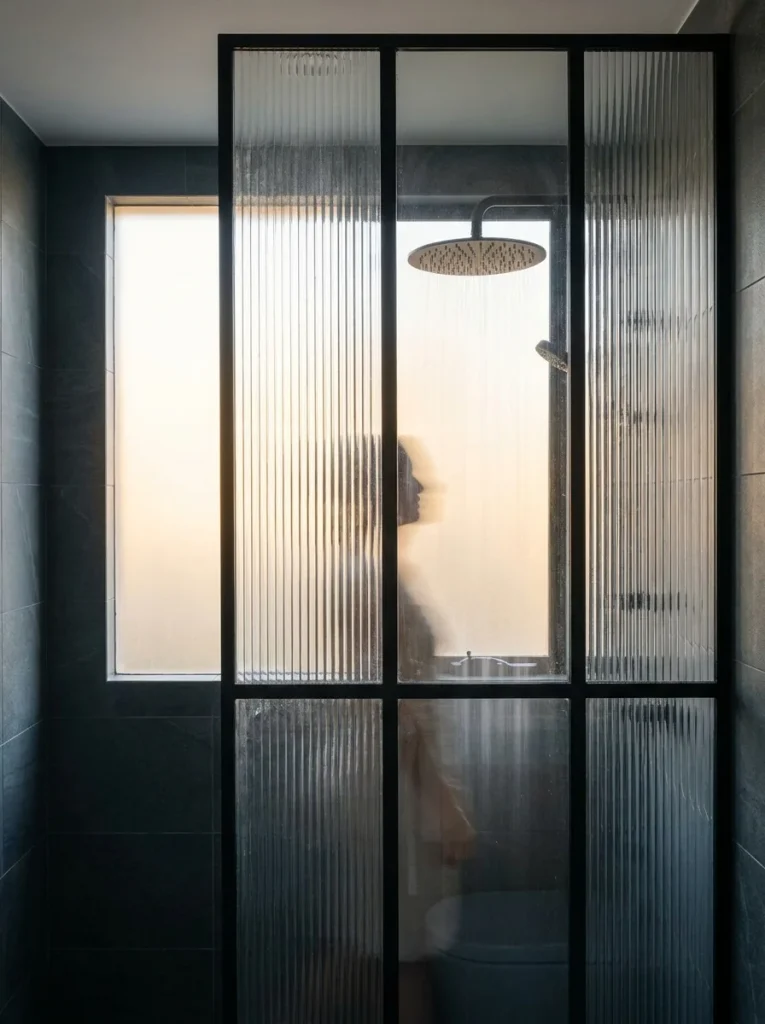
Swap plain clear glass shower screens for textured fluted or reeded glass panels. Vertical fluted grooves diffuse light beautifully and offer partial visual privacy without closing off the shower footprint.
When paired with matte black or brushed bronze metal framing, reeded glass introduces a subtle tactile texture that elevates simple layouts.
8. Large-Format Porcelain & Marble Floor Slabs
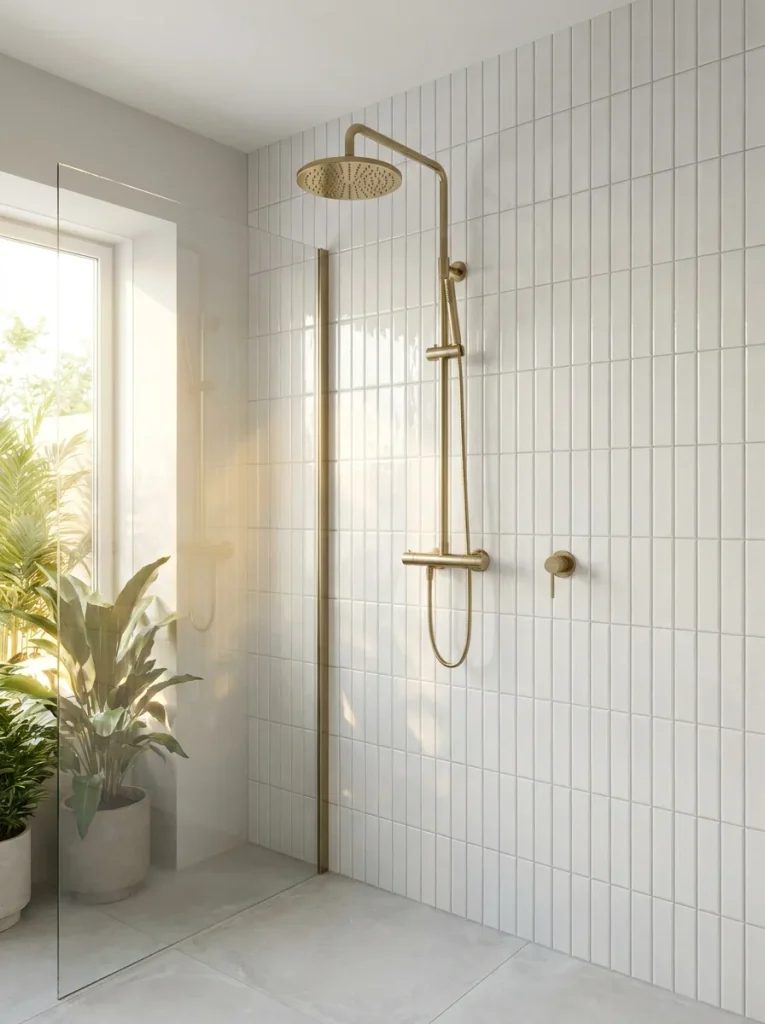
Oversized floor tiles—ranging up to 4×8 feet—drastically reduce the number of visible grout lines across your floor. Using large-format porcelain slabs in matte concrete, limestone, or honed marble finishes creates a cohesive, uniform foundation.
Fewer grid lines mean visual clutter is kept to an absolute minimum, allowing architectural fixtures to shine.
9. Monochromatic Vertical Kit-Kat (Finger) Tiles
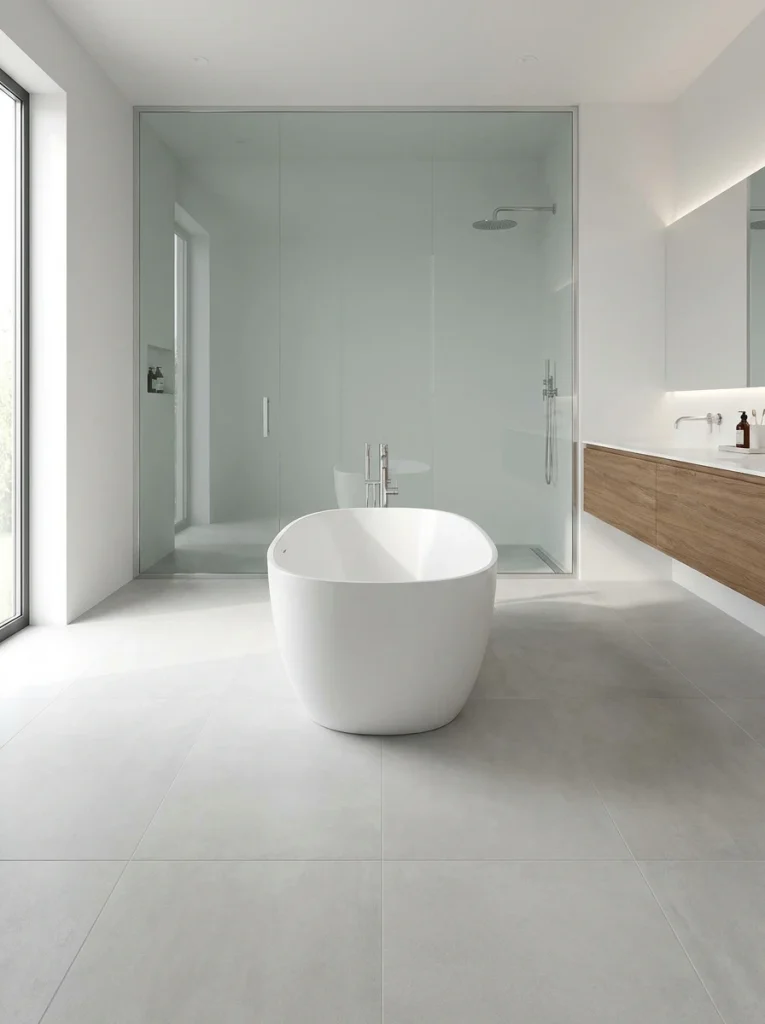
Vertical kit-kat (or finger) tiles have become a favorite accent feature in modern bathroom design. Arranging these slim, rectangular mosaic tiles vertically draws the eye upward, giving low-ceiling bathrooms an immediate sense of height.
When installed in monochromatic off-white, forest green, or charcoal shades, they add rhythmic texture without overpowering the space.
10. Warm Matte Bronze & Brushed Nickel Hardware
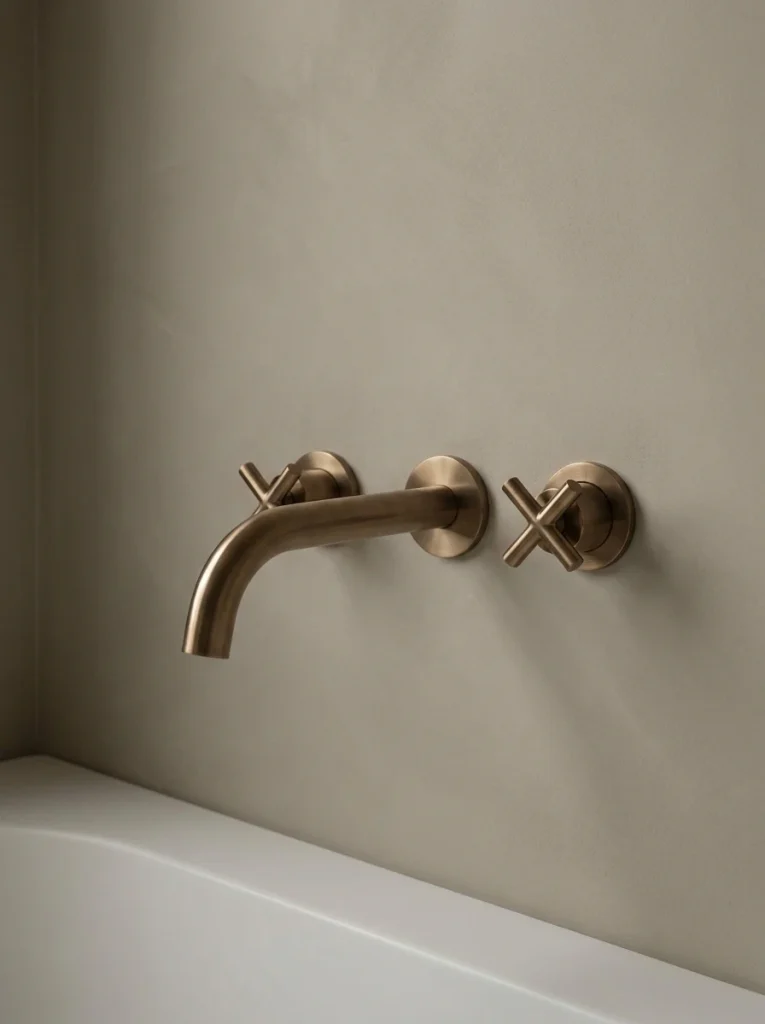
Move away from high-shine polished chrome hardware in favor of warm, muted metallic finishes. Brushed bronze, warm brass, gunmetal, and brushed nickel introduce a subtle sense of luxury.
These low-sheen metal finishes resist fingerprints and water spots better than polished metals, maintaining a clean look throughout daily use.
11. Freestanding Sculptural Soaking Tubs
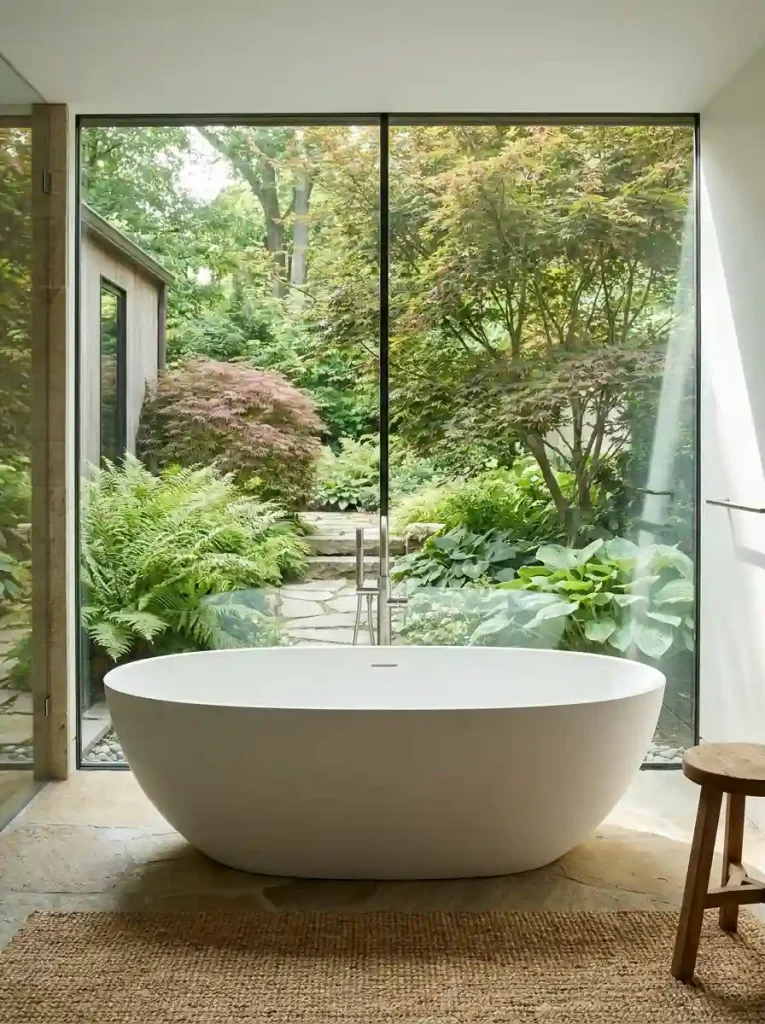
Positioning a standalone sculptural bathtub as the central focal point transforms an ordinary bathroom into a luxury retreat. Opt for matte resin, solid stone, or acrylic soaking tubs with clean, organic shapes.
Placing the tub beneath a large window or framing it against a textured plaster feature wall creates a dedicated relaxation zone.
12. Biophilic Floor-to-Ceiling Light Courts & Plants
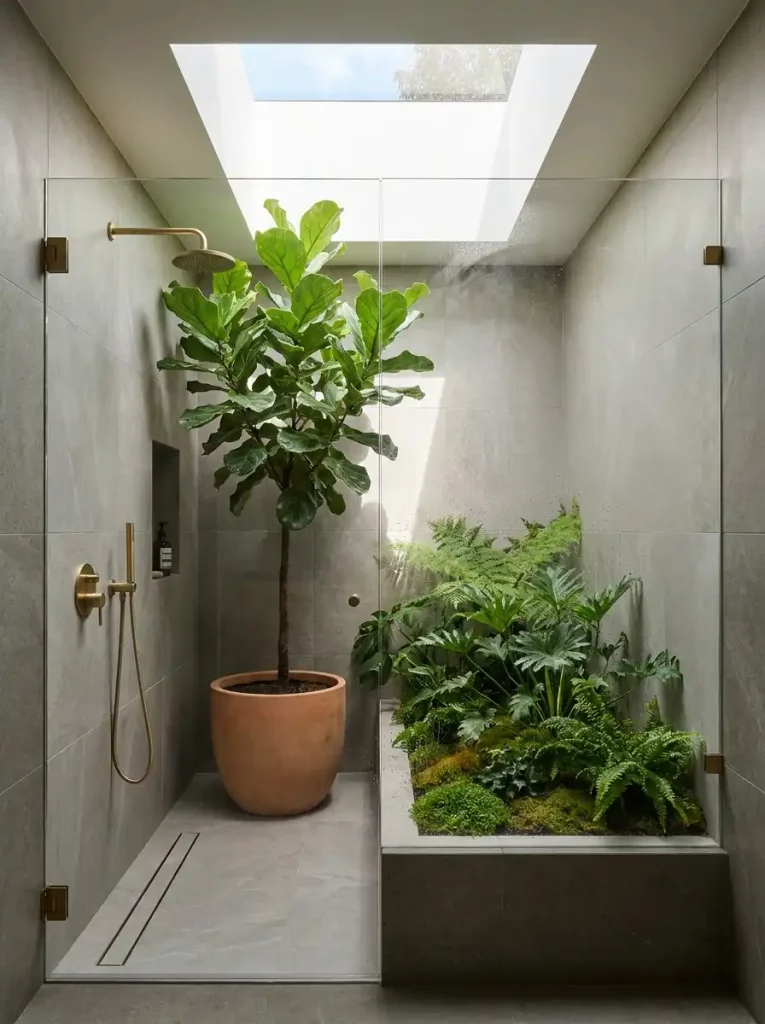
Integrating nature directly into bathroom architecture promotes well-being and freshness. Incorporate large skylights, floor-to-ceiling privacy glass overlooking garden nooks, or built-in shower ledges for humidity-loving plants.
Natural sunlight paired with rich green foliage creates a living, breathing space that feels connected to the outdoors.
13. Flush Recessed Shower Niches & Hidden Storage
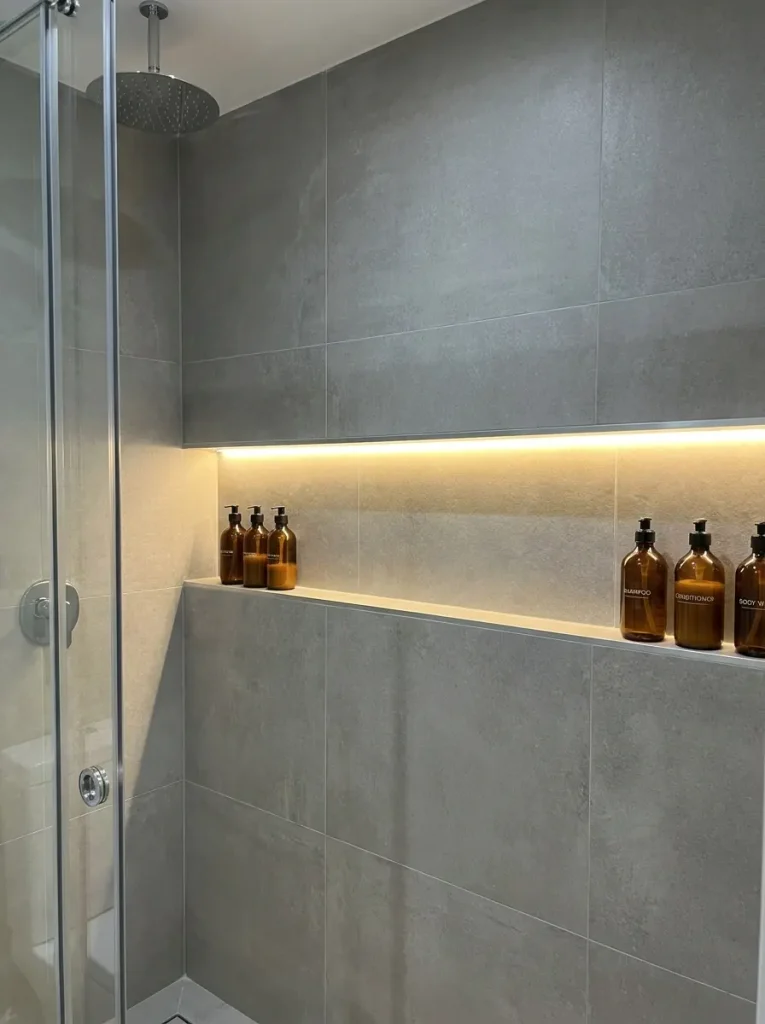
Exposed shampoo bottles and clutter disrupt clean modern lines. Design long, horizontal recessed wall niches inside showers and above bathtubs to keep bathing products neatly organized. Adding concealed LED strip lighting inside the top rim of the niche turns functional storage into a glowing accent feature.
14. Concealed Push-to-Open Medicine Cabinets
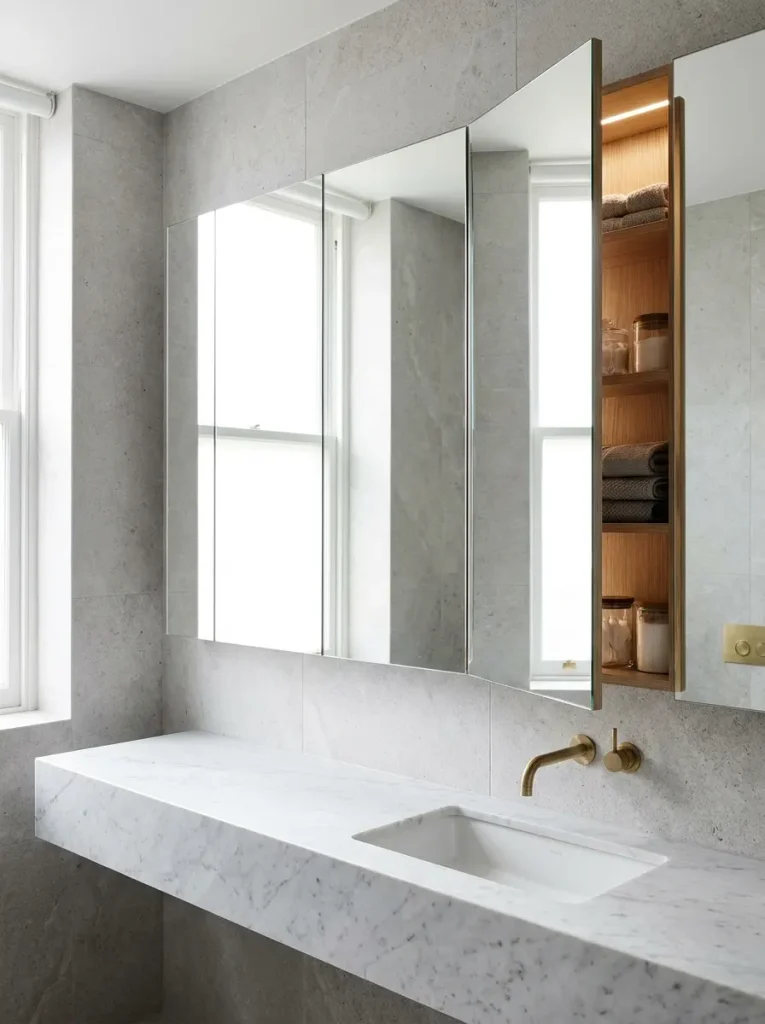
Keep countertop clutter non-existent with smart, hidden storage solutions. Recessed push-to-open medicine cabinets sit entirely flush with surrounding drywall or panelling, disguising generous storage behind seamless mirror faces or wood panels.
This keeps daily toiletries organized and out of sight without sacrificing quick accessibility.
15. Combined Open Wet-Room Layouts
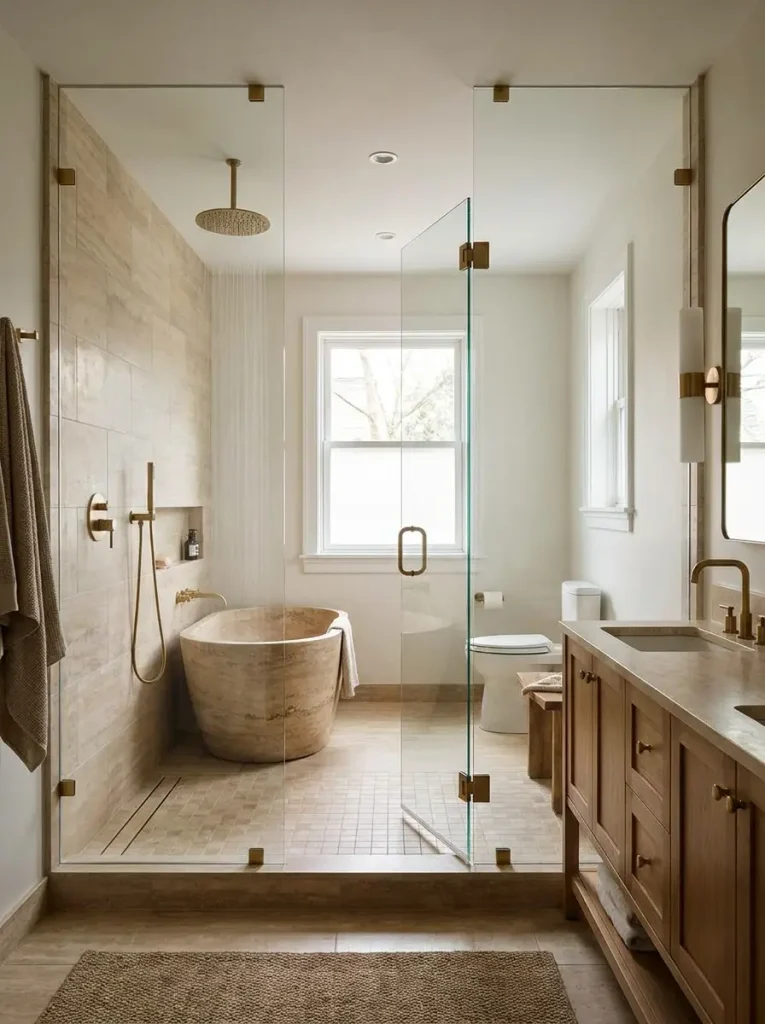
For compact or mid-sized bathrooms, combining the soaking tub and walk-in shower behind a single glass partition creates an efficient wet room layout.
Waterproofing the entire shared shower and tub footprint maximizes available floor space, providing full luxury features without feeling crowded or constrained.
16. Dramatic Dark Moody Accent Zones
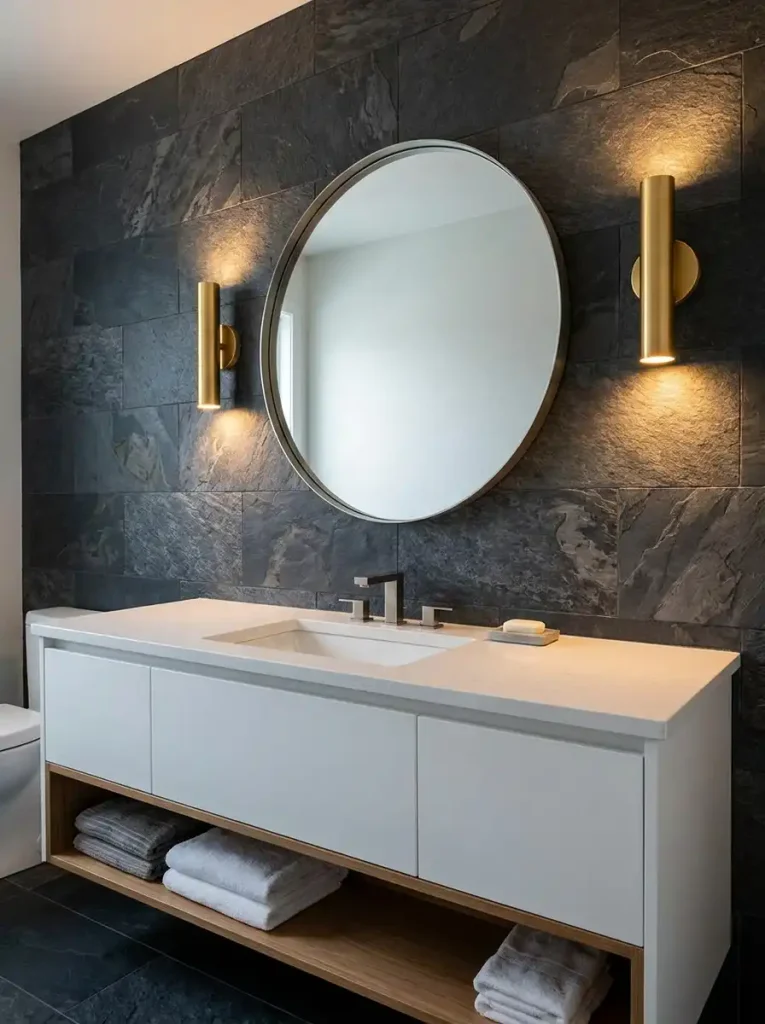
Introducing dark, high-contrast accent zones brings architectural depth and drama to modern spaces. Balance light plaster walls and pale wood vanities with a deep slate feature wall, black slate flooring, or a dark charcoal ceiling beam.
This intentional balance of light and dark elements gives the room a cinematic, tailored finish.
Frequently Asked Questions (FAQ)
What makes a bathroom design look modern?
Modern bathroom design is defined by clean architectural lines, minimal visual clutter, floating fixtures, layered ambient lighting, and high-quality natural materials. Key features include curbless showers, continuous plaster or large-slab surfaces, concealed storage, and muted metallic hardware.
How do I make a small modern bathroom feel larger?
To maximize space in a small modern bathroom, use floating vanities to expose floor area, install large-format tiles to reduce grout lines, opt for a clear glass curbless shower, and use bright, indirect LED mirror lighting. Using a monochromatic light color palette across walls and ceiling also creates a seamless, expansive look.
Are microcement and limewash plaster waterproof for bathroom showers?
Yes, microcement can be used inside wet shower zones when applied over a proper waterproofing membrane and finished with a high-grade, UV-resistant polyurethane sealant. Limewash plaster is suitable for general bathroom walls with adequate ventilation, though sealed microcement or porcelain slabs are preferred for direct high-moisture shower enclosures.