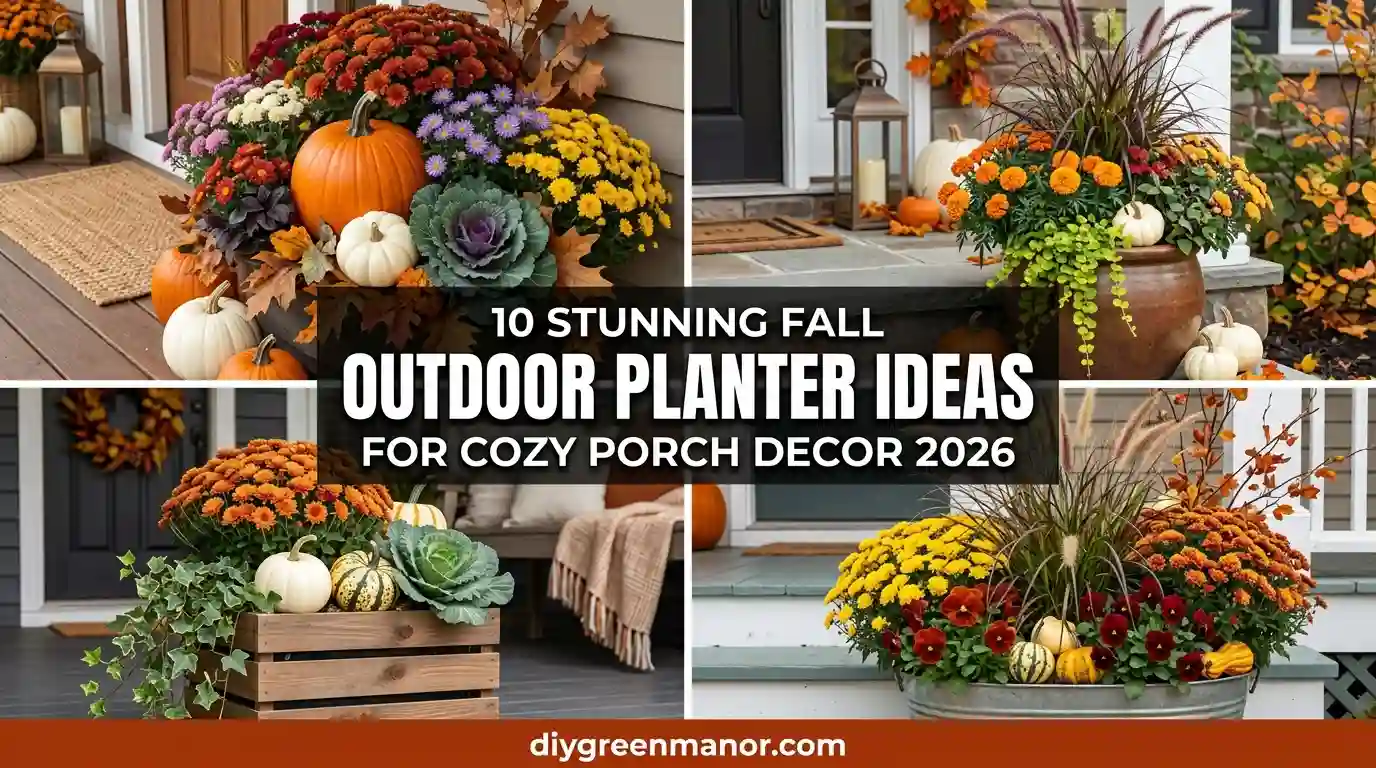
10 Stunning Fall Outdoor Planter Ideas for Cozy Porch Decor 2026
When autumn arrives, updating your front entrance with lush, textured container arrangements is the single fastest way to build instant curb appeal and seasonal warmth.
Modern fall outdoor planters go far beyond simple orange mums and basic pumpkin the trends for 2026 focus on moody foliage, sculptural grasses, rich jewel tones, and tactile organic elements like cascading kale, trailing ivy, and fountain-like ornamental peppers.
1. The Classic “Thriller, Filler, Spiller” Harvest Mix
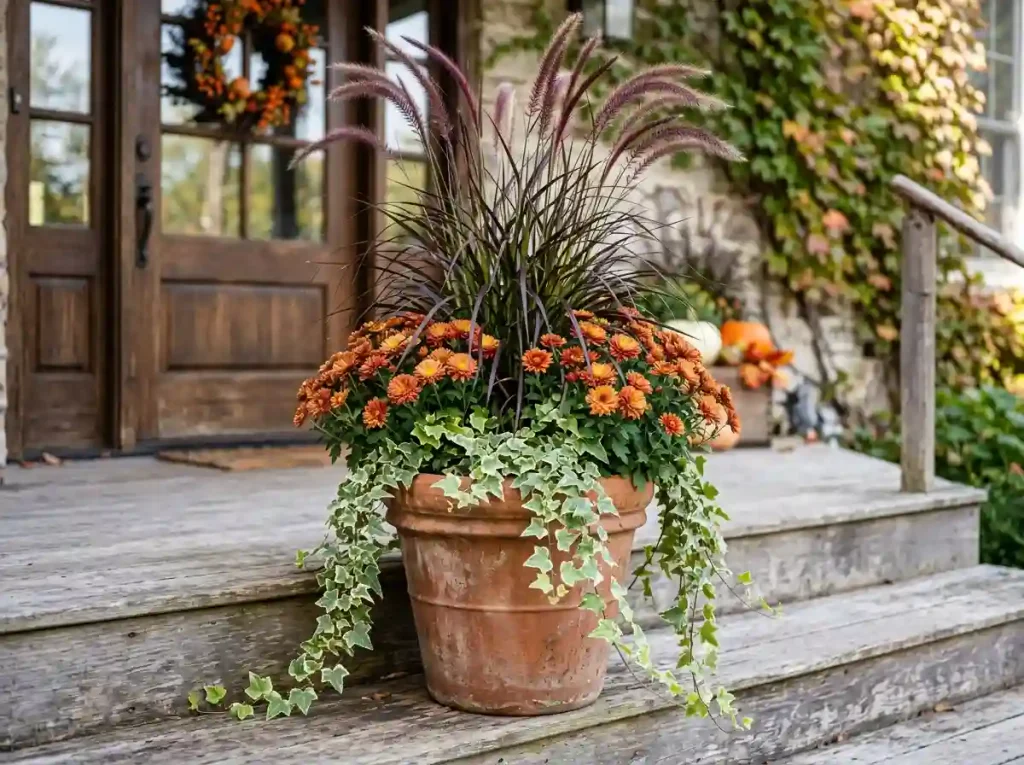
Mastering the classic arrangement formula ensures your fall planters look balanced and professionally designed. Place a tall, dramatic focal plant (the “Thriller”) like Purple Fountain Grass (Pennisetum setaceum) in the center or back of the pot. Surround it with dense, colorful blooming accents (the “Fillers”) such as deep orange Chrysanthemums and golden Pansies, and finish the rim with cascading vines (the “Spillers”) like Variegated English Ivy or Creeping Jenny to soften the container edges.
2. Moody Plum & Dark Velvet Foliage Containers
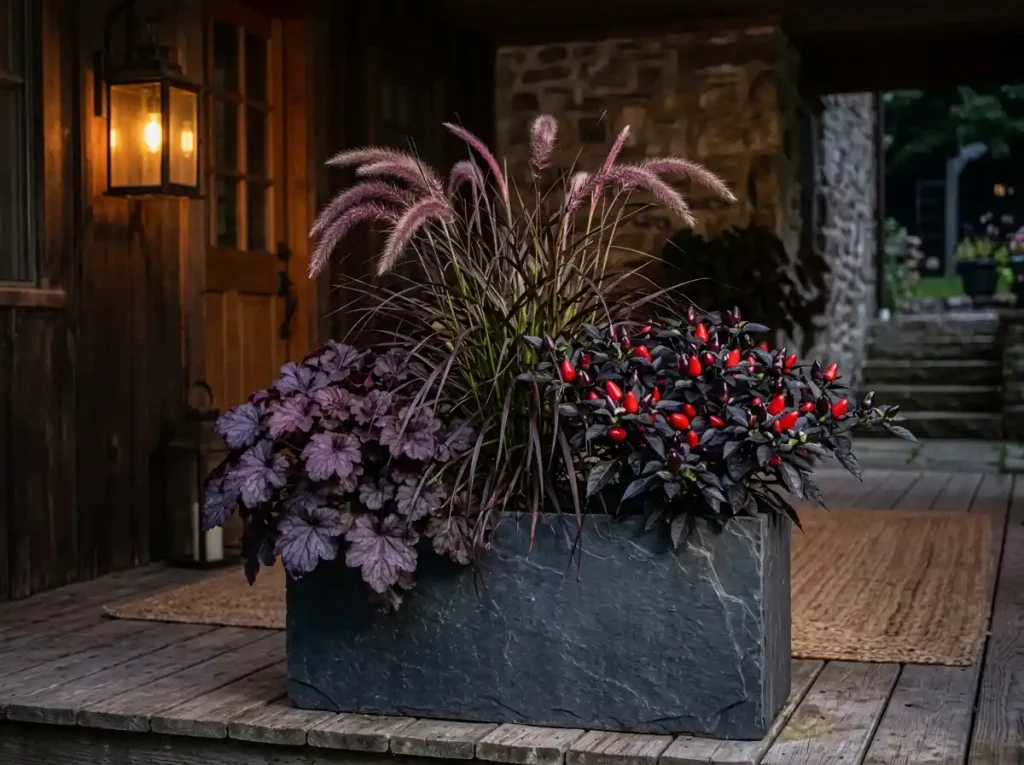
Shift away from bright neon oranges toward moody, sophisticated jewel tones. Combine deep burgundy Heuchera (‘Obsidian’ or ‘Plum Pudding’), dark-leafed Ornamental Cabbage, and black-berried Ornamental Peppers (Capsicum annuum). Contrast these rich velvet textures against muted grey stone or black concrete planters for an elegant, elevated autumn threshold.
3. Crisp Cream, White & Sage Green Minimalist Planters
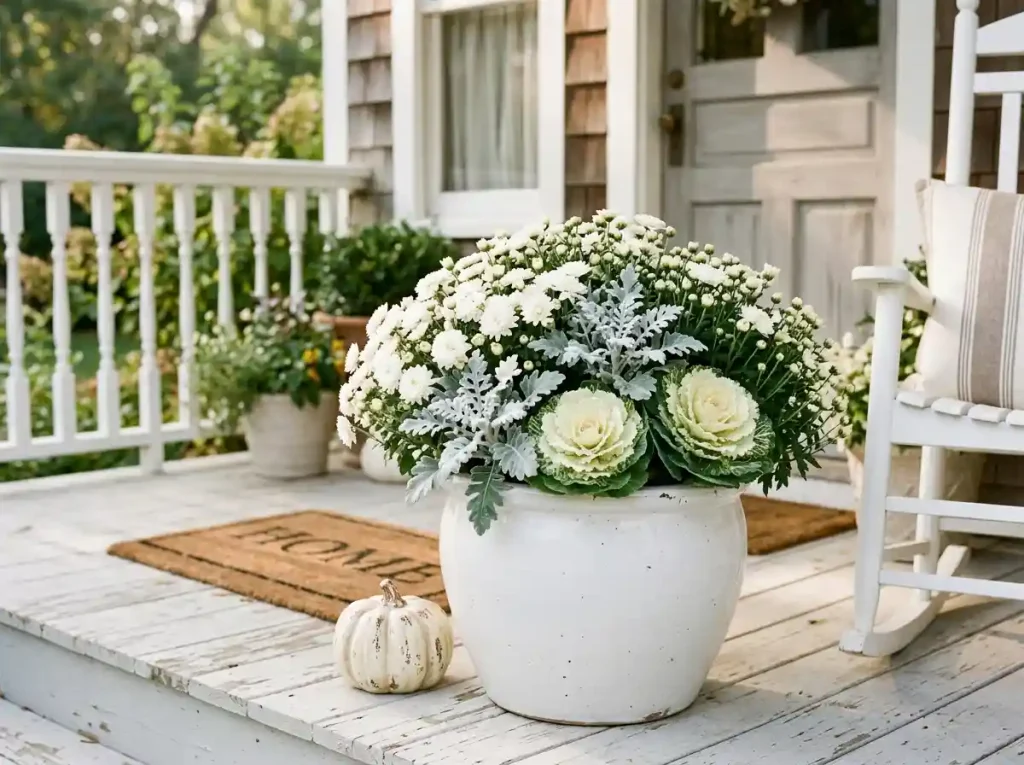
For homes with modern, coastal, or Nordic architecture, a monochromatic white-and-green palette offers a fresh alternative to traditional warm autumn hues. Blend white Chrysanthemums with silver-hued Dusty Miller (Jacobaea maritima), pale green Ornamental Kale, and silvery Dichondra ‘Silver Falls’. Accent the base of the planter with stacked white Cinderella pumpkins and eucalyptus stems for a calm, spa-like porch atmosphere.
4. Rustic Terracotta & Flowering Ornamental Cabbage
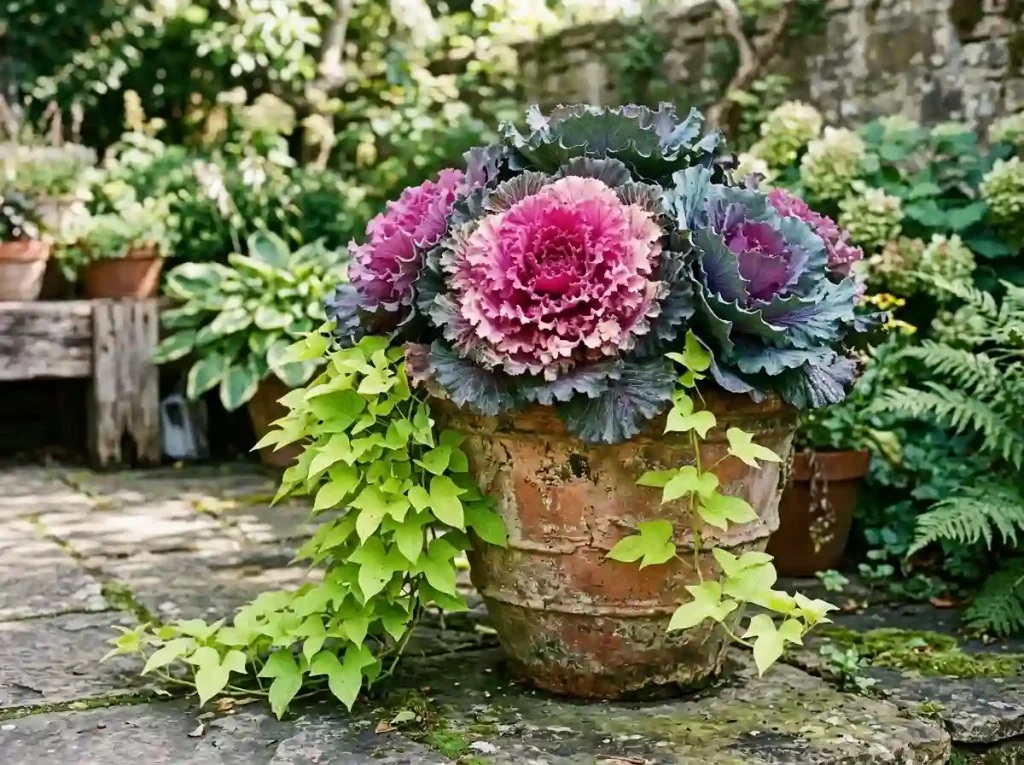
Ornamental Cabbages and Kales (Brassica oleracea) are the true workhorses of late fall container gardens. As temperatures drop, their ruffled centers intensify in color, shifting into vibrant shades of violet, magenta, cream, and soft rose. Planting oversized cabbage heads inside weathered, patina-coated terracotta urns brings old-world Mediterranean charm and incredible frost tolerance to your front steps well into November.
5. Golden Amber & Terracotta Jewel-Toned Display
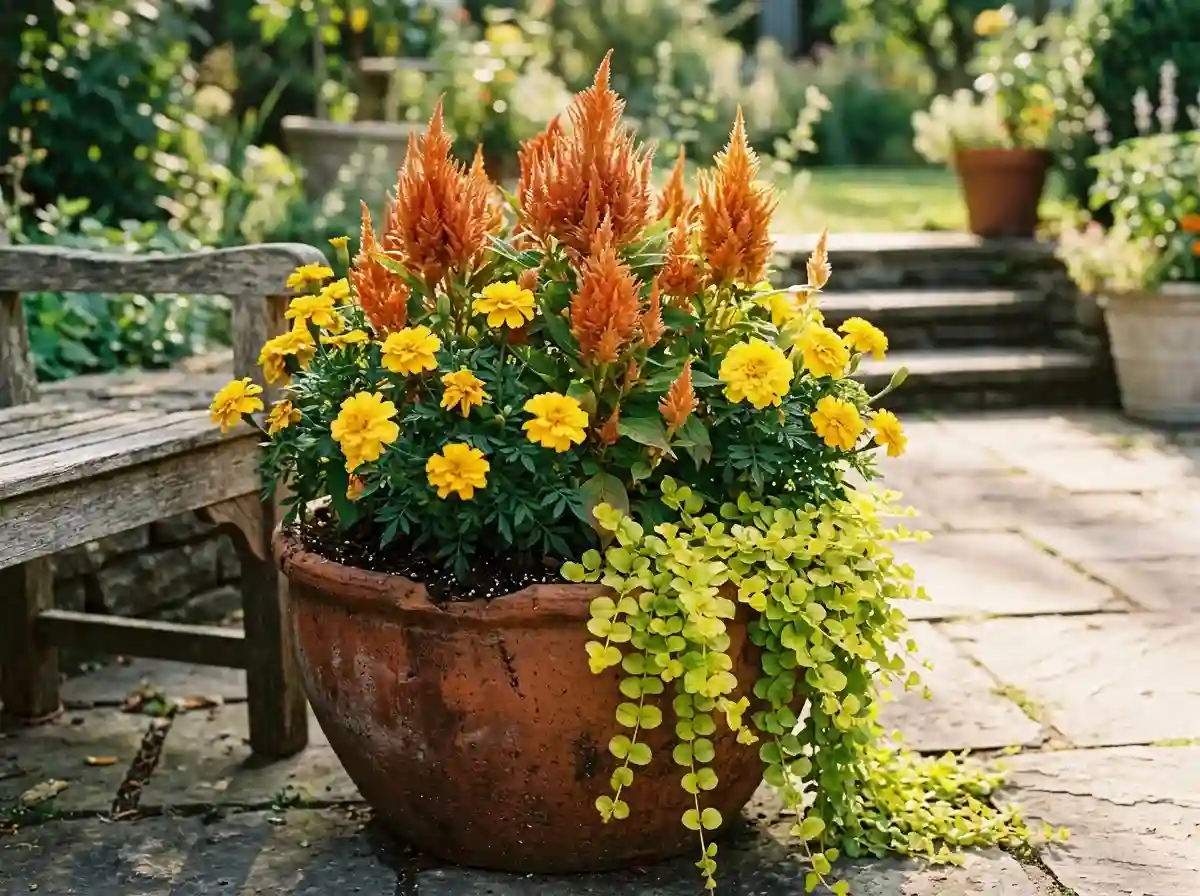
Capture the fiery warmth of autumn foliage by building an arrangement focused on rich ochre, rust orange, and amber hues. Pair feathery Celosia plumes (‘Intenz’ or ‘Dragon’s Breath’) with rust-colored Pansies and golden Marigolds. The mix of spike-like textures and round blossom heads creates a glowing focal point that complements natural wood front doors and copper lanterns.
6. Architectural Evergreen & Winterberry Foundations
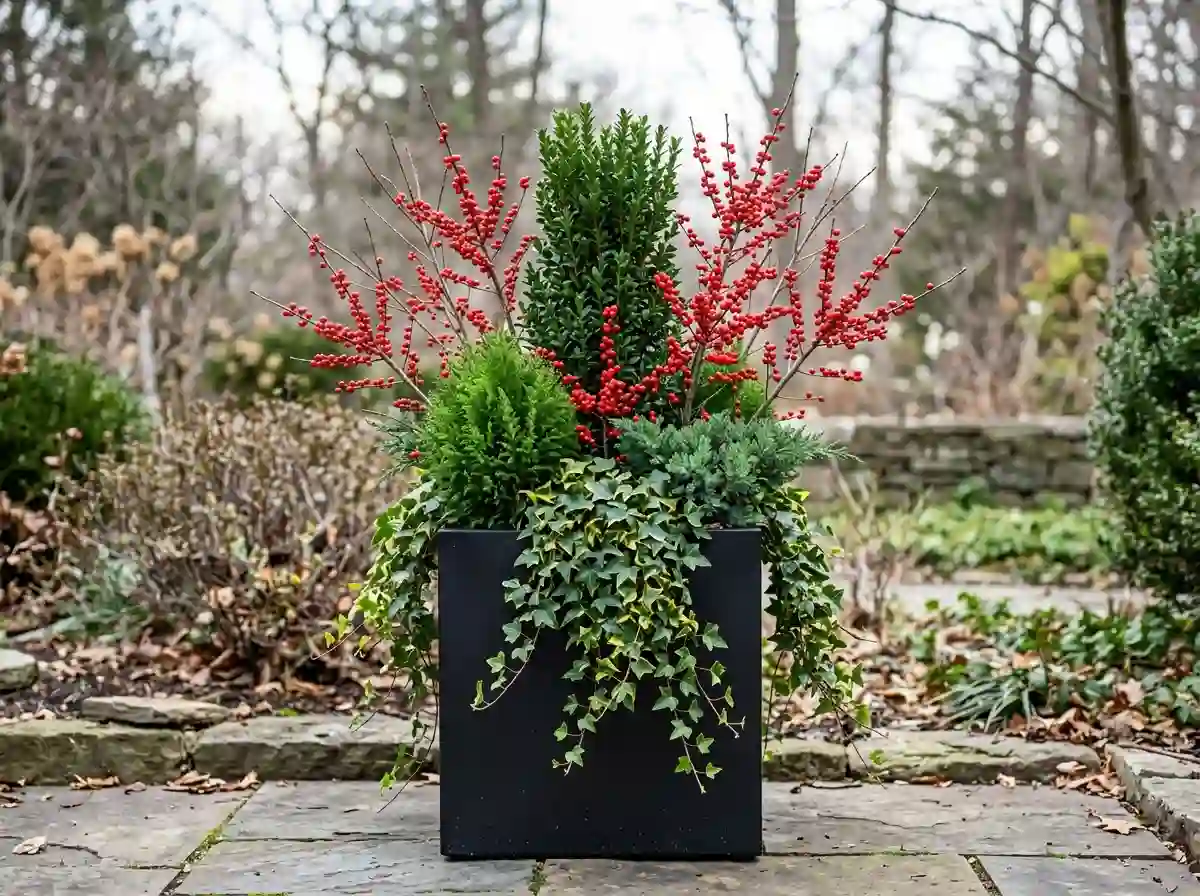
If you want an arrangement that transitions seamlessly from early autumn into the winter holidays, start with a cold-hardy architectural foundation. Plant a central evergreen such as a Pyramidal Boxwood, Dwarf Alberta Spruce, or Lawson Cypress. Layer fall-blooming pansies and ornamental kale around the base for September and October, then swap the temporary blooms for glossy red Winterberry branches and pinecones as winter approaches.
7. Feathery Ornamental Grasses & Fountain Palms
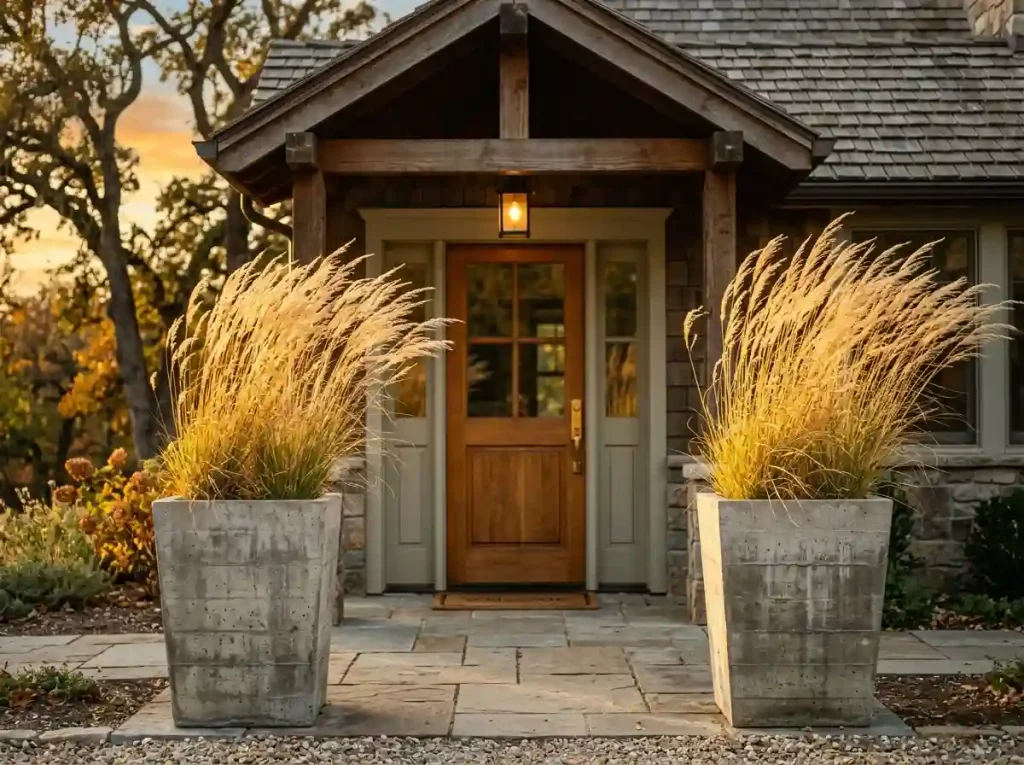
Ornamental grasses introduce movement, height, and delicate rustling sounds to your porch as autumn winds blow. Varieties like Japanese Blood Grass, Feather Reed Grass (Calamagrostis), and Blue Fescue add airy, feather-like plumes that catch the golden afternoon sunlight. Framing your front door with matching tall grass planters adds dramatic vertical scale to entryways with high ceilings or large overhangs.
8. Cottage-Style Heathers, Pansies & Gourds
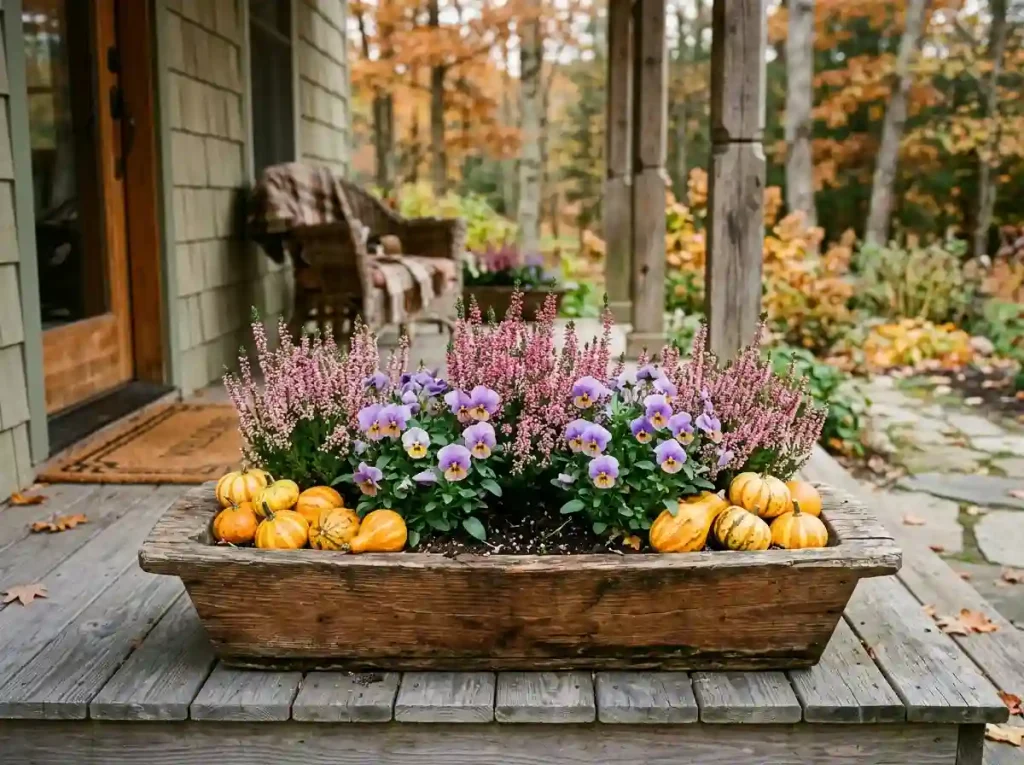
Combine traditional English cottage charm with seasonal harvest elements by planting Scotch Heather (Calluna vulgaris) alongside hardy winter Pansies and Violas. Heather’s dense, needle-like foliage and tiny pink or purple bell blossoms hold their color throughout frost spells. Tuck small ornamental warty gourds and mini heirloom pumpkins along the soil rim for a cozy, handcrafted garden look.
9. Cascading Trailing Vines & Gourds Spillover
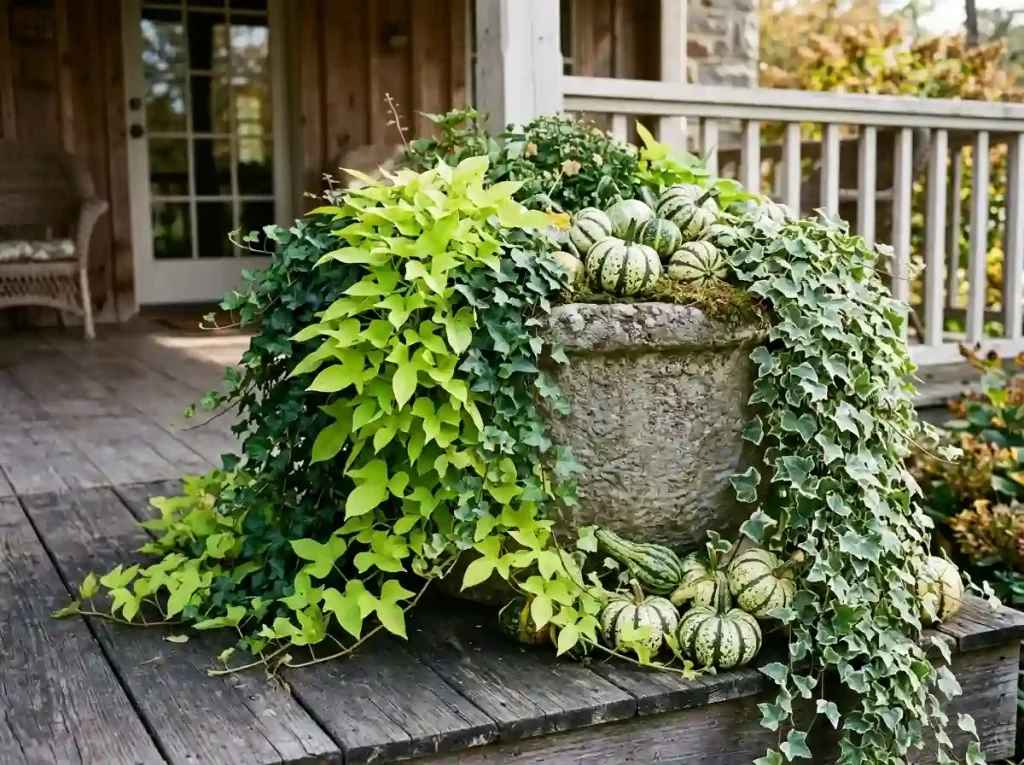
Creating a lush, overflowing effect gives your porch an abundant harvest feel. Combine fast-growing spillers like dark purple Sweet Potato Vine (Ipomoea batatas), trailing Lysimachia, and Variegated Ivy, training them to drape down the sides of elevated pedestal pots. Nestle small striped gourds into the trailing foliage so they appear to grow wild right out of the container.
10. Multi-Tiered Layered Whiskey Barrel Planters
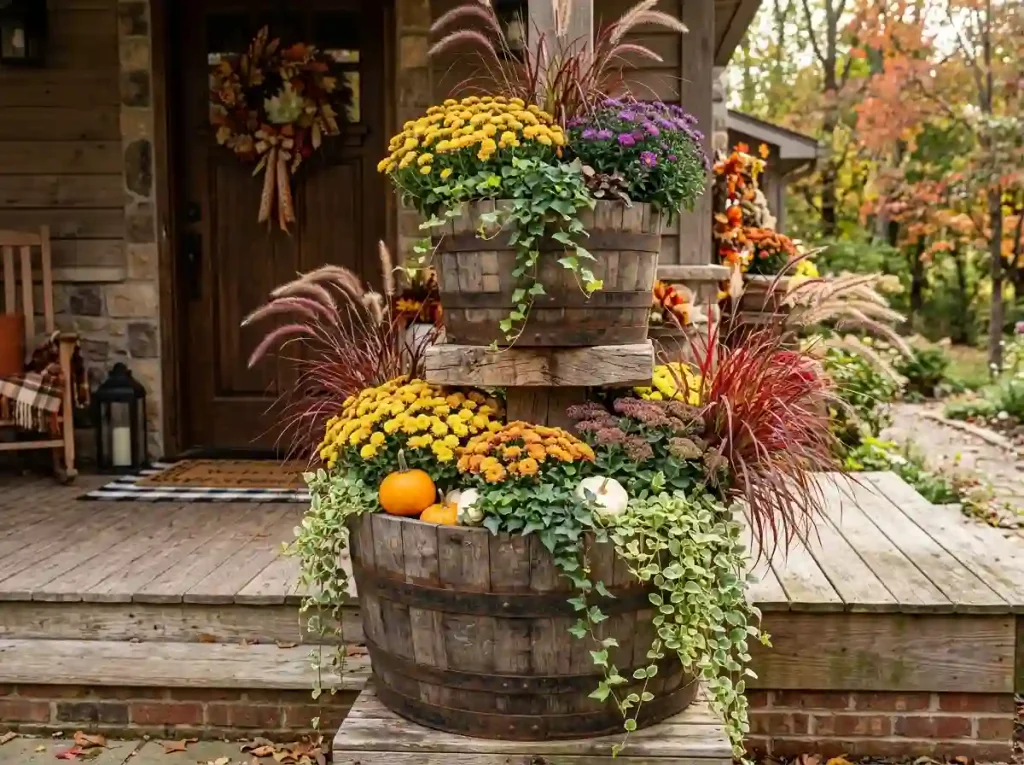
For larger porch spaces or blank corners along front steps, multi-tiered arrangements deliver maximum visual density. Stacking a smaller wooden planter box inside a larger halved whiskey barrel creates double the planting area. Fill the upper tier with tall fountain grasses and erect celosia, while filling the lower ring with dense mums, trailing pansies, and decorative kale to fill the space from ground to eye level.
Frequently Asked Questions (FAQ)
How long do outdoor fall planters last?
Depending on your local climate, a well-maintained fall planter will look vibrant from late August through late November. Frost-hardy plants like Ornamental Cabbage, Pansies, Heuchera, and Evergreens can easily survive light freezes and remain attractive through early winter.
How often should I water fall container plants?
Because autumn temperatures are cooler and daylight hours are shorter, soil evaporation slows down significantly compared to summer. Water your fall planters thoroughly when the top 1 to 2 inches of potting soil feel dry to the touch—typically 1 to 2 times a week, ensuring pots have functional bottom drainage holes to prevent root rot.
Can I transplant fall container plants into my garden beds after the season?
Yes! Perennials included in your fall planters—such as Heuchera (Coral Bells), Boxwoods, Ornamental Grasses, Ivy, and Hardy Chrysanthemums—can be planted directly into garden beds before the ground freezes in late autumn so they return next spring.