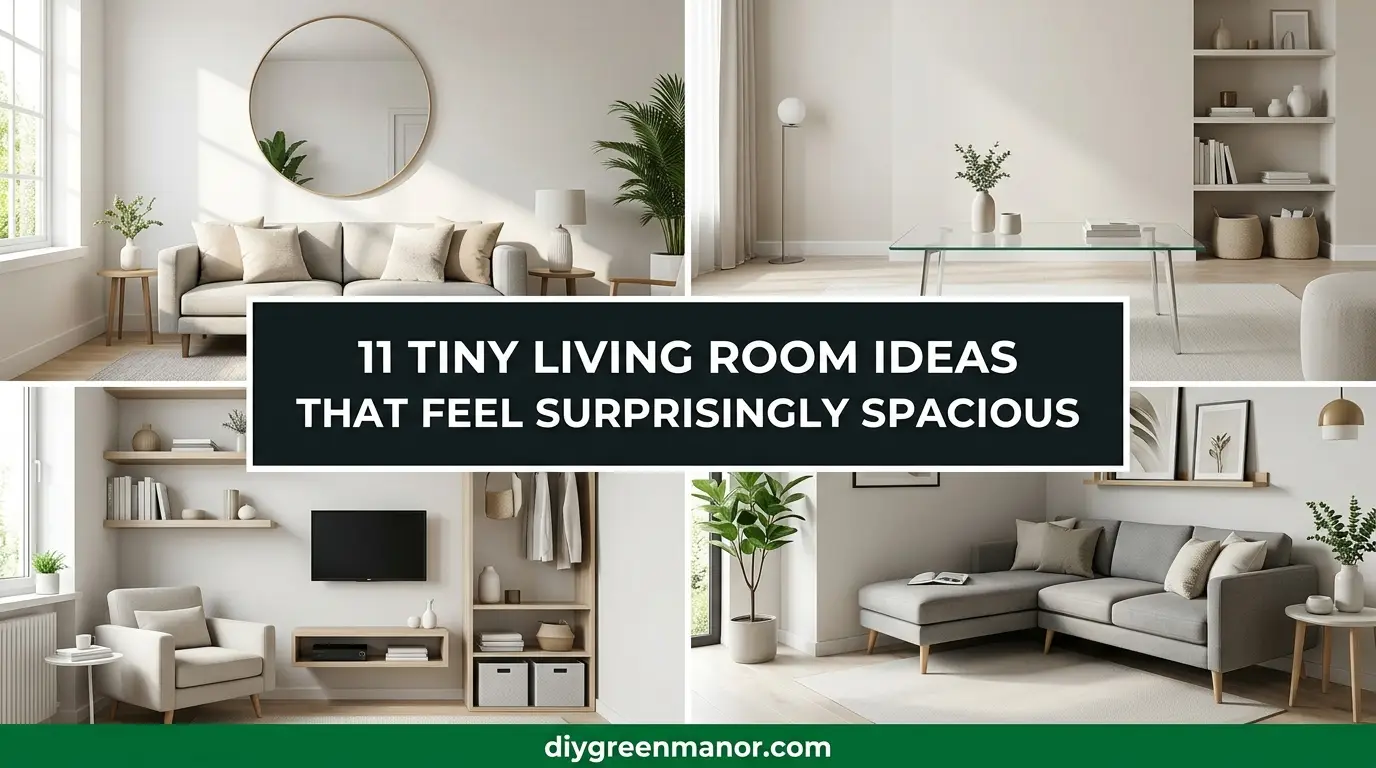
11 Tiny Living Room Ideas That Feel Surprisingly Spacious
Living in a home with a tiny living room doesn’t mean you have to settle for feeling cramped or cluttered. With clever layout strategies, optical illusions, proportional furniture choices, and smart color choices, you can turn even the smallest floor plan into an open, airy, and functional sanctuary.
By maximizing natural light, utilizing vertical height, and choosing dual-purpose furniture, these 11 tiny living room ideas will help you expand your space visually on diygreenmanor.com.
1. Elevated Leggy Furniture to Expose Floor Space
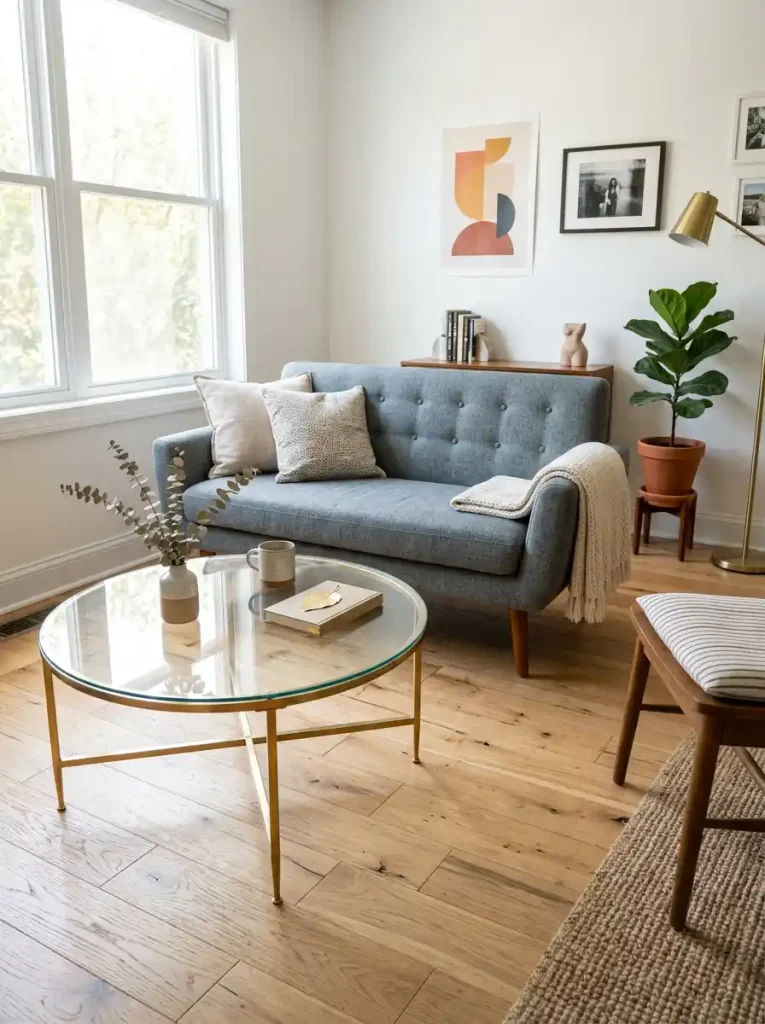
When floor space is at a premium, the more floor surface you can see, the larger your room feels. Bulky, skirted sofas and solid boxy furniture block sightlines and make small rooms feel crowded.
Choose sofas, armchairs, and credenzas raised on tall, slender legs. Allowing light and air to pass underneath furniture creates an illusion of openness and flow.
2. Monochromatic Paint & Trim Scheme
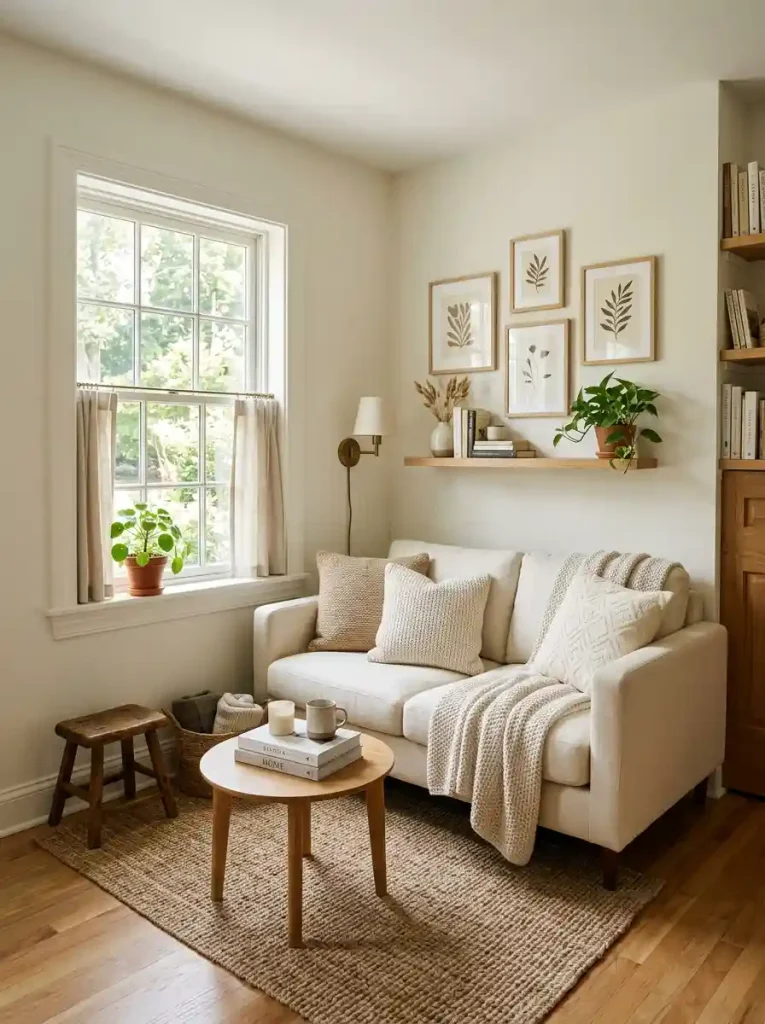
Painting baseboards, walls, and ceiling trim in different contrasting colors cuts up a small room visually, making it appear shorter. Instead, paint your walls, trim, and ceiling in the same soft off-white, light greige, or soft cream shade using a low-sheen finish.
Erasing hard architectural contrast boundaries tricks the eye into perceiving the room as taller, wider, and seamless.
3. High and Wide Ceiling-Mounted Drapery
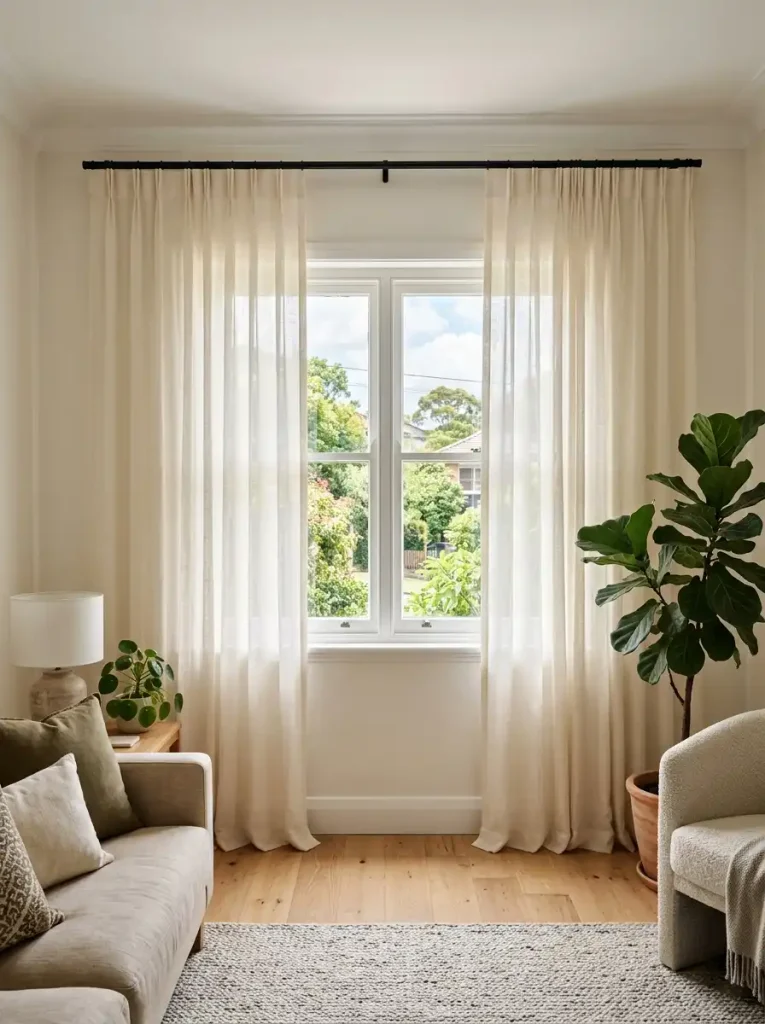
Hang your curtain rods as close to the ceiling line as possible and extend them 10 to 12 inches wider than the window frame on each side.
When curtains are drawn open, the fabric frames the window without blocking natural light, while the vertical fabric lines draw the eye upward, giving the impression of soaring ceilings.
4. Oversized Arch Floor Mirror Placement
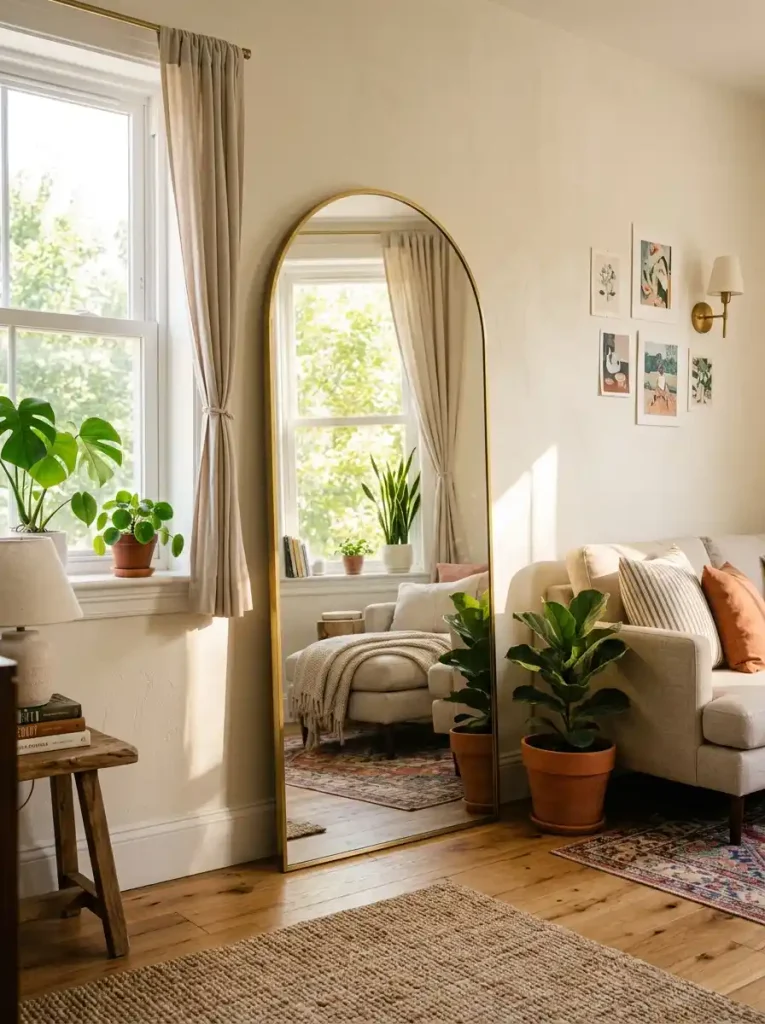
Rather than hanging multiple small mirrors, opt for one single, oversized floor mirror leaning against a main wall.
Placing a large mirror opposite or adjacent to a window doubles incoming natural light and creates a convincing optical depth that makes the room look twice its actual size.
5. Multi-Functional Storage Ottomans & Nesting Tables
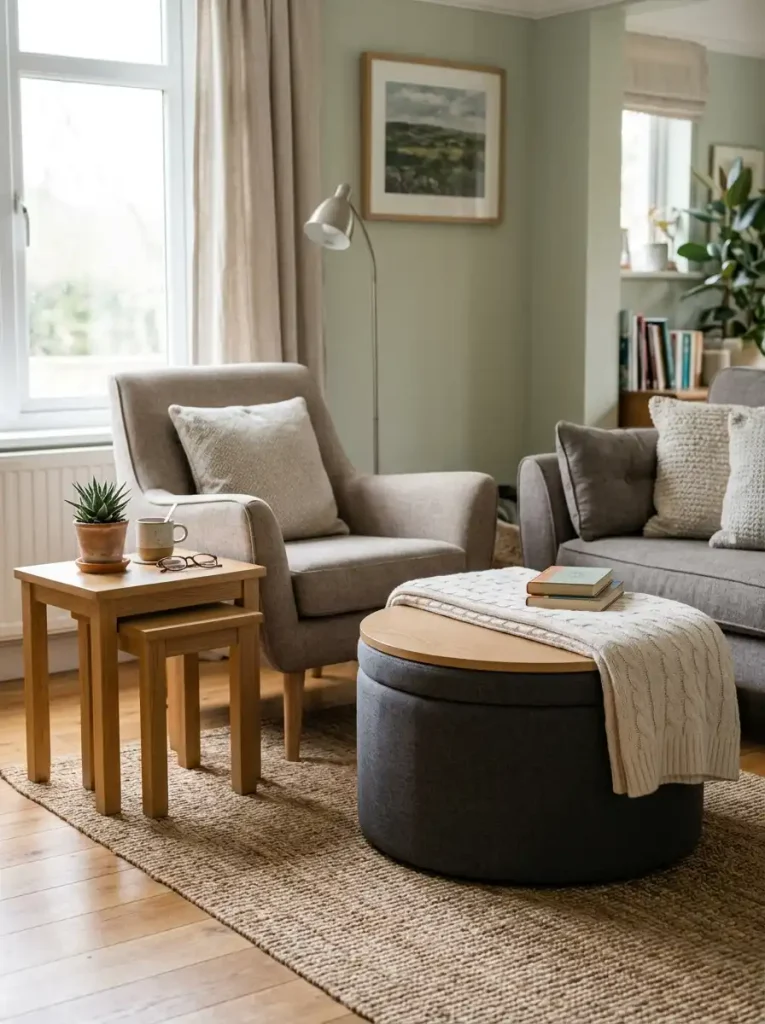
Every piece of furniture in a tiny living room should work double duty. Replace a traditional heavy coffee table with an upholstered storage ottoman that holds extra blankets while serving as seating or a tabletop with a wooden tray on top.
Pair it with nesting side tables that can be pulled out when guests arrive and tucked away when not in use.
6. Floating Wall-Mounted Shelving & TV Consoles
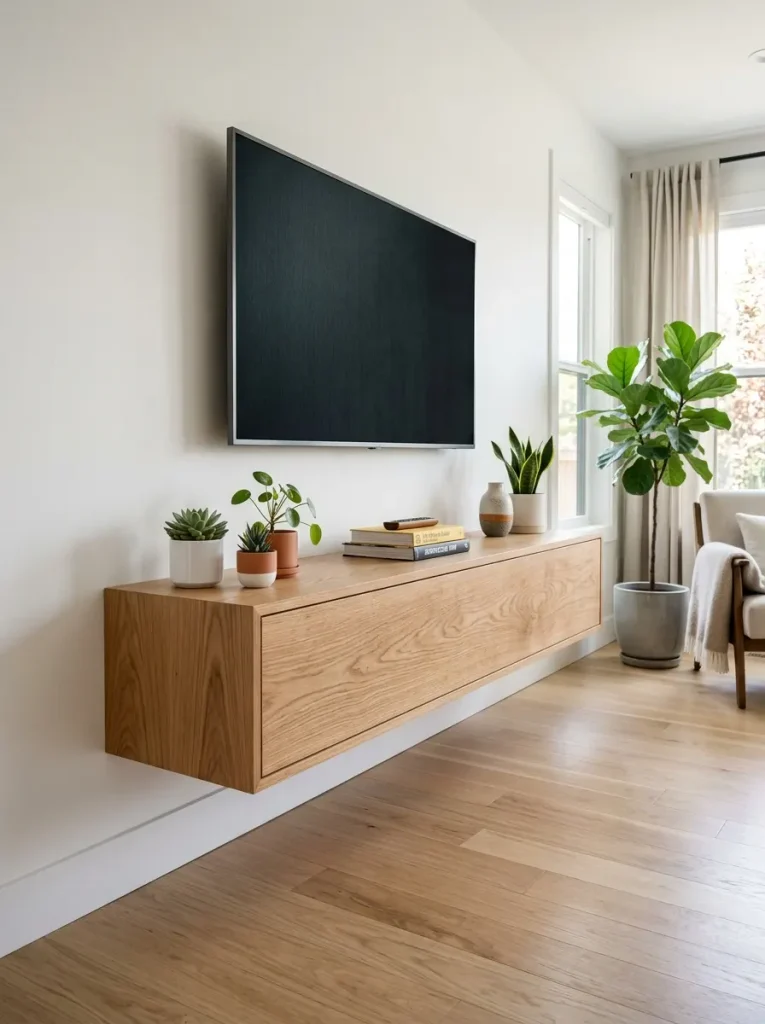
Freeing up floor space is key to uncluttering compact living rooms. Swap heavy floor-standing media units for floating wall-mounted consoles and floating shelves.
Keeping the base area beneath your TV clear creates a light, unobstructed floor transition that immediately makes the space feel larger.
7. Glass, Acrylic & Reflective Coffee Tables
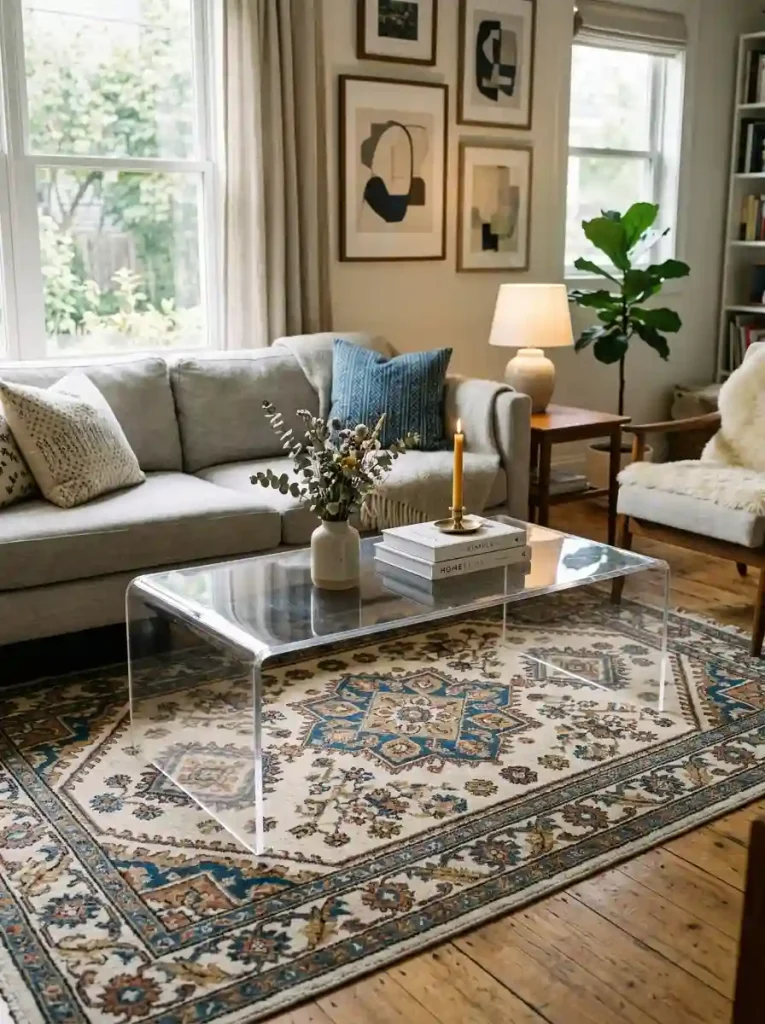
Visually “disappearing” furniture is a secret weapon for small-space styling. Glass-top coffee tables, clear acrylic (Lucite) side tables, or thin metallic frames allow light and line of sight to pass straight through.
Because transparent pieces take up zero visual weight, your room retains a sense of openness without sacrificing functional surfaces.
8. Single Large Anchor Area Rug
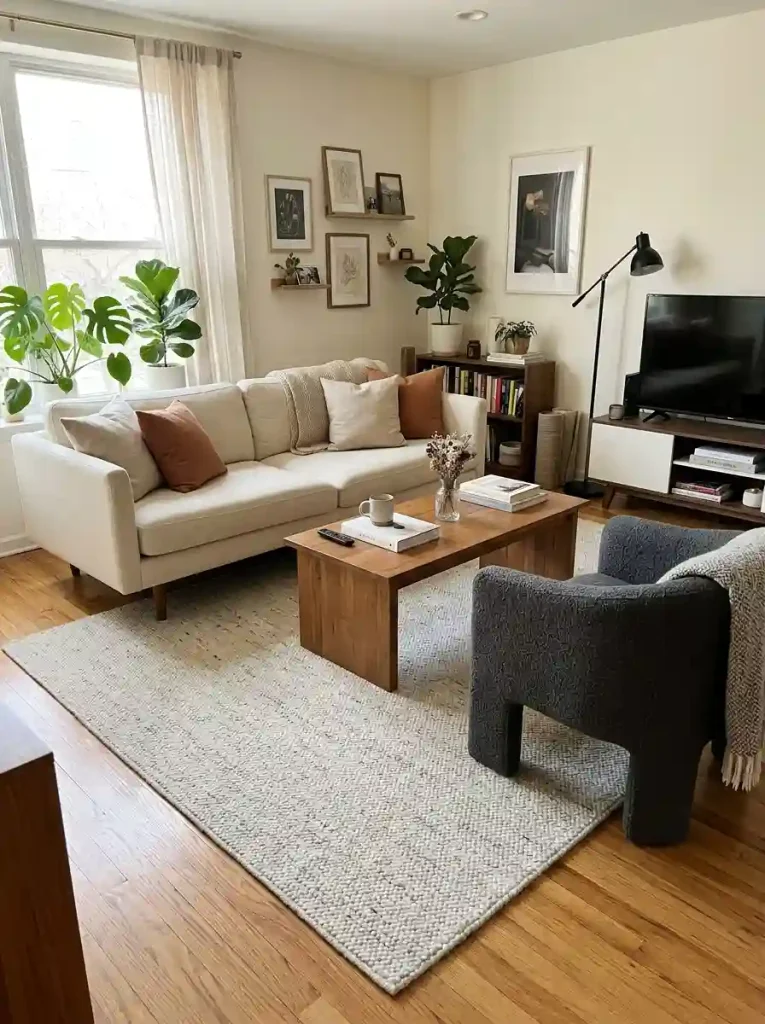
A common mistake in small rooms is placing a tiny “postage-stamp” rug in the middle of the floor, which highlights limited square footage.
Instead, select a large area rug that extends under the front legs of all major furniture pieces. A single, generously sized rug unifies the space and makes the floor footprint feel expansive.
9. Vertical Wall Art & Tall Greenery
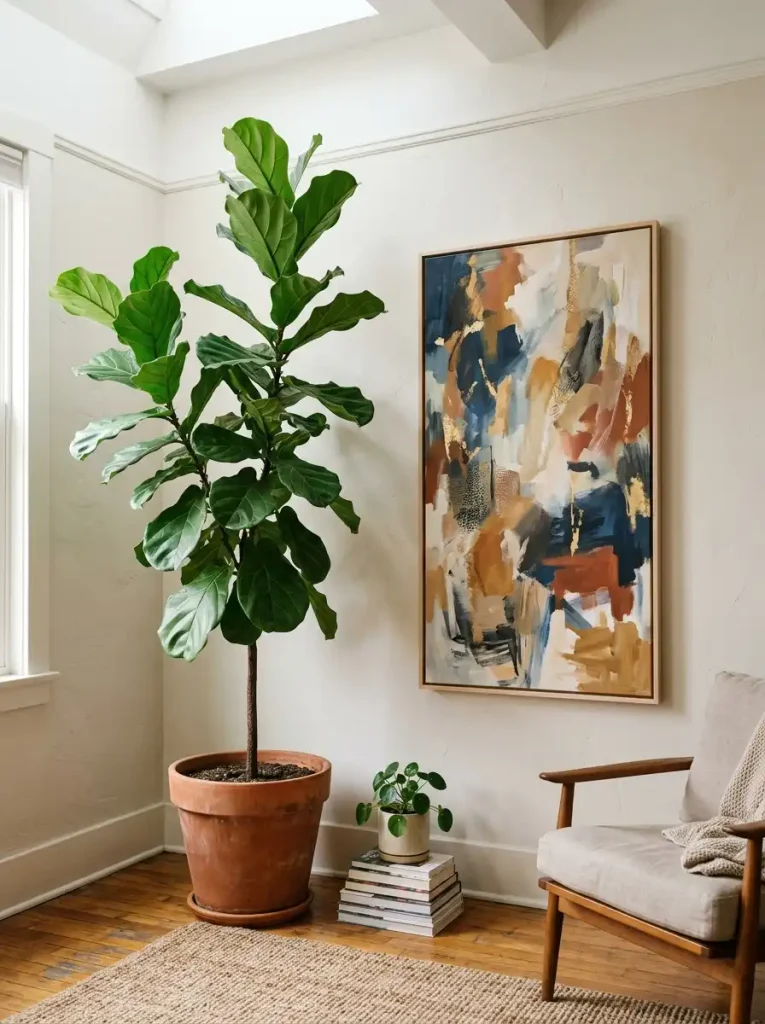
Draw focus upward to emphasize room height rather than narrow width. Hang artwork in vertical orientations, or stack two framed prints vertically above a side chair.
Incorporating tall, slender houseplants like a fiddle-leaf fig, bird of paradise, or snake plant guides the eyes upward, adding organic life and vertical height to the layout.
10. Low-Profile Furniture Lines
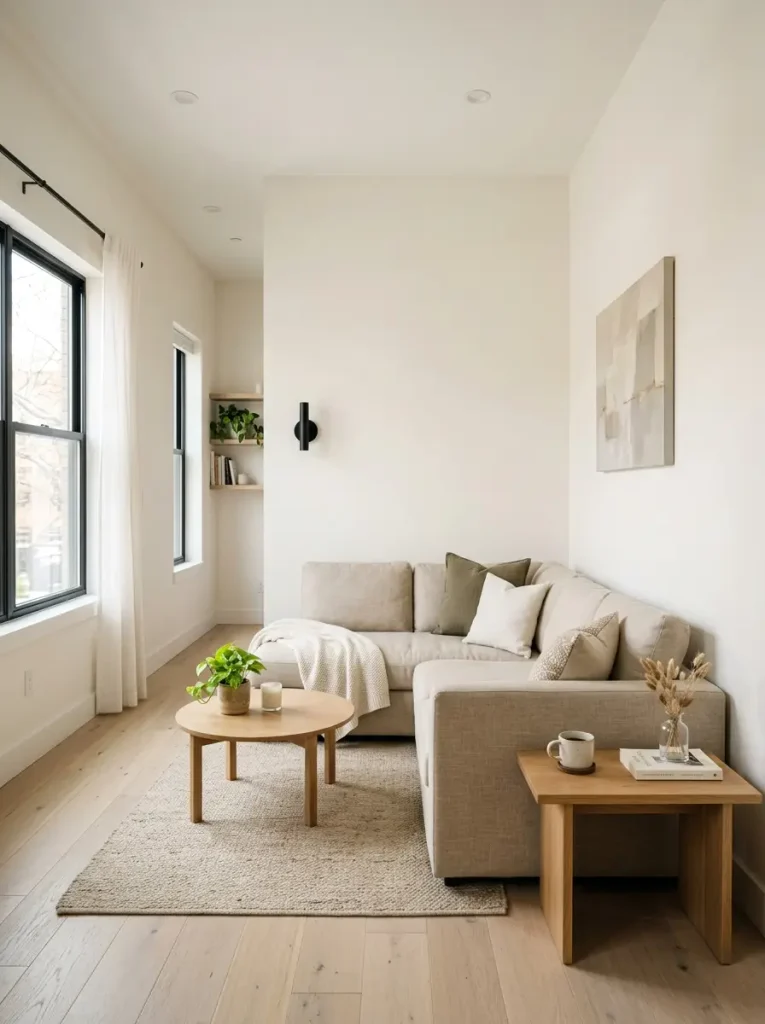
Furniture with high backs or bulky silhouettes can dwarf a small living room. Choosing low-profile sofas and armchairs leaves plenty of open wall space above the cushions, maintaining an open feel across the upper half of the room.
Pairing low seating with slim floor lamps maintains functional comfort without dominating the room.
11. Built-In Nook Seating & Wall Sconces
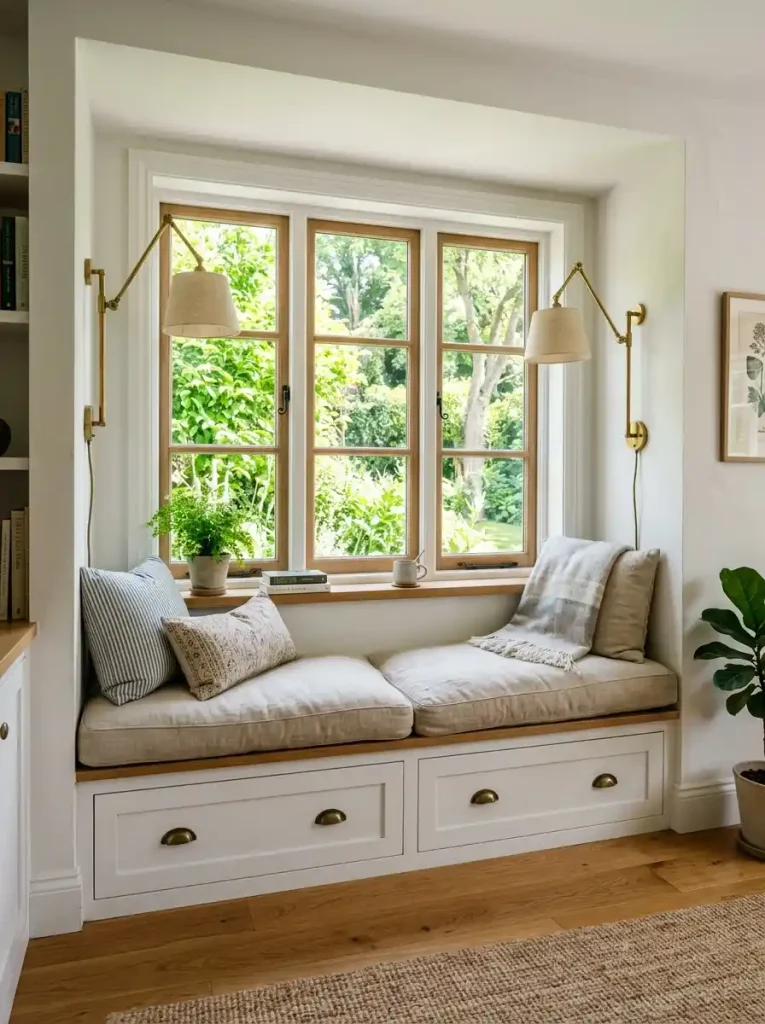
Maximize underutilized corners and window alcoves by installing built-in banquette seating or custom window benches with hidden drawer storage underneath.
Free up end table space by hardwiring or plugging in wall-mounted swing-arm sconces for reading light, leaving surfaces clear for decor and daily essentials.
Frequently Asked Questions (FAQ)
Should I use light or dark colors in a small living room? Light, warm neutral colors (like cream, off-white, and pale greige) are best for making a small living room feel bright, open, and spacious because they reflect light. However, if your room lacks natural light entirely, embracing a rich, dark paint color can create an intentionally cozy, dramatic “gem-box” feel.
What is the best sofa type for a tiny living room? A sleek, two-seater apartment sofa or a small L-shaped sectional with slender, exposed legs works best. Choose thin track arms instead of wide rolled arms to maximize actual seating space without taking up extra inches on the sides.
How do I arrange furniture in a narrow small living room? Pull furniture slightly away from the walls rather than pushing everything flat against them, which can emphasize narrow proportions. Keep the main walkway on one side of the room clear, use round or oval coffee tables to ease foot traffic around corners, and utilize vertical wall space for lighting and storage.