17 DIY Pallet Fence Ideas for Small Backyards
17 DIY Pallet Fence Ideas for Small Backyards
Small backyards deserve great fences too, and nothing fits the small-space DIY brief quite like pallet wood. Free or nearly free from warehouses, garden centers, and online marketplaces, wooden pallets break down into sturdy slats that can become privacy screens, decorative borders, or full fences in a single weekend. Because the wood itself costs almost nothing, you can afford to splurge on a quality stain, solid posts, or pretty finishing details — and still spend a fraction of what store-bought fence panels would cost.
The trick with pallet fences in compact yards is keeping the design light and intentional: clean lines, a consistent finish, and details that do double duty, like built-in planters or evening lighting. Below are 17 DIY pallet fence ideas designed specifically for small backyards — each one cheap, buildable in a weekend, and stylish enough to make the neighbors ask who your contractor was. For even more budget inspiration beyond pallets, explore our 15 cheap backyard fence ideas that look expensive.
1. Classic Vertical Pallet Slat Fence

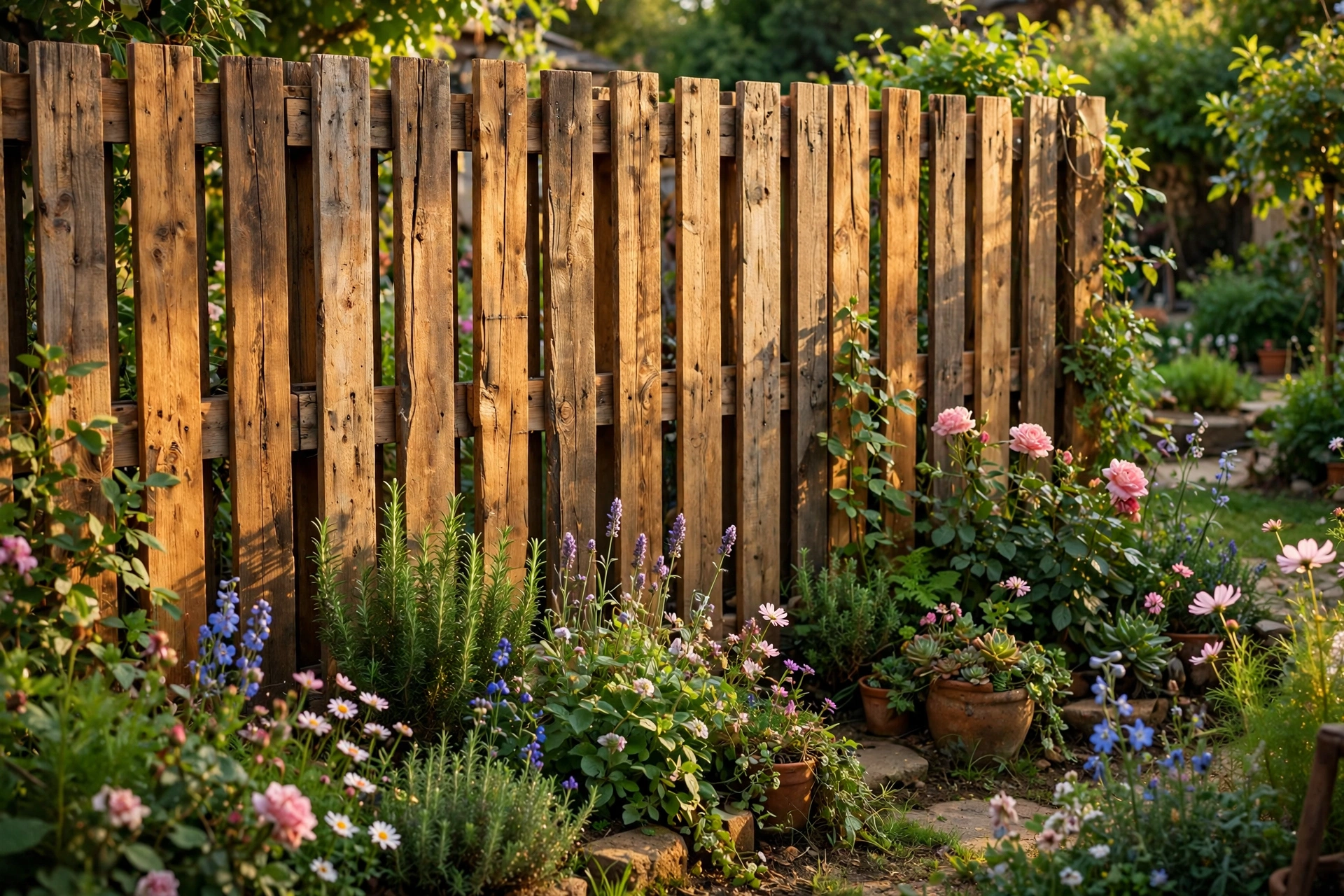
The timeless way to build with pallets: break them down into individual slats, trim them to a uniform height, and mount them vertically on two horizontal rails. Keep the slats tight together for full privacy, or leave a slim gap between boards so light filters through and the fence feels less imposing in a tight yard. A clear sealer keeps the natural wood tone glowing; it weathers to a soft silver-gray if you prefer the low-maintenance route.
2. Horizontal Pallet Fence
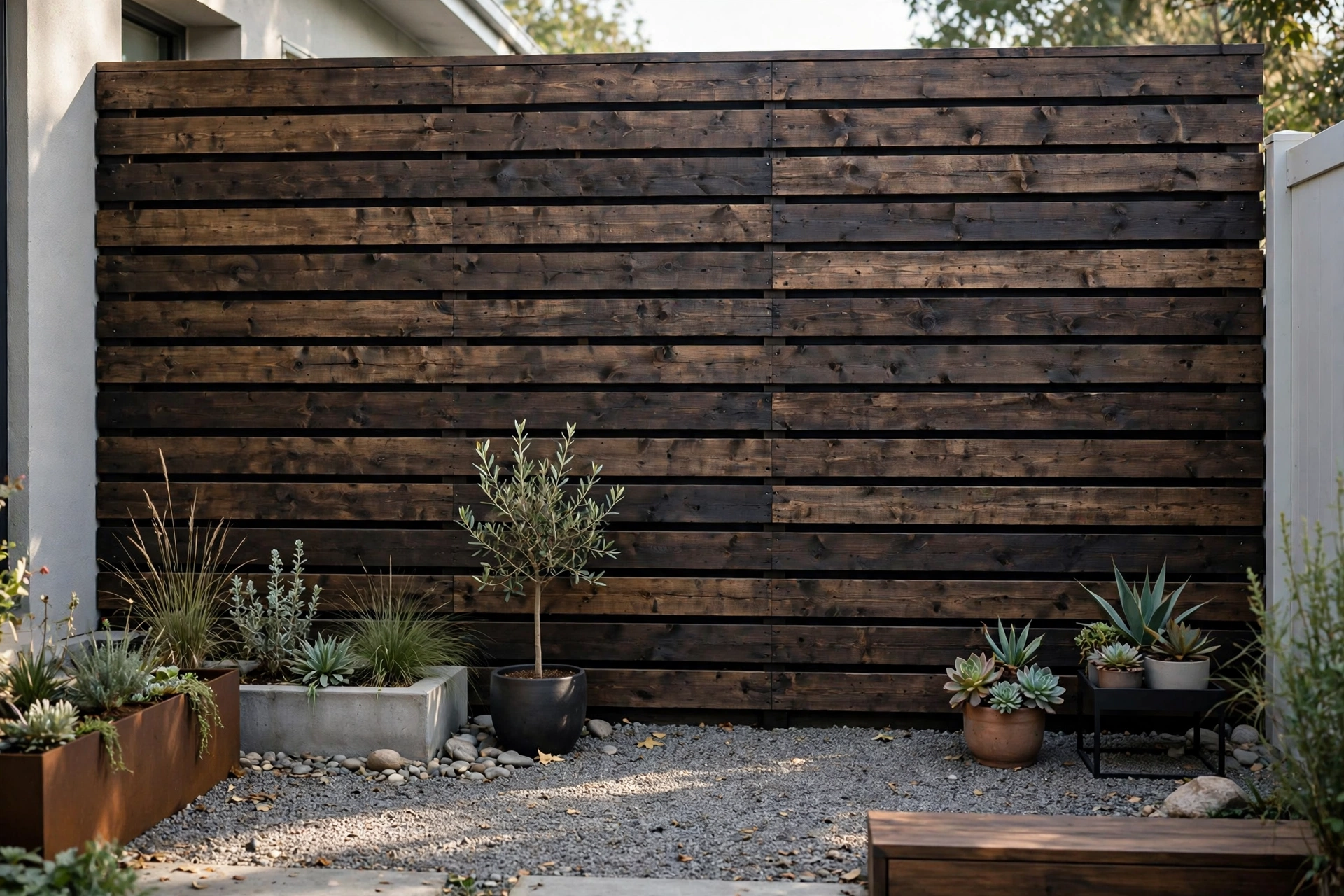
Mount those same pallet slats horizontally and the look goes instantly modern. Horizontal lines make a narrow yard feel wider, which is exactly the optical trick a small backyard needs. Space the boards with a consistent 1/2-inch shadow gap using a scrap spacer block as you go. Cap the top with a flat 2×4 rail for a crisp finished edge that also sheds rainwater.
3. Dark-Stained Pallet Fence

If you do one thing to a pallet fence, make it a rich dark stain. Charcoal, espresso, or near-black stain hides the mismatched tones of salvaged boards and makes green plants pop dramatically against the fence. Dark colors also recede visually, so the boundary of a small yard feels farther away. Use an exterior wood stain with UV protection and plan on a refresh coat every two to three years.
4. Bold Painted Pallet Fence
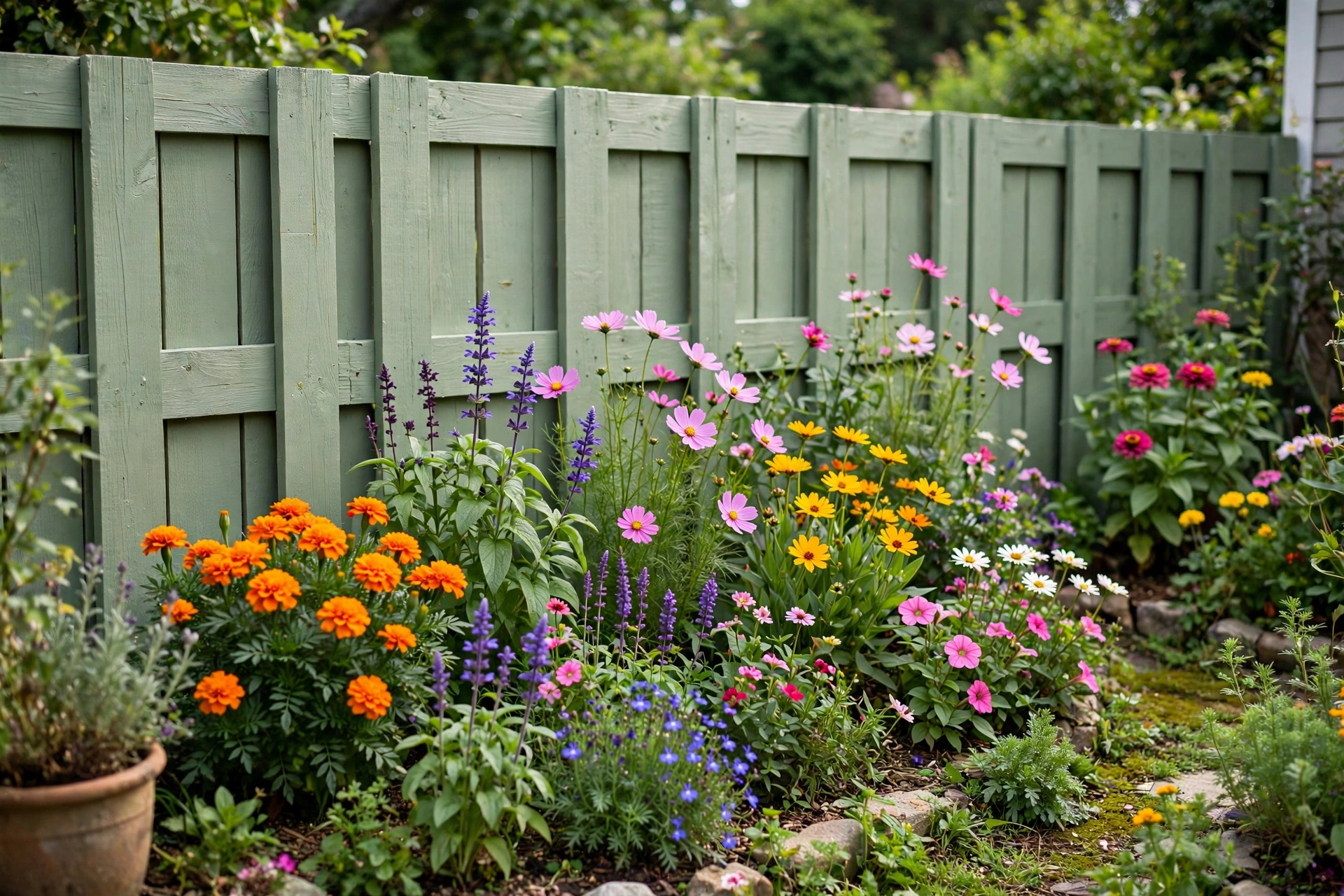
Paint is the great unifier of mismatched pallet boards, and a bold color turns a budget fence into a deliberate design statement. Deep teal, forest green, or classic navy all look intentional and high-end against planting beds. Use exterior acrylic paint over a stain-blocking primer — pallet wood is thirsty and uneven, so two coats are non-negotiable. Keep one extra quart stored for touch-ups after storm season.
5. Whitewashed Pallet Fence
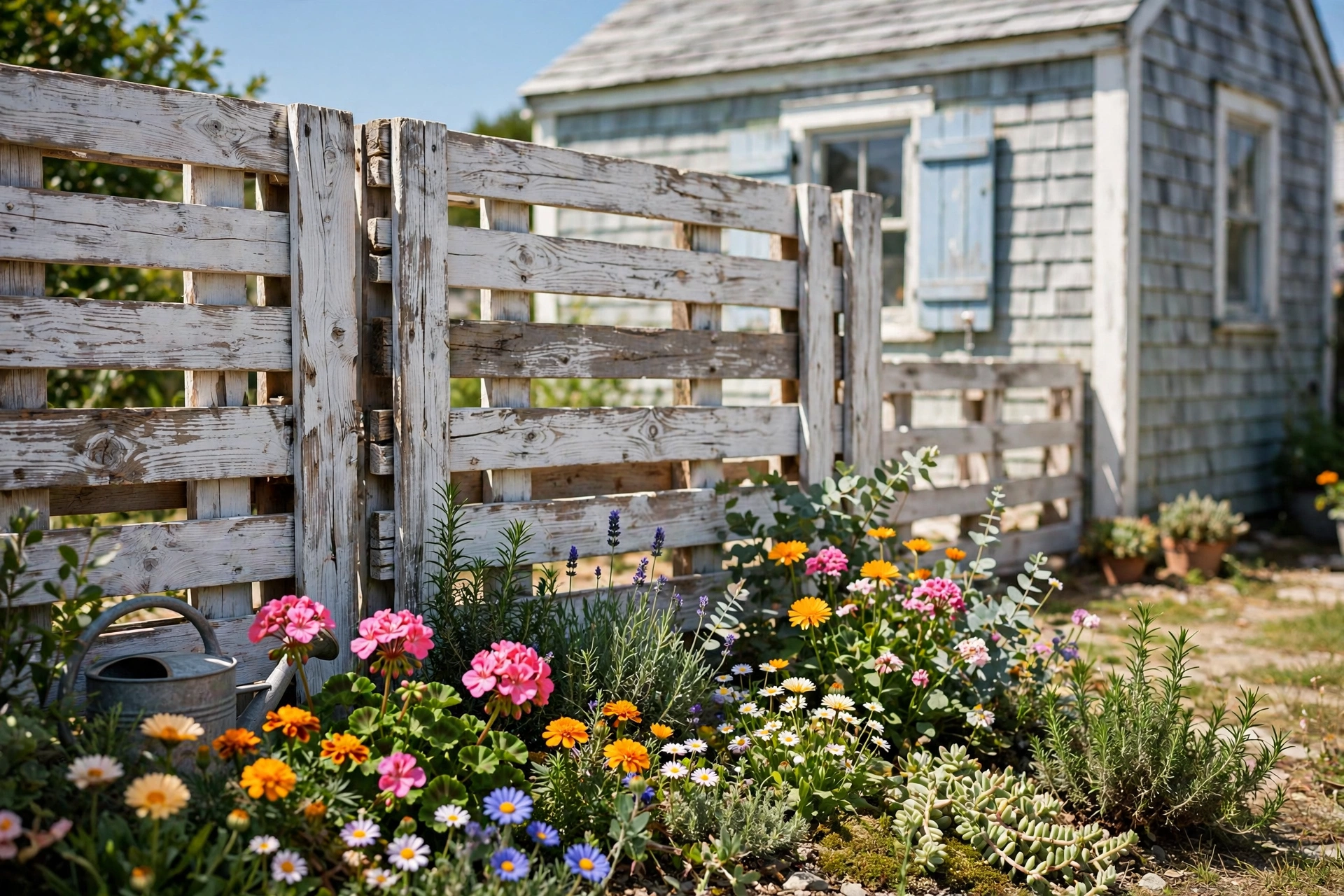
For a softer take on painted pallets, try a whitewash: thin white exterior paint brushed over the slats and partially wiped back so the wood grain shows through. The result is a breezy coastal-cottage look that brightens shady small yards and makes the space feel larger. Whitewash is forgiving on rough pallet wood — imperfections become part of the charm. Seal it with a clear matte outdoor topcoat so it stays fresh.
6. Pallet Fence with Planter Boxes
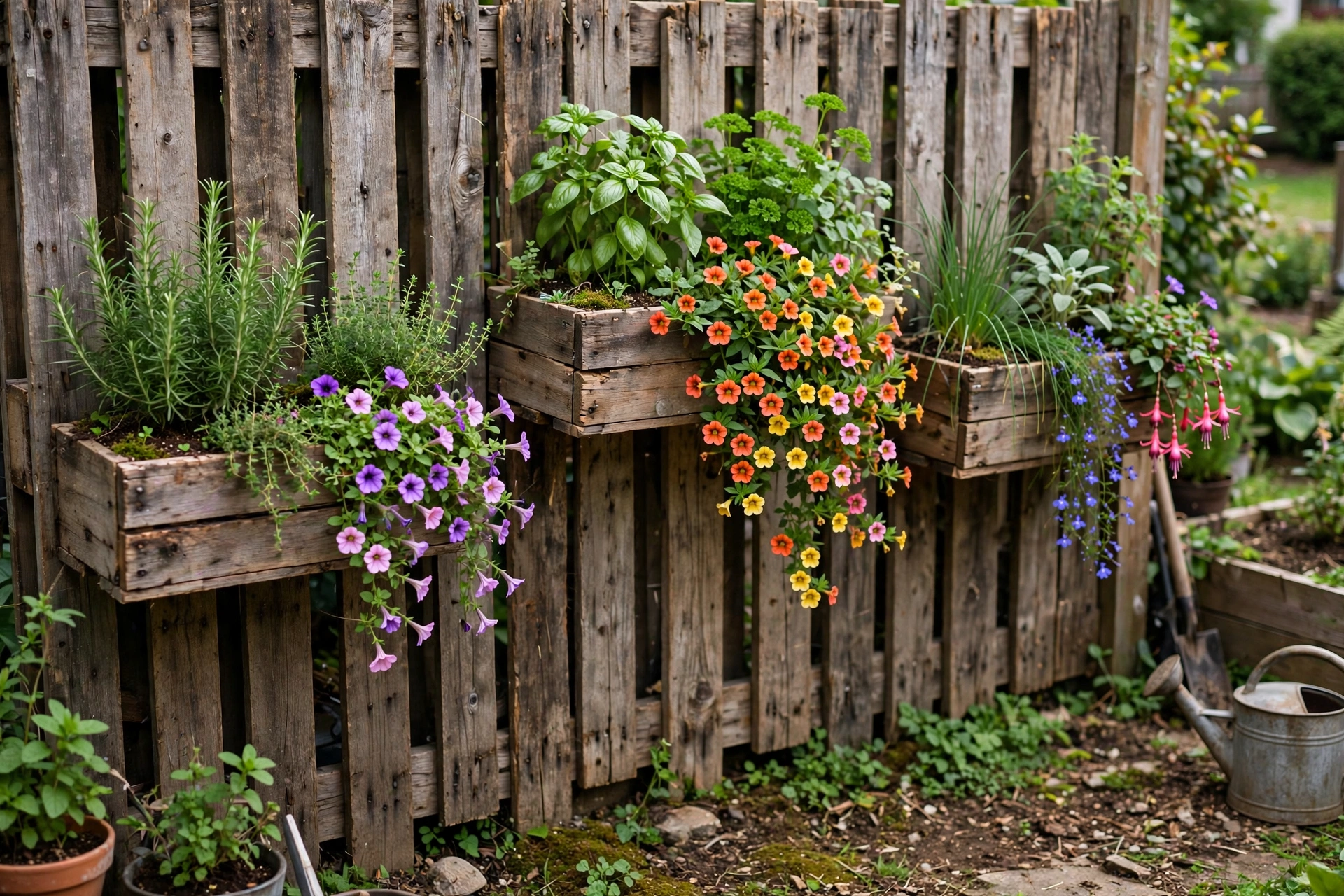
In a small backyard, every square foot has to work hard — so let your fence garden too. Mount simple planter boxes built from spare pallet slats directly to the fence rails, staggering them at different heights for visual rhythm. Line the boxes with landscape fabric, add trailing plants like sweet potato vine or cascading petunias, and you have turned a boundary into a vertical garden. Keep boxes modest in size so the weight stays manageable.
7. Freestanding Pallet Privacy Screens
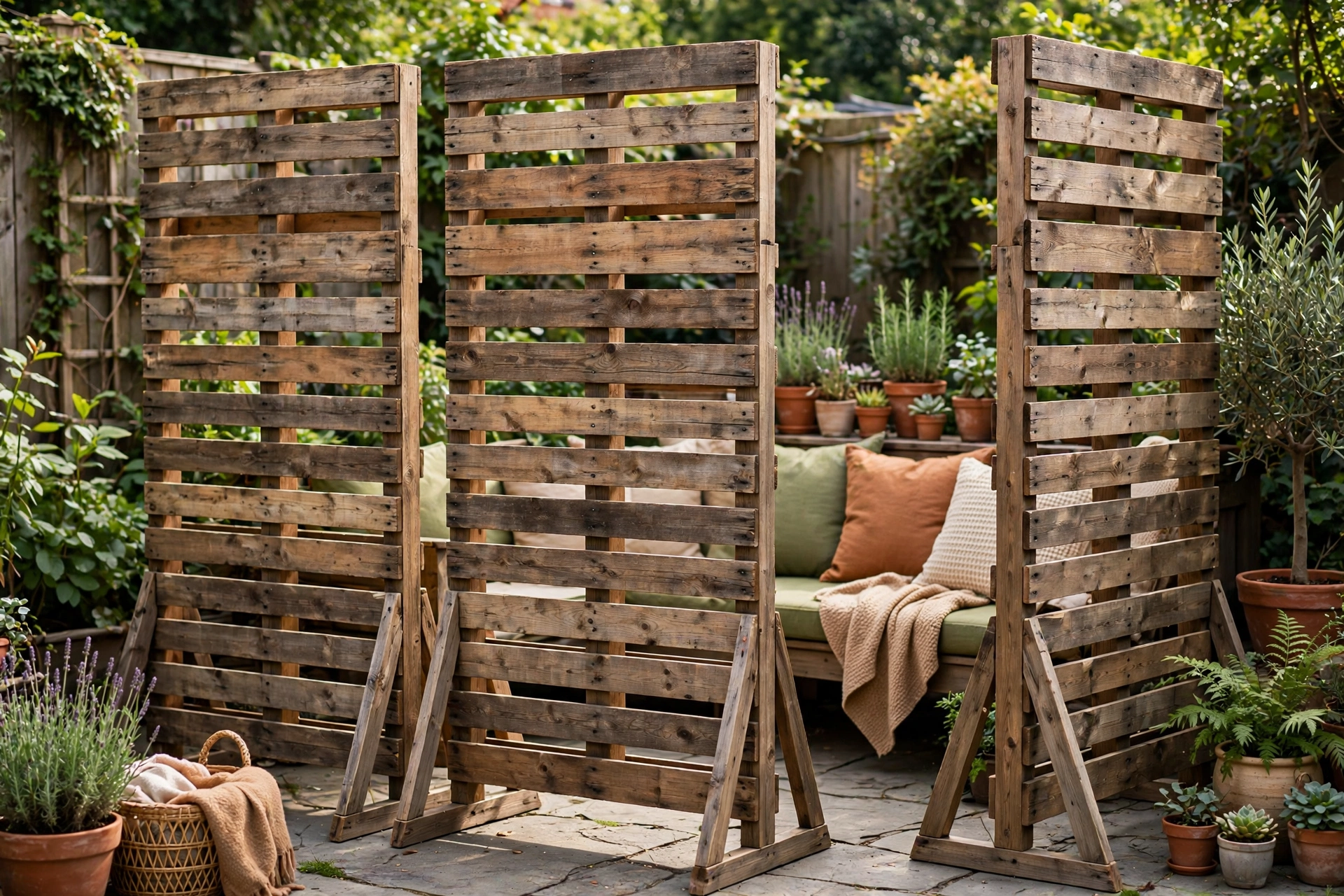
Renters and commitment-phobes, this one is for you: build pallet slats into framed panels mounted on sturdy feet or planter bases so they stand freely with no digging. Use two or three panels to screen a patio corner, hide the trash bins, or block an overlooked seating area. Because they are movable, you can rearrange the yard whenever the mood strikes — and take them with you when you move.
8. Pallet Slats with Wire Mesh Backing
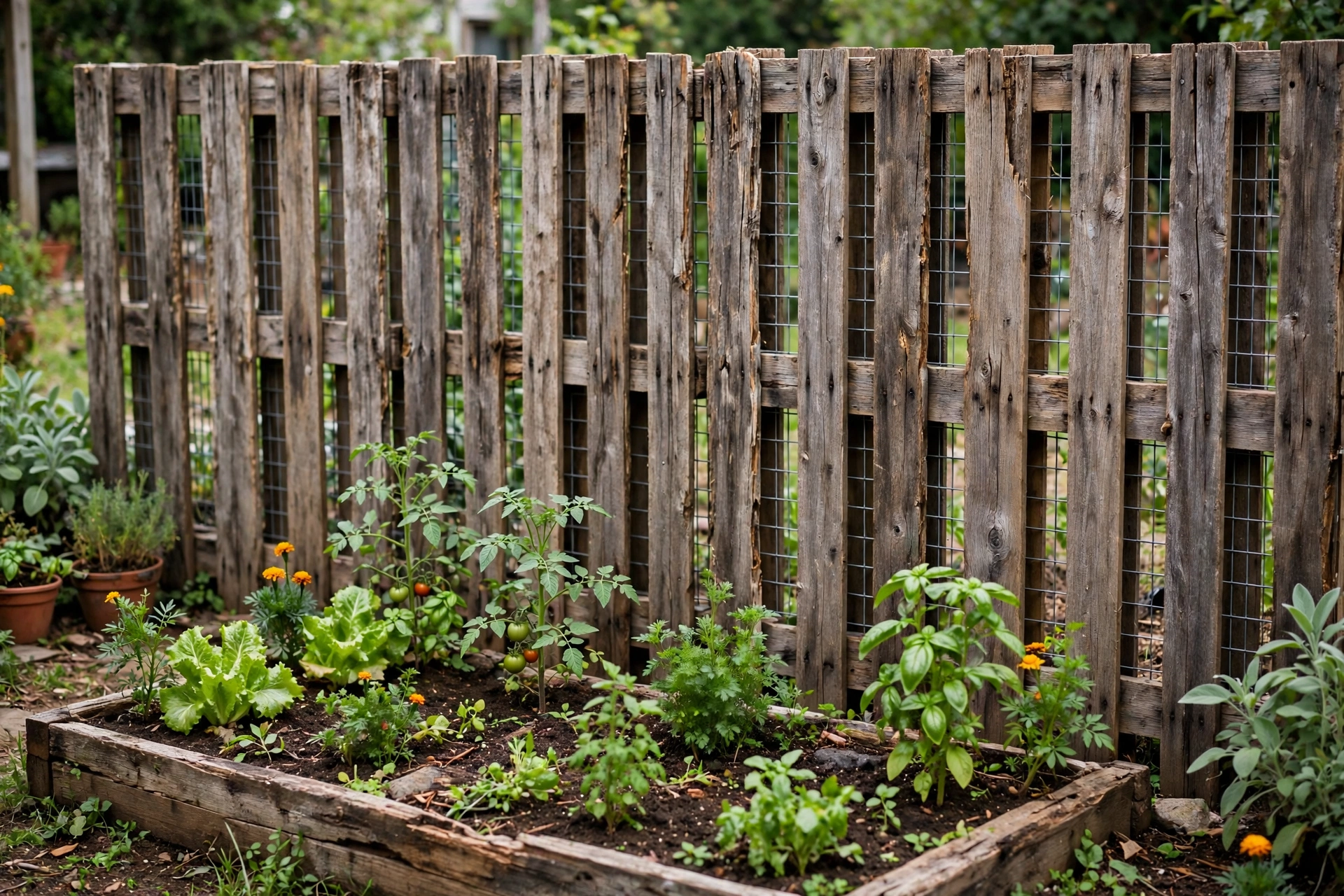
Love the pallet look but need to keep a small dog or curious toddler safely in? Staple welded wire mesh to the back of widely spaced pallet slats. You get the airy, light-filtering feel of a slatted fence with a genuinely secure barrier behind it. The mesh nearly disappears from a few feet away. It is also the perfect setup for training climbing roses or clematis up the fence without them escaping into the neighbor’s yard.
9. Pallet Fence with Trellis Top
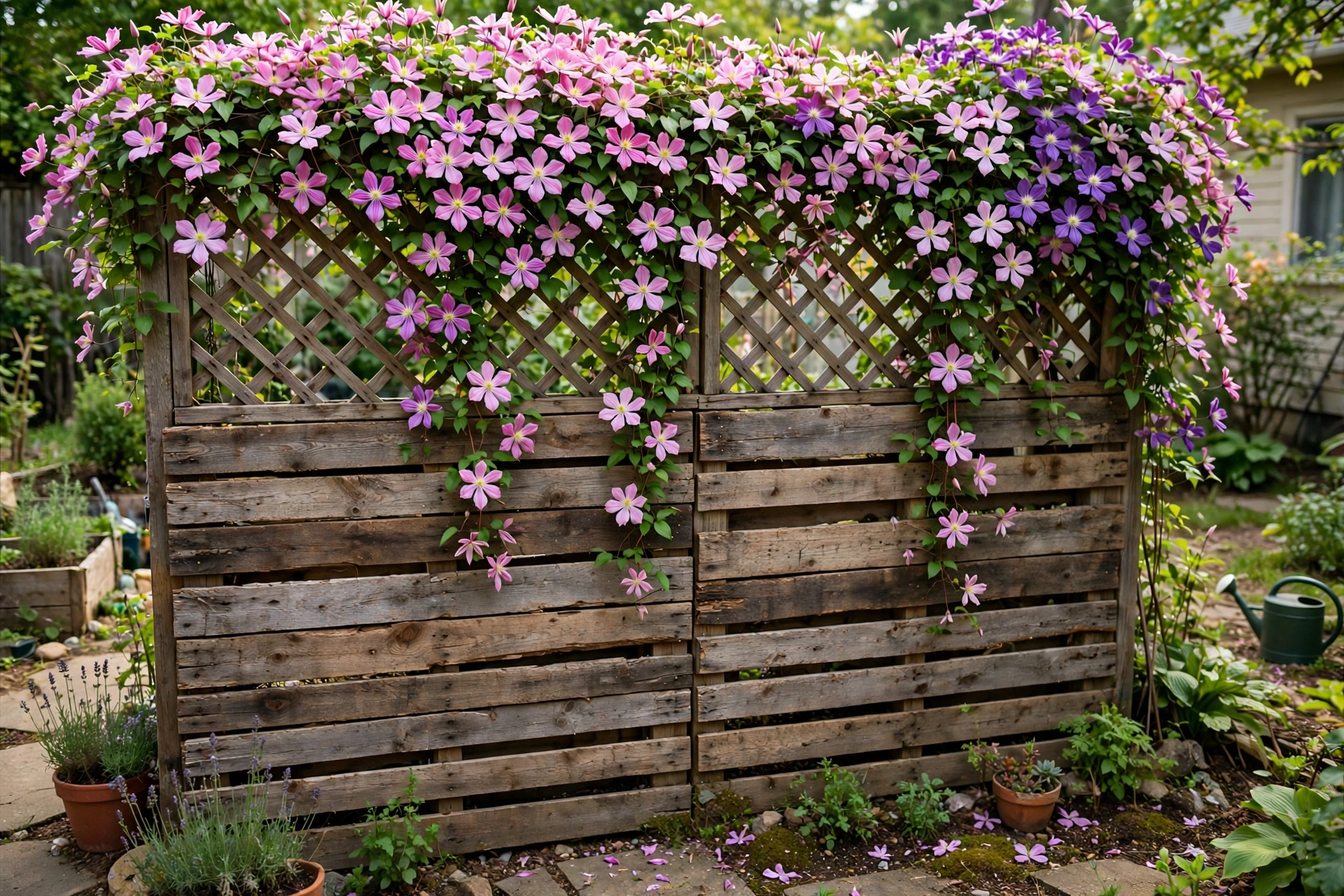
Add a one- or two-foot trellis strip above your pallet fence and you gain height, elegance, and a home for climbing plants — all without the heaviness of a full-height solid fence. Build the trellis from thin pallet slats in a simple grid or diagonal lattice pattern. Plant fast climbers like morning glory, jasmine, or black-eyed Susan vine at the base and let them weave upward for a living crown.
10. Matching Pallet Fence Gate
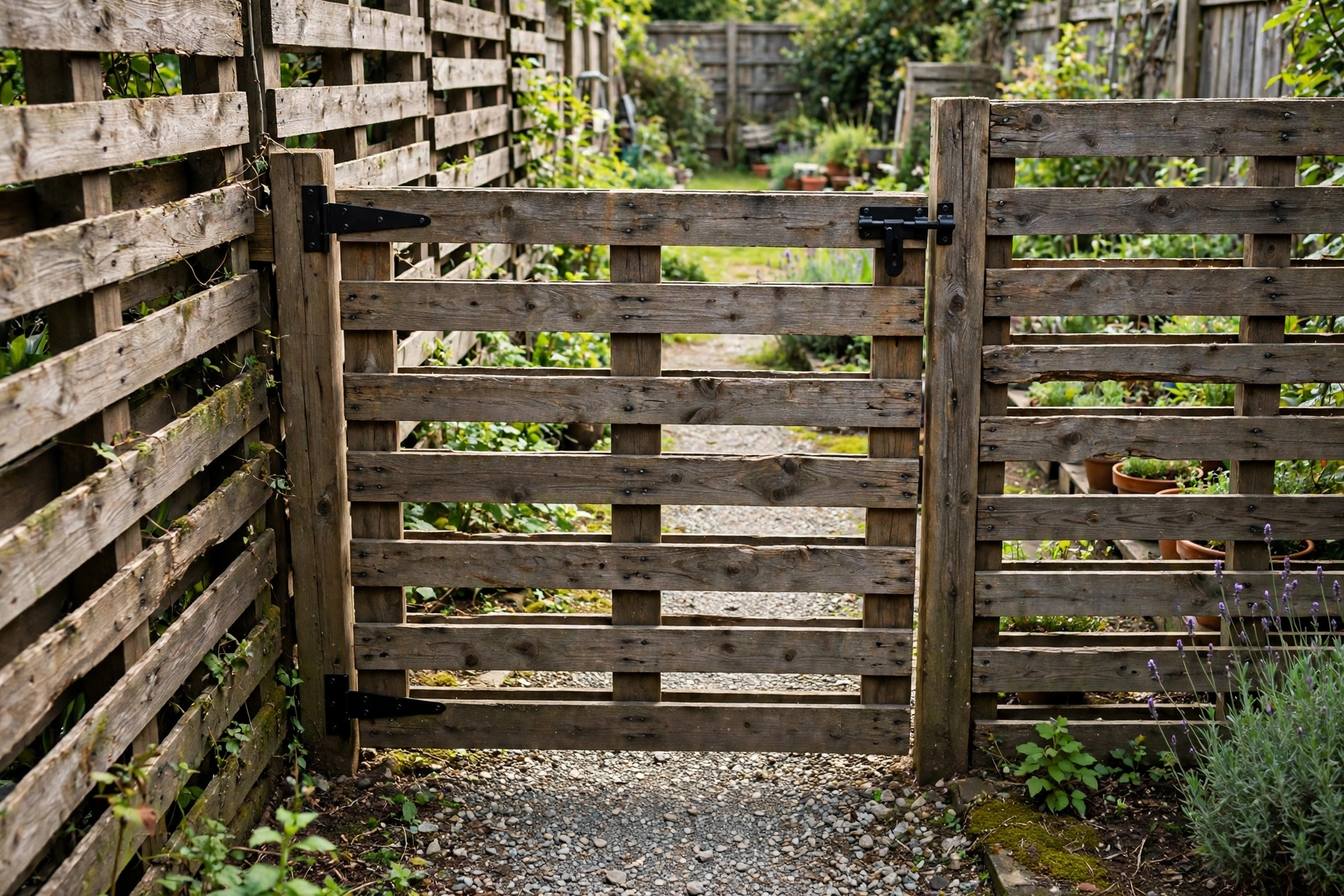
Nothing ruins a nice pallet fence faster than a mismatched store-bought gate. Build the gate from the same slats, in the same pattern and finish as the fence, and frame it with a simple Z-brace on the back for rigidity. Use proper T-hinges and a gravity latch rather than flimsy hardware — a gate gets daily use and cheap hinges will sag within a season. Hang it with a slight upward angle so gravity keeps it closed.
11. Pallet Fence with String Lights
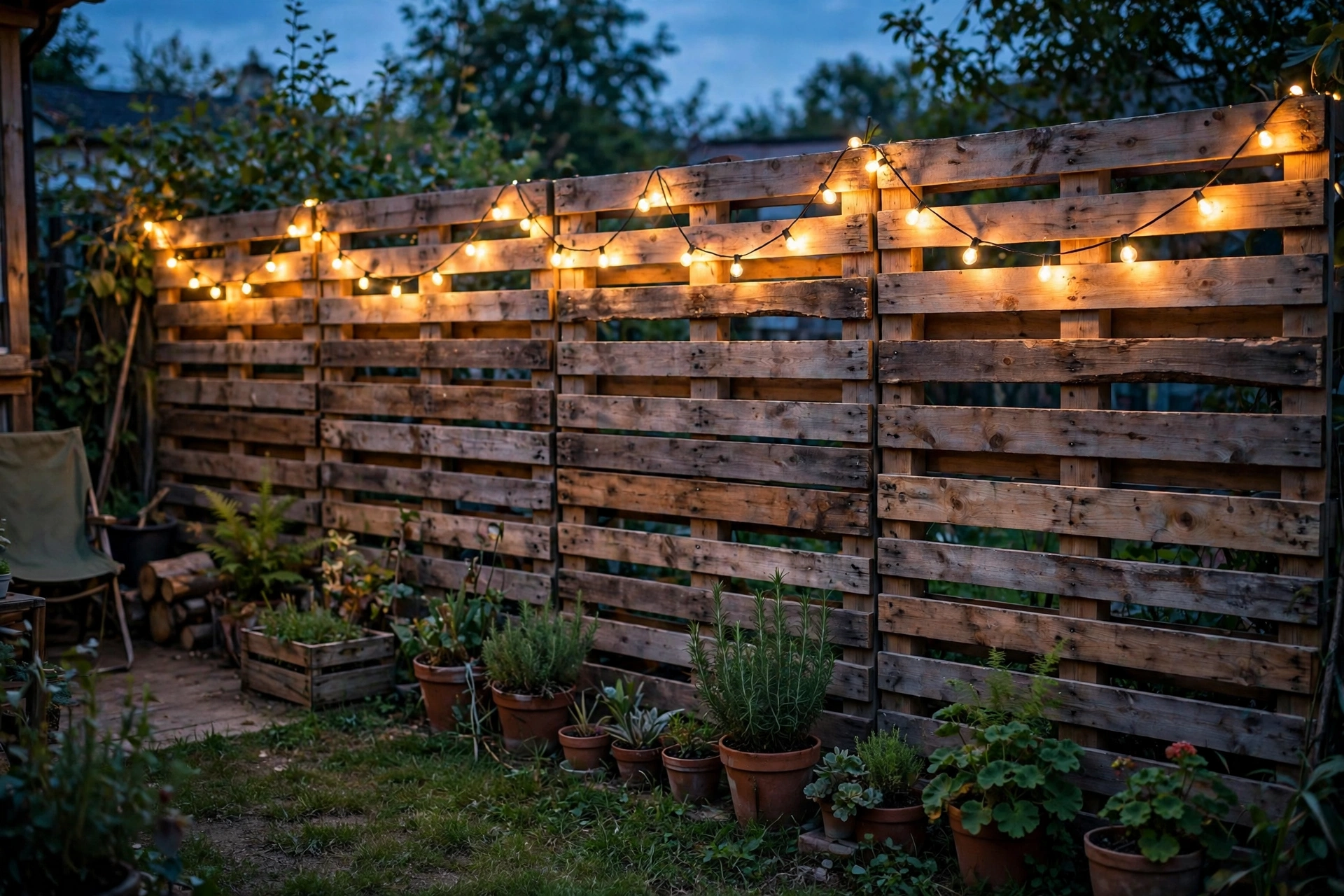
The fastest way to make a pallet fence feel magical after dark is a run of warm string lights along the top rail. Drape them in gentle swags between posts or run them straight along the cap for a cleaner look. Solar-powered strings mean no wiring and no electrician — just hang and enjoy. In a small backyard, this one upgrade turns the whole space into an evening destination.
12. Double-Sided Pallet Fence
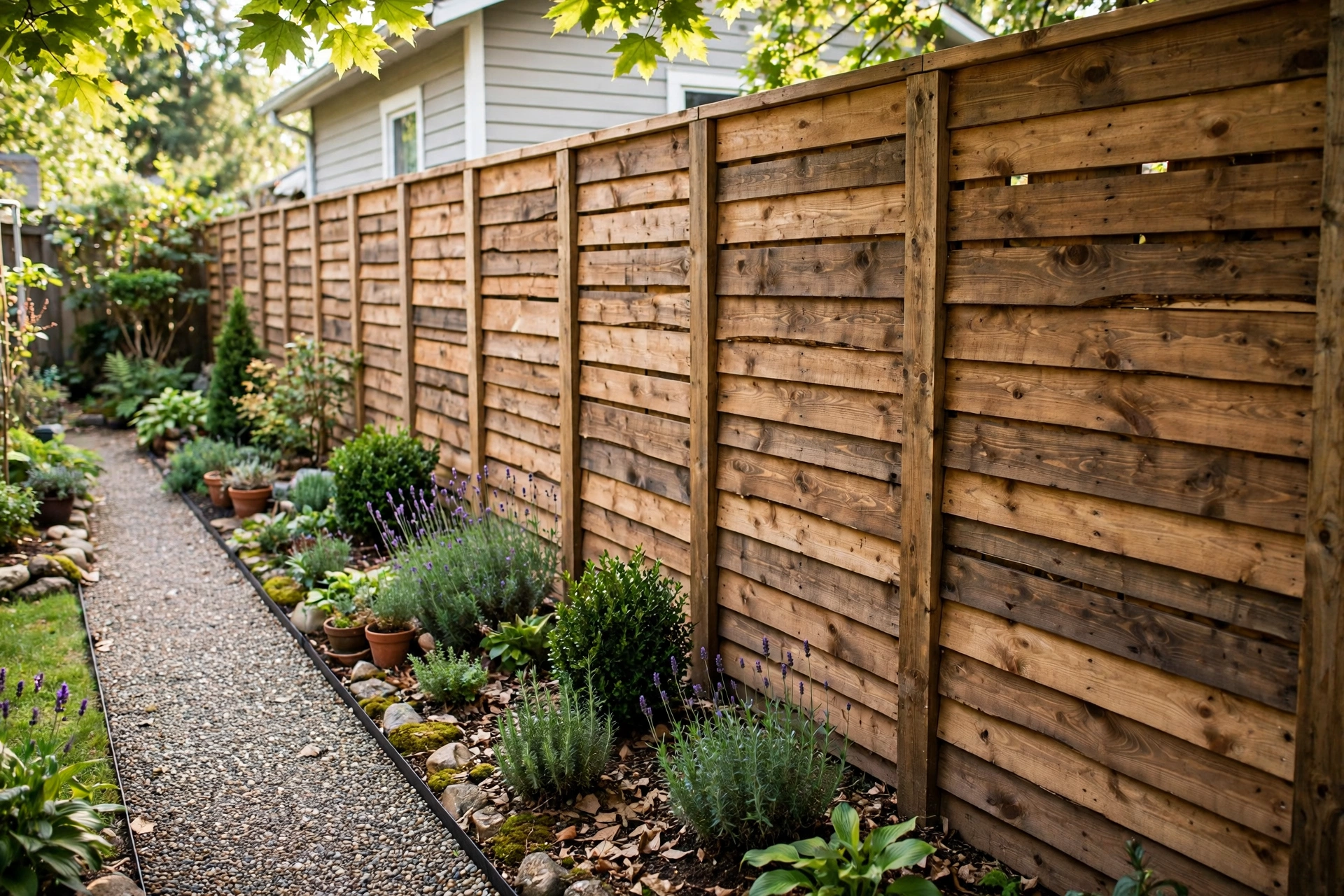
If your fence is visible from the neighbor’s side too, build it double-sided: slats on both faces of the posts with the rails sandwiched in the middle. Both sides look finished, which keeps neighbor relations warm and doubles your design impact. It uses more slats, but pallets are free — the only real cost is a bit more time. Stagger the board joints between the two faces for extra strength.
13. Pallet Wood and Corrugated Metal Mix
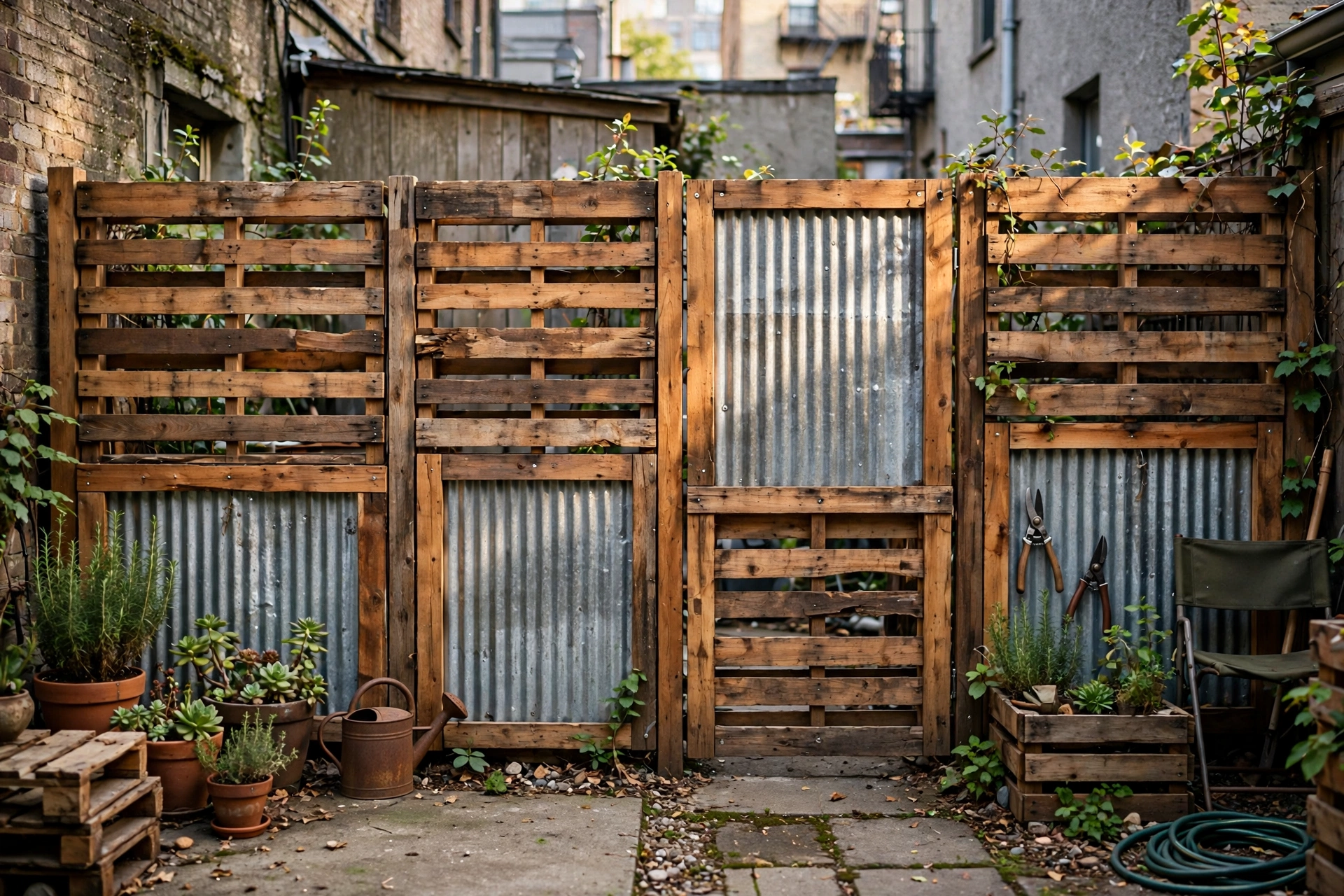
Pair pallet-wood frames with corrugated metal panels for a fence with serious industrial-rustic attitude. The metal brings clean vertical lines and reflects light into the yard, while the pallet-wood posts and rails keep it warm and handcrafted. Use galvanized roofing panels cut to size, and wear gloves — the cut edges are sharp. A dark stain on the wood makes the silver metal sing.
14. Pallet Panels on No-Dig Metal Posts
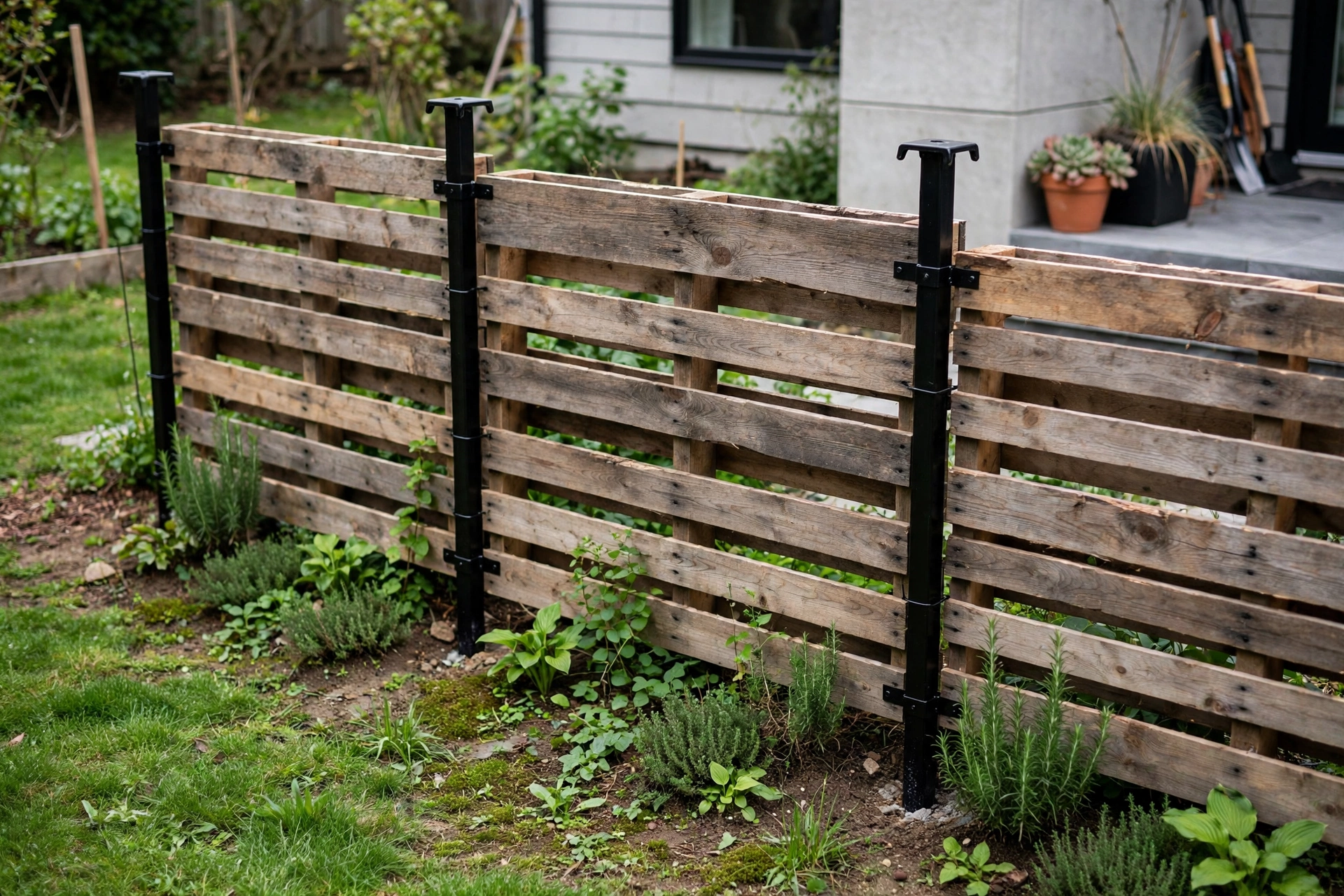
Skip the concrete and the post-hole digger: drive metal T-posts or no-dig spike anchors into the ground and bolt your pallet panels to them. This is the fastest way to get a fence up in a weekend, and it is kind to tree roots and rental agreements alike. Paint the metal posts black so they disappear against stained slats. Check that each post is plumb before attaching panels — a leaning post telegraphs across the whole run.
15. Pallet Fence Living Wall
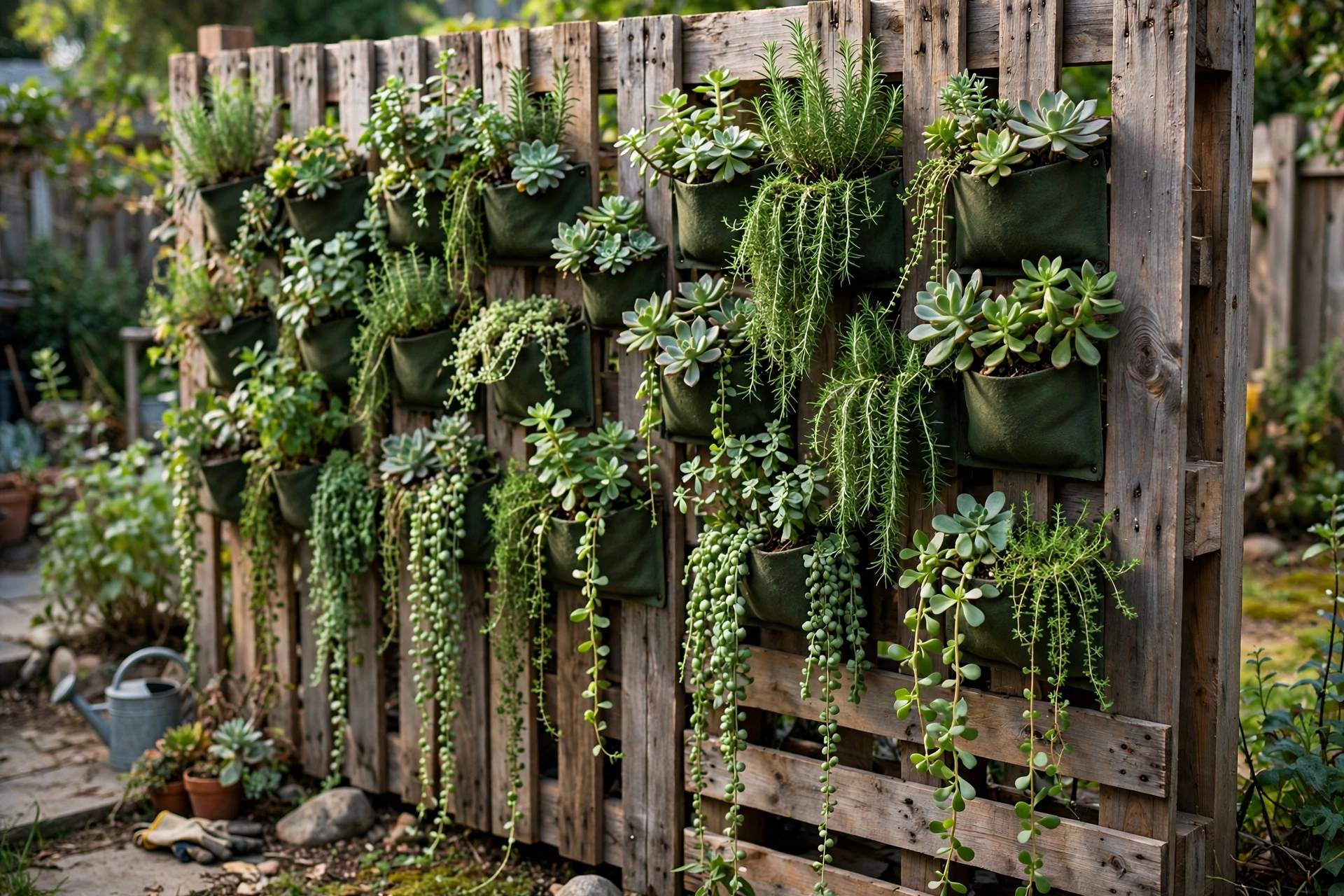
Turn your pallet fence into a vertical garden by adding shallow planting pockets between the slats. Staple landscape fabric into pouches, fill with potting mix, and plant herbs, lettuces, strawberries, or trailing flowers. A living-wall fence section near the patio puts fresh herbs within arm’s reach of the grill. Water consistently — shallow pockets dry out fast — and feed lightly through the growing season.
16. Low Pallet Fence for Patios and Terraces

Not every small yard needs a six-foot wall. A low three- to four-foot pallet fence is perfect for defining a patio edge, keeping mulch in the beds, or giving a terrace a finished border without blocking light or conversation. Build short panels between chunky 4×4 posts with a wide cap rail that doubles as a drink shelf. It reads as intentional landscaping rather than a barrier.
17. Chevron-Pattern Pallet Fence
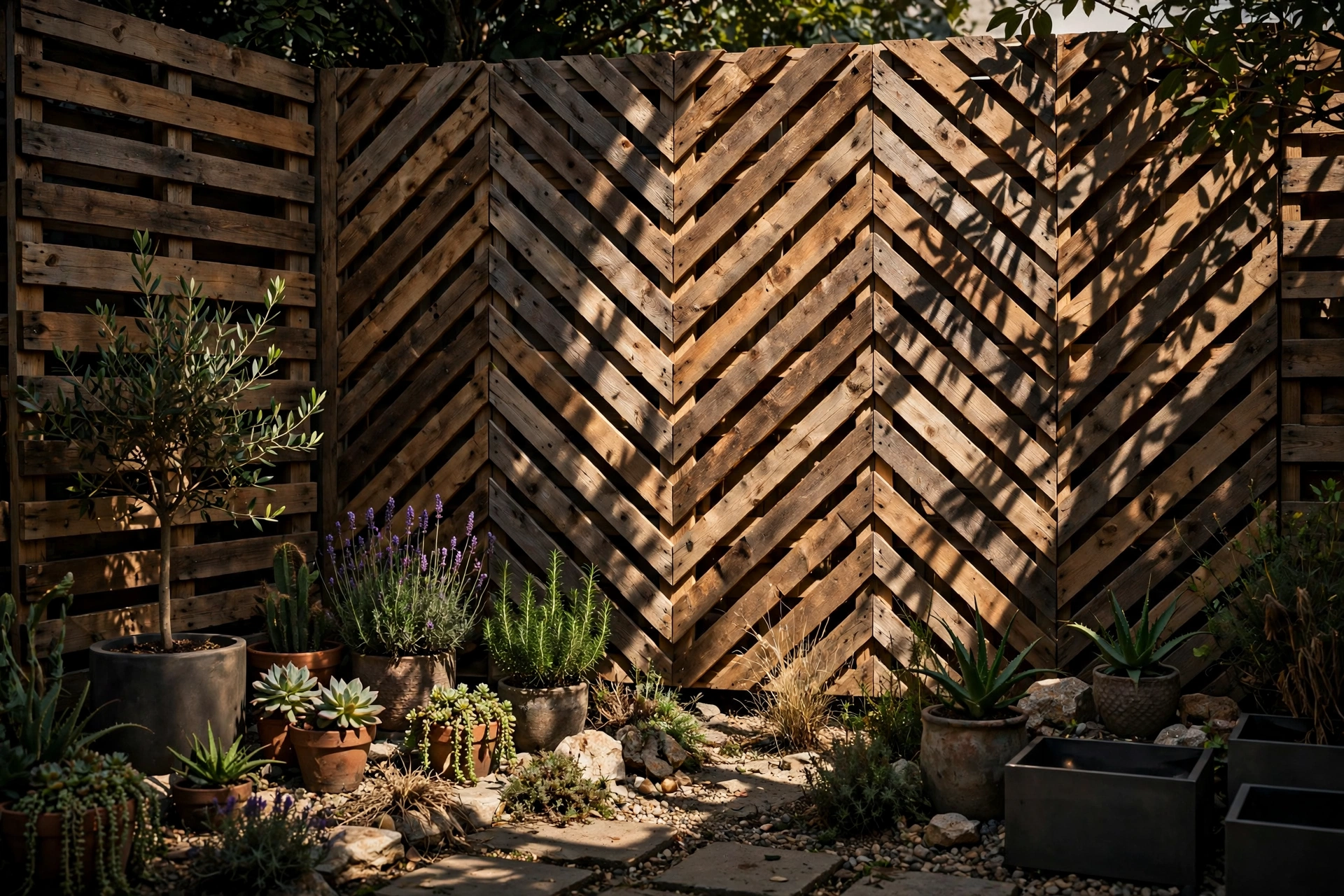
Ready for the showstopper? Cut your pallet slats at 45-degree angles and arrange them in a chevron or herringbone pattern inside a framed panel. Use it as a single feature panel — behind a bench, as a gate, or flanking the patio — rather than for the whole fence, since the angled cuts are fiddly. One chevron panel delivers more wow per board-foot than any other idea on this list.
Conclusion
Pallet fences prove that the best small-backyard ideas are often the simplest: free materials, honest construction, and a finish that ties it all together. Start with one weekend, a stack of salvaged pallets, and whichever idea above made you reach for the tape measure. Build it well — solid posts, good fasteners, real exterior finish — and your nearly-free fence will look anything but cheap.
FAQ:
Where can I find free pallets for a fence?
Check warehouses, garden centers, furniture stores, and construction sites — most are happy to give pallets away rather than pay disposal fees. Look for the HT (heat-treated) stamp and avoid pallets marked MB (methyl bromide) or with spills and stains. Always ask permission before taking pallets stacked behind a business.
How long does a pallet fence last?
A well-built pallet fence typically lasts five to ten years, depending on your climate and how you finish it. The keys to longevity: keep wood off direct soil contact, use exterior stain or sealer on all sides, choose rot-resistant posts (cedar or pressure-treated), and reapply finish every two to three years. The fence will weather and silver gracefully even as it ages.
Do I need to treat pallet wood before building a fence?
Yes, a little prep goes a long way. Sand rough edges to prevent splinters, remove any protruding nails or staples, and check every pallet for the HT stamp. Apply an exterior wood sealer or stain to all sides — including cut ends — before assembly so moisture cannot wick in. If any part of the fence touches soil, consider lining it or using a gravel strip at the base to slow rot where wood meets earth.
Can I build a pallet fence if I rent my home?
Absolutely, with the right approach. Freestanding privacy screen panels on feet need no digging and can move with you, and no-dig metal post anchors leave almost no trace when removed. Keep the fence modest in height, avoid attaching anything to existing structures without permission, and check your lease and any HOA rules first. When in doubt, a quick conversation with your landlord before you build saves headaches later.