19 Horizontal Slat Fence Ideas for a Modern Backyard
19 Horizontal Slat Fence Ideas for a Modern Backyard
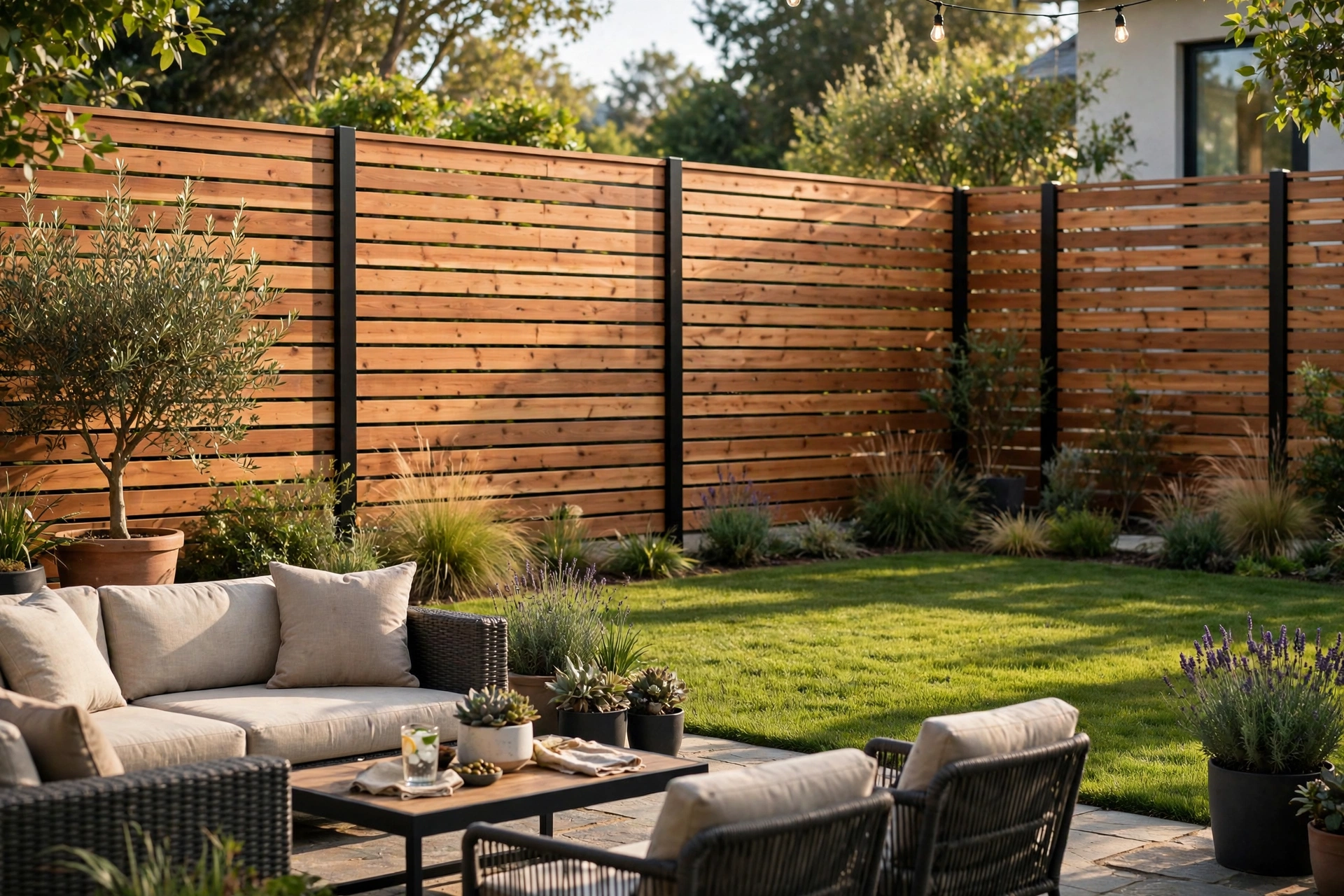
Horizontal slat fences have become the defining backyard trend of 2026, and it is easy to see why. Their long, clean lines make even a small yard feel wider, calmer, and more architectural, while the narrow gaps between boards soften privacy with filtered light and gentle airflow. From warm cedar to dramatic black stain, this is the fence style designers reach for when they want a modern, high-end look.
Whether you are building a full privacy boundary, screening a patio, or upgrading a tired fence line, there is a horizontal slat design to suit your budget and skill level. You can mix slats with metal posts, stone, planters, and lighting, or keep things beautifully simple with stained lumber. Explore these 19 distinct ideas and find the modern backdrop your backyard has been waiting for.
1. Cedar Horizontal Slat Fence
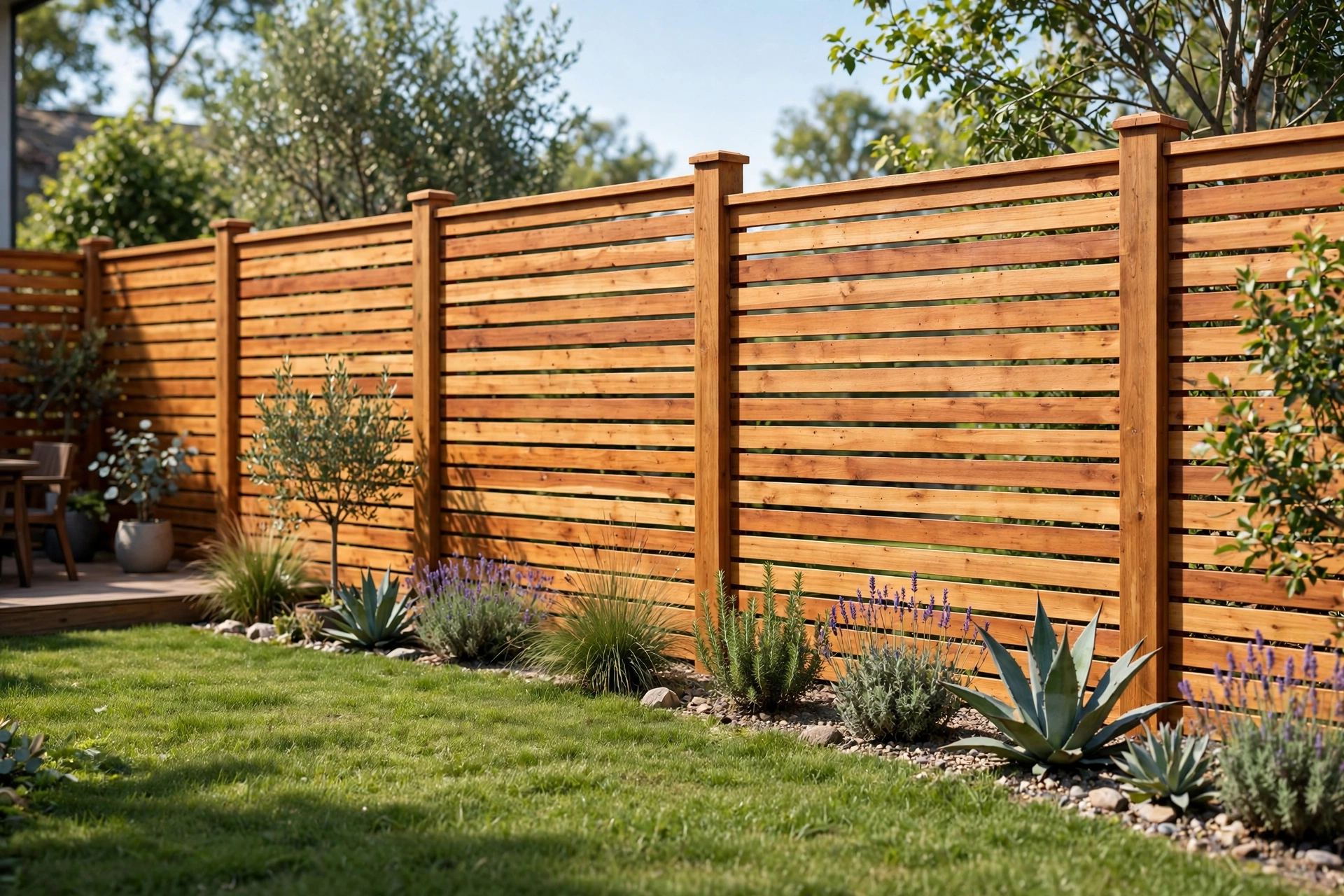
Western red cedar is the classic choice for a horizontal slat fence, and for good reason: its warm honey tones, natural rot resistance, and clean grain look stunning in modern yards. Mount wide cedar boards between sturdy posts with quarter-inch gaps that let light filter through while keeping the space private. Left untreated, cedar weathers to a soft silver-gray, or you can seal it yearly to preserve its rich color. It pairs beautifully with green lawns, gravel paths, and minimalist planting for a timeless backyard backdrop.
2. Black-Stained Slat Fence
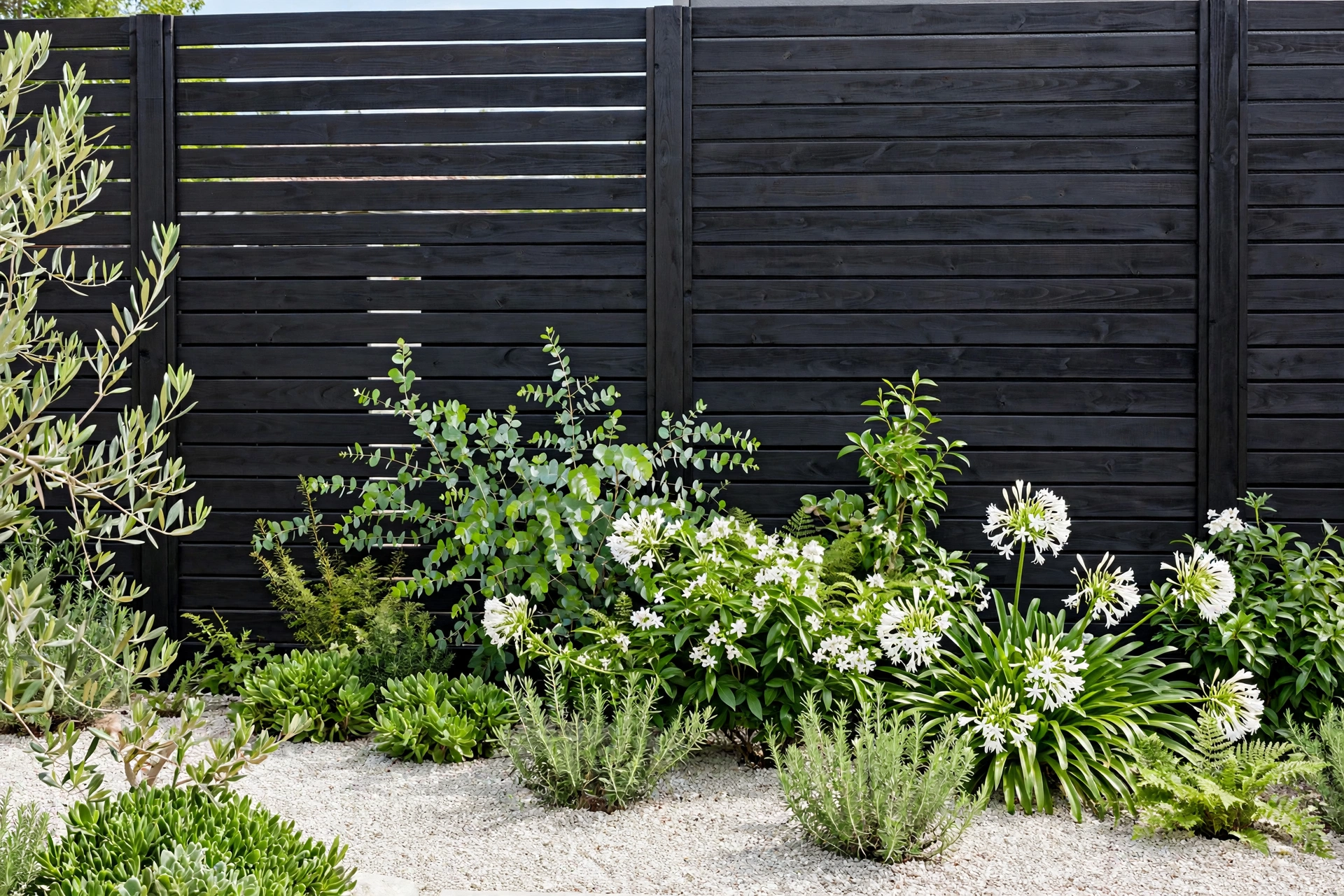
A black-stained horizontal slat fence delivers instant drama and makes everything in front of it look better. The deep charcoal finish turns ordinary pine or cedar boards into a sleek, contemporary wall, while green foliage, white flowers, and pale gravel pop vividly against the dark background. Use a quality exterior stain with UV protection to prevent fading, and keep the gaps even for that crisp shadow-line effect. This bold choice suits modern homes, minimalist gardens, and anyone wanting a fence that feels like a designer statement.
3. Slats with Black Metal Posts
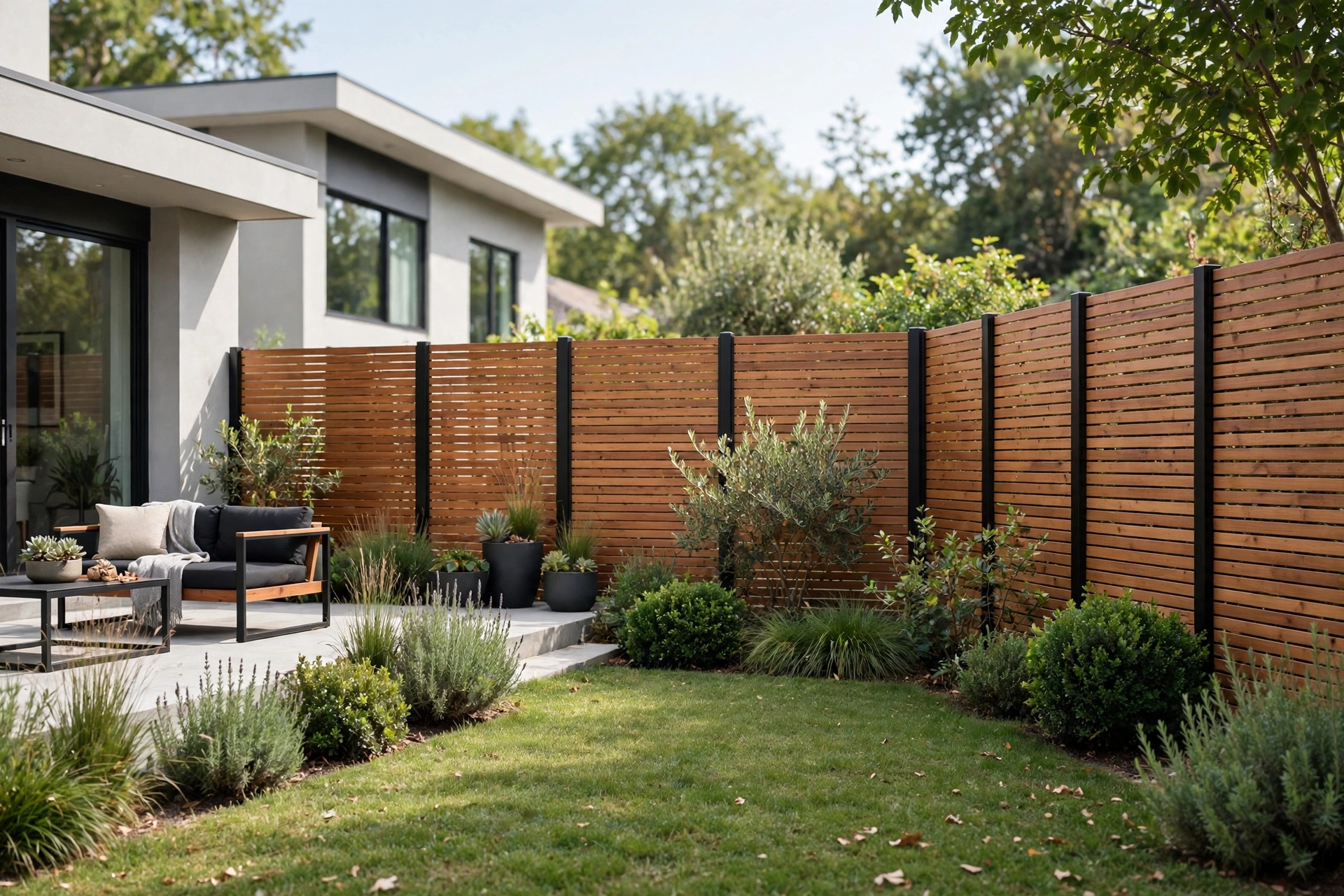
Combining warm wood slats with matte black metal posts creates the perfect balance of organic and industrial style. Slim steel or aluminum posts replace bulky timber, giving the fence a lighter, more refined profile and excellent long-term strength without warping or rotting. The dark metal frames each panel like a picture, emphasizing the horizontal lines and making the wood grain stand out. This mixed-material design works beautifully along long boundaries, around pools, and in contemporary yards where clean architectural details matter most.
4. Wide Slat Modern Fence
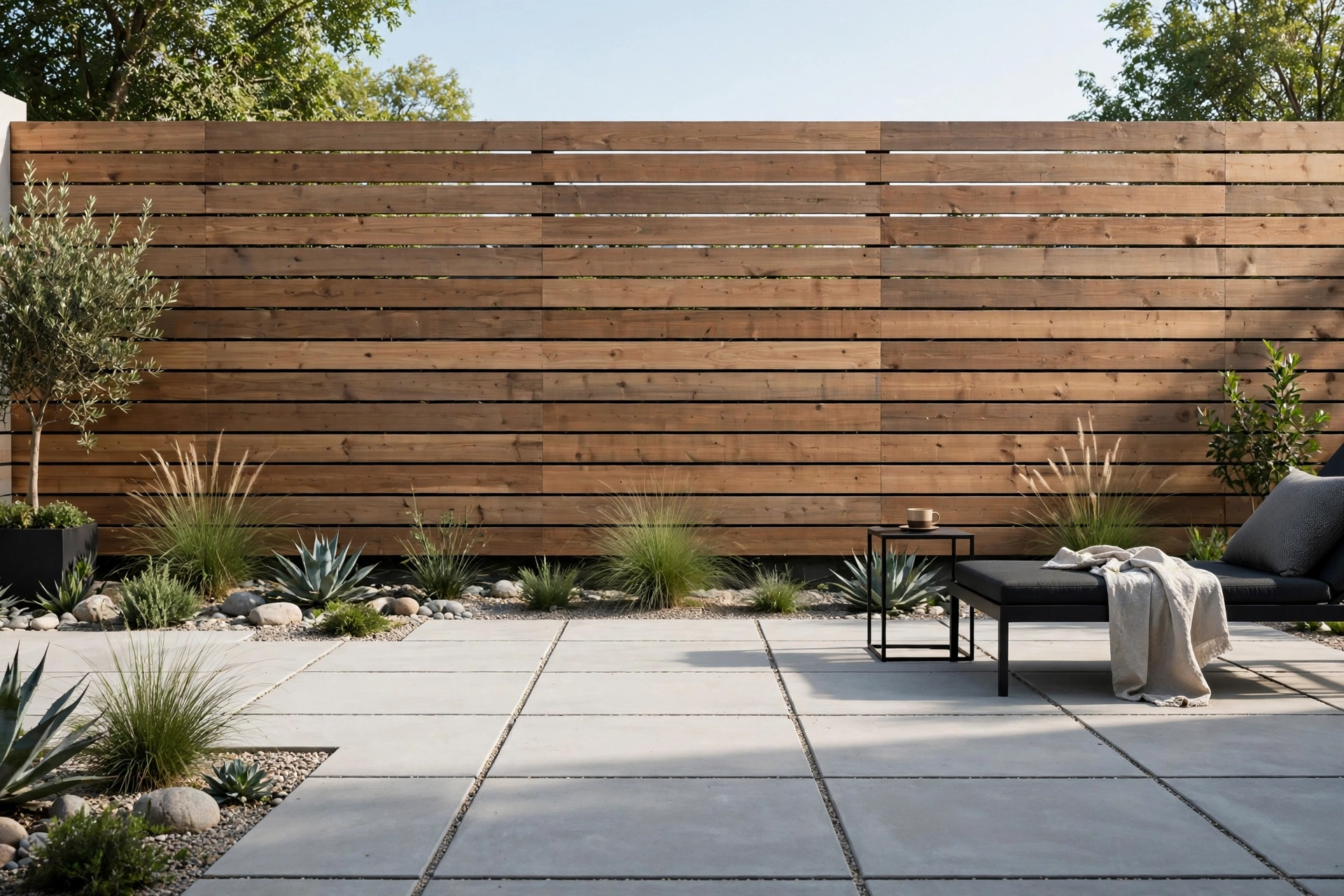
Wide slats, typically six inches or more, give a horizontal fence a calm, luxurious feel with fewer lines and a stronger sense of scale. The broad boards show off the wood grain beautifully and make small backyards feel less busy and more spacious. Space them with narrow, consistent gaps for privacy, or stack them almost tight for a solid contemporary wall. Wide slats suit minimalist landscaping, large-format pavers, and simple planting schemes where the fence itself is meant to be the quiet, elegant star.
5. Narrow Slat Privacy Fence
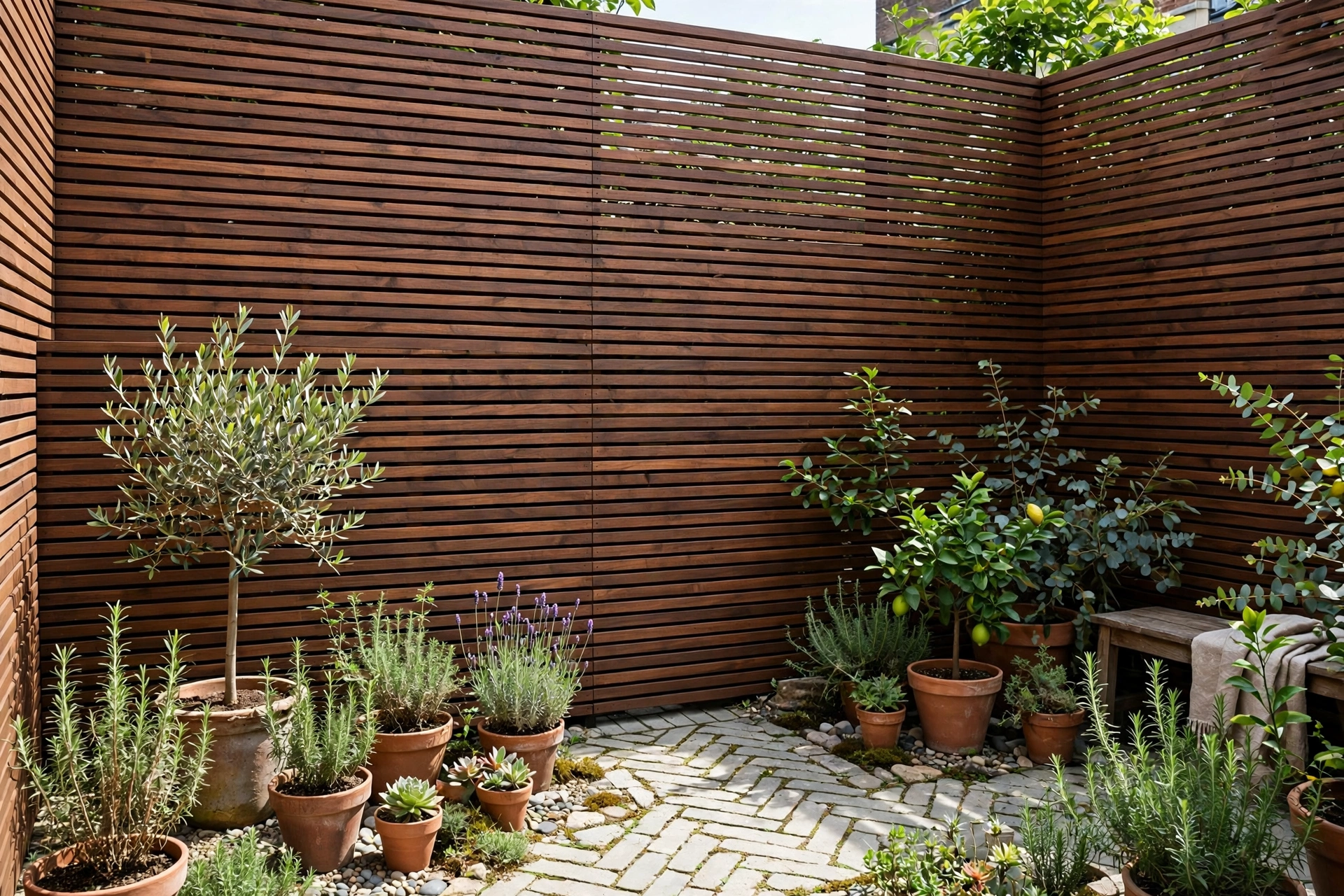
Narrow slats create a fine, rhythmic texture that feels tailored and sophisticated, almost like exterior paneling for your garden. Using two- or three-inch boards with tight gaps delivers excellent privacy while still allowing a whisper of light and air to pass through. The closely spaced lines look especially striking when stained in a rich walnut or warm teak tone. Narrow slat fences are perfect for side yards, courtyard gardens, and urban plots where you want full screening without the heaviness of a solid, bulky fence.
6. Shadow-Gap Slat Fence
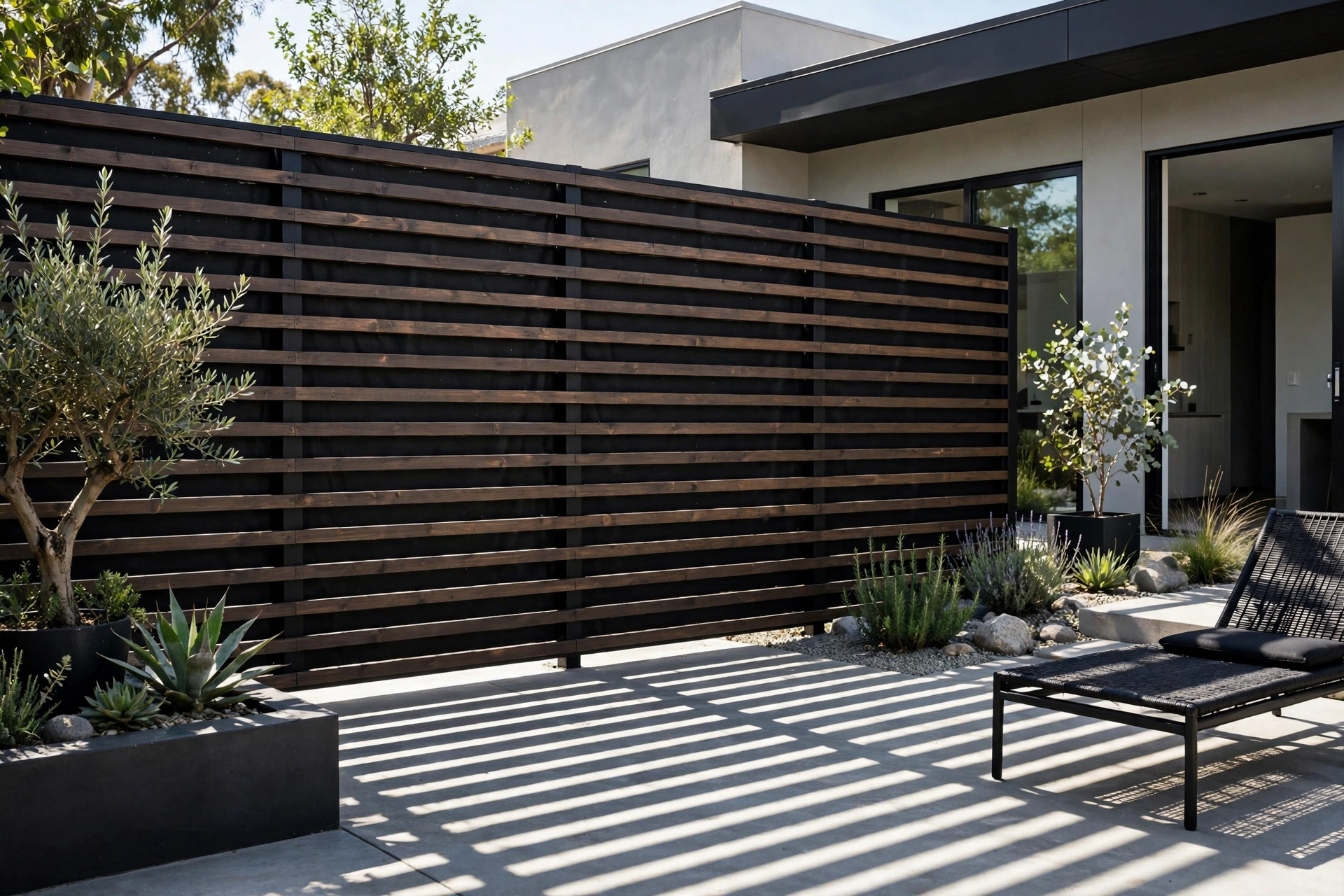
The shadow-gap design is the detail that separates a good slat fence from a great one. Each board is spaced with a precise, deeper gap, often backed by a black painted panel or dark posts, so every line reads as a crisp shadow rather than a see-through slit. The result is strong privacy with a graphic, architectural rhythm that changes beautifully as sunlight moves across it. Shadow-gap fences are a favorite in high-end modern landscaping, yet the technique costs nothing extra beyond careful measuring and consistent spacing.
7. Slat Privacy Screen for a Patio
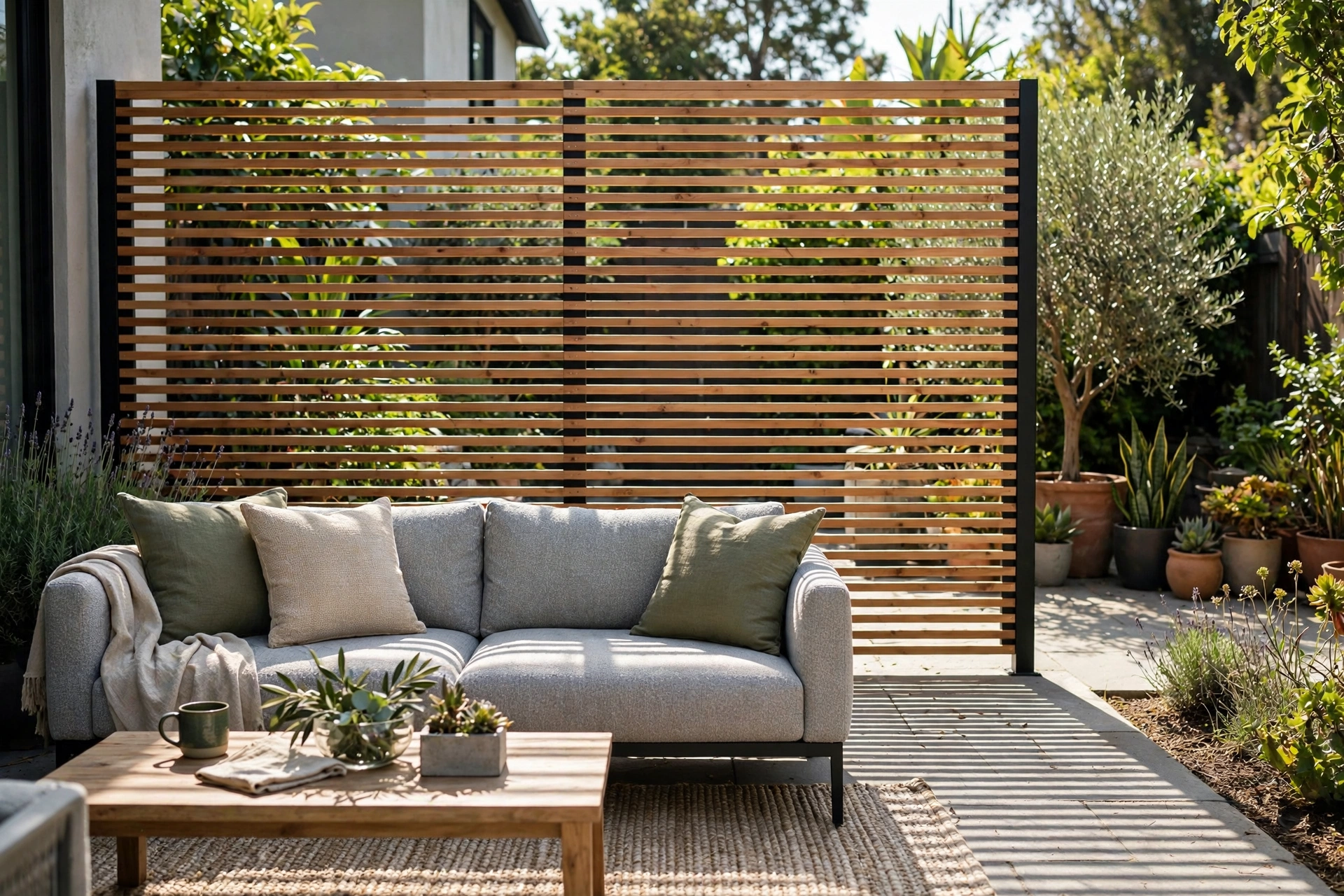
You do not need to fence the whole yard to enjoy this look: a freestanding horizontal slat screen can transform just your patio or deck. Build one or two panels behind a seating area, hot tub, or outdoor dining space to block neighbors’ views while keeping the rest of the garden open. Slat screens filter breezes, cast lovely striped shadows, and create an intimate room-like feeling outdoors. Add climbing plants or outdoor art, and the screen becomes a styled focal point rather than just a barrier.
8. Slat and Stone Combo Fence
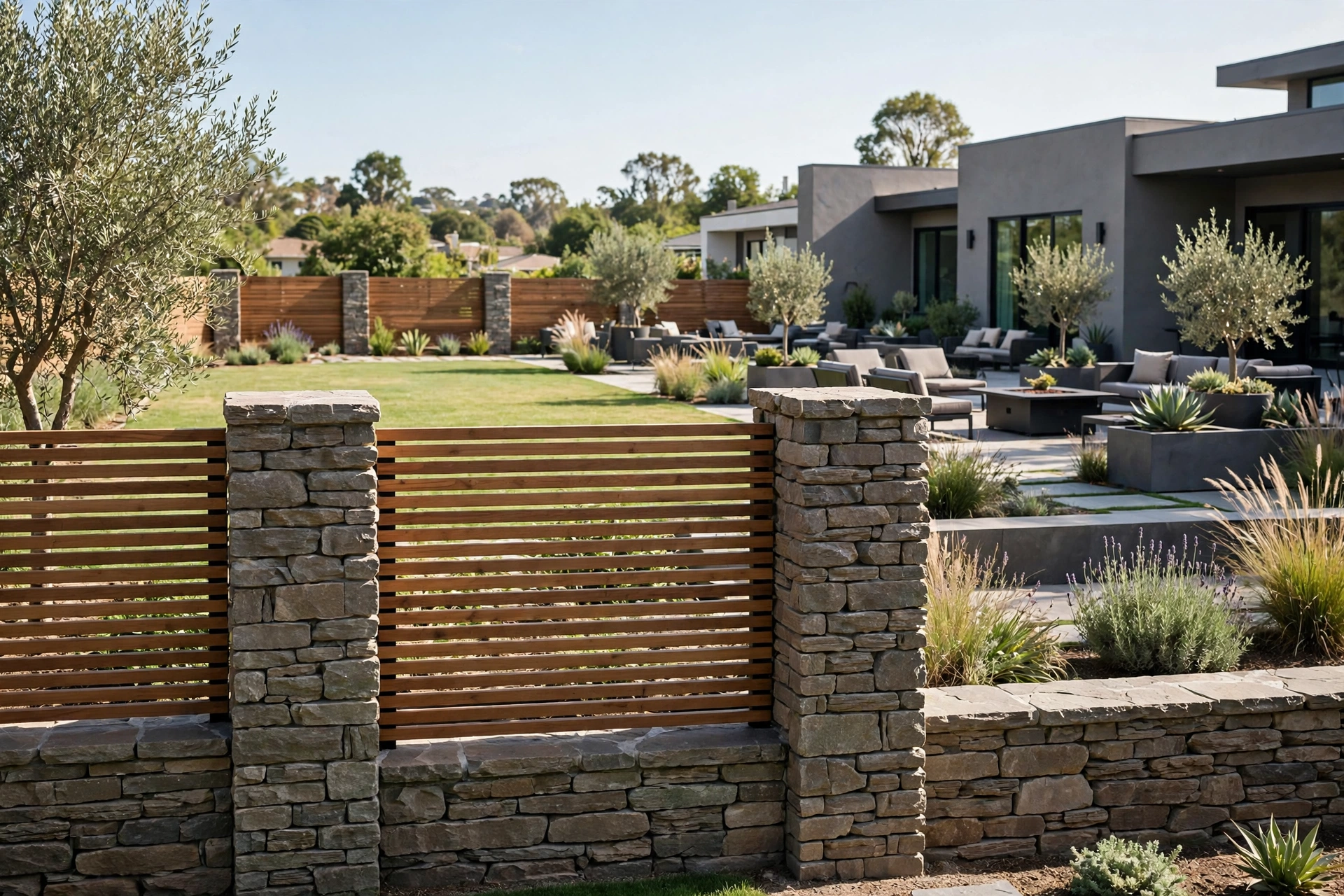
Pairing horizontal wood slats with stone pillars or a low stone base creates a fence with serious presence and lasting structure. The cool, rugged texture of stacked stone or smooth concrete columns contrasts beautifully with warm timber, grounding the design and adding a sense of permanence. Stone elements also protect the wood from ground moisture and mower damage. This combination suits larger yards, sloped sites, and homes with stone or masonry details, delivering a custom, estate-like boundary that still feels warm, modern, and welcoming.
9. Two-Tone Horizontal Slat Fence
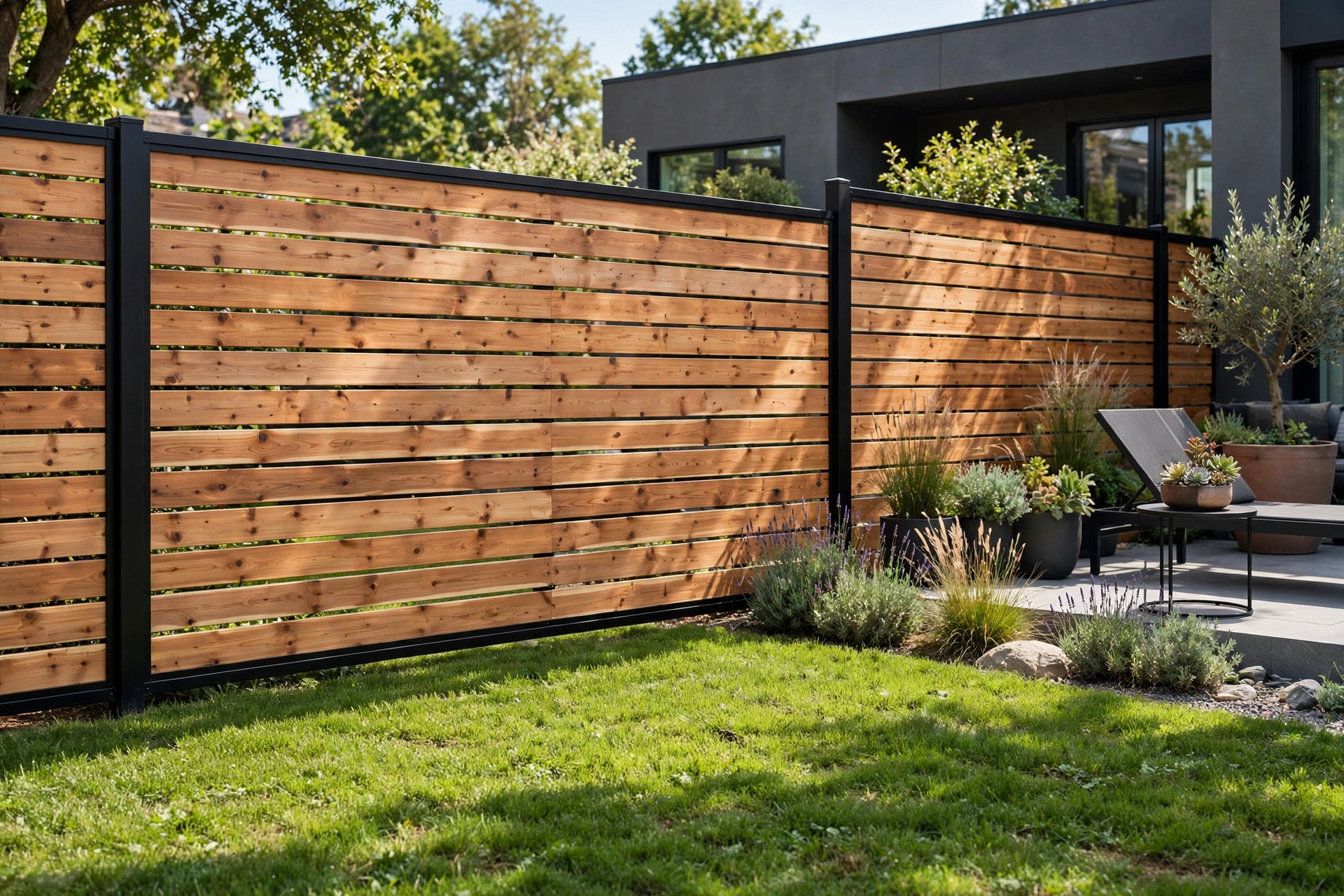
A two-tone slat fence uses alternating stains or paint colors to add depth and personality without changing the simple horizontal structure. Try natural cedar slats framed by black posts and top rails, or alternate warm brown boards with a few charcoal ones for a subtle striped effect. The contrast highlights the craftsmanship and makes the fence a deliberate design feature. Two-tone designs work especially well when they echo colors already in your home’s exterior, decking, or garden furniture for a coordinated, pulled-together backyard.
10. Floating Slat Fence with LED Lighting
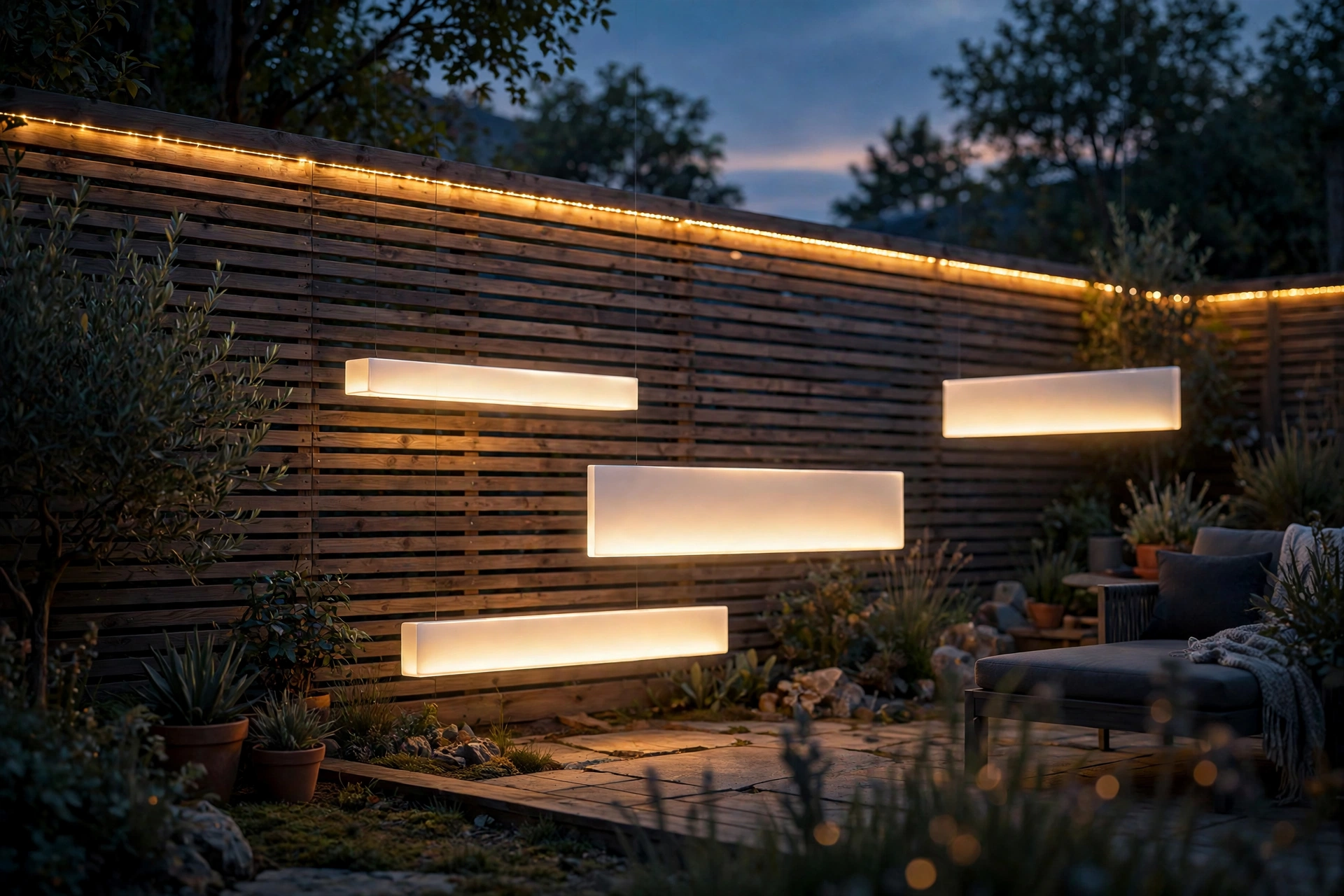
For a fence that truly shines after dark, build the slats slightly proud of the posts and tuck warm LED strip lighting along the top rail or between selected boards. In the evening the panels appear to float, washed in a soft glow that makes the backyard feel like a boutique hotel courtyard. Low-voltage lighting is safe, energy-efficient, and easy to install during construction. This idea turns a practical privacy fence into nighttime ambiance, extending how long you enjoy your outdoor space every single day.
11. Ipe Hardwood Slat Fence
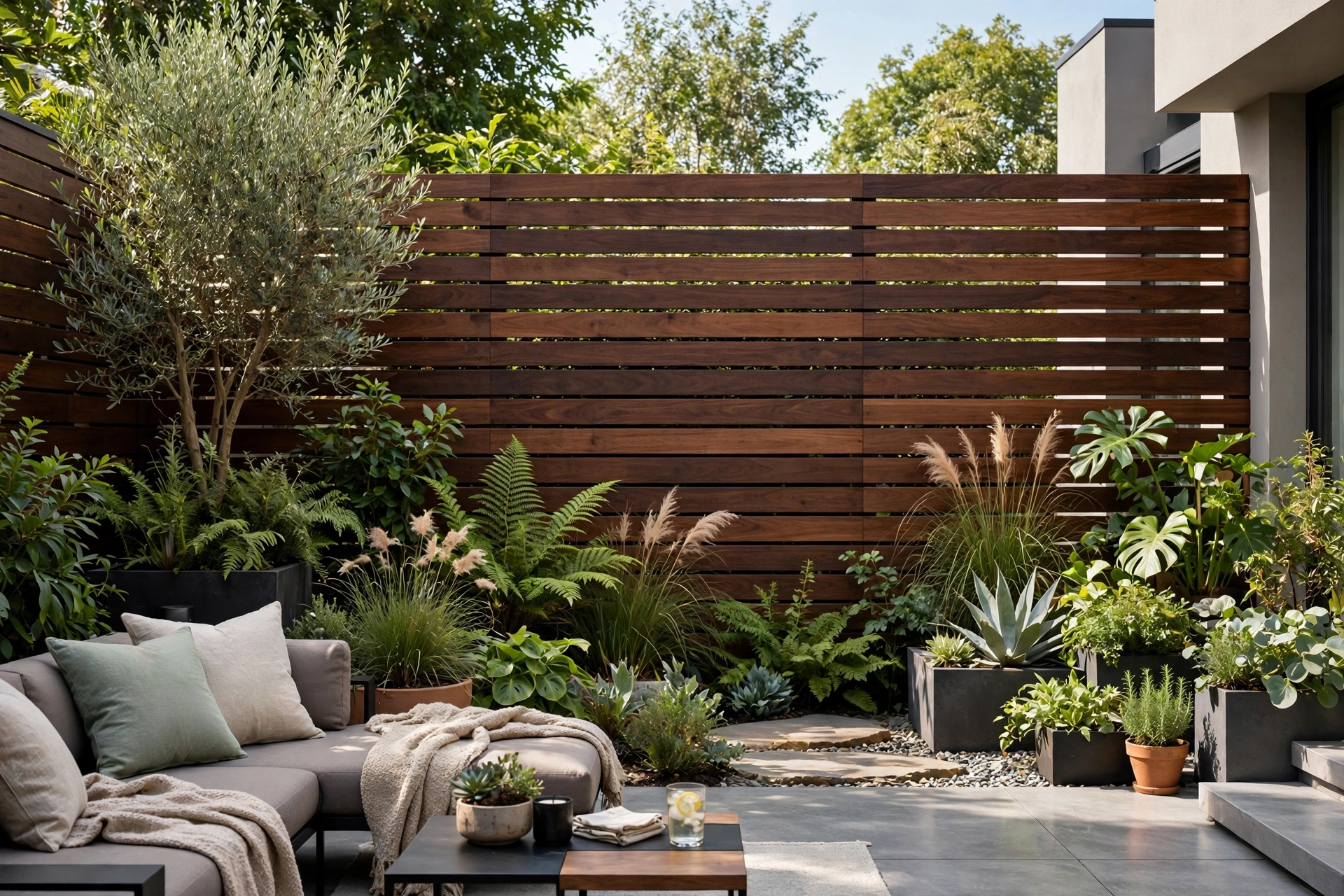
If budget allows one splurge, ipe hardwood makes a horizontal slat fence of unmatched richness and durability. This dense Brazilian hardwood has deep chocolate-brown tones, resists insects and rot for decades, and feels incredibly smooth and substantial. Because the boards are so strong, you can use thinner profiles and wider post spacing for an especially sleek result. Ipe does require pre-drilling and occasional oiling to maintain its color, but for a premium modern backyard, few materials deliver this level of luxury and longevity.
12. Matching Slatted Gate
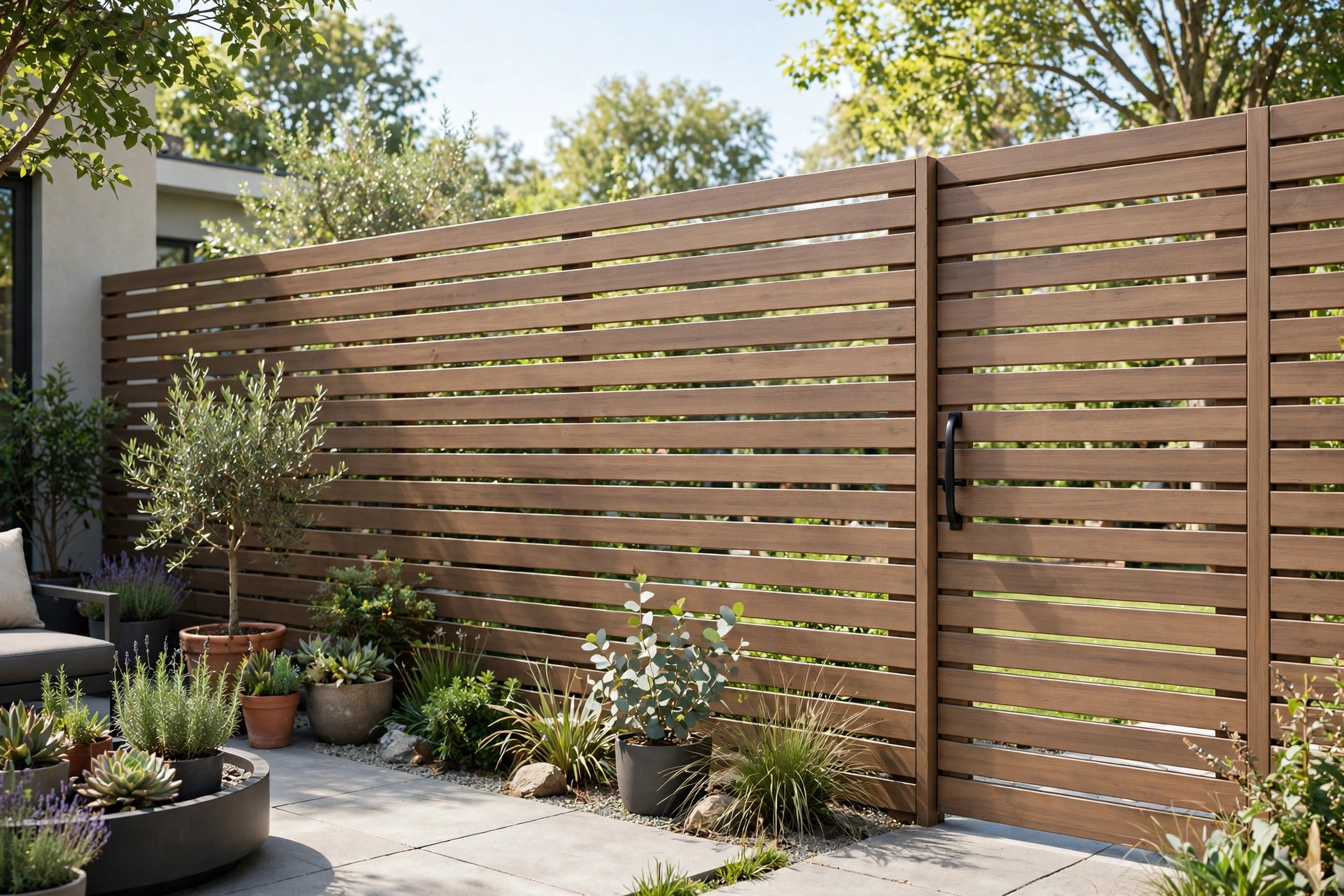
A fence this stylish deserves a gate that matches, and a horizontal slatted gate keeps the clean lines flowing without interruption. Build the gate on a sturdy metal or timber frame to prevent sagging, continue the same slat spacing across it, and finish with a modern black handle and hidden hinges. When closed, the gate nearly disappears into the fence line for a seamless architectural look. It is a small detail that makes the whole installation feel custom-built, considered, and professionally finished.
13. Corner-Wrap Slat Fence
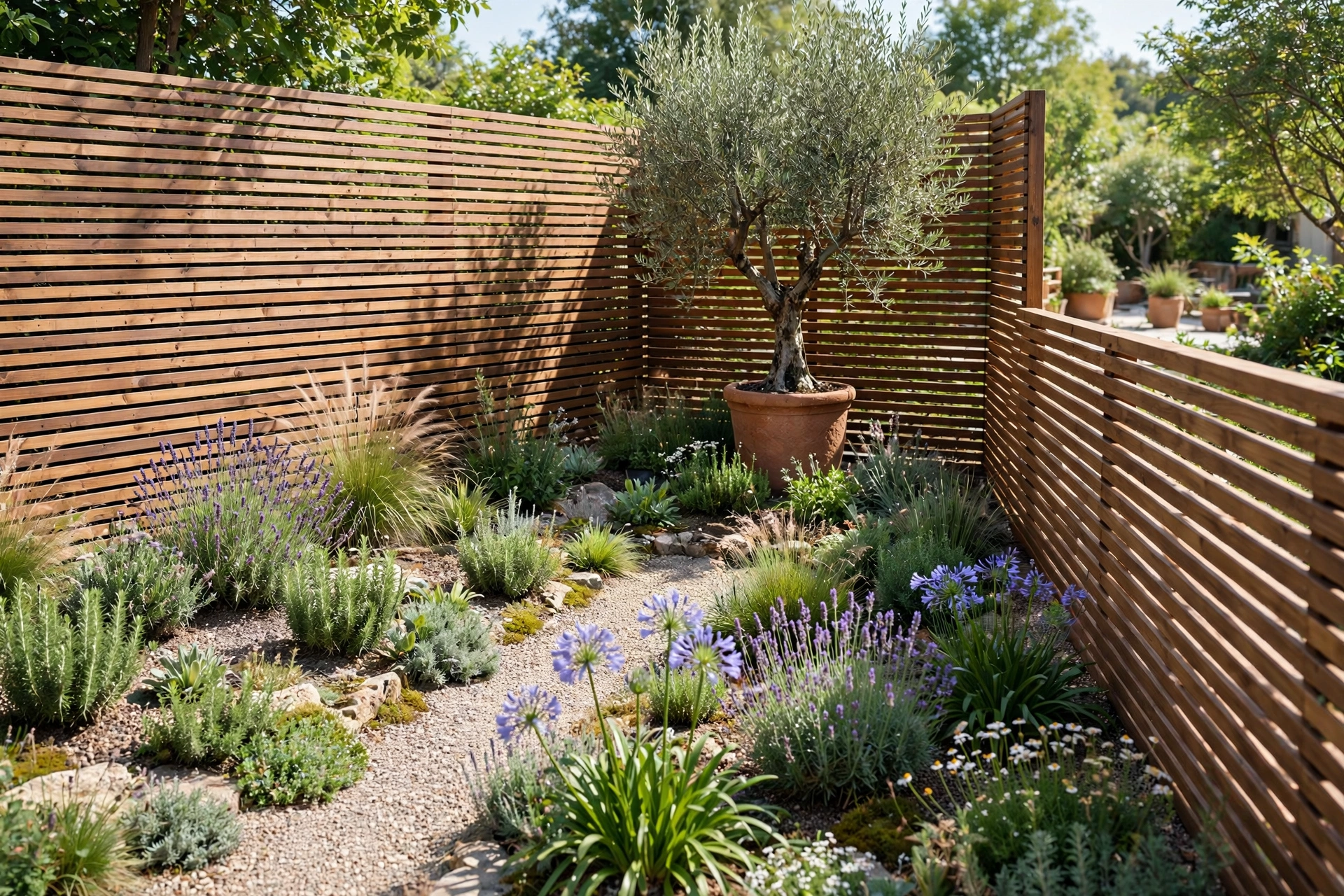
Most fences stop abruptly at corners, but a corner-wrap design carries the horizontal slats smoothly around the turn for a continuous, flowing effect. Mitered corners or slim corner posts keep the lines unbroken, making the yard feel larger and more intentionally designed. This treatment is especially effective in small or L-shaped gardens, where visual continuity reduces the sense of enclosure. Pair the wrapped corner with a specimen plant or sculptural planter, and that once-awkward angle becomes one of the most attractive features in your backyard.
14. Slat Fence with Planter Base
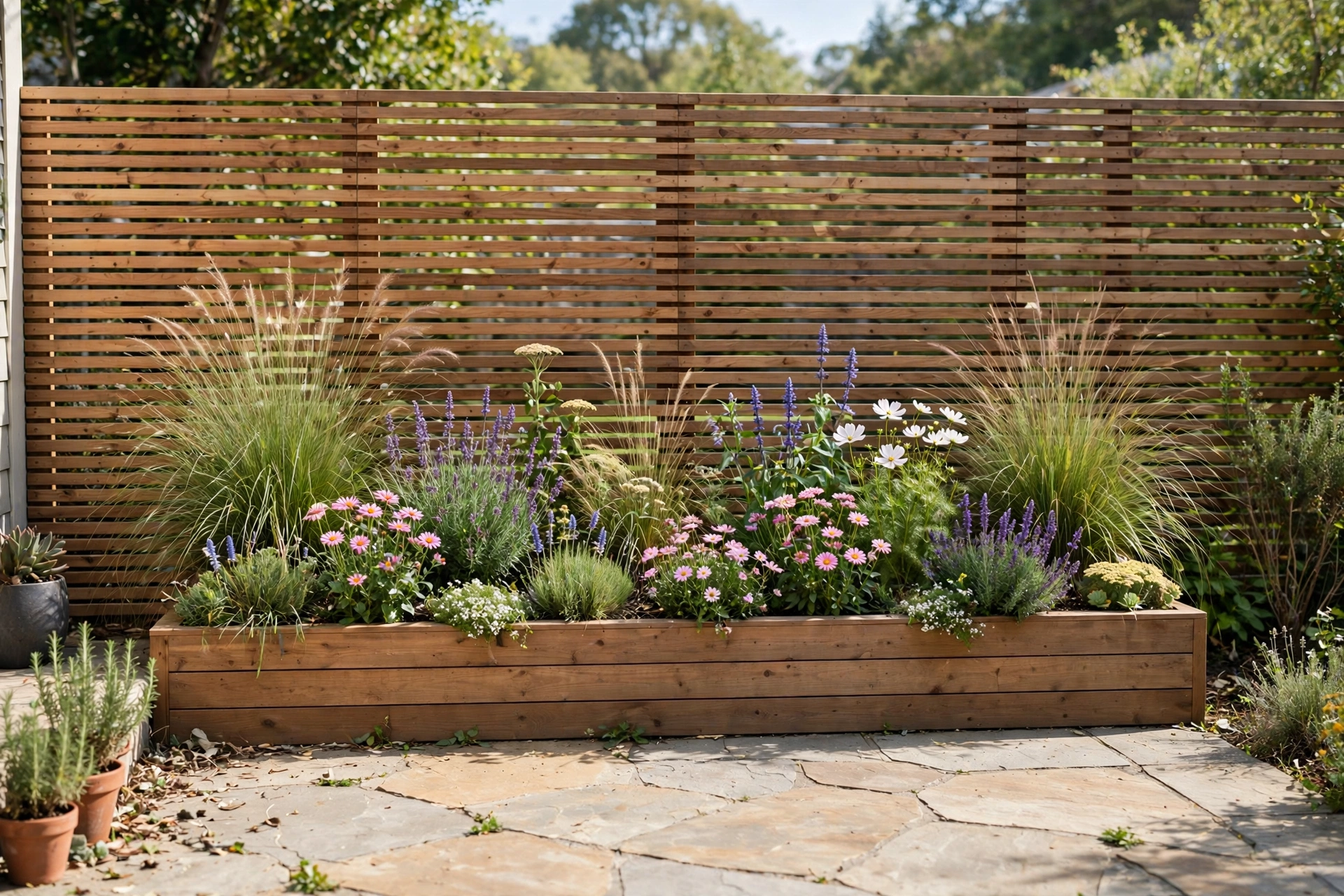
Softening the base of a slat fence with a built-in planter brings greenery right up to the wood and makes the whole boundary feel alive. A long, low planter box along the fence line can hold ornamental grasses, herbs, flowering perennials, or neat boxwood for year-round structure. The plants hide the less interesting bottom rail, add seasonal color, and help the fence blend into the garden. This layered look is perfect for patios and small yards where every inch of planting space counts twice.
15. Mixed-Orientation Slat Fence
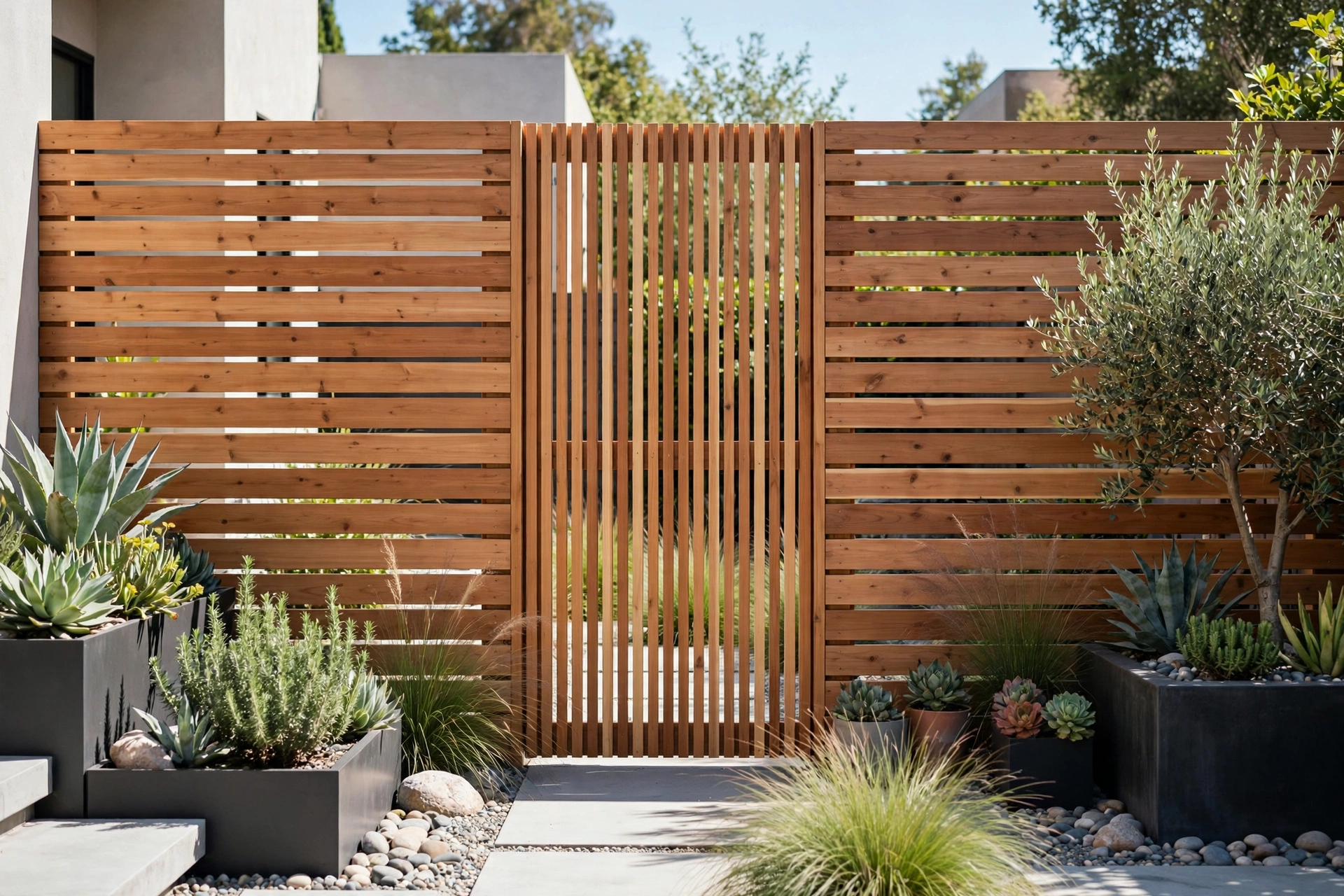
For a fence with real artistic flair, combine horizontal slat panels with a vertical or diagonal section to break up a long run. The change in direction creates a natural focal point, perfect for framing a gate, seating area, or feature tree. Keep the same wood species and stain across both orientations so the design feels intentional rather than mismatched. Mixed-orientation fences suit creative, contemporary gardens and give you the modern slat look with an extra layer of rhythm, movement, and visual interest.
16. Composite Slat Fence
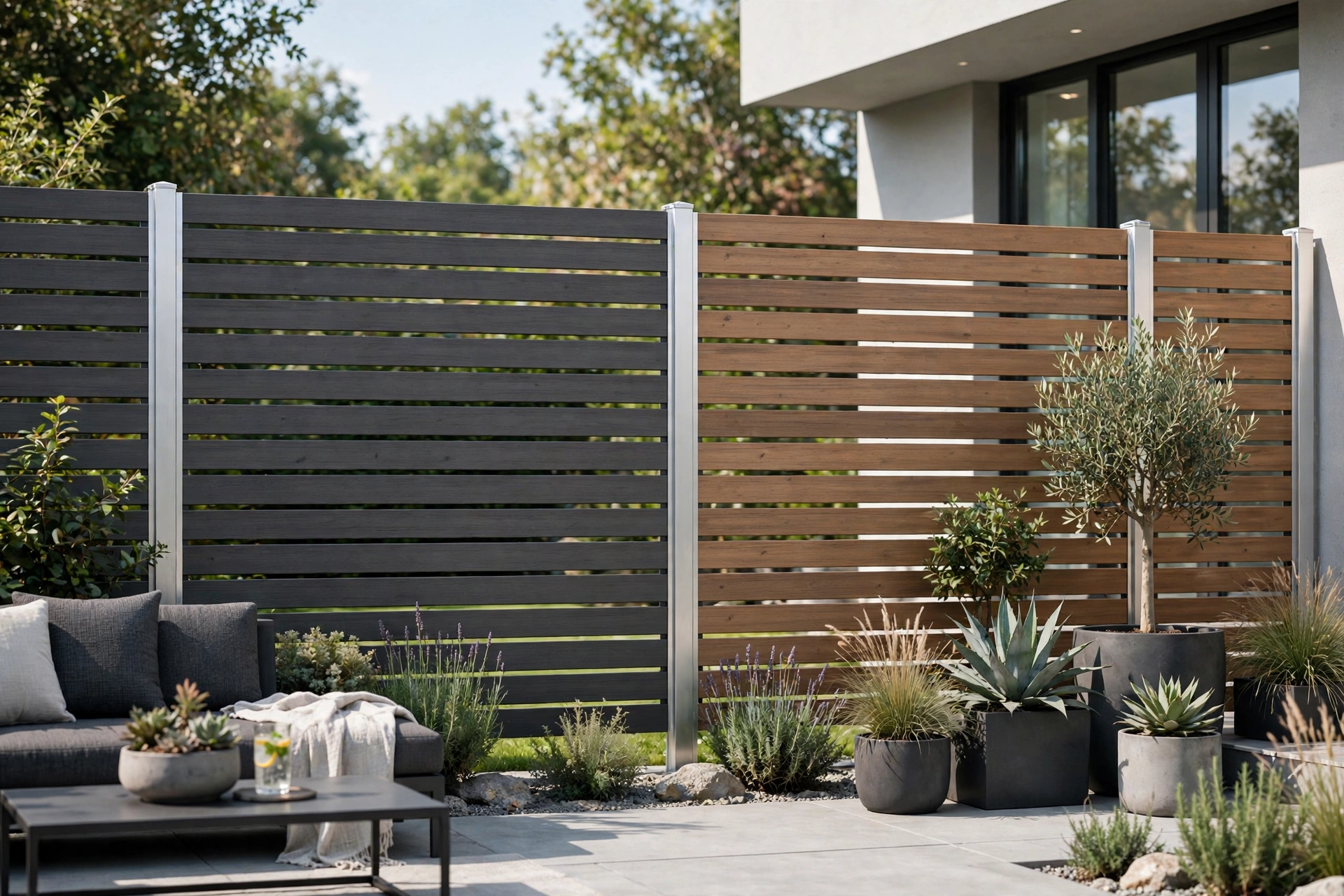
Composite slats deliver the warm look of wood with almost none of the maintenance, making them ideal for busy homeowners. Modern composite boards come in convincing cedar, walnut, and charcoal finishes, will not rot, warp, or attract insects, and never need staining or sealing. Installed horizontally with aluminum posts and channels, they create a crisp, uniform fence that looks freshly built for years. The upfront cost is higher than pine, but the savings in upkeep make composite a smart long-term choice for a modern backyard.
17. Stepped Slat Fence for Sloped Yards
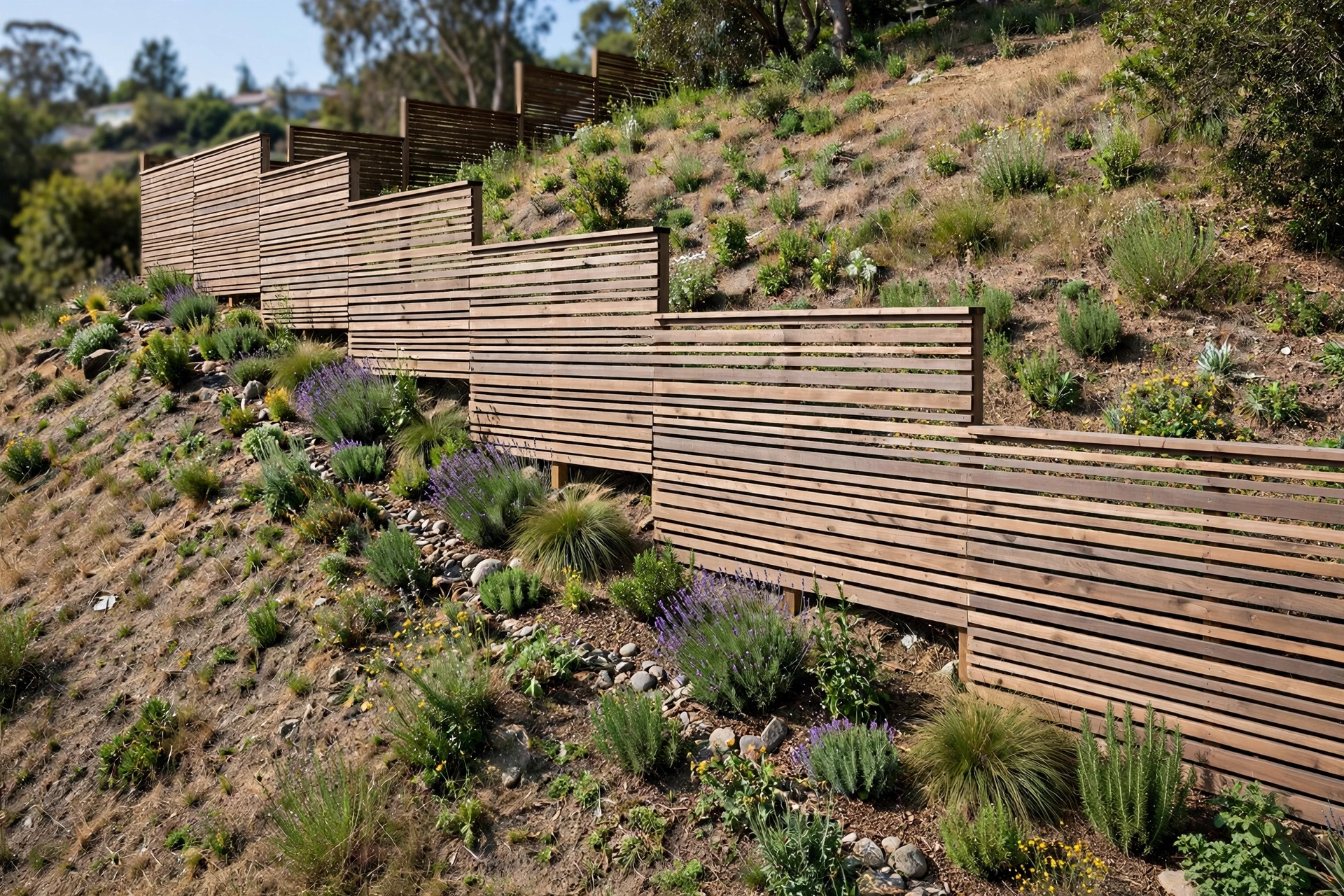
Sloped yards are no obstacle for horizontal slats when you build the fence in clean, stepped panels. Each section stays level while stepping down the hill in even increments, preserving the crisp horizontal lines that make this style so attractive. The stepped rhythm can look deliberate and architectural, especially with consistent step heights and matching posts. Planting along the base softens the transitions and helps prevent erosion. With careful measuring, a sloped slat fence looks every bit as polished as one built on flat ground.
18. Poolside Slat Privacy Fence
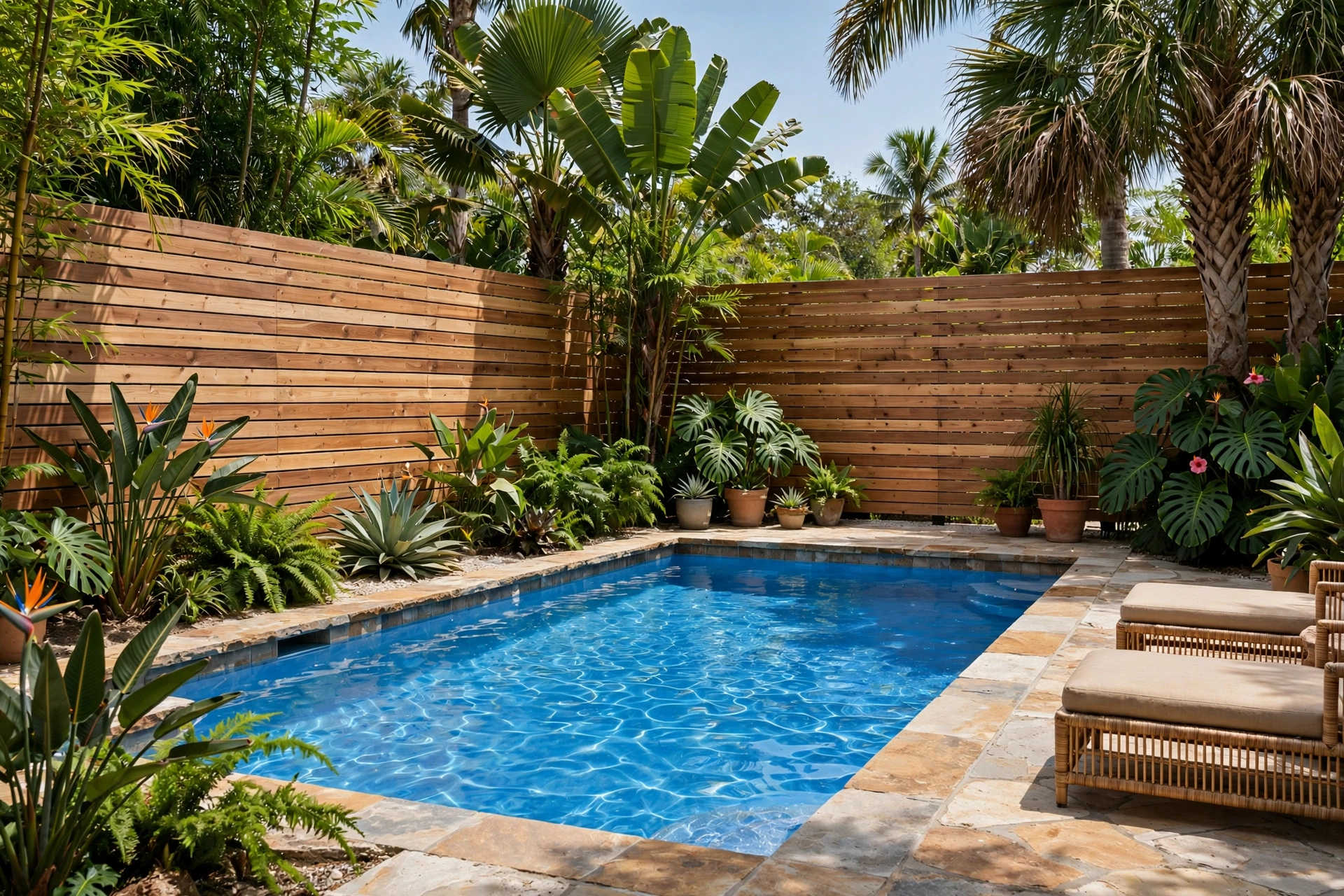
Around a pool, a horizontal slat fence offers privacy with a resort-like feel that solid fencing rarely achieves. The gaps allow breezes to pass, reducing wind turbulence on the water, while the warm wood tones complement blue tiles, pale stone coping, and lush tropical planting. Choose rot-resistant cedar, composite, or hardwood, and check local pool safety codes for height and gate requirements. Add a matching slatted equipment screen, and your pool area gains a cohesive, spa-inspired backdrop for summer days and evening swims.
19. Budget Pine Slat Fence with Dark Stain
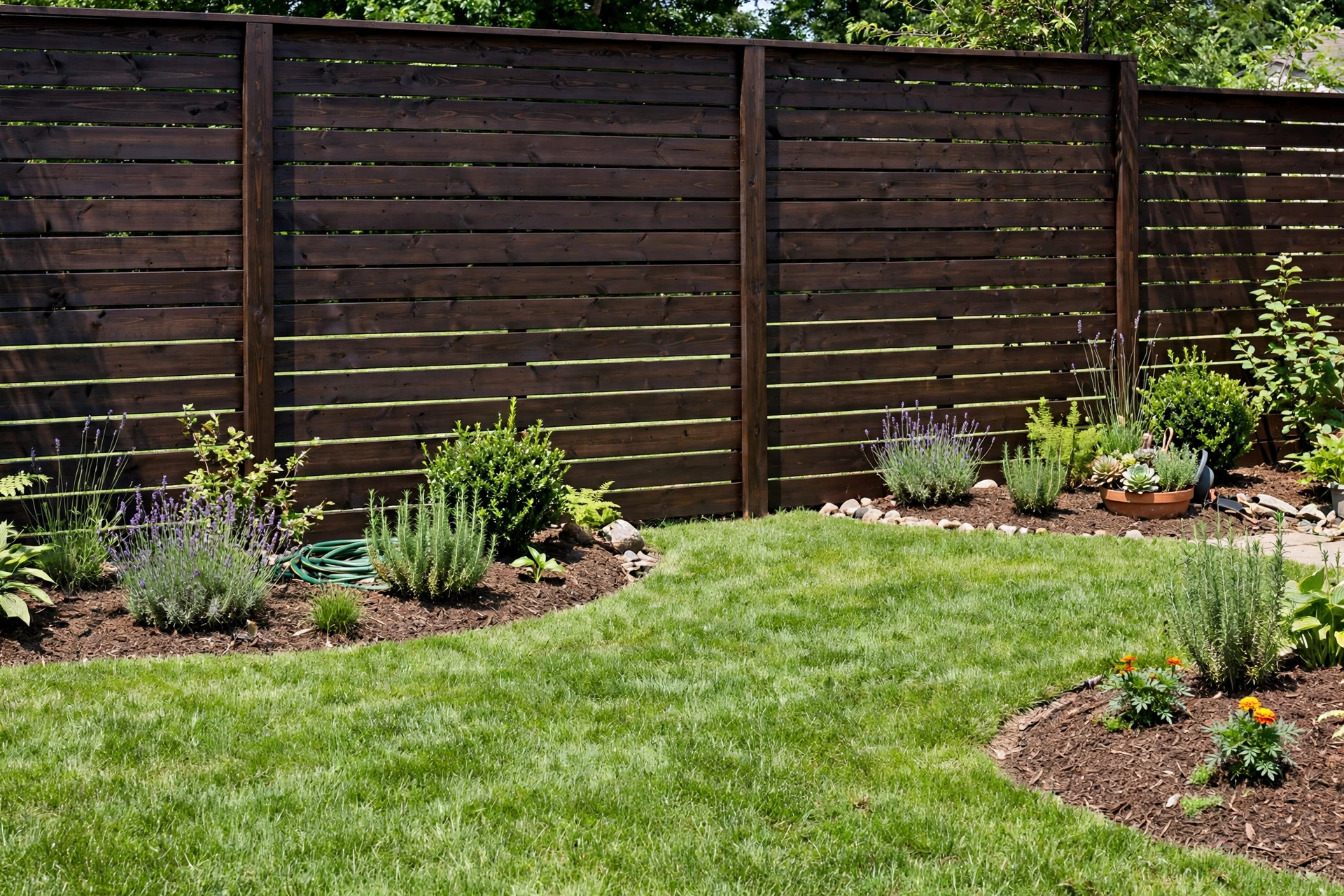
You do not need premium hardwood to get this premium look: ordinary pressure-treated pine boards, carefully spaced and finished with a rich dark stain, can look remarkably expensive. Sand the boards smooth, keep every gap consistent with spacers, and choose an espresso or charcoal stain to disguise the humble lumber. It is one of the smartest cheap backyard fence ideas that look expensive, delivering the full modern slat effect for a fraction of cedar or ipe prices, especially on a DIY build.
Conclusion
Horizontal slat fences have earned their place as the top modern backyard trend because they combine privacy, light, and clean architectural style in one simple design. Whether you choose warm cedar, dramatic black stain, low-maintenance composite, or budget pine with a designer finish, the ideas above show there is a slat fence for every yard and every budget. Pick the design that fits your home, measure carefully, keep your spacing consistent, and enjoy a backyard boundary that looks custom-built and effortlessly modern.
FAQ:
How far apart should horizontal fence slats be spaced?
Most horizontal slat fences use gaps between a quarter inch and one inch, depending on how much privacy and airflow you want. Smaller gaps of a quarter to half an inch offer strong privacy while still filtering light, while wider one-inch gaps feel more open and contemporary. The key is consistency: use spacer blocks during installation so every gap matches. Keep in mind that wood shrinks slightly as it dries, so gaps may widen a little over the first season.
What is the best wood for a horizontal slat fence?
Cedar is the most popular choice because it resists rot and insects naturally, stays stable, and looks beautiful with or without stain. Ipe and other hardwoods offer premium durability and rich color at a higher price, while pressure-treated pine is the budget-friendly option that looks great with a dark stain. Composite slats are the best low-maintenance alternative. Whichever material you choose, proper sealing and good ground clearance will greatly extend the life of your fence.
Are horizontal slat fences more expensive than vertical fences?
They can cost slightly more because horizontal boards often need closer post spacing, stronger framing, and more precise installation to prevent sagging. Material choice makes the biggest difference: a DIY pine slat fence can cost about the same as a standard vertical fence, while cedar, ipe, or composite versions cost more. The extra care in construction pays off in a cleaner, more modern result that many homeowners feel adds real value and curb appeal to the property.
How do you stop horizontal fence slats from sagging or warping?
Use posts spaced no more than six feet apart, add a mid-rail or vertical support batten behind long spans, and choose straight, dry, quality boards from the start. Securing each slat with two screws at every post prevents twisting, and sealing all sides of the wood before installation helps it weather evenly. Thicker boards and naturally stable woods like cedar and ipe resist movement best. Regular inspection and a fresh coat of stain every few years keep the fence straight and strong.





One Comment