13 Bathroom Paint Colors That Feel Modern
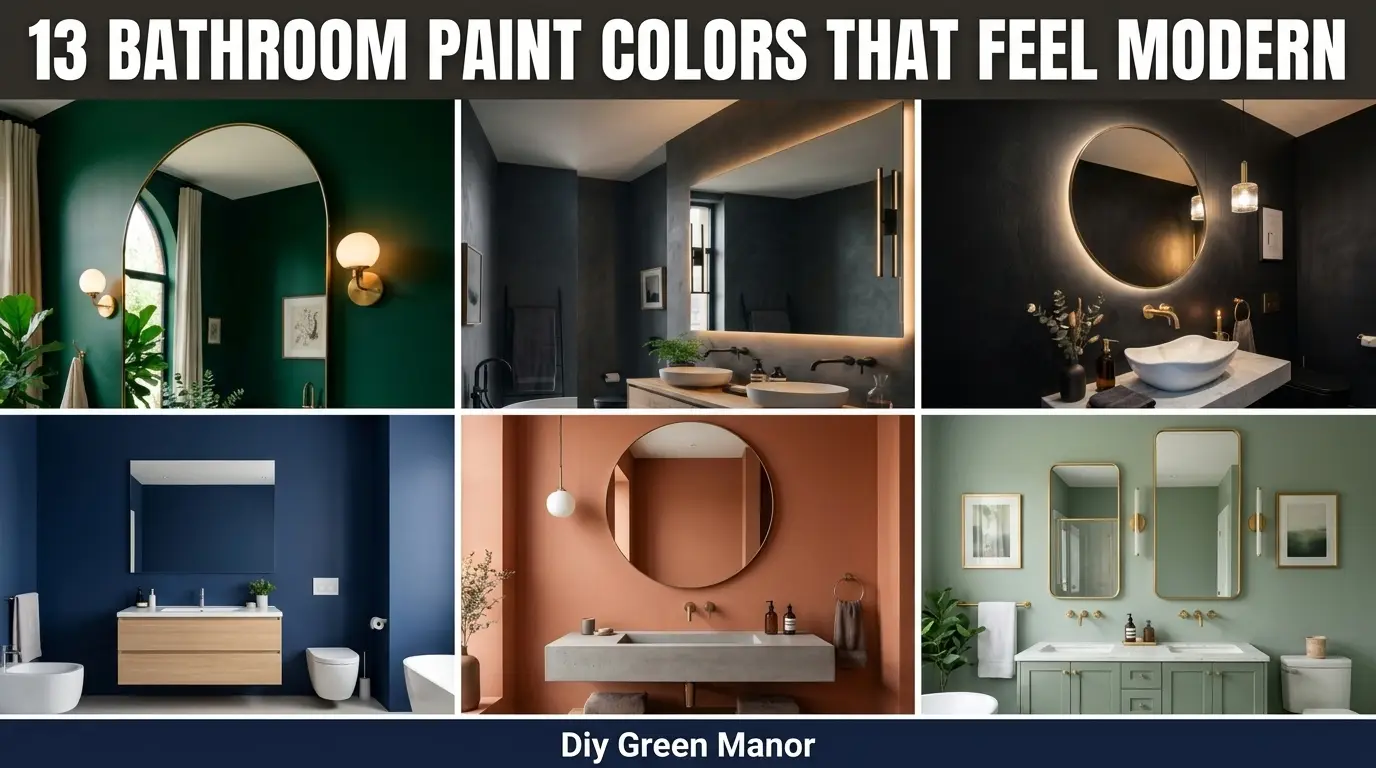
The right bathroom paint color can completely change how a space feels, making it look brighter, calmer, more luxurious, or more contemporary. Modern bathrooms aren’t limited to plain white walls anymore. Soft neutrals, earthy greens, sophisticated blues, warm taupes, and dramatic charcoal shades can all create a stylish atmosphere when paired with the right finishes and lighting. If you’re planning a bathroom refresh, these 13 modern bathroom paint colors offer beautiful inspiration for creating a space that feels current, polished, and inviting.
1. Warm Greige
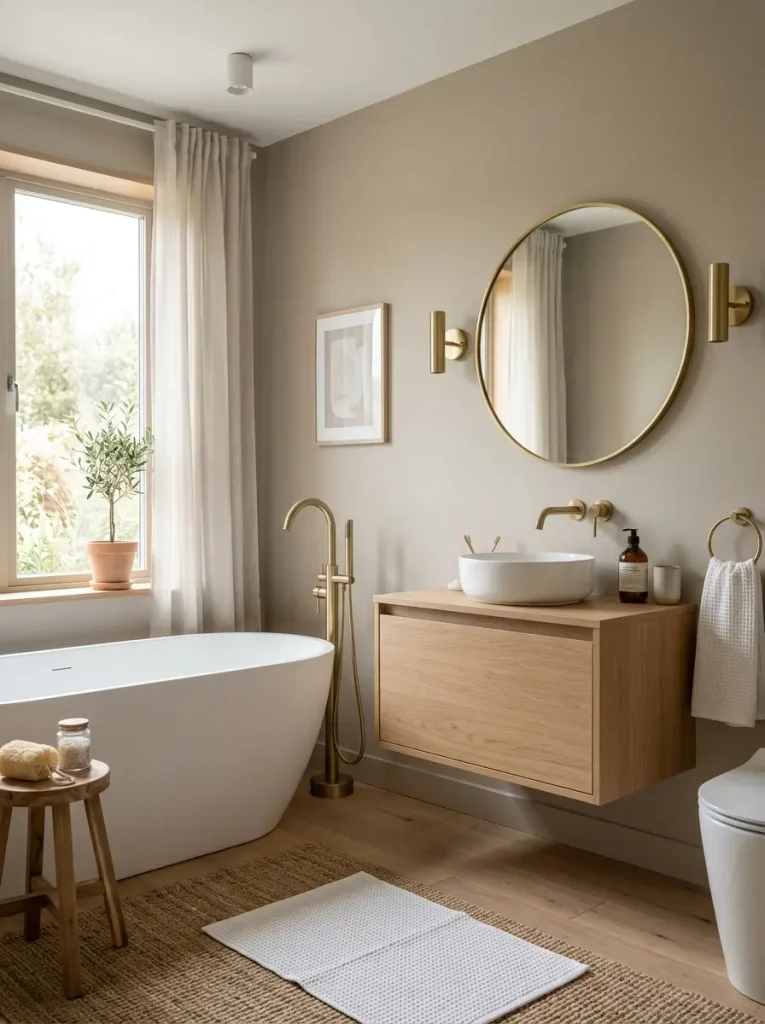
Warm greige combines the softness of beige with the sophistication of gray, making it one of the most versatile choices for a modern bathroom. Unlike cooler gray shades, greige creates a warmer and more welcoming atmosphere while still looking clean and contemporary.
Pair it with white tile, light oak cabinetry, brushed brass fixtures, or matte black accents. The neutral backdrop allows your hardware and decorative details to stand out without competing for attention. Greige is especially effective in bathrooms where you want a sophisticated color without committing to something dramatic.
2. Soft Sage Green
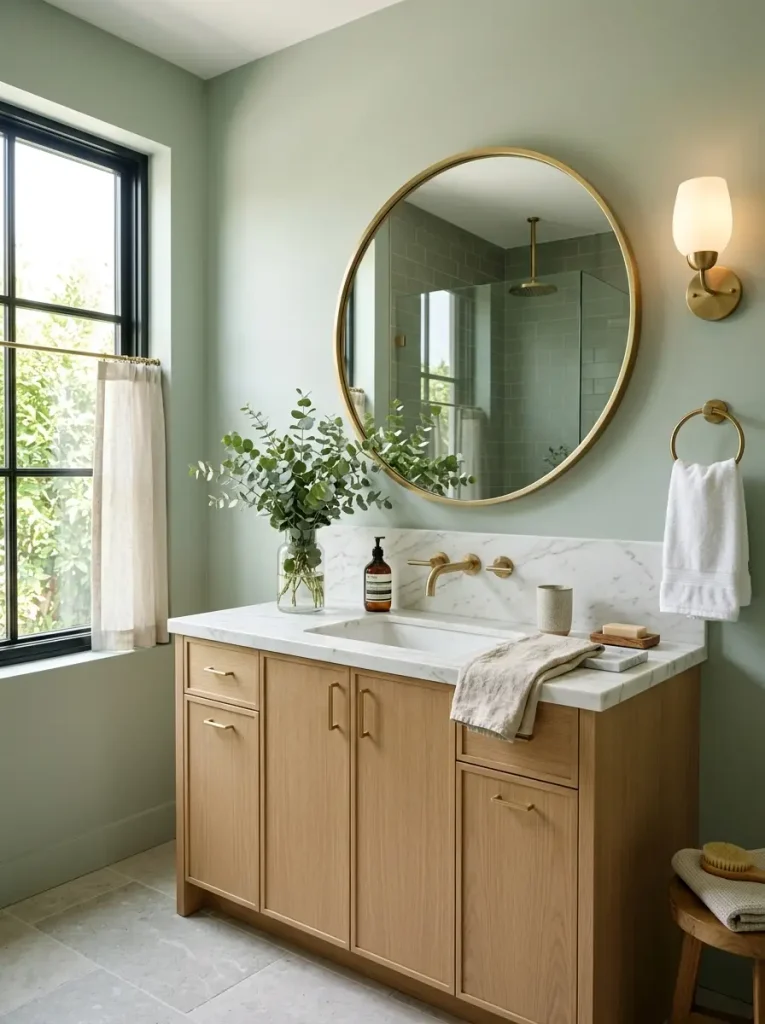
Soft sage green brings a natural, calming quality to bathroom interiors. Its muted appearance feels sophisticated rather than overly colorful, making it an excellent choice for creating a spa-inspired atmosphere. The gentle green also works beautifully with natural materials and plants.
Combine sage walls with warm wood, creamy white surfaces, brass hardware, and botanical accessories. The result is a fresh and relaxing space that feels connected to nature. Sage works particularly well in bathrooms with natural light because sunlight highlights its subtle undertones throughout the day.
3. Moody Charcoal
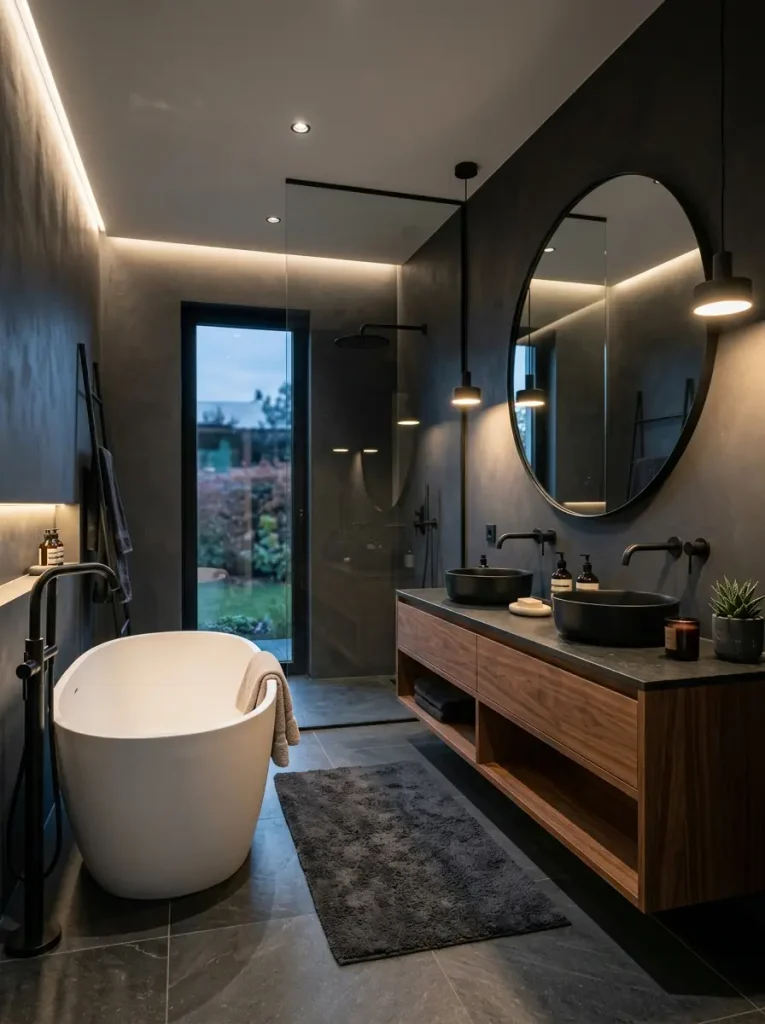
Charcoal creates a bold, sophisticated atmosphere for homeowners who want something more dramatic. Rather than feeling harsh like pure black, a deep charcoal shade provides depth while retaining a slightly softer appearance. It can make a bathroom feel luxurious and intentionally designed.
Balance dark walls with lighter flooring, white fixtures, warm wood, or metallic hardware. Good lighting is especially important when using charcoal, so combine natural light with layered wall or ceiling lighting. This dramatic color is particularly striking in powder rooms and larger contemporary bathrooms.
4. Dusty Blue
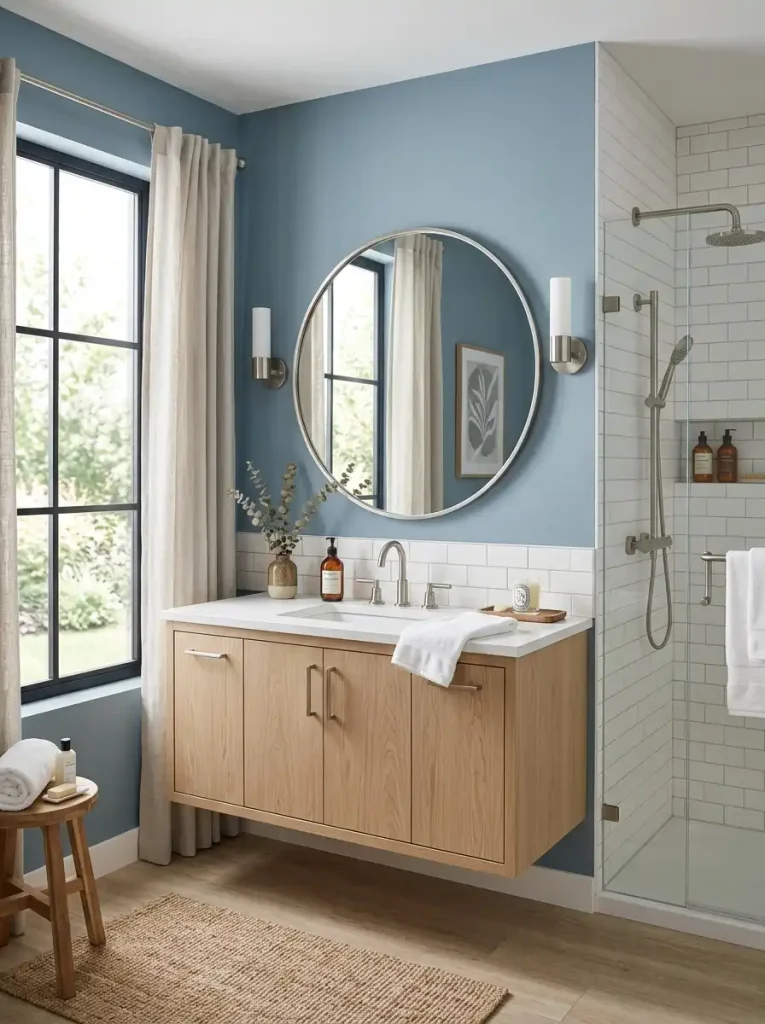
Dusty blue provides a calm alternative to brighter traditional bathroom blues. Its muted undertones give it a sophisticated appearance that feels modern without becoming trendy too quickly. The color works beautifully with white, cream, light wood, and brushed metal finishes.
Use dusty blue on all the walls for a peaceful atmosphere or create an accent wall behind the vanity. Pair it with soft towels and simple accessories to maintain the clean, uncluttered feeling. This color is especially effective in bathrooms designed around relaxation and natural light.
5. Creamy White
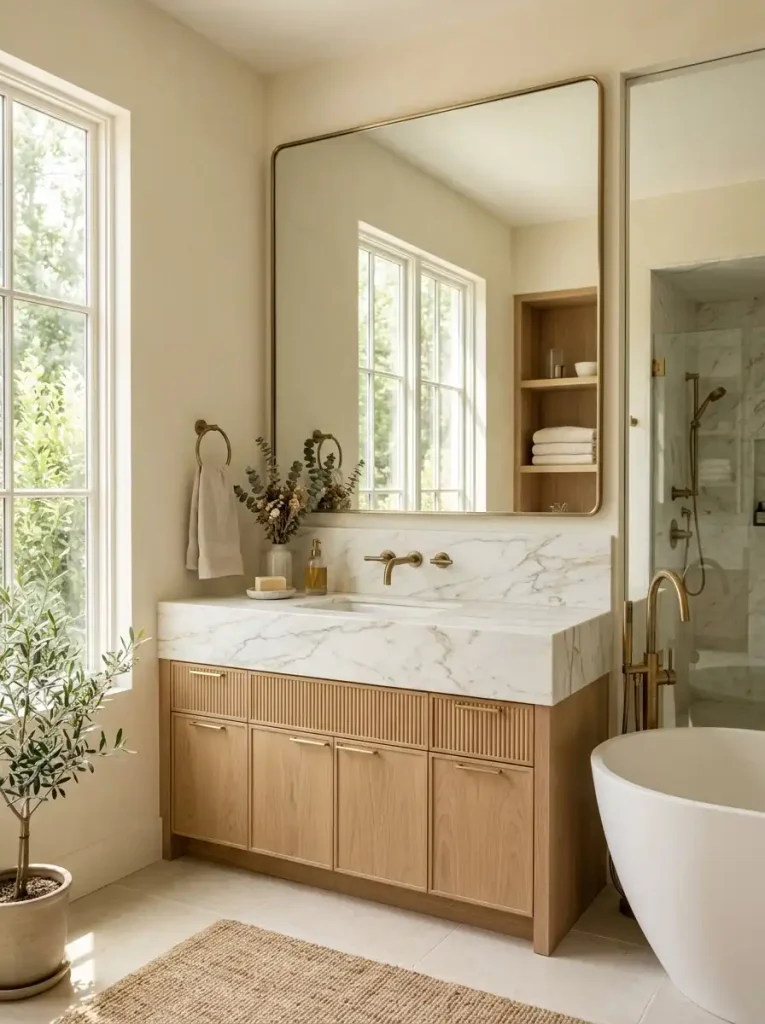
Creamy white is an excellent alternative to stark bright white. Its subtle warmth creates a softer and more inviting atmosphere while maintaining the clean appearance associated with modern bathrooms. It also makes smaller spaces feel brighter and more open.
Pair creamy white walls with natural stone, warm wood, brass, or soft beige accessories. Using several similar warm neutrals creates a layered monochromatic design rather than a flat all-white space. This timeless color works across contemporary, traditional, Scandinavian, and organic modern bathrooms.
6. Deep Forest Green
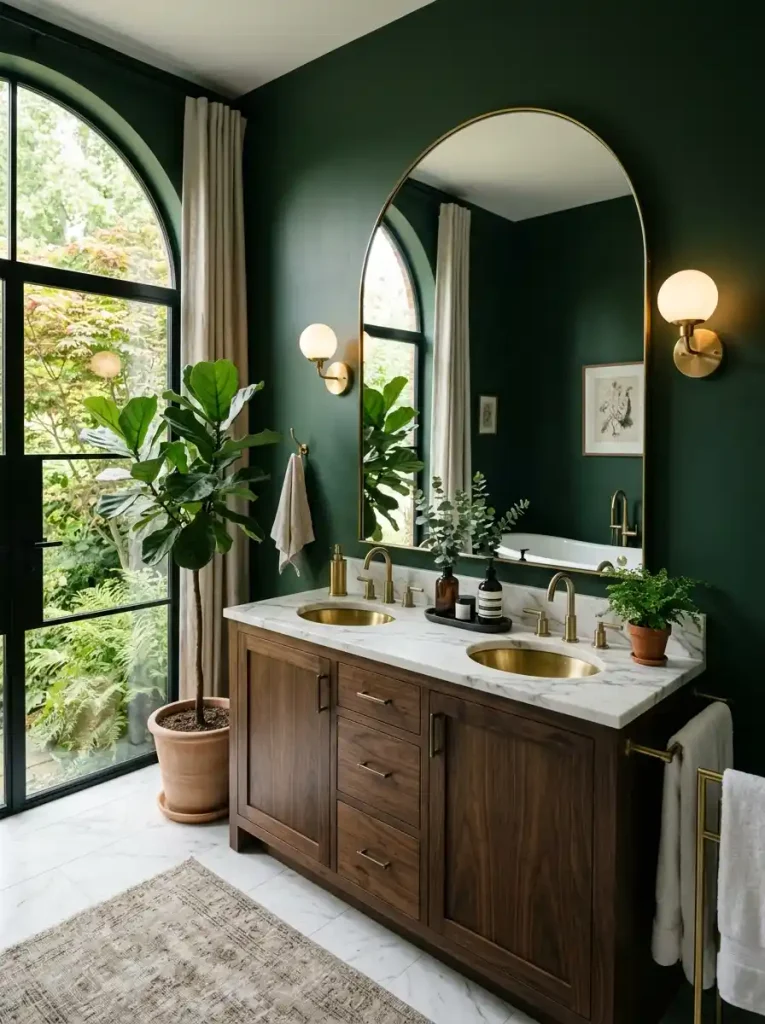
Deep forest green brings richness and personality to a modern bathroom. Its earthy undertones create a sophisticated connection to nature while giving the room a dramatic, luxurious quality. This shade works especially well when you want the walls to become a major design feature.
Pair forest green with warm brass, creamy marble, dark wood, or natural stone. In smaller bathrooms, using the color throughout the walls can create an immersive effect rather than making the room feel fragmented. Add simple greenery to reinforce the natural character of the shade.
7. Warm Taupe
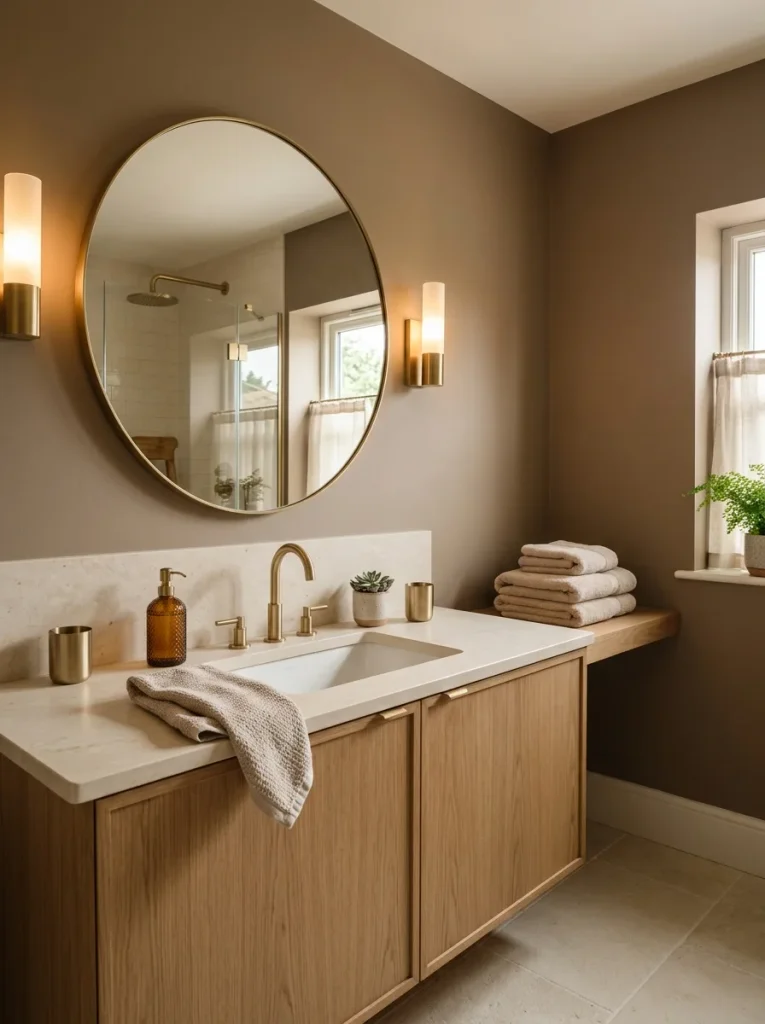
Warm taupe offers more depth than traditional beige while remaining incredibly versatile. Its earthy undertones make a bathroom feel comfortable and sophisticated, particularly when combined with natural textures and warm lighting.
Use taupe walls with cream countertops, oak cabinetry, brass fixtures, and stone flooring. Layer different shades of beige and brown through towels, rugs, and accessories to create a cohesive palette. The result is an understated bathroom that feels modern without appearing overly stark or clinical.
8. Muted Terracotta
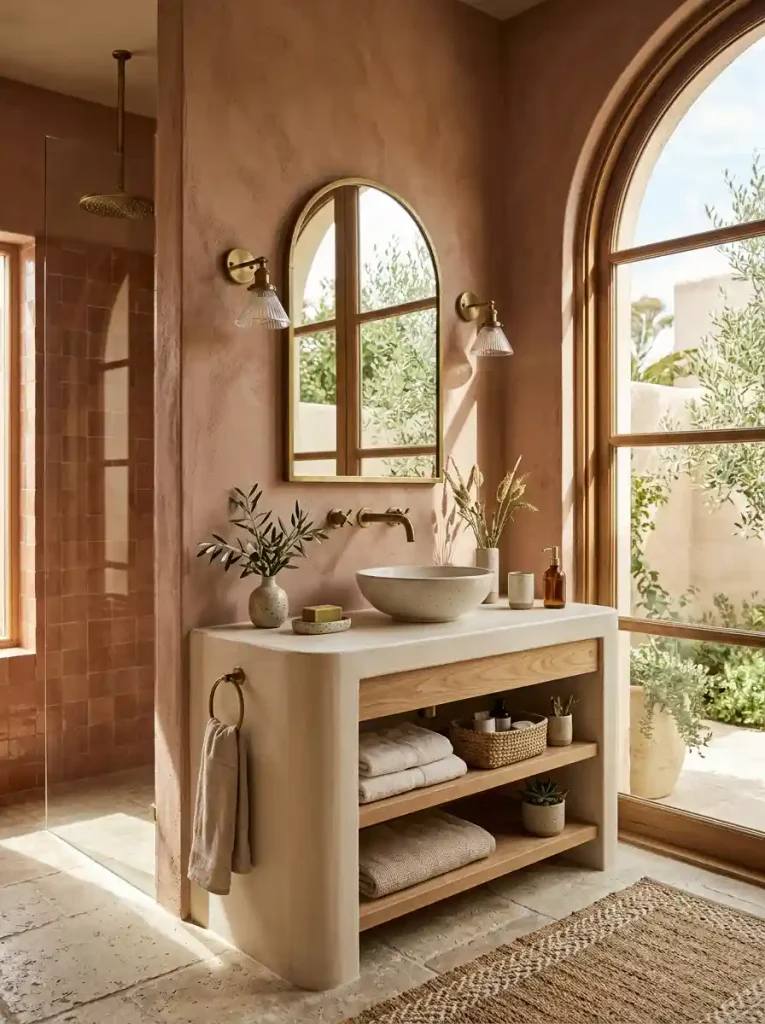
Muted terracotta introduces warmth and character while keeping the bathroom feeling sophisticated. Its earthy quality works particularly well with Mediterranean, organic modern, and Southwestern-inspired interiors. Unlike brighter orange shades, a softened terracotta feels grounded and elegant.
Pair the walls with creamy white, natural wood, handmade ceramics, and aged brass. Keep patterns relatively simple so the rich wall color remains the focal point. Terracotta is especially beautiful in bathrooms with warm natural light, where its earthy undertones become even more inviting.
9. Soft Mushroom
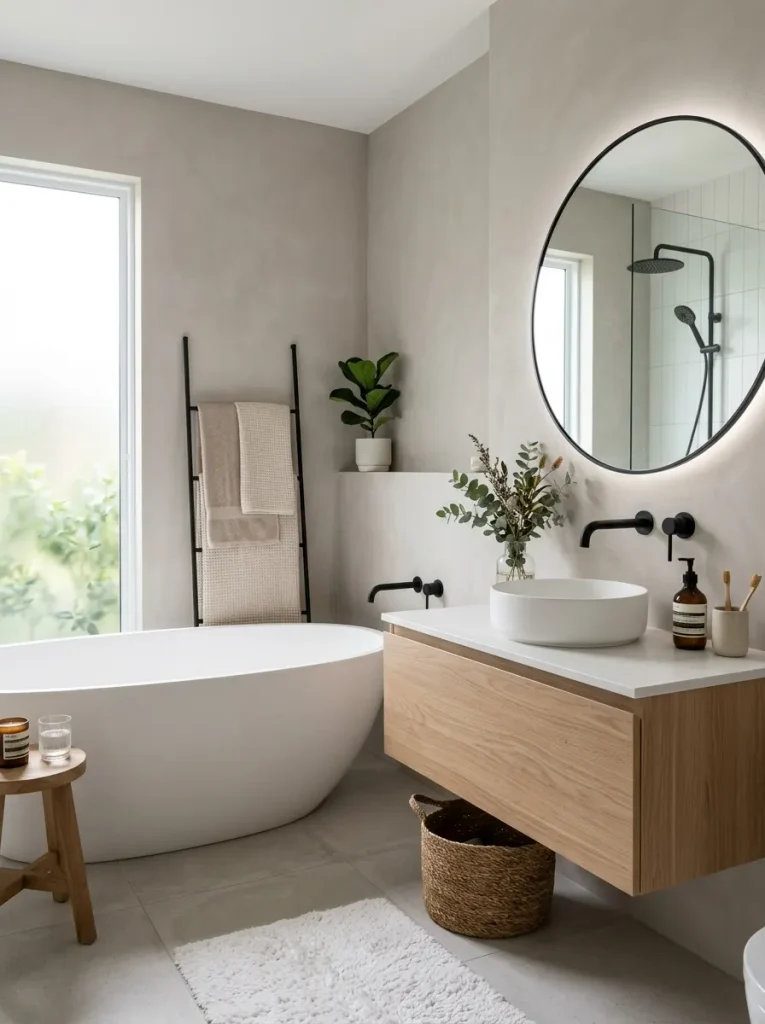
Mushroom is a subtle blend of gray and beige that creates an effortlessly sophisticated backdrop. Its muted quality makes it ideal for homeowners who want something more interesting than white but less dramatic than dark paint.
Combine mushroom walls with light wood, white stone, black hardware, or brushed metal. Because the color is so adaptable, you can easily change accessories and textiles without needing to repaint. It works particularly well in minimalist, contemporary, and organic modern bathrooms.
10. Muted Navy Blue
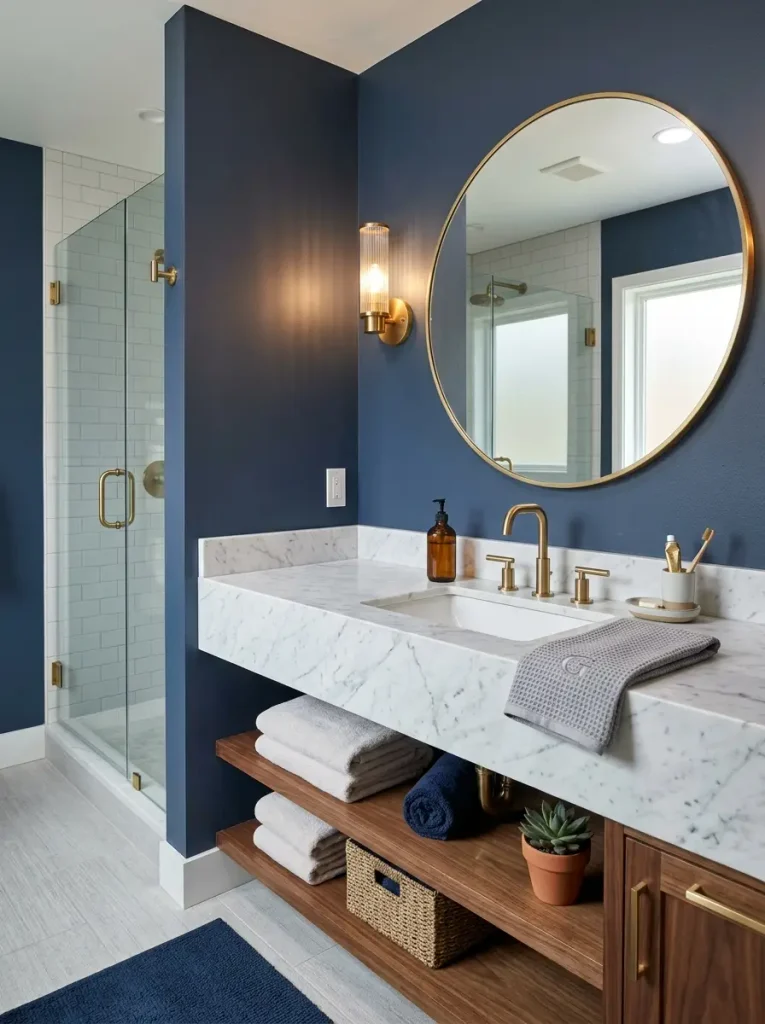
Muted navy creates a rich and timeless bathroom atmosphere. It has enough depth to make the space feel sophisticated while remaining more versatile than extremely dark black-blue shades. Navy works especially well as a feature wall behind a vanity or bathtub.
Pair it with white marble, warm wood, brass fixtures, or creamy textiles to create contrast. If the room receives limited natural light, consider using navy on one wall rather than throughout the entire space. This keeps the bathroom dramatic without making it feel visually heavy.
11. Pale Mushroom Beige
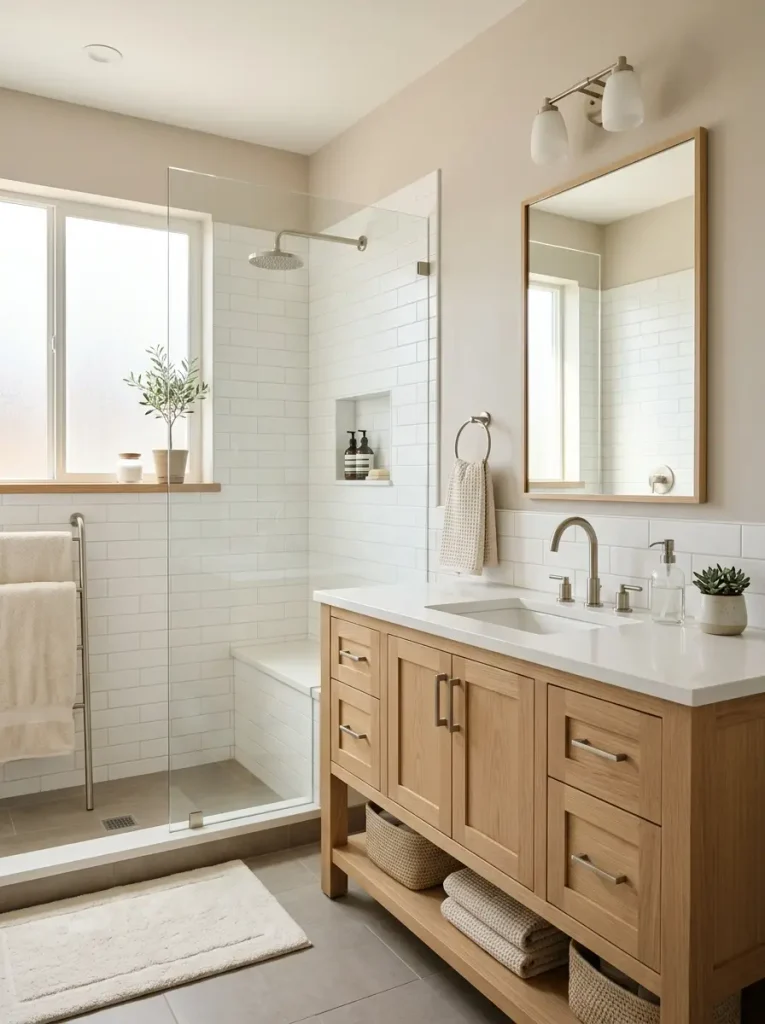
Pale mushroom beige creates a soft, sophisticated backdrop that works beautifully with modern materials. Its subtle gray undertones prevent it from looking overly yellow, while the beige base keeps the bathroom warm and welcoming.
This shade pairs beautifully with creamy white tile, oak cabinetry, brushed nickel, and natural stone. Use it throughout the bathroom for a seamless appearance or combine it with slightly darker beige accents for gentle contrast. It’s an excellent option for creating a calm, spa-like atmosphere.
12. Soft Black
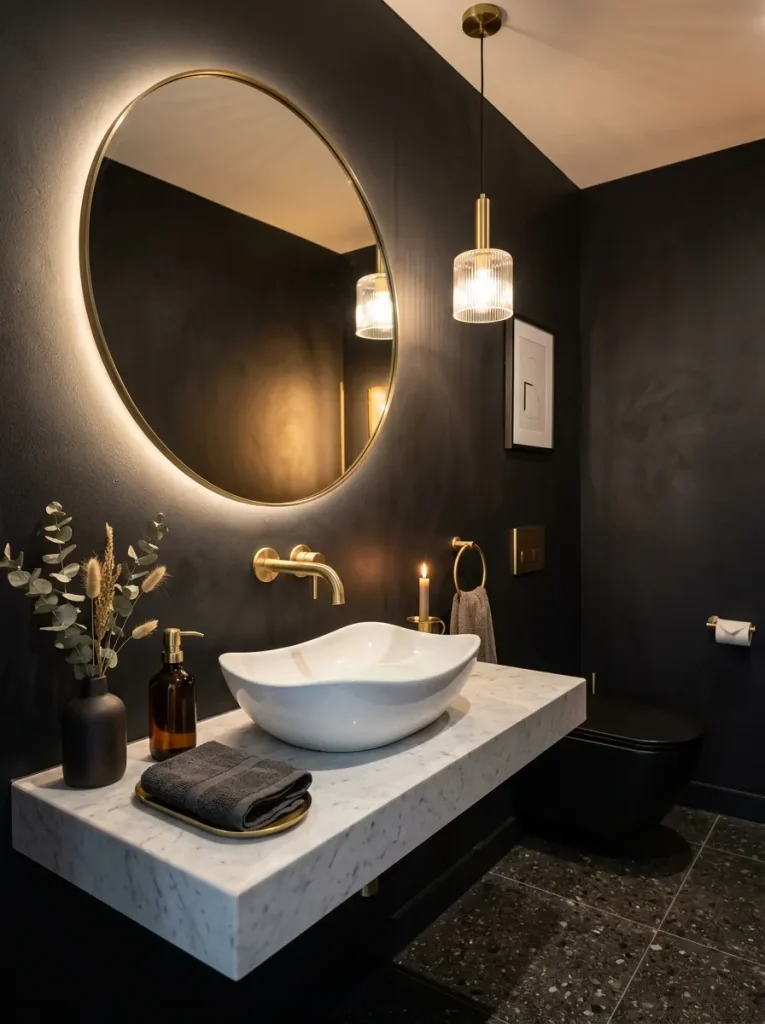
Soft black walls can create an incredibly sophisticated bathroom when balanced with lighter finishes. Unlike bright colors, black creates an immersive backdrop that allows mirrors, fixtures, artwork, and architectural details to stand out dramatically.
This color is especially effective in powder rooms where you can embrace a more dramatic design. Pair black walls with white marble, warm brass, light wood, or creamy textiles. Layered lighting is essential to prevent the space from feeling too dark and to highlight the richness of the paint.
13. Muted Olive Green
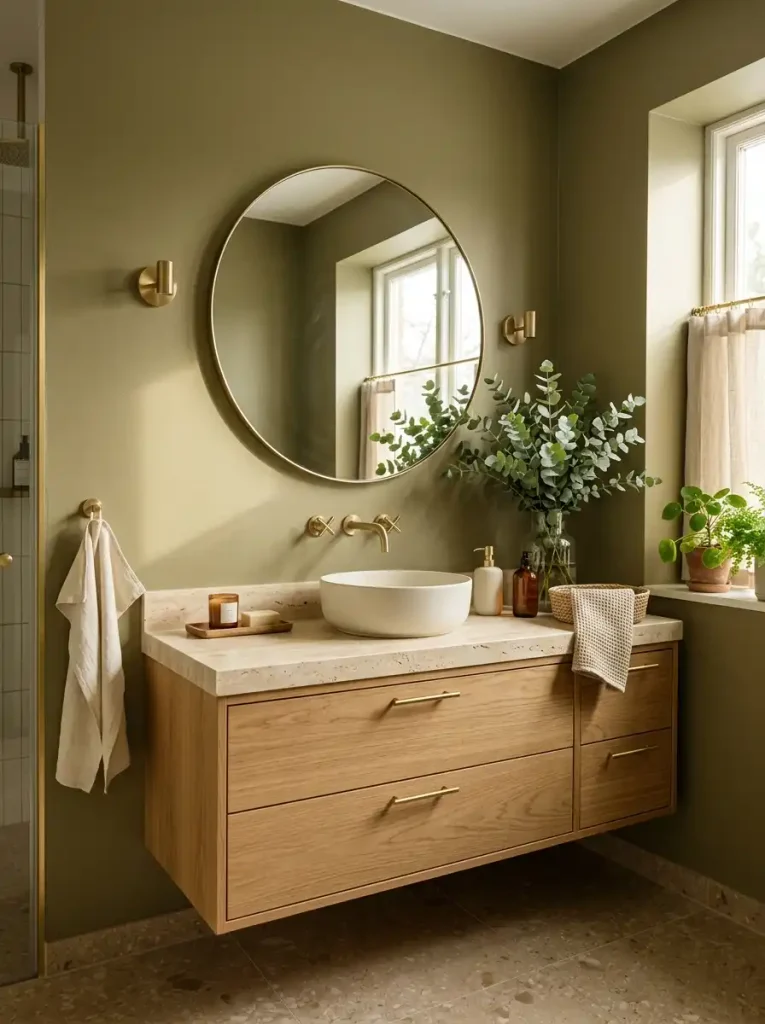
Muted olive green is a sophisticated earthy shade that brings personality without becoming overpowering. Its warm undertones make it particularly beautiful with natural wood, cream, brass, and stone finishes. The color creates a relaxed atmosphere while still feeling polished and contemporary.
Use olive green throughout the bathroom for an immersive look or apply it behind the vanity as an accent. Add woven accessories, simple greenery, and warm lighting to emphasize the natural character of the shade. It is especially well suited to organic modern and nature-inspired bathroom designs.
Conclusion
Choosing the right bathroom paint color is about more than following trends—it should complement your lighting, fixtures, flooring, and overall decorating style. Warm neutrals like greige, taupe, and mushroom create timeless sophistication, while sage, olive, forest green, and dusty blue bring a calming connection to nature. For a bolder statement, charcoal, navy, terracotta, or soft black can create a dramatic designer-inspired atmosphere. Always test paint samples in your actual bathroom because natural and artificial lighting can significantly change how a color appears throughout the day.