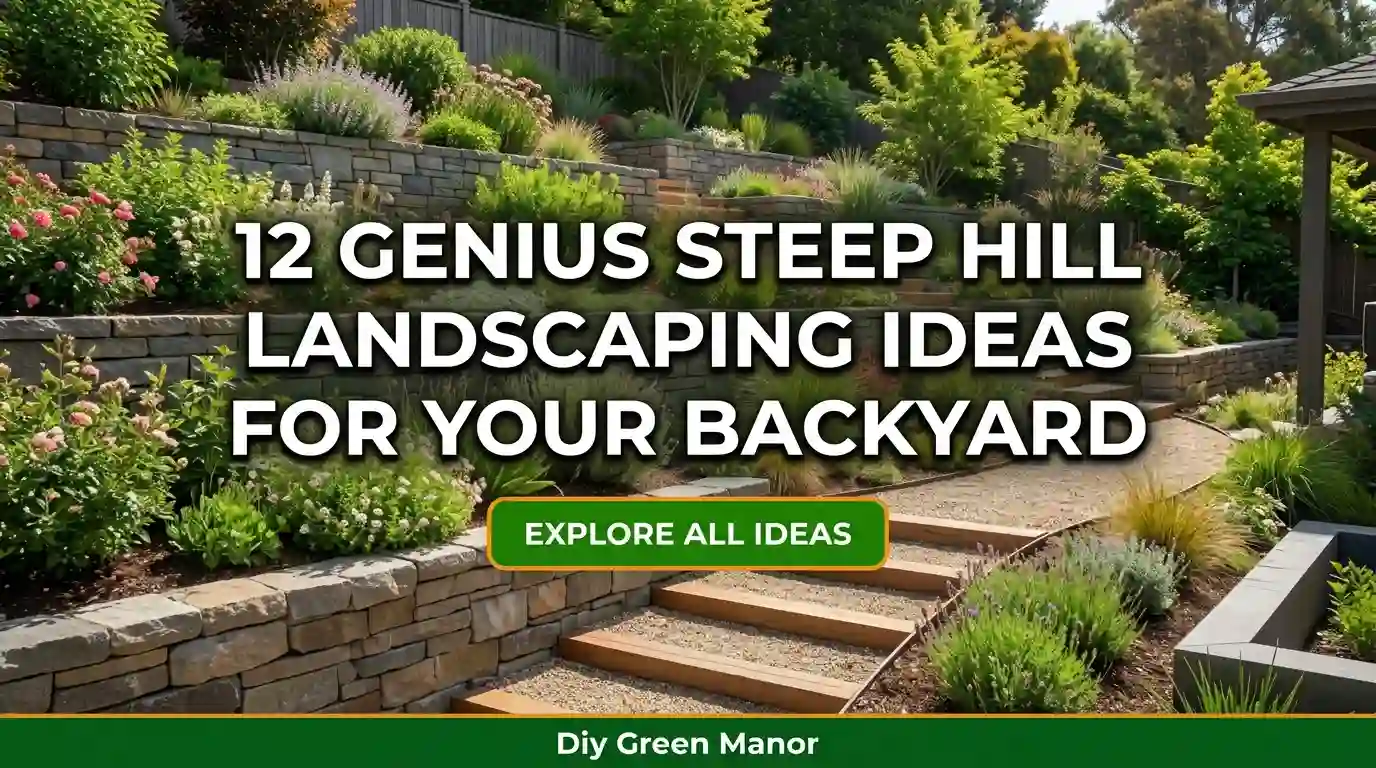
12 Genius Steep Hill Landscaping Ideas for Your Backyard
A steep backyard can feel challenging, but the slope can actually become one of the most interesting features of your landscape. Instead of fighting the natural terrain, smart landscaping can turn a difficult hill into a beautiful garden, seating area, pathway, or dramatic focal point. The best designs combine aesthetics with practical considerations such as drainage, erosion control, and safe access. These 12 genius steep hill landscaping ideas offer inspiring ways to transform a sloped backyard into a functional and beautiful outdoor retreat.
1. Terraced Garden Beds
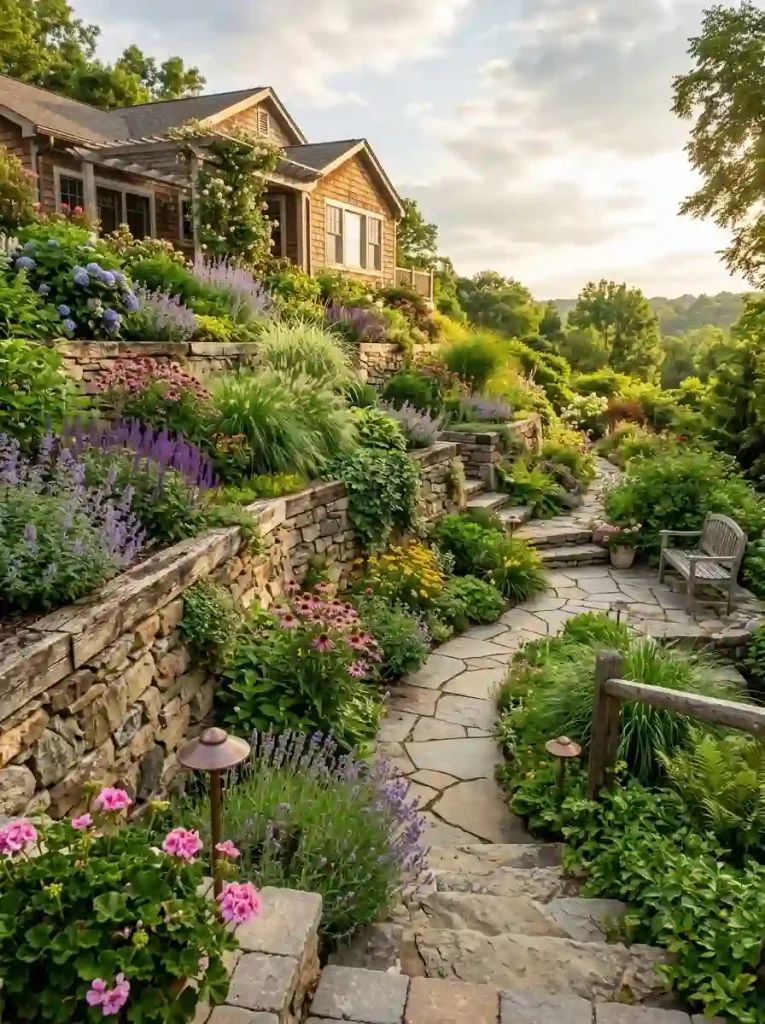
Terraced garden beds are one of the most effective ways to transform a steep slope into a series of usable planting areas. Low retaining walls divide the hill into manageable levels while creating attractive horizontal lines across the landscape. Stone, timber, or other properly engineered retaining materials can complement the style of your home.
Use each terrace for a different combination of shrubs, flowers, ornamental grasses, or edible plants suited to your climate. Layering plants at different heights creates depth and makes the hillside feel intentionally designed. Proper drainage and professionally appropriate retaining-wall construction are important when modifying a steep slope.
2. Winding Stone Stairway
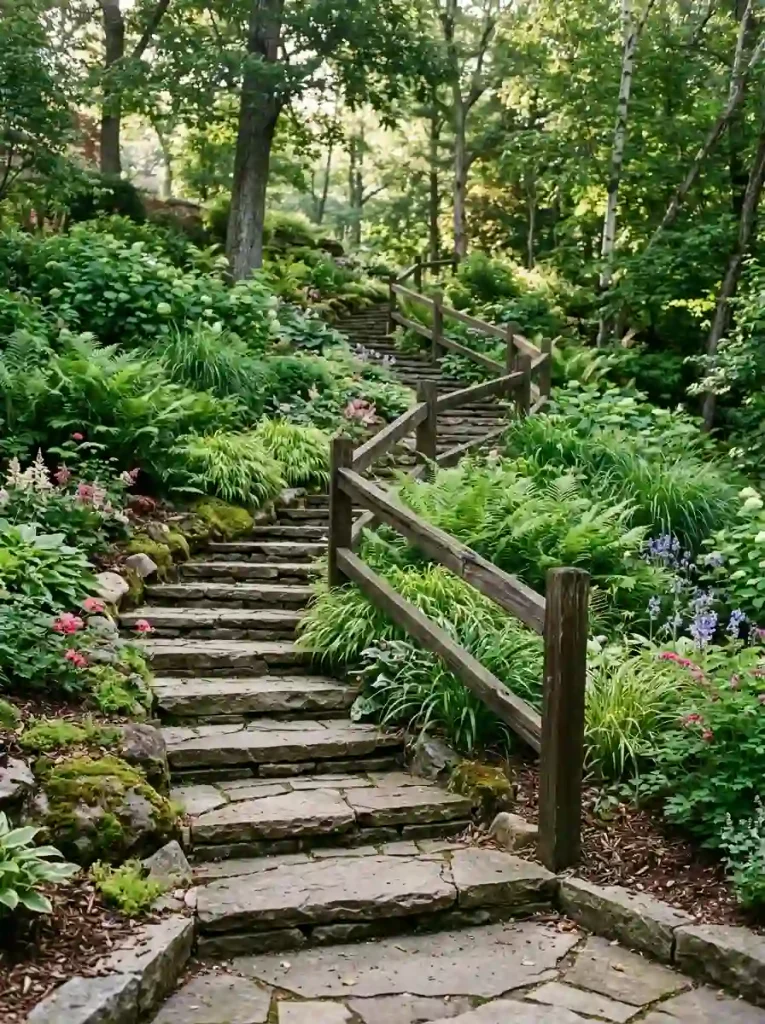
A winding staircase can make a steep backyard easier to navigate while turning the slope into an attractive garden feature. Rather than creating one long, straight staircase, gently changing direction can make the journey feel more natural and visually interesting.
Use natural stone, brick, or another durable material appropriate for outdoor steps. Plant low-growing greenery and shrubs alongside the stairs to soften hard edges. Handrails and proper step dimensions are particularly important on steep terrain, so the finished design should prioritize safe access as well as appearance.
3. Groundcover Hillside Garden
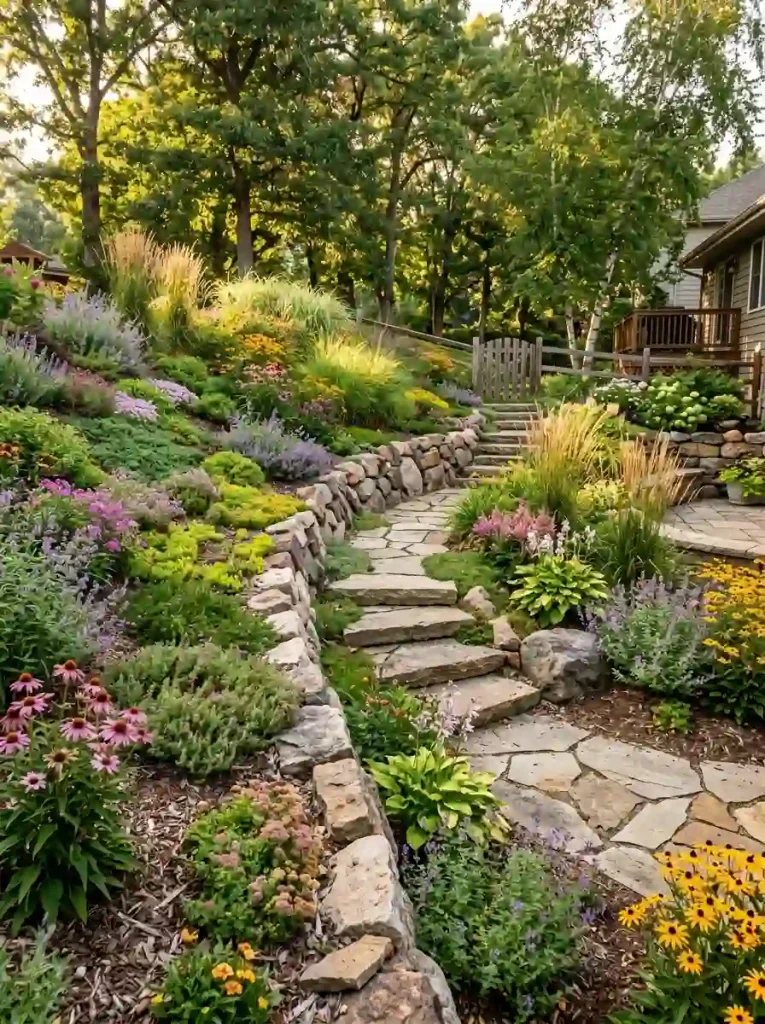
If maintaining a steep lawn sounds exhausting, replace some or all of it with suitable groundcover and low-maintenance planting. A layered combination of spreading plants, ornamental grasses, shrubs, and flowering perennials can create a lush appearance without requiring frequent mowing on dangerous slopes.
Choose plants that are appropriate for your local climate, soil, sun exposure, and slope conditions. Repeating groups of the same plants can make the hillside feel intentional rather than random. A naturalistic planting style can also help the slope blend beautifully with surrounding trees and garden areas.
4. Retaining Wall with Seating
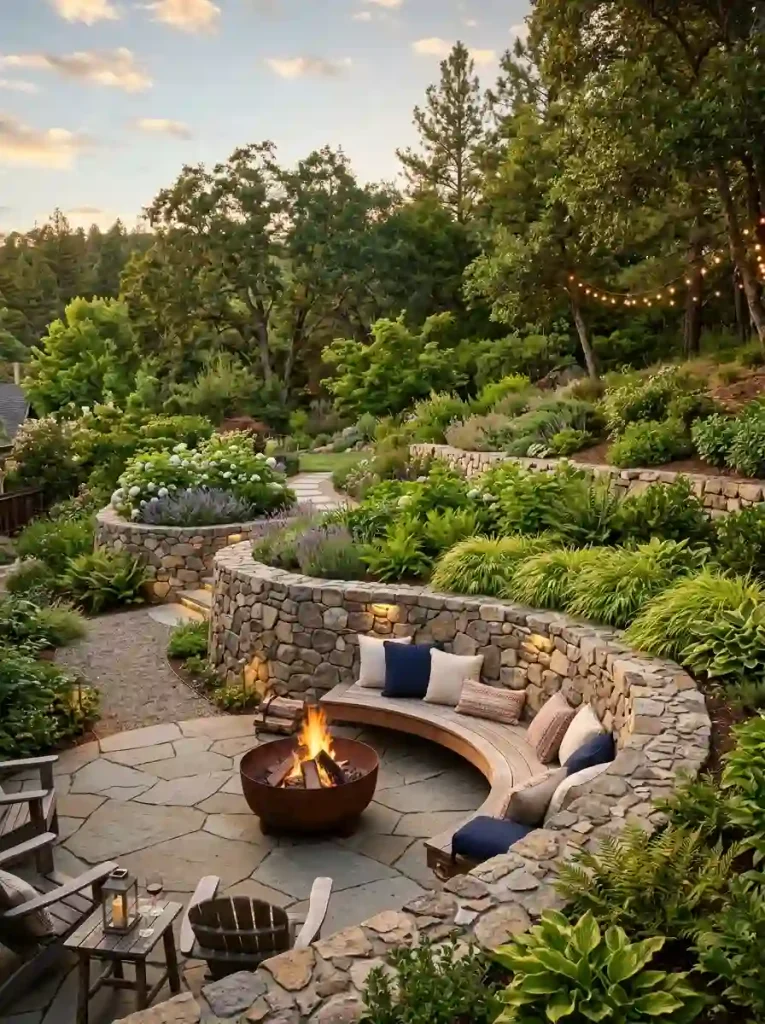
A retaining wall can do more than hold back soil—it can help create a usable outdoor destination. On a suitably designed terrace, a curved stone retaining wall can double as built-in seating around a fire pit or entertaining area.
Use natural stone or a finish that complements your home’s architecture. Add weather-resistant cushions and simple outdoor lighting to make the space inviting. Because retaining structures on steep slopes can have significant structural and drainage requirements, larger projects should be properly designed and constructed rather than treated as purely decorative features.
5. Native Plant Slope
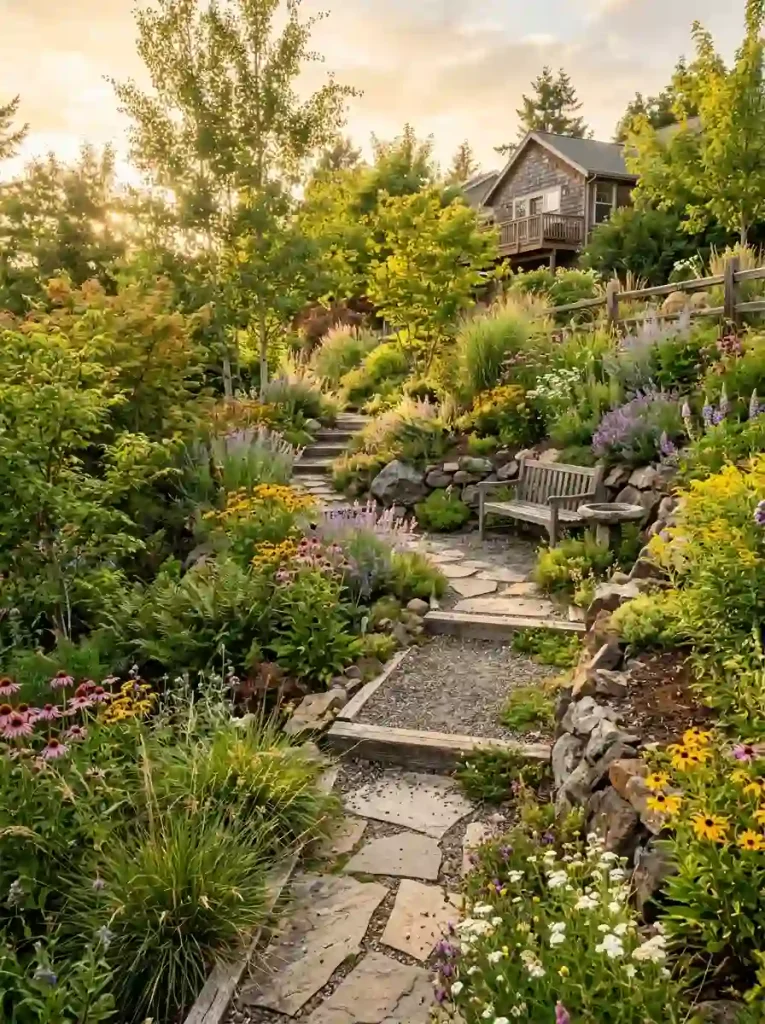
A native plant garden can turn a steep hill into a beautiful natural landscape. Instead of trying to force a traditional lawn onto the slope, use locally appropriate plants that are adapted to your region’s growing conditions.
Combine grasses, flowering perennials, shrubs, and small trees to create layers of texture and seasonal interest. Planting in broad drifts can make the hillside look professionally designed while keeping maintenance manageable. Select species carefully for the site and avoid plants that could become invasive in your region.
6. Multi-Level Backyard Deck
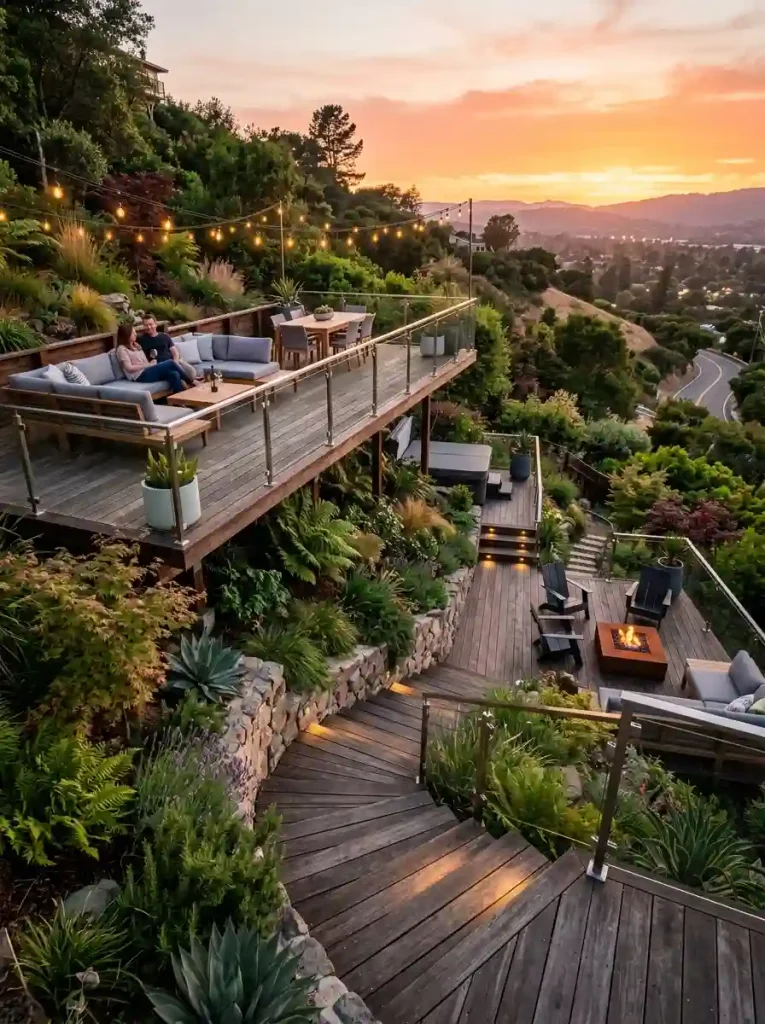
A multi-level deck can transform a steep slope into a series of functional outdoor rooms. Different levels can serve different purposes, such as dining, lounging, gardening, or entertaining. This approach takes advantage of the elevation instead of trying to flatten the entire backyard.
Use natural wood or another durable decking material that complements your home’s exterior. Add railings appropriate for the site’s height and local requirements. Planting around the deck levels can soften the structure and help integrate it into the surrounding landscape.
7. Dry Creek Bed for Drainage
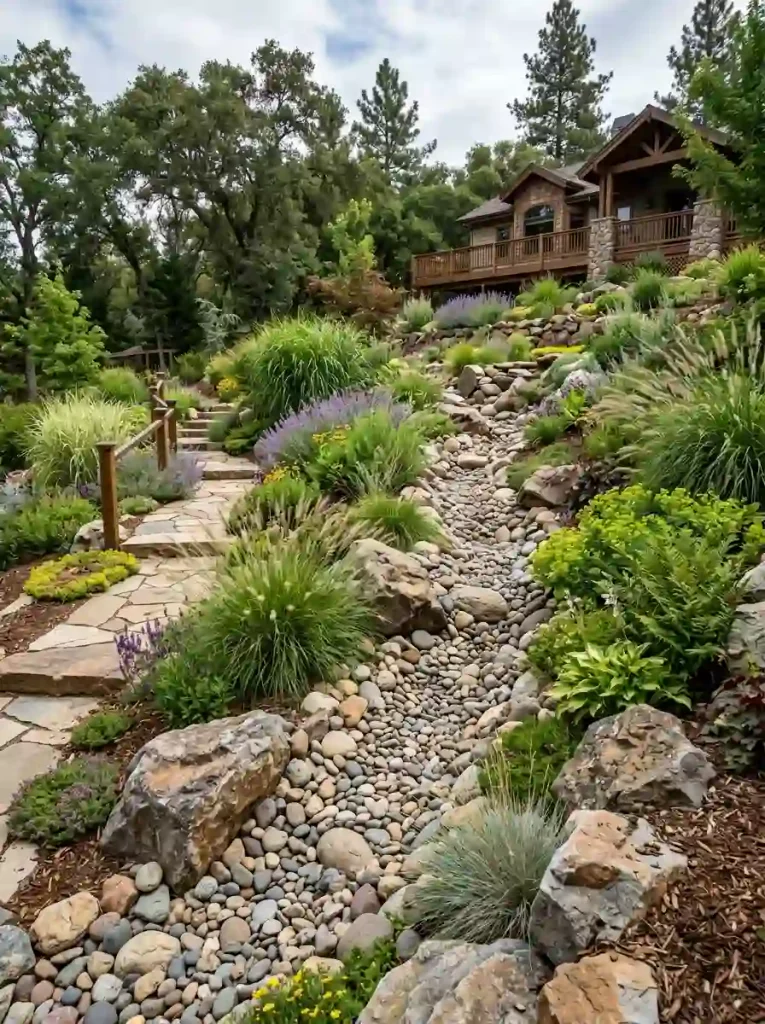
A dry creek bed can add visual interest while helping guide water through a landscape when appropriately designed. Create a natural-looking channel using different sizes of stone, river rocks, and larger accent boulders, then soften the edges with suitable plants.
Allow the creek bed to follow the natural slope rather than forcing an unnatural straight line. The design should be integrated with the site’s drainage strategy rather than treated as a decorative substitute for proper drainage. For significant runoff or erosion problems, professional assessment may be worthwhile.
8. Hillside Rock Garden
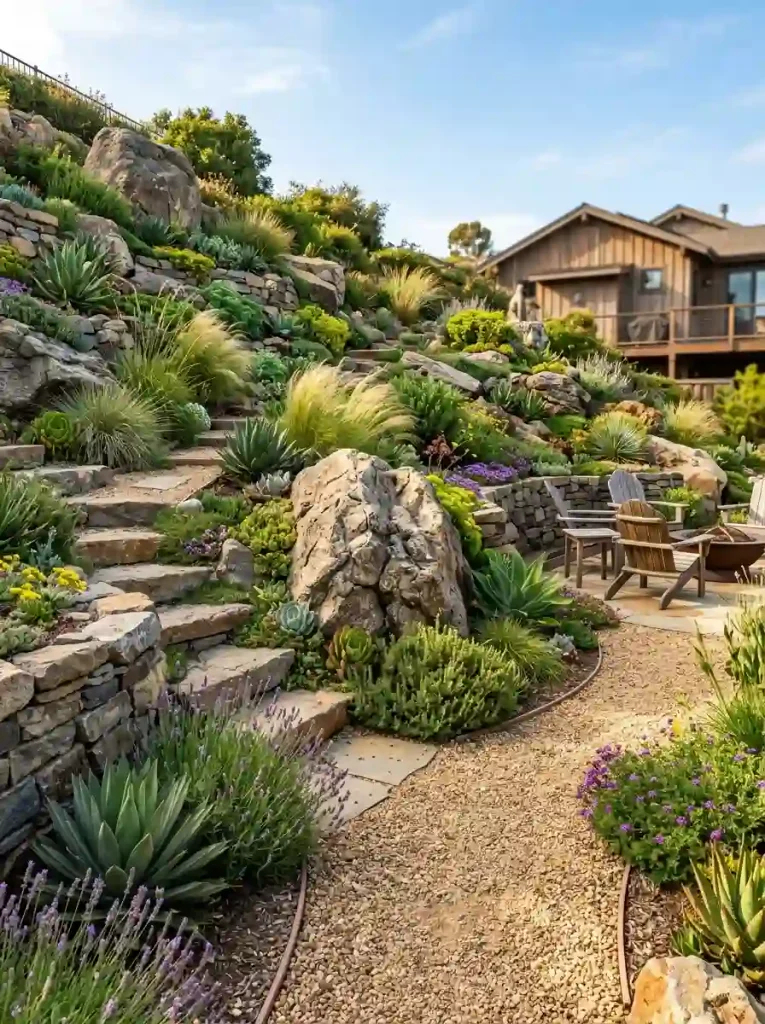
A rock garden can make a steep slope feel intentional while adding structure and visual interest. Large boulders can anchor the design, while smaller stones and gravel fill spaces between drought-tolerant plants and ornamental grasses.
Choose plants according to your climate and the amount of sunlight the hillside receives. Keep the palette restrained for a sophisticated appearance, or introduce seasonal flowers for more color. The combination of stone and low-growing vegetation can create a striking landscape that requires less mowing than traditional turf.
9. Hillside Fruit Tree Garden
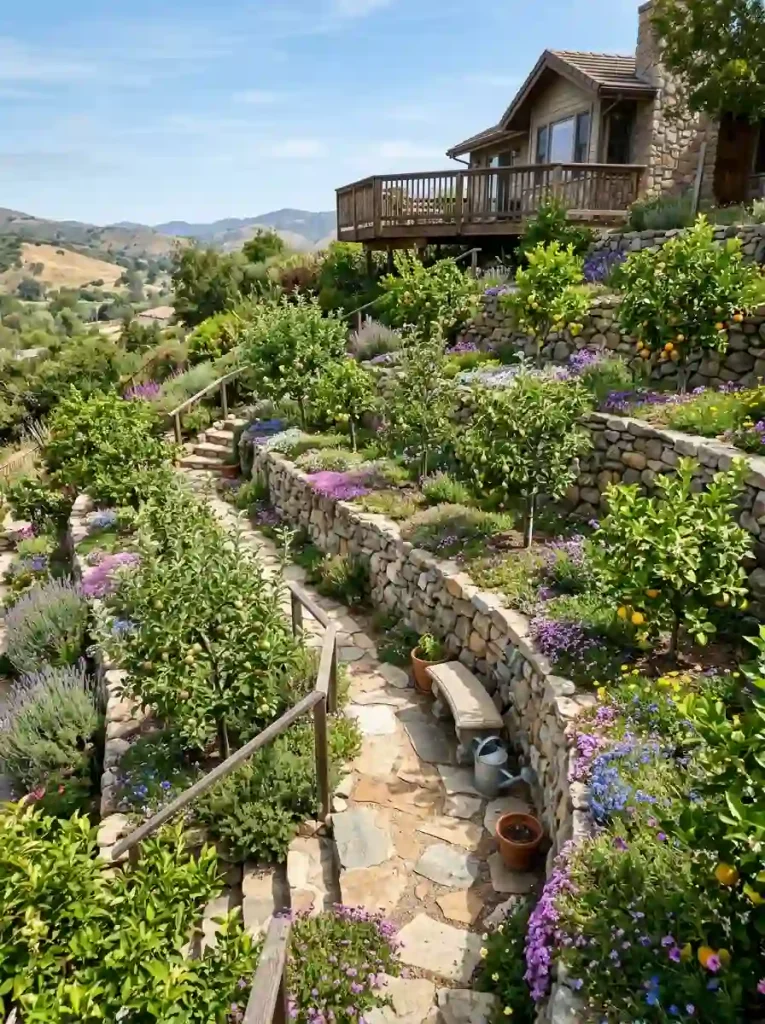
A sloped backyard can become an attractive productive garden when fruit trees and other edible plants are carefully incorporated. Small terraces or appropriately prepared planting areas can create more manageable spaces for trees, berries, herbs, or vegetables.
Select plants that are suited to your climate and the specific amount of sunlight available. Maintain enough space around each tree for growth and access. Combining productive plants with ornamental groundcovers and flowering companions can make the garden both practical and beautiful.
10. Sloped Backyard Water Feature
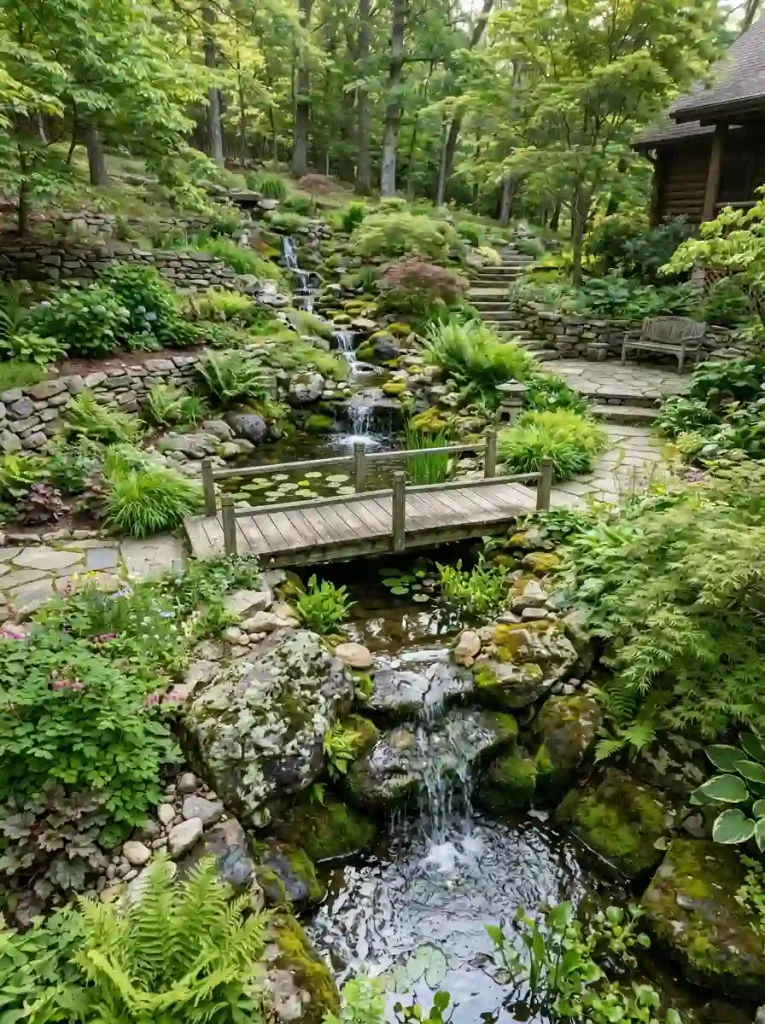
The natural elevation of a steep yard can provide inspiration for a cascading water feature. A series of small pools or carefully constructed channels can create the appearance of water moving naturally down the hillside.
Surround the feature with stones and plants that complement the garden’s overall style. Keep the scale appropriate to the property so the feature doesn’t dominate the landscape. Water features require proper construction, circulation, and drainage planning, particularly when installed on a significant slope.
11. Curved Hillside Pathway
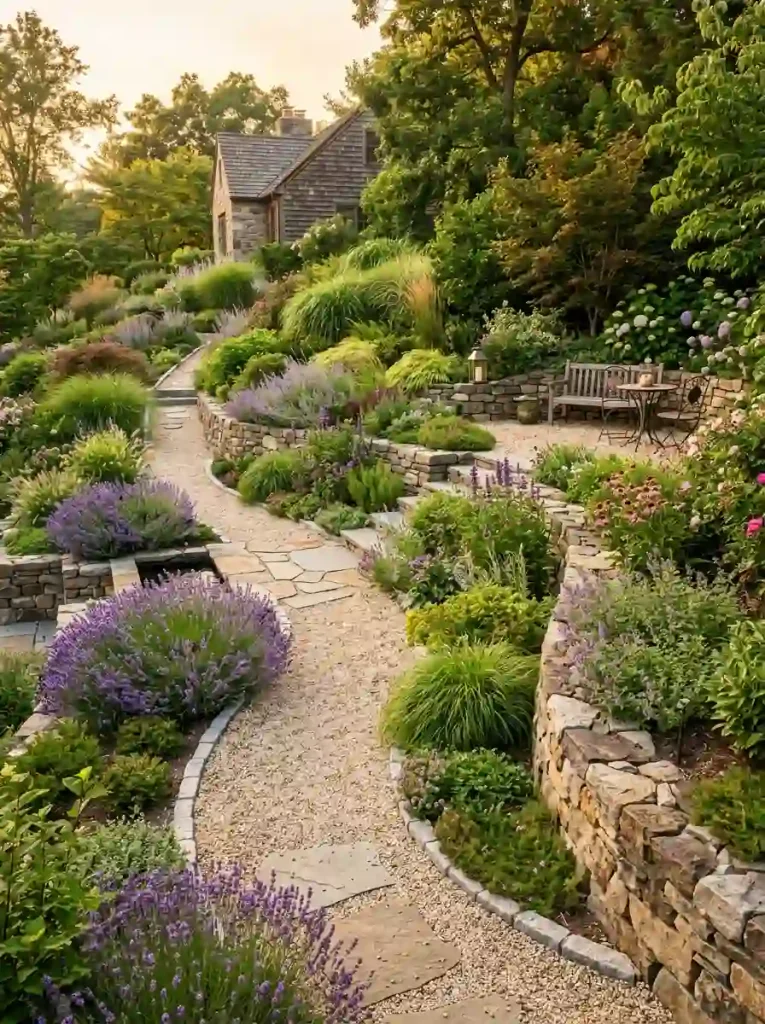
A curved pathway can turn a steep hill into an experience rather than simply a difficult part of the yard. Instead of climbing directly uphill, a gently winding route can create opportunities to discover different planting areas and garden views.
Use durable materials appropriate for the slope, such as stone, compacted gravel, or properly constructed steps where needed. Add planting beds along the route to create a layered garden effect. For steep or slippery areas, incorporate appropriate drainage, stable walking surfaces, and handrails where necessary.
12. Hillside Outdoor Lounge
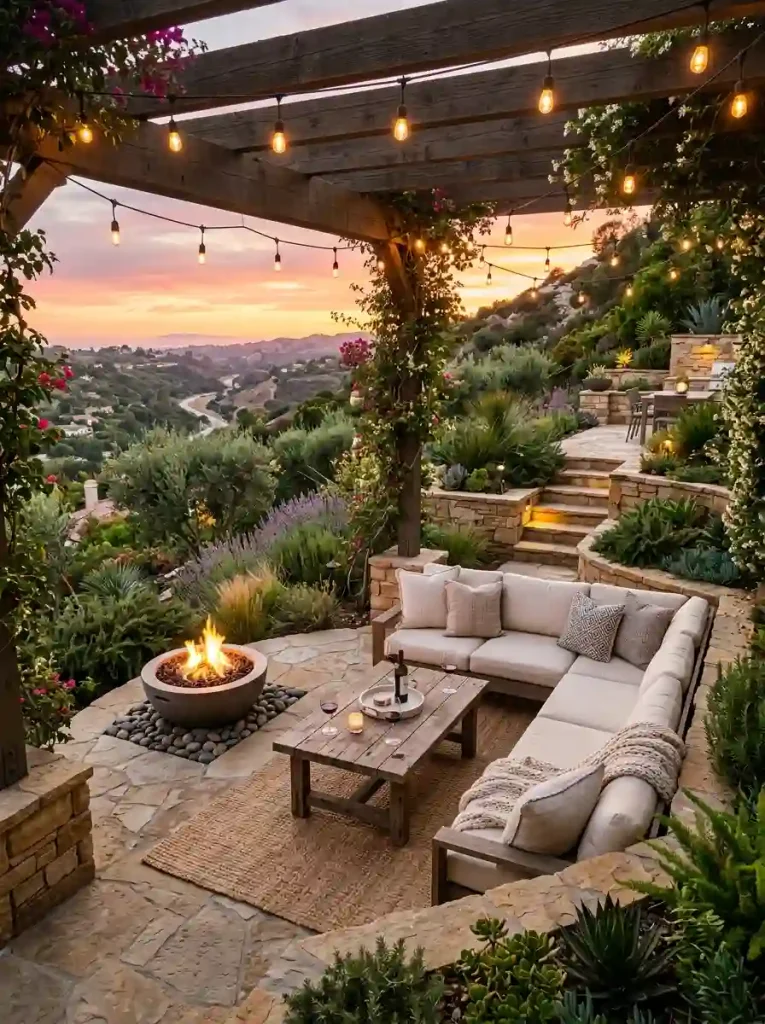
A steep slope can become a spectacular outdoor lounge when a stable terrace is created at the right location. Instead of trying to use the entire hill, focus on creating one or two comfortable platforms where people can sit and enjoy the views.
Add weather-resistant seating, a small fire feature where appropriate, outdoor rugs, and subtle lighting. Surround the terrace with layered plants to soften retaining structures and create privacy. Proper engineering, drainage, and construction are essential for any substantial terrace built into a steep slope.
Conclusion
A steep backyard doesn’t have to be a landscaping problem—it can become an opportunity to create terraces, gardens, pathways, decks, seating areas, and dramatic natural features that a flat yard can’t offer. The best designs work with the existing terrain instead of trying to completely eliminate it. Before beginning major excavation or retaining-wall work, consider drainage, erosion, soil stability, access, and local building requirements. With thoughtful planning and plants suited to your environment, your challenging hillside can become one of the most beautiful and memorable areas of your backyard.