
11 Small Trees With Non-Invasive Roots Perfect for Your Front Yard
Choosing a tree for a small front yard means thinking beyond flowers and foliage. Root behavior, mature size, soil conditions, and distance from sidewalks or foundations all matter when selecting the right tree. While no tree can be guaranteed to have completely non-invasive roots, many smaller species and cultivars are generally considered better choices for residential landscapes when planted in appropriate locations. These 11 options can add shade, seasonal color, privacy, and curb appeal without overwhelming a compact front yard.
1. Japanese Maple
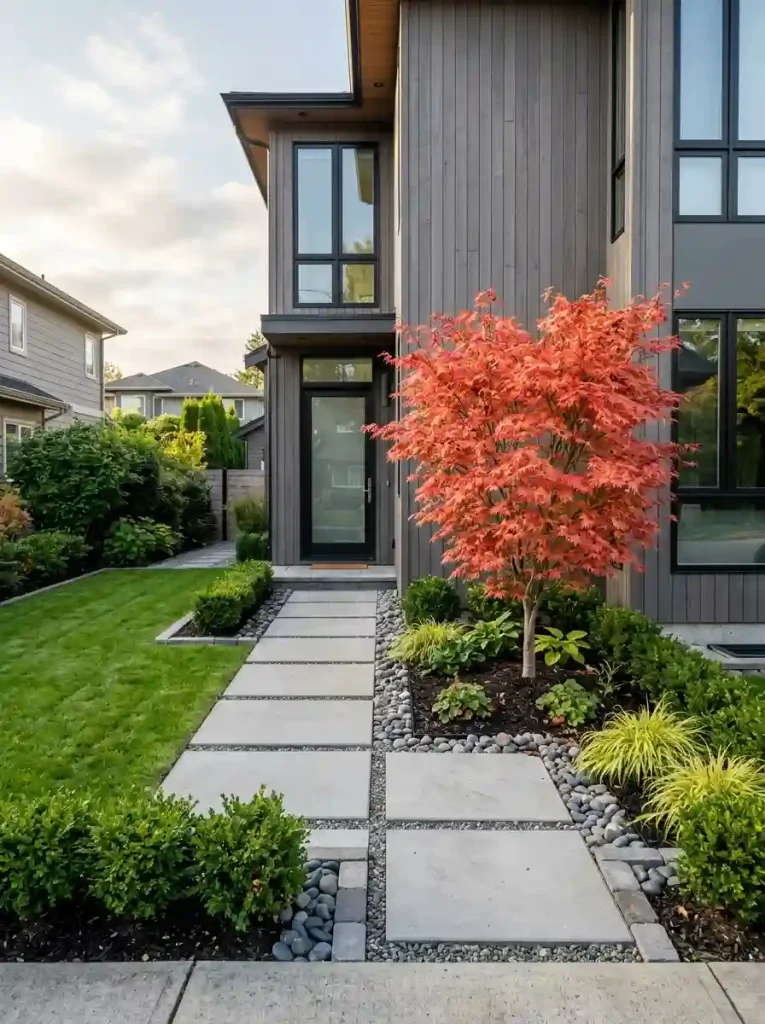
Japanese maple is a beautiful choice when you want a small ornamental tree with exceptional foliage. Many cultivars stay relatively compact, making them easier to incorporate into front yards where space is limited. Their finely divided leaves also create a delicate texture that contrasts beautifully with lawns and shrubs.
Choose a cultivar based on its expected mature size rather than assuming every Japanese maple stays small. Plant it in well-drained soil with suitable light exposure and enough room for the canopy. Its graceful branching structure can become an elegant focal point near an entry walkway.
2. Star Magnolia
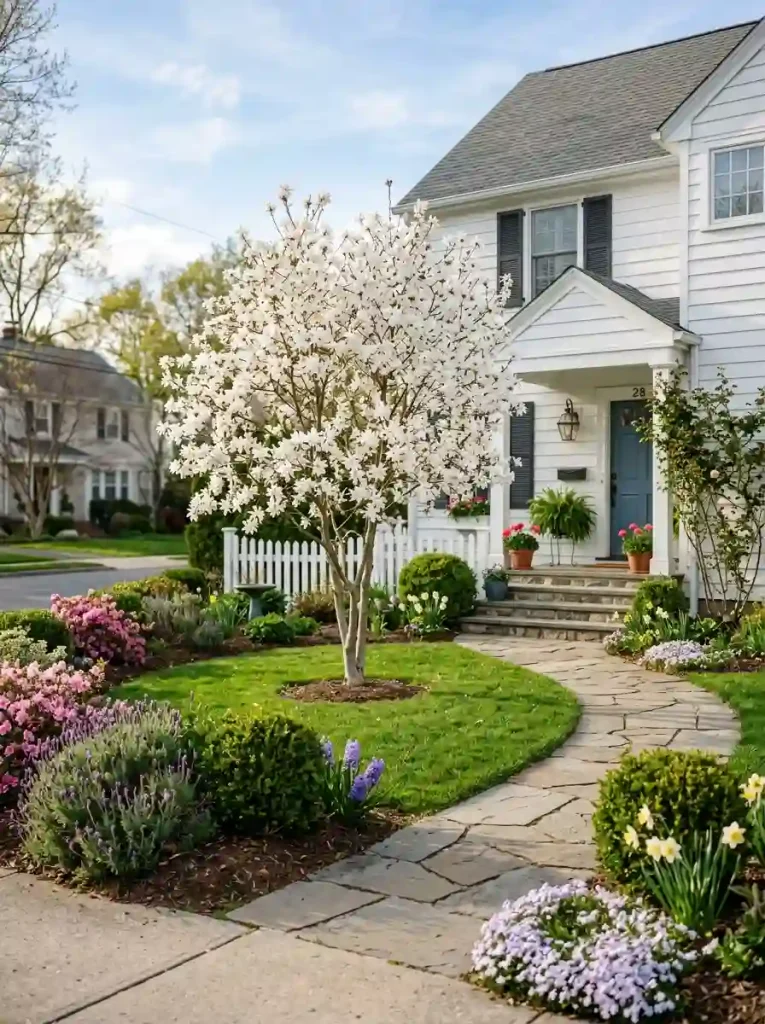
Star magnolia brings beautiful spring flowers without requiring the massive footprint associated with some larger magnolia species. Its white, star-shaped blossoms appear early in the season, creating a striking focal point near a home’s entrance.
Use it as a specimen tree surrounded by low shrubs or flowering perennials. Give the tree enough room for its mature width and choose a site with suitable sunlight and drainage. Because magnolia cultivars vary in eventual size, check the mature dimensions before planting close to structures or paved areas.
3. Eastern Redbud
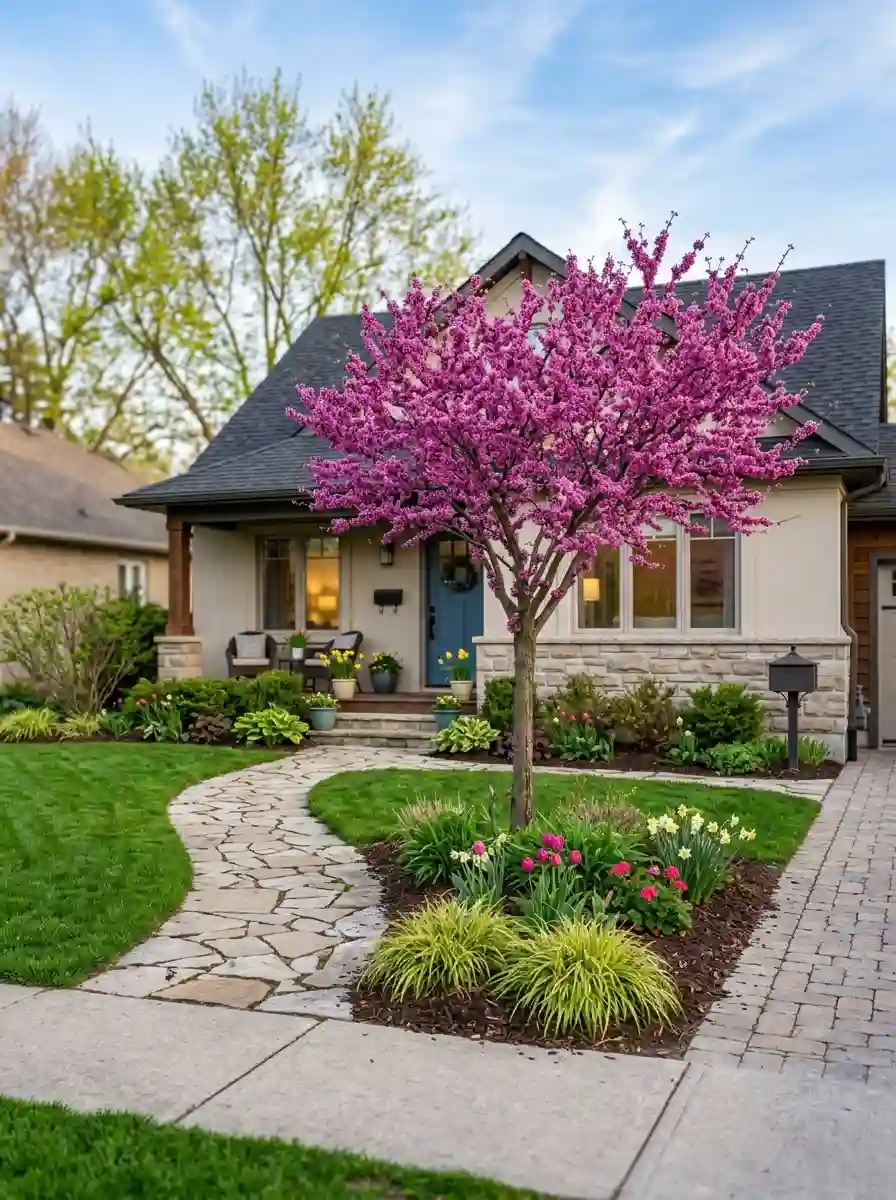
Eastern redbud offers a spectacular burst of pink or rosy flowers in early spring. The blossoms appear along the branches before or around the time the heart-shaped leaves emerge, creating a distinctive seasonal display.
A redbud can work particularly well as a front-yard specimen when there is enough room for its mature canopy. Use low-growing plants beneath it to frame the trunk without overcrowding the root zone. Select a suitable cultivar for your climate and available space, especially if your yard is especially compact.
4. Serviceberry
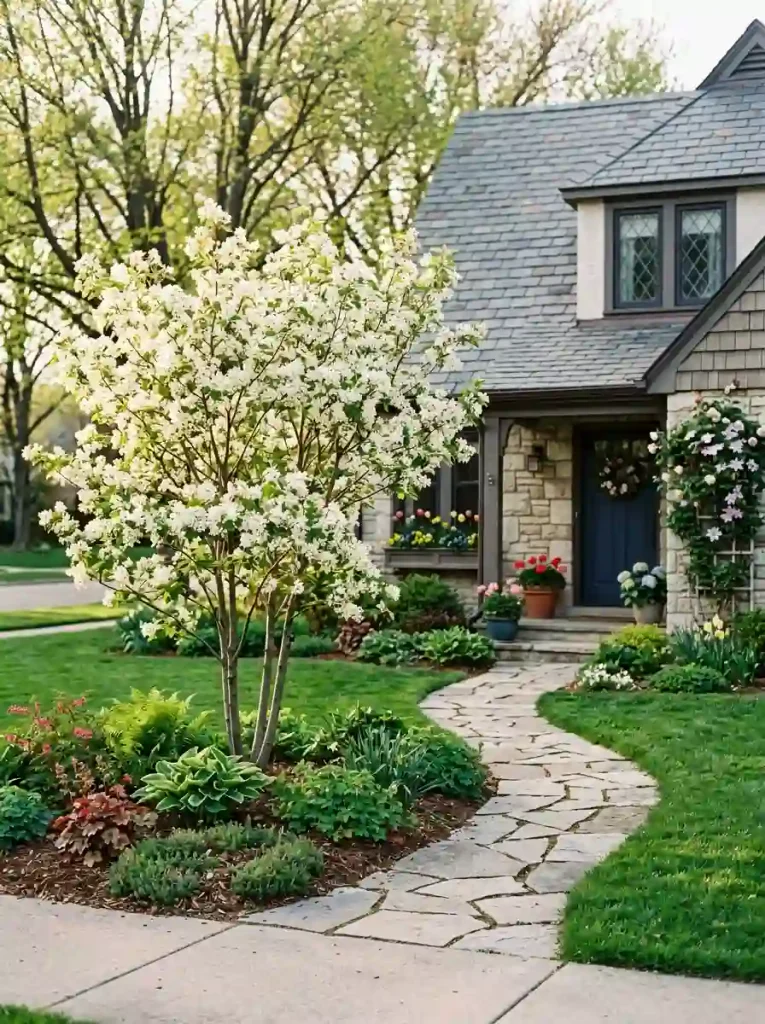
Serviceberry can provide several seasons of interest in one relatively manageable tree. White spring flowers are followed by small edible berries on suitable species, while autumn can bring attractive foliage color.
Use serviceberry near a walkway, lawn, or garden border where its changing appearance can be appreciated throughout the year. Because several serviceberry species and cultivars are available, mature size can vary considerably. Choose one that fits your site and verify local growing conditions before planting.
5. Japanese Snowbell
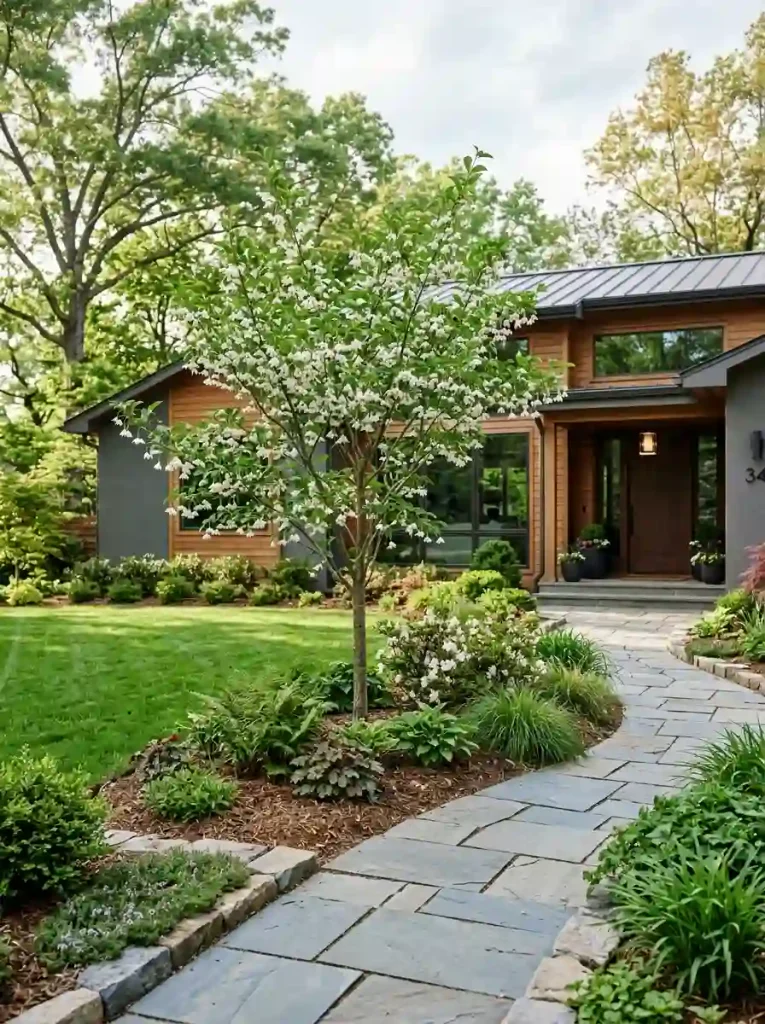
Japanese snowbell offers an understated but sophisticated appearance. Its white bell-shaped flowers hang beneath the branches, creating an attractive display that is especially lovely when viewed from a nearby walkway or seating area.
Its relatively refined form can work beautifully in a smaller front garden. Surround the tree with low shrubs, ornamental grasses, or simple groundcover to emphasize its shape. Provide adequate space for mature growth and choose a planting location with conditions suited to the species.
6. Flowering Crabapple
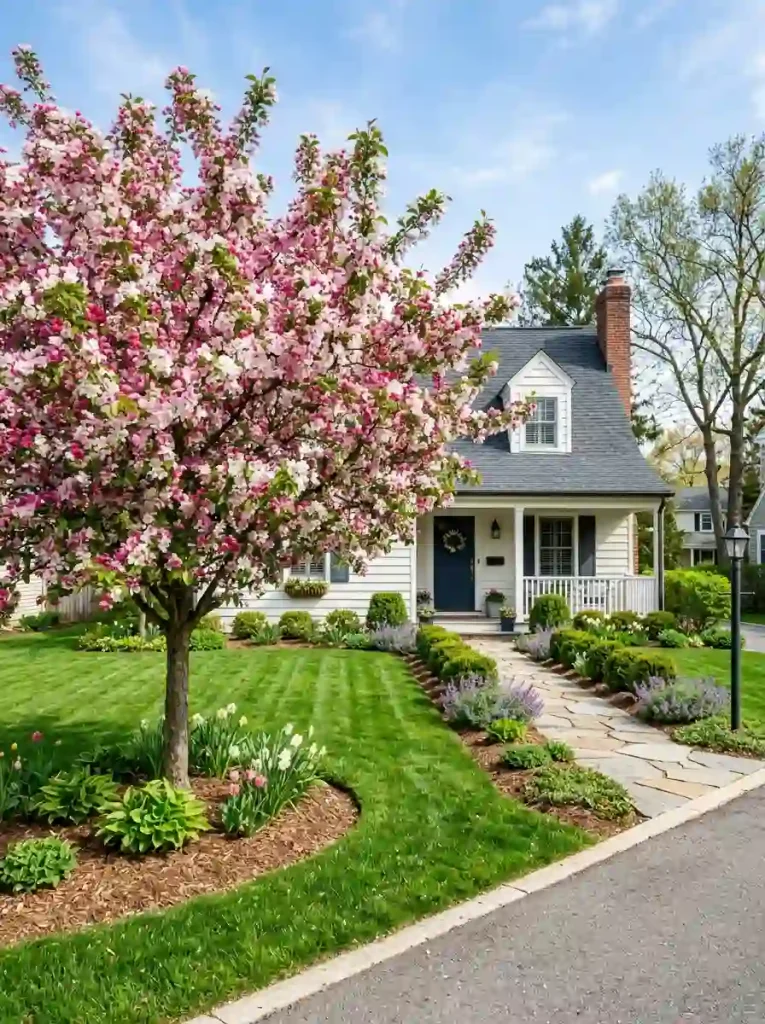
Flowering crabapples can provide beautiful blossoms in spring along with seasonal fruit and attractive foliage. Numerous cultivars are available, including selections bred for more compact growth that can fit smaller residential landscapes.
When choosing a crabapple, look for cultivars with good disease resistance and a mature size appropriate for your yard. Plant it where the canopy has enough room to spread without interfering with structures or pathways. Its flowering display can make a wonderful focal point near the front entrance.
7. Kousa Dogwood
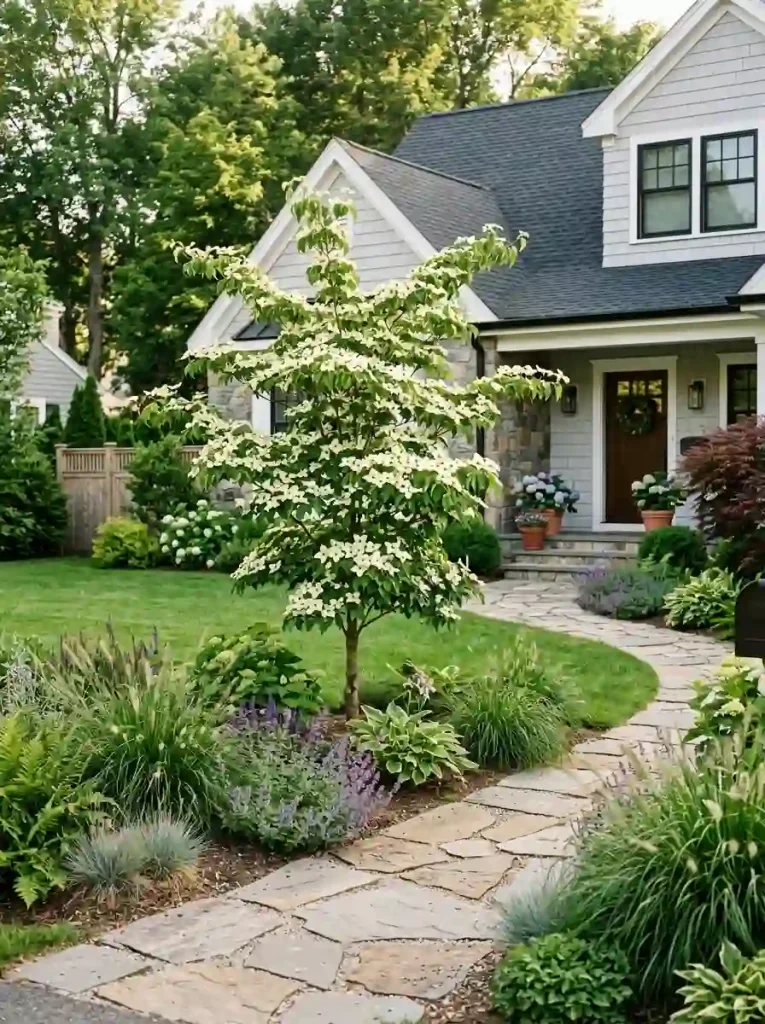
Kousa dogwood is valued for its layered branching structure and attractive seasonal display. Its showy white bracts appear in late spring or early summer, followed by distinctive fruits and often colorful autumn foliage.
Choose a smaller cultivar if your front yard has limited space. The tree looks particularly attractive when surrounded by simple groundcovers or low shrubs that don’t compete with its elegant structure. Give it enough room to develop naturally and select a site with suitable soil and sunlight.
8. Amur Maple
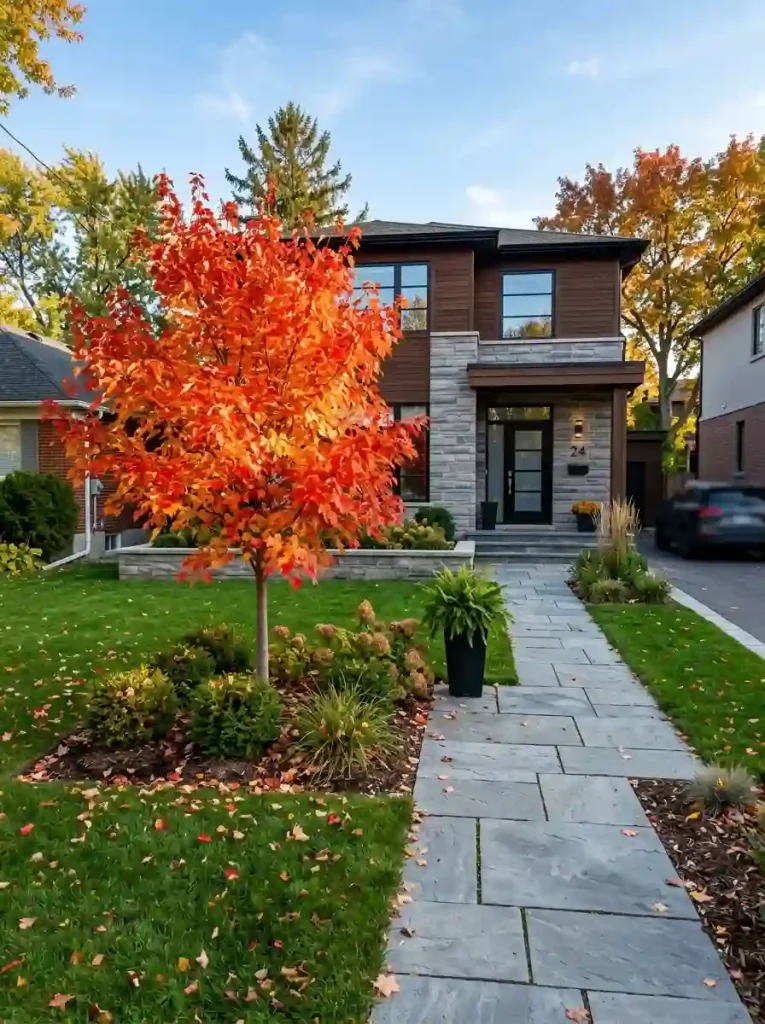
Amur maple can provide a compact form and attractive seasonal color when grown in appropriate conditions. Its leaves can develop vibrant red or orange tones in autumn, creating a striking contrast against evergreen landscaping.
Use it as a small specimen tree or incorporate it into a layered front-yard planting scheme. Before choosing this species, check whether it is considered invasive in your local region, as its suitability varies geographically. Selecting locally appropriate alternatives is always preferable where necessary.
9. Dwarf Conifer Tree
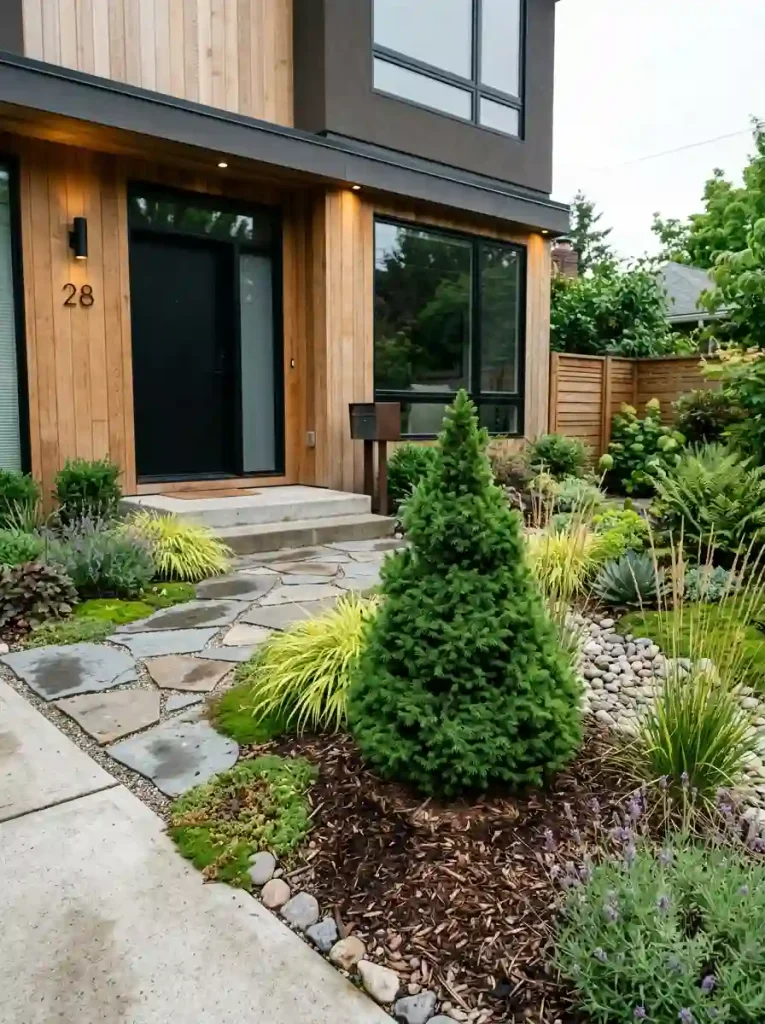
Dwarf conifers can provide reliable evergreen structure when you want your front yard to look attractive throughout the year. Their compact growth habits can work particularly well around entryways, pathways, and smaller garden beds.
Choose a true dwarf or compact cultivar based on its mature dimensions, because some young conifers eventually become surprisingly large. Pair the tree with ornamental grasses, stone, or low flowering plants to create a clean, layered landscape. Good drainage and appropriate sunlight are important for long-term health.
10. Japanese Stewartia
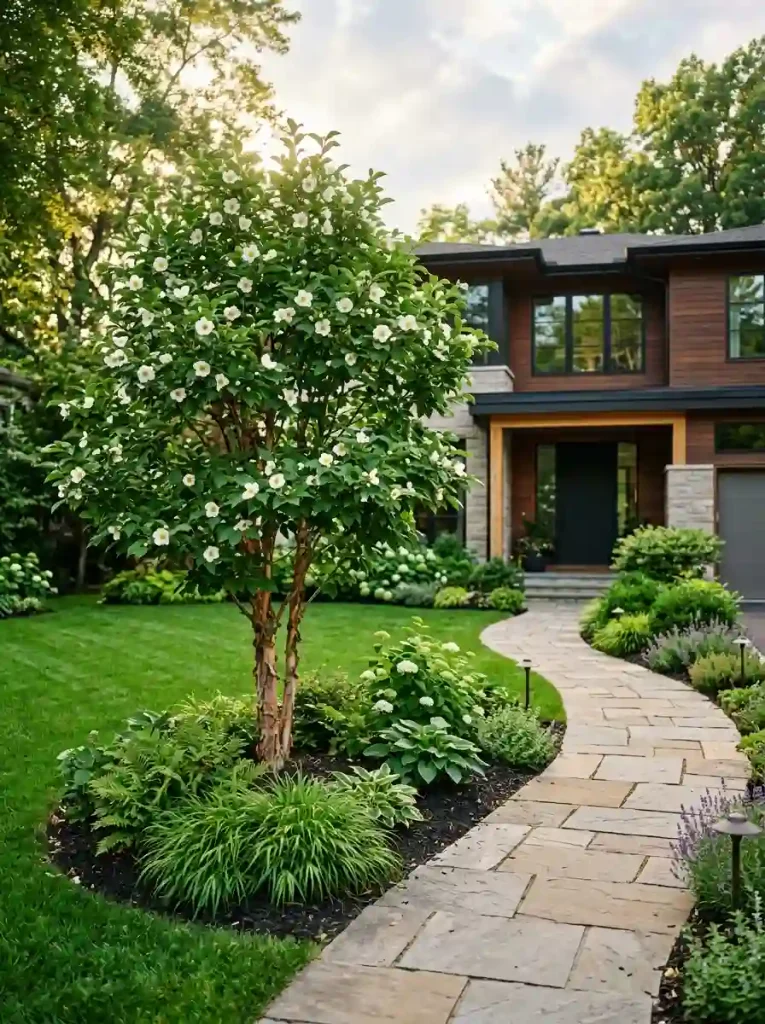
Japanese stewartia is a wonderful option for homeowners who want year-round ornamental interest. It can produce delicate white flowers during summer, colorful autumn foliage, and attractive bark that becomes more noticeable as the tree matures.
Position it where the trunk and branching structure can be appreciated rather than hiding it behind dense shrubs. It works especially well in thoughtfully designed front gardens where every season contributes something different. Choose a location with appropriate moisture, drainage, and light for successful establishment.
11. Fringe Tree
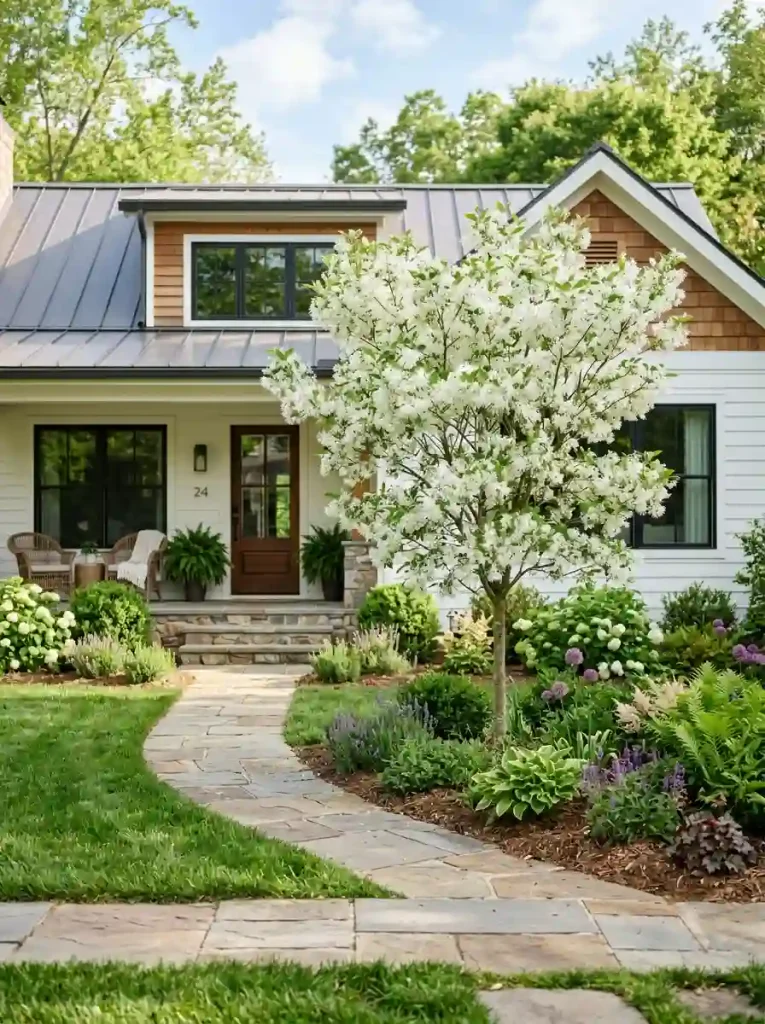
Fringe tree is an excellent choice if you prefer a less conventional flowering tree. Its narrow white flowers hang in clusters from the branches, creating a soft, almost cloud-like appearance in spring.
The tree’s relatively understated form works beautifully in smaller ornamental gardens. Surround it with low perennials or groundcover to keep attention on its graceful structure. As with any tree, check the expected mature size and local growing requirements before choosing a planting location near your home.
Conclusion
Small front yards can still benefit enormously from the beauty and structure of trees. Japanese maple, star magnolia, redbud, serviceberry, Japanese snowbell, crabapple, Kousa dogwood, stewartia, and fringe tree can provide flowers, foliage, seasonal color, or evergreen structure without necessarily requiring the space of a large shade tree.
The phrase “non-invasive roots” should be treated carefully: all trees have roots, and root spread depends on species, soil, irrigation, and site conditions. Rather than choosing solely by root reputation, select a tree with an appropriate mature size and plant it at a sensible distance from foundations, sidewalks, drains, and utility lines.