13 Flowering Trees That Thrive in Most Yards
Flowering trees can instantly elevate a yard with seasonal color, fragrance, shade, and beautiful natural structure. Whether your garden is compact, suburban, cottage-inspired, or spacious, there are flowering trees suited to many different landscape styles. The key is choosing a species or cultivar that matches your local climate, soil, sunlight, and available space. From delicate spring blossoms to vibrant summer flowers, these 13 flowering trees can bring stunning curb appeal and a welcoming garden atmosphere to your outdoor space.
1. Crape Myrtle
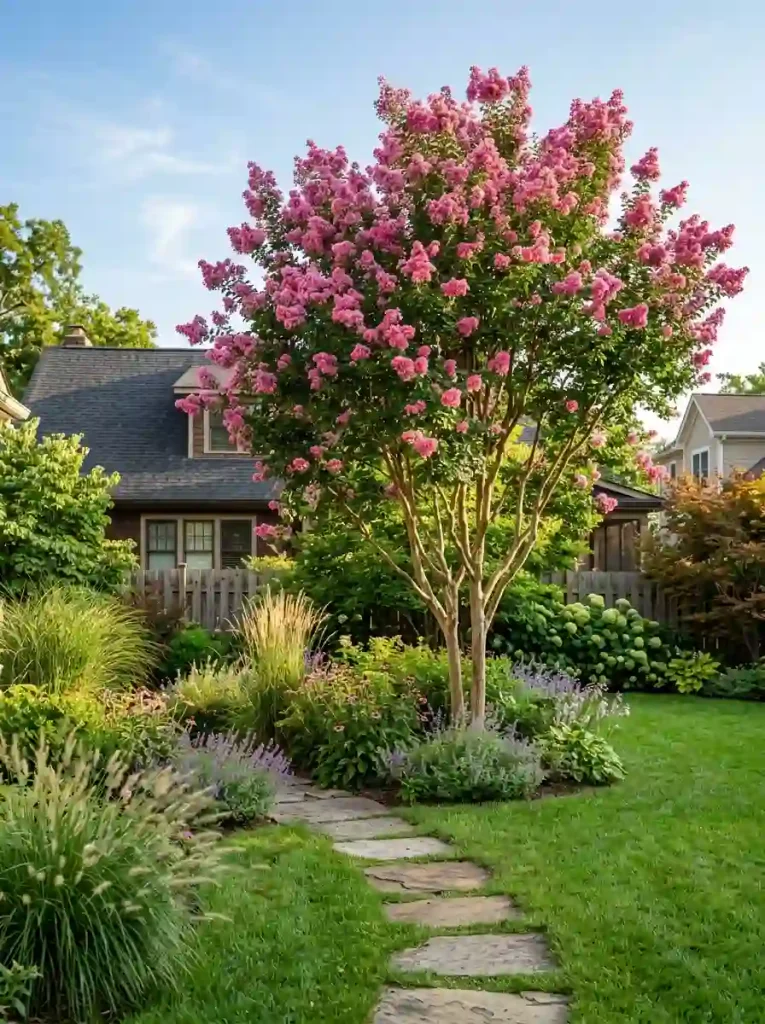
Crape myrtle is a standout choice for adding long-lasting summer color to a yard. Depending on the cultivar, its flowers may appear in shades of pink, red, purple, lavender, or white. Its attractive branching structure also provides visual interest after flowering.
Plant it in a sunny location with enough room for the mature canopy. It can serve as a focal point in a lawn, near a patio, or along a garden border. Since cultivars vary greatly in size, select one appropriate for your available space and local growing conditions.
2. Saucer Magnolia
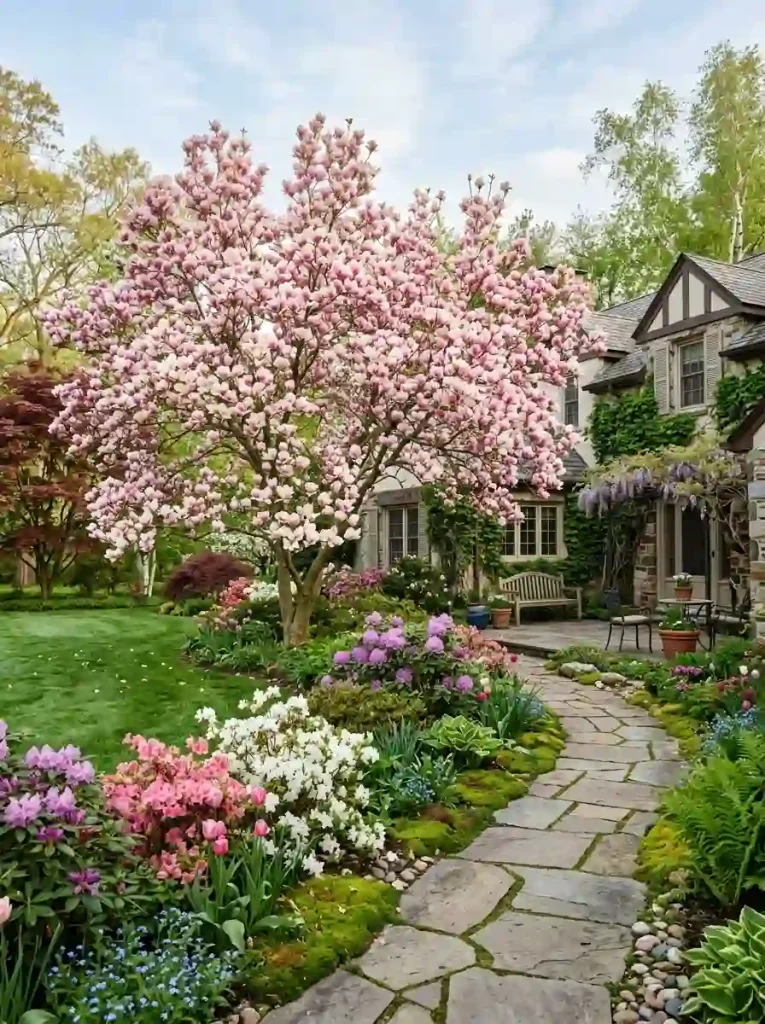
Saucer magnolia makes a dramatic statement when its large cup-shaped flowers appear in spring. The blooms can range from white and pink to deeper purple-pink shades, creating an elegant display before or around the emergence of foliage.
Give this tree plenty of room because mature size can vary significantly by cultivar. An open lawn or spacious garden border can showcase its branching form beautifully. Choose a planting location with appropriate sunlight, drainage, and room for the tree to develop without crowding nearby structures.
3. Eastern Redbud
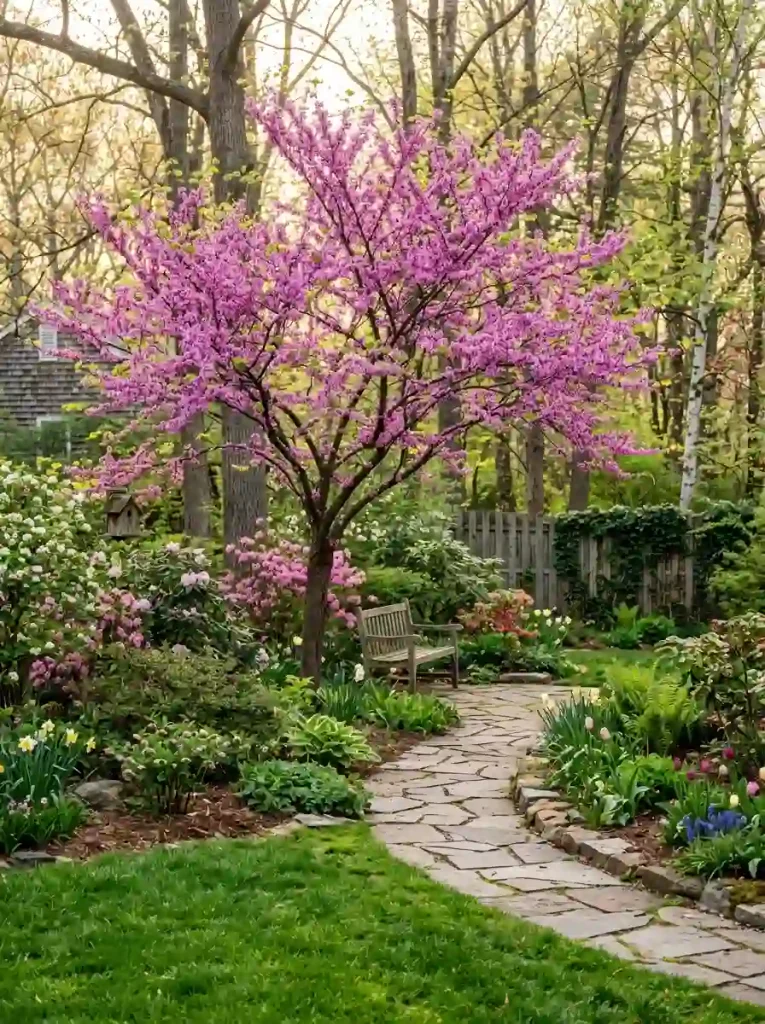
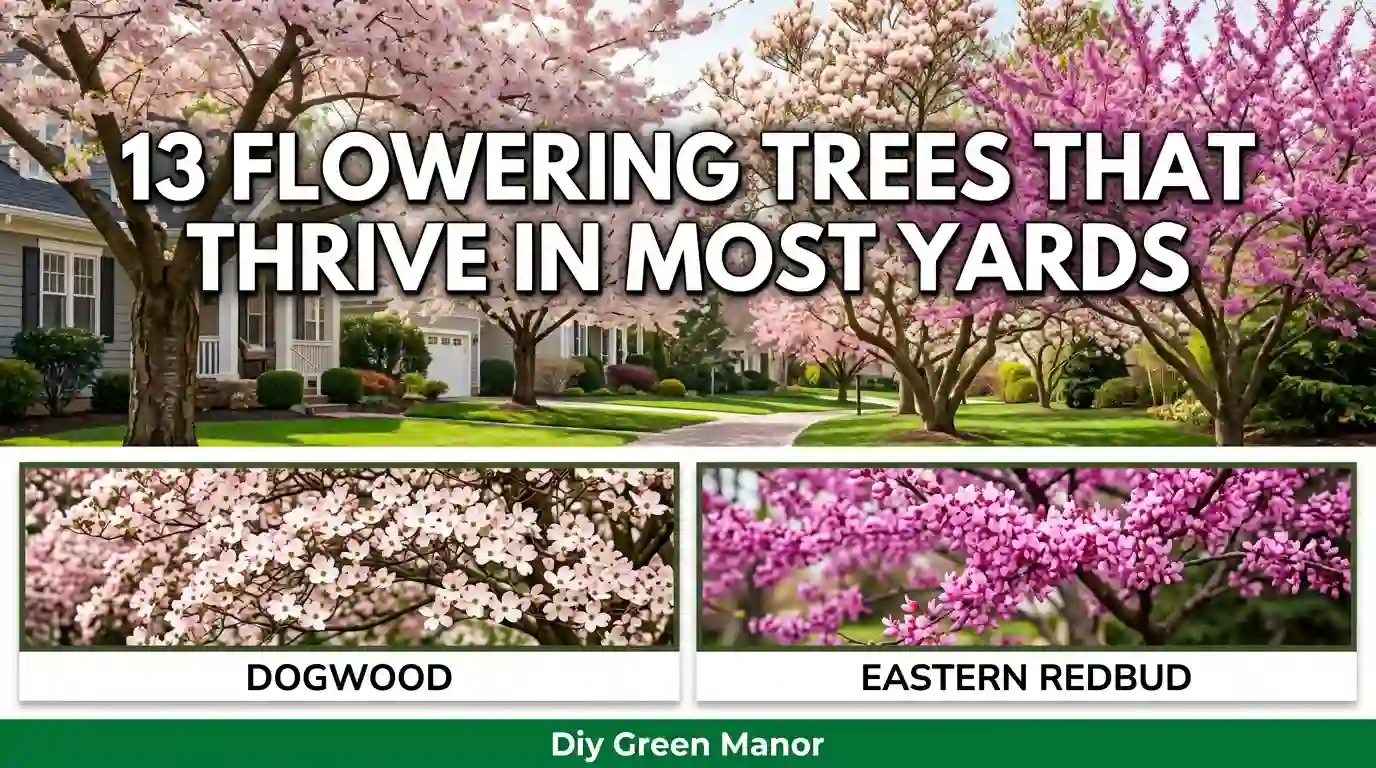
Eastern redbud brings a magical burst of color to the landscape in early spring. Clusters of rosy pink flowers appear directly along the branches, creating a distinctive look before the heart-shaped leaves fully develop.
After flowering, the attractive foliage provides shade and texture throughout the growing season. Use a redbud as a specimen tree or incorporate it into a naturalistic garden. Select a cultivar appropriate for your yard’s mature size and provide suitable soil, sunlight, and drainage for healthy growth.
4. Flowering Dogwood
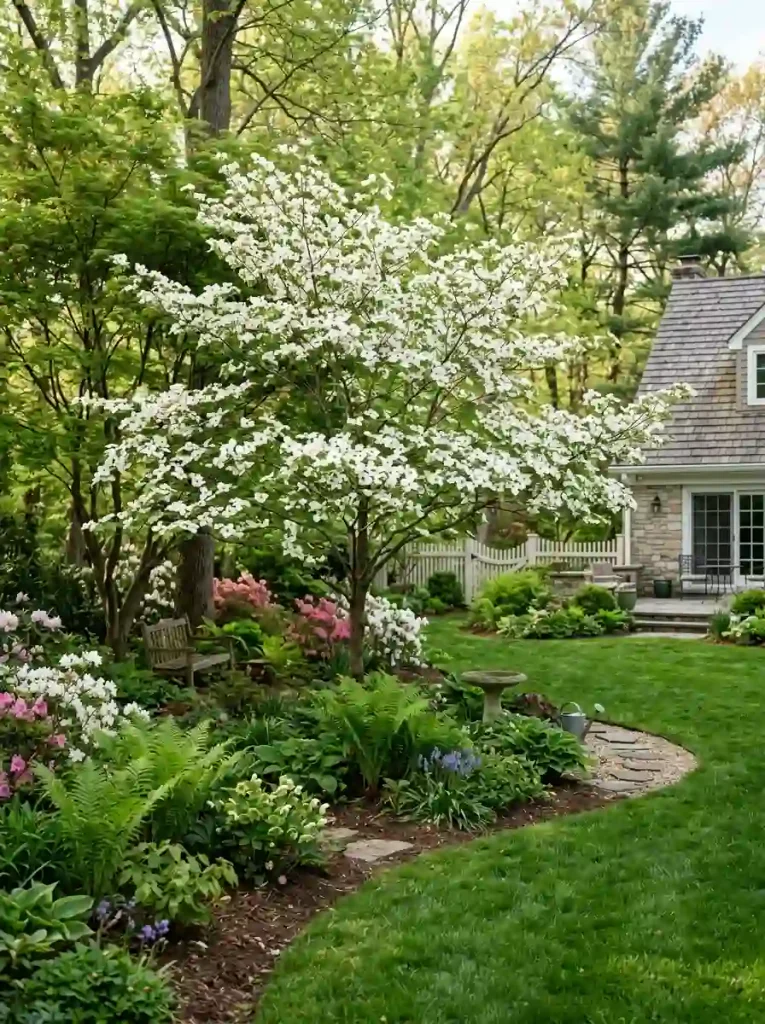
Flowering dogwood is beloved for its elegant spring display and graceful branching habit. Its showy bracts surround tiny central flowers, creating the appearance of beautiful blooms throughout the canopy.
The tree can continue providing seasonal interest after flowering through attractive foliage and autumn color. It works especially well in woodland-inspired landscapes and partially shaded garden settings. Choose a disease-resistant cultivar suited to your region and provide the moisture and soil conditions it prefers.
5. Japanese Flowering Cherry
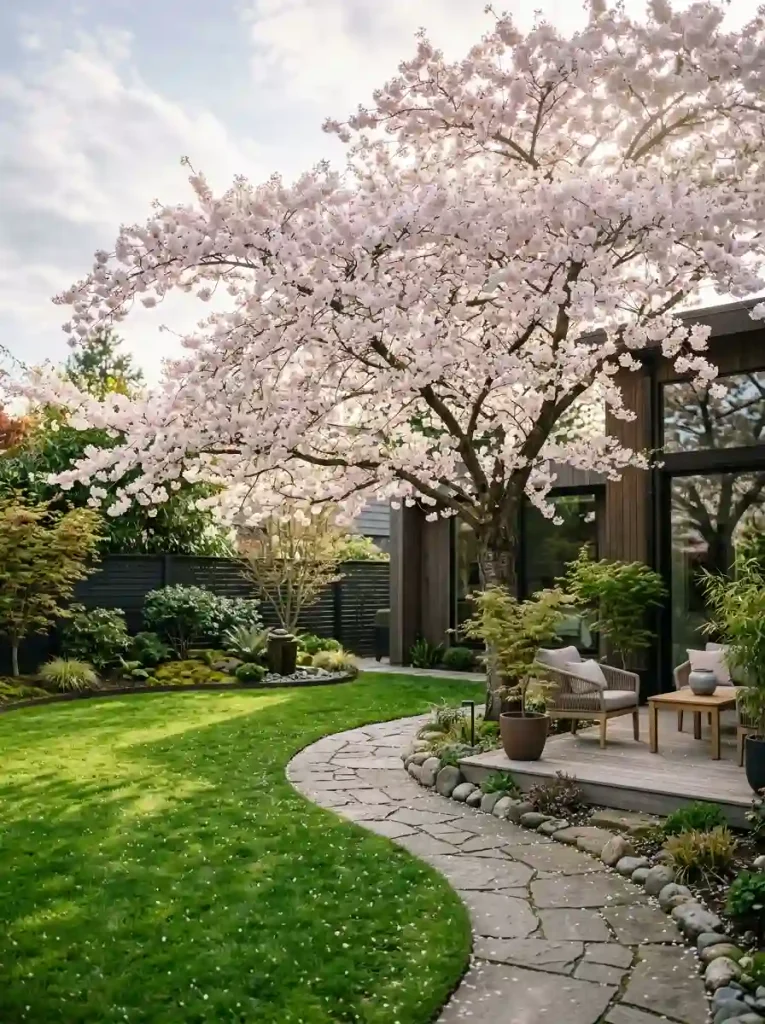
Few trees create a more recognizable spring display than a flowering cherry. Depending on the cultivar, branches can become covered with pale pink or white blossoms, creating a soft and romantic canopy.
Plant flowering cherry where the seasonal display can be enjoyed from a patio, window, or pathway. Avoid overcrowding the tree with nearby structures or dense plantings. Because different cultivars have different mature sizes and growth habits, choose one carefully based on your yard and climate.
6. Flowering Crabapple
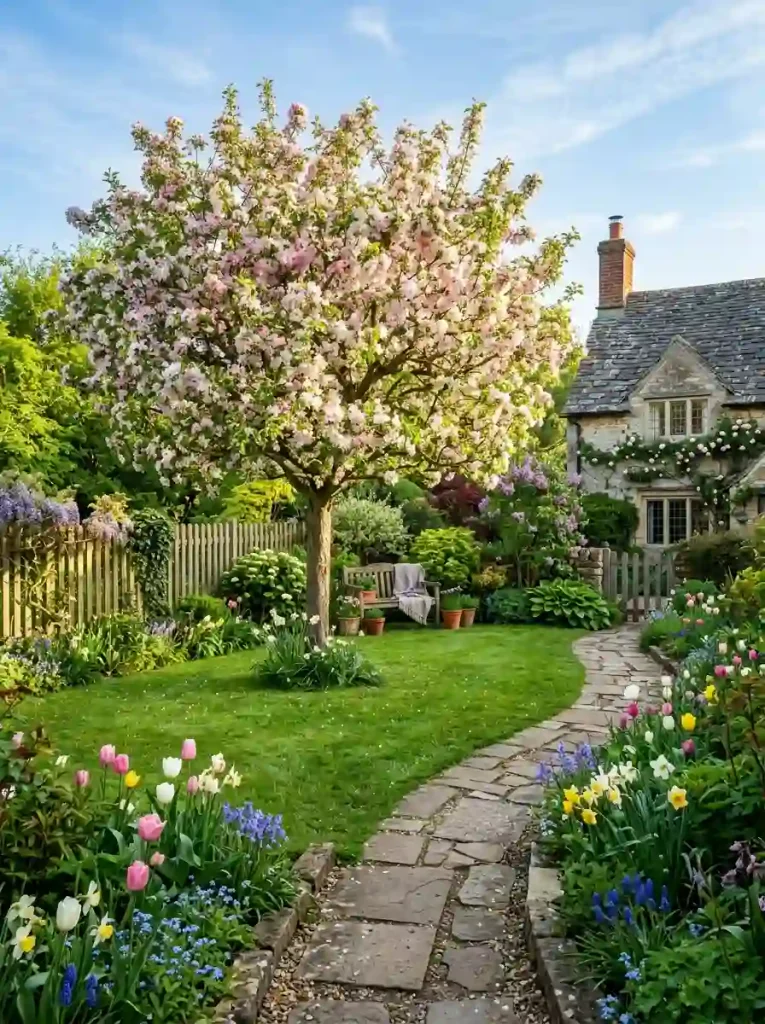
Flowering crabapple combines beautiful spring flowers with additional seasonal interest from foliage and, on suitable cultivars, decorative fruit. Its compact forms can work especially well in residential landscapes.
Look for cultivars selected for good disease resistance and an appropriate mature size. Plant the tree in a sunny location with good air circulation. Surrounded by spring bulbs, low shrubs, or perennial flowers, a crabapple can become a gorgeous focal point in a cottage or traditional garden.
7. Kousa Dogwood
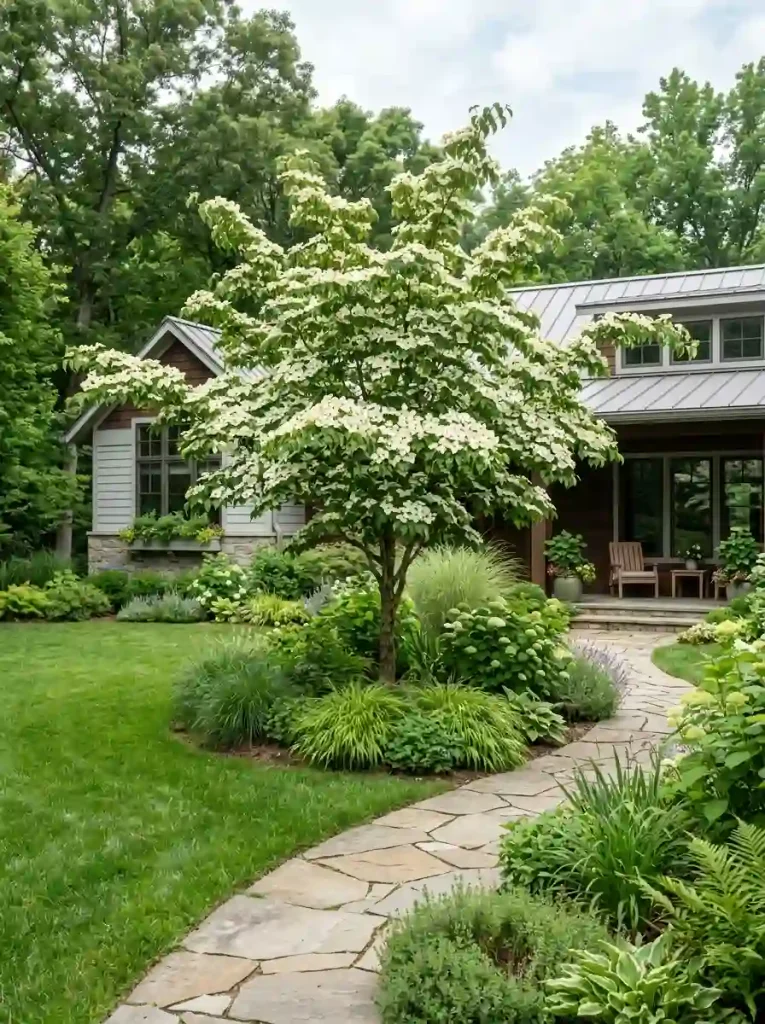
Kousa dogwood provides an attractive alternative to traditional flowering dogwood. Its white bracts appear later in spring or early summer, while its layered branching structure creates an elegant silhouette.
The tree can also offer attractive fruit and autumn foliage, giving it multi-season appeal. Use it as a specimen near a lawn or garden path where its structure can be appreciated. Choose a cultivar suited to your climate and allow adequate space for mature growth.
8. Star Magnolia
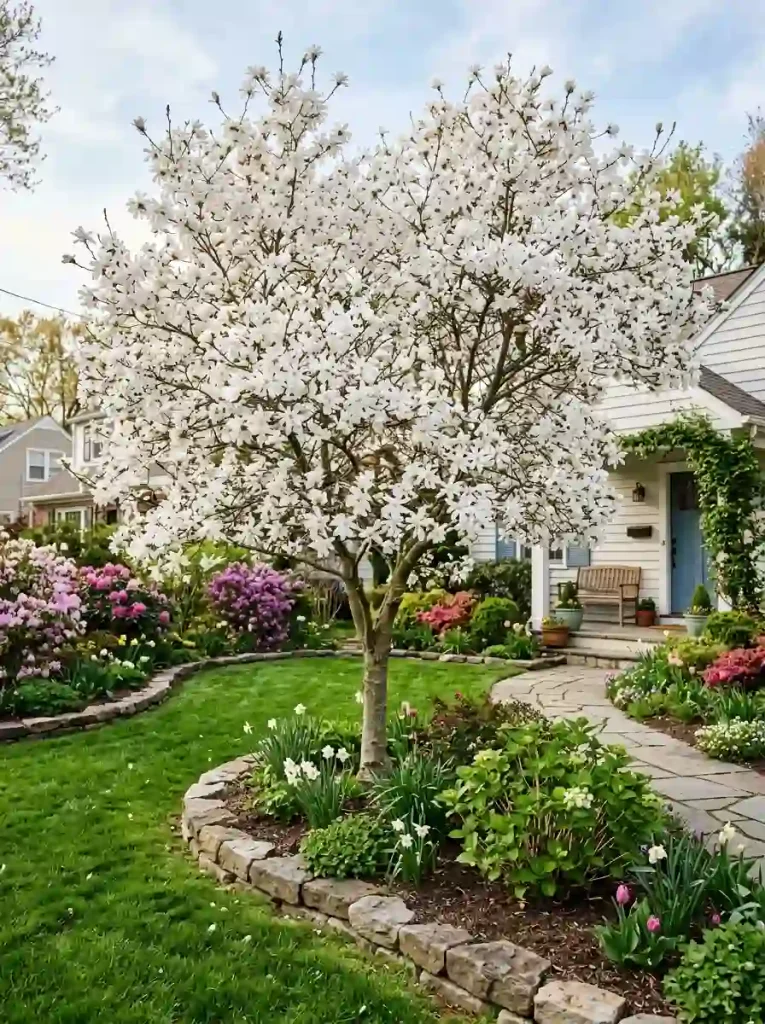
Star magnolia is especially useful for gardens where you want a smaller ornamental tree. Its large white, star-shaped flowers appear in spring and can create a spectacular display against bare or lightly leafed branches.
Plant it where the flowers can be viewed from a walkway, window, or seating area. Its compact nature makes it suitable for many residential landscapes, but mature size still varies by cultivar. Provide suitable drainage and growing conditions for reliable establishment.
9. Fringe Tree
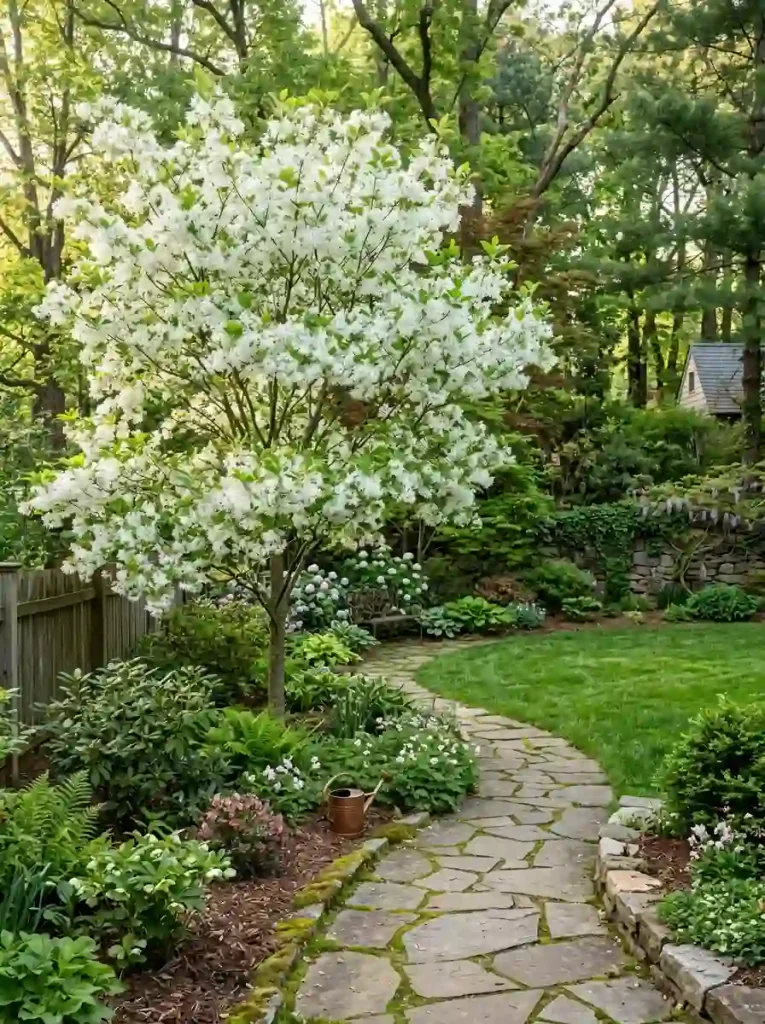
Fringe tree offers a more delicate flowering effect than many showier ornamental trees. Its narrow white flowers hang in clusters from the branches, creating a beautiful fringe-like appearance in spring.
Its understated character makes it a wonderful choice for woodland gardens, naturalistic landscapes, or sophisticated front yards. Position it where its branching form and flowers can be appreciated. Make sure the selected tree has enough space for its mature dimensions and receives suitable growing conditions.
10. Golden Chain Tree
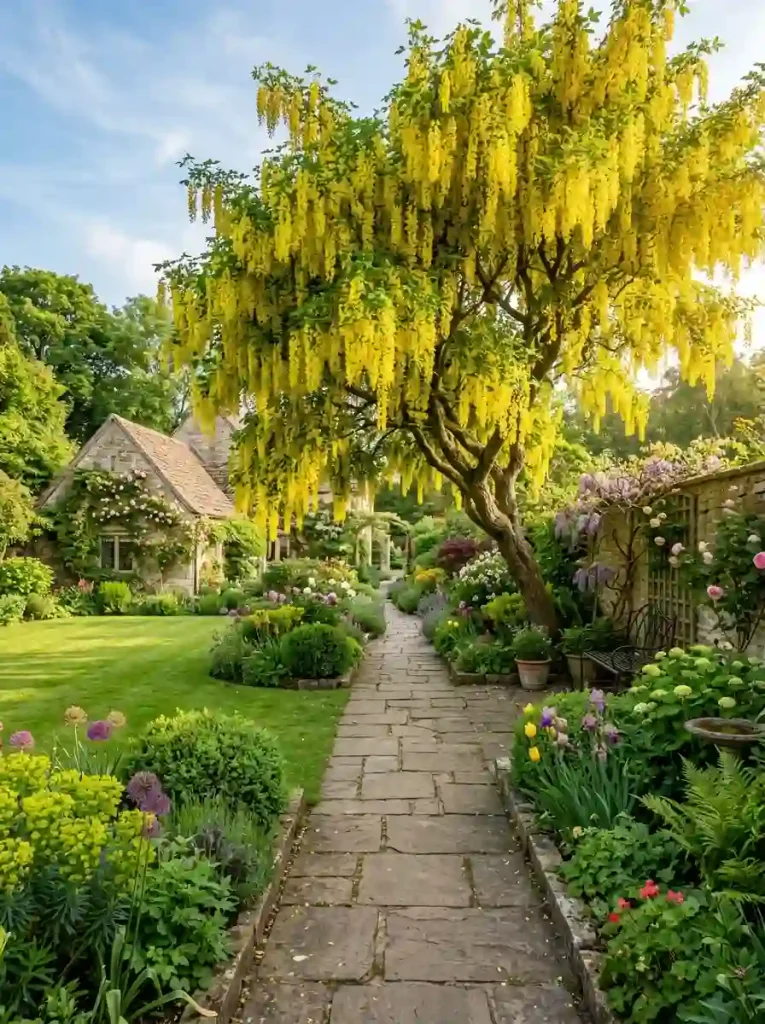
Golden chain tree creates a dramatic display with its long clusters of yellow flowers hanging from the branches. Its unusual form can make it a memorable focal point in a garden.
Use it where the flowering canopy can be appreciated from a distance, such as beside a lawn or garden path. However, Laburnum species can be toxic, so they may not be appropriate for every household. Check local suitability and safety considerations before planting, particularly around children and pets.
11. Japanese Stewartia
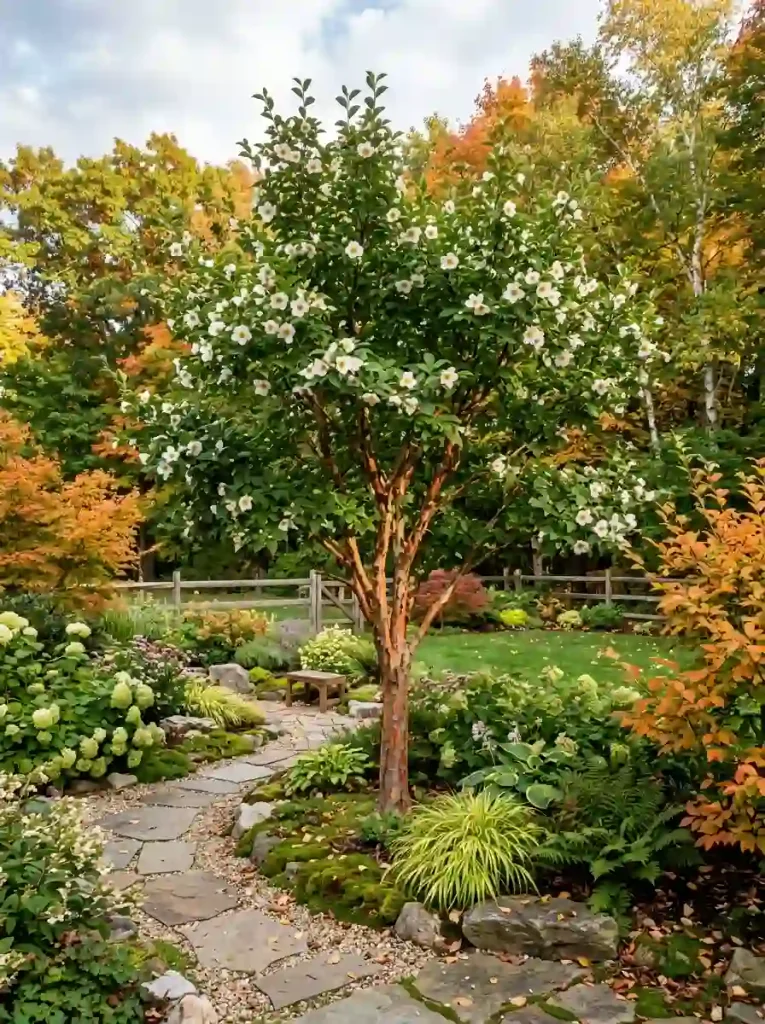
Japanese stewartia is an excellent option when you want a tree that offers interest beyond one flowering season. Its white summer flowers are complemented by attractive bark and often vibrant autumn foliage.
Its relatively refined size and graceful structure can make it a strong choice for thoughtfully designed residential gardens. Place it where its trunk and branching form can remain visible. Provide appropriate moisture, drainage, and sunlight based on your site’s conditions.
12. Serviceberry
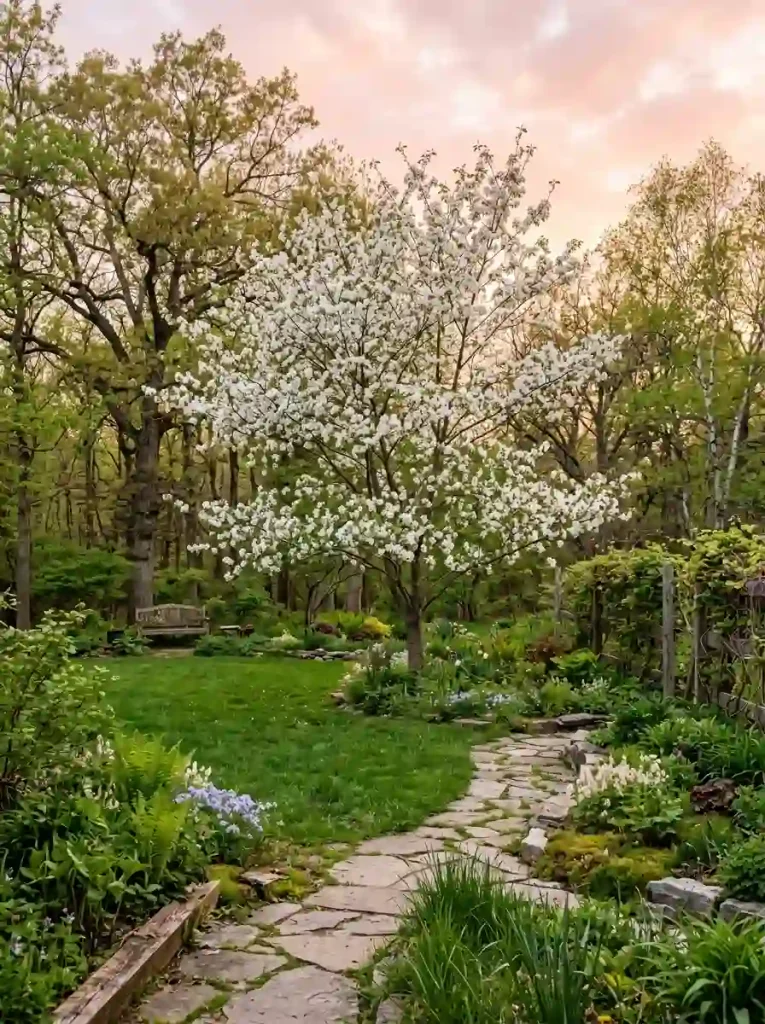
Serviceberry offers several seasons of interest, making it a versatile landscape tree. White spring flowers appear before colorful berries develop on suitable species, while autumn foliage can add another layer of seasonal beauty.
Use it as part of a naturalistic planting scheme or as a specimen near a lawn. Since serviceberry includes several species and cultivars with different mature sizes, select one appropriate for your available space. Native or regionally suitable selections can be especially valuable for wildlife-friendly gardens.
13. Hawthorn
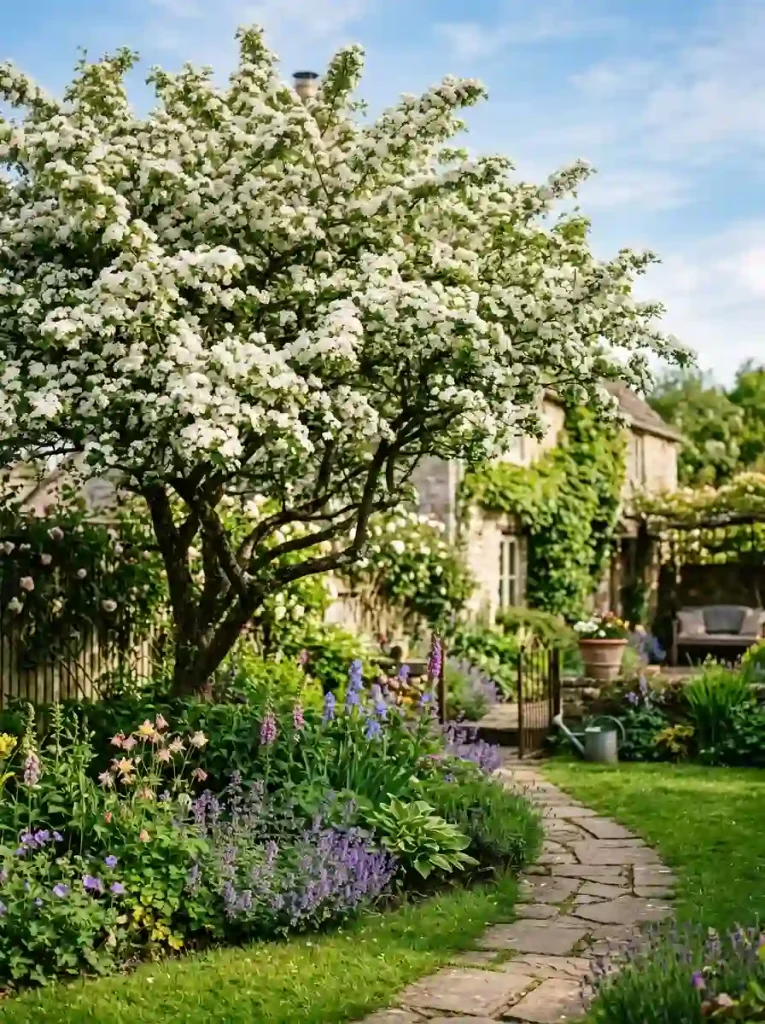
Hawthorn trees can provide beautiful spring flowers along with attractive structure and seasonal interest. Depending on the species or cultivar, flowers may appear in white, pink, or reddish tones, followed by decorative fruit.
Choose a cultivar carefully because hawthorns vary in size, thorns, and disease resistance. Place the tree where its mature dimensions and any thorny branches won’t interfere with walkways or play areas. With thoughtful placement, a suitable hawthorn can add classic character to a residential landscape.
Conclusion
Flowering trees can completely transform a yard, bringing color, structure, shade, wildlife interest, and seasonal beauty to the landscape. From the dramatic blooms of magnolia and cherry to the delicate flowers of fringe tree and stewartia, these 13 options offer plenty of inspiration for different garden styles and climates.
Before planting, check your local hardiness zone, mature tree size, soil conditions, sunlight requirements, and potential disease or pest concerns. The best flowering tree isn’t simply the prettiest one—it’s the variety that is well matched to your yard and climate, giving you years of healthy growth and beautiful seasonal displays.