19 Cozy Friendsgiving Decor Ideas for a Relaxed Holiday Table
19 Cozy Friendsgiving Decor Ideas for a Relaxed Holiday Table
Friendsgiving is the holiday table where nobody has to be formal. There is no seating chart from childhood, no best china anxiety, and no pressure to impress anyone. Friends bring the food, someone always arrives late with dessert, and the best conversations happen over second helpings. These cozy Friendsgiving decor ideas are made for exactly that kind of gathering: warm, relaxed, and easy to put together without spending a fortune or rearranging your whole house.
In this guide, you will find 19 Friendsgiving decor ideas for a relaxed holiday table, from a kraft-paper runner guests can doodle on to a gratitude wall, a photo corner, and a hot cider bar. If you are also planning the more traditional family meal, our Thanksgiving table decor ideas cover a formal holiday table, while our winter dining room decor ideas will keep the room feeling cozy all season. Pick the ideas that fit your space, your guest list, and your budget.
1. Kraft-Paper Table Runner Guests Can Doodle On

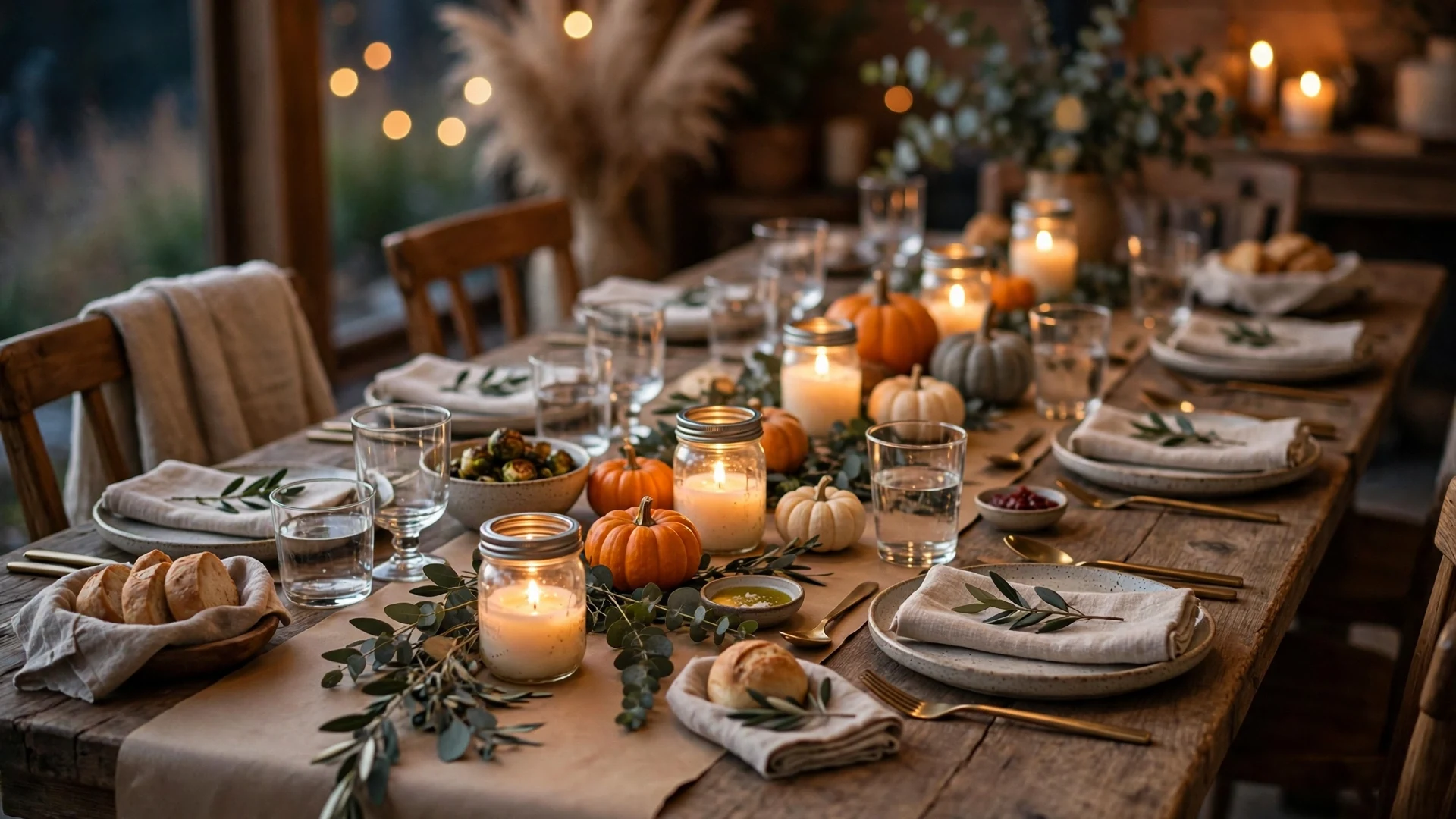
A roll of brown kraft paper down the center of the table is the easiest Friendsgiving decoration you will ever make, and it doubles as entertainment. It looks intentionally rustic against wood, white plates, and candlelight, and it instantly tells guests this is not a stiff dinner. Scatter a few markers or crayons along the runner and watch the table fill up with doodles, jokes, and messages before dessert is even served.
To set it up, tear the paper a little longer than the table so the ends can drape slightly, then tape it underneath at each end so it stays put. Leave the center clear for serving dishes, and put markers in small jars or mugs every few seats. At the end of the night, roll the runner up as a keepsake or recycle it, which means almost no cleanup. It is simple, cheap, and genuinely fun.
- Use plain kraft paper, not printed wrapping paper, so doodles show up clearly.
- Choose washable markers if children are coming, and keep pens away from the tablecloth.
- Write the menu or a welcome note on the runner before guests arrive.
2. A Gratitude Wall Everyone Can Add To
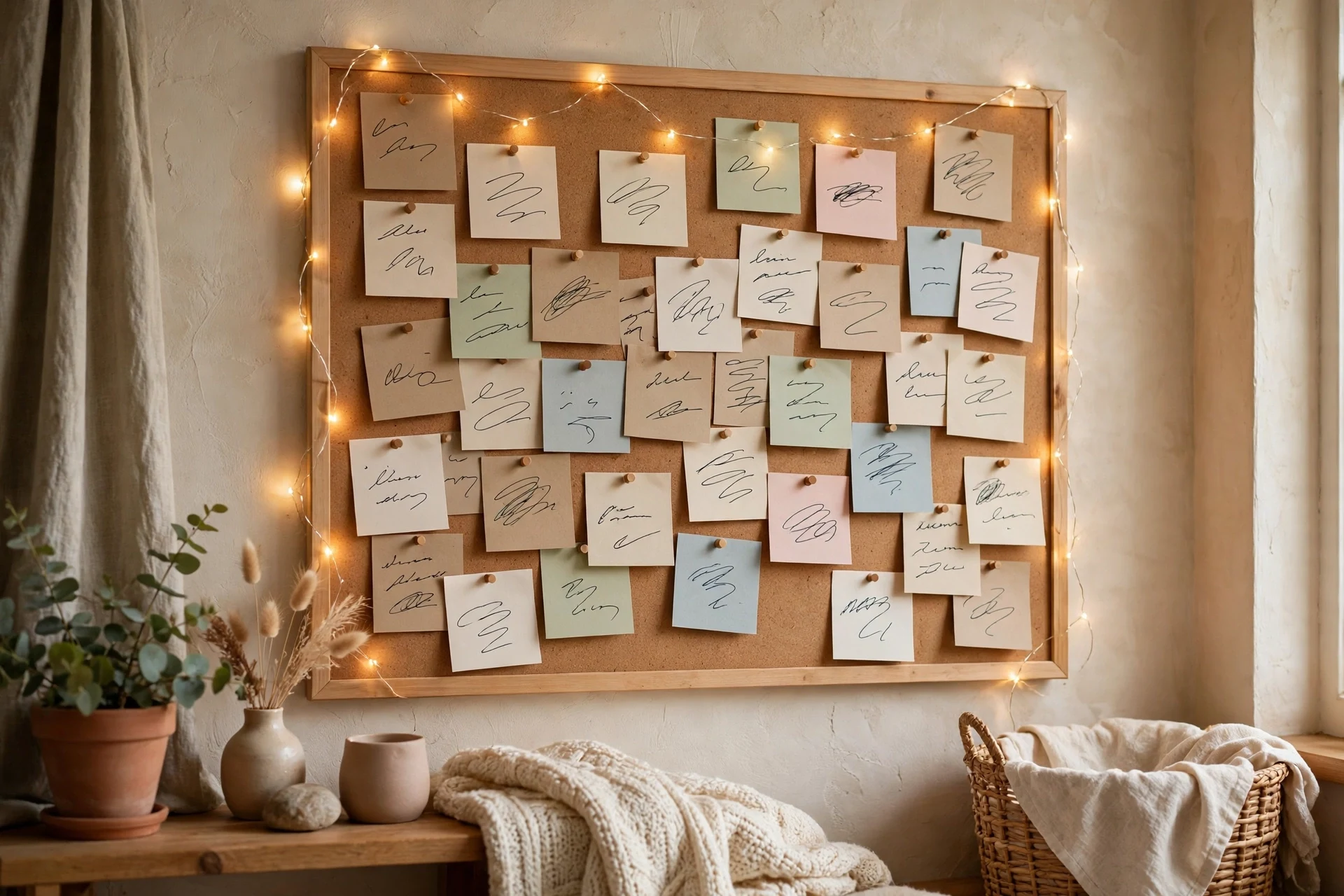
A gratitude wall turns the best part of Friendsgiving, the people around the table, into the decoration itself. Guests write one thing they are thankful for on a card and pin it to a board, a stretched piece of twine, or a blank stretch of wall. By the end of the evening, the wall is full of funny, sweet, and surprisingly moving notes, and it gives everyone something to read while dinner finishes in the oven.
Set out small cards, pens, and pins or clips near the entrance so guests can add a note as they arrive. Keep the cards short and the instructions simple, such as one sentence per person, so nobody feels put on the spot. Later in the evening, read a few favorites aloud before dessert. It takes five minutes to set up and becomes the most talked-about part of the night.
- Use sturdy card stock so notes do not curl or tear when pinned.
- Provide two or three pens, since one always goes missing.
- Photograph the wall before taking it down, so the notes are saved.
3. A Polaroid Photo Corner
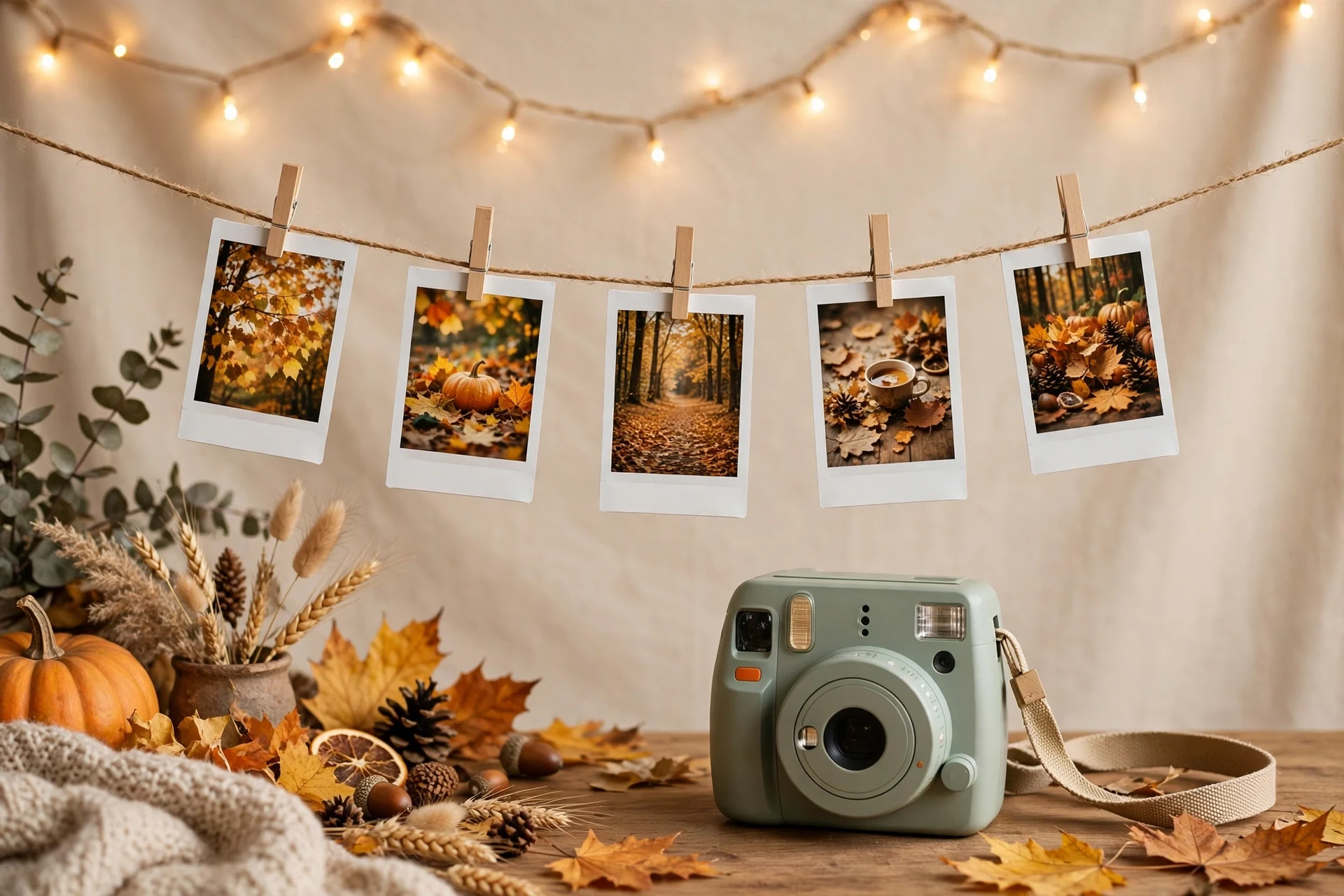
A photo corner gives your Friendsgiving a built-in memory station without turning the evening into a photoshoot. A simple backdrop, a string of lights, and an instant camera are all you need. Friends pose between courses, stick their photo on a line with a clip, and by the end of the night you have a whole gallery of the evening. It is relaxed, it is interactive, and it beats asking everyone to gather for one stiff group photo.
Hang a plain sheet, a kraft-paper backdrop, or a curtain of fall leaves in a corner with good light, and keep props simple: a few hats, funny glasses, or small signs. Put the camera, film, and clips in one basket so nothing gets lost. If you do not have an instant camera, a phone tripod and a shared album work just as well, and guests can print favorites later.
- Place the photo corner near natural light or add one warm lamp for flattering photos.
- Keep props to a handful, so the corner stays tidy and inviting.
- Clip photos to twine as they are taken, so everyone can see them accumulate.
4. Mix-and-Match Seating That Feels Collected
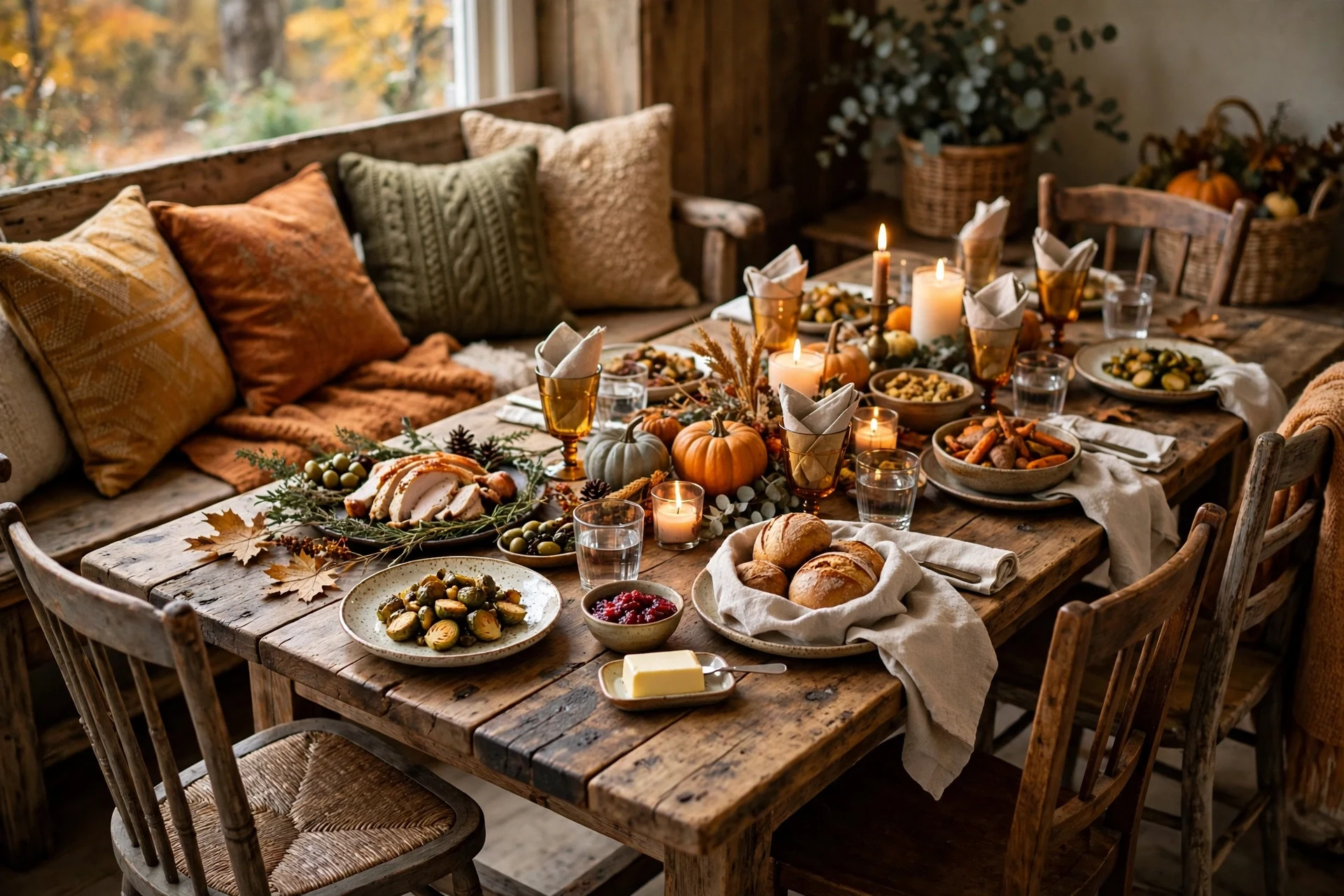
Friendsgiving rarely has a matching dining set for twelve, and that is a strength, not a problem. Mismatched chairs, a bench on one side, and a couple of borrowed stools make the table feel collected and welcoming, like a meal at a friend’s cabin rather than a showroom. The mix also lets you seat more people, since a bench fits three where two chairs would feel crowded.
Pull chairs from every room, add a cushion or folded throw to any hard seat, and keep the heights roughly similar so nobody towers over the table. If you are short on chairs, a sturdy bench along one side is the easiest fix, and guests can slide in and out without rearranging the room. Tie the look together with one repeated element, such as the same napkins or a single runner, so the mix reads as intentional.
- Count seats before the day, and borrow chairs early rather than the morning of the party.
- Add cushions to benches and stools, since guests sit longer at Friendsgiving.
- Keep chair legs clear of the table legs, so sliding in and out is easy.
5. Potluck Dish Labels That Save Everyone Questions
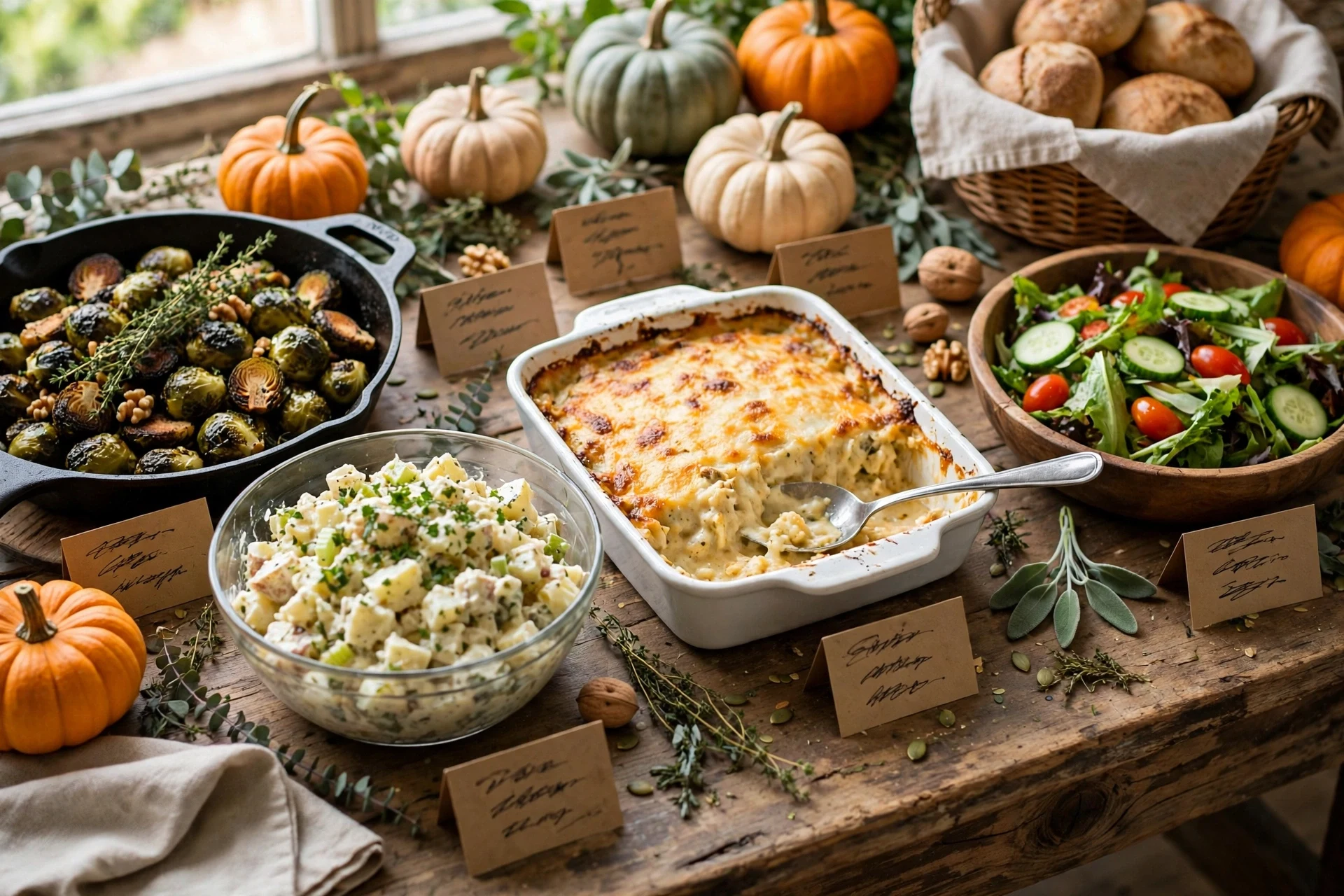
At a potluck Friendsgiving, half the conversation is guests asking what each dish is, whether it has nuts, and who made it. Simple dish labels answer all three questions at once and look charming doing it. Small kraft tags, mini chalkboards, or folded cards beside each dish keep the buffet line moving and make sure guests with allergies can eat with confidence.
Ask each cook to write the dish name, their name, and any major allergens on a card when they arrive, and keep a few blank cards and a pen by the buffet for late additions. Place labels in front of each dish, not behind it, so they are readable from the serving side. It is a tiny detail that makes the whole meal feel organized without making it feel formal.
- Include allergen notes for nuts, dairy, gluten, and meat, even for familiar dishes.
- Use tent-folded cards so labels stand up and stay readable.
- Keep a pen at the buffet for dishes that arrive unlabeled.
6. A Blanket Basket by the Table
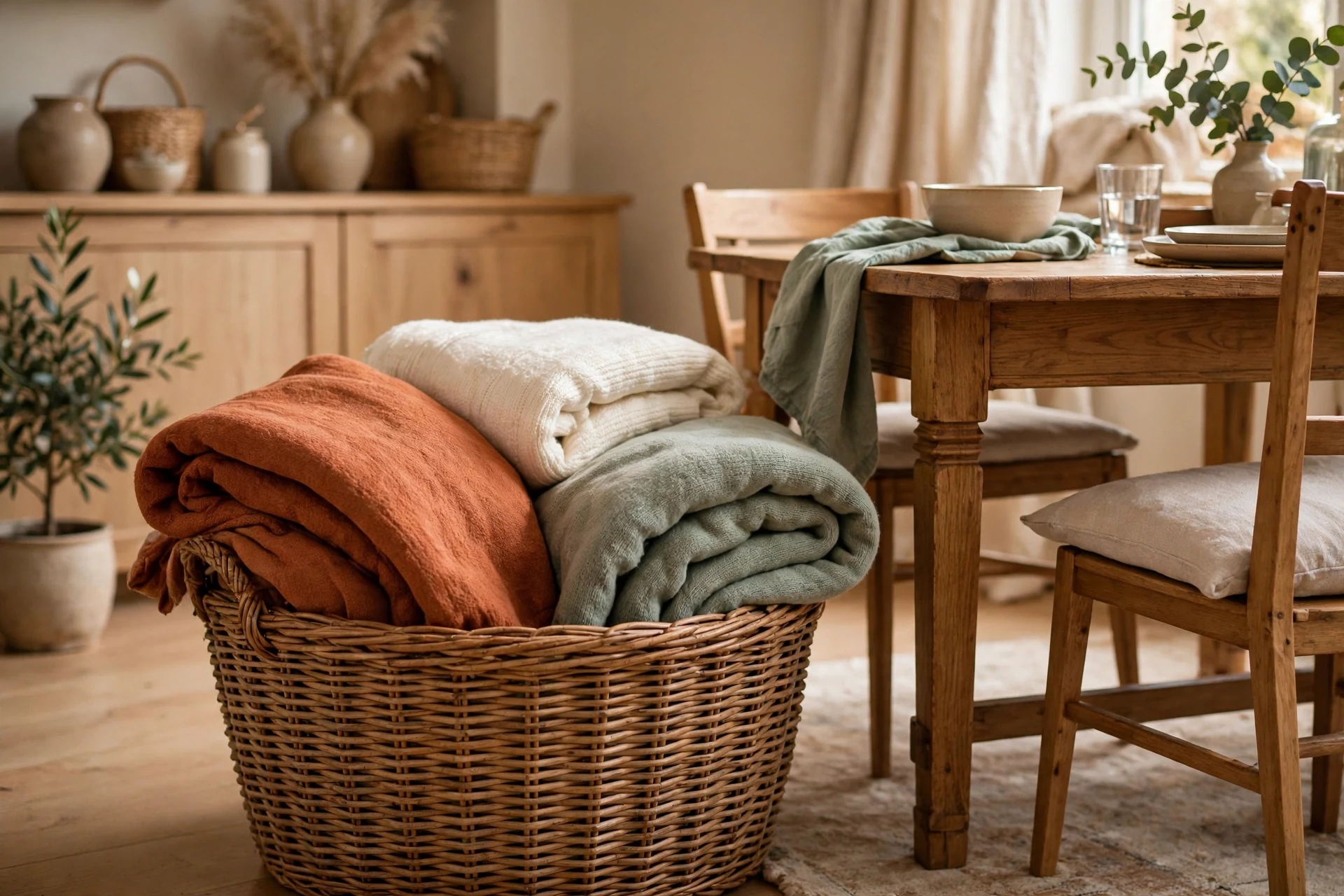
A basket of blankets is the kind of detail guests remember, because it says you thought about their comfort, not just the menu. Friendsgiving often stretches long past dinner, into games and conversation on the sofa or porch, and a soft throw makes that second half of the evening much cozier. It also covers the friend who always feels cold, without anyone having to ask for the heat to go up.
Fill a large basket or crate with four or five clean throws in warm, washable fabrics, and set it where guests can reach it without getting up from the table. Choose colors that suit your room, such as rust, cream, and sage, rather than novelty prints. At the end of the night, toss the used throws straight into the wash, and the basket is ready for the next gathering.
- Wash throws before the party, so they smell fresh rather than stored.
- Pick machine-washable fabrics, since spills at Friendsgiving are a matter of time.
- Place the basket near seating, not in a hallway guests will not visit.
7. Candlelight in Mason Jars
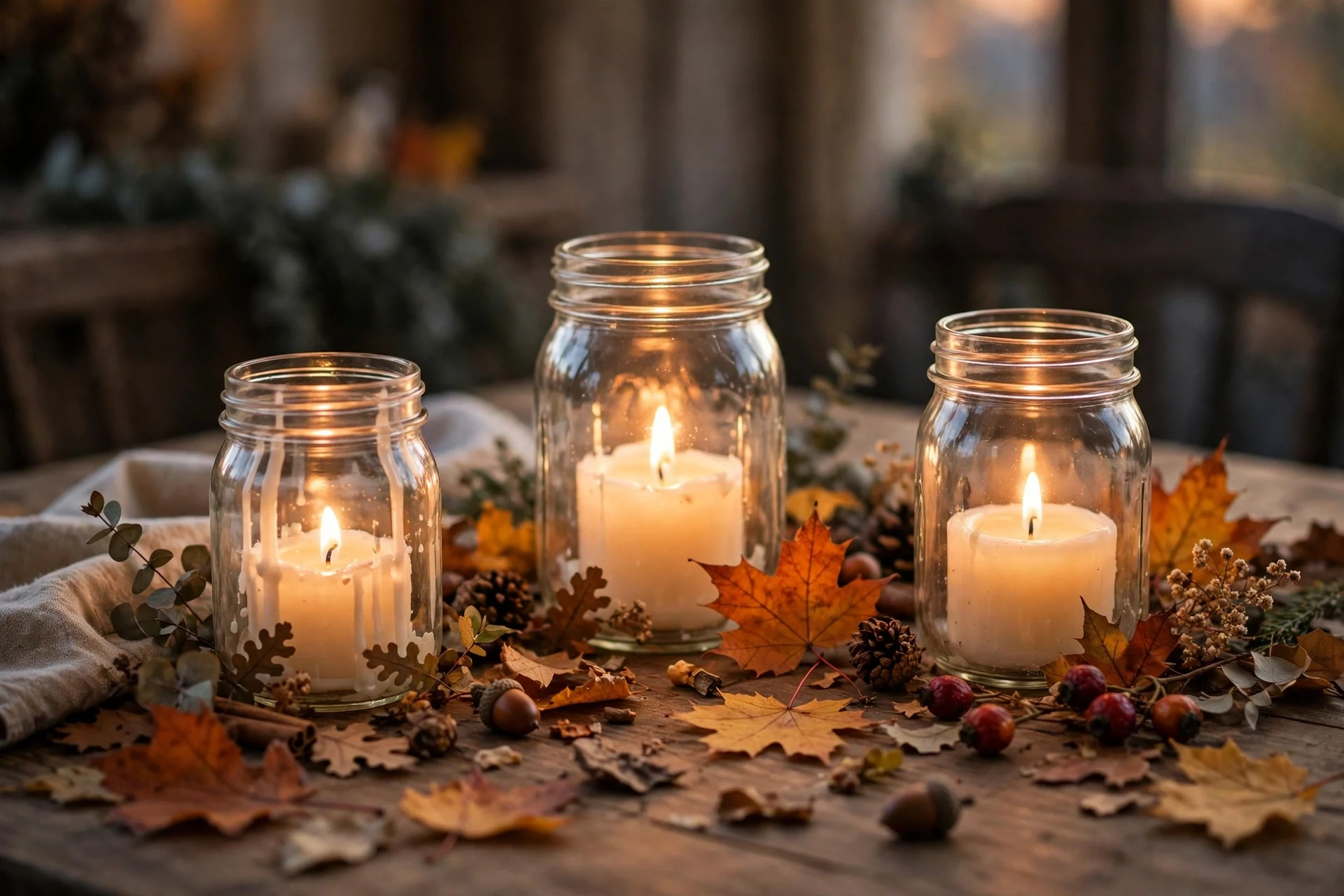
Mason jars with candles are Friendsgiving lighting at its best: cheap, safe, and instantly warm. The glass softens the flame, the jars suit a rustic table, and a row of them down the center of the table makes even a simple potluck look like an occasion. They also cost almost nothing if you already have jars in a cupboard, which is exactly the spirit of a friends-hosted holiday.
Use battery candles inside the jars if children are around or the table is crowded, and real tea lights only where they will not be knocked over. Add a few fall leaves, cranberries, or small pinecones around the base of each jar for color. Keep the jars low enough that guests can see each other across the table, and light them just before everyone sits down so the glow feels intentional.
- Use battery candles near paper runners, fabric, and dried leaves.
- Keep candle height below eye level across the table for easy conversation.
- Group jars in odd numbers, such as three or five, for a natural look.
8. A Low Pumpkin and Eucalyptus Centerpiece

A low centerpiece is the secret to a table where people actually talk to each other. Tall arrangements look impressive in photos but block faces, force guests to lean around flowers, and get moved to the side within minutes. A row of small pumpkins, eucalyptus sprigs, and a few candles gives the table color and scent without ever getting in the way of conversation or the serving dishes.
Choose three to five small pumpkins in mixed colors, such as white, orange, and sage green, and tuck eucalyptus or olive branches between them along the center of the table. Add tea lights in glass holders for evening warmth, and leave gaps where large serving bowls will sit. The whole centerpiece can be assembled in ten minutes, and the pumpkins last for weeks, so you can set it up days ahead.
- Keep the centerpiece under twelve inches tall, so sightlines stay open.
- Mix pumpkin colors rather than using only traditional orange.
- Leave gaps for serving dishes before adding the final greenery.
9. A Friendsgiving Menu Board
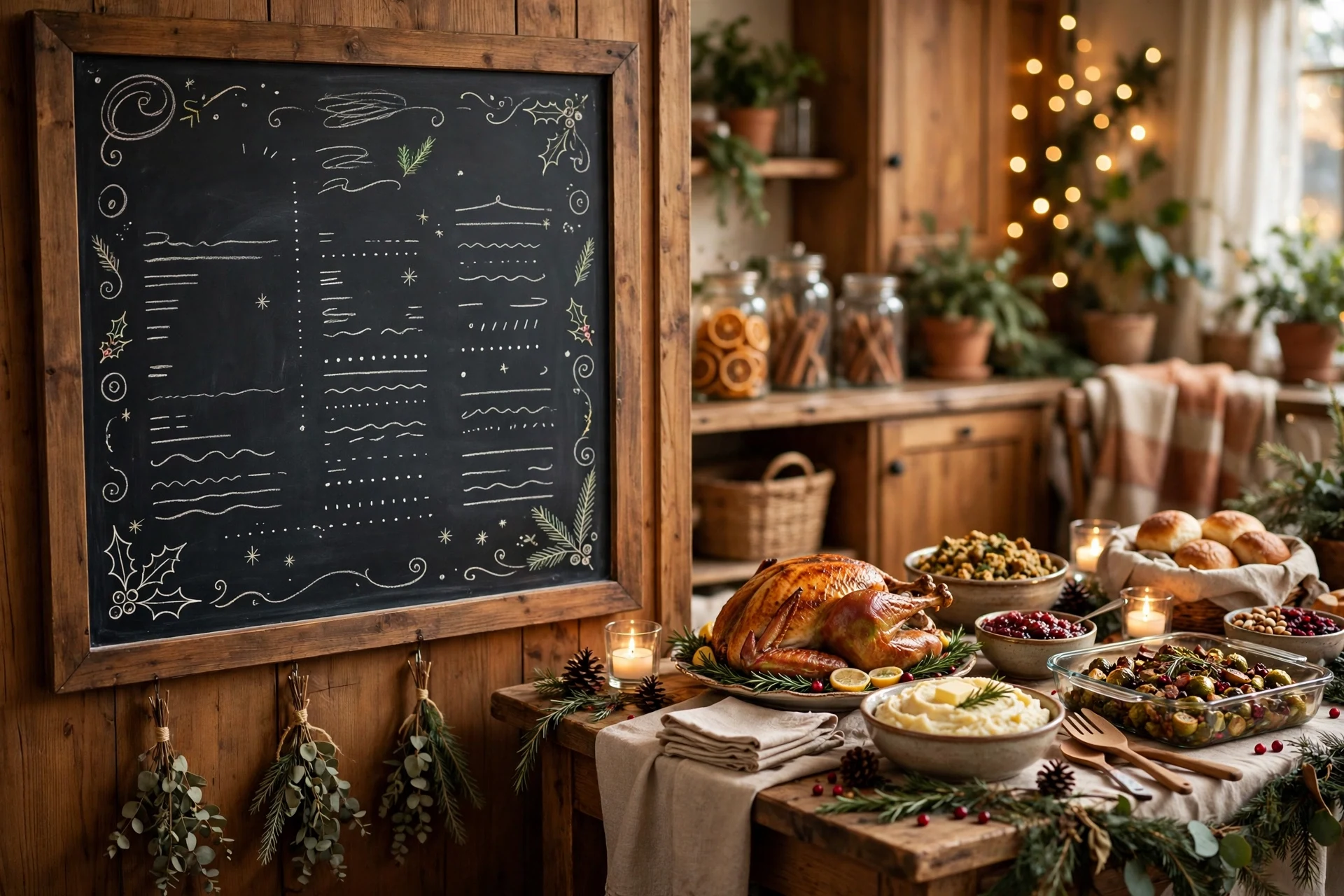
A menu board makes a potluck feel like a real event, and it saves the host from answering the same question twenty times. Write the dishes, who brought them, and the order of the meal on a chalkboard, a framed print, or a large piece of kraft paper near the buffet. Guests can plan their plates, vegetarians can spot their options instantly, and the board itself becomes part of the decoration.
List dishes in serving order, starting with appetizers and ending with dessert, and leave a little space for last-minute additions. Use large, clear handwriting, since the board will be read from a few feet away in warm light. If you like, add a small note at the bottom, such as the time dessert will be served or where the coffee station is, so guests never have to wonder.
- Write in large letters, and test readability from across the room.
- Group dishes by course, so guests can plan a balanced plate.
- Leave blank lines for dishes that arrive after the board is written.
10. Personalized Place Cards With a Twist
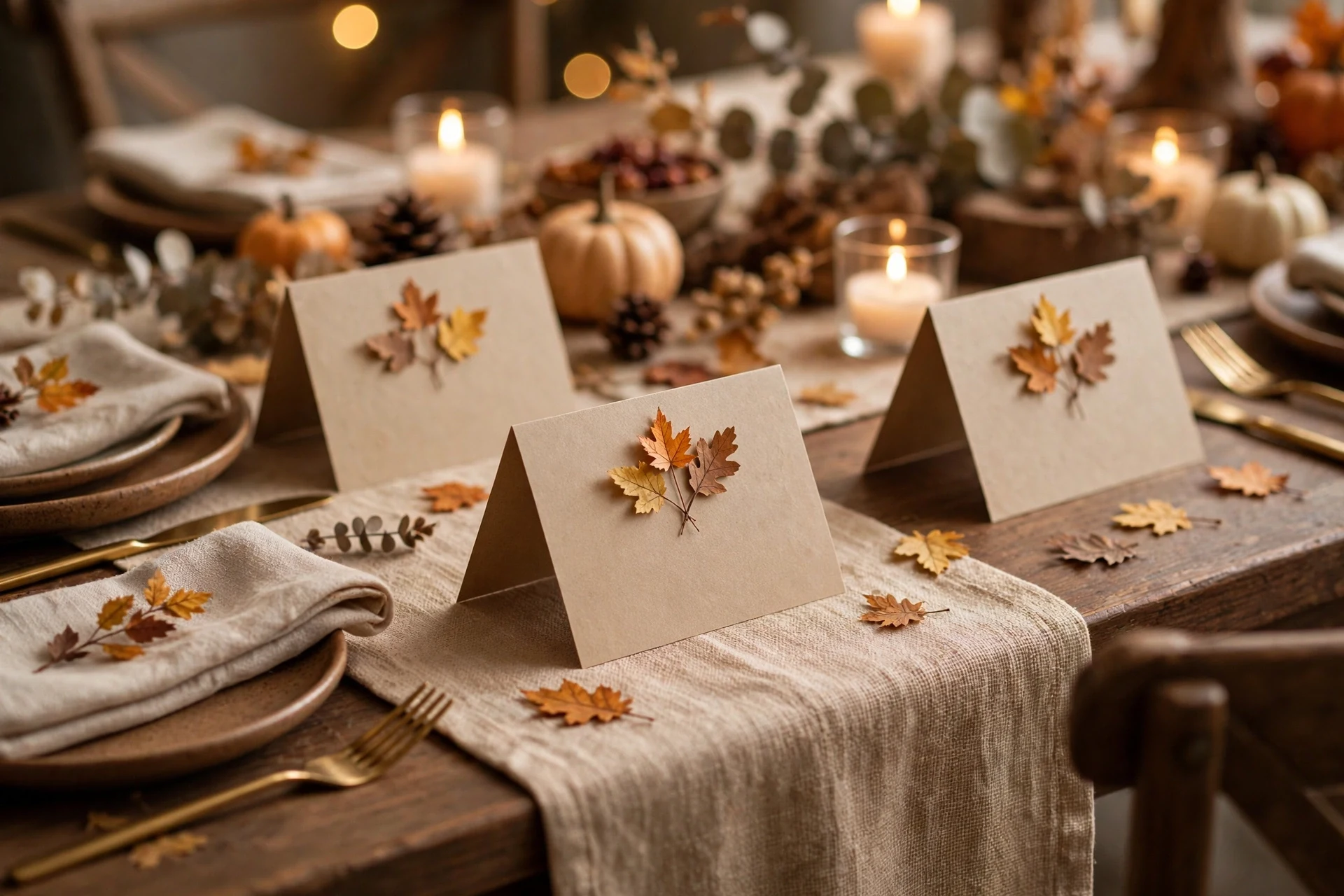
Place cards feel formal until you make them personal, and then they become one of the most-loved details at Friendsgiving. Instead of just a name, write each guest’s name plus a tiny note: a shared joke, their signature dish, or the year you met. Guests laugh when they find their card, and many take them home as keepsakes, which is more than most decorations ever achieve.
Use kraft tags, small pumpkins, or folded cards, and write names in clear handwriting or print them if your script is hard to read. Place one card at each setting, slightly to the left of the plate, where it will be noticed as guests sit down. Keep the notes kind and short, since a place card is a welcome, not a roast, and avoid anything that could embarrass someone in front of the group.
- Keep personal notes short, kind, and readable at a glance.
- Match place cards to the table style, such as kraft tags for a rustic table.
- Double-check spellings, especially for names you do not write often.
11. A Games and Conversation Corner
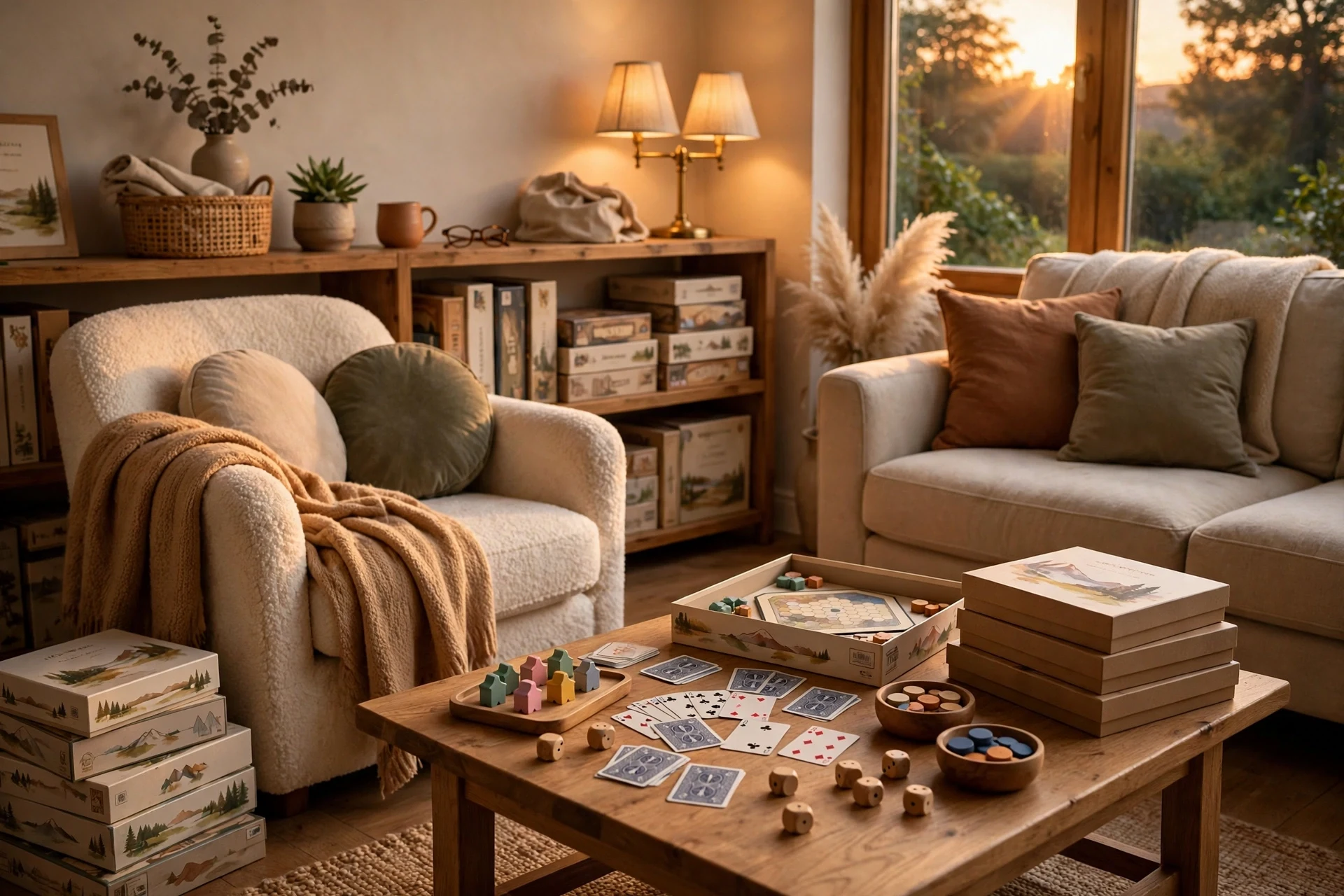
Friendsgiving needs something to do after the plates are cleared, or the evening quietly ends by eight o’clock. A games corner, even a small one, keeps the night going: a stack of board games, a deck of cards, and a jar of conversation questions on a side table. It gives shy guests something to join, gives the cooks a break from hosting, and turns a good dinner into a long, memorable evening.
Choose games that take under an hour and work for mixed groups, and avoid anything that needs long rules explanations. Set out two or three options rather than a whole shelf, so choosing is easy, and keep the corner near seating with good light. Conversation cards are a great backup for guests who do not love board games, since anyone can answer one question and join in.
- Pick short, easy games that new players can learn in five minutes.
- Offer a non-game option, such as conversation cards, for every guest.
- Keep the games table clear of food, so pieces stay clean and safe.
12. A Hot Cider Bar
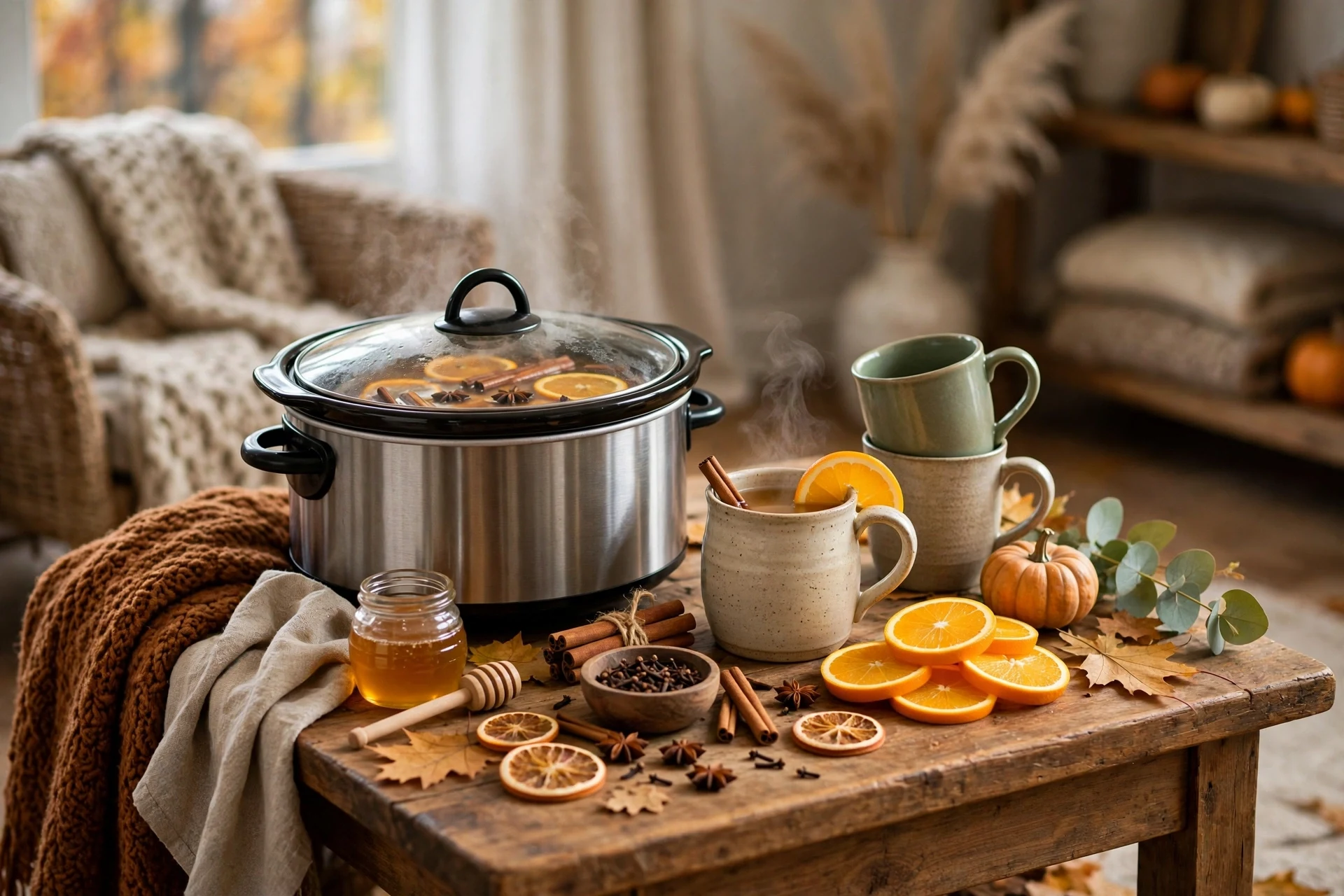
A hot cider bar is Friendsgiving’s answer to a cocktail station, and it works for every guest, including those who do not drink alcohol. A slow cooker of warm spiced cider, a row of mugs, and small bowls of cinnamon sticks, orange slices, and star anise let guests build their own drink and keep refilling it all evening. It smells wonderful, it looks festive, and it costs far less than a full bar.
Set the slow cooker on warm, not high, so the cider stays hot without scorching, and put mugs, a ladle, and garnishes beside it with a small towel for drips. Offer one adult option, such as a bottle of bourbon or rum on the side, clearly labeled, so guests can choose. Keep the bar away from the main food table if space allows, so drink refills do not block the buffet line.
- Keep cider on warm in a slow cooker, and stir it occasionally.
- Label any alcohol clearly, and keep it separate from the garnishes.
- Use sturdy mugs with handles, since guests will carry them around all evening.
13. A Simple Music Station
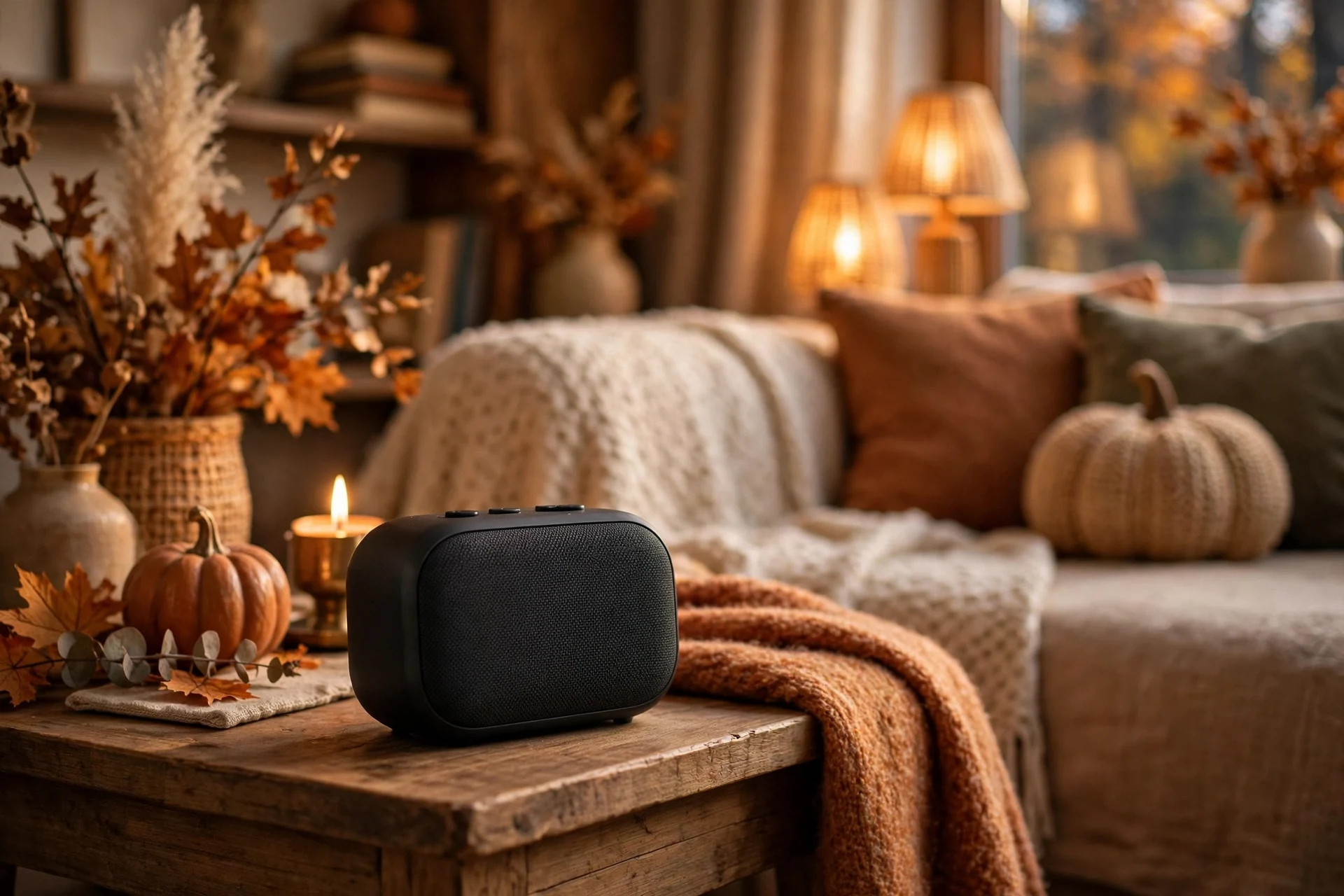
Music is the decoration nobody sees but everyone feels. A quiet playlist in the background makes a room feel warm the moment guests walk in, covers awkward silences while dinner finishes, and signals that the evening is a celebration, not just a meal. A small speaker and a shared playlist are all you need, and the whole setup takes less time than folding napkins.
Build a playlist of mellow, familiar songs before the party, and keep the volume low enough that conversation stays easy. Let guests add songs through a shared playlist link, which doubles as a fun talking point and keeps the music from feeling like one person’s taste. Place the speaker in a corner, not on the dining table, so the sound fills the room without dominating any one seat.
- Keep volume low during dinner, and raise it slightly after dessert for games.
- Use a shared playlist so guests can add their own favorite songs.
- Charge the speaker fully before guests arrive, and keep a charger nearby.
14. A Fall Leaf Garland Along the Table
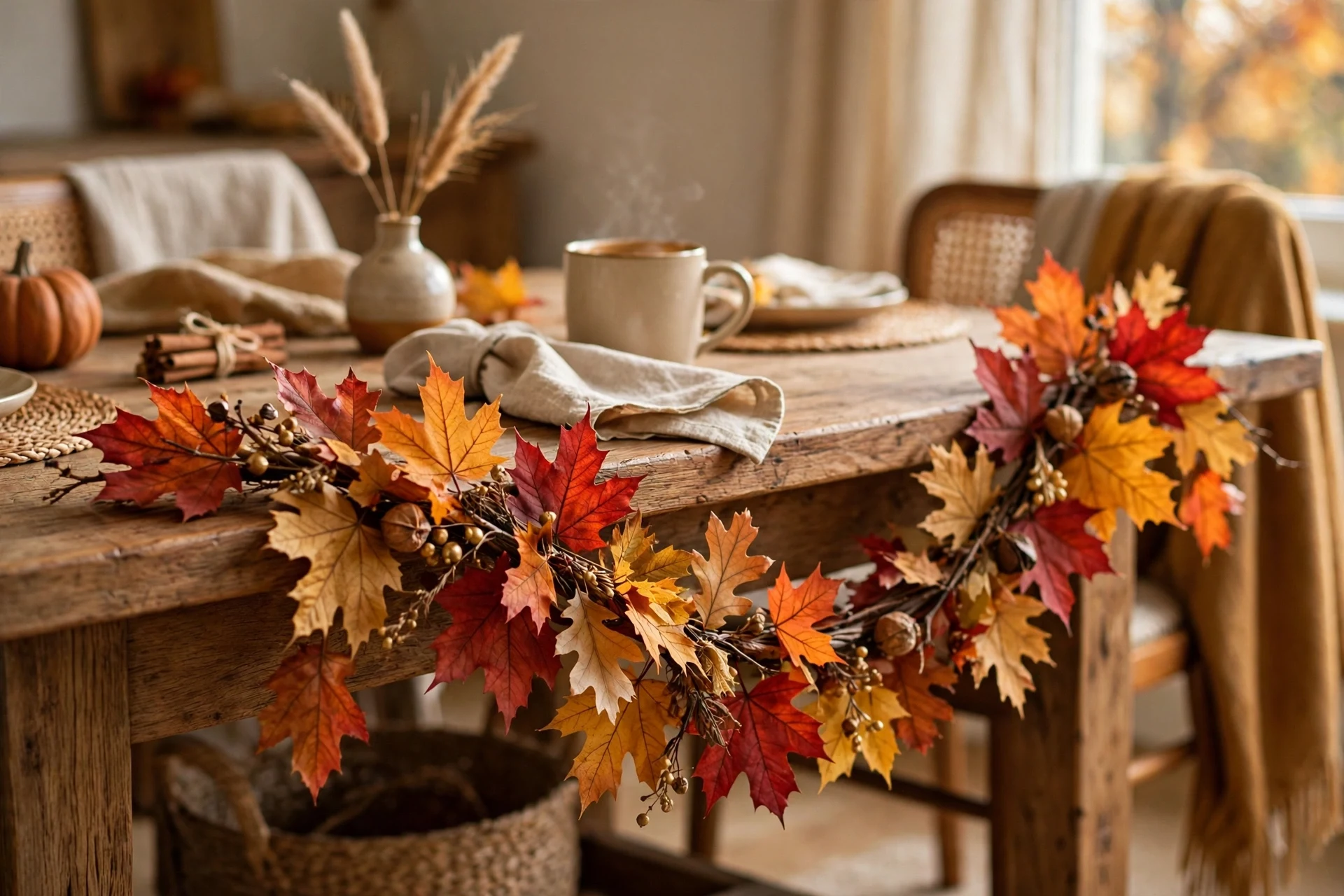
A fall leaf garland is the quickest way to make a plain table look like fall without buying a single flower. Real or faux leaves in warm reds, oranges, and golds draped along the table edge or down the center add instant color, and they pair beautifully with pumpkins, candles, and kraft paper. It is also one of the cheapest decorations on this list, especially if you gather leaves from your own yard.
If you use real leaves, press them between books for a day so they lie flat, or buy a faux garland you can reuse every year. Drape it loosely, not in a stiff straight line, and let a few leaves trail off the table edge for a natural look. Keep the garland clear of candles and hot dishes, and avoid very crumbly dried leaves directly over food, since they shed.
- Press real leaves flat before the party, so the garland lies neatly.
- Choose faux garland if you want a decoration you can reuse next year.
- Keep leaves away from open flames and hot serving dishes.
15. A Dessert Table Worth Gathering Around
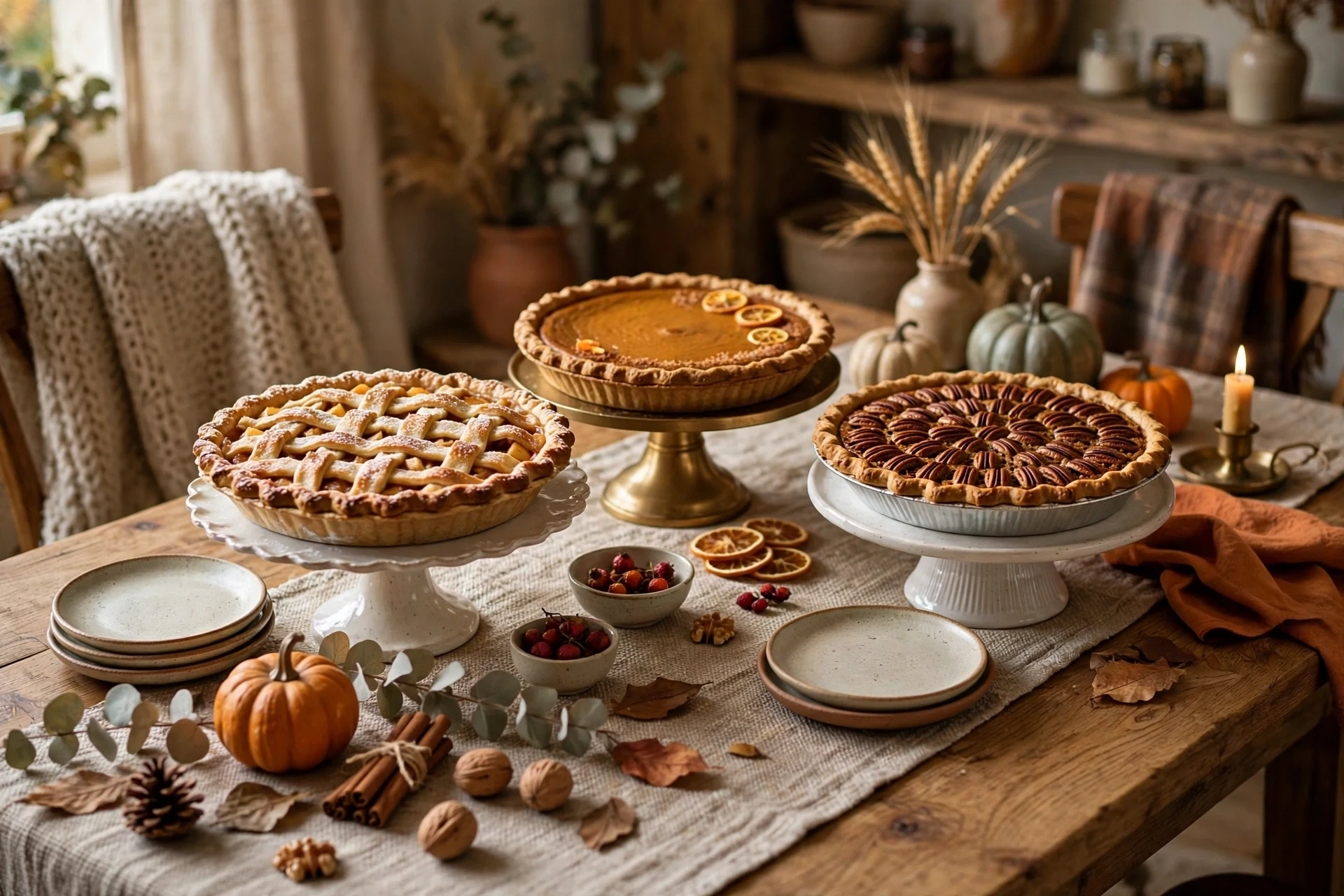
Dessert deserves its own table at Friendsgiving, because potluck desserts are half the event. When pies, cakes, and cookies share space with the main buffet, they get crowded, cut into too early, and lost behind the turkey. A separate dessert table, even a small sideboard or card table, lets each dessert shine, gives guests a reason to get up after dinner, and turns the sweet course into its own little celebration.
Use cake stands and boxes of different heights to display desserts at varying levels, and keep plates, forks, and napkins at one end so the line moves smoothly. Label each dessert with its maker and any allergens, just like the main buffet. If space is tight, a sturdy card table with a pretty cloth works perfectly, and it can be folded away once dessert is done.
- Display desserts at different heights, using stands and sturdy boxes.
- Keep dessert plates and forks at one end of the table for a smooth line.
- Label desserts with maker and allergens, as with the main buffet.
16. A Simple Photo Backdrop, Not a Production
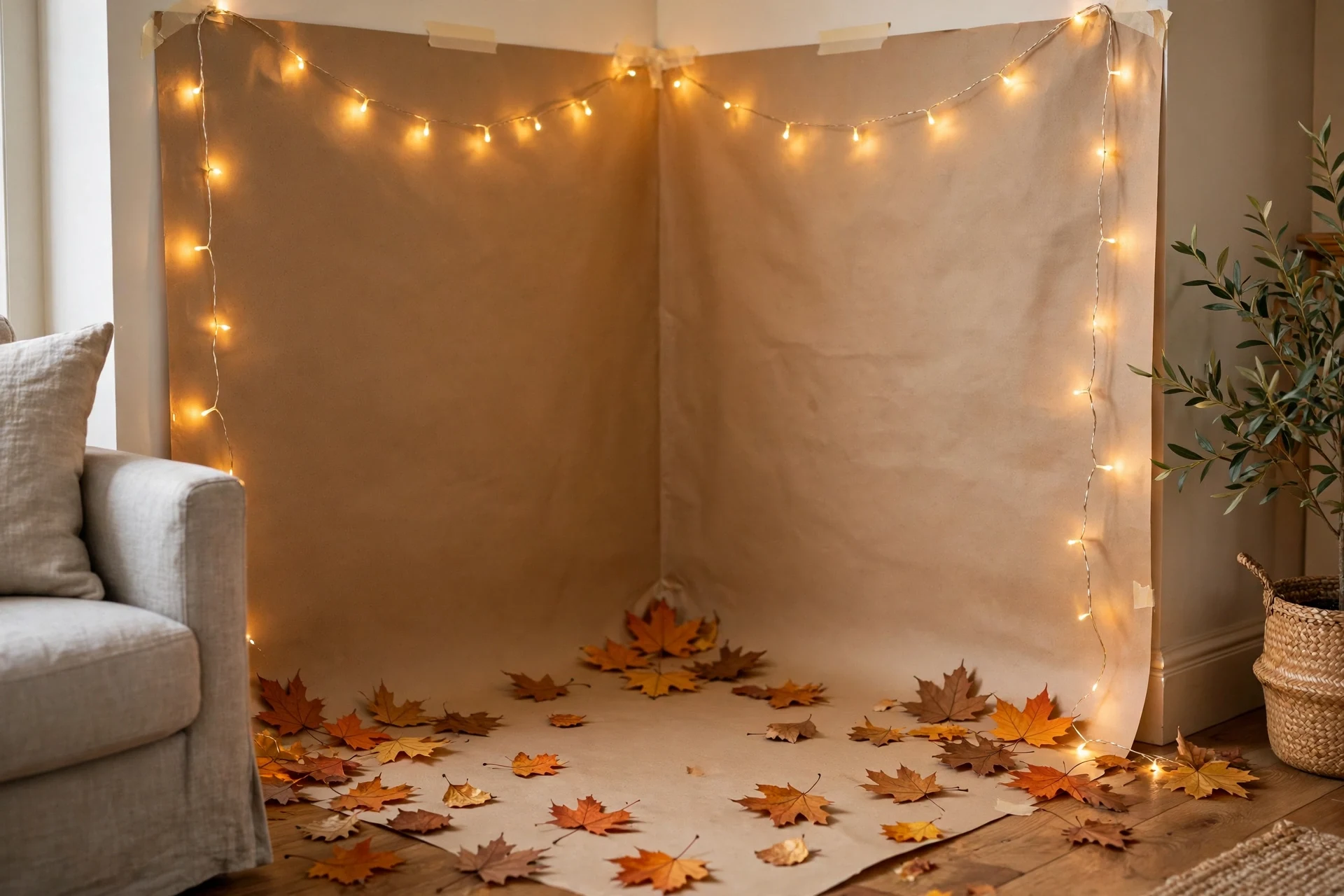
A photo backdrop sounds like a big production, but the best Friendsgiving version is deliberately simple: a plain wall, a kraft-paper sheet, or a curtain hung with a few fall leaves and string lights. It gives photos a clean, festive background without a rented arch or a wall of balloons, and it costs almost nothing. Guests will use it all evening if it is easy to stand in front of and well lit.
Hang the backdrop in a spot with good light, away from the food table so photo lines do not block dinner. Add a small sign, such as the year or a short greeting, and keep props nearby in a basket. The goal is a backdrop that looks good in photos but disappears into the room the rest of the time, which is exactly what a relaxed Friendsgiving needs.
- Choose a spot with good light, and add one warm lamp if needed.
- Keep the backdrop simple, so photos stay focused on the people.
- Place it away from food lines, so photos do not block dinner.
17. Cozy Cushions on Dining Chairs
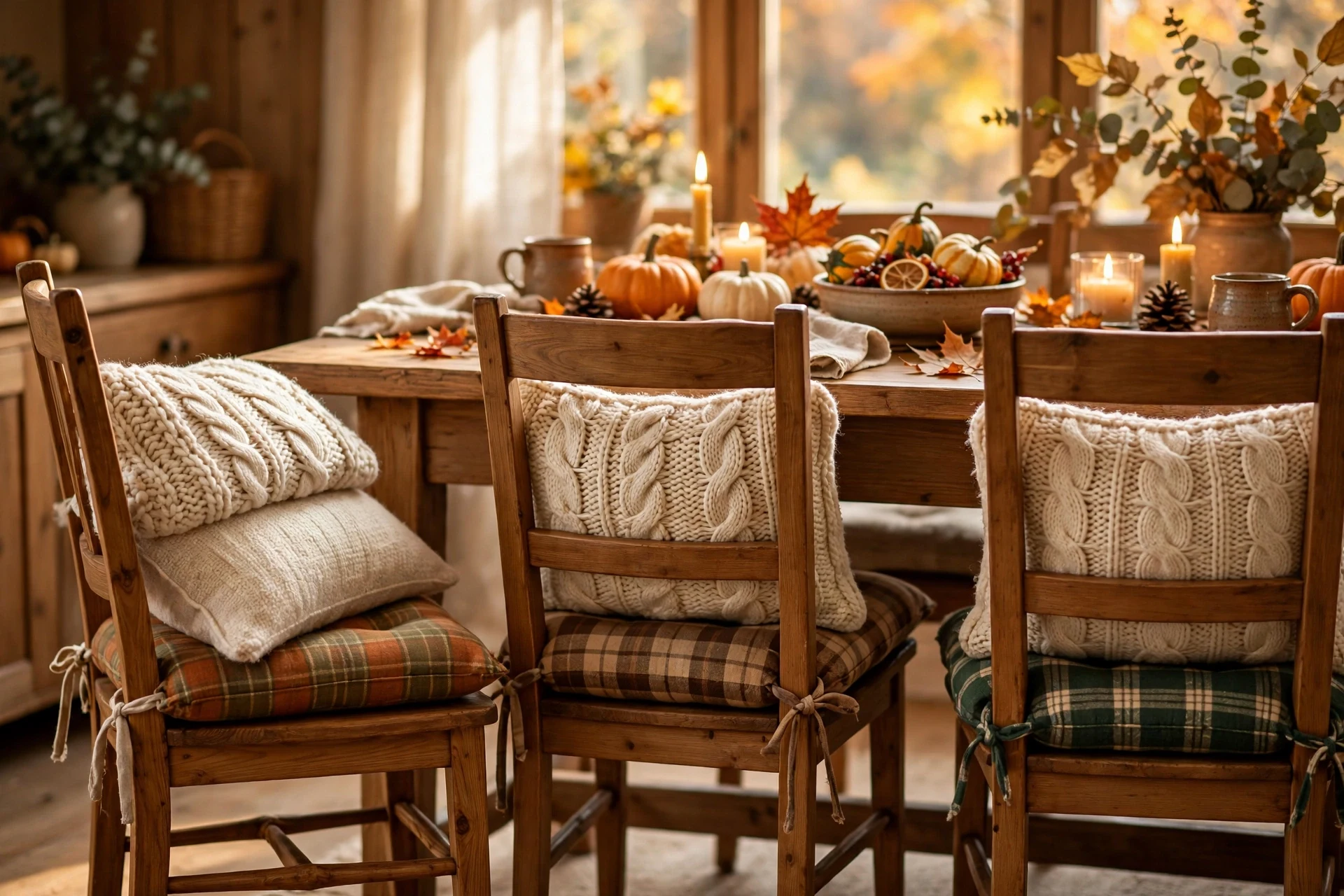
Hard dining chairs are fine for twenty minutes, but Friendsgiving meals last for hours, and comfort matters. A cushion on each chair, in plaid, knit, or simple cotton, makes the table feel softer and more inviting the moment guests sit down. It is also an easy way to add fall color without buying new decor, since cushions you already own in warm tones will do the job.
Tie or place a cushion on every chair, including borrowed ones, so no guest feels like an afterthought. Choose cushions that are easy to wash, since spills happen, and avoid very thick cushions that raise shorter guests too high above the table. If you do not have enough cushions, folded throws on chair seats work just as well and look intentionally cozy.
- Use washable cushion covers, so post-party cleanup is simple.
- Keep cushion thickness moderate, so seat height stays comfortable.
- Match cushions loosely by color family, not by exact pattern.
18. A Signature Drink Toast Station

A toast station gives Friendsgiving a moment, a point in the evening when everyone raises a glass together. It does not need alcohol: sparkling cider, a cranberry spritzer, or a simple punch in a large dispenser, with glasses and garnishes beside it, works for every guest. The station looks festive, it is ready before anyone arrives, and it gives the host a natural moment to thank everyone for coming.
Set the dispenser, glasses, and garnishes on a side table before guests arrive, and keep a towel nearby for drips. Plan the toast for just before dessert or right after everyone is seated, and keep it short and warm. If you serve alcohol as well, label both options clearly and keep water available, so every guest can join the toast comfortably.
- Offer a non-alcoholic toast option, so every guest can join in.
- Keep glasses and garnishes together, so the station is self-serve.
- Time the toast for when everyone is seated and settled.
19. A Take-Home Favor Table
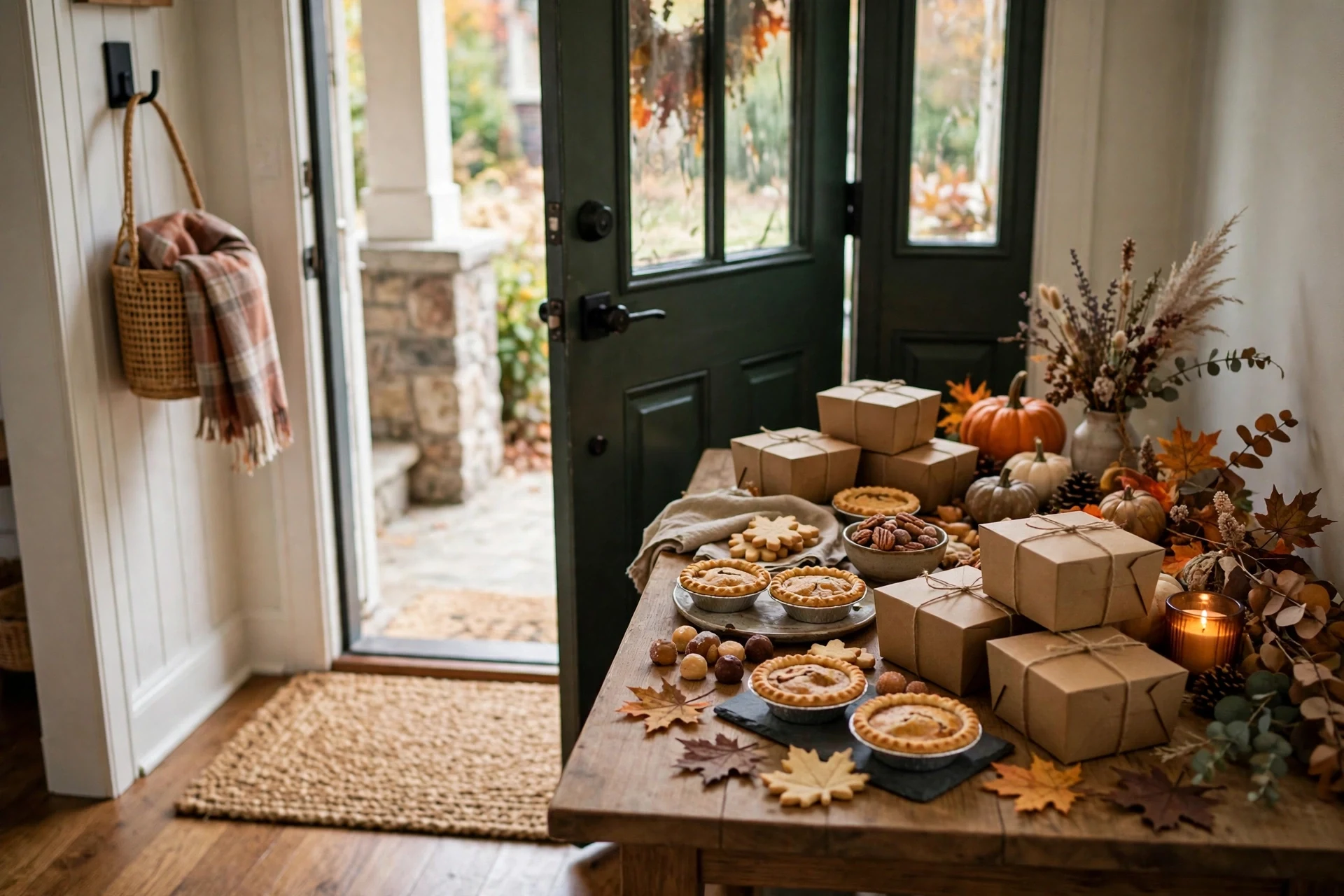
A favor table is the kindest way to end a Friendsgiving, because it solves the two classic problems of the night: too many leftovers and guests who want a little something to remember the evening by. Small boxes for leftovers, a few mini pies or cookies, and a handwritten thank-you card let everyone leave with full hands and a warm feeling, and they save the host from eating turkey for a week.
Set out sturdy take-home boxes, bags, or jars near the door, along with any treats you made extra. Label the boxes if you like, and keep a marker nearby so guests can write their names on them. If you are also hosting overnight guests, our cozy winter guest room ideas will help them feel at home after the party ends. A favor table costs little, but it is the detail guests mention the next day.
- Use sturdy, leak-proof boxes for saucy or heavy leftovers.
- Provide a marker, so guests can label their boxes.
- Place the favor table near the door, so nobody forgets it on the way out.
Frequently Asked Questions
How is Friendsgiving decor different from Thanksgiving decor?
Friendsgiving decor is more relaxed and playful than traditional Thanksgiving decor. Think kraft paper instead of linen, a gratitude wall instead of formal centerpieces, and a cider bar instead of a wine service. The goal is a table that feels welcoming and fun, not formal, so guests can relax, contribute food, and stay for games after dinner.
How far ahead should I decorate for Friendsgiving?
Most Friendsgiving decor can be set up the day before, and non-perishable pieces like garlands, the gratitude wall, and the photo corner can go up even earlier. Save fresh elements, such as pumpkin centerpieces with greenery and the cider bar, for the morning of the party. A day-before setup keeps the day itself calm and leaves time for cooking.
What if I only have a small table or apartment?
Small spaces suit Friendsgiving well, since the style is already casual. Use a kraft-paper runner, a low centerpiece, and a blanket basket, and skip large backdrops or separate dessert tables if space is tight. A bench along one side seats more people, and a buffet-style meal lets guests serve themselves without crowding the table.
How do I handle food allergies at a potluck Friendsgiving?
Ask every cook to label their dish with its name and major allergens, and put the labels where guests can read them before serving themselves. Keep serving utensils separate for each dish, and set aside one clearly marked dish for guests with serious allergies if needed. Clear labels protect guests and keep the host from answering the same questions all evening.
What is a good budget for Friendsgiving decor?
Friendsgiving decor can cost very little, since the best ideas use kraft paper, mason jars, pumpkins, and items you already own. A realistic budget is under fifty dollars for paper, candles, and a few pumpkins, especially if guests contribute dishes. Spend on lighting and one strong centerpiece first, since those make the biggest visual difference.
Can I reuse Friendsgiving decor for Thanksgiving?
Yes, many pieces carry over beautifully, especially pumpkins, eucalyptus, mason jar candles, and leaf garlands. Swap playful elements, such as the doodle runner and photo props, for more formal touches like linen napkins and a traditional centerpiece. For a formal table, see our Thanksgiving table decor ideas for the main event.
Friendsgiving works best when the decor invites people in rather than impressing them, and these 19 cozy Friendsgiving decor ideas do exactly that. A kraft-paper runner, a gratitude wall, and a hot cider bar cost little, take little time, and make the evening feel like a celebration instead of a formal dinner. Choose three or four ideas that fit your home, add the ones your friends will love most, and let the table do the rest.
Start with the centerpiece and the lighting, since those set the mood for the whole room, then add one interactive idea, such as the photo corner or the games table. However you decorate, the best Friendsgiving table is the one where everyone feels welcome, well fed, and in no hurry to leave. Gather your friends, light the candles, and enjoy a relaxed holiday table made for the people you chose.