
19 Cozy Winter Basement Ideas for a Warm Lower Level
19 Cozy Winter Basement Ideas for a Warm Lower Level
A basement can be the coldest, darkest room in the house in winter, but it can also become the warmest place to gather. With low ceilings, concrete floors, and little natural light, this lower level needs a different approach from the rooms upstairs. These cozy winter basement ideas are made for those exact challenges, turning damp, dim space into a comfortable retreat for family evenings, quiet work, and slow weekends.
In this guide, you will find 19 basement-specific ideas that deal with cold floors, low light, and moisture before they deal with decoration. You will see how to layer warmth, brighten windowless corners, and give every part of the basement a purpose. If you are warming up other rooms too, you may also enjoy our cozy winter guest room ideas, our cozy winter sunroom ideas, and our cozy winter reading nook ideas. Start with the problem that bothers you most, and build from there.
1. Layered Rugs Over Concrete Floors

Concrete floors are the main reason basements feel cold underfoot, even when the air temperature is fine. Layering rugs solves the problem directly: a large, flat base rug covers the hard surface, and a smaller, plusher rug on top adds softness exactly where you sit and walk. The layers also absorb sound, which matters in a basement where hard walls and floors can make every step and voice echo.
Choose a low-pile, moisture-resistant rug for the bottom layer, since basement floors can feel damp in winter. Add a washable wool or cotton rug on top in a warm color such as rust, oatmeal, or deep green. Leave a small gap at the edges so air can move, and use a rug pad to stop slipping. If one corner feels colder, that is the spot for the thickest rug and your favorite chair.
- Use a moisture-resistant base rug with a soft, washable rug on top.
- Add a non-slip rug pad so layered rugs stay flat and safe.
- Place the thickest rug where you sit, not just in the center of the room.
2. Warm Lighting for Low Ceilings

Low ceilings make a single bright overhead light feel harsh, because the light has nowhere to spread before it hits your eyes. Warm, layered lighting works better: table lamps, floor lamps, and small wall lights placed at different heights create pools of soft light instead of one glare. Bulbs around 2700K give the amber glow that makes a basement feel like a living room rather than a storage space.
Start with one lamp beside each seat, then add a light near the stairs and one in any dark corner. Avoid cool white bulbs, which make concrete and painted block walls look grey and cold. If you use string lights, keep them along a beam or shelf rather than across the ceiling, so the low ceiling does not feel lower. Dimmers help most of all, letting you match the light to the time of day.
- Use warm 2700K bulbs for a soft, amber glow.
- Place lamps at different heights instead of relying on one ceiling light.
- Add dimmers so brightness can change from day to evening.
3. Painted Exposed Ceilings and Ducts
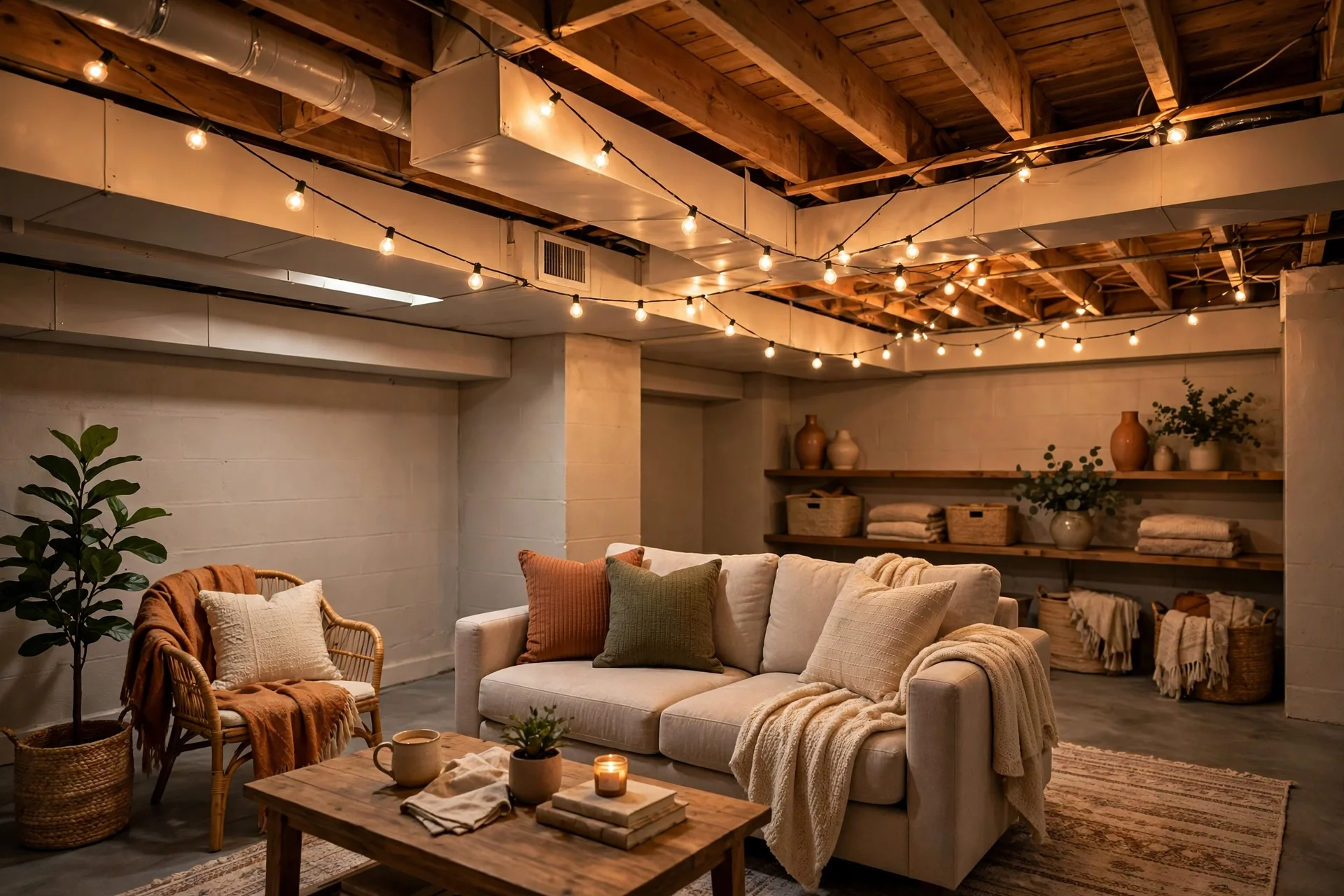
Many basements have no finished ceiling, just joists, pipes, and ducts overhead, and that unfinished look is often what makes the room feel like a utility space. Painting everything one warm color, such as soft white, warm grey, or charcoal, turns the mess into a single intentional surface. The room instantly looks more finished, and the paint helps the ceiling disappear instead of drawing the eye to every pipe.
Before painting, clean dust from joists and ducts, and check for any active leaks or damp spots that need fixing first. Use a sprayer if you can borrow or rent one, since brushes take far longer between joists. Keep access panels and shut-off valves unpainted or clearly marked, so future repairs stay easy. Once painted, a few warm lights along the beams complete the cozy, loft-like feel.
- Fix leaks and damp spots before painting any ceiling surface.
- Paint joists, pipes, and ducts one warm color for a unified look.
- Leave access panels and shut-off valves visible and reachable.
4. Electric Fireplace Focal Wall

A basement rarely has a real fireplace, and adding one is often impractical, but an electric fireplace gives the same focal point without a chimney, gas line, or venting. It anchors the seating area, gives everyone a place to face, and adds real supplemental heat on cold evenings. Because it needs only an outlet, it can sit against almost any basement wall, even one with no windows.
Build the wall around the fireplace with warm wood, shiplap, or painted panels so it looks built in rather than plugged in. Keep the mantel simple: a couple of candles, a small plant, and one framed print are enough. Arrange seating to face the fireplace, and add a throw on each seat. On winter nights, the glow alone makes the whole lower level feel warmer, even before the heater kicks in.
- Choose an electric fireplace that fits the wall and needs only an outlet.
- Frame it with wood or panels so it looks built in, not temporary.
- Face seating toward the fireplace to create a natural gathering spot.
5. Moisture-Smart Seating
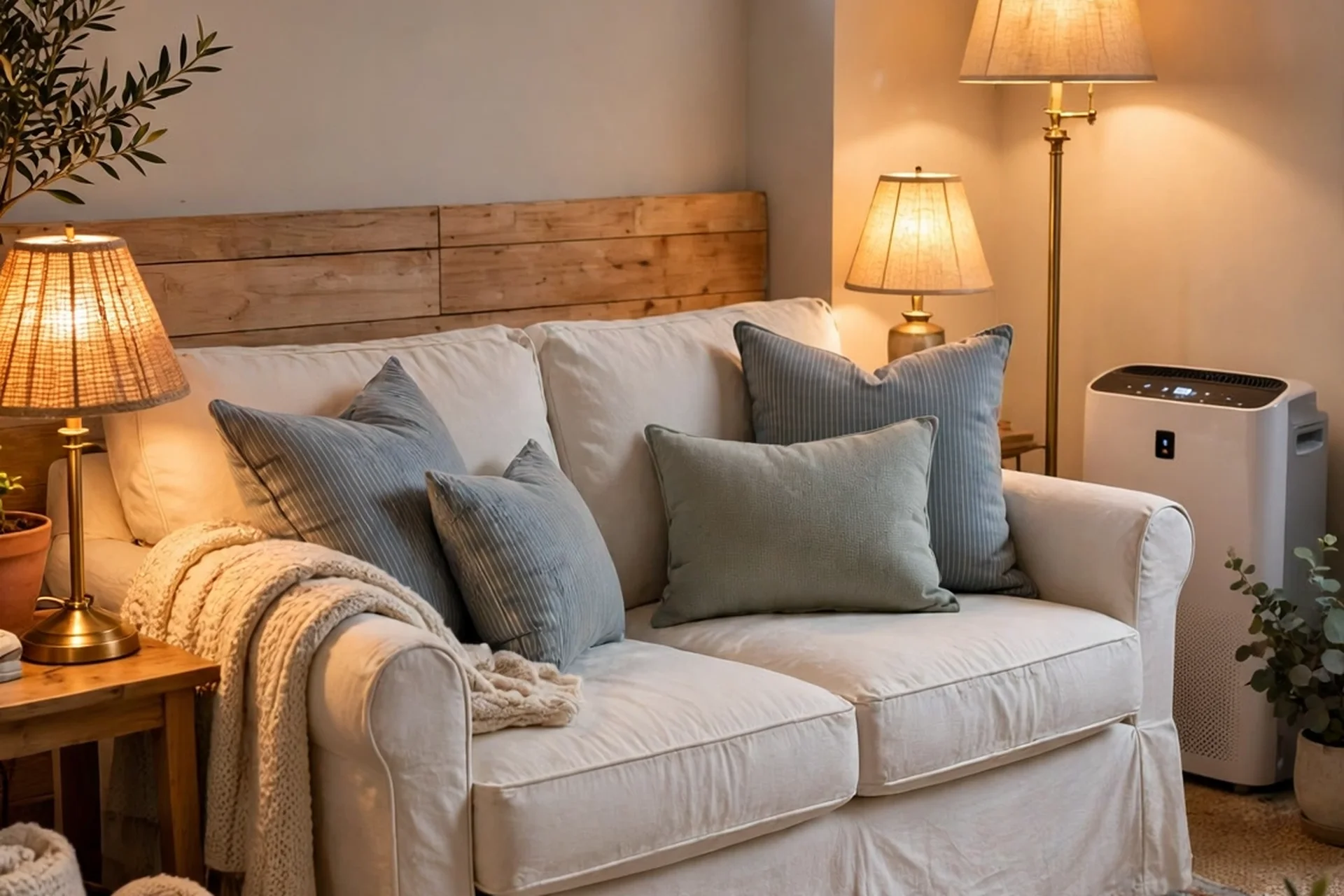
Basement air stays damper than upstairs air, and ordinary upholstery can absorb that moisture, smell musty, and stain more easily. Moisture-smart seating means slipcovered sofas, washable cushion covers, and indoor-outdoor fabrics that can be cleaned and aired out. The room still looks soft and inviting, but every cover can come off and go in the wash after a damp winter week.
Raise seating slightly off the floor with short legs, so air moves underneath and a small spill or damp patch does not soak straight into the frame. Keep a dehumidifier running in the room, and empty it regularly through winter. Store extra throws in a closed basket rather than draped on the floor, where they can pick up damp. With washable covers, a basement sofa becomes practical instead of precious. Wash any cover that smells damp before mustiness sets in.
- Pick slipcovers and washable cushion covers for basement seating.
- Use short legs so air moves under sofas and chairs.
- Run a dehumidifier and keep spare throws in a closed basket.
6. Family Movie Corner

A dark basement is actually an advantage for movie nights, because you do not have to fight window glare the way upstairs rooms do. A family movie corner uses that darkness well: a screen or large television on one wall, a deep sectional sofa facing it, and blankets within reach for every seat. The low light that makes basements feel gloomy in daytime becomes perfect cinema lighting after dinner.
Keep the setup simple and comfortable rather than technical. A sectional with washable covers, a low table for snacks, and a basket of throws turn the corner into a nightly habit. Add a small warm lamp behind the sofa so the room is not pitch black when the movie ends and someone needs the stairs. If the floor is cold, a thick rug under the sectional makes bare feet part of the comfort, not a problem.
- Face a deep sectional toward the screen and keep blankets in a basket.
- Add a small warm lamp behind the sofa for safe, soft light after movies.
- Use a thick rug under the seating so cold floors do not spoil the night.
7. Basement Guest Suite Corner
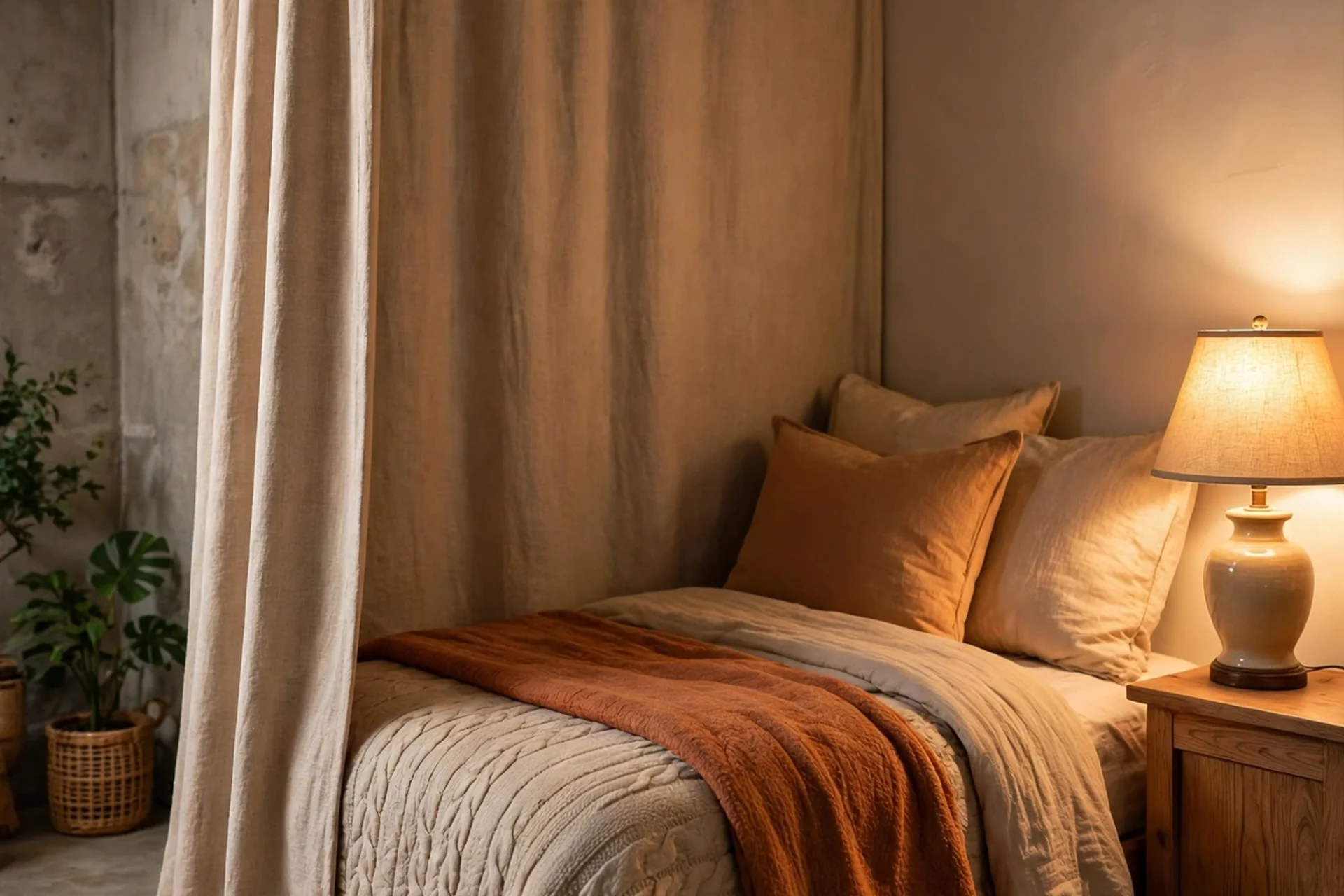
A basement guest corner works best when it feels like a real bedroom, not a spare bed pushed into a corner. A proper bed with warm bedding, a bedside lamp, a small table, and a curtain or screen for privacy gives guests a space of their own, even in an open lower level. The basement’s natural quiet and darkness, which can feel gloomy by day, actually help guests sleep well at night.
Warmth matters more here than anywhere else, since guests cannot adjust your heating. Add an extra blanket folded at the foot of the bed, a small heater with a safety shut-off if the room runs cold, and slippers by the bed for cold floors. A luggage rack or a clear shelf keeps bags off the floor, where damp can reach them. For more guest-room ideas upstairs, see our cozy winter guest room ideas and adapt the same warm layers to the basement.
- Give guests a real bed, lamp, table, and privacy screen or curtain.
- Leave an extra blanket and slippers out for cold basement nights.
- Keep bags off the floor on a rack or shelf to avoid damp.
8. Home Office Nook

A basement office nook trades natural light for quiet, which suits focused work if the lighting is handled well. A desk against a warm wall, a daylight lamp that mimics morning brightness, and shelves above the desk create a workspace that feels separate from the rest of the house. The lack of windows also means fewer distractions, as long as the nook itself feels pleasant to sit in.
Position the desk so the light falls on your work, not straight into your eyes from a low ceiling fixture. Add a comfortable chair with a cushion, since basement chairs on concrete floors get cold and hard quickly. Keep the nook warm with a small rug under the desk and a throw over the chair back. A plant or framed print on the wall stops the corner from feeling like a storage closet with a laptop in it.
- Use a daylight lamp to replace missing window light.
- Place a rug under the desk to warm cold basement floors.
- Keep shelves above the desk so supplies stay off the work surface.
9. Kids Play Zone With Soft Flooring
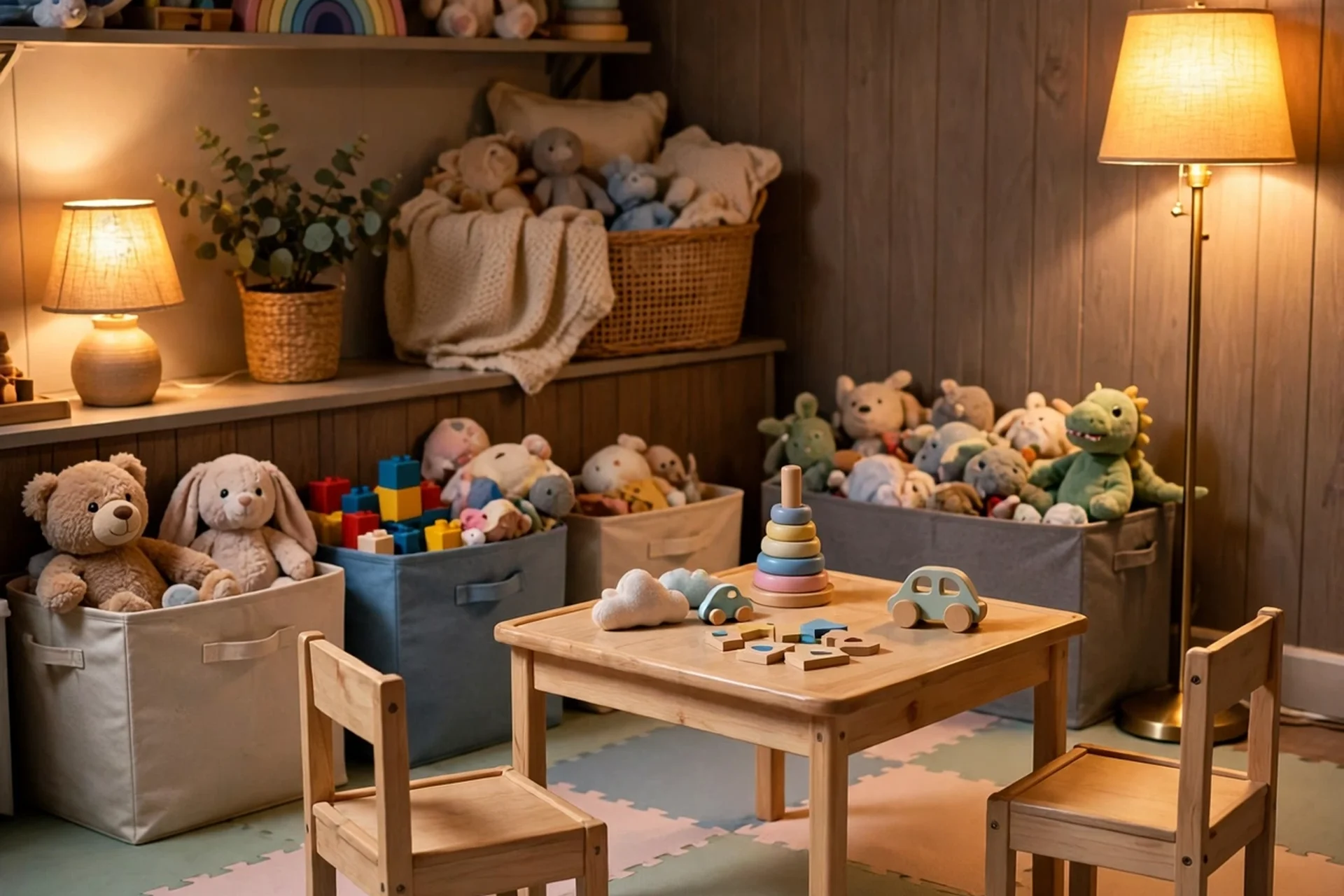
Basements make natural play zones because noise stays downstairs, but concrete floors are unforgiving for children who play on the ground. Soft foam mats or interlocking play tiles solve that at once: they cushion falls, warm the floor, and can be lifted and cleaned when spills happen. Bright bins and low shelves keep toys visible and reachable, so the zone invites play instead of becoming a dumping ground.
Choose mats that are thick enough to kneel on comfortably and easy to wipe clean, since basement floors can be dusty. Keep one wall for art or a chalkboard, and leave open floor space in the middle for building and games. Warm lamps at child height, rather than one harsh ceiling light, make the zone feel friendly. At clean-up time, every toy should have a labeled bin, so the basement stays a playroom and not a second storage room.
- Use thick, wipe-clean foam mats over concrete floors.
- Keep toys in low, labeled bins children can reach themselves.
- Leave open floor space in the middle for building and active play.
10. Windowless Reading Nook

A windowless basement corner can still be a wonderful reading nook, because reading needs good light and quiet more than it needs a view. An armchair with a high back, a floor lamp that shines over your shoulder, and a small shelf or basket of books create a retreat that feels sheltered rather than shut in. The basement’s stillness, once you stop fighting it, becomes the nook’s best feature.
Place the lamp behind and slightly above the chair so light falls on the page without glare. Add a soft throw and a footrest, since basement corners run cooler than the rest of the house. Keep the nook’s colors warm — cream, rust, or sage — so the windowless walls feel cozy rather than blank. If you love reading corners elsewhere in the house, our cozy winter reading nook ideas offer more ways to layer light and comfort around a favorite chair.
- Place a floor lamp behind the chair so light falls on the page.
- Use warm colors and a throw to soften windowless walls.
- Keep books in a basket or shelf within arm’s reach.
11. Warm Wall Panels
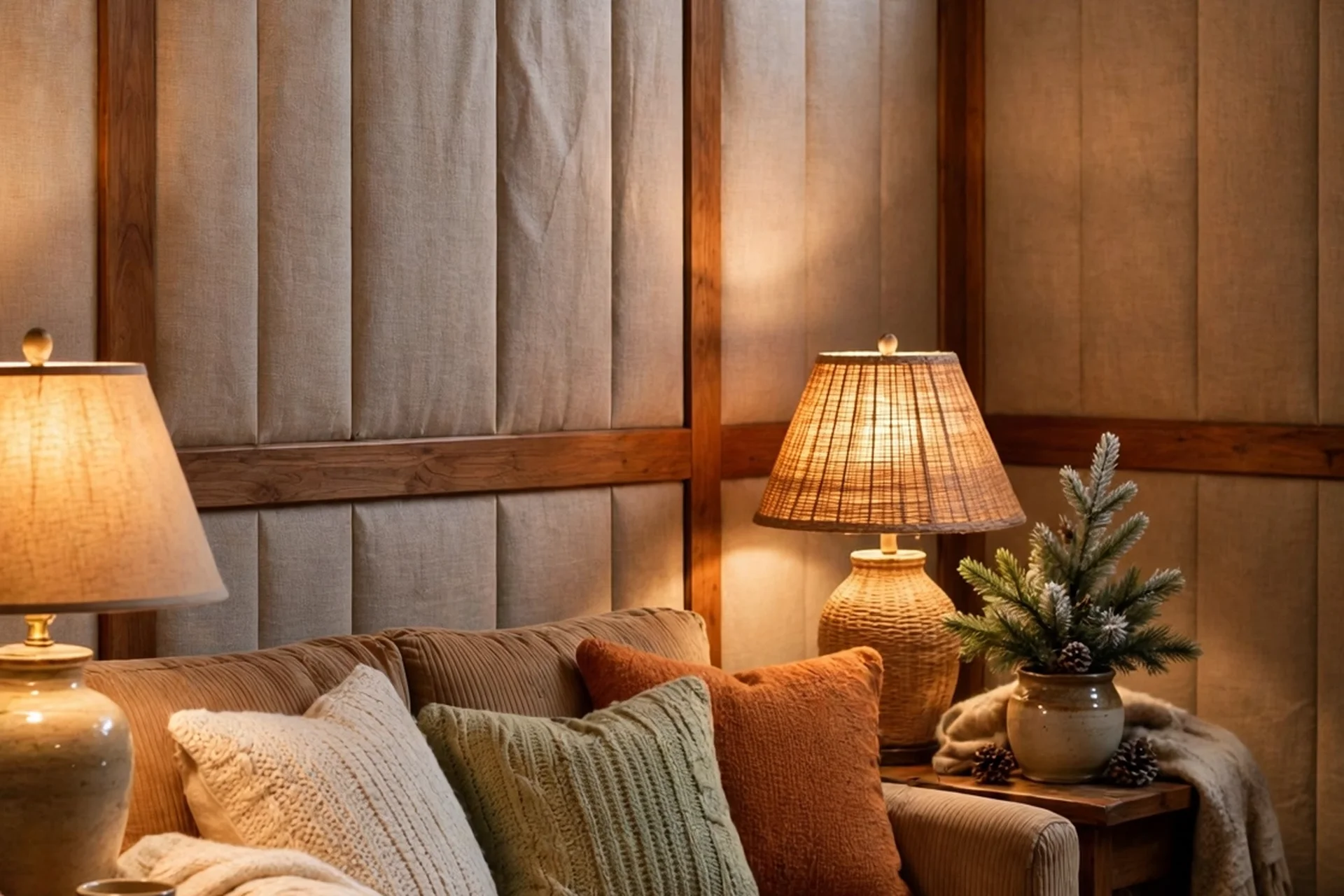
Bare basement walls, whether concrete block or painted drywall over masonry, radiate cold and make the room feel unfinished no matter how nice the furniture is. Warm wall panels — fabric panels, wood slats, or padded boards on the main seating wall — add insulation feel, texture, and sound softening in one step. They turn the coldest surface in the room into the warmest-looking one. The change is visible the moment the first panel goes up.
Install panels only on walls that stay dry, and leave a small gap behind them for air movement so trapped moisture cannot build up. Wood slats work well behind a sofa, while fabric panels suit a reading or movie wall where sound matters. Keep the color warm and mid-toned rather than bright white, which can look stark against a low ceiling. Panels also give you a finished backdrop for art, shelves, and lamps.
- Use panels only on dry walls, with a small air gap behind them.
- Choose wood slats for seating walls and fabric panels for media walls.
- Pick warm, mid-toned colors rather than stark white.
12. Stairwell Transition With Runner and Light

The basement stairs are the first thing you see, and a bare, cold stairwell can make the whole lower level feel unwelcoming before you even arrive. A warm runner, good handrail lighting, and a light color on the stairwell walls turn the descent into a proper entrance. The stairs stop feeling like a trip to the utility room and start feeling like a walk into another living space.
Choose a low-pile, washable runner that grips well, and secure it firmly so every step feels safe. Add small wall lights or a light at the top and bottom of the stairs, since basement stairwells are often the darkest part of the house. Paint the stairwell walls a warm white or pale sage to bounce what light there is. A runner also softens footsteps, which matters when the basement below is being used as a bedroom or office.
- Use a low-pile, firmly secured runner for safe, warm steps.
- Light both the top and bottom of the stairs.
- Paint stairwell walls a light, warm color to bounce light around.
13. Game and Puzzle Table Zone
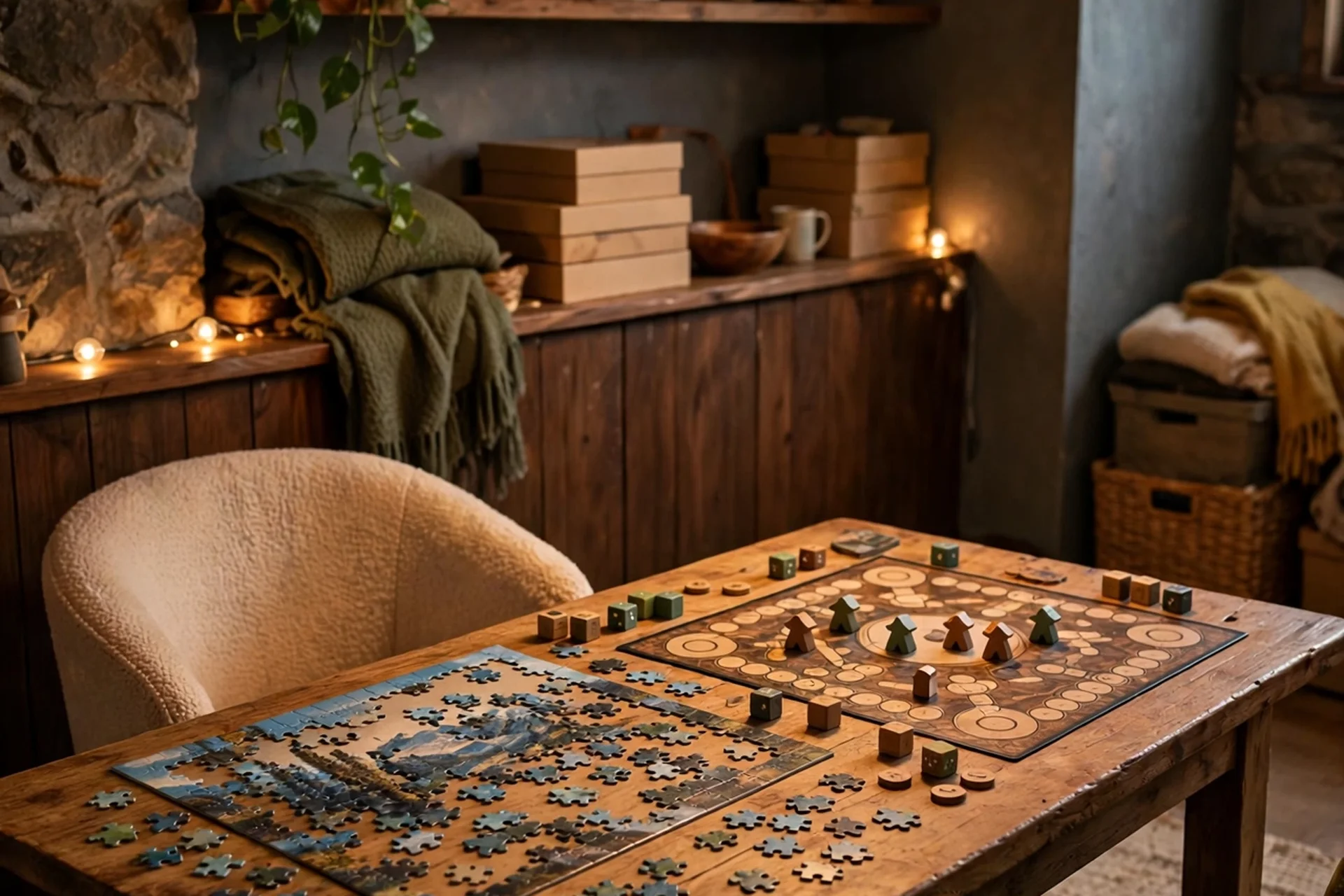
A basement is ideal for a game and puzzle table, because a puzzle in progress can stay out for days without taking over the kitchen table. A sturdy table with comfortable chairs, a good pendant or table lamp, and storage for games nearby creates a zone the whole family returns to on winter evenings. The basement’s separation from the main living areas means a game night does not have to be tidied away the moment it ends.
Pick a table height that works for both board games and puzzles, and chairs with cushions for long sits on cold floors. Keep games in a closed cabinet or labeled bins nearby, so the table stays clear between sessions. A warm pendant light over the table focuses attention and makes the zone feel intentional. Add a small side table for drinks, kept away from the puzzle, and the zone is ready for a whole season of evenings.
- Keep a puzzle or game out on a dedicated table, not the dining table.
- Use cushioned chairs and a focused pendant light over the table.
- Store games in closed bins nearby so the table stays clear.
14. Hidden Storage Wall

Basements tend to collect storage, and open storage is what makes them look like warehouses instead of rooms. A hidden storage wall — closed cabinets, wardrobes, or curtained shelving along one wall — keeps holiday boxes, tools, and out-of-season gear out of sight while the rest of the room stays a living space. The wall itself can look like paneling or built-in furniture, not like a row of boxes.
Label every cabinet or bin inside, so winter items are easy to find without opening everything. Keep frequently used things, such as throws and games, in the easiest cabinets, and long-term storage higher up or further back. Leave the storage wall dry and ventilated, and never stack boxes directly against a cold exterior wall, where condensation can form. With clutter hidden, the basement finally reads as a room, not a storeroom.
- Use closed cabinets or curtained shelving for one full storage wall.
- Label bins inside so winter items are easy to find.
- Keep boxes off cold exterior walls to avoid condensation damage.
15. Brightening a Small Basement Window

Many basements have only one or two small, high windows, and those windows are often blocked by furniture, curtains, or clutter outside the glass. Brightening that window starts with clearing it completely, then using light colors, a mirror, and sheer fabric around it to spread what little daylight arrives. Even a small window can change the mood of a room when its light is allowed to travel.
Paint the wall around the window bright warm white, and hang a mirror on the opposite wall to bounce daylight deeper into the room. Use a sheer panel instead of a heavy curtain, or leave the window bare if privacy allows. Outside, clear leaves and snow from the window well in winter, since a blocked well cuts light more than any curtain does. One bright window, well used, beats several windows left covered.
- Clear the window and window well completely, inside and out.
- Paint surrounding walls warm white and hang a mirror opposite.
- Use sheer fabric or no curtain so daylight is not blocked.
16. Craft and Hobby Table Zone

A basement craft or hobby zone works because projects can stay out without taking over the main living space. A sturdy table, a bright task lamp, and wall shelves for supplies give sewing, painting, model building, or paper crafts a permanent home. The basement’s steady temperature also suits stored materials, as long as the table area itself stays dry and well lit. That permanence is what turns an occasional hobby into a regular winter habit.
Keep supplies in clear, labeled containers on shelves above or beside the table, so the work surface stays free for the project itself. A washable table cover protects the surface, and a comfortable chair with a cushion matters for long sessions on a cold floor. Add a small rug under the table to warm your feet, and a task lamp that can move with the work. When the project pauses, everything stays ready for the next winter afternoon.
- Use clear, labeled containers on shelves so supplies stay visible.
- Add a movable task lamp and a washable table cover.
- Place a rug under the table to warm cold floors during long sessions.
17. Faux Greenery and Hardy Plant Corner
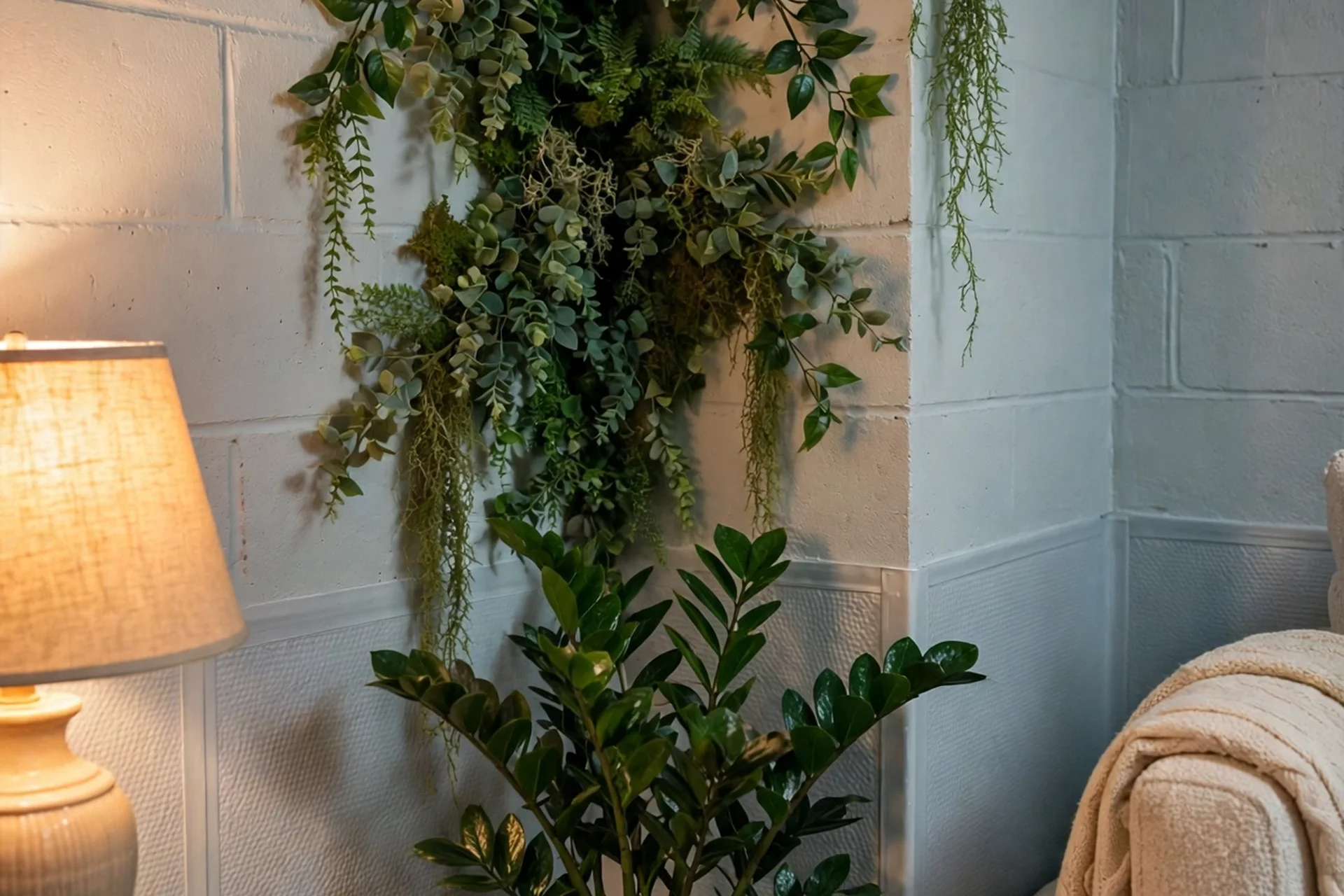
Real plants struggle in many basements, where light is low and air stays damp, but a room without any greenery can feel flat and lifeless. A mix of realistic faux greenery and a few genuinely hardy plants, such as snake plants or pothos near a lamp, gives the basement life without constant losses. Faux stems in a vase or trailing from a shelf add color year-round, while one or two live plants prove the corner is cared for.
Place live plants where a lamp or small window gives them some light, and water them less than upstairs plants, since basement soil dries slowly. Dust faux greenery regularly, because basement dust shows quickly on leaves. Keep plants off the floor on a stand or stool, where cold and damp are strongest. A green corner softens concrete walls and makes the whole lower level feel more like a home and less like a bunker.
- Mix realistic faux greenery with hardy plants like snake plant or pothos.
- Water basement plants less, since soil dries slowly in damp air.
- Raise plants on stands so they sit above the coldest, dampest air.
18. Workout and Movement Corner
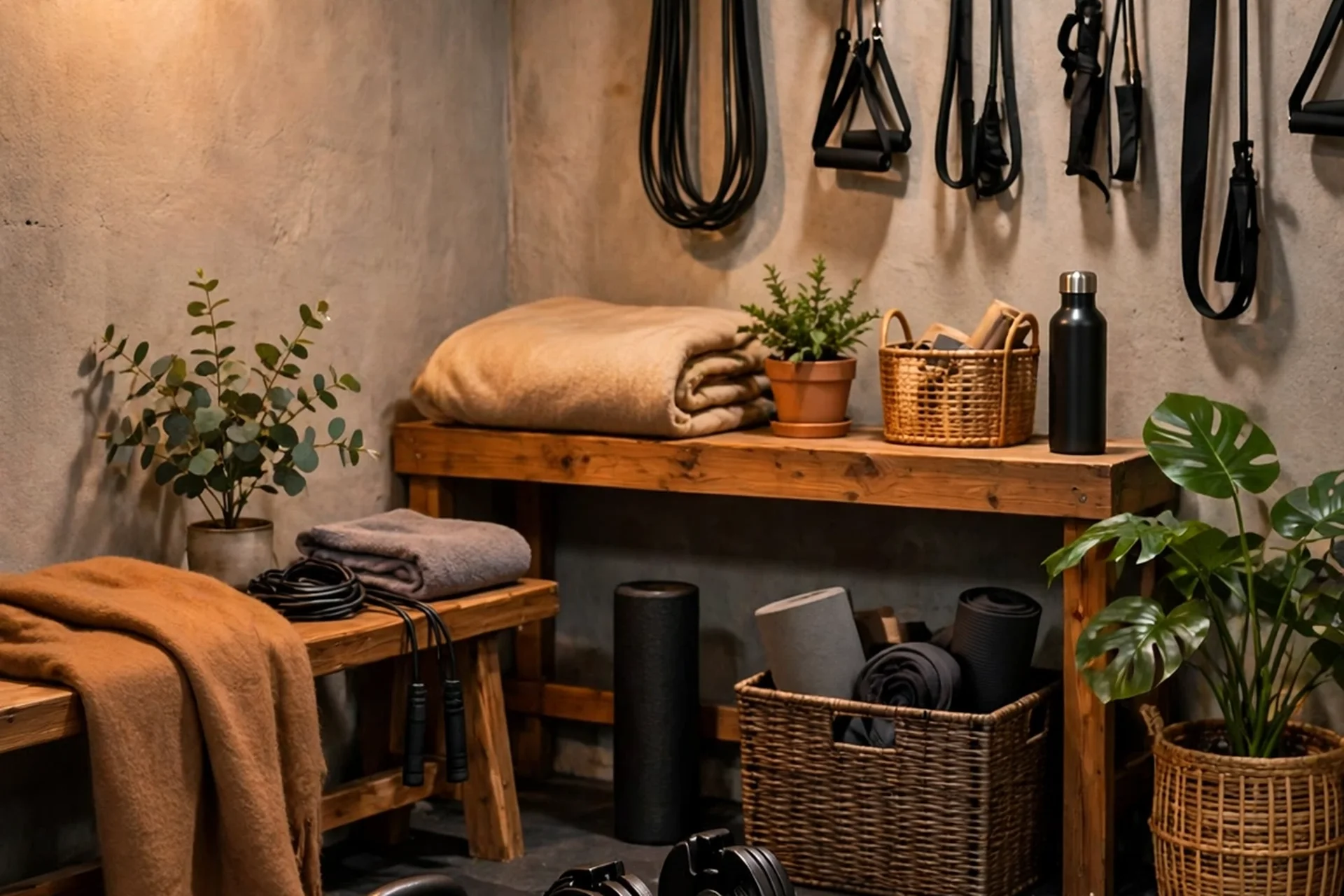
Basements suit workouts because the floor is solid and noise stays downstairs, but bare concrete is hard on joints and cold in winter. Rubber mats or interlocking gym tiles fix both problems: they cushion impact, insulate against the cold slab, and protect the floor from weights. A corner with mats, a few weights, and a yoga mat becomes a small home gym that is actually used, because it is always set up.
Choose thick rubber mats that stay flat and do not slide, and leave enough open space around them for stretching. Add a mirror on one wall if space allows, so form is easy to check, and a small shelf for water and towels. Warm lighting matters here too — bright enough to exercise safely, warm enough that the corner does not feel like a garage. A fan or open vent helps, since basement air can feel still during a workout.
- Use thick rubber mats to cushion joints and insulate against concrete.
- Leave open space around the mats for stretching and movement.
- Keep water, towels, and a small fan nearby for comfort.
19. Cocoa and Snack Station

A basement cocoa and snack station turns a lower-level evening into an occasion, without needing plumbing or a full kitchenette. A sideboard or bar cart stocked with a kettle, cocoa, tea, mugs, and a jar of snacks means nobody has to climb the stairs for a warm drink during a movie or game night. The station also gives the basement a hospitality corner, like a small cafe tucked downstairs.
Keep the station on a dry wall, away from any damp-prone corner, and group everything on a tray so spills are easy to clean. Use sealed jars for snacks, since basement air and occasional pests make open bowls a poor choice. A small lamp on the sideboard makes the station glow in the evening, inviting people over. For a similar cozy corner upstairs, our cozy winter breakfast nook ideas show how a small food corner can anchor a whole room.
- Use a sideboard or cart on a dry wall, no plumbing needed.
- Store snacks in sealed jars to protect them from damp air.
- Group mugs, kettle, and cocoa on a tray for easy cleaning.
Frequently Asked Questions
How do I keep a basement warm in winter?
Start with the floor and the air: layered rugs over concrete, sealed drafts around windows and the stairwell door, and a dehumidifier to keep damp air from feeling colder than it is. Add supplemental heat where you sit, such as an electric fireplace or a safe space heater, and use warm lighting and throws to make the room feel warmer even before the temperature rises. If one wall feels icy, that is the wall to panel or insulate first.
What flooring is best for a cozy basement?
Layered rugs over a moisture-resistant base work well in most basements, because they add warmth and can be lifted and cleaned. Rubber mats suit workout corners, and foam tiles suit play zones. Avoid wall-to-wall carpet glued straight to concrete in damp basements, since trapped moisture can cause musty smells. Whatever you choose, keep flooring slightly raised or breathable so damp cannot get trapped underneath.
How can I brighten a basement with no windows?
Use warm, layered lamps at different heights, paint walls a warm white or pale sage, and hang a mirror to bounce light around the room. Light-colored rugs and furniture also help, since dark surfaces absorb what little light lamps provide. A daylight lamp in a work or reading corner can mimic morning brightness. Avoid a single harsh ceiling light, which makes a windowless room feel flatter, not brighter.
Is it safe to put a bedroom in a basement?
A basement sleeping space needs proper egress, working smoke and carbon monoxide alarms, and good ventilation, so check local building rules before setting one up. Keep bedding off cold floors, use a dehumidifier, and make sure the sleeping corner stays dry. If the basement has damp problems or no safe exit route, use it as a lounge or guest sitting area instead, and keep sleeping spaces upstairs.
How do I stop a basement from smelling musty in winter?
Musty smells usually come from damp air, so run a dehumidifier, improve airflow with a vent or fan, and keep boxes and fabrics off cold floors and exterior walls. Washable slipcovers and sealed storage bins help, since they do not trap moisture the way open cardboard does. If the smell persists after drying the room, check for a leak or condensation problem that needs fixing before decorating further.
Conclusion
A cozy winter basement is not about pretending the lower level is upstairs — it is about solving basement problems first and letting comfort follow. Layered rugs warm cold concrete, soft lighting lifts low ceilings, washable fabrics handle damp air, and a clear purpose for each corner keeps the room from sliding back into storage. If you are refreshing other rooms too, our cozy winter laundry room ideas and our cozy winter mudroom decor ideas use the same practical, room-first approach.
Pick the idea that fixes your biggest basement frustration, whether that is a cold floor, a dark corner, or a room full of boxes. Add one layer of warmth at a time, and let the basement earn its place as the warm lower level your family actually wants to spend winter evenings in. Then put the kettle on, grab a throw, and enjoy the coziest room you used to avoid.