
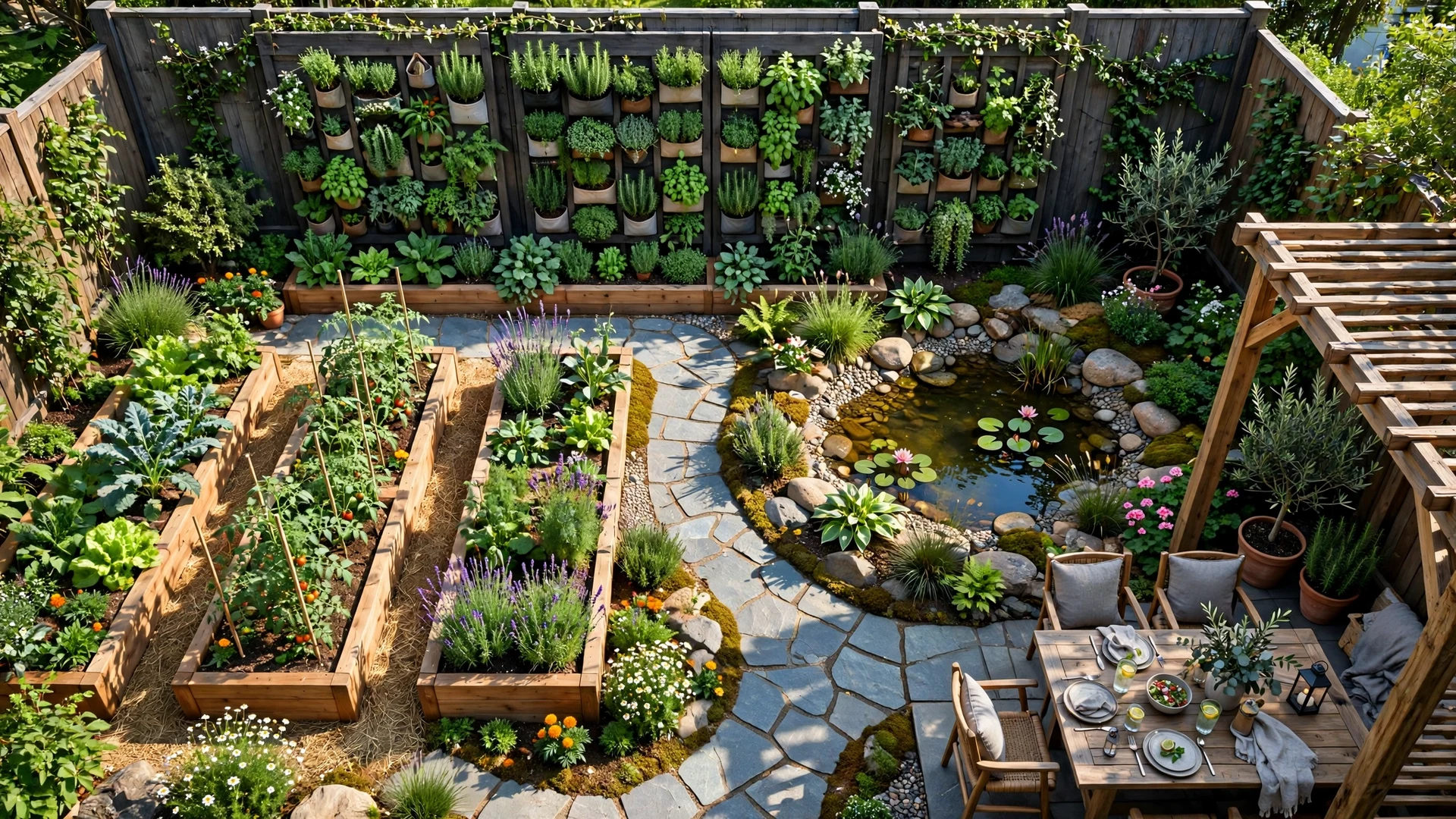
19 Small Backyard Garden Ideas for a Beautiful Outdoor Space
A small backyard does not mean small possibilities. With the right layout, a yard the size of a parking space can hold vegetables, flowers, wildlife, and a place to sit with a morning coffee. The trick is to use height, corners, and containers, and to choose plants that earn their place all year. This guide shares 19 small backyard garden ideas that work in real yards, not just in magazines. Each idea explains what it looks like, how to build it, and how to keep it looking good, so you can pick one this weekend and start with confidence.
You may also like our 17 Fall Landscaping Ideas to Refresh Your Yard Before Winter and 19 Cozy Winter Balcony Garden Ideas for a Small Outdoor Escape for more small-space outdoor inspiration.
1. A Raised-Bed Kitchen Garden in One Sunny Corner
A raised-bed kitchen garden turns even the smallest sunny corner into a productive, good-looking space. Timber or metal beds, about four feet wide, keep soil loose and warm, so lettuce, tomatoes, herbs, and peppers grow faster than they would in compacted ground. The tidy rectangles also make a small yard feel designed rather than improvised, especially when paths between beds stay clear and level. The effect is immediate and surprisingly long-lasting.
Start with two beds and a simple watering routine, then expand only when you can keep up. Fill beds with a mix of topsoil and compost, plant taller crops on the north side so they never shade shorter ones, and tuck basil, marigolds, and chives between vegetables to discourage pests. A short fence or low edging keeps pets and footballs out without blocking light. Keep tools, compost, and watering equipment nearby, so routine care never becomes a chore.
- Keep beds no wider than four feet so you can reach the middle without stepping on soil.
- Water deeply two or three times a week instead of giving a light sprinkle every day.
- Rotate crops each season so tomatoes and peppers never sit in the same bed twice in a row.

2. A Vertical Wall Garden for a Bare Fence
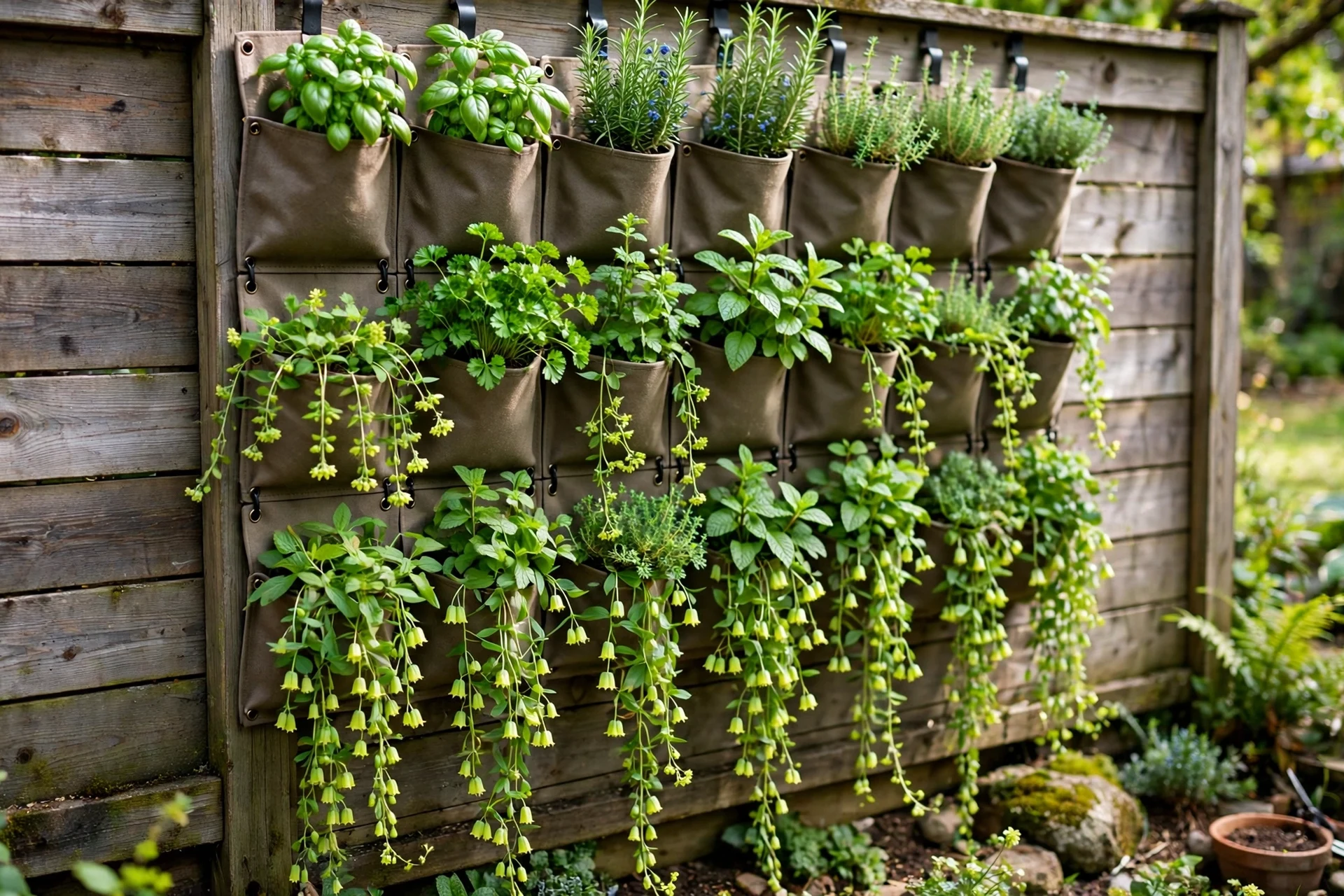
A vertical wall garden is the easiest way to add plants when floor space is almost gone. Pockets, wall planters, or a simple trellis panel fixed to a fence can hold herbs, strawberries, trailing flowers, and small ferns, turning a blank boundary into a living green wall. Because plants grow upward, the ground below stays free for a chair, a path, or a grill. The payoff lasts for years. The effect is immediate and surprisingly long-lasting.
Choose a fence that gets at least four hours of sun, fix planters firmly into posts rather than thin boards, and water from the top so moisture reaches every pocket. Use lightweight potting mix, feed every two weeks in summer, and start with tough plants such as trailing rosemary, thyme, and nasturtiums before trying anything delicate. If something fails, replace it quickly rather than leaving a gap that invites weeds and neglect.
- Line pockets with landscape fabric so soil stays put during heavy rain.
- Check fixings twice a year, since wet soil makes wall planters surprisingly heavy.
- Plant trailing varieties at the top so they soften the wall as they grow downward.
3. A Container Garden That Moves With the Sun
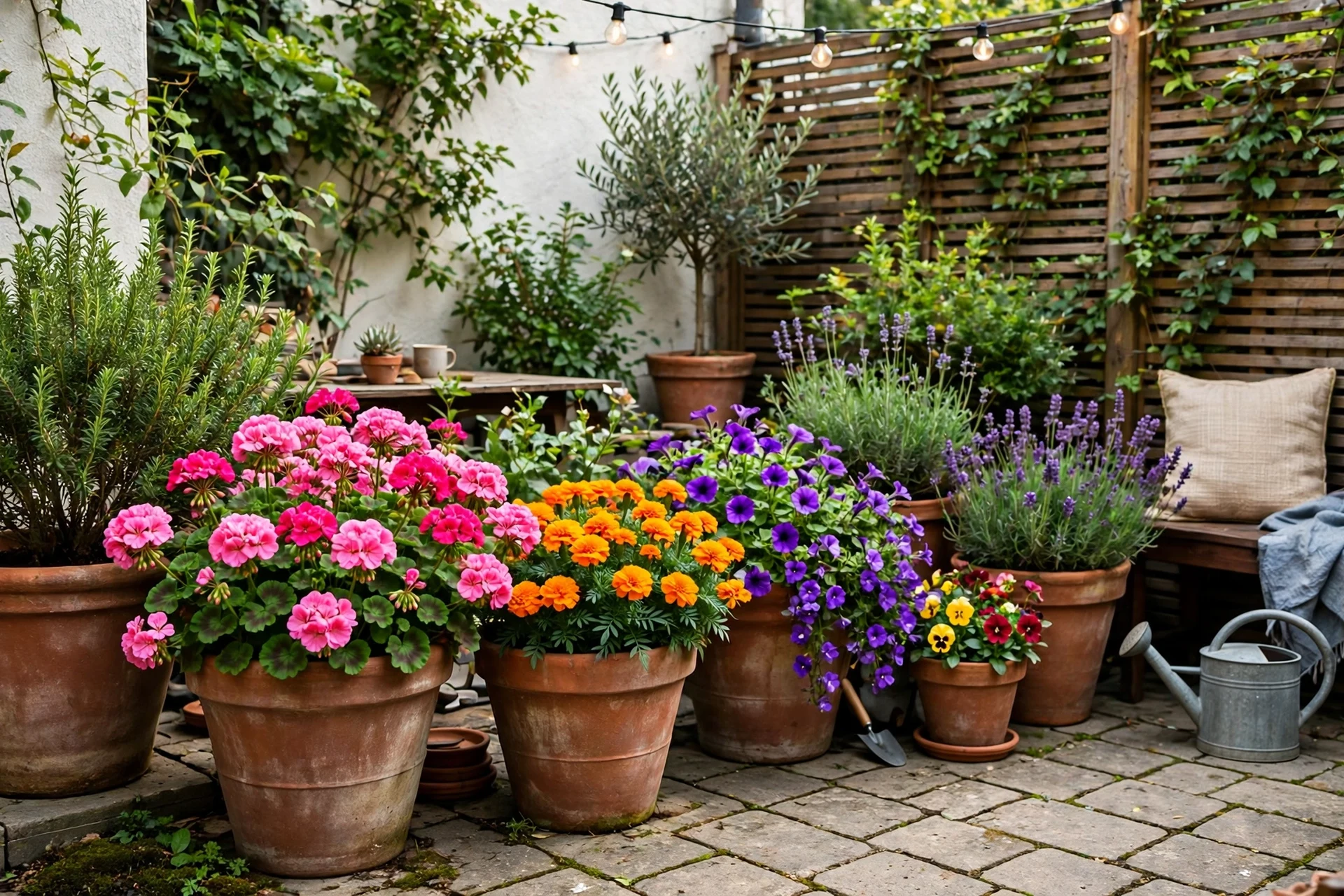
Containers let a small garden follow the sun instead of fighting shade. Large pots, half-barrels, and troughs can hold dwarf fruit trees, roses, lavender, and seasonal color, and they can be shifted a few feet as trees leaf out or shadows move. For renters, containers are also a low-commitment way to garden without digging up a landlord’s lawn. This makes it a practical choice for first-time gardeners and busy families alike.
Pick the largest pots you can lift, because big containers dry out far more slowly than small ones. Use pot feet for drainage, a slow-release fertilizer at planting time, and one thriller plant, one filler, and one spiller per pot for a balanced look. Group pots in odd numbers near a door or seating area for instant impact. Label new plants for the first season, so you remember what to cut back and when to feed.
- Drill extra drainage holes in any pot that holds water after rain.
- Refresh the top few inches of compost each spring instead of repotting everything.
- Move tender pots near a wall in winter for a little extra frost protection.
4. A Small Lawn Framed by a Generous Flower Border
A modest patch of lawn surrounded by a deep flower border makes a small yard feel larger, not smaller. The open green center gives children and pets room to play, while the border carries color, scent, and wildlife interest through the seasons. Keeping the lawn simple and the border generous is a classic trick that works in almost any climate. The result is a space that looks intentional, welcoming, and easy to enjoy every single day.
Mow the lawn a little higher than usual so it stays green in dry spells, and edge it cleanly once a week for a crisp outline. In the border, plant in drifts of three or five, put tall plants at the back, and leave gaps for bulbs in autumn. A curved edge softens corners and makes mowing easier than a fussy shape. A notebook or phone photo record helps you track what thrived, what struggled, and what to repeat.
- Leave grass clippings on the lawn occasionally to feed the soil naturally.
- Add one evergreen shrub per border section so winter never looks bare.
- Keep the border at least three feet deep or it will look thin and fussy.

5. A Gravel Garden That Thrives on Neglect
A gravel garden suits busy owners and dry corners where grass struggles. Gravel suppresses weeds, drains freely, and shows off sculptural plants such as lavender, sedum, ornamental grasses, and agaves to perfection. The pale stone also brightens a shady or narrow yard, making it feel lighter and more open on cloudy days. It also encourages wildlife, seasonal color, and a stronger connection to the outdoors at home. The effect is immediate and surprisingly long-lasting.
Lay landscape fabric, spread three inches of gravel, and plant through slits in the fabric for a clean finish. Choose drought-tolerant plants, water only until they establish, and rake the gravel once a month to keep it level. A few large rocks and a single statement plant stop the space from looking like a parking area. Start with the sunniest or driest spot first, since correcting the hardest area makes the rest easier.
- Use angular gravel rather than rounded pebbles, which scatter underfoot.
- Avoid gravel right beside a lawn, where mowers can fling stones around.
- Top up gravel every second year as it settles into the soil.

6. A Corner Vegetable Patch With a Cold Frame
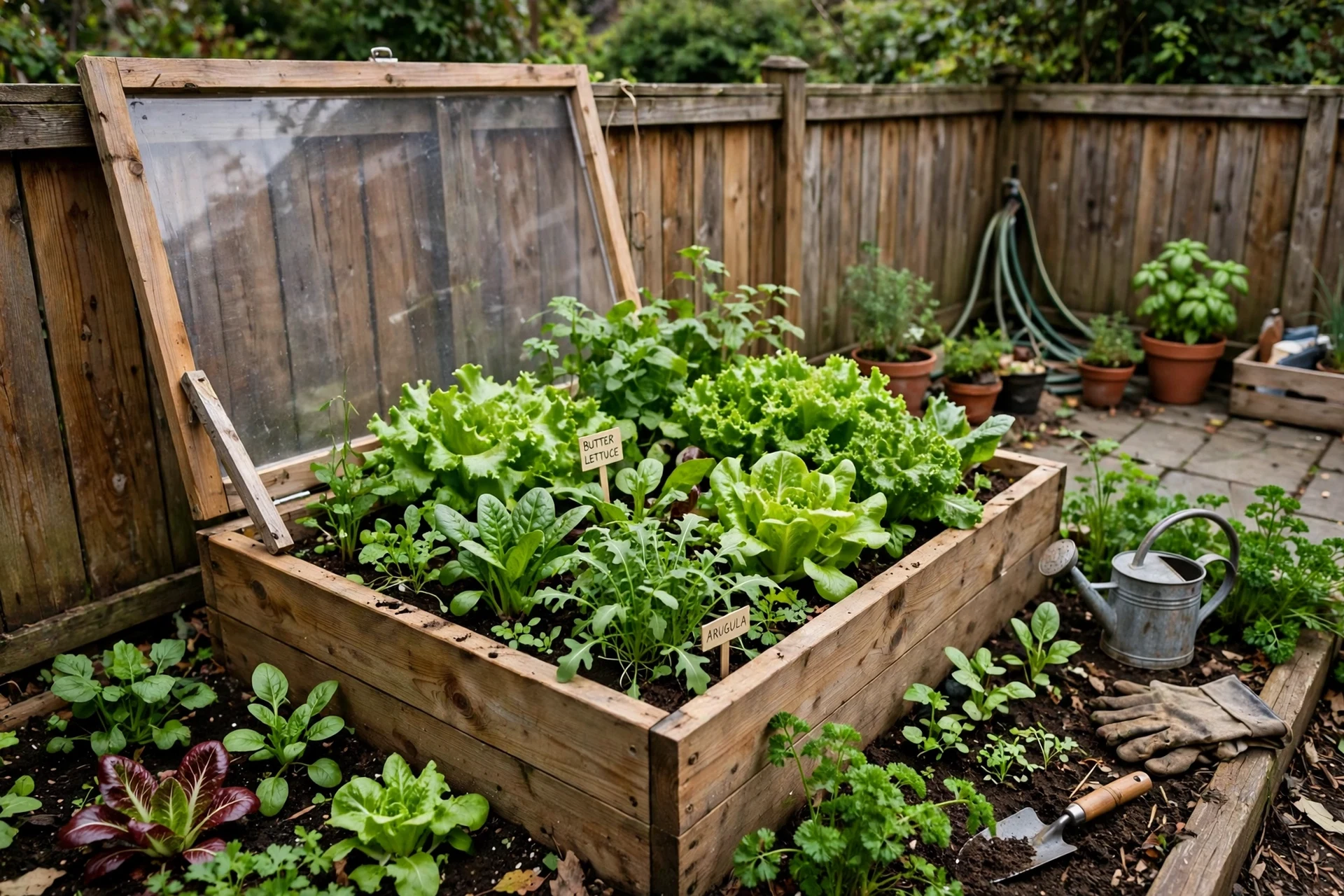
A corner vegetable patch proves you do not need a full allotment to grow food. One sunny corner, a cold frame, and a few square feet of soil can supply salad leaves, radishes, beans, and herbs for months. Corners are often wasted space, so using one for vegetables keeps the rest of the yard free for relaxing. The finished effect is both beautiful and practical, which is exactly what a small yard needs most.
Build the cold frame from old windows or buy a simple kit, and open its lid on warm days so seedlings never overheat. Sow little and often rather than planting everything at once, and keep a watering can nearby so the patch never dries out. A narrow path of stepping stones gives access without compacting the soil. Set aside an hour each weekend for watering, weeding, and a quick tidy, and the space will stay at its best.
- Sow salad leaves every two weeks for a continuous harvest.
- Cover the cold frame at night during the first frosts of autumn.
- Keep a small notebook of what grew well so next year is even easier.
7. A Herb Spiral That Saves Space and Looks Beautiful
A herb spiral packs a dozen herbs into a footprint no bigger than a dustbin lid. Stones stacked in a rising spiral create sunny, dry spots at the top for rosemary and thyme, and cooler, damper spots at the bottom for mint, parsley, and chives. The shape itself becomes a garden feature, especially near a kitchen door. This kind of planting also softens hard surfaces, hides plain fences, and adds welcome privacy.
Build the spiral no higher than waist height so watering and picking stay comfortable. Use rubble or broken bricks as a free core, face it with stone, and fill with gritty compost. Plant mint in its own pot sunk into the spiral, or it will take over the whole structure within a single season. The payoff lasts for years. Keep tools, compost, and watering equipment nearby, so routine care never becomes a chore.
- Place the spiral within a few steps of the kitchen door for easy picking.
- Water the top more often, since it drains fastest.
- Harvest regularly, because cutting herbs back keeps them bushy and productive.

8. A Trellis Screen Covered in Climbers
A trellis screen gives a small yard privacy without the heavy feeling of a solid fence. Roses, jasmine, clematis, and honeysuckle climb quickly, soften hard boundaries, and fill the air with scent in summer. The open lattice still lets breeze and light through, so the garden feels enclosed yet never cramped. It is a flexible idea, too, and can be scaled up, moved, or restyled as your needs change. The effect is immediate and surprisingly long-lasting.
Fix trellis panels to sturdy posts set in concrete, and leave a small gap behind them so air circulates and wood dries out. Tie new shoots in horizontally to encourage more flowers, prune after flowering, and plant a mix of evergreen and flowering climbers so the screen looks good in winter too. A simple annual routine of feeding, trimming, and mulching will keep everything healthy and attractive. The payoff lasts for years.
- Choose thornless climbers beside seating areas and paths.
- Feed climbers in spring with a balanced fertilizer for stronger growth.
- Never let a climber smother a neighbor’s fence without checking first.

9. A Tiny Pond for Wildlife and Calm
A tiny pond, even one made from a buried container, brings a small garden alive. Frogs, birds, and dragonflies arrive within weeks, and the sound of water makes a busy street fade into the background. Wildlife ponds need no fish and no filter, just clean rainwater, native plants, and a gentle slope for creatures to climb out. A well-planned version will reward you with color, scent, and interest through every season.
Dig a shallow bowl no deeper than two feet, line it carefully, and add a sloping stone or log as an escape ramp. Plant oxygenating plants and a marginal plant or two, then leave the water alone apart from topping it up in dry weather. Avoid tap water if possible, since it encourages algae. Check the area after storms and heavy rain, and adjust drainage or supports before small problems grow.
- Keep at least one side of the pond in shade to slow algae growth.
- Never move frogspawn from the wild; local wildlife will find you.
- Clear fallen leaves in autumn so they do not rot in the water.

10. A Stepping-Stone Path Through Planting
A stepping-stone path turns a straight walk across a small yard into a gentle journey. Wide, flat stones set slightly apart invite slow walking, let ground-cover plants creep between them, and break up a lawn or gravel area without the cost of full paving. The path also protects soil and grass from constant foot traffic. That combination of charm and practicality is why the idea suits so many different homes.
Lay stones on a bed of sand, check each one for wobble, and leave gaps of about two inches for creeping thyme or moss. Keep the path wide enough for a wheelbarrow, and curve it slightly around a feature plant or seating spot. Lighting along the path makes evening walks safe and atmospheric. Work in the cool of the morning or evening in summer, and always wear gloves for thorny or dusty jobs.
- Choose stones at least eighteen inches wide for comfortable stepping.
- Set stones level with the surrounding surface to avoid tripping.
- Weed between stones by hand so chemicals never reach nearby plants.
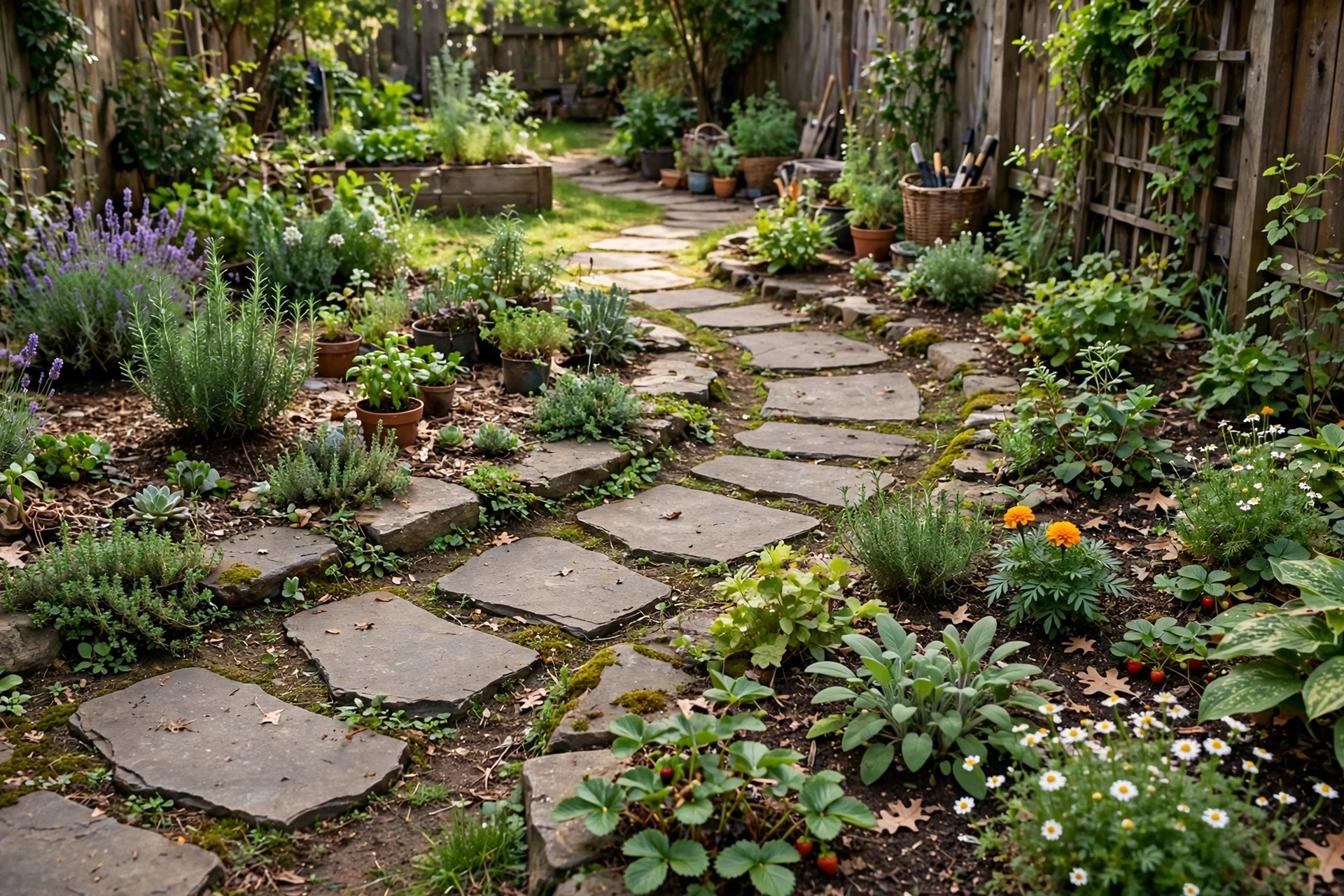
11. A Shade Garden Under an Existing Tree
A shade garden turns the trickiest spot in a small yard into its calmest corner. Hostas, ferns, astilbe, and hellebores thrive where grass thins out, and their layered leaves look lush even without bright flowers. A simple bench beneath the branches makes the shadiest place the most inviting seat in summer. It works in almost any small yard. The payoff lasts for years. It also adds year-round structure, so the garden never looks empty in winter.
Improve the soil with leaf mold and compost, but never pile soil against the tree trunk, which can harm the tree. Water new plants well in their first year, mulch thickly to hold moisture, and choose plants that tolerate dry shade if the tree drinks heavily. A path of bark chips keeps feet clean after rain. Share cuttings and spare plants with neighbors, which is a pleasant way to expand a garden for free.
- Plant in spring or autumn when shade plants establish fastest.
- Avoid digging deep near large roots; use small plants instead.
- Add a few white or pale flowers to brighten deep shade.
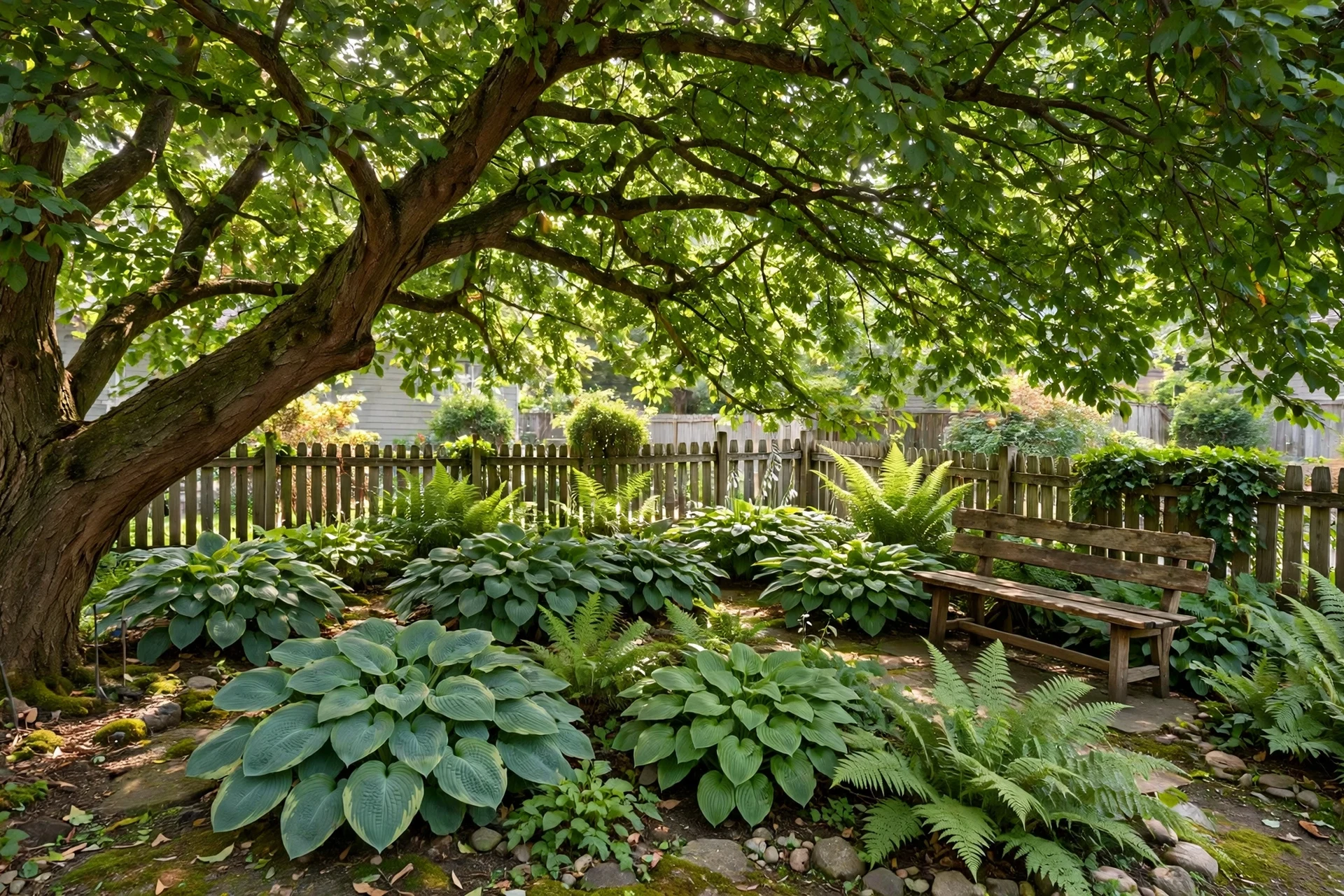
12. A Pollinator Bed That Buzzs All Summer
A pollinator bed fills a small garden with bees, butterflies, and birds from spring to autumn. A mix of native flowers, herbs, and single-flowered blooms provides nectar across the seasons, while the gardener gets color and scent in return. Even a bed the size of a door can support dozens of pollinator visits each day. It also adds year-round structure, so the garden never looks empty in winter. The effect is immediate and surprisingly long-lasting.
Plant in groups of the same flower so pollinators can find them easily, and choose varieties that bloom in sequence rather than all at once. Leave some stems standing over winter for shelter, avoid pesticides entirely, and add a shallow dish of water with pebbles for thirsty insects on hot days. Finally, step back regularly and view the space from indoors, where you will enjoy it most often. The payoff lasts for years.
- Include at least one early flower, such as crocus, and one late flower, such as aster.
- Let a few herbs flower instead of cutting them all back.
- Mow less often, and leave a small wild corner if you can.
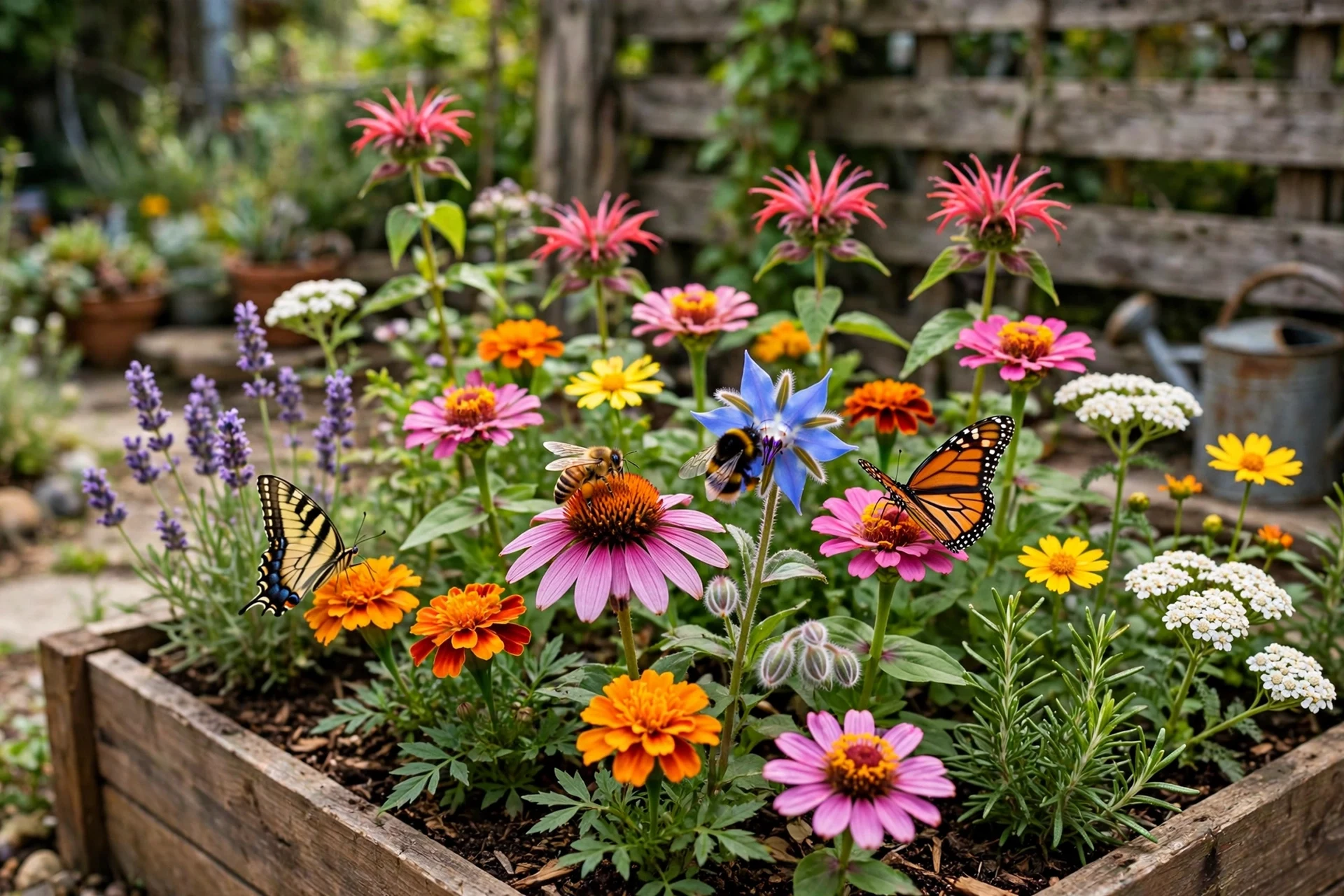
13. Espalier Fruit Against a Sunny Wall
Espalier fruit trees turn a sunny wall into a productive feature without stealing floor space. Apples, pears, and figs trained flat against wires need only a foot of depth, yet they can crop heavily and look sculptural even in winter. The technique suits small yards perfectly, because the tree grows where nothing else can. Over time, the planting matures into a settled, natural-looking corner that feels far larger than its footprint.
Buy a tree already trained on one or two tiers, fix horizontal wires eighteen inches apart, and tie new growth in during summer. Prune in late summer to keep the shape flat, feed in spring, and thin fruit so branches never break under a heavy crop. A south-facing wall gives the sweetest fruit. Buy materials in small batches first, test the layout, and add more only when the design feels right.
- Choose a variety that suits your climate and ripens before first frost.
- Water newly planted espaliers weekly in their first summer.
- Check ties each spring and replace any that cut into bark.

14. A Dining Nook Tucked Into Planting
A dining nook tucked into planting makes outdoor meals feel like a small escape. A bistro table and two chairs surrounded by scented plants, a climber overhead, and soft lighting turns an unused corner into the most-used spot in summer. The planting gives privacy and shade, so even a tiny yard can host long, lazy evenings. With a little planning, the same idea can be adapted to sun, shade, wind, or a very narrow plot.
Choose a level spot with firm footing, such as gravel or paving, and keep the table close to the house for easy carrying of food. Plant lavender, rosemary, and jasmine nearby for scent, hang string lights from a pergola or branch, and add a small side table for drinks and candles. Keep tools, compost, and watering equipment nearby, so routine care never becomes a chore. A simple annual routine of feeding, trimming, and mulching will keep everything healthy and attractive.
- Keep the dining spot within easy reach of the kitchen door.
- Use lightweight chairs you can move when the sun shifts.
- Add a citronella candle or two to keep evenings comfortable.

15. A Cut-Flower Bed for Weekly Bouquets
A cut-flower bed gives a small garden a second job: supplying fresh bouquets all summer. Cosmos, zinnias, sweet peas, and dahlias grow fast, bloom for months, and actually flower more when picked regularly. A bed just six feet long can fill a kitchen vase every week from June to October. Many gardeners find that starting small like this builds confidence for larger projects later on. This kind of planting also softens hard surfaces, hides plain fences, and adds welcome privacy.
Sow or plant in rows for easy picking, stake tall varieties early, and deadhead every few days to keep blooms coming. Cut stems in the morning, plunge them straight into water, and change the vase water every second day. Leave a few flowers to set seed for free plants next year. If something fails, replace it quickly rather than leaving a gap that invites weeds and neglect. The payoff lasts for years.
- Grow flowers you love to arrange, not just ones that look good in a catalog.
- Plant succession sowings every three weeks for continuous blooms.
- Keep cutting tools sharp and clean to avoid damaging stems.

16. A Rain Garden That Handles a Wet Corner
A rain garden turns a soggy corner into a feature instead of a problem. A shallow dip planted with moisture-loving plants collects roof and path runoff, lets it soak away slowly, and stops puddles from spreading across a lawn. The result is a garden that works with rain rather than fighting it. Because the idea uses vertical space, corners, or containers, it leaves the rest of the yard free. The effect is immediate and surprisingly long-lasting.
Dig a shallow basin no deeper than eight inches, loosen the soil underneath, and plant rushes, irises, astilbe, and ferns that tolerate both wet and dry spells. Direct a downspout or path drain into the basin with a simple channel, and mulch with bark that will not float away in heavy rain. Label new plants for the first season, so you remember what to cut back and when to feed.
- Never site a rain garden over drains, septic systems, or buried cables.
- Keep the basin at least ten feet from house foundations.
- Clear silt from the inlet once a year so water keeps flowing in.

17. A Night Garden With Solar Lights
A night garden extends a small yard long after sunset. Solar lights along paths, uplights in trees, and candles on a table make evening time outdoors feel magical, and the garden looks completely different in warm evening light. The effect needs no wiring and costs almost nothing to run. In a small space, that sense of enclosure and greenery matters more than any single plant. A well-planned version will reward you with color, scent, and interest through every season.
Place solar lights where they get daytime sun, use warm white rather than harsh blue-white bulbs, and light only a few focal points instead of flooding everything. A single uplight in a tree, lights along a path, and a lantern on a table are usually enough. Bring rechargeable candles indoors in storms. A notebook or phone photo record helps you track what thrived, what struggled, and what to repeat. The payoff lasts for years.
- Clean solar panels monthly so lights stay bright.
- Use timers or dusk sensors so lights never stay on all night.
- Keep lights low and shielded to protect moths and neighbors.
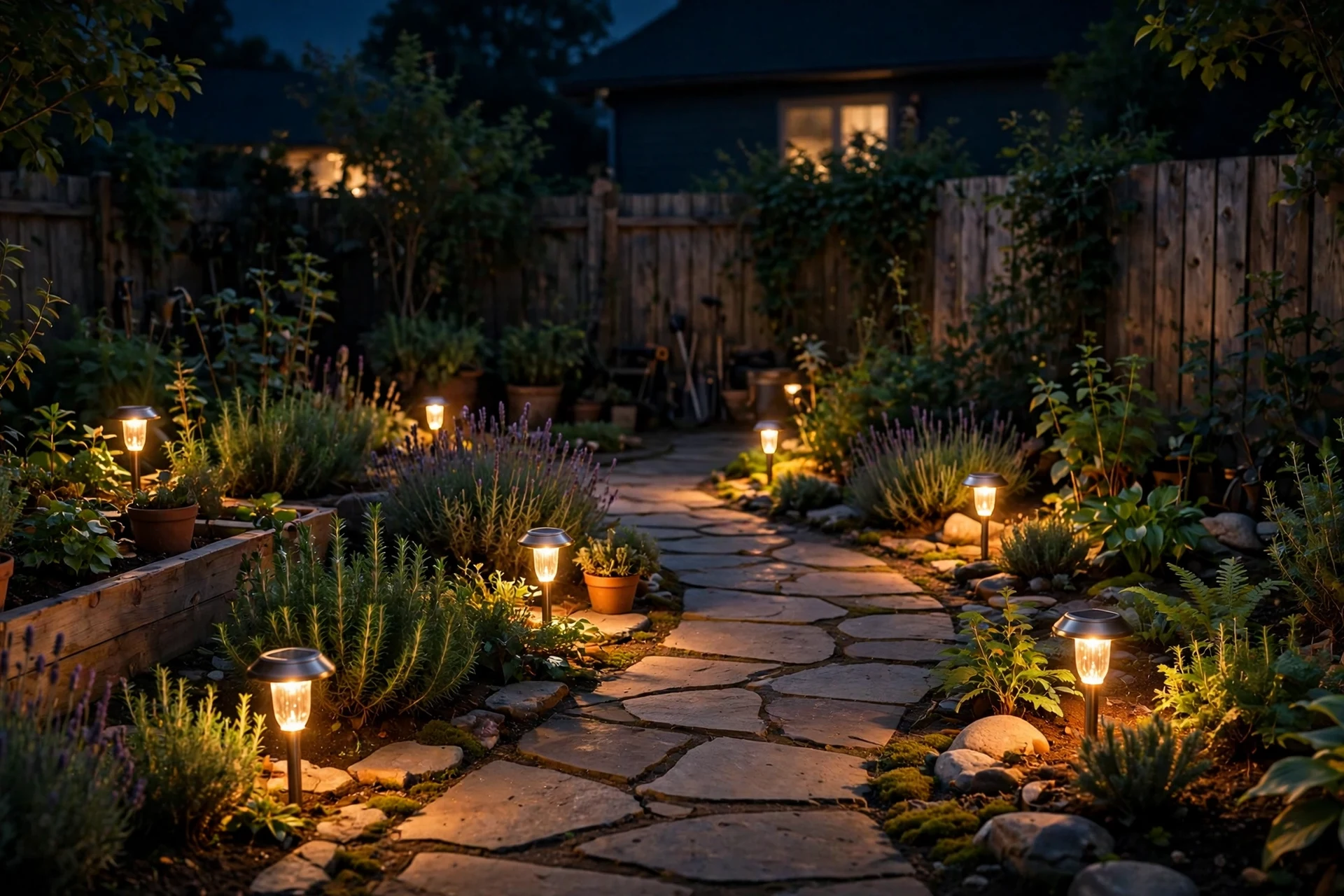
18. A Playful Corner for Children
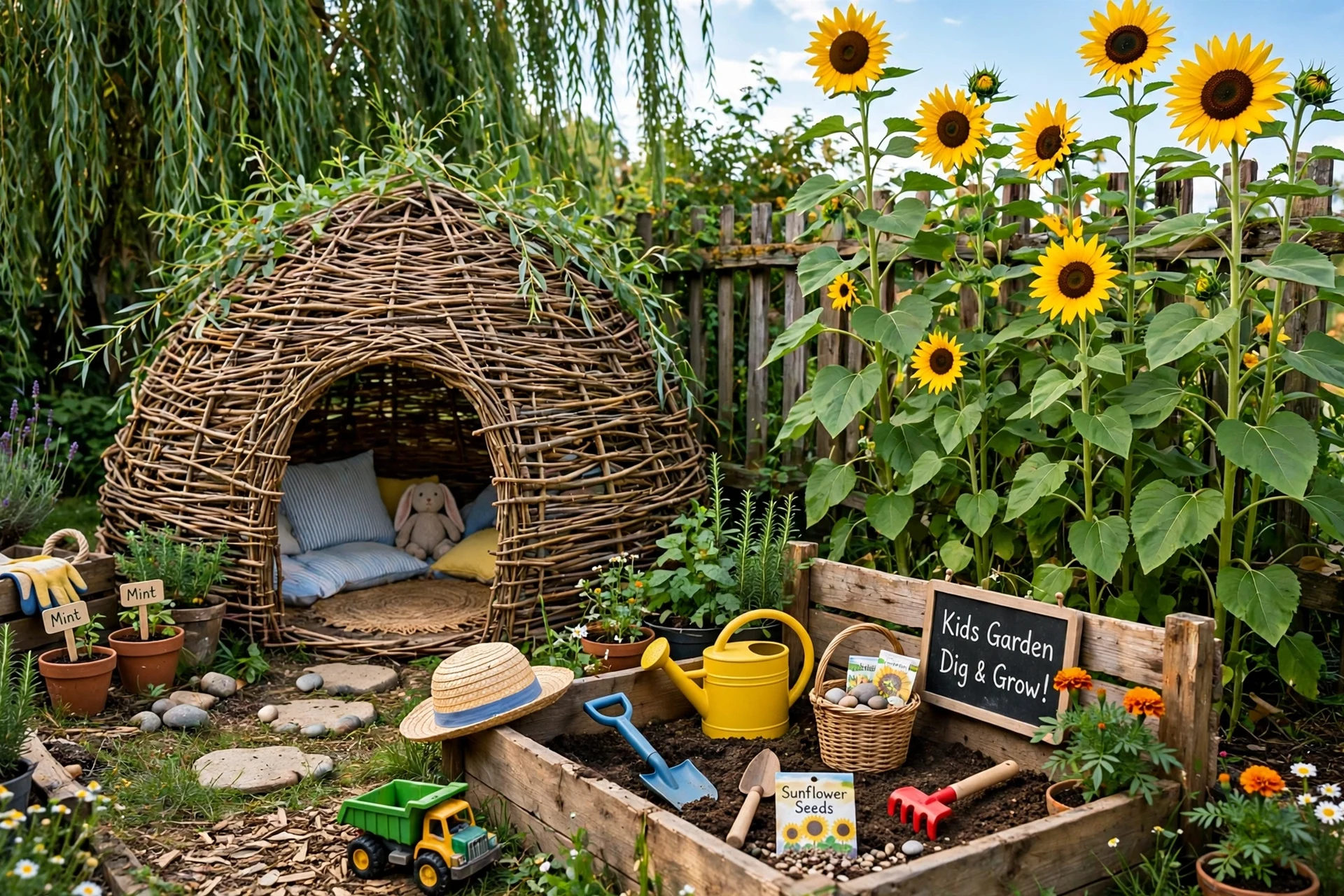
A playful corner gives children their own patch without taking over the whole yard. A small digging bed, a few sturdy plants, a log to balance on, and a den made from willow or beans can keep children outside for hours. The corner can be messy and joyful while the rest of the garden stays tidy. For a small household, that balance of beauty, usefulness, and low effort is hard to beat.
Let children choose a few plants, give them their own tools and a watering can, and accept that their bed will look wild. Use tough, non-toxic plants such as sunflowers, strawberries, and nasturtiums, keep the area visible from the house, and fence it lightly so play stays contained. Start with the sunniest or driest spot first, since correcting the hardest area makes the rest easier. The payoff lasts for years.
- Avoid thorny or toxic plants in a children’s corner.
- Provide shade and water nearby on hot days.
- Rotate play features each year to keep the corner exciting.
19. A Low-Maintenance Evergreen and Mulch Bed
A low-maintenance bed of evergreens and mulch is the backbone of a small garden that always looks cared for. Boxwood, dwarf conifers, and hardy shrubs hold their shape all year, while a thick mulch layer suppresses weeds and holds moisture. The bed needs little more than an annual trim and a mulch top-up. Even a modest version transforms how the yard feels, turning a plain patch into a destination. The effect is immediate and surprisingly long-lasting.
Plant evergreens with room to reach their mature size, so you never fight to keep them small. Mulch three inches deep, keeping it away from stems, and add one or two seasonal plants in pots for color that can be swapped without digging. A simple stone edge keeps mulch out of paths and lawns. Set aside an hour each weekend for watering, weeding, and a quick tidy, and the space will stay at its best.
- Prune evergreens lightly in late spring, never into bare wood.
- Top up mulch each spring before weeds establish.
- Water new evergreens well in their first year, even in winter.

Frequently Asked Questions
How do I start a small backyard garden with no experience?
Start with one sunny bed or a few large containers and easy plants such as lettuce, herbs, and marigolds. Learn watering and feeding on a small scale first, then expand gradually as your confidence grows.
What grows best in a small shady backyard?
Hostas, ferns, astilbe, hellebores, and ivy all thrive in shade. Add pale flowers and a light-colored path to brighten dark corners, and mulch well to hold moisture.
How can I make a tiny garden look bigger?
Use a single open area, such as a small lawn or gravel patch, framed by planting. Add height with climbers and wall planters, keep paths simple, and avoid too many small ornaments that break up the space.
How much maintenance does a small garden need?
Most small gardens need one or two hours a week in summer: watering, deadheading, and a quick weed. Low-maintenance beds of evergreens and mulch need even less, apart from an annual trim.
Can I grow vegetables in a small backyard?
Yes. Raised beds, containers, and a corner patch can grow salad leaves, tomatoes, beans, and herbs in a very small area. Sow little and often for a steady harvest rather than one large crop.
What is the cheapest way to improve a small backyard?
Start with containers, a gravel area, or a stepping-stone path, and grow plants from seed. Reuse stone, timber, and pots where possible, and add one statement plant instead of many small ones.
If you want to keep growing through the colder months, take a look at our How to Build a Greenhouse From Recycled Windows: A Step-by-Step Guide and 19 Cozy Winter Sunroom Ideas for Bright, Slow Mornings for more cold-season inspiration.
Conclusion
A beautiful small backyard garden is not about having more space, it is about using the space you have with intention. Start with one idea that fits your light, your soil, and your lifestyle, whether that is a raised bed, a vertical wall, or a quiet shade corner. Build it well, plant it generously, and give it a season to settle. Before long, the smallest yard can become the favorite room of the house, full of color, scent, and life.
Related reading: fall landscaping ideas, evergreen landscape ideas, and backyard fire pit ideas.




5 Comments