

17 Fall Landscaping Ideas to Refresh Your Yard Before Winter
17 Fall Landscaping Ideas to Refresh Your Yard Before Winter
Fall is the most useful season in the yard, because warm soil, cooler air, and steadier rain give plants a chance to recover from summer and prepare for cold weather. These fall landscaping ideas focus on that preparation: cleaning up, feeding roots, planting at the right time, and fixing small problems before frost turns them into spring repairs. A few focused weekends now can save you a season of catching up later.
In this guide, you will find 17 fall landscaping ideas to refresh your yard before winter, from leaf management and lawn repair to bulb planting, mulch, drainage, and frost protection. Each idea is practical for a typical suburban yard and easy to fit around work and family weekends. If you also want ideas for the colder months ahead, browse these winter garden ideas after you finish your autumn checklist.
You may also like our 19 Small Backyard Garden Ideas for a Beautiful Outdoor Space and 19 Cozy Winter Balcony Garden Ideas for a Small Outdoor Escape for more inspiration for smaller outdoor spaces.
1. Clear Fallen Leaves Before They Smother the Lawn
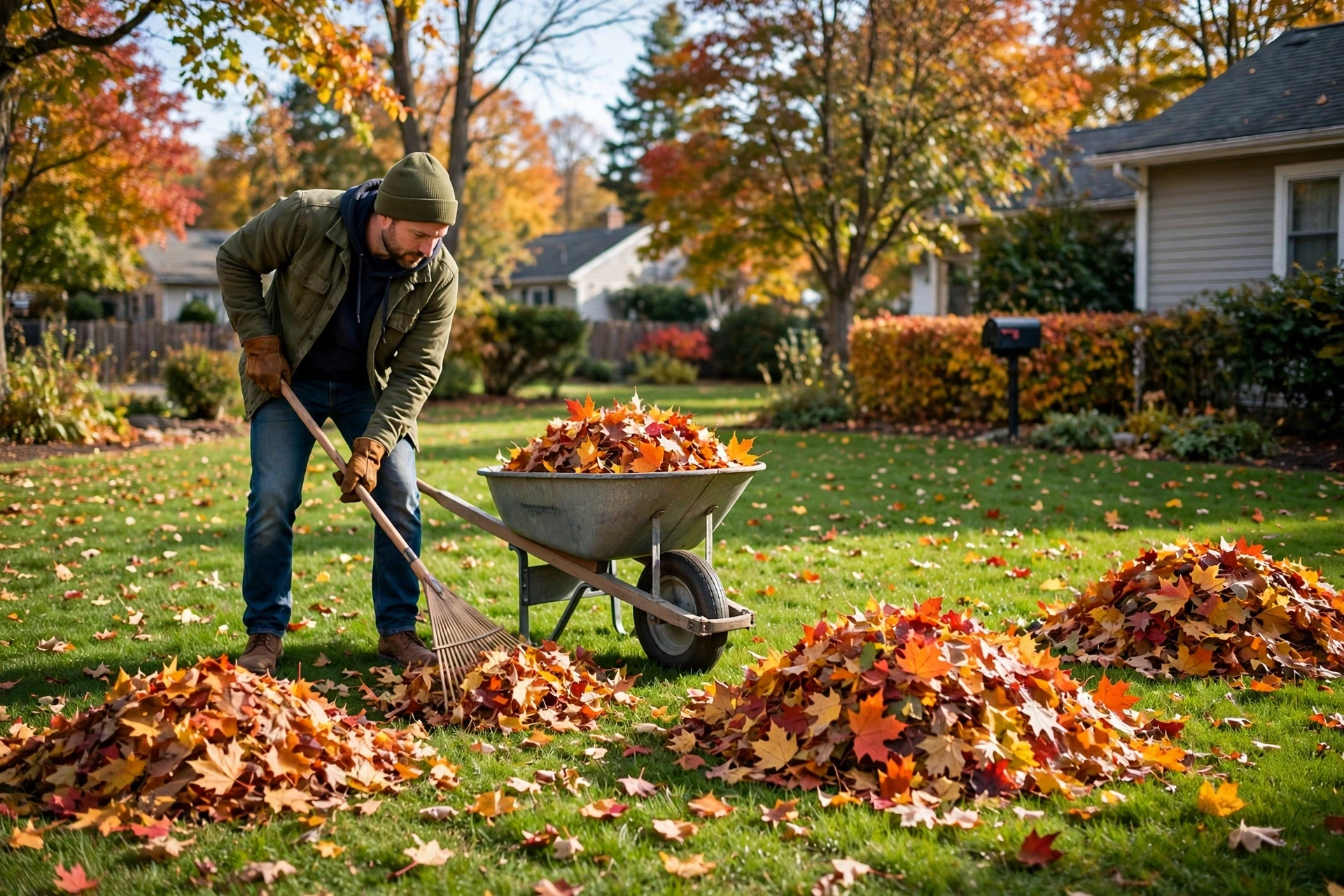
Fallen leaves look charming for a week, but a thick, wet mat can block sunlight and air from the grass underneath, inviting mold, disease, and bare patches by spring. Rake or blow leaves off lawns, paths, and low groundcover every week or two during heavy drop, rather than waiting for one exhausting end-of-season cleanup. Focus first on shaded corners and low spots where leaves pile deepest and stay damp longest after rain.
Use a mulching mower to shred light leaf cover directly into the lawn, where tiny pieces break down and feed the soil without smothering it. For heavier piles, collect leaves in a tarp and move them to beds, a compost pile, or curbside collection if your town offers it. Keep drains and walkways clear too, since packed leaves turn slick and can block water flow during autumn storms and keeps paths safe for evening walks.
- Rake weekly during heavy leaf drop rather than waiting for one huge cleanup.
- Shred light leaf cover with a mulching mower to feed the lawn.
- Keep drains, paths, and gutters clear of packed leaves.
2. Refresh Mulch in Beds for Insulation and a Tidy Look
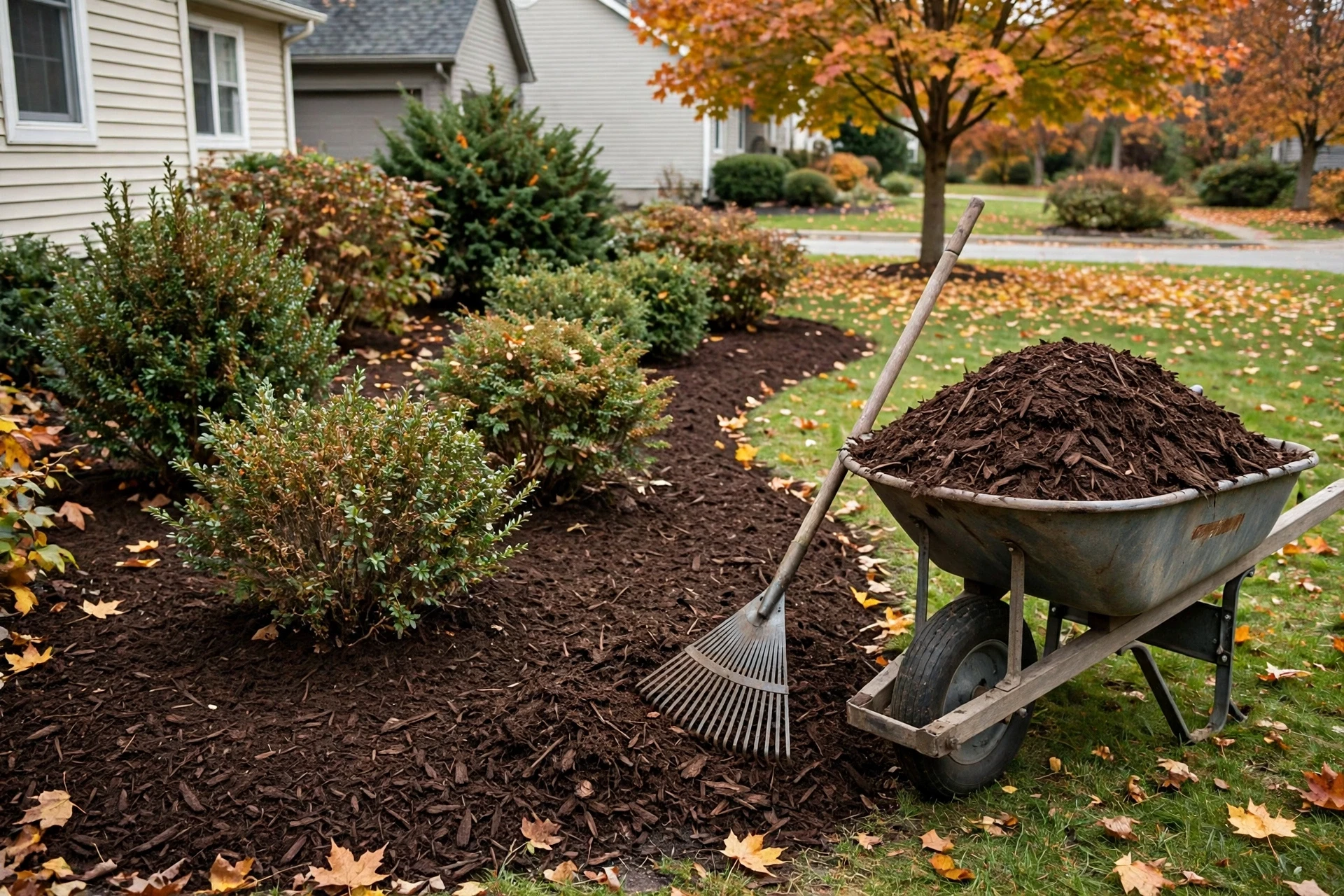
Bare soil loses moisture quickly in autumn wind, and exposed roots suffer more when temperatures swing between warm days and cold nights. A fresh two-to-three-inch layer of shredded bark or wood mulch insulates roots, suppresses late weeds, and instantly makes tired beds look cared for again. Pull back old, matted mulch first so water can reach the soil, and keep the new layer a few inches away from stems and trunks.
Choose natural, undyed mulch for a soft, woodland look that suits most homes, and top up only where it has thinned rather than piling it high everywhere. Avoid volcano-shaped mounds around trees, which trap moisture against bark and invite pests. In vegetable beds, straw works well as a lighter alternative. Water lightly after mulching so the layer settles neatly and stays in place through windy days and the first heavy autumn rains.
- Spread mulch two to three inches deep, no thicker.
- Keep mulch a few inches away from stems and tree trunks.
- Pull back matted old mulch so water can reach the soil.
3. Overseed Thin and Bare Patches While Soil Is Warm
Early fall is the kindest time to repair a patchy lawn because warm soil speeds germination while cooler air reduces stress on young seedlings. Scatter seed over thin areas, worn paths, and spots damaged by summer heat, choosing a blend suited to your sun, shade, and region, and local garden centers can help match varieties to your conditions. Good seed-to-soil contact matters more than quantity, so rake lightly or scratch the surface before you sow.
Water new seed gently once or twice a day until it sprouts, then gradually lengthen the time between waterings as roots deepen. Keep foot traffic off repaired patches for several weeks and mow high once seedlings reach about three inches tall. If your lawn is mostly healthy, overseeding only the weak spots saves seed, time, and money while still thickening the turf before winter and keep the soil consistently moist, not soggy.
- Choose a seed blend suited to your sun, shade, and region.
- Rake lightly first for good seed-to-soil contact.
- Water gently daily until seedlings sprout.

4. Aerate Compacted Soil So Roots Can Breathe
Summer foot traffic, mowing, and heavy rain can press soil particles together until air, water, and nutrients struggle to reach grass roots. Core aeration pulls small plugs from the lawn, opening channels that let roots grow deeper and stronger before winter dormancy. Lawns with clay soil, heavy use, or thinning turf benefit most, and the plugs themselves break down naturally within a couple of weeks and return nutrients to the turf naturally.
Rent a core aerator for a large lawn or hire a local service for a quick pass, working in two directions over the worst areas. Aerate when soil is moist but not soggy, ideally before overseeding so seed falls into the fresh holes. Leave the plugs on the lawn to decompose, and water afterward if rain is not expected. Skip spike shoes, which punch holes without removing soil or relieving compaction in a lasting way.
- Aerate when soil is moist but not soggy.
- Make a second pass over the most compacted areas.
- Leave the soil plugs on the lawn to break down naturally.

5. Feed the Lawn One Last Time for Strong Spring Growth
A fall feeding helps grass store energy in its roots through winter instead of pushing tender top growth that frost can damage. Apply a fertilizer labeled for autumn lawn care at the rate on the bag, spreading it evenly with a broadcast spreader and watering it in lightly. Time the feeding several weeks before the ground freezes so nutrients can move into the root zone while grass is still active.
Do not guess at amounts or double up products, since excess fertilizer can burn turf and wash into drains. If you have not tested your soil, a standard fall formula is a safe starting point for most lawns, while a soil test gives a more precise plan for future seasons. Keep granules off paths and driveways, sweeping any stray pellets back onto grass. Mow normally afterward, leaving clippings to return nutrients.
- Apply fertilizer at the rate shown on the bag, never double.
- Water lightly after feeding so granules reach the soil.
- Sweep stray granules off paths and back onto the grass.

6. Plant Spring Bulbs Now for a Colorful Surprise
Tulips, daffodils, crocuses, and alliums need a cold winter rest to bloom, which makes fall planting essential rather than optional. Tuck bulbs into sunny or lightly shaded beds, planting each one two to three times as deep as it is tall, with the pointed end facing up. Group bulbs in odd-numbered clusters for a natural drift instead of lining them up in stiff, single rows, which can look stiff and unnatural in a garden bed.
Mix early, mid-season, and late varieties so color arrives in waves rather than all at once in spring. Add a handful of compost to each planting hole, water well, and mark the spot so you do not disturb bulbs during later digging. In areas with hungry squirrels, cover plantings with wire mesh or choose daffodils, which animals usually leave alone. Label varieties now to avoid surprises later. Patience now pays off beautifully in spring.
- Plant bulbs two to three times as deep as they are tall.
- Group bulbs in odd-numbered clusters for a natural look.
- Mix early, mid-season, and late varieties for waves of color.

7. Fill Containers and Beds With Mums and Pansies
When summer annuals fade, mums and pansies step in with rich autumn color that lasts until hard frost in many regions. Chrysanthemums offer bold mounds of gold, rust, burgundy, and white, while pansies add cheerful faces in purple, yellow, and blue that tolerate cool nights. Together they brighten porches, window boxes, and empty bed edges without demanding constant care. They also pair well with pumpkins, gourds, and dried grasses for a seasonal display.
Plant mums in full sun and water them deeply until established, pinching off spent blooms to stretch the show. Pansies prefer cooler weather and can even bounce back after a light frost, making them ideal for front-door pots. Pair them with ornamental kale, grasses, or trailing ivy for texture, and refresh potting mix in containers before planting so roots have fresh nutrients for the season ahead and help plants settle quickly.
- Plant mums in full sun and deadhead spent blooms.
- Use pansies in cooler spots and front-door pots.
- Refresh container potting mix before planting.

8. Divide Overgrown Perennials to Rejuvenate Crowded Clumps
Perennials that once bloomed generously can weaken when their centers die out or roots become a tangled, crowded mass. Fall is a gentle time to divide many spring- and summer-blooming types, giving each new piece room, fresh soil, and a chance to root before winter. Hostas, daylilies, irises, and ornamental grasses are common candidates, though timing varies by plant, so check plant-specific timing before you dig. Fall division also frees space for new spring bulbs nearby.
Lift the whole clump with a fork, then cut or pull it into sections, each with healthy roots and several shoots. Replant divisions right away at the same depth, water deeply, and mulch lightly around them. Share extras with neighbors or move them to a new bed instead of discarding healthy plants. Skip dividing fall bloomers now, and wait until spring for those still putting on their autumn show in the garden.
- Divide spring- and summer-blooming perennials in fall.
- Keep several shoots and healthy roots on each division.
- Water new divisions deeply and mulch lightly.

9. Plant Trees and Shrubs While Roots Can Still Establish
Fall planting gives trees and shrubs a head start because roots keep growing in warm soil long after leaves drop, even when top growth has stopped. With less heat stress and usually more rain than summer, new plants settle in with less watering and often grow more vigorously the following spring. Choose species suited to your climate, mature size, and available sunlight levels before you buy or plant anything permanent carefully.
Dig a hole twice as wide as the root ball but no deeper, set the plant at its original soil level, and backfill with native soil rather than rich amendments alone. Water slowly and deeply, then mulch around the base without touching the trunk. Stake only if wind is a real concern, and remove ties within a year. Avoid planting tender tropical types now, since they cannot handle approaching cold.
- Dig the hole twice as wide as the root ball, no deeper.
- Set the plant at its original soil level.
- Water slowly and deeply, then mulch without touching the trunk.

10. Prune Only What Is Dead, Damaged, or Dangerous
Fall is not the season for heavy shaping, because fresh cuts can stimulate tender growth that a sudden frost will kill. Instead, remove only dead, broken, diseased, or crossing branches that pose a hazard or invite infection over winter. Clean cuts just outside the branch collar help wounds close naturally, and disinfecting tools between diseased cuts limits the spread of problems. Sharp, clean tools make smoother cuts that heal faster.
Leave major reshaping, hedge shearing, and spring-flowering shrubs alone until their proper season, since many already hold next year’s buds. If a large limb hangs over a walkway or roof, call a professional rather than climbing with a saw. Collect pruned material right away after pruning, compost healthy small trimmings, and dispose of diseased wood in the trash rather than adding it to a home compost pile at all for safe disposal.
- Remove only dead, broken, diseased, or crossing branches in fall.
- Cut just outside the branch collar for clean healing.
- Disinfect tools between cuts on diseased wood.

11. Redefine Bed Edges for a Crisp, Finished Look
Over a season, lawn grass creeps into beds and mulch spills onto turf, blurring the lines that make a landscape look intentional. A clean edge in fall restores that definition, improves drainage at bed borders, and makes spring mowing and mulching far easier. Use a half-moon edger or flat spade to cut a neat, shallow trench along the existing bed line, working in smooth, steady sections for a professional finish.
Remove the cut sod and loose soil, then decide whether to leave a natural trench edge or install stone, metal, or brick edging for a more permanent border. A trench edge costs nothing and looks tidy when refreshed each year, while solid edging reduces future creep. Backfill beds with mulch after edging so the new line stands out, and sweep paths clean for an instantly polished finish around the whole yard.
- Cut a shallow, even trench with a half-moon edger.
- Remove cut sod so the new line stays crisp.
- Refresh mulch after edging to make the border stand out.

12. Fix Drainage Before Winter Rain and Freeze Arrive
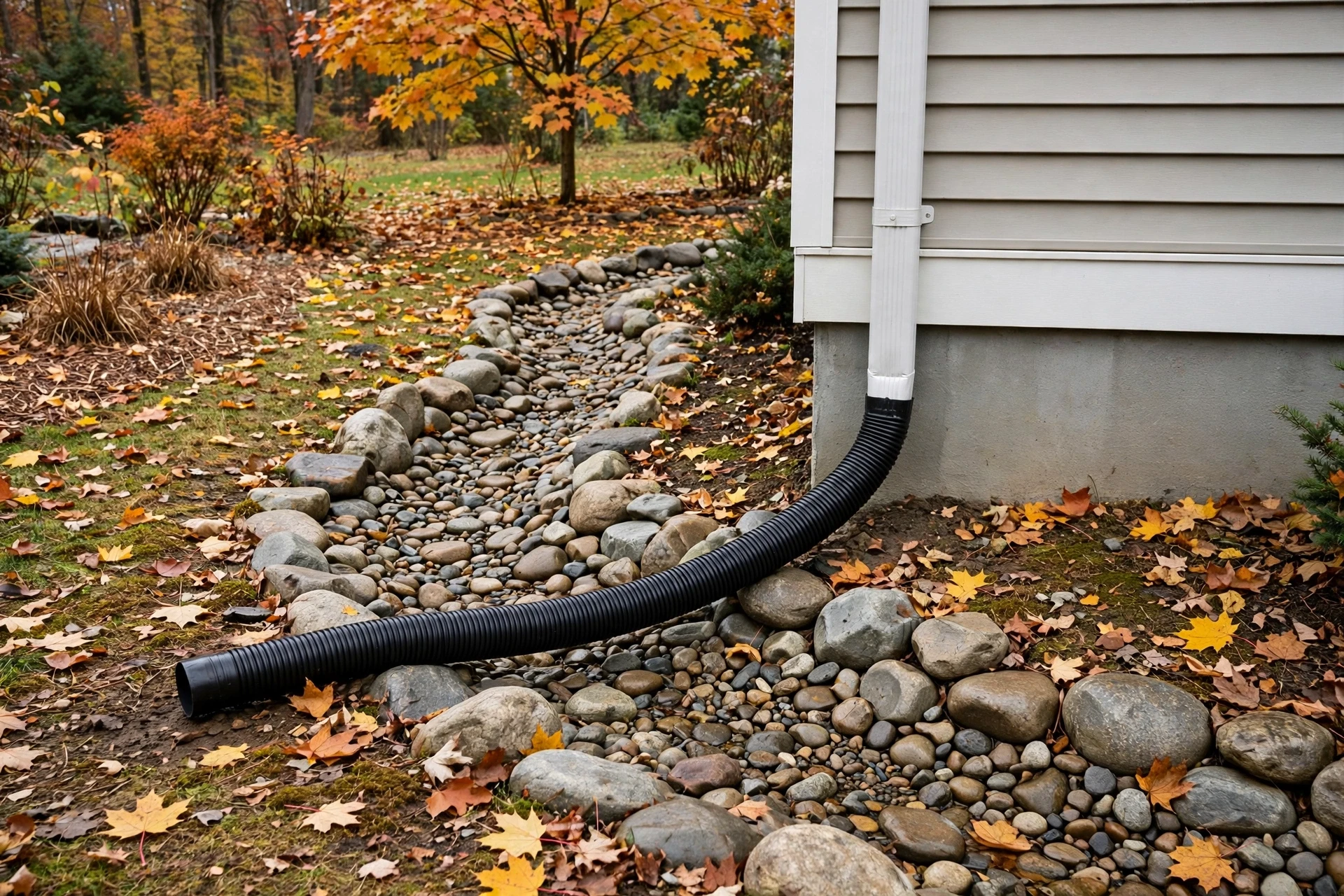
Autumn storms reveal drainage problems that summer dryness hides, from puddles near foundations to soggy low corners where grass refuses to grow. Walk your yard during or after rain, noting where water pools, where downspouts discharge, and whether soil slopes away from the house. Small corrections now prevent erosion, icy patches, and water damage during winter freeze-and-thaw cycles. Early action also protects foundations, paths, and planting beds from costly damage.
Extend downspouts away from foundations, clear clogged gutters and drains, and fill low spots with topsoil graded gently away from buildings. For persistent wet areas, a shallow swale or dry creek bed can guide water safely across the yard. Avoid sending runoff toward neighbors or streets. If water reaches basements or undermines paths, consult a landscape professional before the ground freezes solid. Recheck drainage after the first heavy autumn storm.
- Walk the yard during rain to spot pooling water.
- Extend downspouts away from foundations.
- Grade low spots gently away from the house.
13. Refresh Patios, Paths, and Hardscape for Safer Steps
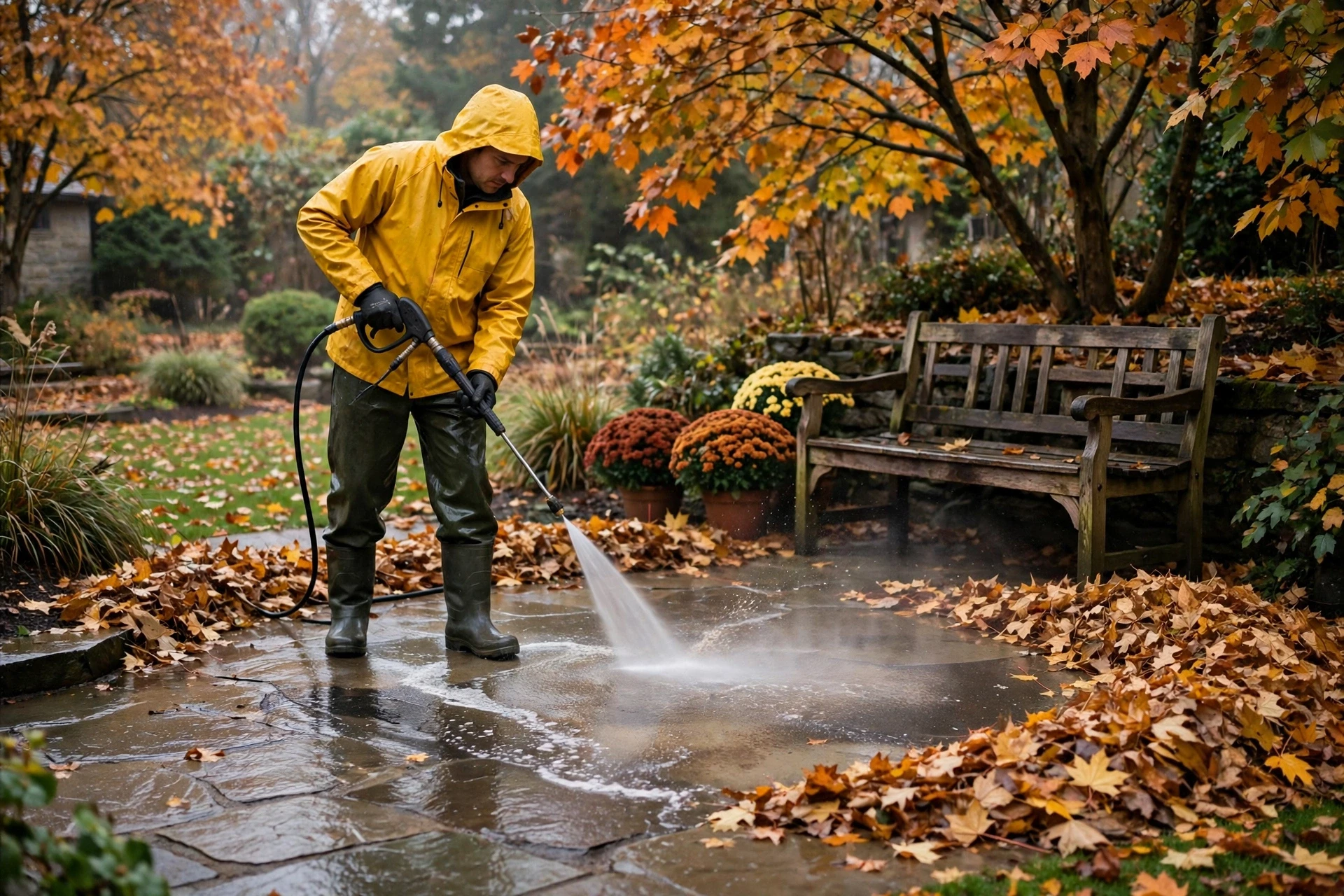
Moss, algae, fallen leaves, and summer grime make patios and paths slippery just as days grow shorter and wetter. A thorough fall cleaning quickly restores grip and reveals the true natural color of stone, brick, or concrete, while also exposing cracks that winter ice formation could widen. Sweep first, then scrub or pressure-wash on a low setting, testing an inconspicuous spot to avoid damaging softer surfaces or loosening joint material.
Refill joints with polymeric sand or fine gravel where it has washed out, reset wobbly pavers, and seal surfaces only if the product suits your material and climate. Trim overhanging branches that drip sap or drop debris onto a cozy backyard fire pit seating area, and store cushions before damp weather stains them. Clear steps and handrails too, so evening trips outside stay safe and comfortable through darker autumn months. Check outdoor lighting along paths at the same time.
- Sweep before washing so grit does not scratch surfaces.
- Test pressure washing on a hidden spot first.
- Refill washed-out joints with sand or fine gravel.
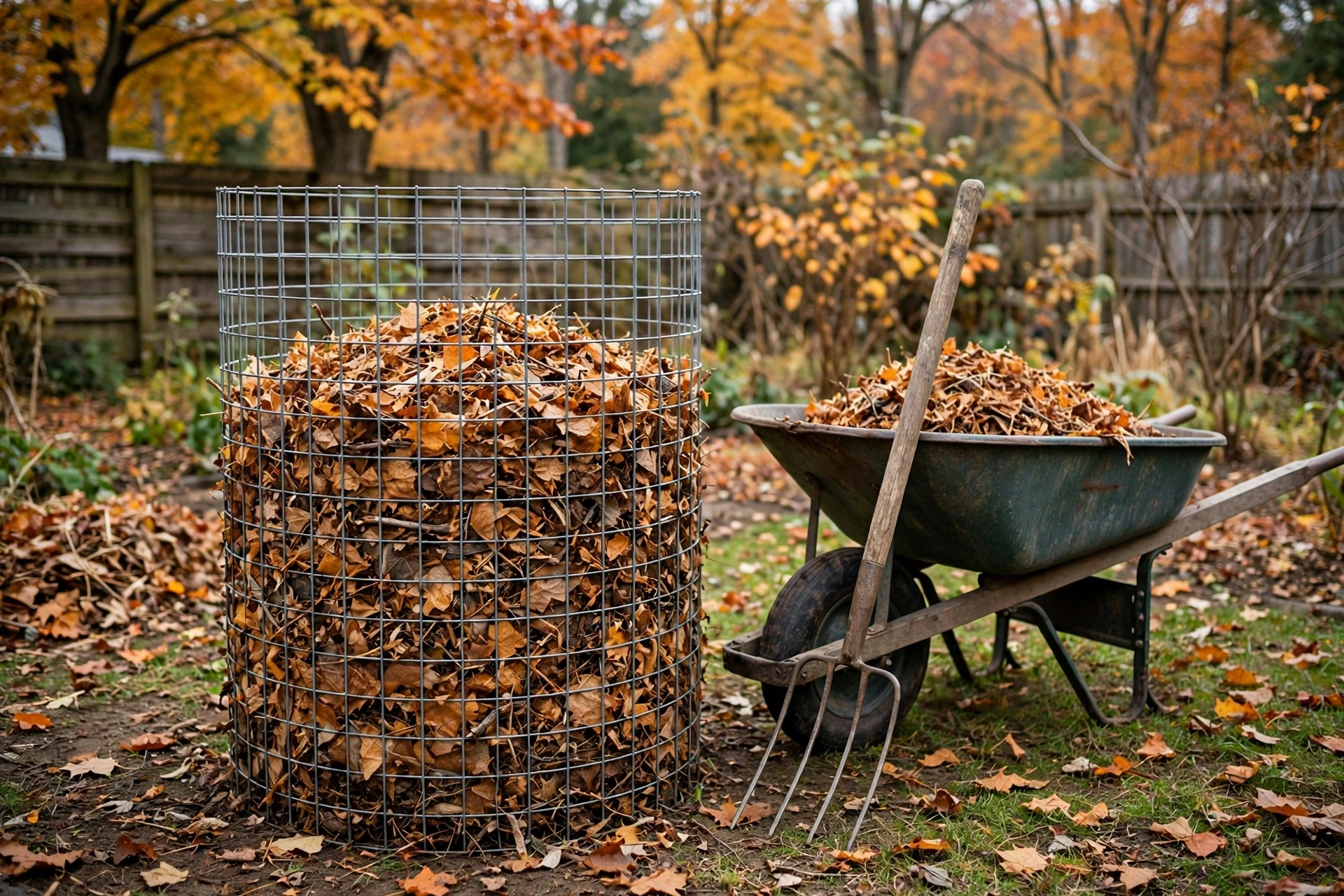
14. Start a Leaf Compost Pile for Free Garden Gold
Instead of bagging every leaf for disposal, turn autumn’s abundance into rich compost that will feed next year’s beds for free. Shredded leaves break down faster than whole ones, so run them over with a mower or shredder before piling. Mix roughly three parts brown leaves with one part green material, such as grass clippings or kitchen scraps, and keep the pile as damp as a wrung-out sponge and speeds decomposition noticeably.
Turn the pile every few weeks to add air, and cover it loosely to retain moisture without making it soggy. A simple wire bin or three-sided enclosure keeps the pile tidy and contained. In several months, dark, crumbly compost will be ready to spread on beds. Avoid adding diseased plants, meat, or treated wood, which can cause odors or spread problems in the garden. Finished compost also improves soil structure over time.
- Shred leaves before piling so they break down faster.
- Mix about three parts leaves with one part green material.
- Turn the pile every few weeks to add air.
15. Protect Tender Plants Before the First Frost
Tropical plants, tender bulbs, and container favorites cannot survive a hard frost, so a little preparation saves plants you would otherwise replace each spring. Watch local forecasts and move pots indoors or into a sheltered garage before nighttime temperatures drop near freezing temperatures. For plants staying outside, cover them with frost cloth or old cotton bedsheets on cold nights, removing covers each morning so heat and light return each day.
Bring tender bulbs such as dahlias and cannas indoors after foliage blackens, dry them, and store them in a cool, dark place. Keep stored bulbs dry and check them occasionally for mold. Reduce watering for indoor transplants and check leaves for pests before they join houseplants. Group remaining outdoor containers near a sheltered wall for extra warmth, and wrap especially vulnerable pots in burlap to protect roots from sudden temperature swings.
- Watch forecasts and cover plants before a frost night.
- Remove frost covers each morning so light and warmth return.
- Check indoor transplants for pests before bringing them inside.

16. Add One Evergreen Anchor for Winter Structure
While fall work focuses on preparation, one well-placed evergreen can carry the landscape through winter after deciduous plants go bare. A compact juniper, boxwood, or dwarf spruce adds steady deep green near an entry, at a bed corner, or beside a path, giving the eye a resting place when snow covers color. Choose a variety rated for your zone and sized for its mature spread, not just its nursery pot.
Plant it early in the fall season so roots establish before the ground freezes, following the same wide-hole and mulching steps used for other shrubs. Water it deeply until dormancy, since evergreens continue losing moisture through needles in winter wind. One or two anchors are enough; the goal is structure, not an evergreen-only design. Pair the new plant with seasonal mulch and fallen-leaf cleanup for a balanced autumn look overall. For more structure ideas, see these evergreen landscape ideas.
- Choose a variety rated for your hardiness zone.
- Plant early in fall so roots establish before freezing.
- Water deeply until dormancy, since evergreens lose moisture in winter wind.

17. Winterize Faucets, Hoses, and Irrigation Systems
Water left in outdoor pipes, hoses, and irrigation lines can freeze, expand, and crack fittings, leading to expensive spring repairs. A short autumn checklist prevents most cold-weather plumbing surprises. Before the first hard freeze, disconnect garden hoses, drain them fully, and store them coiled in a shed or garage. Shut off water to outdoor faucets from inside the house where possible, then open the outside tap to let remaining water drain out.
If you have an irrigation system, follow the manufacturer’s instructions for blowing out lines or hire a professional to winterize it safely. Insulate exposed pipes and faucet covers in unheated areas, and empty watering cans, birdbaths, and fountains that could crack. Mark shutoff valves clearly, and note the date you winterized everything so spring startup is simple and leak-free. Store any leftover covers and insulation where you can find them next autumn.
- Disconnect and drain hoses before the first hard freeze.
- Shut off outdoor water from inside where possible.
- Insulate exposed pipes and faucet covers.

You may also like our How to Build a Greenhouse From Recycled Windows: A Step-by-Step Guide if you want to keep growing through the colder months.
Conclusion
Autumn yard work is not about doing everything at once. It is about choosing the jobs that protect what you already have and set up what you want next spring, whether that means a thicker lawn, a brighter bulb display, or beds that drain properly through winter rain. Work through this list in order of urgency for your yard, starting with warm-soil jobs like seeding and planting.
Pick the fall landscaping ideas that fit your yard, your budget, and your weekends, and leave the rest for next year or for a professional if the job is large. Small, steady steps now — a fresh mulch layer, a cleared drain, a few dozen bulbs — add up to a yard that wakes up healthier, tidier, and ready to enjoy as soon as spring arrives.
Frequently Asked Questions
When should I start fall landscaping work?
Start as soon as leaves begin to fall and nighttime temperatures cool, usually early to mid-autumn in most US regions. Lawn seeding, aeration, and bulb planting all need warm soil, so do them first. Save frost protection and faucet winterizing for later in the season, when the first frost is forecast.
What is the most important fall lawn job?
For most lawns, the winning combination is aeration, overseeding thin spots, and one fall feeding. Together they relieve compaction, thicken turf, and help roots store energy for winter. If you can only do one job, overseeding bare patches while soil is still warm usually makes the biggest visible difference by spring.
Should I rake all my leaves or leave some?
Remove thick leaf mats from lawns, since they block light and air and invite disease. Shredded leaves are different: a light layer mulched into the lawn, spread in beds, or composted feeds the soil and shelters helpful insects. Keep leaves off paths and drains, where they become slippery and block water.
Can I plant trees and shrubs in fall?
Yes, fall is an excellent time for most hardy trees and shrubs, because roots grow in warm soil after top growth stops. Plant early enough for roots to establish before the ground freezes, water deeply, and mulch around the base. Avoid tender tropical plants, which cannot handle approaching cold.
What should I not prune in fall?
Avoid heavy shaping and pruning spring-flowering shrubs in fall, since many already hold next year’s flower buds and fresh cuts can trigger tender growth that frost kills. Limit fall pruning to dead, damaged, diseased, or hazardous branches, and save major reshaping for the plant’s proper season.







3 Comments