
19 Cozy Winter Balcony Garden Ideas for a Small Outdoor Escape
19 Cozy Winter Balcony Garden Ideas for a Small Outdoor Escape
A balcony does not have to go quiet when the cold arrives. With a few warm layers, hardy plants, and soft light, even the smallest outdoor space can become a favorite winter retreat. These cozy winter balcony garden ideas are made for real apartments and small homes, where every square foot has to work hard and every plant has to survive frost, wind, and short days.
In this guide, you will find 19 practical ideas for turning a bare balcony into a small outdoor escape, from evergreen planters and windbreak curtains to heated throws, bird-friendly touches, and a mini greenhouse. If you love small-space gardening, you may also enjoy these small backyard garden ideas, and for broader cold-season planting advice, these winter garden ideas pair beautifully with a balcony plan. When you are ready to settle in with a book outside, these cozy winter reading nook ideas offer more inspiration for a quiet corner of your own.
You may also like our 19 Small Backyard Garden Ideas for a Beautiful Outdoor Space and 17 Fall Landscaping Ideas to Refresh Your Yard Before Winter for more small-space and seasonal gardening inspiration.
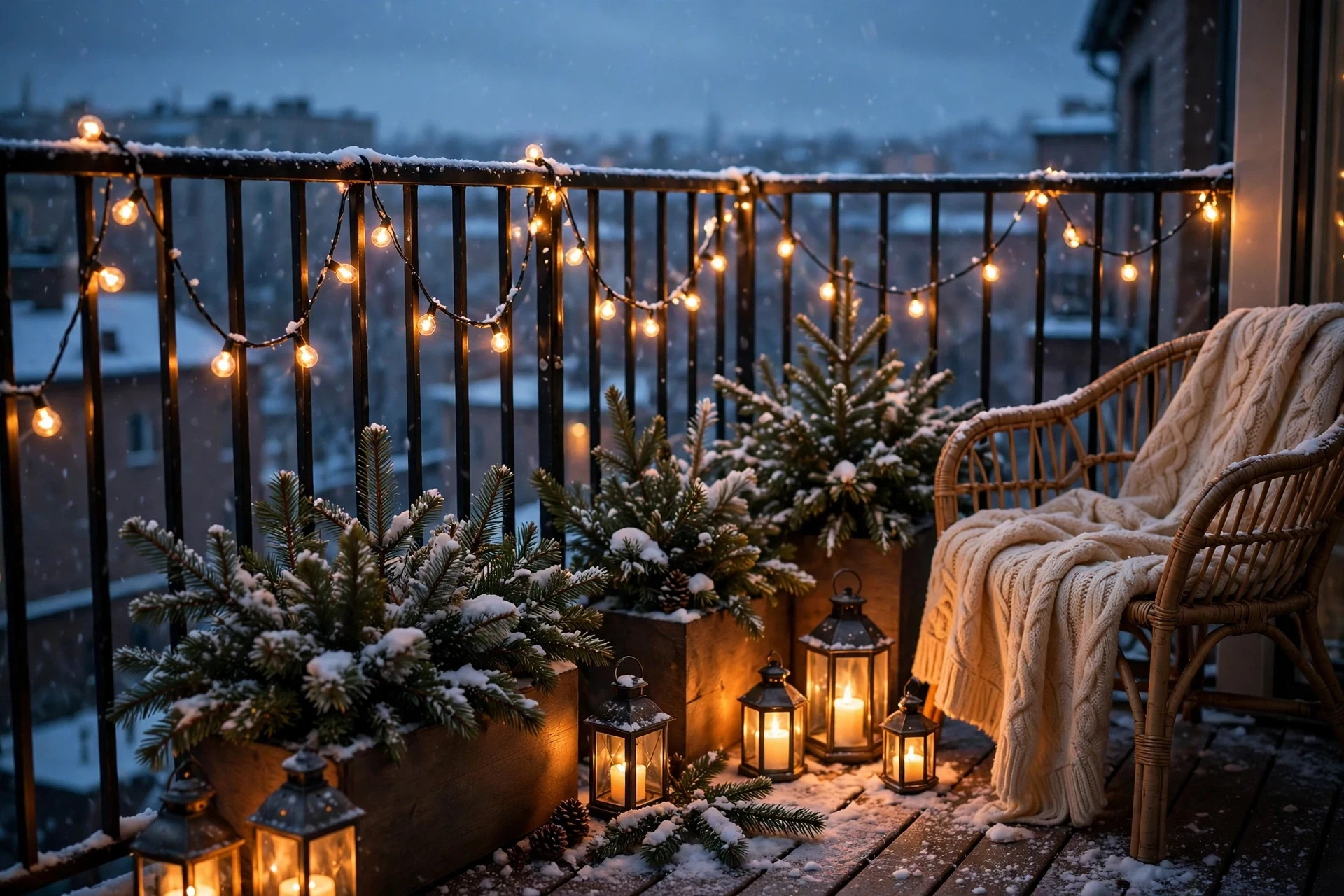
1. Warm String Lights and Lanterns
Warm string lights are the fastest way to make a winter balcony feel inviting after dark. Draped along a railing, wound around a small tree, or strung overhead, their soft amber glow turns cold evenings into something worth stepping out for. Paired with a few lanterns on the floor or a side table, the light feels layered rather than harsh, and the whole space reads as warm, calm, and welcoming. The result feels magical on even the coldest night.
Choose outdoor-rated lights with a warm white color temperature, around 2700K, and put them on a timer so they switch on at dusk without any daily effort. Battery-operated lanterns work well where outlets are scarce, while flameless candles inside glass lanterns give a flickering glow without any fire risk. Keep cords tucked away from walkways and away from wet planters. Choose shatterproof bulbs if your balcony faces strong winter winds.
- Pick warm white lights, not cool blue-white, for a truly cozy glow.
- Use a timer so lights come on at dusk and off before bedtime.
- Keep real flames away from curtains, cushions, and dry garlands.
2. Evergreen Planters and Mini Trees
Evergreen planters are the backbone of a winter balcony garden because they stay green long after summer flowers have faded. Dwarf spruce, boxwood, juniper, and small pine trees hold their shape through frost and snow, giving the balcony structure and color all season. A pair of matching planters by the door instantly makes the space look intentional, even on the grayest January day. They also screen views and soften hard balcony edges beautifully.
Choose compact varieties that will not outgrow their pots within a season, and plant them in frost-proof containers with drainage holes. Group pots together near a wall so they shelter each other from wind, and water sparingly during cold spells, since evergreens still lose moisture through their needles. A light dusting of snow only makes them look better. Feed lightly in autumn, and check soil moisture before each watering session.
- Pick dwarf evergreens rated for your climate zone so they survive hard freezes.
- Use frost-proof pots, since terracotta can crack in freezing weather.
- Group planters near a wall to cut wind exposure and reduce drying.

3. Cozy Outdoor Rug and Textiles
An outdoor rug changes a balcony floor from cold concrete to a room you actually want to stand on. Layered with weather-resistant cushions and a soft throw, it softens hard edges, adds color, and makes the whole space feel finished rather than forgotten. In winter, warm tones like rust, deep green, cream, and charcoal work beautifully against evergreen foliage and bare branches. A patterned rug can also hide everyday wear from winter boots.
Choose a flat-weave outdoor rug that dries quickly and can be shaken out or hosed down in spring. Add cushion covers in outdoor fabric so a surprise snow shower does not ruin them, and keep a waterproof storage box nearby for throws on wet nights. A rug that fits the seating area, rather than the entire balcony, usually looks neater and stays cleaner. Roll the rug up during storms to keep its underside dry.
- Choose outdoor fabric for cushions so damp weather does not stain or soak them.
- Pick a flat-weave rug that dries fast and is easy to shake clean.
- Store throws in a lidded box when rain or snow is forecast.

4. Small Bistro Set for Winter Mornings
A small bistro set turns a winter balcony into a morning ritual, even when the air is crisp. One tiny table and two folding chairs are enough for coffee, a notebook, or a quiet few minutes before the day begins. The small scale suits narrow balconies perfectly, and because the set folds away, it never blocks the door or crowds the planters when you need the space. It is a simple habit that makes winter mornings feel special.
Look for metal or resin furniture that handles cold and damp without rusting or cracking, and add a seat pad for warmth on frosty mornings. Position the set where it catches morning sun, usually facing east or south, and keep a small tray nearby so mugs and books stay steady in a breeze. A single potted evergreen beside the table completes the scene. A windbreak nearby helps even more on blustery winter mornings.
- Choose folding chairs so the set can be tucked away in a storm.
- Place the set in the sunniest corner for warmer winter mornings.
- Add seat pads in outdoor fabric for comfort on cold metal or resin.

5. Windbreak Curtains and Privacy Screens
Wind is often what makes a winter balcony feel unusable, more than the cold itself. Outdoor curtains, a bamboo screen, or a freestanding privacy panel can cut that chill dramatically, turning a drafty ledge into a sheltered nook. They also add privacy from neighboring buildings, which makes it much easier to relax, read, or enjoy a slow morning coffee outside. The shelter also lets candles and lanterns burn more steadily outside.
Hang weather-resistant curtains from a tension rod or ceiling track, and weight the hems so they do not whip around in gusts. Freestanding screens should be anchored or weighted at the base, especially on high balconies where wind is stronger. Leave a small gap at the bottom for airflow, and choose a fabric color that complements your planters and cushions. Choose a rod that fits your balcony width without any drilling.
- Weight curtain hems or tie them back on very windy days.
- Anchor freestanding screens so gusts cannot topple them onto plants.
- Leave a small airflow gap to prevent damp and mildew behind fabric.

6. Heated Throws and a Blanket Basket
A basket of warm throws is a small touch that makes a big difference on a winter balcony. When blankets are right there, within arm’s reach, you are far more likely to step outside, wrap up, and stay for a while. Chunky knits, fleece, and wool blends all look inviting folded in a woven basket, and they add texture and warmth to the space even when no one is sitting there. Keep one throw folded on each chair for guests.
Keep the basket under cover, near the door or beneath a small table, so throws stay dry between uses. A battery-heated throw or a heated seat pad is a wonderful upgrade for very cold climates, but even a regular wool blanket works well when paired with a windbreak and a warm drink. Shake throws out weekly so they stay fresh through the season. A small hot water bottle tucked inside adds gentle warmth too.
- Store the basket under cover so throws stay dry in rain and snow.
- Layer a fleece throw under a wool one for extra warmth on cold days.
- Choose washable throws so winter use does not become a laundry worry.

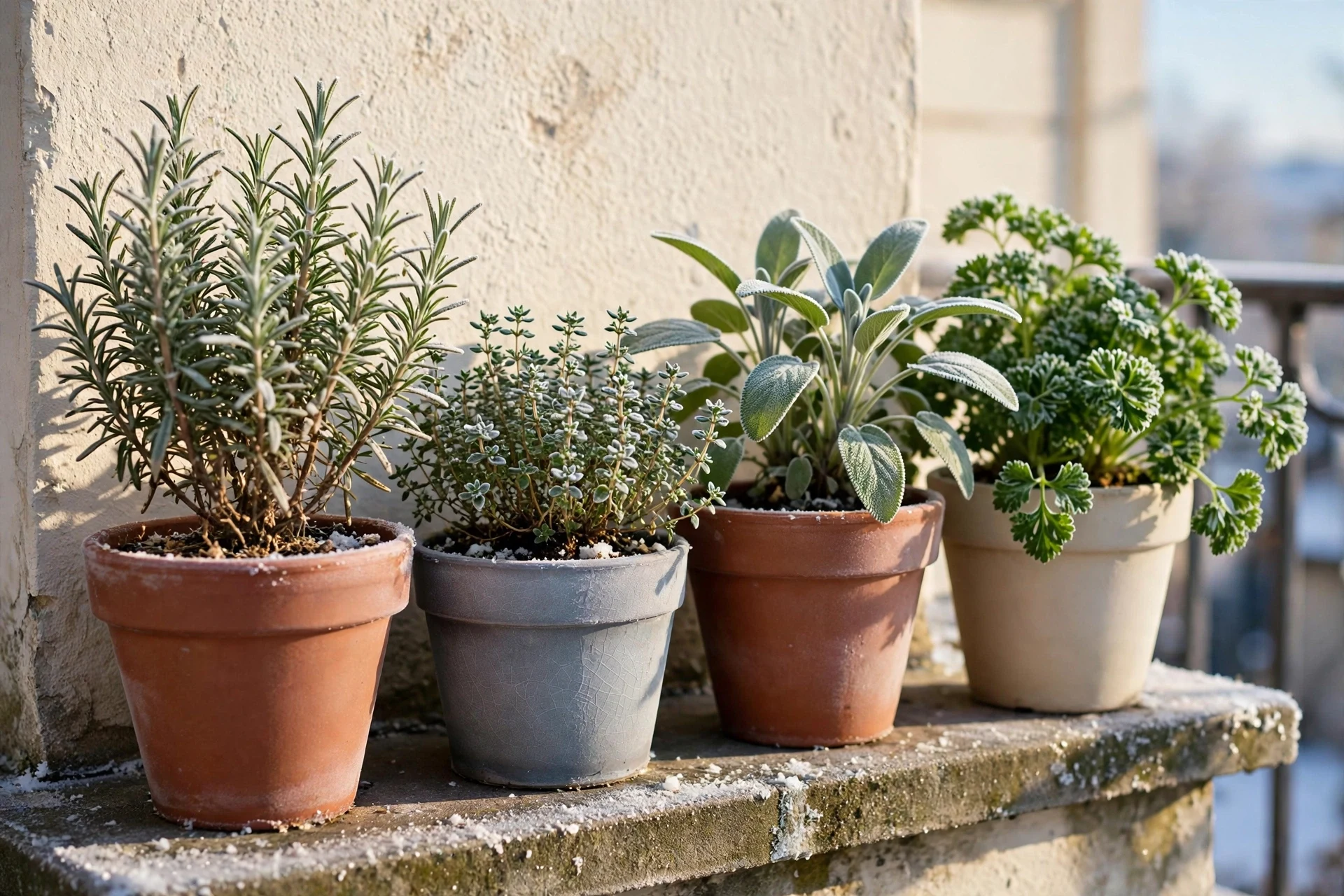
7. Potted Winter Herbs and Greens
Fresh herbs in winter feel like a small luxury, and several hardy varieties keep growing long after summer herbs have died back. Rosemary, thyme, sage, and parsley all tolerate frost, and their scent makes a balcony garden smell wonderful even in January. Snipping a few leaves for soup or roast vegetables on a cold day is one of the most satisfying winter garden habits. Their green leaves also brighten the balcony on dull winter days.
Plant herbs in well-drained pots near a sunny wall, and bring the most tender ones closer to the door during hard freezes. Water only when the soil feels dry, since cold, wet roots rot faster than dry ones, and harvest lightly so plants keep enough foliage to recover. A small wooden crate or tray keeps several herb pots tidy in one spot. Label each pot so you remember what you planted last season.
- Grow rosemary, thyme, sage, and parsley for reliable cold-season harvests.
- Water sparingly in winter and always let pots drain fully.
- Harvest lightly so plants keep foliage through the coldest weeks.
8. Garland on the Balcony Railing
A garland along the balcony railing is the simplest way to make the whole space feel festive and finished. Fresh cedar, pine, or fir branches drape beautifully, smell wonderful, and look even better with a light dusting of snow. Woven with pinecones, red berries, and a strand of warm lights, a railing garland turns an ordinary balcony edge into the prettiest frame in the home. A simple ribbon bow at each end finishes the look neatly.
Attach the garland securely with zip ties or garden twine at several points, so wind cannot pull it loose. Fresh garland lasts for weeks in cold weather and needs no watering once it is cut, while good-quality faux garland can be reused year after year. Keep the garland clear of heaters, candles, and any open flame for safety. Replace any faded sections in January to keep the display looking fresh.
- Fasten garland at several points so wind cannot tear it loose.
- Mix cedar, pine, and fir textures for a full, natural look.
- Keep garland away from heaters and open flames at all times.

9. Candle Cluster for Safe Evening Glow
A cluster of candles on a balcony table or floor tray creates a glow that string lights alone cannot match. Grouping candles of different heights together feels intentional and warm, and the flicker makes even a small space feel like a retreat. The warm light also makes the balcony inviting viewed from indoors. Used safely, with flameless candles or sturdy glass hurricanes, this is one of the coziest winter balcony touches you can add.
Choose battery-operated flameless candles if your balcony is windy or if cushions and garlands sit nearby, since they give the same flicker without any fire risk. For real candles, always use glass hurricanes, keep them on a stable tray, and never leave them burning unattended. Place the cluster where it can be seen from indoors, so the glow doubles your enjoyment. Store spare batteries nearby so the glow never fades unexpectedly.
- Use flameless candles near fabric, garlands, and windy railings.
- Group three or five candles at varied heights for a natural look.
- Never leave real candles burning unattended on a balcony.

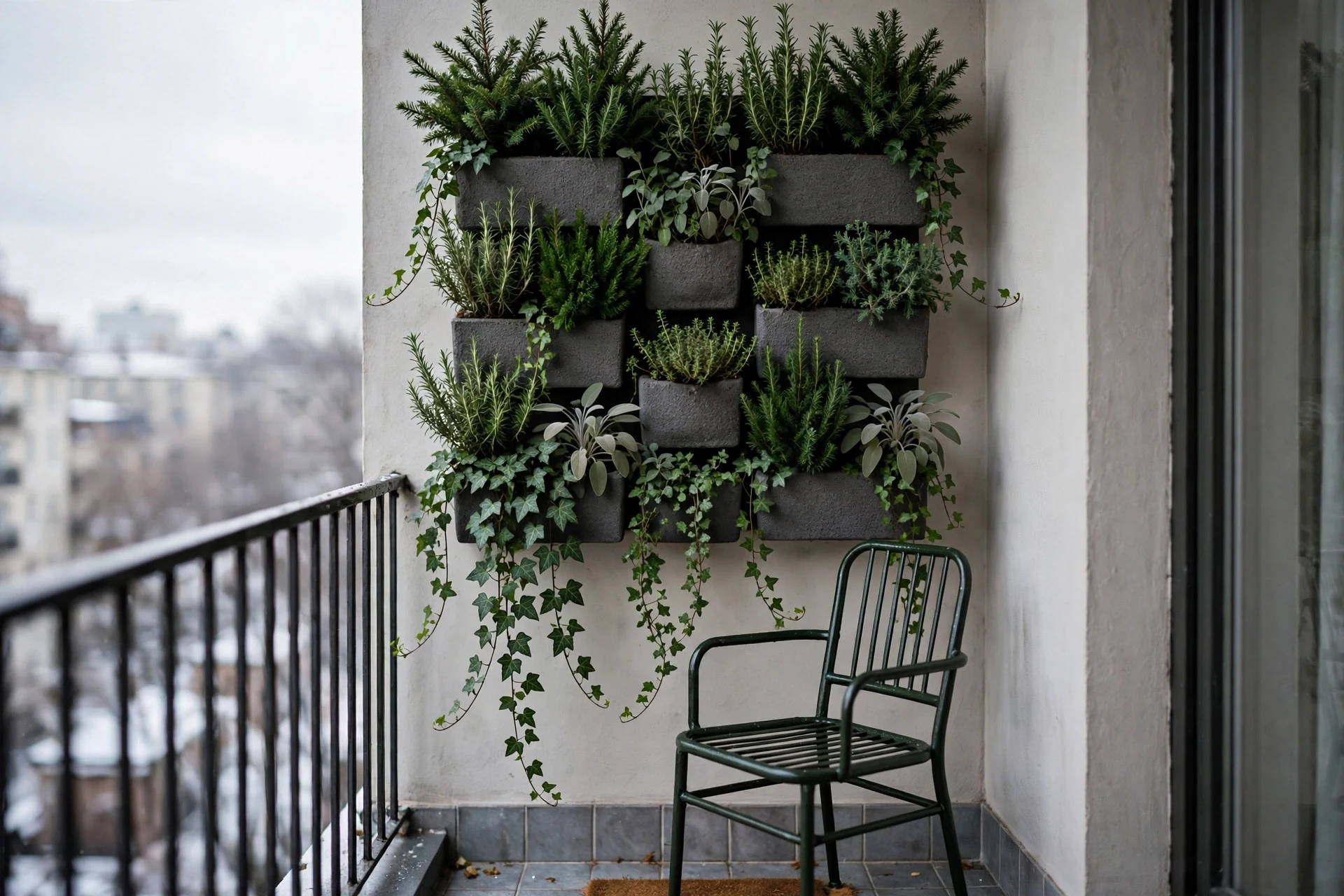
10. Vertical Garden Wall with Winter Plants
A vertical garden wall is the best way to add plants when balcony floor space is almost gone. Pockets, wall planters, or a simple trellis panel fixed to the wall can hold evergreens, winter herbs, trailing ivy, and small ferns, turning a blank wall into a living green feature. Because plants grow upward, the floor below stays free for a chair, a bistro set, or a storage bench. It also hides plain walls and adds instant privacy.
Fix planters firmly into wall studs or masonry, never into thin cladding alone, since wet soil makes wall planters surprisingly heavy. Water from the top so moisture reaches every pocket, and choose lightweight potting mix to keep the load manageable. Check fixings twice during winter, after storms and heavy snow, so nothing loosens over time. Start with hardy plants, and replace any failures quickly in spring before gaps invite weeds.
- Fix planters into studs or masonry, not thin cladding alone.
- Use lightweight potting mix to reduce the load on the wall.
- Plant trailing ivy at the top so it softens the wall as it grows down.
11. Storage Bench for Cushions and Throws
A storage bench solves two balcony problems at once: it gives you a seat, and it hides the cushions, throws, and gardening tools that otherwise clutter a small space. On a winter balcony, that matters even more, because wet cushions left outside quickly become unusable. A bench with a lift-up lid keeps everything dry, tidy, and close at hand whenever you want to sit outside. It also keeps the balcony looking tidy between weekend visits.
Choose a weather-resistant bench in wood, resin, or metal, and line the inside with a waterproof bag if your balcony gets driving rain. Keep the heaviest items at the bottom and the throws you reach for daily on top, so nothing gets buried. A cushion on the bench lid turns it into the most comfortable seat on the balcony. Wipe the lid dry after rain so cushions stay fresh inside.
- Line the bench with a waterproof bag in exposed, rainy spots.
- Store daily throws on top so they are easy to grab.
- Add a bench cushion to turn storage into comfortable seating.

12. Bird-Friendly Winter Balcony
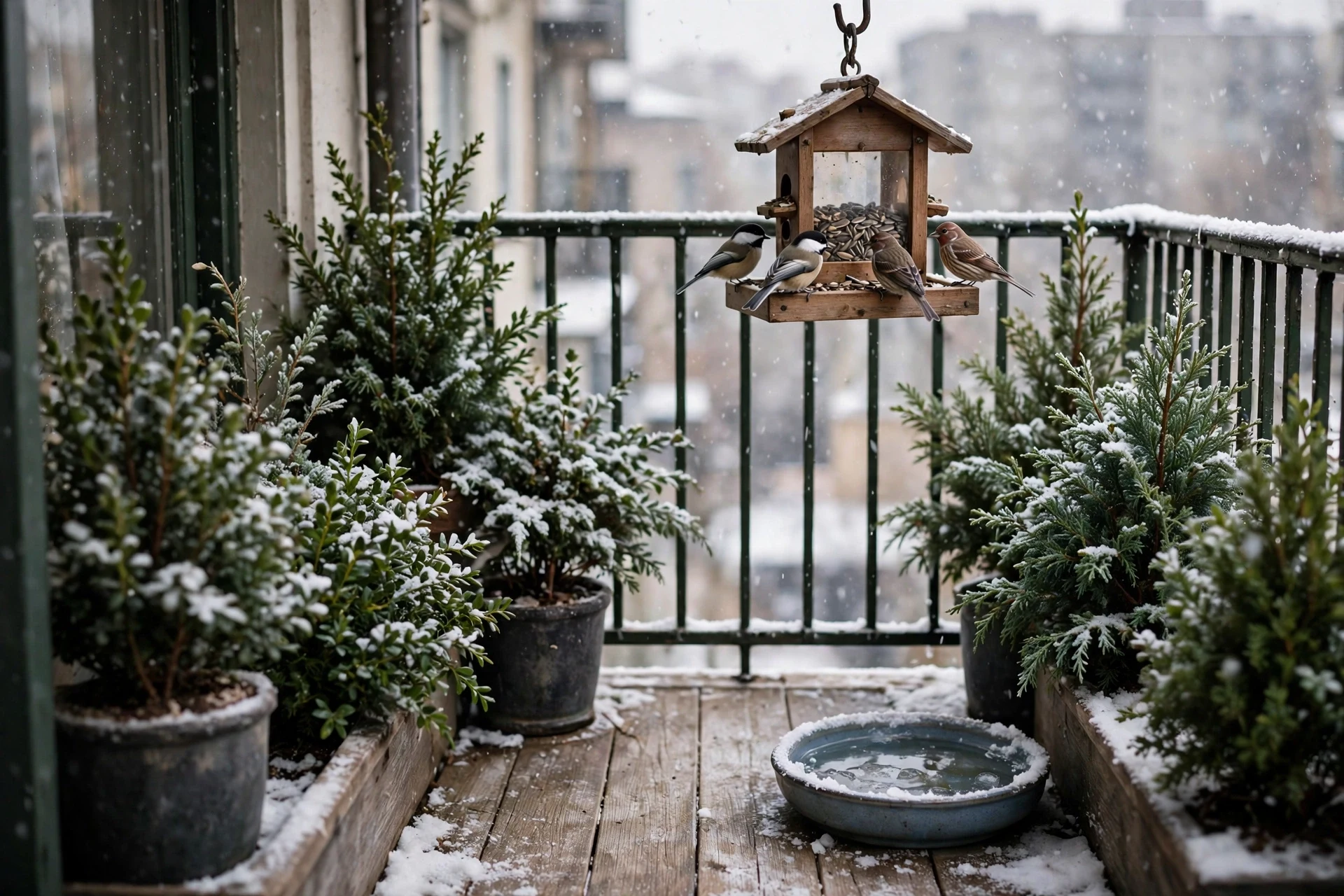
Winter is the hardest season for garden birds, and a balcony feeder can make a real difference while giving you a wonderful daily show. Sunflower seeds, suet, and a shallow dish of water attract chickadees, finches, and sparrows, and watching them from indoors on a snowy morning is one of winter’s quiet pleasures. A bird-friendly balcony feels alive even when the plants are resting. A small evergreen nearby gives birds shelter between visits to feeders.
Hang feeders near shrubs or evergreens where birds can dart for cover, and keep them away from large windows to reduce collisions. Break the ice on the water dish each freezing morning, and clean feeders regularly to prevent disease spreading among visiting birds. Avoid bread and salty scraps, which offer little nutrition and can harm birds. Keep feeders stocked through cold snaps, when natural food is scarcest for birds outside.
- Offer sunflower seeds and suet near sheltering evergreens.
- Break ice on the water dish each freezing morning.
- Clean feeders regularly to keep visiting birds healthy.
13. Frost-Proof Pots and Good Drainage
Frost-proof pots are not a glamorous topic, but they are what keep a winter balcony garden alive and looking good. When water trapped in soil freezes, it expands and can crack terracotta, split glazed pots, and damage roots. Choosing the right containers and giving them proper drainage is the unglamorous foundation that lets every prettier idea on this list survive the season. Good containers also protect roots from repeated freezing and thawing cycles.
Use thick ceramic, stone, concrete, or high-quality resin pots labeled frost-proof, and always raise them on pot feet so water drains freely instead of pooling underneath. Add a layer of gravel at the bottom, use free-draining potting mix, and empty saucers after rain so pots never sit in standing water. These small habits prevent most winter pot damage. Check pots after storms, since wind and ice can shift drainage quickly.
- Choose pots labeled frost-proof rather than standard terracotta.
- Raise pots on feet so water drains instead of freezing underneath.
- Empty saucers after rain to stop pots sitting in standing water.

14. Mini Greenhouse and Cold Frame
A mini greenhouse or cold frame extends the balcony growing season by weeks on both ends, protecting tender plants from frost while still letting in light. Even a small tabletop greenhouse can hold herbs, salad leaves, and seedlings through cold snaps, and a cold frame made from an old window over a wooden box works just as well. It turns a balcony from a fair-weather garden into a year-round one. Even beginners can succeed with this simple winter setup.
Place the greenhouse against a sunny wall and anchor it firmly, since small structures catch wind easily on balconies. Open the lid or vents on mild days so plants never overheat, and close it before evening frost. Water sparingly inside, because enclosed pots dry out more slowly, and check for condensation that can encourage mold. Label seedlings clearly, and keep a watering can nearby for mild days when soil dries out.
- Anchor small greenhouses firmly against wind on high balconies.
- Vent on mild days so plants do not overheat inside.
- Water sparingly, since enclosed pots stay damp longer.

15. Snow-Dusted Conifer Corner
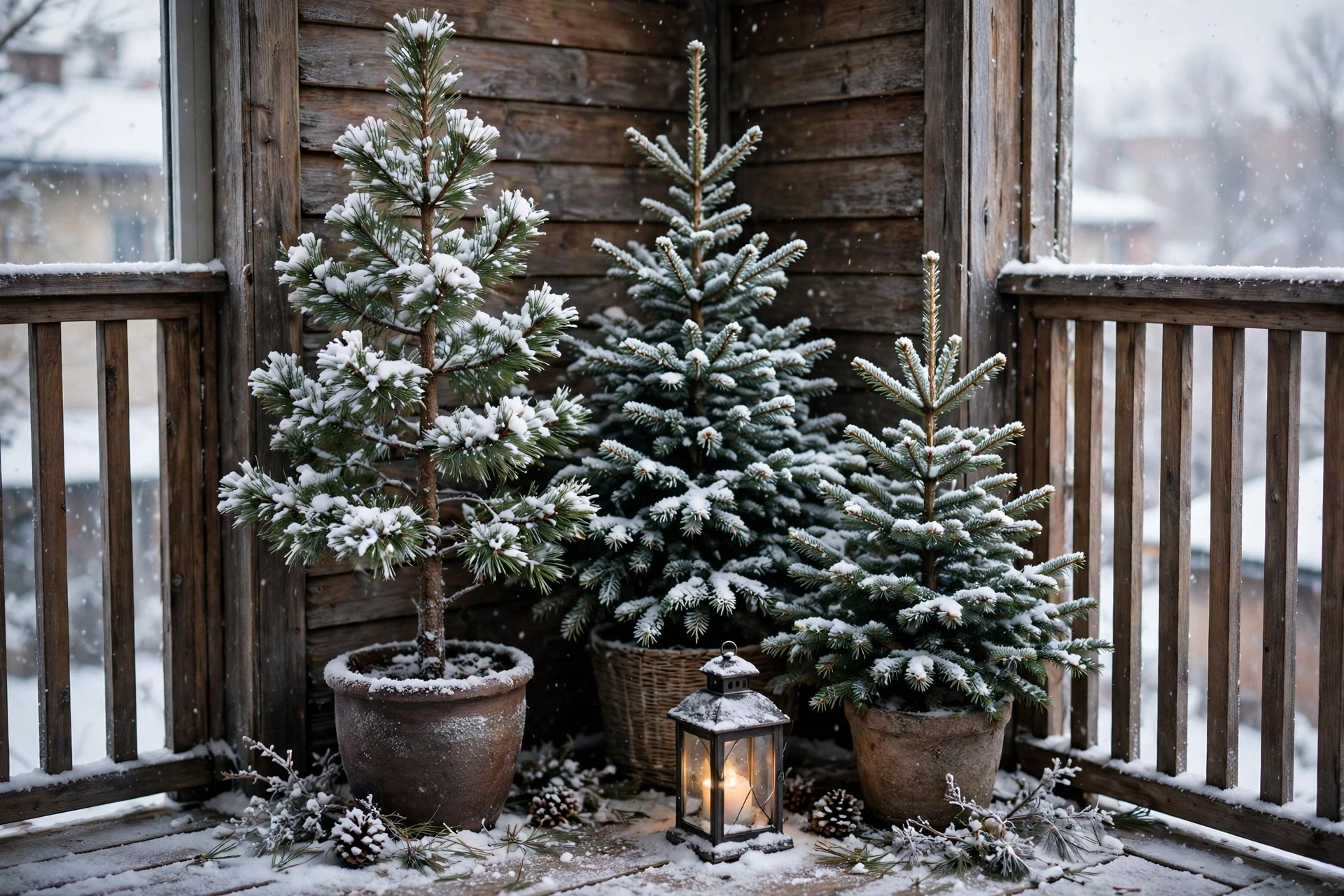
A snow-dusted conifer corner is winter gardening at its simplest and most beautiful. A few pines, spruces, or firs grouped in one corner, left to catch snow naturally, create a scene that looks like a tiny forest. There is no need for extra decoration: the layered green branches, the white dusting, and the quiet shape of the trees do all the work. No other decoration is needed for this naturally beautiful winter scene.
Group conifers of different heights together, with the tallest at the back and smaller ones in front, so the corner reads as a natural cluster rather than a row. Leave enough space between pots for air to circulate, and brush off very heavy snow before branches bend or break. A single lantern at the base adds evening magic without distracting from the trees. A timer on the lantern keeps the corner glowing each evening automatically.
- Mix conifer heights so the corner looks like a natural cluster.
- Brush off heavy snow before branches bend under the weight.
- Add one lantern at the base for a soft evening glow.
16. Warm Wood Decking Tiles
Wood decking tiles are one of the quickest upgrades for a cold balcony floor. Laid straight over concrete, they add warmth underfoot, a natural texture, and the feeling of a real outdoor room. In winter, the warm brown tones contrast beautifully with green evergreens and white snow, and the raised tiles also help water drain away instead of pooling around pots. They also feel warmer than stone or concrete under bare feet.
Choose interlocking tiles made for outdoor use, and lay them only where you walk and sit, leaving a small gap at the edges for drainage. Sweep leaves and grit from between the tiles regularly, and lift a tile now and then to check for trapped moisture underneath. Most sets need no tools at all, so the whole floor can be transformed in an afternoon. Store spare tiles indoors so replacements are ready if one cracks.
- Use outdoor-rated interlocking tiles that handle rain and frost.
- Leave edge gaps so water drains instead of pooling under tiles.
- Sweep between tiles regularly to stop grit and leaves building up.

17. Hanging Planters with Pine and Berries
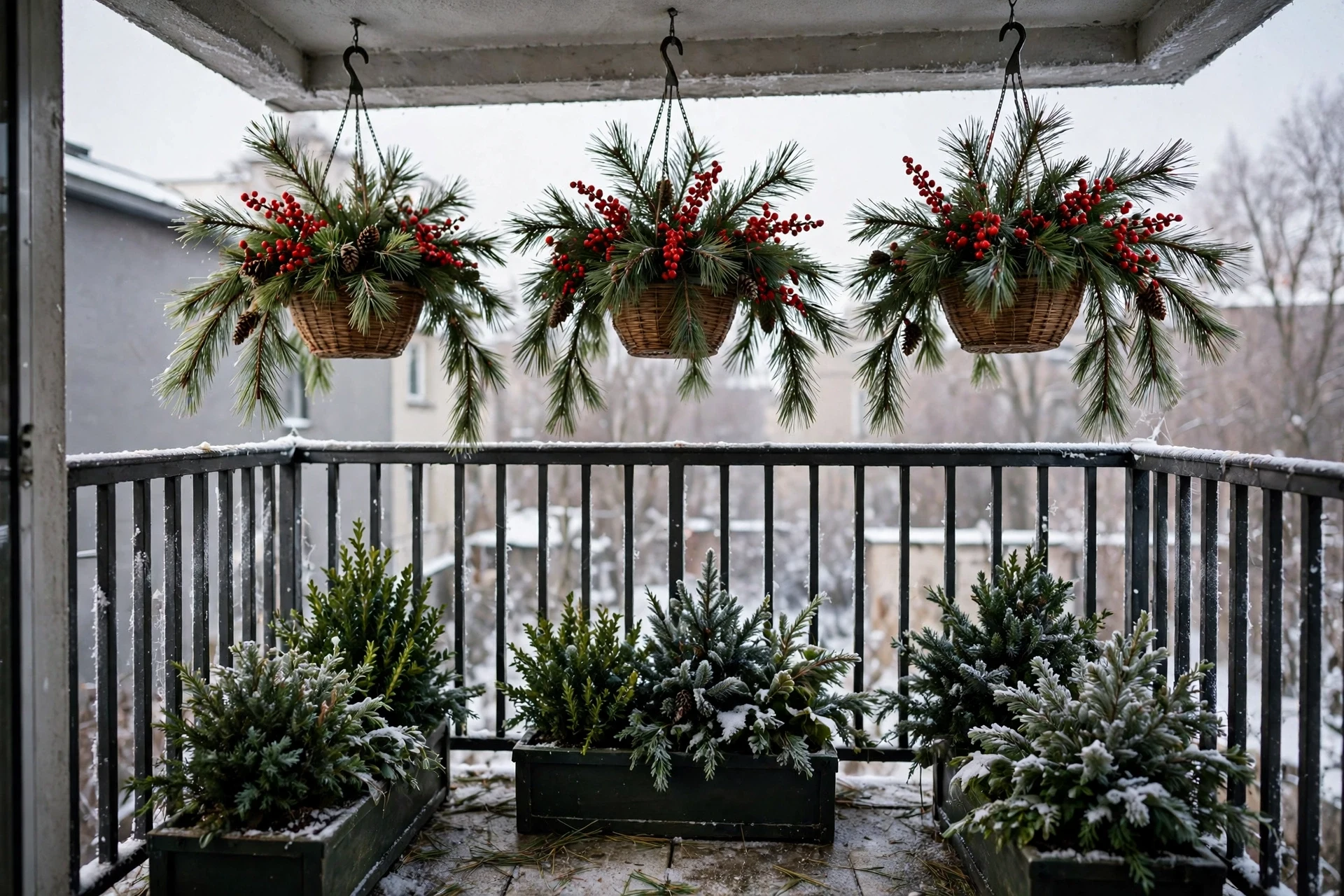
Hanging planters with pine branches and red berries add winter color at eye level, where balcony railings and ceilings often go bare. Suspended from hooks or a ceiling beam, they draw the eye upward and make a small space feel layered and full. The deep green of pine against bright berries is a classic winter combination that needs no further decoration to look festive. They also soften balcony ceilings and corners that often look bare.
Use sturdy hooks rated for the weight of a wet planter, and hang planters where they will not swing into the railing in strong wind. Fill them with fresh pine cuttings, berry branches, and a few pinecones, refreshing the greens in January if they fade. Keep hanging planters light by using small pots and free-draining mix. Check hooks monthly, since winter wind and ice add extra strain over time outside.
- Use hooks rated for a wet planter’s full weight.
- Hang planters clear of railings so wind cannot swing them into walls.
- Refresh pine cuttings in January when the first batch fades.
18. Cozy Reading Corner with an Outdoor Chair
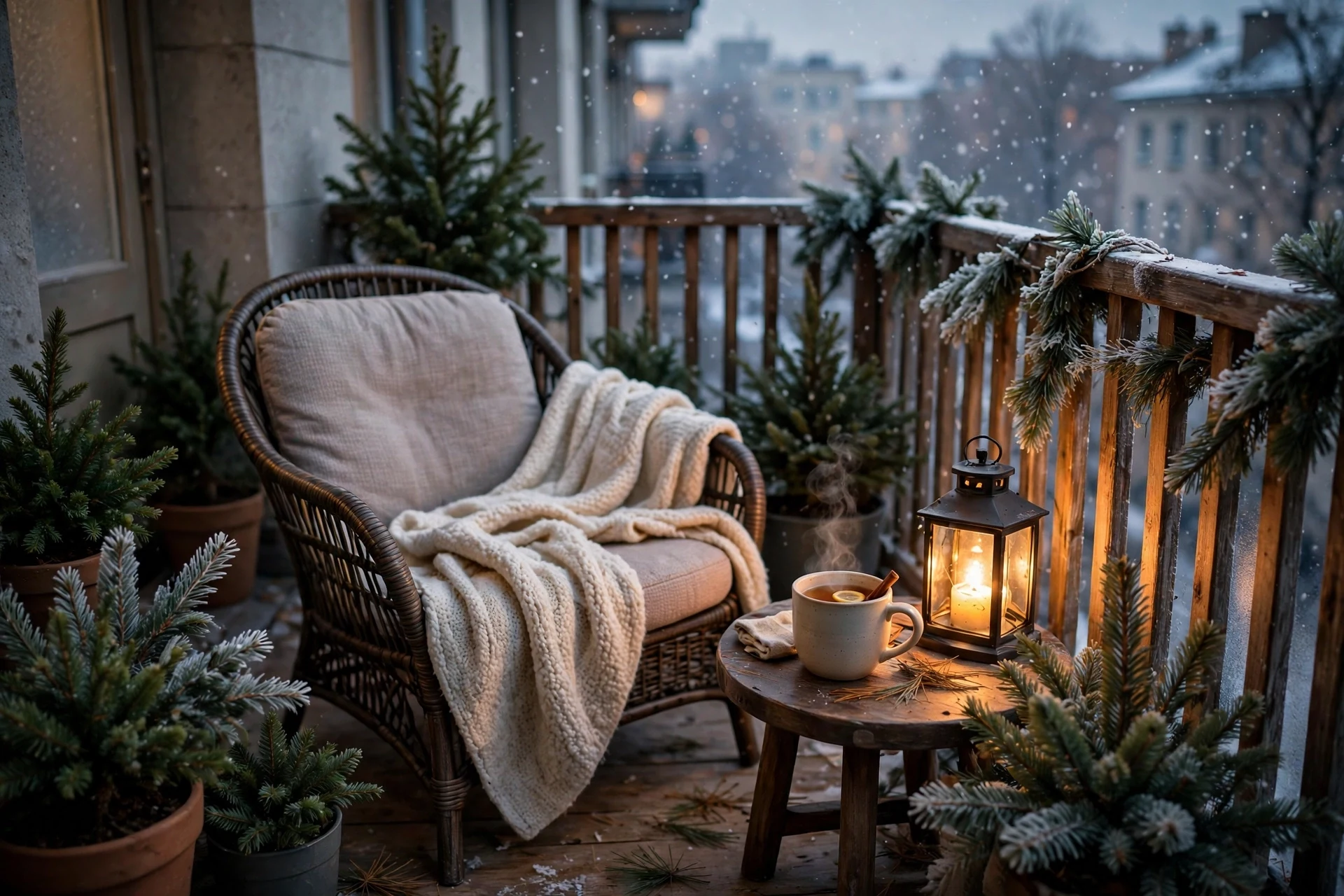
A cozy reading corner gives a winter balcony a purpose beyond looking pretty: it becomes a place to actually spend time. One comfortable outdoor chair, a soft throw, a small side table for tea, and a warm light are all it takes. Tucked into the most sheltered corner, with evergreens nearby and a windbreak behind you, it feels private, calm, and surprisingly warm. A small footstool makes the corner even more comfortable for long reads.
Choose a chair with a deep seat and good back support, and add a weather-resistant cushion so long reads stay comfortable. Position a small lamp or lantern just behind your shoulder so light falls on the page, not in your eyes, and keep a basket for books beside the chair. On the coldest days, a heated pad under the throw makes the corner irresistible. A warm drink on the table completes this peaceful winter retreat.
- Pick a deep, supportive chair so long reading sessions stay comfortable.
- Place light behind your shoulder to light the page without glare.
- Keep books and tea within arm’s reach in a small basket or table.
19. Seasonal Swap from Autumn to Winter
The seasonal swap from autumn to winter is the moment a balcony garden changes character, and doing it deliberately keeps the space looking good instead of neglected. Out go spent summer pots and faded autumn displays; in come evergreens, winter herbs, berries, and warm textiles. It is a satisfying afternoon project that sets the whole balcony up for months of cold weather. The result is a balcony that looks cared for all winter long.
Start by clearing dead plants and cleaning pots, then check drainage and replace any cracked containers before frost arrives. Move the hardiest plants to the most sheltered spots, add fresh evergreen arrangements, and swap lightweight autumn cushions for heavier winter textiles. Finish with lights and a lantern, and the balcony is ready for winter evenings. Take photos before and after, so next winter’s seasonal swap becomes even easier to repeat.
- Clear dead plants and clean pots before the first hard frost.
- Replace cracked containers now, before freezing water splits them further.
- Swap light autumn textiles for heavier winter cushions and throws.

Frequently Asked Questions
Can you garden on a balcony in winter?
Yes. Hardy evergreens, winter herbs, and cold-tolerant greens all grow well in containers, especially when pots are grouped near a sheltered wall and protected from harsh wind. Choose plants rated for your climate zone, use frost-proof pots with good drainage, and water sparingly so roots do not sit in cold, wet soil.
What plants survive winter on a balcony?
Dwarf spruce, boxwood, juniper, and pine are reliable evergreens, while rosemary, thyme, sage, and parsley handle frost well in many regions. Hellebores and winter jasmine add seasonal flowers in milder climates. Always check the plant tag for your zone, since a balcony can be colder and windier than a garden at ground level.
How do you keep balcony plants from freezing?
Group pots together against a wall, wrap the most tender containers in burlap or bubble wrap, and mulch the soil surface to insulate roots. Water before a freeze, since moist soil holds heat better than dry soil, and move the most tender pots closer to the door or indoors during hard freezes.
How do you make a small balcony cozy in winter?
Layer warm light, soft textiles, and shelter: string lights and lanterns, an outdoor rug, throws, and a windbreak curtain make the biggest difference. Add evergreens for color, a comfortable chair, and a warm drink, and even a tiny balcony becomes a place you want to use on cold evenings.
Do balcony plants need watering in winter?
Yes, but much less than in summer. Evergreens still lose moisture through their needles, so check the soil every week or two and water on mild days when the soil feels dry. Always let pots drain fully, and avoid watering just before a hard freeze.
When the cold deepens, you may also like our 19 Cozy Winter Sunroom Ideas for Bright, Slow Mornings and How to Build a Greenhouse From Recycled Windows: A Step-by-Step Guide for more ways to keep growing through winter.
Conclusion
A winter balcony does not need to be large, expensive, or complicated to feel like an escape. Start with the ideas that fit your space and your climate, whether that is a pair of evergreen planters, a string of warm lights, or a reading chair tucked into a sheltered corner. Each small change adds warmth, color, and a reason to step outside.
These cozy winter balcony garden ideas work best when you build them gradually, one weekend at a time, and keep what you love. Pick your favorite idea, gather a few hardy plants and warm layers, and enjoy your small outdoor escape all winter long.







3 Comments