
19 Winter Landscaping Ideas for a Beautiful Cold-Season Yard
19 Winter Landscaping Ideas for a Beautiful Cold-Season Yard
Most yards go quiet in winter, but they do not have to go dull. A cold-season yard has its own kind of beauty: dark evergreens against white snow, red berries on bare branches, warm light along a cleared path, and the clean shapes of trees and grasses. These winter landscaping ideas are built for that season specifically, not borrowed from spring or summer, so your yard looks intentional from the first frost through the last thaw.
In this guide, you will find 19 winter landscaping ideas covering structure, color, light, wildlife, and protection, all chosen for cold weather and snow. If you are planning the whole year round, our fall landscaping ideas show how to prepare a yard before winter arrives, and our small backyard garden ideas work well for compact spaces. For a sheltered spot to enjoy the view, see our cozy winter balcony garden ideas too. Start with one idea, and let winter become a season your yard is ready for.
1. Evergreen Foundation Planting

Evergreen foundation planting is the backbone of a winter yard. While deciduous shrubs stand bare, boxwood, yew, spruce, and juniper keep their color and shape, so the house never looks exposed. Planted along the foundation, they soften hard walls, hide bare soil, and give snow something green to settle on. A mix of heights works best, with taller shrubs at corners and lower, rounded forms under windows.
When planting, leave room for growth and for snow sliding off the roof, and keep shrubs a little away from the wall so air can move. Water evergreens well before the ground freezes, since winter wind dries their leaves. In cold regions, choose varieties rated for your zone rather than the prettiest plant at the nursery. With the right evergreens in place, the front of the house looks finished even in January.
- Mix tall corner shrubs with low, rounded forms under windows.
- Water evergreens deeply before the first hard freeze.
- Choose varieties rated for your USDA zone, not just for looks.
2. Winterberry Shrubs for Red Color

Winterberry is one of the few shrubs that looks its best after its leaves fall. Its bare branches carry clusters of bright red berries through winter, and against snow they are visible from the street. The color is cheerful without any decoration, and it lasts for months if birds do not eat the berries first. Planted in groups of three or five, winterberry turns a dull corner into a focal point.
Winterberry needs moist soil and a male pollinator nearby to set berries, so check the plant tag before buying just one shrub. It grows well in sun or light shade and tolerates wet spots where other shrubs struggle. Leave the berries on the plant rather than cutting every stem for arrangements. By February, when color is scarce, those red berries feel like a small celebration.
- Plant a male pollinator nearby or berries will not form.
- Give winterberry moist soil and sun or light shade.
- Leave most berries on the plant for winter color.
3. Ornamental Grasses Standing in Snow
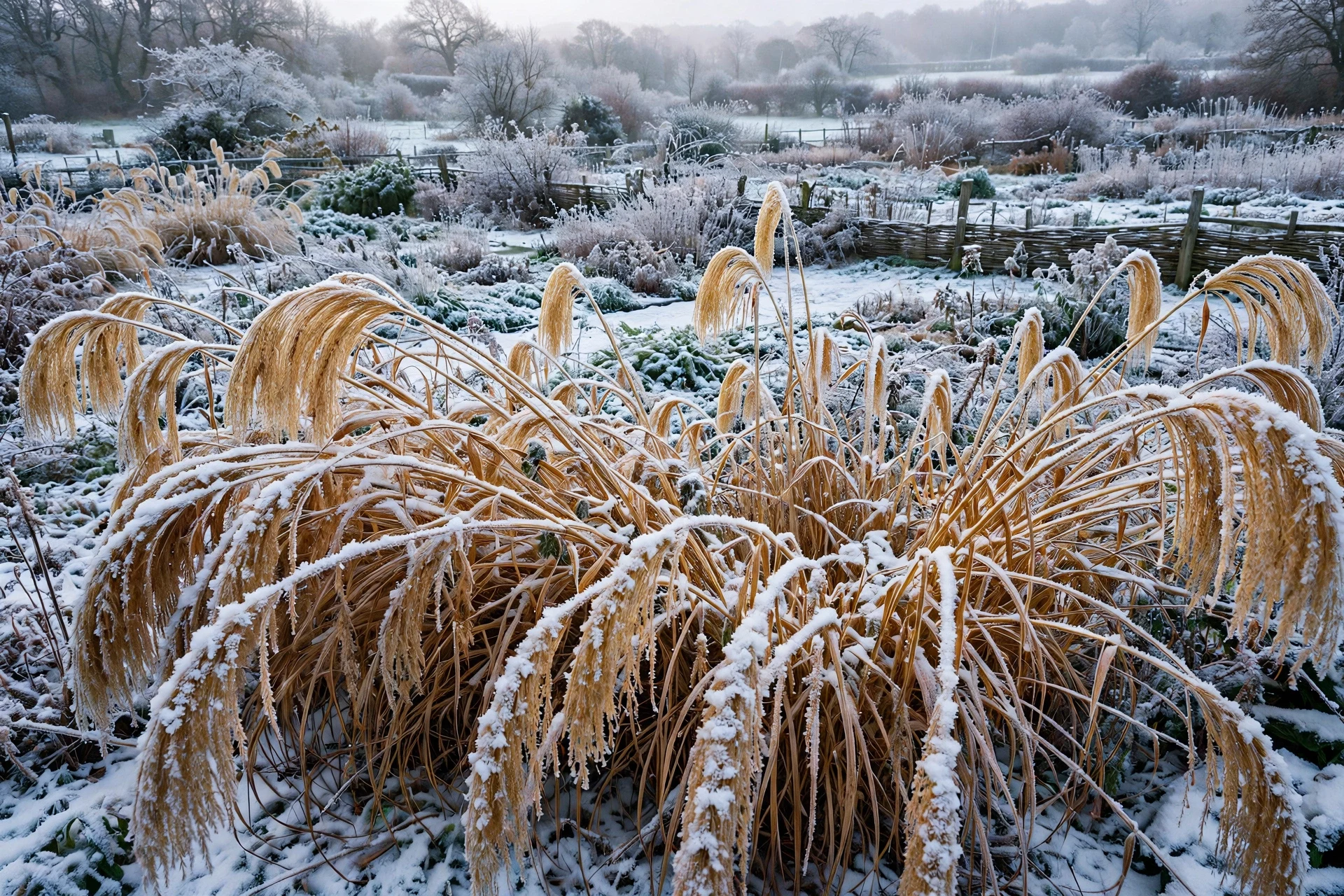
Ornamental grasses earn their place by refusing to disappear in winter. Left uncut, miscanthus, switchgrass, and feather reed grass hold their golden stems and feathery seed heads through snow and frost. They sway in winter wind, catch low sunlight, and add movement to a yard that would otherwise look frozen solid. Their upright shapes also break up flat, snow-covered beds.
The key is to resist cutting them back in fall. Leave the grasses standing until late winter or early spring, then cut them down just before new growth starts. This also shelters insects and birds through the coldest months. Plant grasses where they get sun and where snow will not bury them completely. Come spring, one quick cut refreshes the whole bed.
- Do not cut ornamental grasses back in fall; wait until late winter.
- Plant them in sun where snow will not bury them fully.
- Cut down old stems just before new spring growth appears.
4. Birch Trees with White Bark
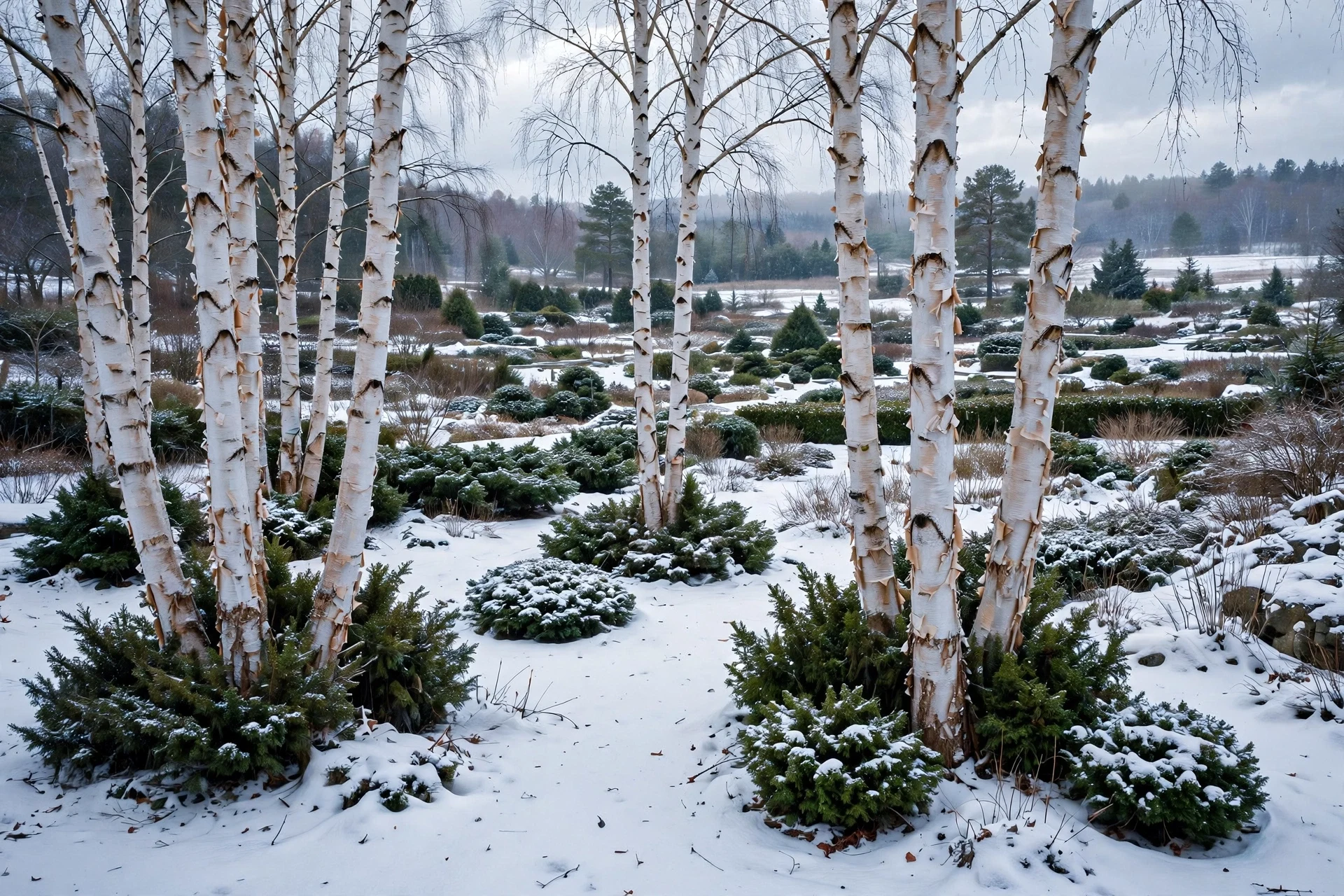
Birch trees are winter showpieces because their bark does the decorating. White, peeling bark glows against snow and dark evergreens, and a group of three birches reads like a piece of sculpture even on a grey day. Their slender trunks and fine branches also let light through, so a birch grove never feels heavy or dark in winter. It is structure and color in one plant.
Birches like moist, cool soil and do best with mulch and regular water in their first years. Plant them in groups of three for a natural look, and underplant with evergreen groundcover so the base looks finished. Avoid planting birches where the soil stays bone dry in summer. With steady moisture, birches grow quickly and reward you with winter beauty for decades.
- Plant birches in groups of three for a natural grove effect.
- Keep the soil moist and mulched, especially when young.
- Underplant with evergreen groundcover for a finished base.
5. Hellebores, the Winter Flowers

Hellebores are the closest thing to a winter miracle in the garden. These tough perennials push up cup-shaped flowers in late winter, often while snow still sits on the ground, in shades of white, pink, plum, and green. Their dark, leathery leaves stay green all year, so the bed never looks empty. Planted near a path or a window, they give you flowers to look for on the coldest days.
Give hellebores shade or part shade, rich soil, and good drainage, and they will return bigger each year. Remove old, tattered leaves in late winter so the new flowers show clearly. They are slow to establish but very long-lived, so patience pays off. Once you have seen hellebores bloom through snow, a winter garden without them feels incomplete.
- Plant in shade or part shade with rich, well-drained soil.
- Cut back old leaves in late winter to reveal the flowers.
- Be patient: hellebores grow slowly but live for many years.
6. Witch Hazel Winter Blooms
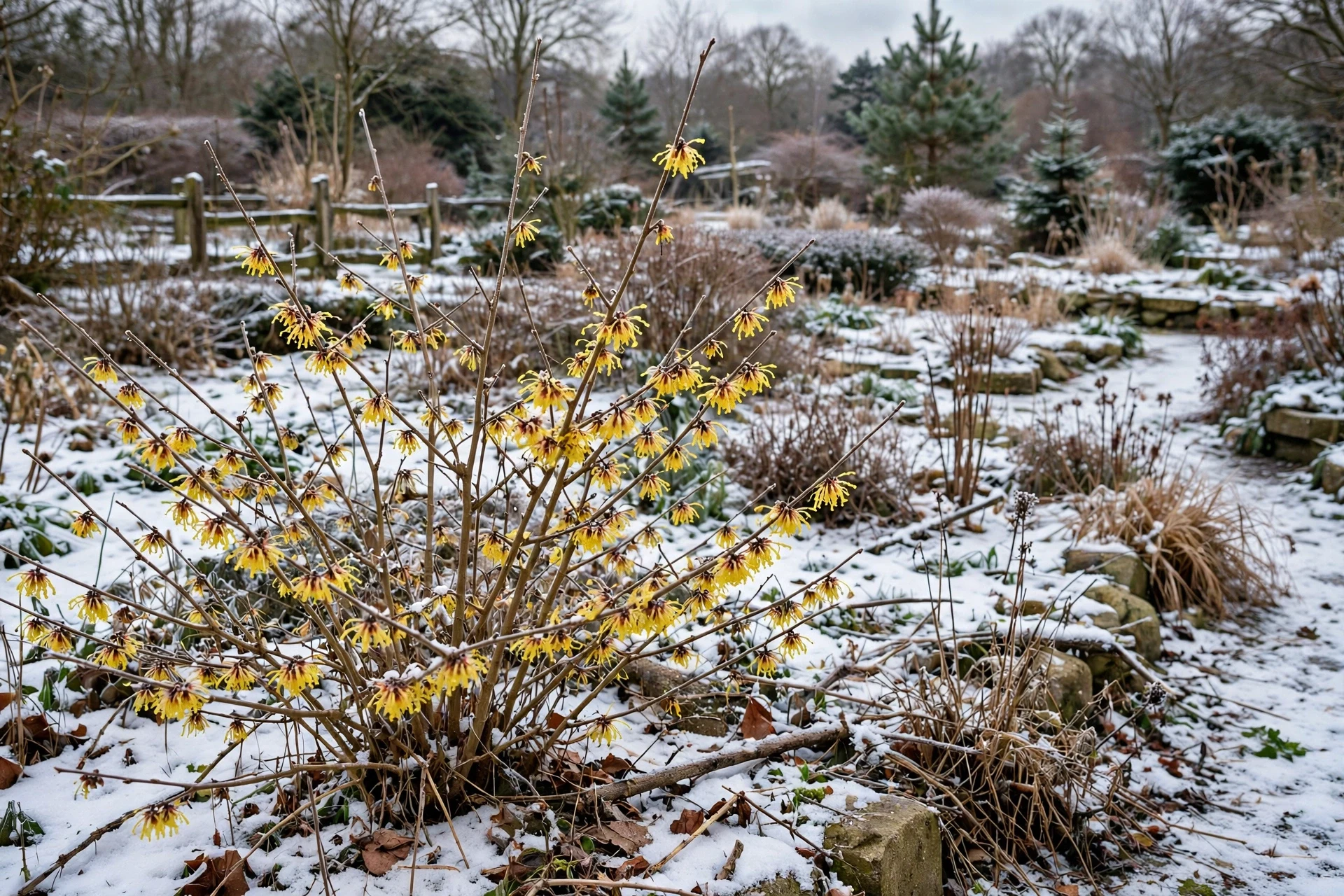
Witch hazel blooms when almost nothing else dares to. In late winter, its bare branches open into small, ribbon-like flowers in yellow, orange, or red, and some varieties smell faintly sweet on a mild day. The flowers are delicate up close and surprisingly bright from a distance, especially against snow. It is a shrub that rewards anyone who walks the yard in February.
Plant witch hazel where you will see it from a window or a path, in sun or light shade with moist, well-drained soil. It needs little pruning; just remove crossing branches after flowering. Give it room to spread, since it grows into a graceful, vase-shaped shrub. A witch hazel in bloom is proof that the garden is already waking up.
- Plant near a window or path so winter blooms are visible.
- Prune lightly after flowering, only to remove crossing branches.
- Allow room to spread into its natural vase shape.
7. Evergreen Privacy Hedge in Snow
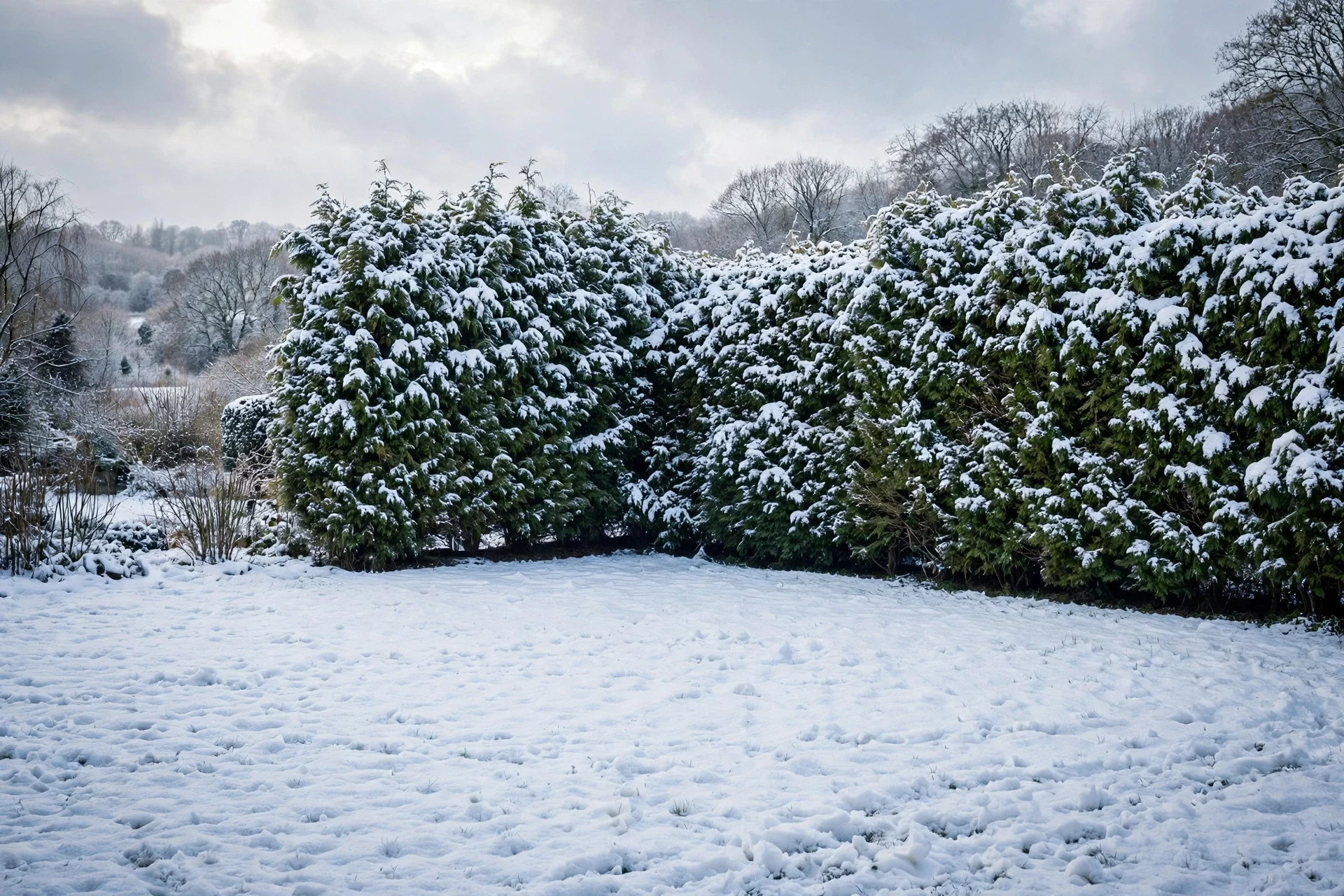
An evergreen hedge does in winter what a fence cannot: it stays alive, green, and soft. Arborvitae, holly, and yew hedges block wind, muffle street noise, and give the yard privacy even when every other plant is bare. Snow settling on top of a hedge outlines its shape beautifully, turning a boundary into a feature. It also shelters birds through the coldest nights.
Choose a hedge species that handles snow load and your winter lows, and plant it with enough space to reach its mature width. Water new hedges well into fall, and brush heavy, wet snow off branches after storms so they do not split. A little patience in the first few years gives you a living wall that works every season, but shines in winter.
- Pick a species that tolerates snow load and your zone’s lows.
- Brush heavy, wet snow off branches after storms.
- Water new hedges well into fall before the ground freezes.
8. Container Evergreens by the Entry

Container evergreens are the fastest way to make a winter entry look cared for. A pair of large planters with spruce, boxwood, or juniper, tucked with pine branches and a few red berries, frames a door beautifully without any summer flowers. The containers add height and structure right where guests arrive, and they are easy to refresh each year.
Use frost-proof pots, since terracotta can crack in freezing weather, and make sure the pots drain so roots do not sit in ice. Water containers during winter thaws, because pots dry out faster than garden soil. In spring, the same evergreens can move into the garden or stay on for another season. Two good containers can carry a whole entry through winter.
- Use frost-proof pots with drainage holes, not plain terracotta.
- Water containers during winter thaws when soil dries out.
- Tuck pine branches and berries around the shrubs for color.
9. Winter Path Lighting

Winter path lighting is both practical and beautiful. Days are short, paths get icy, and a lit walkway keeps everyone safe after dark. But it also transforms the yard: warm lights along a snowy path, or strung through bare trees, make the whole garden glow on a winter evening. The contrast of warm light and cold snow is one of winter’s best effects.
Use low-voltage or solar path lights rated for cold weather, and place them where footing is tricky, such as steps and curves. Timers or dusk-to-dawn sensors mean the lights are on when you need them without wasting energy. Keep lights low and warm-toned rather than bright white for a cozy feel. Good lighting lets you enjoy the winter yard long after sunset.
- Place lights at steps, curves, and any icy or uneven spots.
- Use warm-toned lights and timers or dusk-to-dawn sensors.
- Choose fixtures rated for cold, wet winter weather.
10. A Cleared Stone Walkway
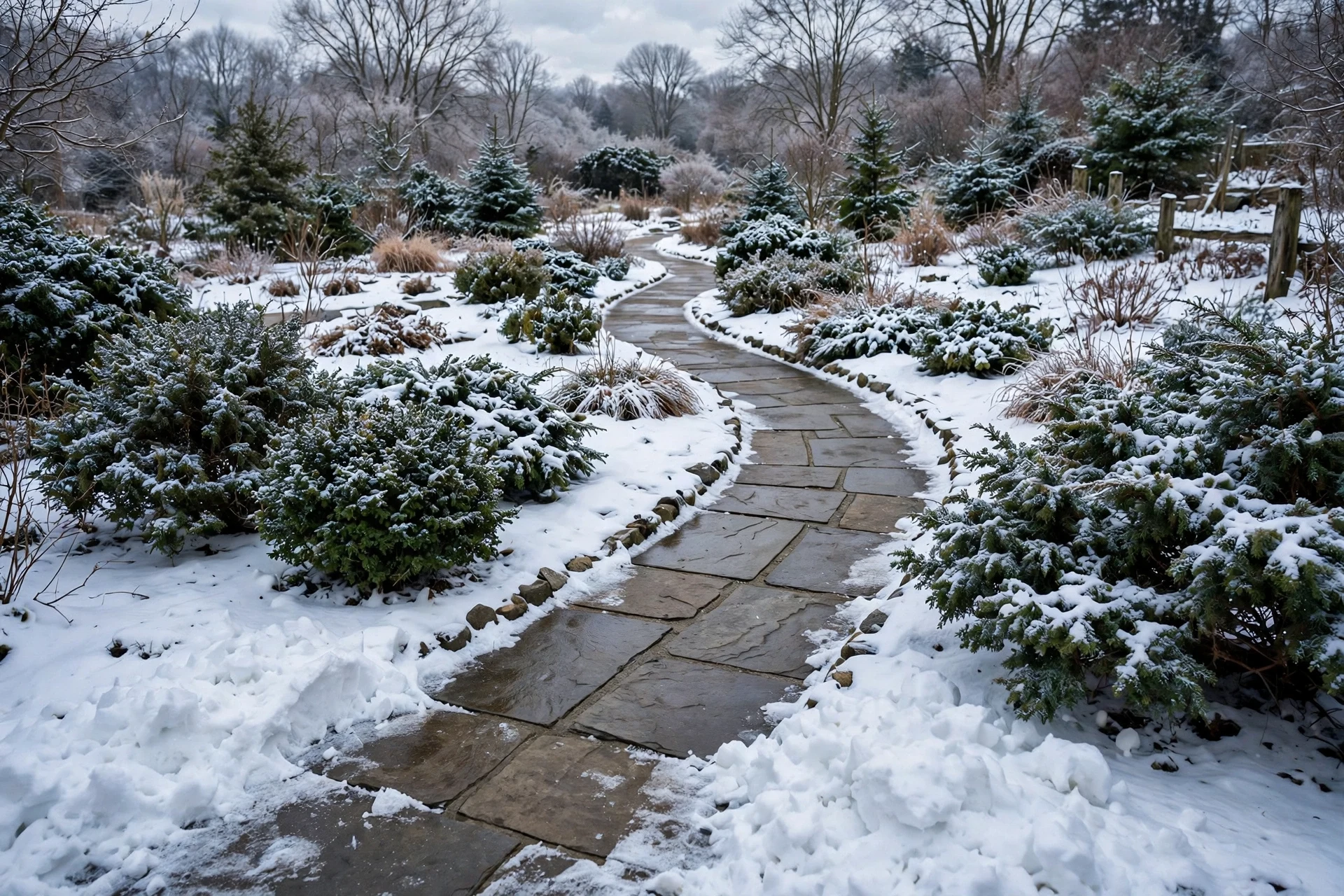
A cleared stone walkway is the winter yard’s invitation to keep walking outside. While lawns disappear under snow, a stone or gravel path with clear edges gives the garden structure and a reason to step out. It also keeps feet off frozen, muddy grass and makes the yard usable on winter days. A walkway that is shoveled and edged looks intentional, not neglected.
Choose rough-textured stone or gravel for grip, and keep the path wide enough to shovel comfortably. Edge it with stone or metal so the line stays visible under light snow. If you like the look of a cozy winter mudroom entry, carry that same warm, practical feeling outside by keeping the walkway to the door clear and lit. A little daily clearing beats a season of ice.
- Use rough stone or gravel for grip on icy days.
- Make the path wide enough to shovel easily.
- Edge the walkway so its line shows under light snow.
11. A Heated Birdbath and Feeders

A heated birdbath turns a winter yard into a wildlife destination. Birds need water even more than food in freezing weather, and a heated bath that stays ice-free draws cardinals, chickadees, and juncos all winter. Watching them from a warm window is one of the quiet pleasures of the season, and it gives the yard life when plants are dormant.
Place the birdbath where you can see it from inside, near evergreen cover where birds can hide from hawks, and keep it filled and clean. A heated birdbath uses little electricity and is far safer than breaking ice daily. Pair it with feeders stocked with sunflower seed and suet. The birds will return daily, and the yard will feel alive all winter.
- Place the bath near evergreen cover and visible from a window.
- Clean and refill the bath regularly to keep water safe.
- Offer sunflower seed and suet alongside the water.
12. Cold Frames for Winter Greens
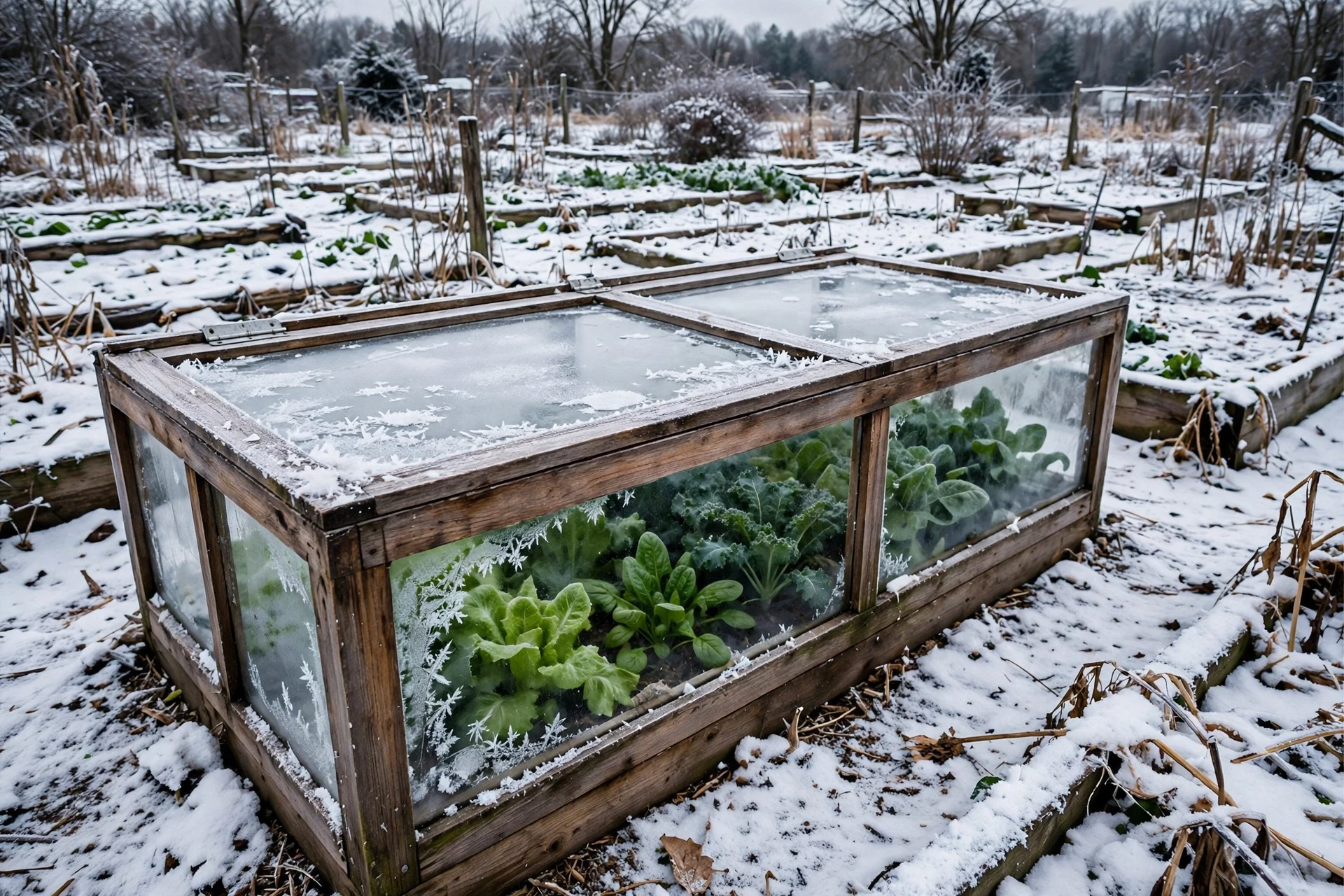
Cold frames let you garden through winter without a greenhouse. These low, glass-topped boxes trap sun and shelter hardy greens like spinach, kale, and lettuce from wind and frost. On a sunny winter day, a cold frame can be surprisingly warm inside, and you can harvest fresh leaves in January. It is the most satisfying kind of winter gardening.
Build or buy a simple wooden frame with a clear, hinged lid, and place it facing south for maximum winter sun. Vent the lid on mild days so plants do not overheat, and close it before frost. If you enjoy the idea of growing your own food year-round, our guide to building a greenhouse from recycled windows shows a bigger version of the same principle. Start with one cold frame and a few hardy greens.
- Face the cold frame south for maximum winter sun.
- Vent the lid on mild days and close it before frost.
- Grow hardy greens like spinach, kale, and lettuce first.
13. Mulch and Burlap Winter Protection
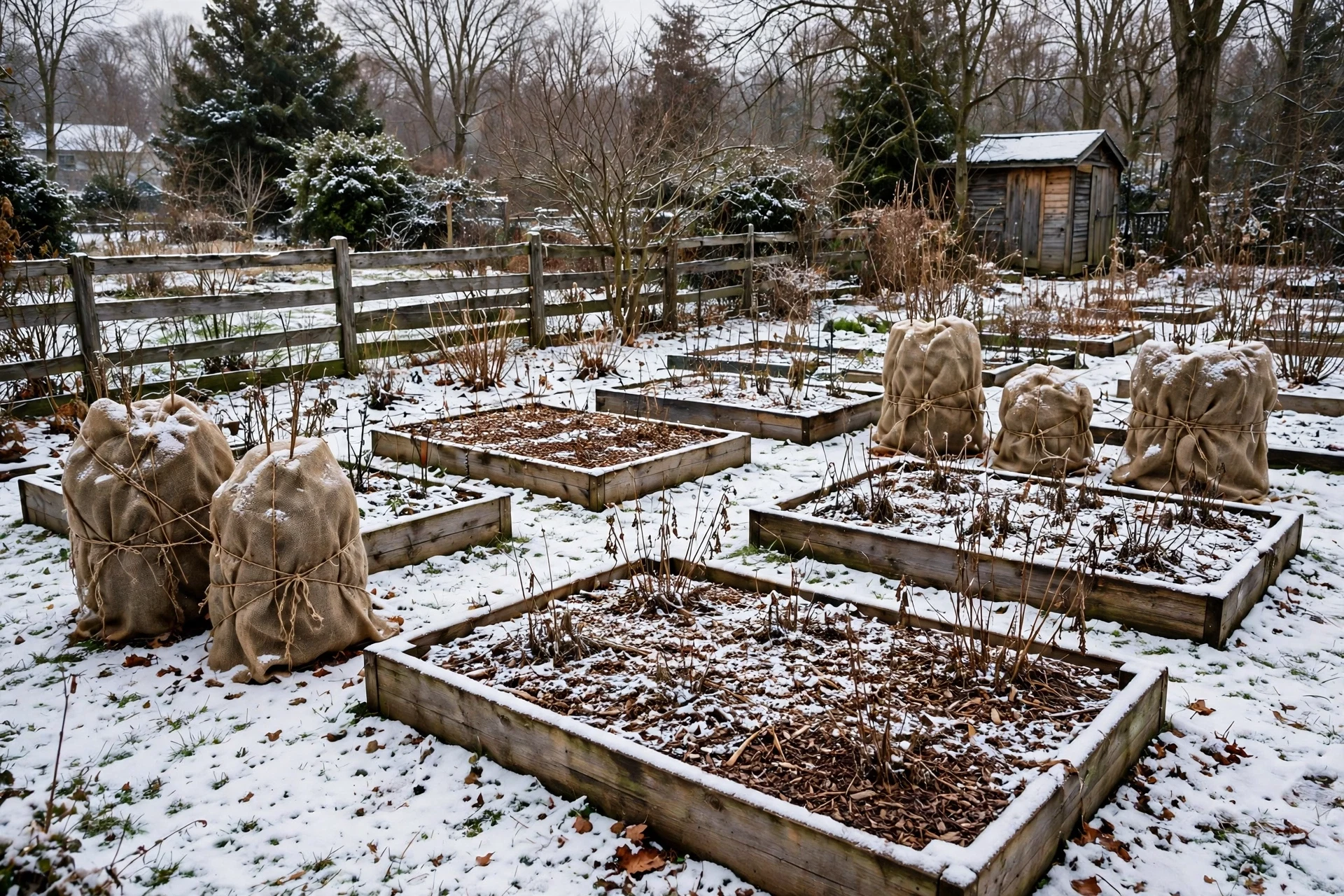
Mulch and burlap are winter’s quiet protectors. A thick layer of mulch insulates roots against freeze-and-thaw cycles, which do more damage than steady cold. Burlap wraps shield broadleaf evergreens and tender shrubs from drying winter wind and salt spray. Together, they are the difference between plants that bounce back in spring and plants that do not.
Apply mulch after the ground has cooled but before it freezes solid, keeping it away from plant stems to avoid rot. Wrap vulnerable shrubs loosely in burlap, leaving the top open for air, and remove the wrap in spring. This is not glamorous work, but it is the most valuable winter landscaping task there is. Protected plants are the ones that make next year’s garden possible.
- Mulch after the ground cools, keeping mulch off plant stems.
- Wrap tender shrubs loosely, leaving the top open for air.
- Remove burlap in spring once hard freezes have passed.
14. A Fire Pit Gathering Spot

A fire pit makes a winter yard a place to gather instead of just look at. On a clear, cold evening, a fire, a few sturdy chairs, and warm blankets turn the backyard into the coziest room in the house. The firelight against snow is beautiful, and the warmth lets you stay outside long enough to enjoy it. It is winter entertaining at its simplest.
Place the fire pit on a non-flammable surface, away from overhanging branches and with room for chairs to sit back from the heat. Keep a stack of dry wood nearby and a bucket of sand for safety. Add outdoor cushions in weatherproof fabric and a basket of throws. A fire pit gives the winter yard a purpose after dark.
- Set the fire pit on stone or gravel, away from branches.
- Keep dry wood and a bucket of sand nearby for safety.
- Use weatherproof cushions and a basket of warm throws.
15. A Cozy Outdoor Seating Nook
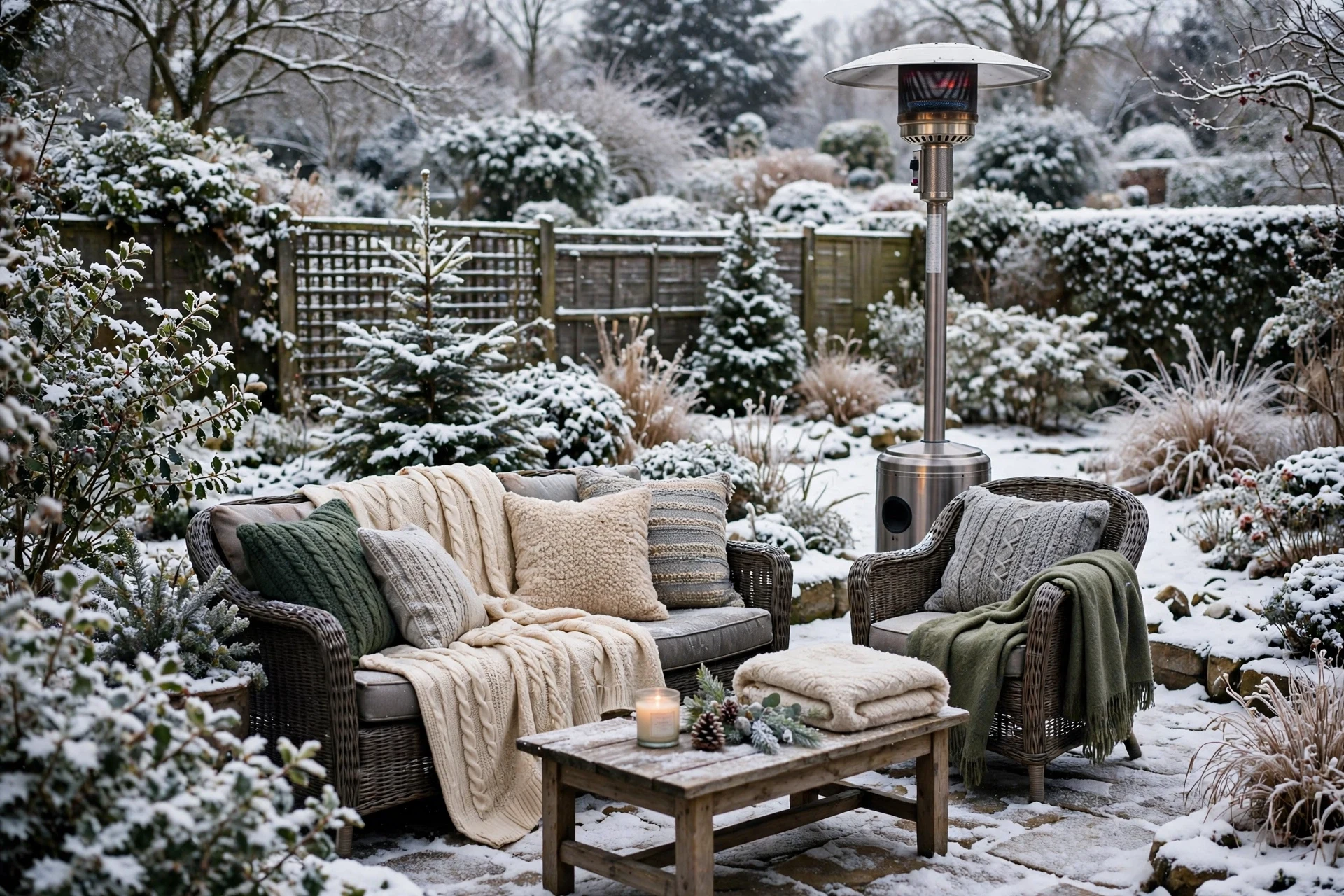
An outdoor seating nook proves a yard does not close in winter. A sheltered corner with a bench or chairs, a patio heater, and plenty of throws invites you outside for morning coffee or an evening chat, even in January. The key is shelter: a wall, a hedge, or a pergola that blocks wind makes the same temperature feel much warmer.
Choose weatherproof furniture and store cushions indoors when storms are coming. A patio heater or a chiminea adds real warmth, and a windbreak of evergreens helps even more. If you like sheltered outdoor living, our cozy winter sunroom ideas show how the same cozy thinking works inside glass walls too. One warm nook can change how you feel about winter.
- Pick a sheltered corner blocked from wind by a wall or hedge.
- Use weatherproof furniture and bring cushions in during storms.
- Add a patio heater and a basket of throws for real warmth.
16. Ice Lanterns Along the Path

Ice lanterns are winter’s most magical, and cheapest, decoration. Made by freezing water in a bucket or balloon mold around a candle, they glow warmly on a snowy path and cost almost nothing. Lined along a walkway or grouped by the door, they turn an ordinary winter evening into something special. They last as long as the cold does.
To make them, fill a container with water, let it freeze partway, remove the unfrozen center, and set a candle inside. Use battery candles if you prefer no open flame, and place lanterns where they will not be knocked over. They are a lovely project to make with children on a snowy afternoon. When the temperature rises, they simply melt away.
- Freeze water partway, then hollow the center for a candle.
- Use battery candles for a flame-free version.
- Place lanterns where they will not be knocked over.
17. A Snow-Covered Rock Garden

A rock garden is one of the few garden styles that looks better in snow. Stones, gravel, and low evergreen groundcovers hold their shapes under a dusting of white, and the contrast of grey stone, green foliage, and snow is quietly beautiful. Unlike flower beds, a rock garden needs no winter cleanup and never looks bare or muddy.
Build a rock garden on a slope or a raised bed for drainage, using local stone in varied sizes and hardy groundcovers like creeping juniper or sedum. Leave gaps for snow to settle naturally rather than piling it on. In spring, the same stones warm quickly and give early plants a head start. A rock garden is winter structure you can enjoy without any work.
- Use local stone in varied sizes on a slope for drainage.
- Plant hardy groundcovers like creeping juniper or sedum.
- Let snow settle naturally instead of piling it on the bed.
18. Evergreen Garlands on Fences and Gates
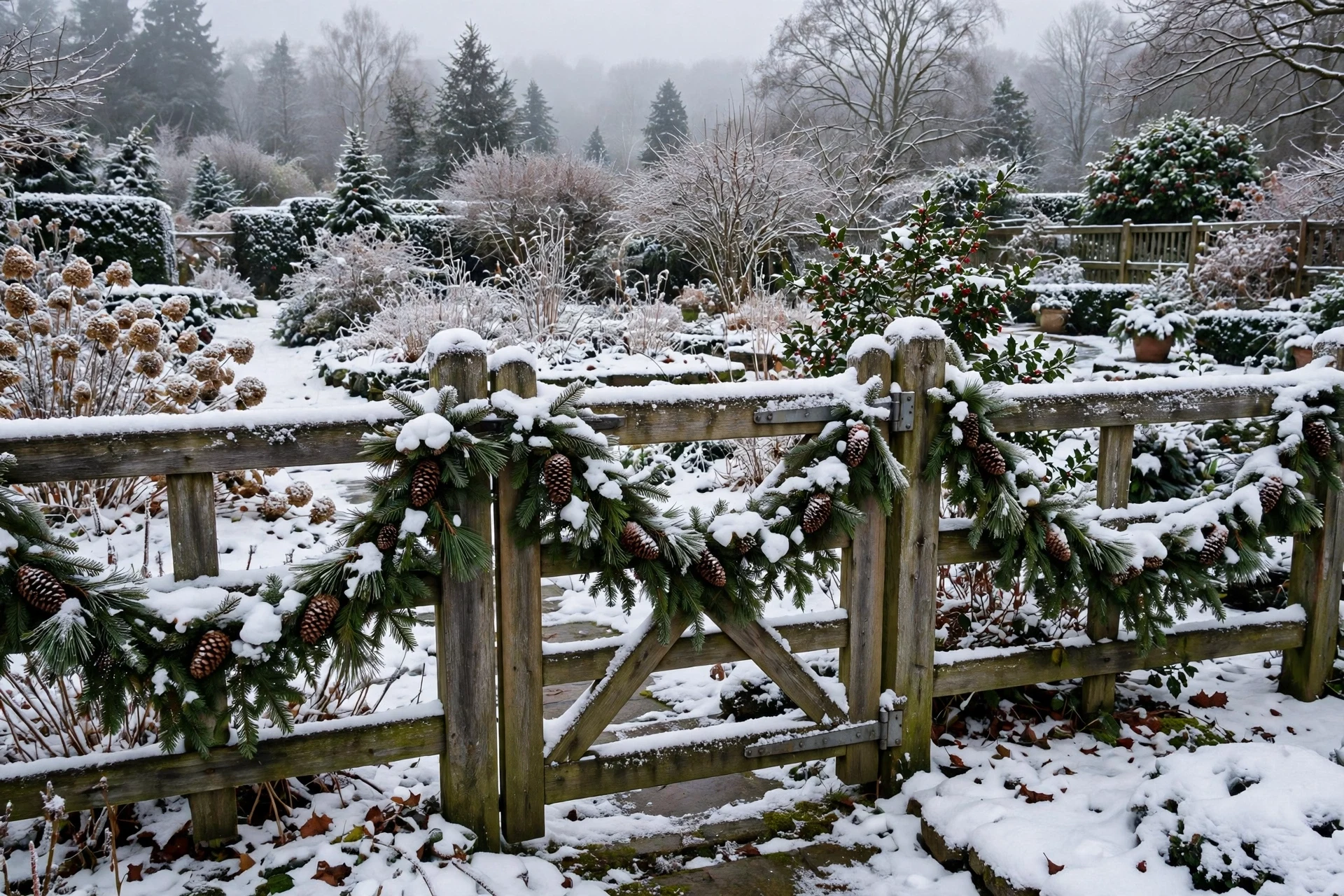
Evergreen garlands bring the holiday feeling out into the yard, and they can stay long after the holidays. Draped along a fence, a gate, or a porch rail, fresh pine, cedar, or fir garlands add scent, color, and softness to hard winter lines. They look especially good against wood and snow, and they cost far less than new planting.
Use fresh garlands and mist them lightly to extend their life, or choose good-quality faux garlands for the whole season. Attach them securely so winter wind does not tear them down, and add pinecones or a simple bow for detail. After the holidays, the same garlands can stay through January as plain winter greenery. It is an easy, high-impact winter touch.
- Attach garlands securely so winter wind cannot tear them down.
- Mist fresh garlands lightly to keep them green longer.
- Keep them up through January as plain winter greenery.
19. Front-Yard Winter Curb Appeal
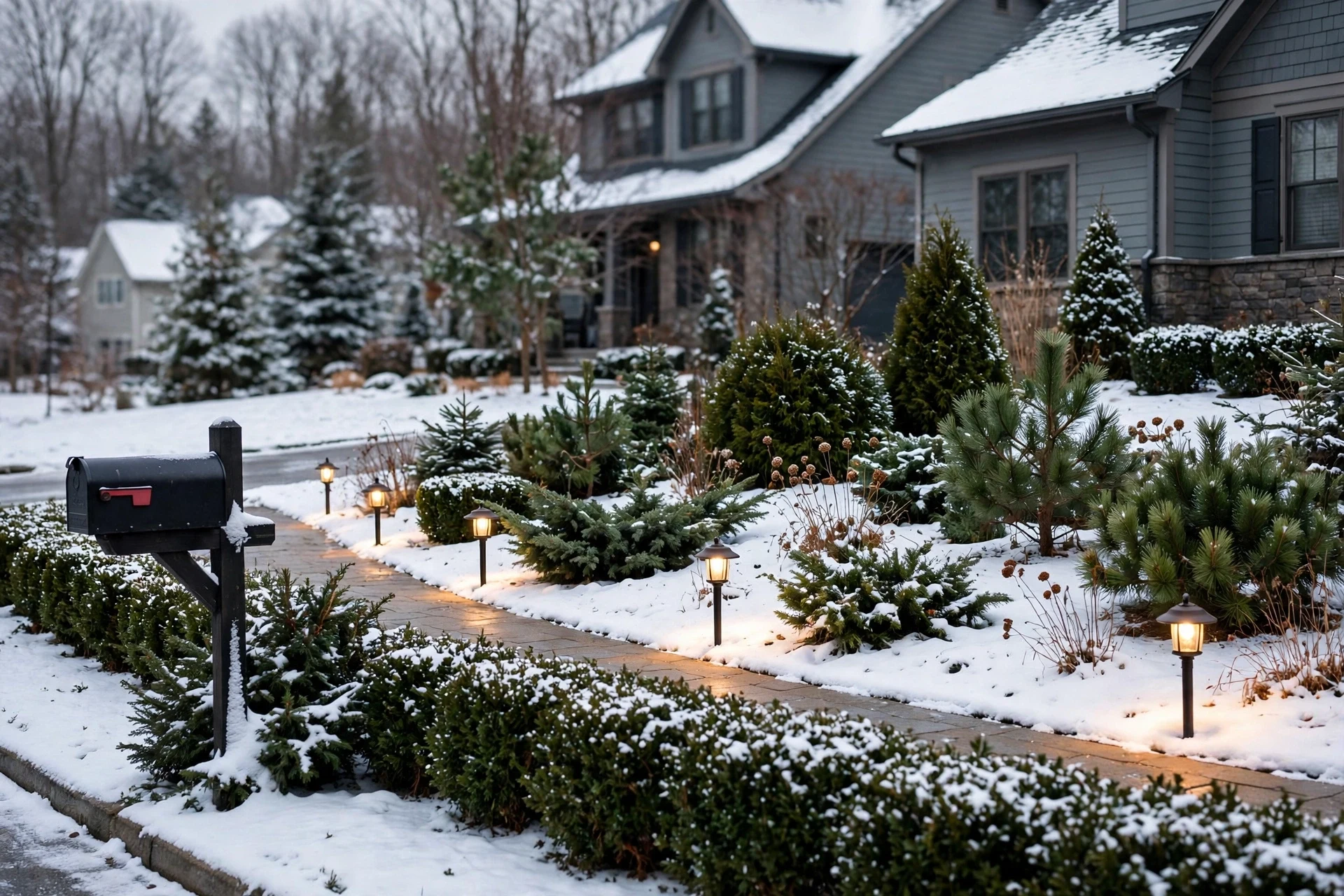
Front-yard winter curb appeal is about looking cared for when nature is not helping. Neat evergreen borders, a cleared walk, warm lights, and a tidy mailbox area tell visitors the house is loved, even in February. It does not take a big project: a few evergreens, clean edges, and good lighting do most of the work.
Start by edging beds, clearing the walk, and adding evergreen containers or a small hedge where the yard looks thinnest. Warm path lights finish the picture after dark. For ideas that carry the same warmth to the door itself, see our festive Christmas porch decor ideas, and for the whole cold-season picture, revisit our fall landscaping ideas before next autumn. A tidy winter front yard is the best first impression of the year.
- Edge beds and clear the walk for an instantly tidier look.
- Add evergreen containers where the yard looks thinnest.
- Finish with warm path lights for evening curb appeal.
Frequently Asked Questions
What plants look good in a winter landscape?
Evergreens are the foundation, with winterberry for red color, birch for white bark, ornamental grasses for movement, and hellebores and witch hazel for winter flowers. Together they give a yard color, shape, and interest even in snow. Choose plants rated for your zone so they survive your coldest nights.
Should I cut back plants before winter?
Leave ornamental grasses and most perennials standing through winter, since they protect roots and shelter wildlife. Cut them back in late winter, just before new growth starts. Remove only diseased or damaged growth in fall, and apply mulch after the ground cools.
How do I keep a yard looking neat in winter?
Keep walkways cleared and edged, use evergreen structure, add warm lighting, and tidy beds before the first snow. A few containers by the entry and a clean mailbox area go a long way. Avoid piling snow onto garden beds, where it can break plants.
Can I garden in winter, or should I wait for spring?
You can garden in winter with cold frames for hardy greens, and by planning, protecting plants, and enjoying winter-interest planting. Heavy planting and pruning are better left for spring, but winter is ideal for structure, lighting, and protection work.
What is the best lighting for a winter yard?
Warm-toned, low-voltage or solar path lights work best, placed at steps, curves, and entries. Timers or dusk-to-dawn sensors save energy. Keep lights low and warm rather than bright white for a cozy winter glow.
How do I protect plants from winter wind and snow?
Mulch roots after the ground cools, wrap tender shrubs loosely in burlap, and brush heavy, wet snow off evergreen branches after storms. Water evergreens well before the ground freezes so they do not dry out in winter wind.
Conclusion
A winter yard does not need to wait for spring to be beautiful. With evergreen structure, a few bursts of color from berries and winter flowers, warm light along cleared paths, and simple protection for tender plants, your cold-season yard can look intentional, welcoming, and alive. These winter landscaping ideas work together: structure first, then color, then light, then the details that make you want to step outside.
Pick the idea that fits your yard and your winter best, whether that is a hedge, a fire pit, a cold frame, or a row of ice lanterns, and build from there. For year-round planning, our small backyard garden ideas and cozy winter balcony garden ideas pair well with this guide. Then step outside on a cold, bright morning and enjoy a yard that was made for winter.