19 Front Yard Landscaping Ideas for Instant Curb Appeal
19 Front Yard Landscaping Ideas for Instant Curb Appeal
First impressions start at the curb. Before anyone steps inside your home, the front yard has already told them something about it — whether it feels cared for, welcoming, and full of life. The good news is that you do not need a huge budget or a complete redesign to change that impression. A few thoughtful front yard landscaping ideas, done well, can make a plain front yard look polished, intentional, and inviting almost overnight.
In this guide, you will find 19 front yard landscaping ideas covering walkways, planting beds, lawn edging, porch planting, lighting, and mailbox beds — all chosen for all-season curb appeal, not just one season. Whether your yard is large or small, sunny or shady, you can start with one idea and build from there. For a smaller space, our small backyard garden ideas show how the same layered approach works in a compact yard, and for porch styling, see our festive Christmas porch decor ideas. Pick the idea that fits your home, and give your front yard the welcome it deserves.
1. Layered Walkway Border Planting
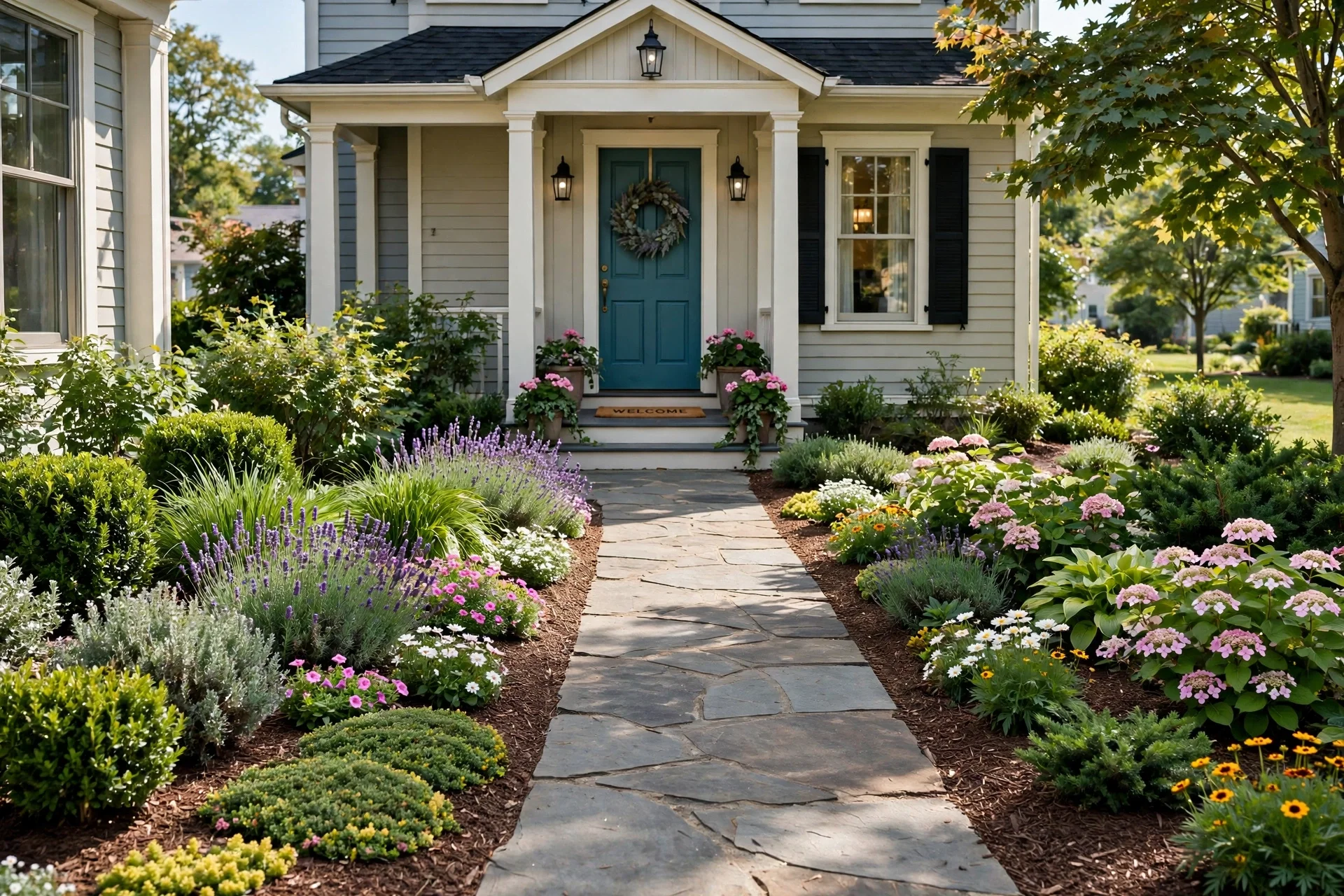
A layered walkway border turns the path to your front door into a garden in its own right. Start with low edging plants such as creeping thyme or liriope along the path, add mid-height perennials like salvia, daylilies, or coneflowers behind them, and finish with taller shrubs or ornamental grasses at the back. The stepped heights guide the eye toward the entrance and make even a short walk feel lush, finished, and welcoming from the street.
Keep the lowest plants tidy so they never spill onto the path, and leave enough width for two people to walk side by side. Choose plants that suit your sun and soil, and repeat two or three varieties along the whole border instead of planting one of everything. A fresh layer of mulch ties the layers together, holds moisture, and gives the border a clean, cared-for look all season long.
- Layer plants by height: low edging, mid-height perennials, taller shrubs at the back.
- Repeat two or three varieties along the border for a calm, designed look.
- Refresh mulch each spring to hold moisture and keep weeds down.
2. Curved Planting Bed with Natural Stone Edging

Straight beds can make a front yard feel boxy, but a gentle curve softens the whole space. A curved planting bed sweeping out from the house or along the walkway adds movement and makes the lawn feel larger and more natural. Natural stone edging holds the shape, keeps mulch and soil in place, and brings a warm, timeless texture that pairs beautifully with brick, siding, or stone on the house itself.
Mark the curve with a garden hose first, then step back to the street to check the shape before you dig. Set stones snugly into a shallow trench so they stay put, and plant taller plants toward the back of the curve with lower flowers spilling toward the lawn. Finish with dark mulch, which makes green foliage and bright blooms stand out and gives the new bed an instantly finished appearance.
- Sketch the curve with a hose and check it from the street before digging.
- Set edging stones in a shallow trench so they do not shift over time.
- Use dark mulch to make flowers and foliage stand out.
3. Symmetrical Planters Flanking the Front Porch

Symmetry is one of the fastest ways to make an entrance look intentional. Two matching planters, one on each side of the front door, frame the entry and draw the eye straight to it. Fill them with a simple formula: a tall center plant, fuller plants around it, and something trailing over the edge. The result looks balanced and welcoming whether your porch is wide and grand or just a small stoop.
Choose planters large enough that they do not dry out every day, and use pots with drainage holes so roots never sit in water. Match the pot style to your home — classic urns for a traditional house, clean concrete or metal for a modern one. Swap the seasonal flowers a few times a year, and the same two planters will keep your entrance looking fresh from spring through fall.
- Use matching planters on both sides of the door for instant balance.
- Pick large pots with drainage holes to reduce watering chores.
- Match the pot style to your home’s architecture.
4. Low Hedge Framing the Front Lawn

A low hedge works like a picture frame for your front yard. Kept at knee to waist height, it defines the edge of the lawn, hides the line where grass meets sidewalk, and gives the whole yard a tidy, finished outline. Unlike a tall fence, it never blocks the view of your home, so the house stays visible and friendly while the yard still feels clearly shaped and cared for.
Boxwood is a classic choice, but yew, privet, and dwarf holly also hold a neat shape with regular trimming. Plant the hedge in a straight or gently curved line, and trim it slightly narrower at the top than at the base so sunlight reaches the lower leaves. Two light trims a year are usually enough to keep it dense, even, and looking sharp through every season. Trim in late spring and again in late summer for the neatest result.
- Keep the hedge at knee to waist height so the house stays visible.
- Trim slightly narrower at the top so sunlight reaches lower leaves.
- Plan two light trims a year to keep the shape dense and even.
5. Mailbox Flower Bed

The mailbox is one of the first things visitors and neighbors notice, yet it is often the most neglected spot in the yard. A small flower bed around the mailbox post turns that overlooked corner into a cheerful greeting. A ring of low, tough flowers, a little mulch, and perhaps a small stone edge are all it takes to make the whole front yard feel more loved. It is a tiny project with an outsized payoff for the whole street.
Check your local postal rules before you build, since carriers need clear access to the box and some areas limit bed height or edging. Choose hardy plants that tolerate heat, road dust, and occasional splashes, such as daylilies, sedum, or petunias. Keep the bed low and open on the approach side, and water it when you water the rest of the yard so it never looks dried out. A quick weekly check keeps it neat.
- Check postal access rules before adding edging or tall plants.
- Choose tough, heat-tolerant plants like daylilies, sedum, or petunias.
- Keep the bed low on the carrier’s approach side.
6. Ornamental Tree as a Front Yard Focal Point

Every great front yard needs one star, and a small ornamental tree is often the best choice. A flowering cherry, redbud, crabapple, or Japanese maple gives the yard height, shade, and a seasonal show — spring blossoms, summer leaves, and fall color — all from a single plant. Placed where it can be seen from the street and from the porch, it anchors the whole landscape. It also gives birds shelter and the porch a lovely framed view.
Pick a tree that will stay in scale with your house and yard at its mature size, not just the size it is at the nursery. Plant it away from power lines, sidewalks, and the foundation, and give it a wide mulch ring with low plants underneath rather than grass right up to the trunk. Water deeply in its first two years, and it will reward you with decades of curb appeal.
- Choose a tree that stays in scale with your home at mature size.
- Keep it clear of power lines, sidewalks, and foundations.
- Mulch widely around the base instead of mowing right to the trunk.
7. Mixed Perennial Border Along the House

A mixed perennial border softens the hard line where the house meets the ground and fills the front of the home with color for months. By combining shrubs, perennials, and ornamental grasses that bloom at different times, the bed never has a dull stretch: something is always coming into flower while something else is just finishing. The effect is rich and garden-like without needing constant replanting. The result feels abundant without looking messy or overplanted.
Start with a backbone of evergreen or long-lived shrubs, then weave in perennials in groups of three or five for a natural drift effect. Leave space between young plants so they can grow without crowding, and note bloom times on the plant tags as you shop. With a good mix, the border largely takes care of itself, needing only a spring cleanup and an occasional division. A spring mulch top-up keeps the whole border looking fresh.
- Plant perennials in groups of three or five for natural drifts of color.
- Mix bloom times so something is flowering from spring to fall.
- Leave growing room between young plants to avoid crowding.
8. Gravel Path with Groundcover Joints

A gravel path has a relaxed, cottage-garden charm that concrete sometimes lacks, and it is far easier to install yourself. Laid over landscape fabric with flat stones set into it, gravel drains well, crunches pleasantly underfoot, and suits both traditional and modern homes. Low groundcover tucked between the stones softens the edges and makes the path feel like part of the garden, not just a route through it. It also suits narrow side yards and cottage-style homes beautifully.
Dig the path a few inches deep, add a firm base layer, and use edging to keep gravel from wandering into the lawn. Creeping thyme, moss, or low sedum work well between stones in sunny spots, while moss or sweet woodruff suit shade. Rake the gravel level a few times a season, and top it up once a year to keep the path looking neat and full. Rake it level after heavy rain to keep it smooth.
- Use edging to keep gravel from spreading into the lawn or beds.
- Match groundcover to your sun: thyme and sedum for sun, moss for shade.
- Top up gravel once a year to keep the path full and level.
9. Raised Stone Planters by the Entry Steps
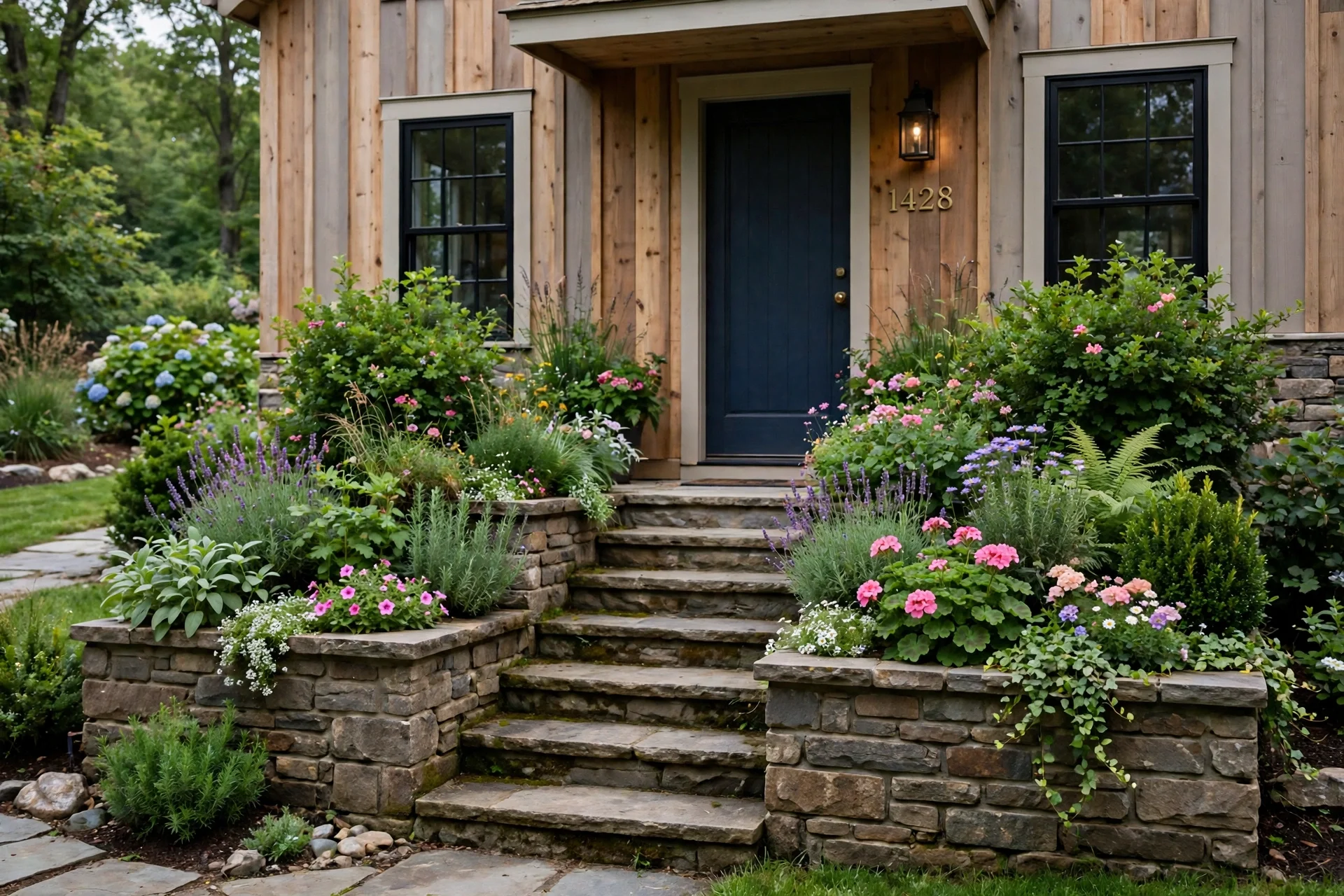
Raised stone planters lift your planting right up to eye level, which is exactly where it makes the biggest impression. Built beside the entry steps, they turn a plain staircase into a grand approach, give you better soil and drainage than the ground beside the house, and make weeding and watering easier on your back. Stone also echoes the house itself, so the entry feels solid and permanent. They also give the entry a sense of permanence and polish.
Build planters at least eighteen inches deep so roots have room, and include drainage gaps or a gravel base so water never pools. Fill them with a mix of structural shrubs and seasonal flowers, and keep the planting a little lower than the handrail so the steps stay safe and open. A coat of mulch on top finishes the look and keeps the soil moist between waterings. Water new plantings deeply until their roots establish well.
- Build planters at least eighteen inches deep for healthy roots.
- Add drainage so water never pools behind the stone.
- Keep plants below handrail height so steps stay safe and open.
10. Crisp Lawn Edging and Mowing Stripes
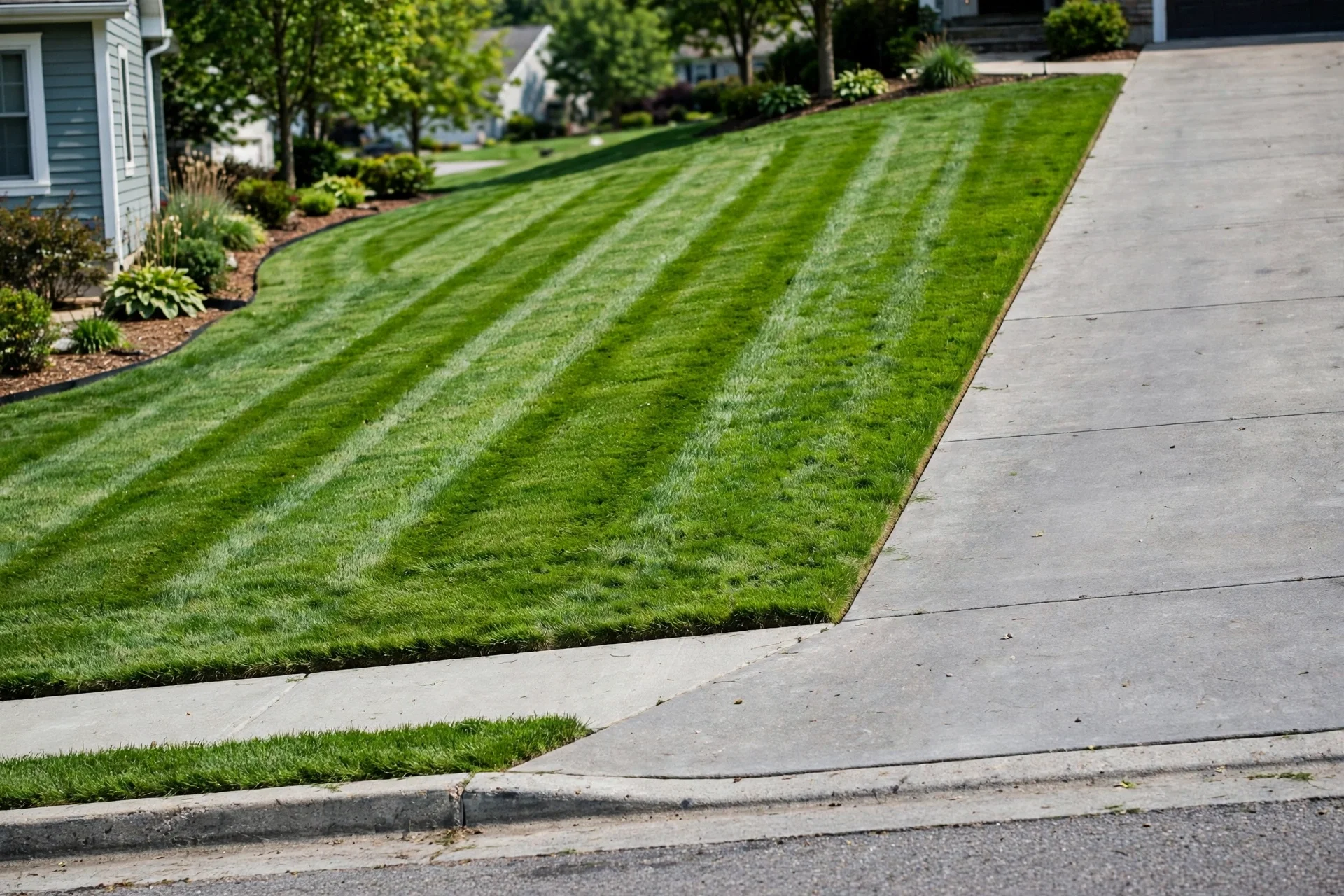
Sometimes the biggest curb appeal upgrade costs nothing at all. A freshly mowed lawn with clean stripes and a crisp edge along the sidewalk, driveway, and beds looks cared for in a way that no plant can fake. The stripes catch the light and make the lawn look thicker, while a sharp edge draws a clear line between grass and everything else, giving the whole yard a tailored finish. It is the simplest upgrade with the most visible reward.
Mow with a sharp blade, cutting no more than one-third of the grass height at a time, and alternate your mowing direction each week to create the striped pattern. Edge with a half-moon edger or string trimmer after mowing, and sweep clippings off hard surfaces. It takes only a few extra minutes, but the difference from the street is immediate and dramatic. Keep the mower blade sharp, since a dull blade tears grass and browns the tips.
- Never cut more than one-third of the grass height in one mow.
- Alternate mowing direction weekly to build a striped pattern.
- Edge after mowing and sweep clippings off paths and drives.
11. Solar Path Lighting Along the Walkway
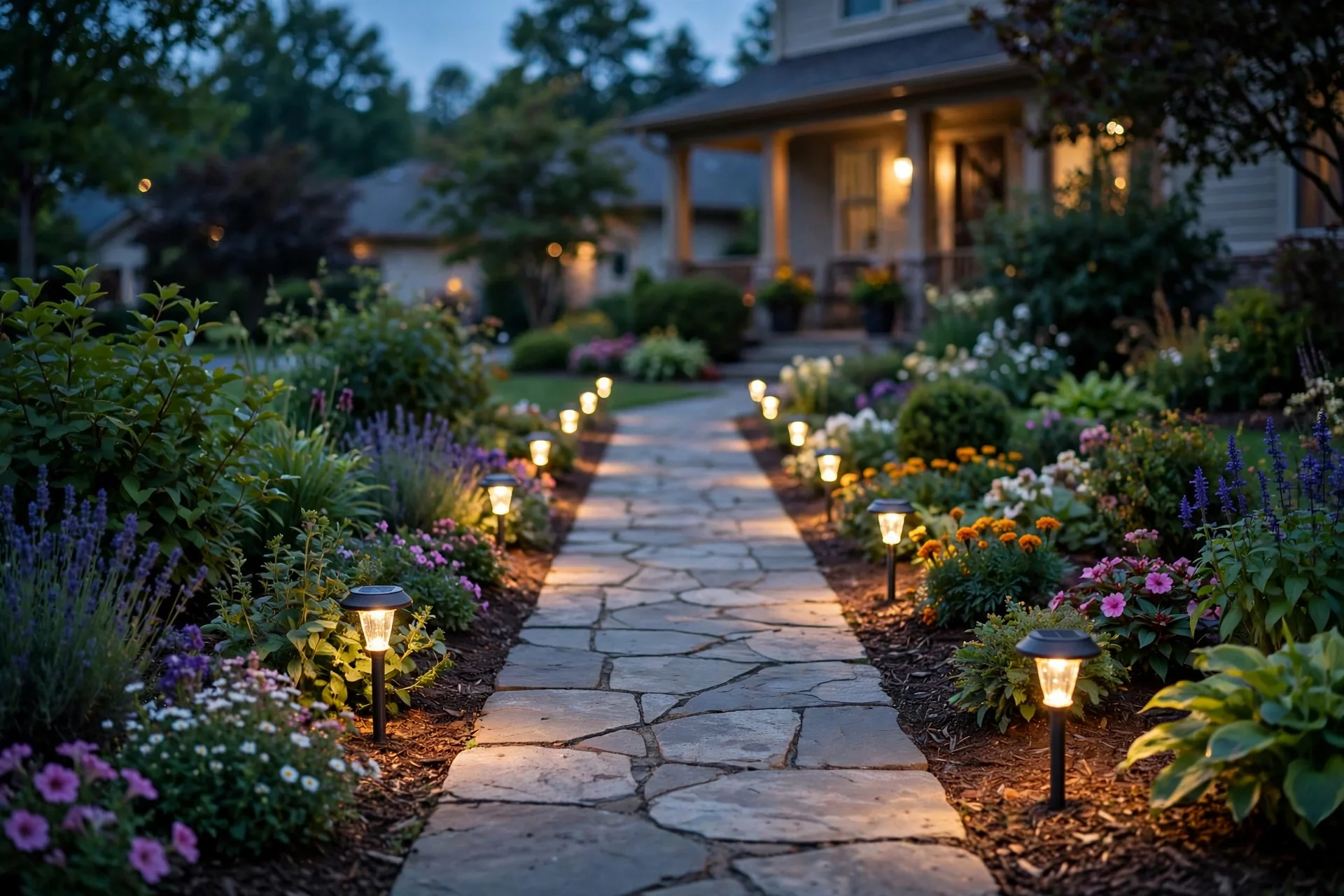
Curb appeal should not disappear at sunset. Solar path lights along the walkway make the front yard look magical after dark, help guests find the door safely, and highlight the planting you worked so hard on. Because they charge by day and need no wiring, they are one of the easiest upgrades you can make — just push them into the soil and let the sun do the rest. They also make evening arrivals feel safer and more welcoming.
Space lights evenly, about six to eight feet apart, and stagger them slightly rather than lining them up like a runway. Choose warm white light for a welcoming glow, and keep the solar panels clear of overhanging plants so they charge fully. In shaded yards, pick lights with larger panels or place them where they catch the most afternoon sun. Wipe the panels clean a few times a year, since dust and pollen can dim their glow noticeably.
- Space lights six to eight feet apart and stagger them slightly.
- Choose warm white light for a welcoming evening glow.
- Keep solar panels clear of plants so they charge fully each day.
12. Front Porch Container Garden

If your front yard is small, or your soil is poor, a porch container garden brings the landscape right to the door. Grouping pots of different sizes and heights on the porch and steps creates a lush, layered look without digging a single bed. You can grow flowers, herbs, trailing vines, and even small shrubs, and move the whole arrangement around whenever you want a change. They also let renters enjoy a garden without digging beds.
Group pots in odd numbers and vary their heights, using plant stands or upturned pots to lift smaller containers. Use a good potting mix rather than garden soil, and check moisture often, since pots dry out faster than beds. Feed container plants lightly through the growing season, and swap in fresh color as seasons change to keep the porch looking alive all year. Move tender pots to a sheltered corner before the first hard frost arrives each year.
- Group pots in odd numbers and vary their heights for a natural look.
- Use potting mix, not garden soil, for healthy container roots.
- Water containers more often than beds — they dry out faster.
13. Rock Garden Beside the Driveway
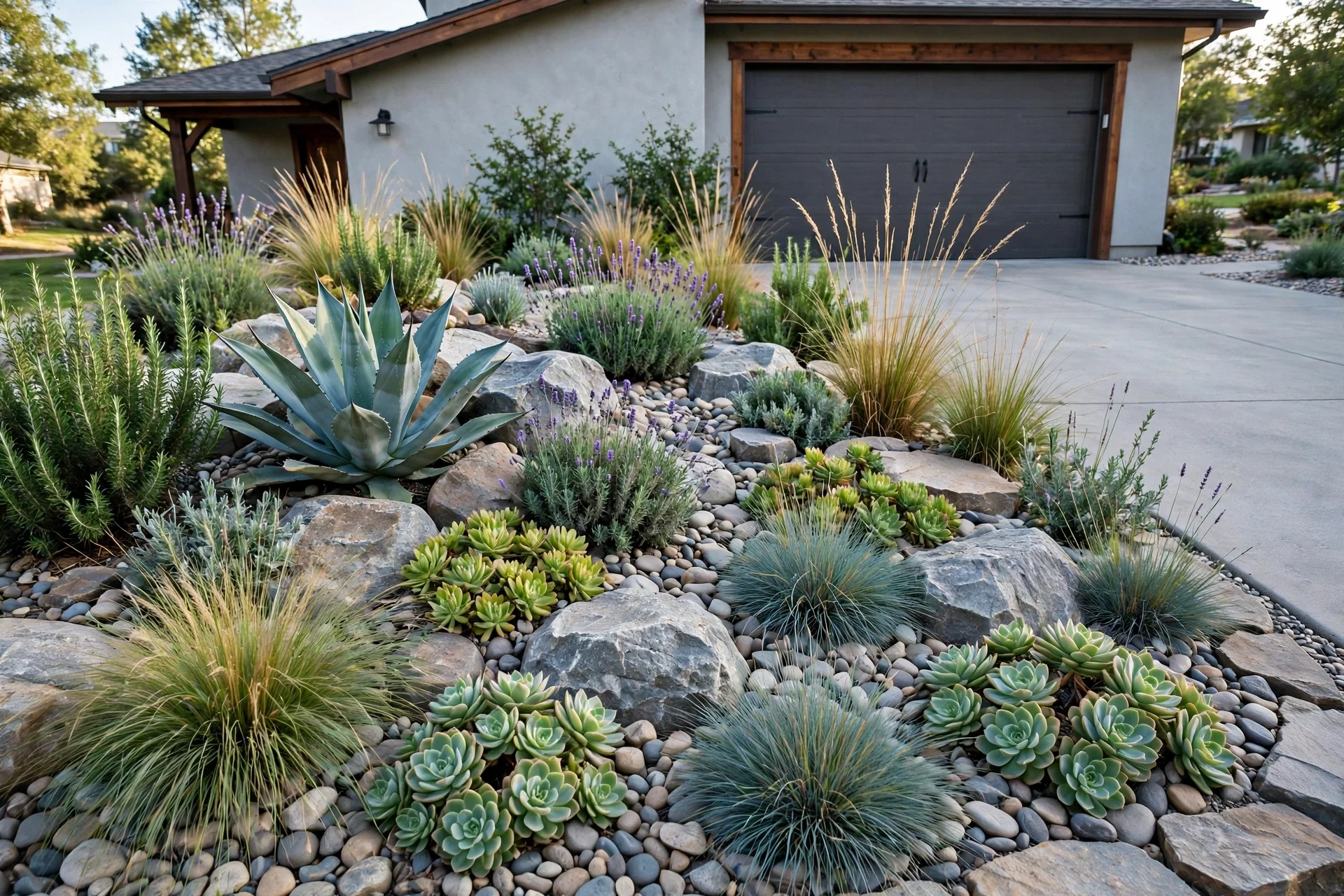
The strip beside a driveway is often the hardest spot in the front yard: hot, dry, and battered by car doors. A rock garden turns that problem area into a feature. Decorative stones, gravel, and drought-tolerant plants like sedum, lavender, and ornamental grasses thrive in the heat, need little water, and look sculptural and modern against the hard surface of the drive. It also cuts watering chores and stays neat through dry spells.
Use a mix of stone sizes, from large feature boulders down to gravel, and bury the biggest stones a third deep so they look natural rather than perched. Choose plants rated for heat and reflected sun, and leave open gravel space between them so the garden does not look crowded. A rock garden like this stays handsome with very little upkeep, even through hot, dry summers. A weed barrier beneath the gravel keeps maintenance pleasantly low.
- Bury large stones a third deep so they look natural, not perched.
- Mix stone sizes, from feature boulders down to gravel.
- Choose heat-tolerant plants like sedum, lavender, and grasses.
14. Flowering Shrub Hedge for Gentle Privacy

A front yard does not need a tall fence to feel private. A flowering shrub hedge along the boundary softens the view from the street, gives the porch a sense of shelter, and fills the yard with seasonal blooms and fragrance. Hydrangeas, lilacs, viburnum, and roses all make beautiful living screens that feel far friendlier than a wall or a solid fence. They also attract pollinators and birds, adding life to the whole yard.
Choose shrubs that suit your climate and the height you actually want, and plant them far enough apart to grow without crowding. Prune after flowering rather than in early spring, so you never cut off the coming season’s blooms. A flowering hedge takes a year or two to fill in, but once it does, it gives you privacy, color, and curb appeal in a single planting. Feed shrubs lightly in spring for stronger growth and more blooms.
- Prune after flowering so you never cut off next season’s blooms.
- Space shrubs for their mature size, not their nursery size.
- Mix two or three shrub types for a longer flowering season.
15. Stepping-Stone Path Through Groundcover
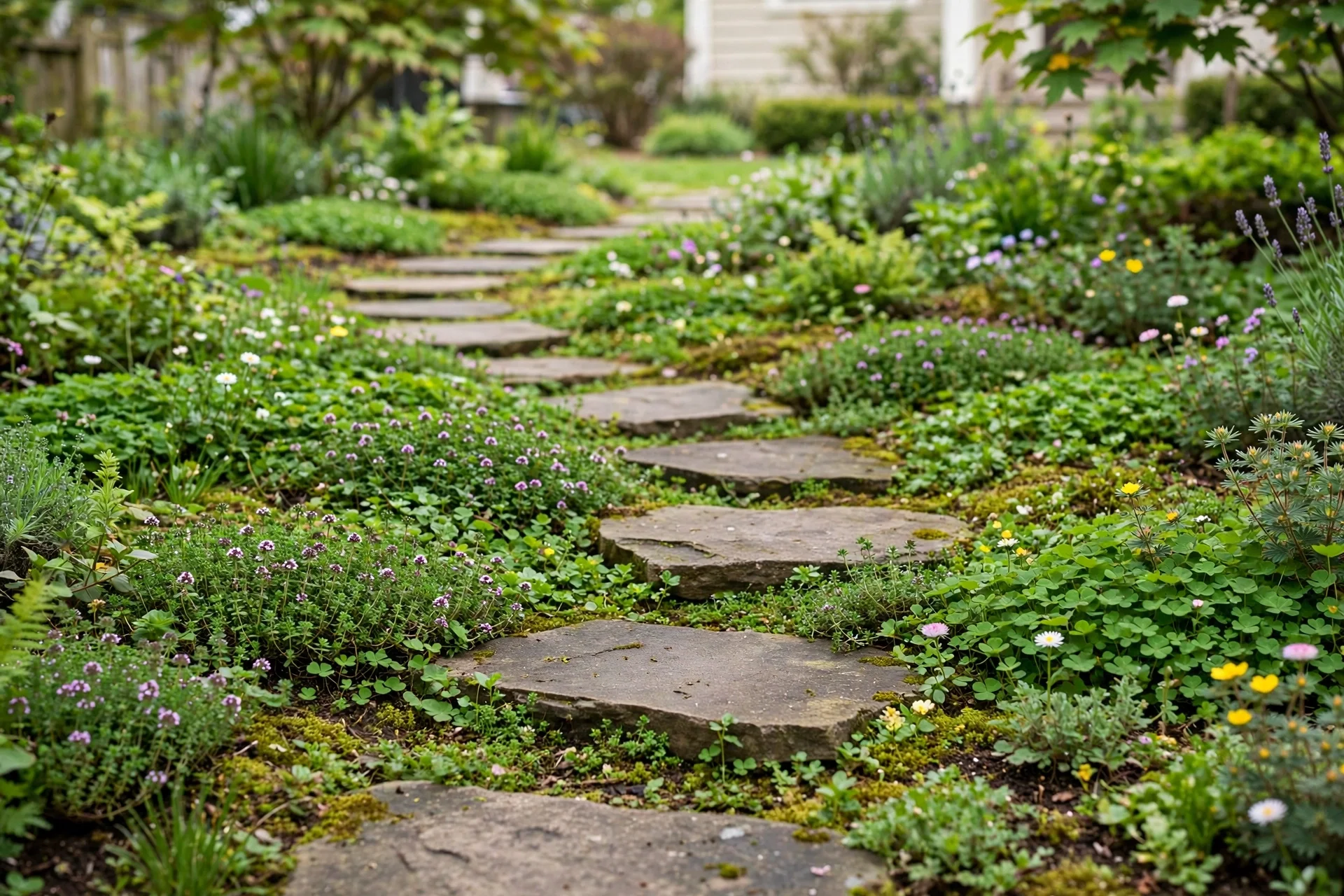
A stepping-stone path invites people to slow down and enjoy the garden instead of hurrying to the door. Wide, flat stones set into low groundcover create a soft, informal route that blends into the planting around it. The path feels like a garden feature in itself, especially when flowers and grasses spill gently over the edges of the stones. Children love hopping along them, and guests naturally pause to admire the planting nearby.
Space stones at a comfortable walking stride, and set them level with the soil so they never wobble or trip anyone. Creeping thyme, Irish moss, or low sedum make excellent groundcover between stones, filling gaps and releasing a light scent when stepped on. Keep the path a little wider than you think you need, and it will feel generous rather than cramped. Brush soil off the stones after rain so the path stays safe and tidy.
- Set stones level with the soil so they never wobble.
- Space them at a natural walking stride, not too close together.
- Use fragrant groundcover like creeping thyme between the stones.
16. Window Boxes on the Front Windows
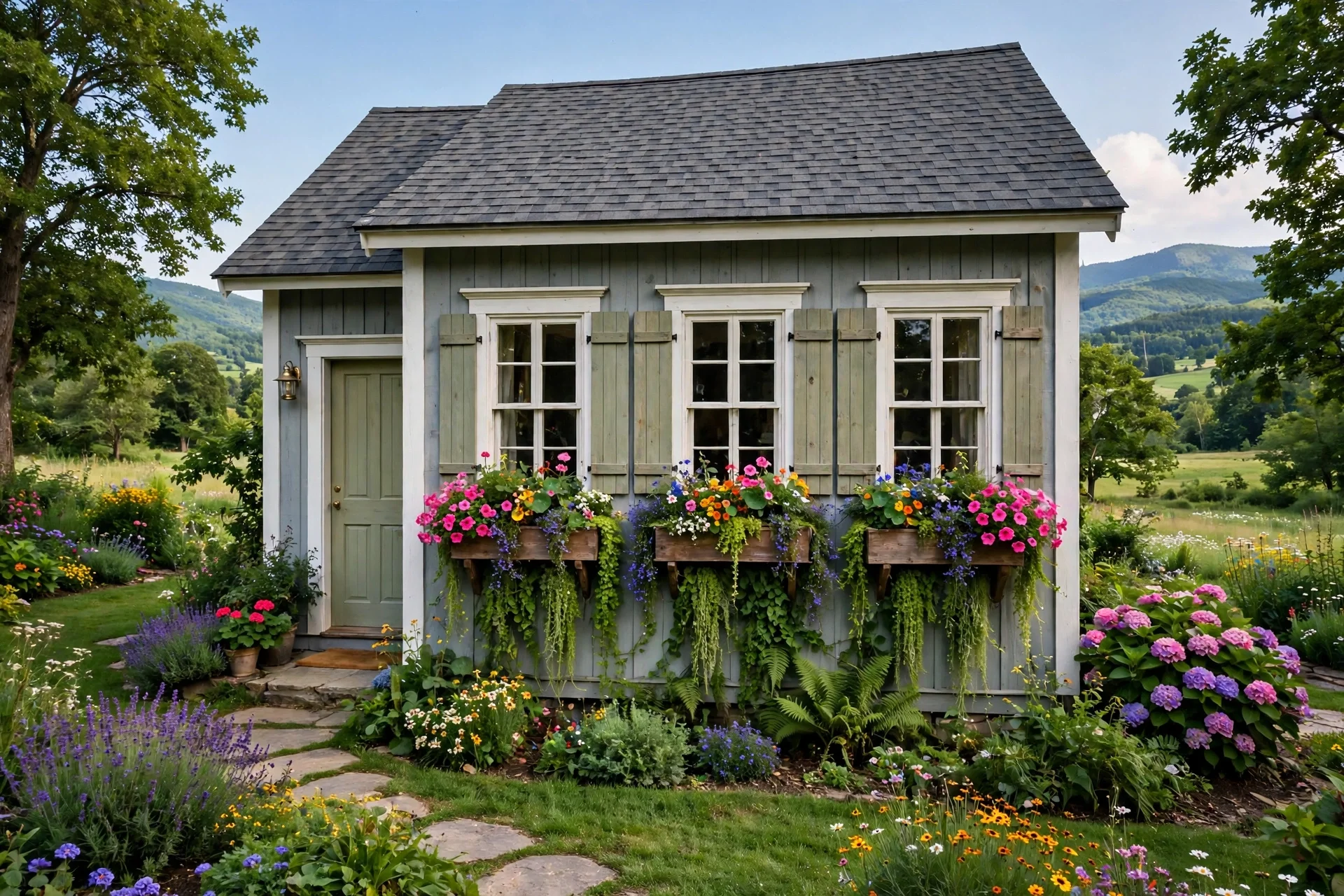
Window boxes add color exactly where the eye naturally goes: the front windows. From the street, they turn a flat wall into a layered, charming facade, and from inside, they frame your view with flowers. A box overflowing with blooms and trailing greenery is one of the most romantic and instantly noticeable curb appeal touches you can add, even on a very small budget. They are especially charming on cottages, farmhouses, and brick homes.
Mount boxes securely into studs or masonry, since a planted box is heavy, and always use liners with drainage holes. Plant with the same thriller, filler, and spiller idea as porch pots: something tall, something full, and something trailing. Water window boxes often in summer heat, and deadhead spent blooms to keep the color coming for months. In hot climates, choose trailing plants that tolerate afternoon sun and heat without wilting quickly.
- Mount boxes into studs or masonry — a planted box is heavy.
- Always use liners with drainage holes to protect roots and walls.
- Deadhead spent blooms regularly to keep flowers coming.
17. Planting Beds Along the Driveway

A bare driveway can dominate a front yard, but planting beds along its edges soften it and tie it into the rest of the landscape. Low shrubs, grasses, and flowers on one or both sides break up the hard surface, guide the eye toward the house, and make the drive feel like part of the garden rather than just a place to park. The effect is especially strong when the beds echo the style of the front walkway beds.
Keep plants low near the drive so car doors and mirrors clear them easily, and choose tough varieties that handle heat reflected off the pavement. Leave a small gravel or stone strip right at the edge if cars regularly pull close, so foliage is not crushed. With mulch and a clean edge, driveway beds look polished and intentional from the moment you turn in. Sweep fallen leaves and debris off the beds regularly for a tidy look.
- Keep plants low near the drive so doors and mirrors clear them.
- Choose heat-tough plants that handle reflected pavement heat.
- Echo the walkway bed style so the whole yard feels connected.
18. Seasonal Color Rotation in the Front Beds

Perennials give a yard its backbone, but annual flowers give it its sparkle. Rotating seasonal color through the front beds — spring pansies and tulips, summer petunias and marigolds, fall mums and ornamental kale — keeps the yard looking freshly planted all year. It is also the easiest way to try a new color scheme without committing to a permanent change. A bold color scheme near the door makes the whole house feel festive and cared for.
Plan two or three color swaps a year and buy annuals in trays for the best value. Pull spent plants right away, refresh the top layer of soil, and water new plantings well until they establish. For a different seasonal approach to the whole yard, our fall landscaping ideas show how to carry color and structure into autumn. A small bed of annuals near the entry gives the biggest impact for the least effort.
- Plan two or three color swaps a year for constant fresh color.
- Buy annuals in trays for the best value on large beds.
- Put the brightest annuals near the entry for maximum impact.
19. Entry Arbor with Climbing Roses
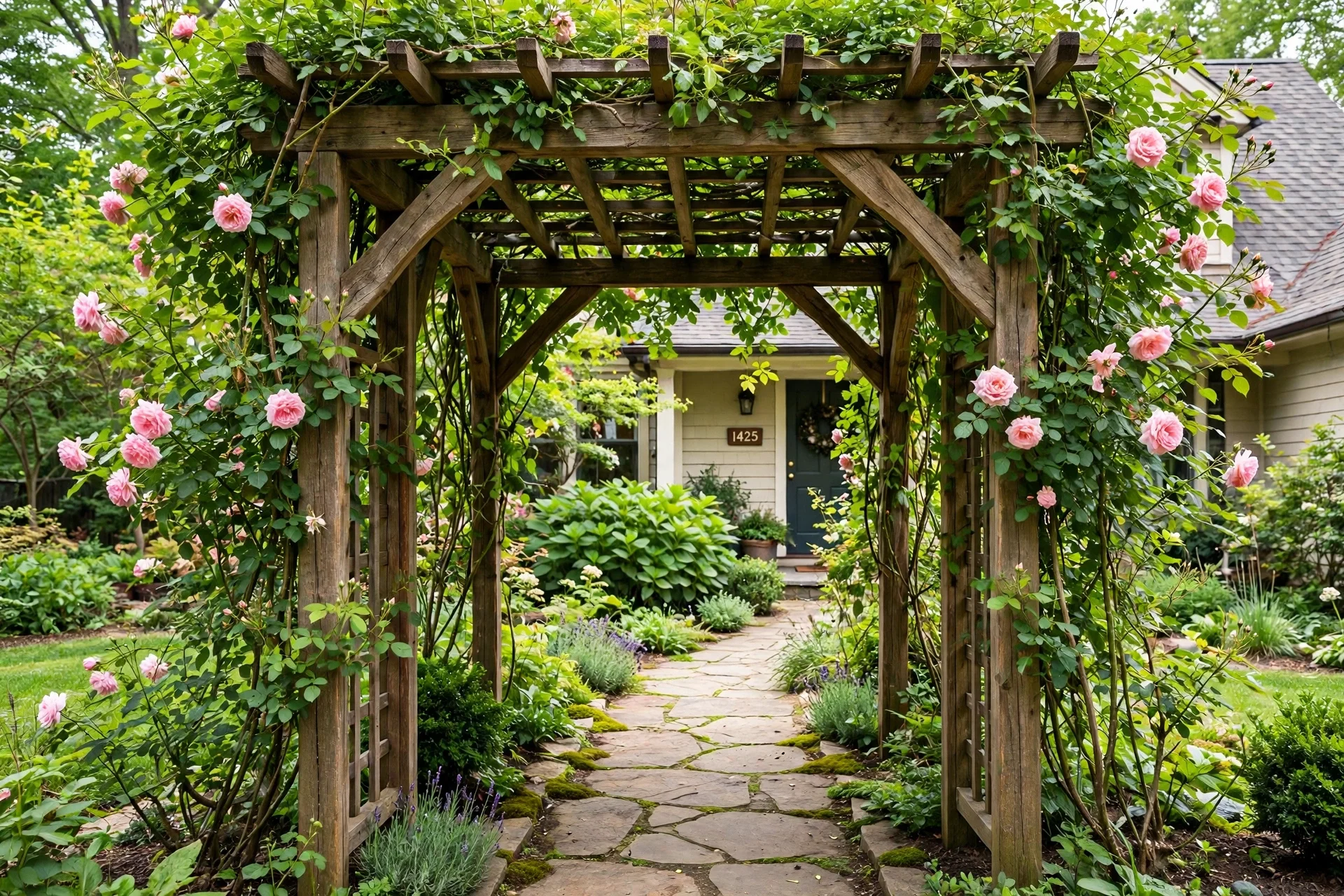
An arbor over the front walkway marks the moment you arrive home. Draped with climbing roses, clematis, or jasmine, it creates a leafy doorway that smells wonderful, frames the view of the house, and makes even a modest front yard feel like a garden estate. It is a small structure with an outsized effect on how welcoming the whole property feels. It also creates a beautiful backdrop for photos and a shady pause on warm days.
Build the arbor sturdy and tall enough to walk under comfortably, at least seven feet high, and anchor it firmly so wind never worries it. Train climbers along the sides rather than letting them smother the top, and prune each year to keep the opening clear. Within a season or two, the arbor becomes the feature neighbors remember — and the perfect frame for your front yard. Choose weather-resistant wood or metal so it lasts for years outdoors.
- Build the arbor at least seven feet high for comfortable clearance.
- Anchor it firmly so wind cannot shift or topple it.
- Train climbers along the sides and keep the opening clear.
Frequently Asked Questions
What is the cheapest way to improve front yard curb appeal?
Start with what costs nothing: mow, edge, and sweep, then add fresh mulch to existing beds. Those three steps alone can transform a tired yard. After that, a pair of porch planters and a few trays of seasonal annuals near the entry give the biggest visible change for the smallest spend.
How do I choose plants for the front of my house?
Match plants to your sun, soil, and climate zone first, then to the scale of your home. Low plants belong under windows, taller shrubs at corners, and nothing that will block paths or views at maturity. Native and well-adapted plants usually need less water and care than fussy imports.
Should the front yard match the style of the house?
Yes, as a general rule. A cottage garden suits a storybook home, clean lines and grasses suit a modern home, and classic shrubs and symmetry suit a traditional home. Matching the landscape style to the architecture makes the whole property feel designed rather than assembled at random.
How can I make a small front yard look bigger?
Use curves instead of straight lines, keep hedges low so the house stays visible, and repeat a few plants rather than crowding in many types. A clear focal point, like a small tree or an arbor, draws the eye and makes the space feel intentional rather than cramped.
Do I need professional help to landscape my front yard?
Most of these ideas are very doable yourself, especially beds, containers, lighting, and mulching. Consider a professional for large trees, drainage problems, retaining walls, or any work near utilities. For the rest, start small, learn as you go, and add one project at a time.
How do I keep front yard landscaping looking good all year?
Build the yard on structure first — shrubs, hedges, trees, and hardscaping — then layer seasonal color on top. Mulch each spring, trim hedges twice a year, and swap annuals a few times a year. A yard with good bones looks cared for in every season, even when little is in bloom.
Great curb appeal is not about having the biggest yard or the rarest plants. It is about a clear path to the door, healthy plants in the right places, a tidy lawn edge, and one or two features that make people stop and smile. The 19 front yard landscaping ideas in this guide work together or on their own, so you can start with a single weekend project and keep adding as time and budget allow.
Pick the idea that excites you most — a flower-lined walkway, a porch full of containers, or an arbor dripping with roses — and start there. Your front yard is the first hello your home gives the world, so make it a warm one. Save this guide, share it with a neighbor planning their own yard, and enjoy watching your curb appeal grow season after season.